分类: world

  • Iranian footballers say Australia has given them ‘hope’ for safe future

    Iranian footballers say Australia has given them ‘hope’ for safe future

    Two Iranian female footballers who have been granted political asylum in Australia have opened up about their new chapter, saying the country has given them a renewed chance to build a secure life where they can both live and compete without fear. Atefeh Ramezanisadeh and Fatemeh Pasandideh were part of a seven-member group of Iranian national team delegation that initially received humanitarian visas while participating in the 2024 Women’s Asian Cup hosted in Australia. In a surprise turn of events, the remaining five members of the group ultimately chose to return to Iran, reversing their initial decision to seek protection abroad.

    The crisis surrounding the team began shortly after the squad declined to sing Iran’s national anthem ahead of their opening tournament match, a silent protest that came just days after joint air strikes by Israel and the United States sparked deadly conflict in Iran starting February 28. After the protest, footage emerged of an Iranian state television host labeling the players as “traitors” who deserved punishment for their silence during the anthem, triggering widespread international alarm over the players’ safety if they returned home.

    In their first formal public statement since their asylum application was approved, Ramezanisadeh and Pasandideh expressed gratitude to supporters who have stood by them, while requesting space to adjust to their new lives. “At this stage, our primary focus is on our safety, our health and beginning the process of rebuilding our lives,” the joint statement reads. The pair added that they have been deeply moved by the warmth and generosity of Australia’s large Iranian diaspora community, saying that widespread community support has made them feel welcome and eased the isolation of their major life transition. They also extended thanks to the Australian government for granting them a safe haven in the country, and to Home Affairs department officials for their committed, personalized support throughout the visa and asylum process.

    The two players have already begun integrating into Australia’s domestic football landscape, with recent photos showing them training with A-League Women side Brisbane Roar. They confirmed in their statement that they aim to continue pursuing elite professional football careers in their new home.

    To understand the full context of the players’ decision, the sequence of events that unfolded during the Asian Cup offers critical context: after the anthem protest sparked backlash back home, the players were relocated from their original accommodation on the Gold Coast to Brisbane, roughly an hour’s drive north. It was there that they slipped away from the minders accompanying the Iranian delegation, seeking protection from the Australian Federal Police before starting their asylum claims.

    Human rights activists have long raised allegations that the five players who chose to return to Iran faced extreme coercion, arguing that Iranian authorities made threats against their immediate family members remaining in the country to force the players to reverse their decision to seek asylum. Speaking at the height of the crisis earlier this year, Australian Home Affairs Minister Tony Burke acknowledged that the government could not ignore the immense external pressures that shaped each player’s impossible decision.

    The Iranian government has pushed back sharply against the events, with the country’s sports ministry claiming that the return of the five players proved they had “defeated the enemy’s plans” through national unity and patriotism. The ministry also accused the Australian government of advancing foreign political agendas, claiming Canberra was “playing in Trump’s field.” Tasnim News Agency, an outlet closely affiliated with Iran’s Islamic Revolutionary Guard Corps, has further claimed that the two players who stayed were subjected to systematic “psychological warfare, extensive propaganda and seductive offers” from Australian actors to convince them to remain in the country.

    The case has drawn global attention to the risks facing Iranian athletes who speak out against their government, and has sparked renewed debate over Australia’s humanitarian visa obligations for at-risk sportspeople from conflict zones.

  • Global warming causes Colombian glacier to disappear

    Global warming causes Colombian glacier to disappear

    A stark visual testament to the accelerating impacts of human-caused climate change has emerged from the Colombian Andes, where the Cerros de la Plaza glacier has been officially declared completely vanished after more than a century of gradual retreat driven by rising global temperatures.

    New satellite composite imagery compiled from 2026 Copernicus Sentinel data illustrates the dramatic transformation: in late December 2015, the mountain peak still retained a visible layer of permanent ice and snow, but by the end of February 2026, no frozen cover remained, leaving only exposed bedrock where the glacier once stood. Official confirmation of the glacier’s total disappearance came last week from Colombia’s Institute of Hydrology, Meteorology and Environmental Studies (IDEAM), the government agency tasked with monitoring the country’s changing natural landscapes.

    Historical data compiled by IDEAM underscores the scale of the loss: at its peak in the 19th century, Cerros de la Plaza spanned 5 square kilometers (1.93 square miles) across the high peaks of the Sierra Nevada del Cocuy range in northeastern Colombia, where summits rise more than 5,000 meters above sea level. Decades of rising temperatures pushed the glacier into steady retreat, with the ice sheet shrinking incrementally from 2015 until it vanished entirely by March 2026.

    IDEAM’s official statement framed the loss as a tangible warning of climate change’s irreversible impacts. “Climate change is a reality that is already transforming our territories. And what is at stake is not only the landscape, but the very balance of these ecosystems,” the agency said.

    The Colombian Andes are recognized as one of the world’s most biodiverse mountain regions, hosting iconic threatened species including Andean condors and the rare spectacled bear, a mammal endemic to South America’s high altitude ecosystems. The Sierra Nevada del Cocuy glacial system is already one of only six remaining glacial networks left in Colombia, and national environment ministry data shows the country’s total glacial ice coverage has plummeted by 90% since the 19th century.

    Beyond biodiversity, the loss of Andean glaciers carries direct consequences for human communities across the region. Glacial melt feeds critical freshwater sources that sustain mountain ecosystems, and underpin key human activities ranging from agricultural crop irrigation to commercial and subsistence fishing.

    The disappearance of Cerros de la Plaza aligns with broader global climate trends: both the European Union’s Copernicus Climate Change Service and U.S.-based non-profit research organization Berkeley Earth have confirmed that the past 11 years are the warmest ever recorded on Earth. A landmark 2023 study published in the *Science* journal projected that even if all nations meet their Paris Agreement commitments to limit global warming to 1.5 degrees Celsius above pre-industrial levels, half of the planet’s total glacier mass will have melted by the end of the 21st century.

  • Trump says Israel agrees to 10-day Lebanon ceasefire

    Trump says Israel agrees to 10-day Lebanon ceasefire

    In a surprise announcement posted to his Truth Social platform Wednesday, former US President Donald Trump confirmed that Israel and Lebanon have reached an agreement for a 10-day ceasefire set to enter into force at 10pm local time Thursday, or 5pm EST. The announcement came after Trump held separate calls with Lebanese President Joseph Aoun and Israeli Prime Minister Benjamin Netanyahu.

    Trump wrote in his post that both leaders had agreed to implement the temporary truce to open a path toward long-term peace between their two nations, and he extended an invitation to both leaders to attend high-level peace talks at the White House. These talks would mark the first substantive negotiations between Israel and Lebanon since 1993, and the first planned White House meeting of its kind since 1993, Trump added, noting that both sides have expressed a desire for lasting peace and that he expects rapid progress.

    The announcement caps days of behind-the-scenes US diplomatic efforts to arrange the first direct highest-level contact between the Lebanese and Israeli heads of state in decades. However, senior Lebanese government sources have pushed back on the narrative of coordinated direct talks, revealing that President Aoun refused to hold a direct call with Netanyahu before a ceasefire was formally put in place.

    This diplomatic friction comes just two days after Washington hosted a first round of direct ambassador-level talks between Israeli and Lebanese envoys, the first such official direct engagement between the two nations since 1993. The senior Lebanese official explained that Lebanon had already demonstrated goodwill by participating in the Washington talks, but would not take an additional step that would grant Netanyahu a symbolic political victory he failed to achieve through military force on Lebanese soil. The official added that a pre-ceasefire call between Aoun and Netanyahu would carry severe domestic political consequences for Lebanon, warning it could trigger widespread internal unrest that would destabilize the already fragile country.

    The current crisis erupted after US-Israeli strikes on Iran killed Iranian Supreme Leader Ali Khamenei on March 2, prompting Lebanese Shia movement Hezbollah to launch a retaliatory cross-border rocket strike against Israel. In response, Israel launched a sustained, large-scale military campaign across Lebanon. A truce agreement was reached to pause US-Israeli military operations against Iran starting April 8 that was meant to include Lebanon, but Israel continued its offensive, leveling entire towns and villages across southern Lebanon. Despite the ongoing fighting, Iranian officials have continued to prioritize a ceasefire in Lebanon as part of ongoing diplomatic negotiations with the US to end the broader regional conflict.

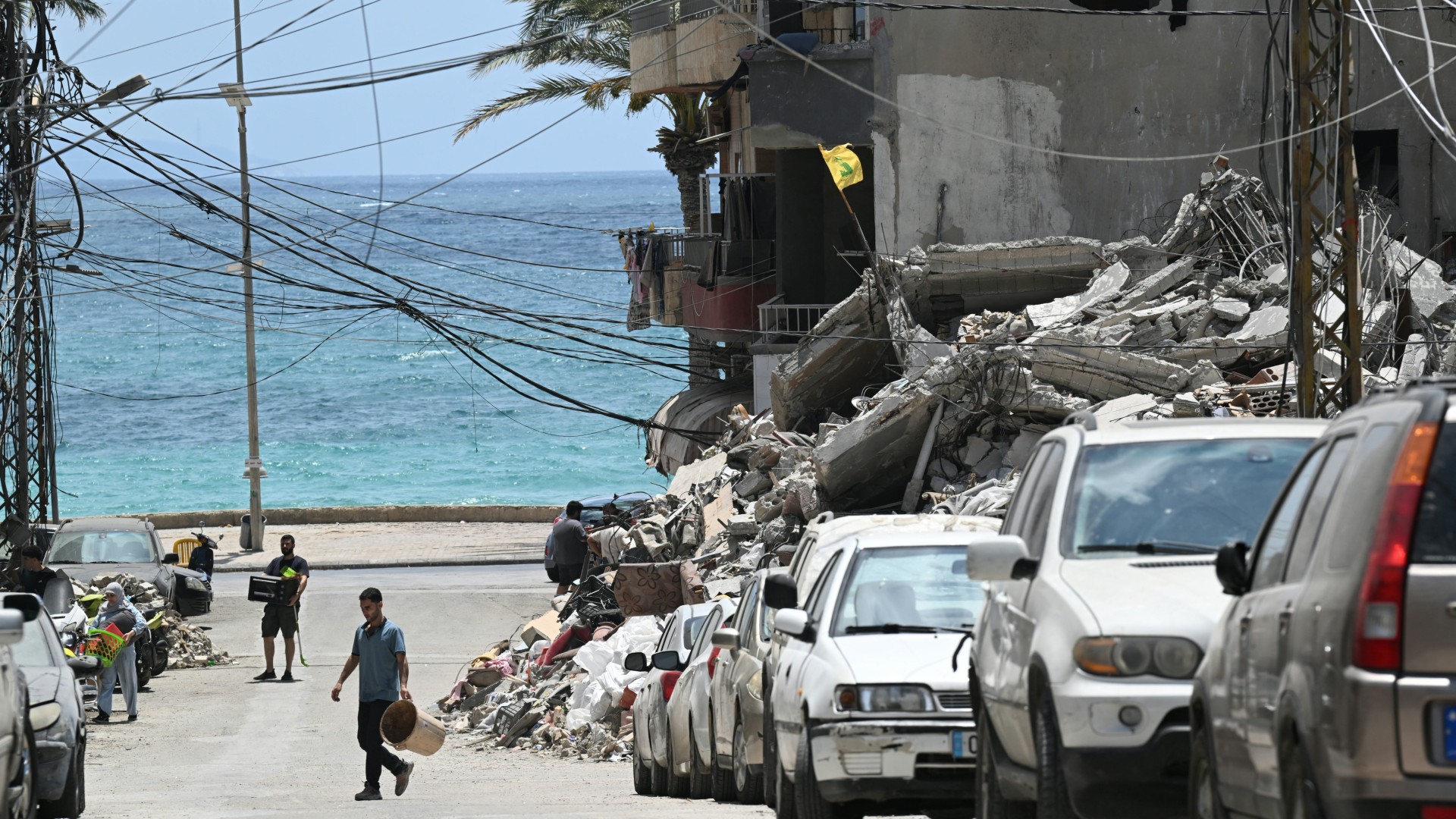
    Even as news of the impending ceasefire broke Thursday morning, Israeli forces continued their military campaign. After Israeli media reported that a direct call between Aoun and Netanyahu would happen imminently, Israeli warplanes targeted and destroyed the Qasmiyeh bridge, the last remaining crossing connecting southern Lebanon to the rest of the country. Lebanon’s state-run National News Agency confirmed that enemy aircraft carried out two consecutive strikes on the structure, which connected the Sour and Saida regions, leaving it completely destroyed.

    The Qasmiyeh strike is part of a broader Israeli campaign to sever transportation links across southern Lebanon. Last month, the Israel Defense Forces announced it would target all bridges and crossings along the Litani River, which cuts across southern Lebanon from east to west, a move designed to isolate large swathes of the territory from the rest of the country. In recent weeks, the military has carried out that plan, damaging or destroying at least nine spans across the river. The Qasmiyeh bridge had already been hit in late March, suffering major damage, but Lebanese military engineers had partially repaired it and reopened it to traffic just last week. According to Lebanese outlet L’Orient Today, Lebanese soldiers stationed near the bridge preemptively closed access roads ahead of Thursday’s strike, but the attack still completely shattered the crossing, leaving it irreparable, a Lebanese security official told Reuters.

    The ongoing Israeli strikes have continued to claim civilian lives across the country. On Thursday alone, at least 11 people including women and children were killed in multiple Israeli strikes across southern Lebanon, while one additional person was killed in a strike targeting a vehicle on the highway connecting Beirut to Damascus, the capital of neighboring Syria. Official Lebanese government data puts the total death toll from Israeli attacks in Lebanon since March 2 at more than 2,190 people.

    The violence has disproportionately targeted medical and humanitarian personnel. On Wednesday, Lebanese paramedic organizations confirmed that the Israeli military killed four rescue workers and wounded six more in three sequential targeted strikes on the southern village of Mayfadoun. The strikes deliberately targeted medical teams in waves: the first wave hit medics responding to a call for wounded civilians, the second struck responders who arrived to assist the first team, and a third hit medics rushing to support both groups. The Lebanese Ministry of Health reports that 91 healthcare workers have been killed by Israeli forces in the past six weeks alone.

    Israel has not carried out large-scale strikes on Beirut since April 8, when the military conducted roughly 100 simultaneous strikes across Lebanon in a 10-minute window that killed more than 350 people. But deadly strikes against civilian and infrastructure targets across southern Lebanon have continued unabated, as Israeli ground forces push forward with their incremental ground invasion into the southern part of the country. Notably, the US announcement of the ceasefire deal made no mention of Hezbollah, the political and military movement that controls much of southern Lebanon and has been Israel’s primary opponent in the ongoing fighting.

  • Ten-day ceasefire deal between Israel, Lebanon takes effect

    Ten-day ceasefire deal between Israel, Lebanon takes effect

    A 10-day ceasefire agreement negotiated between Israel and Lebanon officially entered into force on Friday, marking a major breakthrough after weeks of open hostilities, as U.S. President Donald Trump revealed plans to facilitate the first-ever direct face-to-face summit between the two nations’ top leaders. The truce, which launched at 2100 GMT — midnight local time for both countries — comes as Washington accelerates diplomatic efforts to reach a wider peace deal that would end the ongoing regional war with Iran, a negotiation where Tehran has long conditioned any agreement on a halt to fighting between Israel and Lebanese groups.

    As the ceasefire took hold, unconfirmed reports of celebratory gunfire echoed through Beirut’s southern suburbs, the traditional stronghold of the Iran-backed militant group Hezbollah. The current cycle of regional violence began on February 28, when a joint U.S.-Israeli military offensive against Iran triggered broader conflict, and Lebanon was drawn into the fighting on March 2 after Hezbollah launched rocket attacks against Israeli targets. In the weeks since, Israeli air and ground operations across southern Lebanon have left more than 2,000 people dead, forced more than one million Lebanese civilians from their homes, and pushed Israeli ground forces deep into the country’s southern border region.

    Shortly after the truce went into effect, the Israeli military confirmed it had carried out strikes on more than 380 sites it described as “Hezbollah terror organization targets” across southern Lebanon in the final hours before the ceasefire, and announced it remains on high alert to resume military operations if the terms of the agreement are broken.

    President Trump wrote on his Truth Social platform that the truce followed “excellent” telephone conversations with both Israeli Prime Minister Benjamin Netanyahu and Lebanese President Joseph Aoun, confirming that both leaders had signed off on the 10-day halt to hostilities. He later added that he expects both Netanyahu and Aoun to travel to the White House within the next four to five days for talks. A direct, high-level meeting between the Israeli and Lebanese heads of state would represent a historic watershed for a region that has been defined by decades of open conflict.

    In the 24 hours leading up to the ceasefire, violence continued across the border. An Israeli hospital spokesperson confirmed three people were injured in attacks on Thursday, while Lebanon’s Ministry of Health reported that an Israeli airstrike on the southern Lebanese town of Ghazieh killed at least seven people and wounded 33 others.

    Prime Minister Netanyahu framed the truce as an opening to reach a “historic peace agreement” with Beirut, but stressed that the full disarmament of Hezbollah remains a non-negotiable precondition for any long-term deal. Trump confirmed that Hezbollah is bound by the terms of the ceasefire, while the U.S. State Department clarified that the agreement requires the Lebanese government itself to dismantle the Iran-backed militant group. United Nations Secretary-General António Guterres issued a statement welcoming the truce and calling on “all actors” — language intentionally including Hezbollah — to fully uphold the terms of the agreement.

    Reactions to the truce among Lebanese civilians in Beirut were mixed. Sixty-one-year-old housewife Jamal Shehab expressed relief at the halt in fighting, saying, “We are very happy that a ceasefire has been reached in Lebanon because we are tired of war and we want safety and peace.” But sitting in a central Beirut cafe, lawyer Tarek Bou Khalil voiced deep skepticism about the longevity of the deal. “It’s well known Trump cannot be taken at his word, and Netanyahu cannot be trusted,” he told Agence France-Presse. Still, he acknowledged the pressure that forced the deal, adding, “the result of the pressures of the war with Iran and the blunders of Netanyahu and the enemy army in south Lebanon, forced them into a ceasefire.”

    Speaking to reporters before departing the White House for a scheduled trip to Las Vegas, Trump called the ceasefire “very exciting” and confirmed the deal includes Hezbollah. He added that he expects the Lebanese government to “take care of Hezbollah” moving forward, and said he believes the Iran-backed group will abide by the truce. A Hezbollah lawmaker told AFP that the group would “cautiously adhere” to the ceasefire on the condition that Israel halts all offensive attacks. Hezbollah lawmaker Ibrahim al-Moussawi thanked Iran for its diplomatic support, saying the ceasefire would not have been possible without Iran’s backing, noting that Tehran framed the truce as a negotiation equal in importance to any agreement over the Strait of Hormuz.

    Netanyahu confirmed that while Israel has agreed to the 10-day truce, it will maintain a 10-kilometer (six-mile) “security zone” along the entire southern Lebanese border. He reaffirmed that Israel’s two core conditions for a permanent ceasefire remain unchanged: the full disarmament of Hezbollah, and a lasting peace agreement “based on strength.”

    Lebanese Prime Minister Nawaf Salam welcomed Trump’s mediation and the ceasefire announcement, calling a halt to hostilities a “key Lebanese demand that we have pursued since the very first day of the war.” An official source told AFP that while President Aoun’s office thanked Trump for his diplomatic efforts to secure the truce, Aoun has rejected Trump’s request for a direct telephone call with Netanyahu. The ceasefire comes shortly after this week’s historic meeting between the Israeli and Lebanese ambassadors in Washington, the first such meeting between senior diplomatic representatives of the two countries since 1993.

    The truce is also expected to strengthen Trump’s ongoing push for a wider peace deal to end the war with Iran. The U.S. president told reporters that Washington is “very close” to a final peace agreement with Tehran after six weeks of war, and suggested he may travel to Pakistan to sign any finalized deal.

  • Zionist militia frequently contacted Nazi Germany, Israeli documents reveal

    Zionist militia frequently contacted Nazi Germany, Israeli documents reveal

    Long-sealed documents pulled from Israeli state archives have recently brought a long-rumored chapter of Zionist paramilitary history into sharp, new clarity, detailing repeated efforts by the radical Zionist Stern Gang to forge a strategic partnership with Nazi Germany during the 1930s and 1940s, when British forces held the Mandate of Palestine. First reported by leading Israeli newspaper Haaretz, the declassified files trace these secret outreach attempts directly to Avraham Stern, founder of the extremist armed group that split from the larger Irgun Zionist militia to continue anti-British resistance through World War II. The core ideological foundation for the proposed alliance, records show, was shared opposition to British rule in Palestine – the territory the wider Zionist movement targeted as the site of a future independent Jewish state.

    The documents lay out how the Stern Gang dispatched member Naftali Lubenchik to meet secretly with German officials on the group’s behalf. A 1951 archival account notes that Lubenchik held the false belief that Nazi Germany did not aim for the total physical annihilation of European Jewry, but only sought to expel Jewish populations from the continent and concentrate them in a single territory. This misreading of Nazi intentions laid the groundwork for the militia’s diplomatic overtures.

    Long before these contacts became public, the mainstream Zionist paramilitary Haganah – the dominant armed Zionist organization in Mandatory Palestine – was already aware of the Stern Gang’s actions. A 1941 Haganah intelligence document, titled “Contacts with the Axis” (a reference to the Nazi Germany-Fascist Italy alliance), contains previously unreported remarks from Eliyahu Golomb, the Haganah’s de facto commander at the time. Speaking to a small, closed circle of associates, Golomb acknowledged he had received intelligence that a high-profile Jewish militant codenamed “S” had been in contact with German enemy forces. The newly released records confirm the “S” in question was Avraham Stern.

    A Polish immigrant who settled in Palestine in the 1920s, Stern held radical views: he pushed for unrestricted Jewish immigration to the region and demanded the full expulsion of what he called the “foreign” British presence from land he deemed inherently Jewish. His animosity toward British rule ran so deep that he was willing to set aside ideological differences with the Nazi regime to achieve his goal of a Jewish state, a stance that put him sharply at odds with the other major Zionist factions of the era. While the Irgun and Haganah had agreed to a moratorium on anti-British attacks for the duration of the war against Nazi Germany, the Stern Gang continued to launch assaults on British targets and even rival Jewish groups throughout the conflict.

    Historical records compiled by Haaretz confirm multiple separate outreach attempts to German leadership. One formal proposal even outlined terms for “active partnership” with Nazi Germany in the war, framing the alignment as rooted in “shared interests between German policy and Jewish national aspirations” and calling for a formal post-war alliance between a newly established Jewish state and the German Reich. As late as 1943, Stern Gang member Natan Friedman – who later changed his name to Natan Yellin-Mor and went on to serve as a member of Israel’s parliament, the Knesset – wrote that “Germany has not yet been defeated and may still become our ally.”

    Ultimately, the Stern Gang’s efforts to secure a Nazi alliance never came to fruition, but the Haganah closely monitored every step of the outreach, per Haaretz’s reporting. By 1942, after a string of deadly bank robberies and violent shootouts between the militia and British mandatory authorities, British forces tracked down Stern, killing him at the age of 34. At the time, Stern’s collaboration overtures were a major source of embarrassment for the mainstream Zionist movement, and the Haganah even joined British efforts to crack down on the Stern Gang, hunting down its members.

    The newly declassified files also lay bare the full extent of Stern’s core worldview at the time. One document records his conviction that Britain had “betrayed the Jewish people and will never allow the establishment of a Jewish state.” In contrast, he argued, “Germany has no special interest in Palestine, and since the Nazis want to cleanse Europe of Jews, nothing is simpler than transferring them to their own state.” Stern firmly believed a practical agreement with the Nazis was achievable, writing, “negotiations should be opened, and Jews of Europe should be recruited into a special army that would fight its way to Palestine and conquer it from the British.” Additional files confirm Stern sought to “seize control of all of Eretz Yisrael [Greater Israel] by force with the help of a foreign power” – a foreign power explicitly identified as Nazi Germany.

    For his part, Yair Stern, son of Avraham Stern, has pushed back on the framing of his father’s actions in an interview with Middle East Eye for a documentary focused on the militia founder. He downplays the Nazi overtures as a minor, context-specific episode intended to rescue European Jews from persecution, arguing his father could not have known the full scope of the Nazis’ planned Holocaust – which was not formalized until shortly before Avraham Stern’s death in 1942. He also dismisses confessions from former Stern Gang members about the collaboration efforts, claiming the statements were extracted under duress during Haganah interrogations and cannot be considered credible.

  • Vance criticised for ‘inaccurate’ claim that Gaza aid is highest in five years

    Vance criticised for ‘inaccurate’ claim that Gaza aid is highest in five years

    Gaza’s de facto administration has publicly pushed back against recent inaccurate comments from U.S. Vice President JD Vance, who falsely claimed that more humanitarian aid is currently entering the Gaza Strip than at any point in the past five years, crediting the U.S. for what he called a prioritized approach to the crisis.

    Vance made the contested claim during an appearance at a Turning Point USA event held on Tuesday, asserting that the improved aid flow was a direct result of the U.S. administration taking the humanitarian situation in Gaza seriously. The very next day, Gaza’s Government Media Office issued a formal condemnation of the remarks, rejecting them as disconnected from on-the-ground reality and directly contradictory to independently verified field data.

    The context for the ongoing dispute traces back to an October 2023 ceasefire brokered by the U.S., designed to end a year-long armed conflict that has left Gaza’s 2.3 million Palestinian residents trapped under a tightened Israeli blockade that has cut off access to basic necessities, while daily Israeli bombardment has devastated the coastal enclave. The conflict has already killed more than 72,000 people and injured over 170,000, according to local counts, and parts of Gaza were formally declared to be in famine earlier this year, with dozens of recorded deaths from starvation and malnutrition linked to the blockade.

    Under the terms of the October ceasefire agreement, Israel was mandated to lift longstanding restrictions on aid entry and allow up to 600 trucks of essential supplies—including food, fuel, medicine, shelter materials and commercial goods—to enter Gaza daily. To date, Israel has failed to meet this requirement, maintaining strict limits on aid deliveries that have left the territory’s catastrophic humanitarian crisis largely unaddressed.

    Gaza’s Government Media Office laid out clear data contradicting Vance’s claim, noting that the average number of trucks entering Gaza per day since the ceasefire took effect is just 227—only 37 percent of the agreed-upon daily target. As a recent example, the office pointed out that only 207 trucks entered the enclave on April 9, and fewer than 80 of those carried humanitarian aid.

    The office emphasized that ignoring these verified facts amounts to dangerous misinformation that obscures the systemic reality of restricted aid access and deliberate deprivation imposed by Israeli occupation, which has consistently failed to meet its legally mandated humanitarian obligations. It added that distorting facts to present a false picture of the situation will neither reduce the severity of Gaza’s ongoing humanitarian catastrophe nor absolve any involved party of its legal and moral responsibilities for the crisis.

    Official United Nations data further backs up the refutation of Vance’s claim. In the period between 2021 and early 2023, before the current large-scale conflict began, up to 12,000 trucks of goods entered Gaza per month—an average of roughly 400 trucks per day, most carrying commercial supplies. That number dropped dramatically after former Israeli Defence Minister Yoav Gallant, who is currently wanted by the International Criminal Court on war crime charges, announced a total blockade of Gaza, stating that “no electricity, no food, no fuel” would be allowed to enter.

    During the height of active conflict, some months saw total aid entry drop to just 600 trucks for the entire month, an average of only 20 trucks per day. The highest monthly volume recorded during the conflict was 5,670 trucks, equal to roughly 190 trucks per day—still less than half of the ceasefire agreement’s target and well below pre-conflict averages. Even weeks after the ceasefire took hold in November, total truck entry hit just 4,282 for the month, an average of only 142 trucks per day, per UN data.

    That downward trend has continued into 2024: 3,513 trucks entered in January, 2,660 in February, 2,032 in March, and only 586 had entered as of mid-April. As aid volumes continue to fall, Gaza officials and residents have issued repeated warnings in recent weeks that stockpiles of food, fuel, medicine and shelter materials are once again reaching critically depleted levels.

    Just last week, the international medical humanitarian organization Doctors Without Borders (MSF) released a statement confirming that Israel continues to deliberately obstruct aid access, even as living conditions across Gaza remain catastrophic. MSF noted that this intentional obstruction is leading to widespread preventable deaths across the enclave, adding that even though the intensity of active bombardment has decreased since the ceasefire, the humanitarian situation remains catastrophic for residents.

    Sabreen Abu Ouda, a 45-year-old Gaza City resident, told Middle East Eye earlier this week that many Gaza residents are growing increasingly terrified that the enclave is heading back toward widespread famine. Abu Ouda and other residents reported that severe shortages of bread and other essential supplies, including staple foods and cooking fuel, have worsened dramatically in recent weeks. Vegetable prices have skyrocketed due to widespread scarcity, while eggs, chicken and other proteins have all but disappeared from local markets, leaving millions of residents unable to access adequate nutrition.

  • Apple TV accused of whitewashing genocide after announcing new Israeli series

    Apple TV accused of whitewashing genocide after announcing new Israeli series

    Technology giant Apple has ignited widespread public condemnation after its streaming platform Apple TV+ began promoting a new Israeli drama series, with critics accusing the company of whitewashing Israel’s ongoing military campaigns and alleged genocide in the Gaza Strip. The controversy erupted this week following the release of the official trailer for *Unconditional*, an eight-part thriller series. The opening shot of the trailer introduces lead character Gali, a 23-year-old played by Talia Lynne Ronn, in full Israeli military uniform, who is detained in Moscow on charges of drug smuggling. The plot follows Gali’s mother Orna, portrayed by Liraz Chamami, as she investigates her daughter’s alleged entanglement in a operation described on screen as “something critical for Israeli National Security.”

    Critics have zeroed in on the series’ framing of an Israeli soldier as a sympathetic victim, a narrative that has drawn particular fury amid more than two and a half years of deadly Israeli military operations in Gaza that United Nations officials and leading international genocide experts have formally classified as an act of genocide. As of recent counts, more than 72,000 people in Gaza have been killed since October 2023, according to local health authorities.

    “So, two and a half years into an ongoing genocide carried out by Israel, Apple TV is releasing a show depicting an Israeli soldier (who, for some reason, is wearing a uniform in a Russian airport) as a victim,” one social media user posted on platform X, summing up widespread anger. “The fucking audacity.”

    Many critics have characterized the series as a deliberate propaganda push to sanitize Israel’s global image at a time when its actions in Gaza have drawn global condemnation. “Rome deaf [sic] and reprehensible genocide washing. SHAME ON YOU!!” one commenter wrote in response to Apple’s *Unconditional* announcement, while another rejected the project outright: “Save your Zionist propaganda. We say no thanks.”

    Prominent Palestinian-American author Susan Abulhawa joined the criticism, framing the series as a calculated effort to shift public perception in the wake of widespread global outrage over Israel’s violence in Gaza. “This series is nothing more than a manipulation of public imagination and collective conscience in the wake of nearly three years of all of us seeing Israelis commit unspeakable carnage,” Abulhawa wrote. “They are working to literally engineer your thoughts in direct opposition to what you’ve seen in real life with your own eyes.”

    Media analyst Sana Saeed questioned the strategic logic of Apple’s investment, noting that Israel has become an increasingly divisive cultural and political taboo among younger generations of Americans, a key demographic for long-term streaming growth. “To be investing in anything Israeli – in any industry where you need to condition the young consumer as a long term, loyal and committed consumer – is an explicit and political choice not rooted in market research and brand growth, but in something transparently insidious,” Saeed wrote.

    The conflict extends far beyond Gaza, too: since February 2025, the U.S.-Israeli military campaign against Iran has killed at least 3,600 Iranians, according to U.S.-based human rights organization HRANA, while an additional 2,100 people have been killed in Lebanon over the same period.

    Within hours of the trailer’s launch, critics uncovered a 2015 Instagram post from lead actor Talia Lynne Ronn captioned: “Whoever messes with us gets tear-gassed.” The post shows Ronn posing with a group of armed women, and additional photos from the same year appear to confirm Ronn served in the Israeli military during that period. One social media user labeled Ronn “the Israeli actress playing an IDF terrorist in the new Apple TV series” who “was of course an IDF terrorist in real life as well.”

    Middle East Eye has reached out to both Ronn and Apple TV+ to request a response to the criticism. The backlash has already translated into consumer action, with multiple users announcing they are canceling their Apple TV+ subscriptions and boycotting Apple products entirely. “I just canceled Apple TV. I will never purchase another Apple product. Thoroughly disgusted by this genocide propaganda,” one user posted.

    Additional scrutiny has been drawn by the series’ creative origins: *Unconditional* is produced by the same team behind *Homeland*, the long-running Showtime drama that was adapted from an original Israeli series and ran from 2011 to 2020. Throughout its run, *Homeland* faced persistent accusations of Islamophobia and harmful, inaccurate depictions of Middle Eastern cities and Muslim communities.

    Critics have pointed to multiple past examples of *Homeland*’s misleading framing: “I remember in the Homeland series they showed Islamabad as some slum city when in reality it is one of the most beautiful capitals on earth,” one commenter wrote. Another added, “Homeland once depicted Hamra Street in Beirut as some back alley shithole and funny enough they did the filming for that in Tel Aviv. Unsurprising that the writers are making Israeli slop now.” Back in 2012, then-Lebanese Tourism Minister Faddy Abboud even threatened legal action against the *Homeland* production team over the show’s negative and inaccurate depiction of Beirut.

  • Hormuz under my thumb

    Hormuz under my thumb

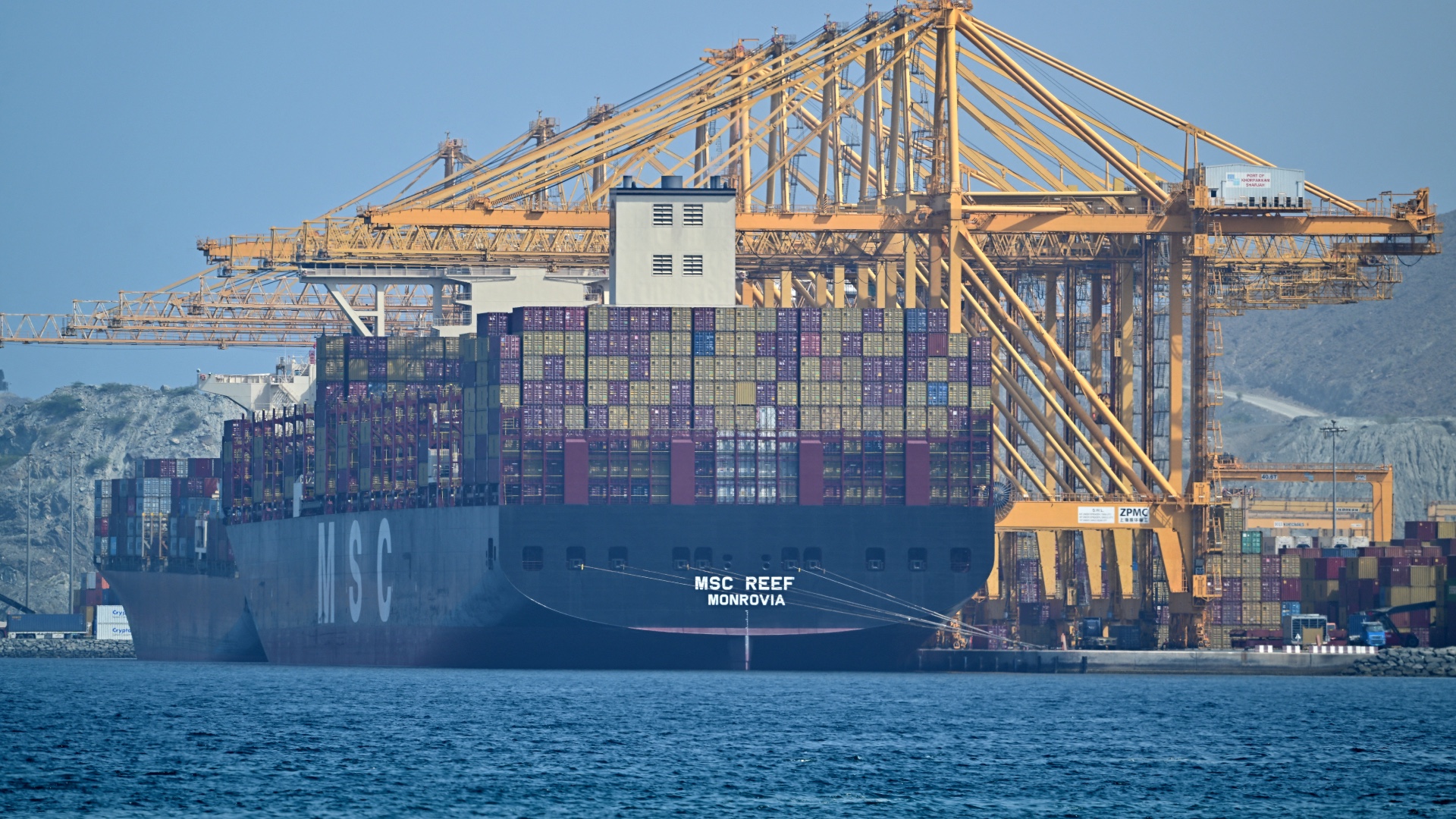
    After weeks of high-stakes diplomatic negotiations between the United States and Iran concluded in deadlock with no final agreement reached, the United States has moved to impose a full blockade on the Strait of Hormuz, one of the world’s most critical maritime chokepoints for global energy trade.

    Decades of simmering regional hostilities and unresolved conflicts have long created fragile conditions for commercial shipping through the strait, and this latest aggressive unilateral action has only amplified existing volatility. The waterway, which carries roughly a fifth of the world’s daily oil consumption and a large share of global liquefied natural gas trade, is central to the stability of international energy markets and the broader global economy.

    Analysts warn that reckless, unilateral moves to disrupt navigation through the strait will not only escalate regional tensions but also send shockwaves through global supply chains, drive up energy costs for consumers worldwide, and deepen existing economic uncertainty across both advanced and developing economies.

    Stakeholders across the global community have emphasized that the only sustainable path to restoring calm, reopening the strait for unimpeded commercial navigation, and preventing further escalation is a comprehensive de-escalation of hostilities between all involved parties in the region. Only through ending ongoing armed conflicts and returning to diplomatic dialogue can the Strait of Hormuz return to the peaceful, normal navigation that global trade depends on.

  • Lebanon’s Aoun rejects call with Netanyahu as Israel severs last bridge to the south

    Lebanon’s Aoun rejects call with Netanyahu as Israel severs last bridge to the south

    Diplomatic tensions have escalated across the Lebanon-Israel border this week after a senior anonymous Lebanese official confirmed that Lebanese President Joseph Aoun has ruled out any near-term phone conversation with Israeli Prime Minister Benjamin Netanyahu, quashing earlier reports of a planned historic first call between the two nations’ sitting leaders.

    Beirut has already communicated Aoun’s firm stance to the U.S. government ahead of a scheduled Thursday meeting between the Lebanese president and U.S. Secretary of State Marco Rubio, the official told Middle East Eye. This development comes just 48 hours after the U.S. hosted a landmark diplomatic meeting between Israeli and Lebanese ambassadors in Washington, the first formal diplomatic encounter between the two countries since 1993.

    In explaining the decision to reject the call, the senior official noted that Lebanon had already demonstrated flexibility by participating in the Washington talks, and would not take an additional step that would grant Netanyahu a domestic political and moral victory that he has failed to secure through military operations on Lebanese soil. The official added that a first-ever conversation between the two leaders would carry severe domestic political ramifications for Lebanon, and could even spark widespread internal unrest described as “an explosion in the country”.

    The planned call between Aoun and Netanyahu was first announced by U.S. President Donald Trump, shortly after Israel’s cabinet convened in a late Wednesday session to discuss a potential ceasefire agreement with Lebanese actors. For his part, Aoun has already clarified that any permanent ceasefire must act as a clear precursor to formal direct negotiations between Lebanon and Israel, a long-standing core position for the Lebanese government.

    According to Israeli outlet Haaretz, senior Israeli military command has received orders to prepare forces currently positioned in southern Lebanon for an impending ceasefire, which local reports indicate could take effect between 7 p.m. and midnight local time.

    Despite the ongoing ceasefire negotiations, Israeli military operations have continued and even intensified in some parts of Lebanon. On Thursday morning, shortly after Israeli media publicized reports of the planned Aoun-Netanyahu call, the Israeli Air Force carried out a strike that completely destroyed the Qasmiyeh bridge – the last remaining surface crossing connecting southern Lebanon to the country’s central and northern regions. Lebanon’s state-run National News Agency confirmed that two consecutive airstrikes hit the infrastructure, fully destroying the span connecting the Sour and Saida regions.

    The Qasmiyeh strike is part of a broader Israeli campaign to cut off access to southern Lebanon. Last month, the Israeli military announced it would target all bridges and crossings along the Litani River, a waterway that runs east-west across southern Lebanon, to isolate large swathes of the region from the rest of the country. In recent weeks, the military has carried through on this threat, damaging or destroying at least nine crossings over the river. The Qasmiyeh bridge was first heavily damaged in an Israeli strike in late March, but the Lebanese army completed partial repairs and reopened it to vehicle traffic just last week. Prior to Thursday’s second strike, Lebanese troops stationed near the crossing had already closed access roads in anticipation of an attack, according to local Lebanese outlet L’Orient Today. A Lebanese security source told Reuters Thursday’s strike “shattered” the crossing, leaving it irreparable.

    The ongoing violence has continued to claim civilian lives across Lebanon. At least 11 people, including women and children, were killed in a series of Israeli strikes across southern Lebanon on Thursday alone. A separate airstrike targeting a vehicle on the highway connecting Beirut to the Syrian capital Damascus also killed one additional person.

    Since the start of the current conflict, more than 2,100 Lebanese people have been killed in Israeli attacks, according to official Lebanese government data. The violence has disproportionately impacted healthcare and rescue workers: on Wednesday alone, four Lebanese rescue workers were killed and six wounded in three sequential targeted Israeli strikes on the southern village of Mayfadoun. Lebanese paramedic groups reported that the strikes targeted three successive waves of medics: the first team responded to calls from wounded civilians, the second came to aid injured first responders, and the third arrived to support both teams after the initial attacks. To date, the Lebanese health ministry confirms that 91 healthcare workers have been killed by Israeli forces in the six weeks since hostilities resumed.

    Hostilities between the two sides escalated in early March following a joint U.S.-Israeli strike that killed Iranian Supreme Leader Ali Khamenei, after which Lebanese armed group Hezbollah launched a cross-border rocket retaliatory attack on Israel. Israel has not carried out large-scale strikes on central Beirut since an 8 April attack that killed more than 350 people across Lebanon in a 10-minute wave of 100 strikes, but it continues to carry out daily deadly operations in southern Lebanon as its ground invasion progresses.

  • Activist Kemi Seba arrested in South Africa, faces extradition to Benin

    Activist Kemi Seba arrested in South Africa, faces extradition to Benin

    PRETORIA, South Africa — Law enforcement authorities in South Africa announced Thursday the arrest of high-profile Beninese dissident Kemi Seba, who is facing extradition to his home country on charges tied to last year’s unsuccessful coup attempt against Benin’s sitting government.

    Seba, 45, whose legal birth name is Stellio Gilles Robert Capo Chichi, was taken into custody during a coordinated police sting operation in Pretoria, South Africa’s administrative capital. He was arrested alongside his son, with both men facing two counts: conspiracy to commit a crime and violations of South African immigration law. The charges stem from allegations the pair plotted an irregular migration journey to Europe via neighboring Zimbabwe, authorities confirmed. A third individual accused of facilitating the plot by paying roughly 250,000 South African rand, equal to $15,000, to enable unauthorized cross-border movement is also in police custody.

    South African police confirmed the operation was carried out with direct support from Interpol, which had flagged Seba as an international fugitive wanted by Benin for crimes against the state. All three suspects made their first court appearance at Brooklyn Magistrates’ Court on Wednesday, where the judge scheduled the next hearing for April 20. Seba remains in pre-trial detention as South African authorities move forward with formal extradition proceedings.

    The legal pursuit of Seba traces back to December 2023, when Benin issued an international arrest warrant for the activist on charges of “incitement to rebellion.” The charge followed a viral social media video in which Seba publicly expressed support for the failed coup attempt against President Patrice Talon. In the clip, Seba incorrectly announced the coup had succeeded, hailed the attempt as “the day of liberation,” and labeled the soldiers who launched the putsch as “patriots.”

    Beyond his connection to last year’s coup attempt in Benin, Seba has built a regional profile as a vocal critic of French influence across West Africa, openly supporting a string of successful military coups in neighboring countries that brought pro-Russian military leaders to power. His long-standing anti-French rhetoric and advocacy for Russian-aligned governance in the region led to France revoking his French citizenship earlier this year in 2024.