分类: world

  • Wanted activist arrested in South Africa over support for Benin coup plot

    Wanted activist arrested in South Africa over support for Benin coup plot

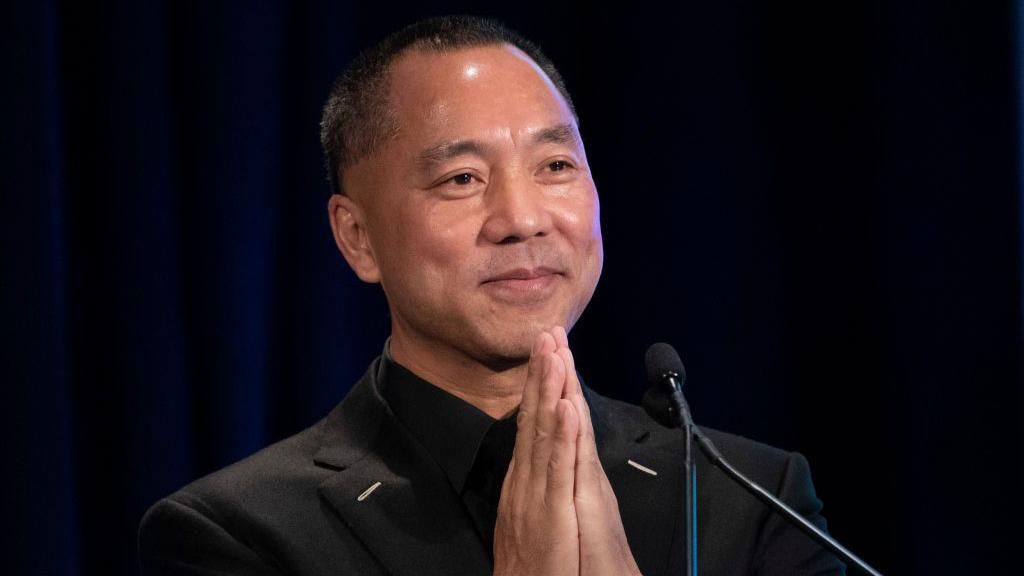
    In a coordinated sting operation carried out at a Pretoria shopping center earlier this week, South African law enforcement has detained high-profile French-born Beninese activist Kemi Seba, who was wanted internationally for charges tied to an alleged failed coup attempt in his home country of Benin. Alongside Seba, 45, officials also took his 18-year-old son and a third individual accused of acting as a paid smuggler into custody, as the group was reportedly plotting an escape route to Europe via neighboring Zimbabwe.

    Seba, whose full legal name is Stellio Gilles Robert Capo Chichi, has built a large international following as a vocal Pan-Africanist, known above all for his vehement opposition to long-standing French political and cultural influence across the African continent. He currently leads the Pan-Africanist Emergency NGO, an organization focused on advancing African sovereignty and cross-continental solidarity, and counts 1.5 million followers across his social media platforms.

    The arrest stems from charges filed by Beninese authorities, who accuse Seba of inciting rebellion after he openly supported a December 2025 attempted coup against Benin’s sitting government. The mutiny, carried out by rogue soldiers, was quickly defeated within hours with security support from Nigeria and France, but Seba released a public video calling the attempted overthrow a “day of liberation” for Benin, a former French colony. That statement prompted Benin to issue an international arrest warrant for the activist. Preliminary investigations from South African police also confirmed Seba is wanted on additional criminal charges related to crimes against the state in his native France.

    The smuggling facilitator detained alongside Seba and his son had reportedly been paid 250,000 South African rand, equal to roughly $15,000, to help the group cross the Limpopo River into Zimbabwe, from where they planned to travel onward to Europe, according to an official statement released by South African police this Thursday. All three detainees appeared in court on Wednesday and remain in police custody ahead of a next hearing scheduled for 20 April, with formal extradition proceedings already underway.

    Seba’s history of political activism has long been marked by controversy. He has been convicted multiple times in France on charges of inciting racial hatred, and has repeatedly faced accusations of anti-Semitism. In 2024, France stripped him of his citizenship, a move he responded to by publicly burning his French passport and declaring he had been “freed from the burden of French nationality.”

    He has also been repeatedly accused by Western officials of spreading Russian propaganda across the African continent. Thomas Gassilloud, who chaired France’s National Assembly defence committee in 2024, labeled Seba a mouthpiece for Russian interests, claiming he served a foreign power that actively fuels anti-French sentiment across West Africa. Later that same year, the ruling military junta in Niger granted Seba a diplomatic passport naming him a special adviser to junta leader Abdourahamane Tchiani. Like neighboring military-led governments in Mali and Burkina Faso, Niger’s junta cut military counterterrorism cooperation with France after seizing power and has aligned itself closely with Russia instead.

    As of this report, Seba has not issued any public comment responding to the charges against him.

  • Trump says war ‘close to over’, hints at fresh talks

    Trump says war ‘close to over’, hints at fresh talks

    A stark contradiction has emerged between U.S. President Donald Trump’s optimistic remarks on the US-Iran conflict and unconfirmed reports of expanding American military presence in the Middle East, as regional diplomatic efforts gain momentum to de-escalate tensions. Speaking in an interview with Fox Business host Maria Bartiromo on Wednesday, Trump asserted that the ongoing standoff with Tehran is ‘very close to being over’, adding that he believes Iranian authorities are eager to reach a negotiated settlement. He also dropped a hint that a new round of bilateral talks could be held in Pakistan in the coming days.

    While the Trump administration has not publicly confirmed any new troop movement, The Washington Post first reported that thousands of additional U.S. service members will be deployed to the region in the coming days to pressure Iran into accepting a deal favorable to Washington. Iran has yet to issue an official response to Trump’s talk of new negotiations, but Pakistan’s Ministry of Foreign Affairs released a public statement this week outlining an upcoming diplomatic tour by Pakistani Prime Minister Shehbaz Sharif, who will visit Saudi Arabia, Qatar, and Turkiye between April 15 and 18.

    Officials note the visits are centered on advancing bilateral cooperation and discussing regional peace and security priorities. A key stop on Sharif’s tour is Turkiye, where he will take part in the 5th Antalya Diplomacy Forum and hold one-on-one talks with Turkish President Recep Tayyip Erdogan and other visiting global leaders.

    The United Nations has already signaled cautious optimism for renewed negotiations. During a UN briefing on Tuesday, Secretary-General Antonio Guterres said that following a call with Pakistani Deputy Prime Minister Mohammad Ishaq Dar, the UN has received indications that US-Iran talks are highly likely to restart. Guterres also praised Pakistan for taking the diplomatic initiative to facilitate dialogue and advance peace in the Middle East.

    Alongside diplomatic efforts, the U.S. military has maintained aggressive pressure on Iran through a full naval blockade of Iranian ports along the Strait of Hormuz, a critical global chokepoint for oil and energy trade. In a post on X Wednesday, U.S. Central Command confirmed that American guided-missile destroyers are part of the blockade force, which enforces restrictions on all vessels entering or exiting Iranian coastal waters, regardless of their flag. ‘A blockade of Iranian ports has been fully implemented as US forces maintain maritime superiority in the Middle East,’ U.S. Central Command chief Admiral Brad Cooper said in a statement.

    Despite the formal blockade, however, two commercial vessels managed to reach Iranian ports this week by adjusting their automatic identification system (AIS) data, according to a Xinhua News Agency report citing maritime intelligence firm Lloyd’s List. The two Iran-flagged container ships, originally registered as heading for the major southern Iranian port of Bandar Abbas, changed their AIS destination to the broader label ‘PG Ports’, short for Persian Gulf Ports, and successfully completed their journey to Bandar Abbas on Tuesday.

    Iran’s ambassador to Pakistan, Reza Amiri Moghadam, has condemned the naval blockade as a dangerous and irresponsible act. He described the move as ‘a reckless misstep meant possibly for a dignified exit and face-saving’ for the United States, adding that the action is designed to create the narrative that Washington is imposing its will through military force. Moghadam argued the blockade serves to justify past military deployments, aggressive rhetoric, human casualties, and the heavy financial burden of the conflict on American taxpayers.

    As diplomatic teams work to finalize the date and location for the next round of US-Iran talks, the international community is also turning attention to another ongoing conflict in the Middle East: the standoff between Israel and Lebanon. A group of 10 countries including Canada, the United Kingdom, Australia, Japan, Brazil, Colombia, Indonesia, Jordan, Sierra Leone, and Switzerland issued a joint statement this week expressing deep concern over the deteriorating humanitarian situation and mass displacement crisis in Lebanon. Currently, Israeli and Lebanese delegations are holding direct ambassador-level talks at the U.S. State Department in Washington, with Israel pushing for the full disarmament of Hezbollah and Lebanon calling for an immediate ceasefire.

  • Conflict takes toll on historical sites

    Conflict takes toll on historical sites

    As armed conflict continues to roil the Middle East, a growing international outcry has emerged over the irreversible damage inflicted on centuries of cultural heritage, with at least 131 historical sites in Iran already harmed by joint US-Israeli strikes and escalating threats to culturally significant landmarks across Lebanon amid ongoing Israeli bombardment. Experts warn that this destruction goes far beyond what is commonly accepted as unavoidable collateral damage of war, representing a deliberate erasure of shared human history.

    Neda Zoghi, an Iranian artist and civilization scholar with a doctorate in Islamic art who currently serves as a researcher at the Asia West East Centre based in Kuala Lumpur, Malaysia, argues that the scale of destruction points to a coordinated attack on the identity of regional civilizations. “When over 100 cultural heritage sites and museums sustain deliberate or negligent destruction in a matter of weeks, we are confronting something far more calculated — the systematic dismantling of a civilization’s physical memory,” Zoghi explained in comments on the escalating crisis.

    Per a Friday report from Xinhua News Agency, Seyed Reza Salehi-Amiri, Iran’s Minister of Cultural Heritage, Tourism, and Handicrafts, confirmed that the damage spans 20 of Iran’s provinces, with 131 irreplaceable historical and civilization-related monuments sustaining harm from the strikes. Photographic evidence released in early April captured the devastating impact: visitors walking through the fire-scarred, structurally damaged interiors of Tehran’s iconic Golestan Palace, a UNESCO World Heritage Site and one of Iran’s most recognizable cultural landmarks, serve as a stark visual testament to the destruction.

    As strikes continue, concerns are also mounting that Lebanon’s rich array of cultural and historical properties face the same fate. The country’s millennia-long history has left it with thousands of archaeological sites, historic city centers, and heritage landmarks, many of which already sit in active conflict zones along the Lebanon-Israel border. Cultural heritage advocates warn that without urgent intervention to protect these sites, the region could lose irreplaceable pieces of global cultural history that have survived centuries of conflict and change.

    The destruction of cultural heritage during armed conflict is widely recognized as a violation of international humanitarian law, which explicitly prohibits deliberate attacks on historic monuments and cultural sites unless they are repurposed for military use. The scale of damage reported in Iran has drawn growing condemnation from cultural organizations across the globe, with many calling for an immediate halt to strikes that target or put at risk sites of cultural significance.

  • Calls intensify for urgent action to end Sudan war

    Calls intensify for urgent action to end Sudan war

    As Sudan’s devastating civil conflict enters its fourth year this week, humanitarian organizations from across the globe are ramping up calls for immediate, coordinated diplomatic intervention to end the fighting, warning that ongoing violence threatens to push one of the world’s worst displacement crises to even more catastrophic levels. Since fighting first broke out in April 2023, the conflict has already displaced an estimated 14 million people, according to senior officials from the United Nations High Commissioner for Refugees (UNHCR).

    Of that staggering total, 9 million people remain internally displaced within Sudan’s borders, while an additional 4.5 million have fled across the country’s borders to seek safety in neighboring nations including Egypt, Chad and others. Mamadou Dian Balde, UNHCR’s regional director for Eastern and Southern Africa, laid out the core demands of displaced Sudanese people in a public statement this week: an immediate end to hostilities, and urgent, scaled-up support to ease widespread suffering while diplomatic efforts progress.

    “Every corner of Sudan’s society has been upended by this war,” Balde explained, noting that students, working professionals, small business owners and ordinary families have been forced to abandon their homes with almost no advance warning, leaving behind nearly all their possessions and livelihoods. Beyond the immediate human cost, he warned that a lack of decisive international engagement risks creating broader regional instability, and could push growing numbers of displaced people to seek safety far beyond Africa’s borders, including in Europe and the Gulf Cooperation Council states.

    Alongside the displacement crisis, children and women are bearing the brunt of the conflict, aid groups warn. Development NGO Plan International released a new assessment Wednesday estimating that 12 million Sudanese people — nearly a quarter of the country’s entire pre-war population — face heightened risk of gender-based violence, including widespread rape and sexual assault. The organization confirmed that repeated targeted attacks on healthcare facilities across the country have gutted medical systems’ ability to care for survivors, leaving most without access to life-saving emergency care, mental health support or legal recourse to hold perpetrators accountable.

    The conflict has also collapsed Sudan’s entire education system, leaving more than 14 million children — the majority of them girls — unable to attend classes, with no clear timeline for when schools will be able to reopen safely. “This conflict has not just destroyed buildings and infrastructure — it has destroyed entire communities and shattered the futures of generations of young Sudanese,” said Mohamed Kamal, Plan International’s country director for Sudan. “If the global community fails to act now, we will be living with these consequences for decades to come.”

    Across the country, an estimated 30 million people require immediate life-saving humanitarian assistance, but the international response has been severely hampered by a crippling funding shortfall. In February, a coalition of humanitarian agencies launched a coordinated regional response plan covering seven host countries, asking for $1.6 billion to fund food aid, emergency shelter, clean water access and education support for displaced Sudanese communities. As of this month, that appeal is only 10 percent funded, far less than the amount needed to address the full scale of the crisis, Balde confirmed.

    “Without immediate, sustained financial support, countless lives — and the entire futures of girls and young women across Sudan — will be lost,” Kamal added.

    The International Rescue Committee (IRC) has sounded the alarm over the full human cost of the conflict, confirming that more than 150,000 people have been killed since fighting began in 2023. Today, Sudan accounts for 10 percent of all unmet global humanitarian needs, the organization said.

    UNICEF has also highlighted the catastrophic toll the conflict has taken on children, who have faced unrelenting violence and displacement for three years. “For three years, children across Sudan have been killed, injured and displaced at staggering levels,” said Catherine Russell, UNICEF’s executive director. “Their homes, their schools and their hospitals continue to come under attack. There is no justification for violence against children. It reflects a collective failure by all parties to this conflict to uphold and protect the most basic human rights of the youngest and most vulnerable Sudanese.”

  • Turkish police order 83 arrests over online praise for school shootings

    Turkish police order 83 arrests over online praise for school shootings

    Turkey has been rocked by two fatal school shootings that unfolded within 24 hours this week, leaving at least nine people dead and dozens more injured, prompting a sweeping national crackdown on harmful online content linked to the attacks.

    The deadliest of the two attacks took place on Wednesday at Ayser Calik Secondary School in the southern Turkish province of Kahramanmaras. According to official statements from local authorities, eight students and one teacher lost their lives in the violence, while 13 other people were wounded, six of whom remain in critical condition. The attacker, a 14-year-old student at the school, was also killed during the response to the incident.

    Investigators have confirmed that the shooting was not a spontaneous act of violence. Prosecutors overseeing the case revealed that a premeditated plan was recovered during a forensic examination of the suspect’s digital devices. A document dated April 11, 2026, found on the teen’s computer explicitly outlined his intention to carry out a ‘major operation’ in the near future. Police also confirmed that the suspect had used an image referencing Elliot Rodger — the 22-year-old American perpetrator of a 2014 mass shooting in California that left six dead — as his profile photo on the messaging app WhatsApp.

    Local media reports add that the teen carried five firearms and seven ammunition magazines into the school, opening fire inside two separate classrooms. As of Thursday, funeral services were underway for victims at Kahramanmaras’s main central mosque, with senior Turkish government ministers scheduled to attend the ceremonies to honor the lives lost. Family members of victims have described the chaos and grief that followed the attack: one victim’s aunt told the BBC she learned her 10-year-old niece had been killed only after the child’s name was read out in rolling news coverage.

    The Kahramanmaras attack came just one day after a separate school shooting in the country’s southeast. On Tuesday, an ex-student in his late teens opened fire at Ahmet Koyuncu Vocational and Technical Anatolian High School in the Siverek district, injuring 16 people. Local governor Hasan Şildak reported that the attacker fired a shotgun indiscriminately before taking his own life at the scene.

    In the wake of the two back-to-back tragedies, Turkish law enforcement has launched a major crackdown on social media content deemed harmful or inciting violence. Police confirmed this week that arrest warrants have been issued for 83 people accused of posting controversial and dangerous content online that praises the shootings and the attackers. Authorities say the posts ‘engaged in praising crime and criminals and negatively affecting public order.’ As part of the operation, access to 940 social media accounts has been blocked and 93 Telegram groups linked to the problematic content have been permanently taken down.

  • Kazakhstan sentences 19 for protest against repression in China’s Xinjiang region

    Kazakhstan sentences 19 for protest against repression in China’s Xinjiang region

    In a landmark decision that human rights advocates call an unprecedented shift in Central Asian geopolitical alignment, a Kazakh court has convicted 19 ethnic Kazakh activists who staged a protest against China’s long-running crackdown in the Xinjiang Uyghur Autonomous Region in late 2023. The ruling marks the harshest crackdown to date on voices critical of Chinese policy in the neighboring country, according to regional experts and rights watchdogs.

    The November 2023 demonstration, held near Kazakhstan’s border with China, saw the activists call for the release of a Kazakh citizen detained by Chinese authorities in Xinjiang. During the protest, participants burned Chinese national flags and portraits of Chinese leader Xi Jinping, actions that Beijing later decried as a deliberate provocation. All 19 individuals convicted are citizens of Kazakhstan.

    Court documents and local media reports confirm the sentencing: 11 of the activists received five-year prison terms on charges of “inciting discord,” while the remaining eight were handed down suspended sentences with strict movement restrictions. Shinquat Baizhan, the legal representative for the convicted group, has publicly verified these details.

    Background to the verdict stretches back to 2017, when the Chinese government launched a sweeping security campaign in Xinjiang that interned more than one million Uyghurs, Kazakhs and other Muslim-majority ethnic minority groups in mass detention camps and prisons. While Beijing claims the campaign targeted extremism and has since wound down large-scale detentions, the region remains under heavy authoritarian control, with severe constraints on religious practice, cultural expression and cross-border movement. More than one million ethnic Kazakhs reside in Xinjiang, with thousands detained and countless others separated from family members across the border in Kazakhstan.

    For Kazakhstan, a Central Asian nation of 19 million people that counts China as its largest trading and investment partner, Xinjiang policy has long been a sensitive diplomatic issue. Yalkun Uluyol, a China researcher with Human Rights Watch, explained that Kazakh authorities launched criminal probes into the protesters only after receiving a formal diplomatic protest from the Chinese consulate in Almaty, Kazakhstan’s largest commercial city. The Associated Press obtained and reviewed the diplomatic note, in which Beijing called the demonstration “an open provocation against the national dignity of the People’s Republic of China and an insult to the Chinese Communist Party and the Chinese people.”

    When contacted for comment on the verdict, China’s Ministry of Foreign Affairs framed the proceedings as an exclusive internal matter for Kazakhstan, adding that the country is a “friendly neighbor” that “understands China’s position on Xinjiang governance.” Kazakhstan’s foreign ministry declined to provide any comment on the case.

    The convicted protesters are all affiliated with Atajurt, a grassroots human rights organization that advocates for ethnic Kazakhs affected by repression in Xinjiang. The group has long operated under pressure in Kazakhstan, an authoritarian state that has little tolerance for domestic dissent. In 2019, authorities arrested Atajurt founder Serikzhan Bilash, forcing him into exile after he signed an agreement pledging to end all political activity. Until recently, however, the Kazakh government allowed limited Atajurt operations, acknowledging widespread public sympathy in the country for ethnic Kazakhs suffering persecution across the border.

    That quiet tolerance has now evaporated, Uluyol said, as Kazakhstan deepens its economic and political ties to Beijing. “This is unprecedented. It signals that Kazakhstan is willing to sacrifice freedom of its people to maintain good relations with Beijing,” he noted. Prior to this ruling, individual activists speaking out on Xinjiang had faced pressure, but rights groups confirm this is the first time such a large group of activists has been given prison sentences for their advocacy.

    Exiled Atajurt founder Bilash, now residing in the United States, warned the convictions will have far-reaching consequences for human rights documentation and support in Xinjiang. For years, the group has provided financial aid to families of detained ethnic Kazakhs, submitted testimonial evidence to the United Nations and foreign embassies, and collected hundreds of first-hand accounts from people searching for missing relatives detained in China.

    “The world will lose more than just a human rights organization; it will lose the biggest window into the humanitarian disaster in neighboring Xinjiang,” Bilash said.

  • War memorial visit a reminder of sacrifice, unity

    War memorial visit a reminder of sacrifice, unity

    Ahead of the 2026 Tengchong Mt Gaoligong Ultra marathon held in Yunnan, Southwest China, 10 American runners and their family members made a meaningful stop that went far beyond pre-race preparation: a visit to a local war memorial honoring the Chinese People’s War of Resistance Against Japanese Aggression (1931–1945). The trip offered the group a deeply personal look at the shared wartime history that binds China and the United States, a history too often overlooked in modern discourse.

    The memorial, located in the strategic border city of Tengchong, centers its exhibits on two defining chapters of WWII history in the region: the campaigns of the Chinese Expeditionary Force, which fought to retake the vital China-Myanmar supply line from Japanese occupation, and the legacy of the Flying Tigers, the official American Volunteer Group that played a critical role in the Allied war effort in Asia. Formed in 1941, the Flying Tigers conducted dangerous supply runs along the treacherous “Hump” air route connecting India to China’s Kunming and Chongqing, delivering critical resources to Chinese and American ground forces fighting on the front lines.

    For 80-year-old Bob Becker, whose father and uncle both served in World War II in the region, the visit was far more than a historical tour. Walking through the memorial’s halls, studying well-preserved flight suits, personal artifacts, and candid photographs of American airmen interacting with local Chinese civilians, as a guide detailed how Flying Tigers members fought side-by-side with Chinese troops and civilians, Becker was overcome with emotion. “It was very impressive and I got emotional. I felt a real connection because my father and my uncle both fought in World War II here,” he said. He added that he was deeply moved by the selfless spirit of all those who fought, their commitment to standing for justice, and their dedication to the greater good.

    Becker shared a hopeful vision for future cross-cultural exchange, saying he hopes more Americans will travel to the site to experience these shared historical stories firsthand, and come away with a deeper understanding of the long-standing historic bond between the people of China and the United States.

    Other participants echoed the meaning of the experience. Greg Pressler, another participating American runner, stressed that the visit reinforced why collective memory of war is so critical. “When we forget history, we are at risk of repeating it,” he noted. In an era of growing global instability, Pressler said hearing accounts of sacrifice from both Chinese people and foreign volunteers who came to China’s aid was incredibly moving. The memorial, he added, makes clear just how much can be achieved when people set aside their differences to stand with one another in need.

    For endurance athlete David Green, the trip even renewed a sense of optimism. Learning the detailed history of how the two nations collaborated closely to defeat aggression offered a powerful example of what can be accomplished when nations work toward a common goal. “It renews my hope,” he said, “that people, even from different backgrounds, can unite together.”

  • War in the Middle East: latest developments

    War in the Middle East: latest developments

    The ongoing Middle East conflict, triggered by US-Israeli airstrikes on Tehran that began on February 28, has produced a wave of interconnected political, economic and military developments across the globe, spanning diplomatic efforts, energy market shifts, security operations and financial market reactions.

    One of the most immediate points of confusion emerged following remarks by former US President Donald Trump, who claimed that Israeli and Lebanese leaders planned to hold direct talks on Thursday. However, a senior anonymous official source confirmed to Agence France-Presse that Lebanese authorities have no knowledge of any scheduled contact with Israel, and no official notification of such negotiations has been delivered through formal diplomatic channels.

    As global energy markets face heightened volatility tied to the conflict, the Australian government has moved quickly to shore up its strained domestic fuel reserves. Prime Minister Anthony Albanese announced Thursday that Canberra has finalized a deal to secure an extra 100 million liters of diesel supplied by Brunei and South Korea, addressing growing concerns over supply chain disruptions tied to Middle East hostilities.

    For the global semiconductor industry, Taiwanese manufacturing giant TSMC, the world’s largest contract chipmaker, moved to calm investor fears this week. The company stated that it does not anticipate near-term disruptions to its access to critical industrial materials including helium and hydrogen, even as the conflict disrupts regional trade routes.

    On the security front, Iranian state media outlet IRNA reported that the country’s Revolutionary Guards have detained four individuals suspected of espionage on behalf of Israel’s Mossad intelligence agency, per an official statement from the elite military force.

    Pakistan is actively pushing for diplomatic de-escalation ahead of a potential second round of peace talks between the US and Iran. Pakistani Prime Minister Shehbaz Sharif confirmed he held a meeting with Saudi Arabia’s de facto leader Crown Prince Mohammed bin Salman in Jeddah, as part of a regional tour that also includes Qatar. Both Saudi Arabia and Qatar have been targeted by Iranian retaliatory strikes following the initial US-Israeli attacks on Tehran that sparked the full-scale war. Sharif wrote on social platform X that he reaffirmed Pakistan’s unwavering commitment to facilitating dialogue between Washington and Tehran, with the goal of reaching a lasting peace agreement for the region.

    Tensions remain high around the Strait of Hormuz, the world’s most critical chokepoint for global oil and gas exports. Top military adviser to Iran’s supreme leader Mojtaba Khamenei issued a stark warning: if US forces launch a ground invasion of Iran, Iranian forces will take American troops hostage, and will sink any US vessels that enforce a military blockade on the strait. Hardline Iranian politician Mohsen Rezaei doubled down on the threat, claiming that a US ground invasion would play into Iran’s hands, saying “we would take thousands of hostages, and then for each hostage we would get a billion dollars”.

    The US has expanded its economic pressure on Iran this week, unveiling a new round of sanctions targeting more than 20 individuals tied to Iranian oil transportation, alongside multiple companies and tankers linked to the shipping network run by petroleum magnate Mohammad Hossein Shamkhani. Shamkhani is the son of Ali Shamkhani, a senior security official and adviser to Iranian supreme leader Ali Khamenei; both father and son were killed in the opening US-Israeli airstrikes on February 28 that launched the war. US Treasury Secretary Scott Bessent said in an official statement that the Treasury department is moving aggressively under its “Economic Fury” campaign to target regime elites who profit at the expense of ordinary Iranian citizens.

    The humanitarian toll of the conflict is set to grow sharply, according to World Bank Chief Economist Indermit Gill. Speaking to AFP, Gill warned that global ripple effects from the war could push an additional 60 million people into acute food insecurity. Gill noted that 300 million people already face severe hunger globally, and that figure could jump by 20% very rapidly as the conflict’s economic and trade disruptions spread.

    Despite the rising humanitarian risks, global stock markets have rallied sharply this week on growing optimism for a diplomatic breakthrough. Japanese stock indices hit an all-time record high on Wednesday, driven by investor hopes that the US and Iran will extend their existing ceasefire to allow for further talks to end the war and reopen the Strait of Hormuz. All major Wall Street indices also closed at record highs the same day.

    Israeli Prime Minister Benjamin Netanyahu reaffirmed alignment with US goals in a televised address Wednesday, saying that Israel and the United States share identical objectives when it comes to containing Iran. “We want to see enriched material removed from Iran; we want to see the elimination of enrichment capability within Iran; and, of course, we want to see the (Hormuz) strait reopened,” Netanyahu stated.

  • Pope heads to epicenter of Cameroon’s separatist conflict to preach message of peace

    Pope heads to epicenter of Cameroon’s separatist conflict to preach message of peace

    YAOUNDE, Cameroon – In a high-stakes visit focused on reconciliation and accountability, Pope Leo XIV has arrived in Cameroon as part of his groundbreaking four-nation tour of Africa, marking the first papal visit to the continent by the first American pope. His journey centers on Bamenda, the heart of a long-simmering separatist conflict in Cameroon’s Anglophone northwest that humanitarian organizations have labeled one of the globe’s most underreported and neglected humanitarian crises.

    The 93-year-old pontiff is scheduled to lead an interfaith peace gathering Thursday in Bamenda, a city located just kilometers from Cameroon’s western border with Nigeria. The dialogue will bring together leaders from across Cameroon’s religious and traditional communities, including a Mankon traditional ruler, a Presbyterian Church moderator, a Muslim imam, and a Catholic nun. The gathering is designed to amplify the work of local interfaith movements that have spent years working to end the violence and support thousands of civilians left traumatized by the conflict. Following the peace meeting, Pope Leo will celebrate an open-air Mass for local residents.

    The conflict, which stretches back to 2017 when separatists launched an armed rebellion for an independent Anglophone state called Ambazonia, has deep roots in Cameroon’s colonial history. After World War I, the former German colony of Cameroon was split into two territories administered by Britain and France. In a 1961 United Nations-supervised referendum, the two British-administered Anglophone regions voted to unite with the independent French-speaking Republic of Cameroon. Separatist leaders argue that for decades, the Anglophone minority has faced systematic political and economic marginalization at the hands of the country’s French-speaking majority. The ongoing conflict has killed more than 6,000 people and forced more than 600,000 residents to flee their homes, per data from the International Crisis Group, even as global media and diplomatic attention has largely overlooked the crisis.

    In a notable gesture ahead of the pope’s visit, separatist military factions announced a three-day ceasefire to facilitate safe passage for the papal delegation and local worshippers. Lucas Asu, spokesperson for the separatist Unity Alliance, framed the pause in fighting as a demonstration of the movement’s commitment to humanitarian principle even amid active conflict. “This pause reflects a deliberate commitment to responsibility, restraint and respect for human dignity, even in the context of ongoing conflict,” Asu said, adding that the pope’s visit should remain a spiritual rather than political event, and should not be interpreted as an endorsement of Cameroon’s sitting government.

    Upon his arrival in Cameroon Wednesday, the first stop of his leg in the country, Pope Leo delivered a blunt address to the nation’s leadership, calling for an end to systemic graft in the resource-rich nation. He directly urged that “the chains of corruption” be broken, in a public rebuke to long-ruling President Paul Biya. At 93, Biya is the world’s oldest sitting head of state, having held uninterrupted power since 1982. He secured a disputed seventh term in 2018 and claimed victory in last year’s contested election that extended his rule to an eighth term, a result that opposition leaders rejected as fraudulent.

    While the frequency of deadly attacks has dropped in recent years, the conflict remains far from resolved. International-mediated peace negotiations between the Cameroonian government and separatist factions have stalled, with both sides repeatedly accusing the other of negotiating in bad faith. This visit marks a rare moment of global attention on a crisis that has spent years off the international agenda, with hopes among local peacebuilders that the papal spotlight will reinvigorate efforts toward a lasting negotiated settlement.

    This Associated Press religion coverage is produced through AP’s collaboration with The Conversation US, with funding from Lilly Endowment Inc. AP retains sole editorial responsibility for all content.

  • Russian missiles and drones bombard Ukraine in hourslong attack, killing at least 16 people

    Russian missiles and drones bombard Ukraine in hourslong attack, killing at least 16 people

    On Thursday, Ukrainian officials confirmed that Russian forces have carried out the largest multi-wave aerial assault on the country in nearly two weeks, a relentless hours-long attack that targeted civilian population centers across Ukraine from daylight through the overnight hours. The bombardment has left at least 16 civilians dead and more than 80 others wounded, according to official casualty updates.

    Authorities reported that Russian forces deployed nearly 700 drones alongside dozens of ballistic and cruise missiles for the assault, with nearly all strikes focused on civilian infrastructure and residential areas. This large-scale attack fits a consistent pattern of Moscow’s military strategy since launching its full-scale invasion of Ukraine more than four years ago: daily small-scale strikes on civilian areas, punctuated periodically by massive, widespread barrages. To date, the United Nations has recorded more than 15,000 confirmed civilian fatalities from these ongoing Russian airstrikes and bombardments across Ukraine.

    The latest attack comes just days after Ukrainian President Volodymyr Zelenskyy completed a urgent 48-hour diplomatic tour of Germany, Norway, and Italy, where his core mission was securing additional air defense systems to counter Russian aerial assaults. Ukraine has repeatedly raised alarms that existing stockpiles of critical American-made air defense interceptors are being depleted faster than new supplies can arrive, exacerbated by diversion of military resources to confront the ongoing conflict in Iran. Kyiv has also publicly opposed a recent temporary U.S. waiver on Russian oil sanctions, arguing the exemption generates critical revenue that the Kremlin uses to fund its invasion.

    In a post on the social platform X following the attack, Zelenskyy emphasized, “Another night has proven that Russia does not deserve any easing of global policy or lifting of sanctions.” The Ukrainian president expressed gratitude to Germany, Norway, and Italy for the new air defense support agreements reached during his trip, adding that Ukrainian officials are currently negotiating additional air defense supplies with the Netherlands. At the same time, he acknowledged that some allied partner nations have failed to deliver on previously made military support pledges. “I have instructed the Commander of the Air Force to contact those partners who earlier committed to providing missiles for Patriot and other systems,” Zelenskyy stated.

    Casualty reports from across the country reflect the broad impact of the barrage. Four civilians, including a 12-year-old child, were killed in Kyiv, with more than 50 others injured in the capital. Tetiana Sokol, a 54-year-old Kyiv resident, described the terror of the attack to the Associated Press: two missiles struck just blocks from her home, forcing her and her dog to take shelter in an interior hallway as blast waves shattered windows and lit up the night sky. “On the third attack everything broke, everything flew, we were shocked, we didn’t know where to run. I grabbed whatever came to hand and ran away with the dog,” she said. “I still can’t find the cats in the house, they climbed out somewhere, I don’t even know. No windows, nothing, the dog is still walking around in stress.”

    Beyond Kyiv, nine civilians were killed and 23 wounded in the southern port city of Odesa, three killed and roughly 36 injured in the central Dnipro region, and one civilian killed in the southern Zaporizhzhia region. Ukrainian Foreign Minister Andrii Sybiha condemned the attack in a post on X, writing, “Such attacks cannot be normalized. These are war crimes that must be stopped and their perpetrators held to account.”

    Ukraine’s Air Force reported that its air defense systems successfully intercepted or disabled 667 of the 703 incoming Russian targets, including 636 Iranian-made Shahed drones and other uncrewed aerial vehicles. Despite this high interception rate, 20 attack drones and 12 missiles still reached their targets, striking 26 populated and civilian locations across the country. The Associated Press continues to cover developments in the Russia-Ukraine war at its dedicated hub.