Diplomatic tensions have escalated across the Lebanon-Israel border this week after a senior anonymous Lebanese official confirmed that Lebanese President Joseph Aoun has ruled out any near-term phone conversation with Israeli Prime Minister Benjamin Netanyahu, quashing earlier reports of a planned historic first call between the two nations’ sitting leaders.
Beirut has already communicated Aoun’s firm stance to the U.S. government ahead of a scheduled Thursday meeting between the Lebanese president and U.S. Secretary of State Marco Rubio, the official told Middle East Eye. This development comes just 48 hours after the U.S. hosted a landmark diplomatic meeting between Israeli and Lebanese ambassadors in Washington, the first formal diplomatic encounter between the two countries since 1993.
In explaining the decision to reject the call, the senior official noted that Lebanon had already demonstrated flexibility by participating in the Washington talks, and would not take an additional step that would grant Netanyahu a domestic political and moral victory that he has failed to secure through military operations on Lebanese soil. The official added that a first-ever conversation between the two leaders would carry severe domestic political ramifications for Lebanon, and could even spark widespread internal unrest described as “an explosion in the country”.
The planned call between Aoun and Netanyahu was first announced by U.S. President Donald Trump, shortly after Israel’s cabinet convened in a late Wednesday session to discuss a potential ceasefire agreement with Lebanese actors. For his part, Aoun has already clarified that any permanent ceasefire must act as a clear precursor to formal direct negotiations between Lebanon and Israel, a long-standing core position for the Lebanese government.
According to Israeli outlet Haaretz, senior Israeli military command has received orders to prepare forces currently positioned in southern Lebanon for an impending ceasefire, which local reports indicate could take effect between 7 p.m. and midnight local time.
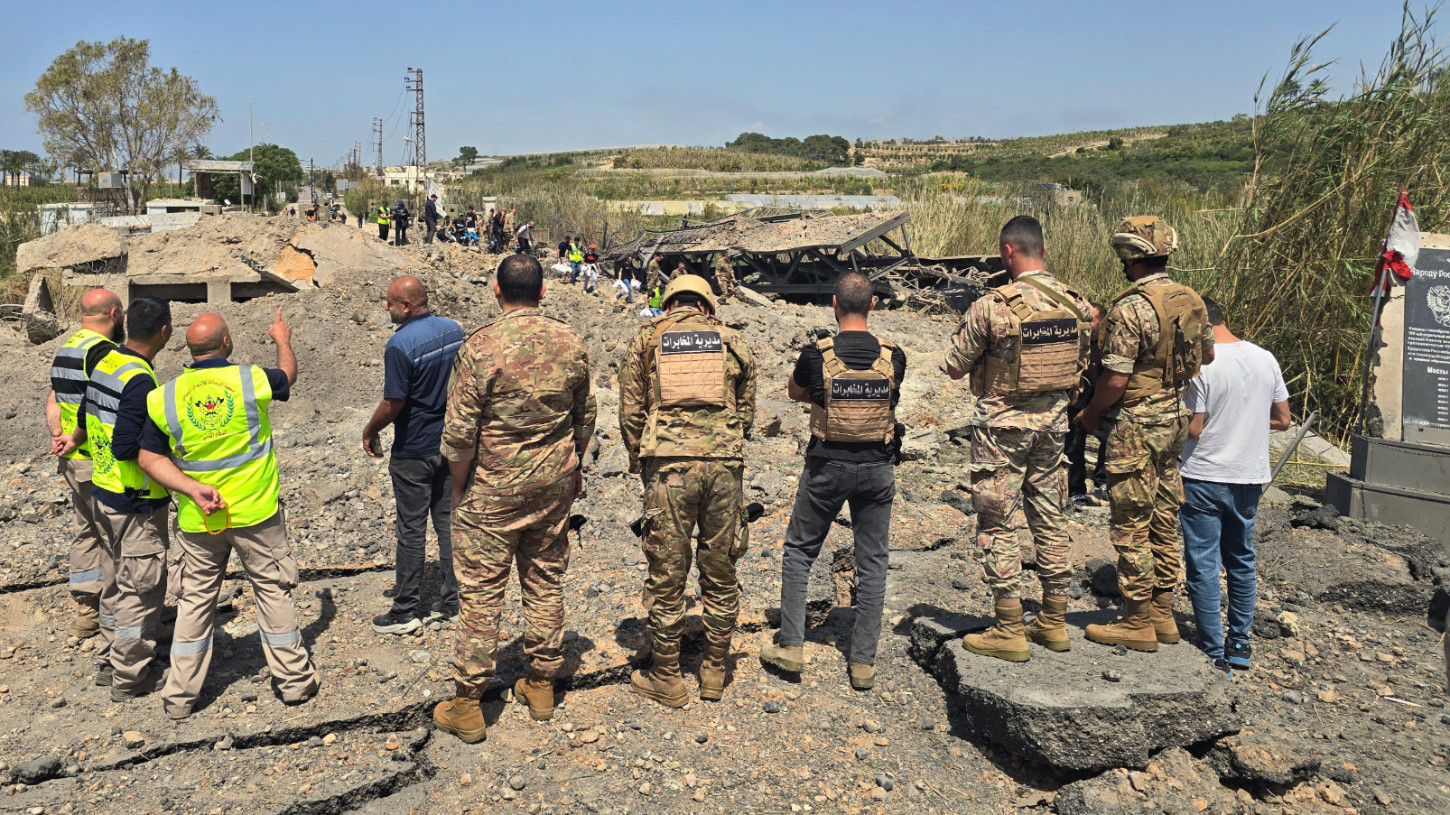
Despite the ongoing ceasefire negotiations, Israeli military operations have continued and even intensified in some parts of Lebanon. On Thursday morning, shortly after Israeli media publicized reports of the planned Aoun-Netanyahu call, the Israeli Air Force carried out a strike that completely destroyed the Qasmiyeh bridge – the last remaining surface crossing connecting southern Lebanon to the country’s central and northern regions. Lebanon’s state-run National News Agency confirmed that two consecutive airstrikes hit the infrastructure, fully destroying the span connecting the Sour and Saida regions.
The Qasmiyeh strike is part of a broader Israeli campaign to cut off access to southern Lebanon. Last month, the Israeli military announced it would target all bridges and crossings along the Litani River, a waterway that runs east-west across southern Lebanon, to isolate large swathes of the region from the rest of the country. In recent weeks, the military has carried through on this threat, damaging or destroying at least nine crossings over the river. The Qasmiyeh bridge was first heavily damaged in an Israeli strike in late March, but the Lebanese army completed partial repairs and reopened it to vehicle traffic just last week. Prior to Thursday’s second strike, Lebanese troops stationed near the crossing had already closed access roads in anticipation of an attack, according to local Lebanese outlet L’Orient Today. A Lebanese security source told Reuters Thursday’s strike “shattered” the crossing, leaving it irreparable.
The ongoing violence has continued to claim civilian lives across Lebanon. At least 11 people, including women and children, were killed in a series of Israeli strikes across southern Lebanon on Thursday alone. A separate airstrike targeting a vehicle on the highway connecting Beirut to the Syrian capital Damascus also killed one additional person.
Since the start of the current conflict, more than 2,100 Lebanese people have been killed in Israeli attacks, according to official Lebanese government data. The violence has disproportionately impacted healthcare and rescue workers: on Wednesday alone, four Lebanese rescue workers were killed and six wounded in three sequential targeted Israeli strikes on the southern village of Mayfadoun. Lebanese paramedic groups reported that the strikes targeted three successive waves of medics: the first team responded to calls from wounded civilians, the second came to aid injured first responders, and the third arrived to support both teams after the initial attacks. To date, the Lebanese health ministry confirms that 91 healthcare workers have been killed by Israeli forces in the six weeks since hostilities resumed.
Hostilities between the two sides escalated in early March following a joint U.S.-Israeli strike that killed Iranian Supreme Leader Ali Khamenei, after which Lebanese armed group Hezbollah launched a cross-border rocket retaliatory attack on Israel. Israel has not carried out large-scale strikes on central Beirut since an 8 April attack that killed more than 350 people across Lebanon in a 10-minute wave of 100 strikes, but it continues to carry out daily deadly operations in southern Lebanon as its ground invasion progresses.