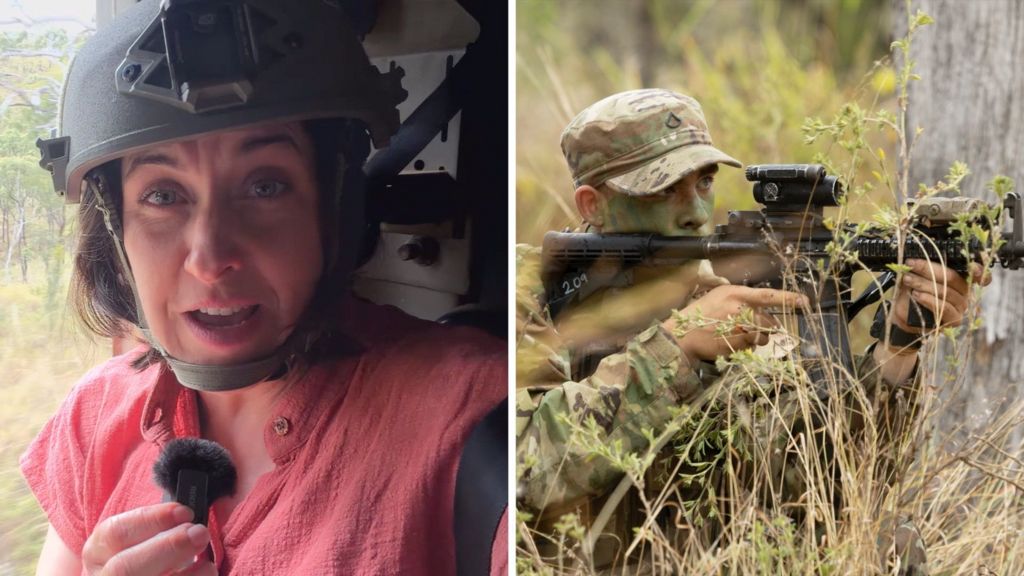
Deep within the rugged, sparsely populated heart of Australia’s inland bushland, an unusual military presence has drawn global attention: soldiers from the United States and Japan are conducting large-scale training exercises thousands of kilometers away from the world’s active conflict zones, on the territory of a nation that is not currently engaged in any open war. This exercise raises pressing questions for international observers about the strategic purpose behind the deployment, and what it signals about shifting security dynamics across the Indo-Pacific region. As the BBC’s Katy Watson reports, the choice of remote Australia as a training ground is no random decision. The vast, unpopulated expanses of the Australian outback offer unique logistical advantages that are hard to replicate in more crowded regions of the Asia-Pacific. Unlike the densely populated coastal areas where most military activity in the region is concentrated, the remote bush provides ample space to test large-scale maneuvers, live-fire exercises, and combined arms operations without disrupting civilian communities. Beyond geographic convenience, the location also carries significant strategic weight. Australia has deepened its security cooperation with both the United States and Japan in recent years, as part of a broader push to reinforce deterrence and interoperability across allied nations in the Indo-Pacific. The joint training effort serves multiple goals: it allows troops from three different nations to practice coordinating operations in unfamiliar terrain, strengthens personal and professional bonds between military command structures, and sends a clear signal of unified commitment to maintaining a free and open regional order. For Australia, hosting the drills also underscores its role as a key hub for allied military activity in the southern Indo-Pacific, even as the country avoids direct participation in ongoing conflicts thousands of kilometers to its north. Military analysts note that exercises like this have grown in frequency and scope in recent years, reflecting rising concerns among allied nations over shifting regional security challenges. While the training is billed as a routine defensive exercise, it comes at a moment of heightened geopolitical tension across the Indo-Pacific, making the deployment notable for both its timing and its composition of troops from three major regional powers.
分类: world
-
How six months in Israeli jail changed this Palestinian journalist’s life forever
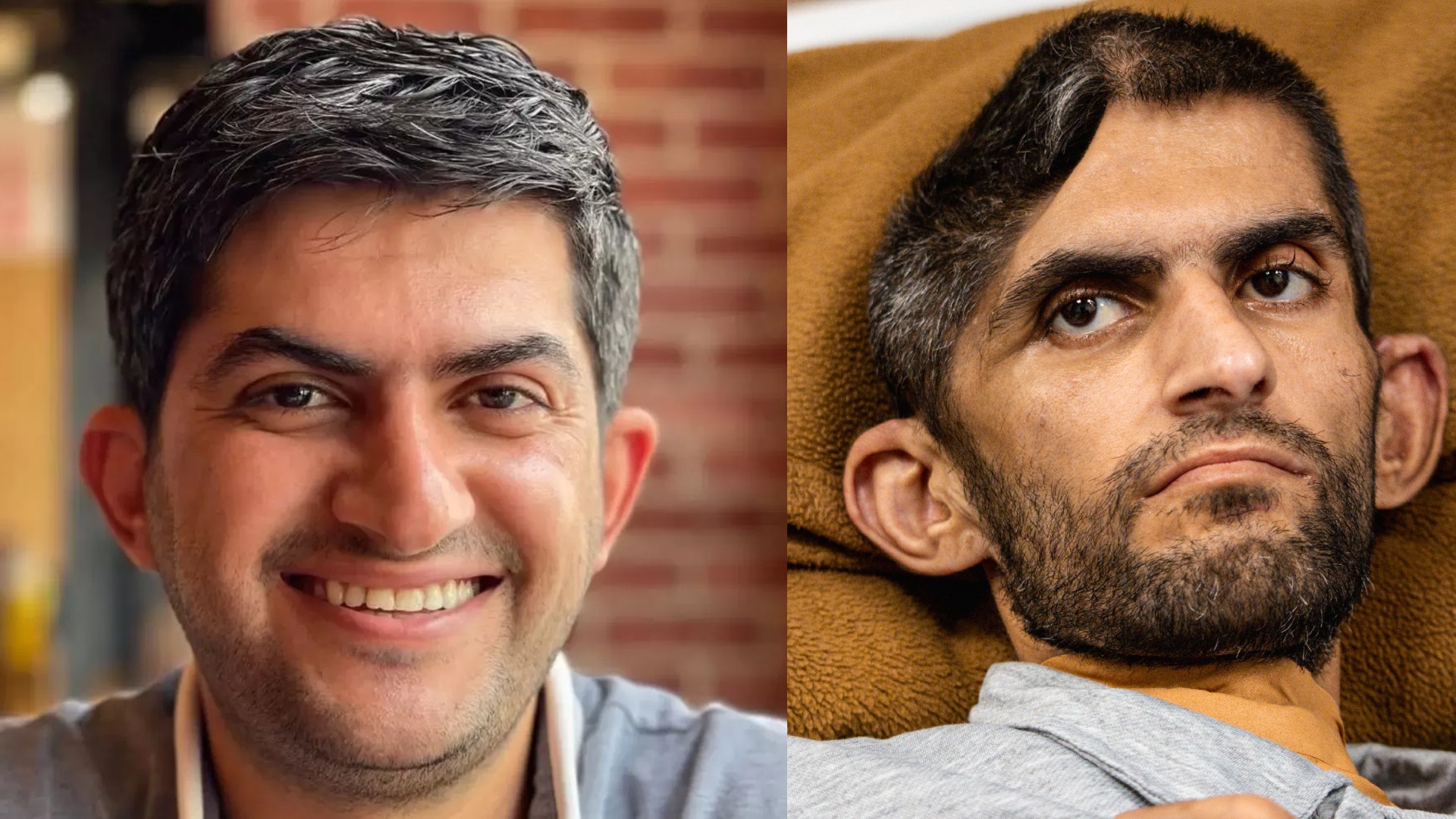
When Mujahid Bani Mufleh saw his own before-and-after photographs following six months of uncharged detention in Israeli custody, the transformation shocked even him. Today, five months after his release, the 36-year-old father of three and veteran Palestinian journalist from Beita, a town in the occupied West Bank near Nablus, remains hospitalized, fighting a long, uphill recovery that grew dire just days after he walked free.
Arrested at his family home on June 28, 2025, Bani Mufleh was held under Israel’s controversial administrative detention policy: a practice that allows authorities to imprison Palestinians indefinitely without charge or trial, relying on secret evidence that neither detainees nor their legal representatives are permitted to review. Before his arrest, he had only a pre-existing diagnosis of diabetes and was otherwise in good health. But what he encountered behind bars – systematic torture, repeated physical abuse, and deliberate medical neglect – shattered his health permanently.
Two days after his release on January 12, 2026, Bani Mufleh was rushed to the hospital with a severe brain hemorrhage that triggered a stroke, a medical crisis he attributes directly to the abuse he endured in custody. Surgeons performed emergency life-saving surgery, removing a portion of his skull to reduce dangerous pressure on his brain, and he spent two months in a coma. When he awoke, he emerged gaunt, frail, with hollowed features and sunken eyes, appearing years older than the man taken from his home half a year earlier.
“It hurts to look at photographs of the person I used to be,” Bani Mufleh shared from his hospital bed at Jenin’s Ibn Sina Hospital. “My defences collapsed under the weight of torture and humiliation. They wanted you to forget who you were.”
For his entire adult life, Bani Mufleh has worked as a journalist, and throughout his detention, he clung to one unshakable goal: once free, he would share the untold stories of the fellow prisoners trapped alongside him. Today, the torture and subsequent stroke have robbed him of the ability to report as he once did, turning him from a storyteller into the story itself. “I never forgot that I was a journalist,” he said. “Throughout my detention, I kept thinking that one day I would tell the stories of those who could no longer speak for themselves. But time never gave me that chance. Before I could write about the tortured, I suffered a stroke. And instead of writing their stories, I became the story.”
Even as he relearns basic skills – his speech is slow, punctuated by long pauses as he searches for forgotten words – Bani Mufleh has not abandoned that promise. The deaths of two detainees he was held with remain seared into his memory, and he is determined to honor them by sharing their fates. The first was Samir al-Rifai, a 50-year-old prisoner who could not survive the abuse he endured. After the pair were tortured together, prison guards stormed their cell and pepper-sprayed the entire space, leading al-Rifai to collapse. He was carried out and never returned; Bani Mufleh later learned he had died in custody.
The second was 20-year-old Ahmad Taza’zah, whose health rapidly declined after he was attacked during torture. “During torture, they unleashed a dog on him that tore into his face,” Bani Mufleh recalled. “The wounds became infected, and all he needed was a course of antibiotics. Instead, they left him suffering for days. He began vomiting constantly. Later, they took him into the prison yard. He never returned alive.”
Bani Mufleh’s experience is far from an isolated case. Since October 2023, Israeli forces have arrested more than 20,000 Palestinians across the occupied West Bank and Gaza Strip. Independent human rights organizations and international media investigations have documented widespread, systematic abuse of Palestinian detainees, including routine torture, deliberate starvation, denial of medical care, and sexual violence. At least 84 confirmed Palestinian detainees, including one child, have died in Israeli custody under these conditions, and rights groups warn the actual death toll is almost certainly higher.
Throughout his detention, Bani Mufleh clung to one memory from the outside world to get through the violence and loss: the face of his young son, Arab, the day of his arrest. “In prison, I kept trying to remember my son Arab’s face so I wouldn’t be consumed by the faces of those who died behind bars. But I could remember only one image of him – crying as Israeli soldiers arrested me in our home,” he said. “After they beat and tortured me, I looked at him while I lay on the floor. He was crying. That became the last image of him that stayed with me.”
For Bani Mufleh’s wife, Nuha al-Shurfa, and their three children, rebuilding life after his release has meant adapting to permanent change and celebrating small signs of progress. When Bani Mufleh came home, he had lost 25 kilograms during his detention, and received no meaningful treatment for his diabetes behind bars. “When Mujahed came home, it felt as though our family had come back to life,” al-Shurfa told Middle East Eye. “He returned severely weakened… Throughout his time in prison, despite being diabetic, he received no proper medical care. Seeing him improve, even little by little, gives us hope and the strength to keep going.”
Al-Shurfa added that her husband’s condition remains fragile five months after release. He still struggles to consume most fluids, even water, over fears it will worsen his condition and damage his lungs. “We know his recovery is far from over and that he still faces many challenges every day,” she said. “But having him with us again is something we are deeply grateful for, and we will stand by his side every step of the way.” For the family, recovery is measured in quiet, small victories: a few clear words spoken without effort, an unassisted step, a day with less pain than the last.
For Bani Mufleh, the harrowing experience of detention and recovery has reshaped his understanding of what matters most in daily life. “During my detention, I learned what real hunger feels like – waiting for meals that never felt enough, going to sleep with an aching stomach, and waking up with the same feeling,” he said. “I learned how a simple loaf of bread can become a dream, and how a sip of cold water can feel like a blessing from heaven.”
Recovery has taught him an equally humbling lesson, he added: “Throughout my recovery, I learned the meaning of helplessness – when getting out of bed becomes a battle, taking a single step feels like an achievement, breathing without pain becomes a wish, and a peaceful night’s sleep turns into a distant luxury. Those months taught me that life’s greatest blessings are not the big things we once imagined. They are the small, everyday moments we used to live without ever noticing.”
Even as physical challenges keep him from returning to full-time reporting, Bani Mufleh says sharing the stories of his fallen cellmates is now a core part of his own recovery – and he has no intention of breaking the promise he made behind bars.
-
Assassination of Al-Arabiya journalist highlights tensions in southern Yemen
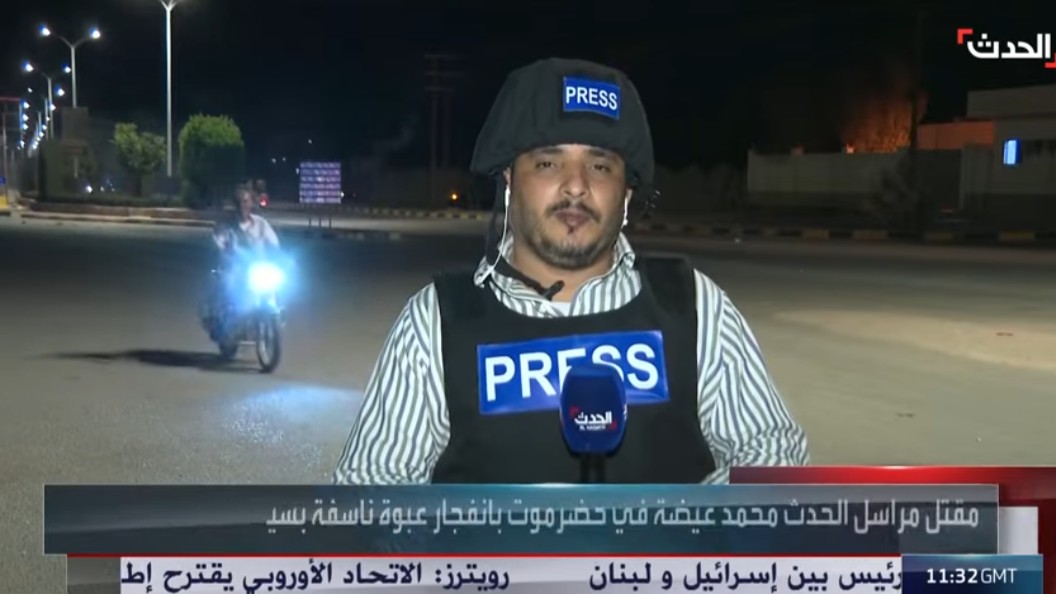
On the evening of June 24, a deadly attack unfolded in central Mukalla, the capital of Yemen’s eastern Hadramaut governorate, that cut short the life of a seasoned regional journalist and pulled back the curtain on deep unresolved political and security fractures in southern Yemen. Forty-year-old Mohammed Aydah, a freelance photographer and correspondent for Saudi state-owned outlet Al Arabiya, had just dropped his family at their residence and was preparing to drive to meet a friend when an improvised explosive device hidden beneath his driver’s seat detonated. The blast engulfed his vehicle in flames on Sitteen Street, close to the city’s Pakistani School, and killed Aydah instantly.
Local security sources confirm Aydah was explicitly warned of threats to his life roughly one month before the attack, with authorities urging him to take strict safety precautions. Since 2019, Aydah had covered political, security, and development beats across eastern Yemen, and his reporting on demonstrations organized by the UAE-backed Southern Transitional Council (STC) – along with his on-the-ground documentation of the group’s governance activities – had made him targets of hostile actors, sources close to the journalist confirm.
As of this report, no faction among Yemen’s deeply fragmented political landscape has claimed responsibility for the killing. The Saudi-backed Presidential Leadership Council (PLC), which is based in Aden, has issued a formal condemnation of the attack. Salem Ahmed Al-Khanbashi, Hadramaut’s governor and the general who led the military operation that retook the region from STC control in early January, has ordered a full official investigation into the incident. Prime Minister Shaya Mohsen al-Zindani has also directed Yemen’s Interior Ministry and all relevant security agencies to prioritize identifying and apprehending those responsible for the assassination.
Political finger-pointing began almost immediately after the attack, with STC representatives quickly shifting blame to Al-Qaeda in the Arabian Peninsula (AQAP) and other independent armed groups. However, this accusation has been widely challenged by regional analysts, who note that AQAP’s established modus operandi centers on sudden, unclaimed large-scale violence rather than forewarned targeted assassinations of specific individuals. Many observers also frame the STC’s statement as political opportunism: by attributing the killing to extremist “terrorist” groups, the organization implicitly argues that such violence was contained during its period of administrative control over southern Yemen.
An anonymous STC National Assembly member rejected all claims of the group’s involvement in an interview with Middle East Eye. “It is true that we consider Saudi Arabia a major enemy, as it has been damaging the south, but that doesn’t mean we will assassinate or welcome the assassination of a civilian journalist,” he said. “We are a project of peace, not death. If we were going to create chaos, we would target Saudi-backed officials, not a journalist.” He also pushed blame onto the Saudi-backed Aden-based government and Hadramaut’s governor, arguing their administration had failed to uphold security, noting that multiple assassinations have rocked southern Yemen in the six months since the STC lost territorial control.
The Houthi movement, which controls Yemen’s capital Sanaa and has fought the Saudi-led coalition for more than a decade, condemned the assassination via its Al Masirah media outlet without assigning blame, while using the incident to emphasize chronic instability in PLC-held territory.
Senior Yemeni and Gulf analyst Ibrahmi Jalal notes that both the Houthis and the STC – which announced its own dissolution in a controversial 2025-2026 political deal – had motive to target Aydah over his critical coverage. “When we look at the landscape and examine who might have access to sleeping cells and sabotage activities with the intent to disrupt and undermine the stability of government-held areas, there are two primary actors: the Houthis and the quote-unquote self-dissolved STC,” Jalal explained.
Aydah’s killing is far from an isolated event. Since the STC’s military defeat and contested dissolution between late December 2025 and early January 2026, targeted political assassinations across southern Yemen have increased sharply. Just last month, Wesam Qaid, CEO of Yemen’s Social Fund for Development, was abducted and killed in Aden. In April, Abdulrahman Al Shaer, an educator and senior leader of the Islah political party, was assassinated. In January, a senior Salafi brigadier general, Hamdi Shukri, who now commands a large southern military region, survived an attempted assassination.
Senior Yemeni political analyst Baraa Shiban notes that in the Al Shaer assassination case, authorities arrested members of a cell with ties to former counterterrorism units that previously operated under the STC’s umbrella. “The prosecution has started the process of making charges, but it will take time,” Shiban said. He added, “Whoever targeted Mohammed wanted to silence him, but it was also a threat to all other journalists.”
Prior investigations by the BBC have already documented direct links between the UAE-backed STC and a string of earlier assassinations in Aden. Many commentators have drawn a key inference from the current trend: while targeted killings were relatively rare during the STC’s period of direct administrative control, their recent surge suggests that STC-affiliated armed networks still retain influence as a militia that no longer holds territory but retains the capacity to carry out coordinated attacks. One anonymous source familiar with Aden’s political climate noted that STC members publicly condemned Aydah’s killing but privately celebrated his death, given his consistent critical coverage of the group’s activities.
Crucially, the STC’s formal dissolution did not result in the full dismantling of its security and military structures. Some units were redeployed to new posts, while others were nominally absorbed into official Yemeni Interim Regional Government institutions. Jalal explains that even integrated units still retain large numbers of personnel loyal to the STC, whose core political goals and loyalties remain unchanged. “It remains to be seen how well they would be absorbed and demonstrate a sense of belonging to an institution that protects the people above all,” he said.
The STC’s exiled leader, Aidarous al-Zubaidi, fled to Abu Dhabi in January and continues to issue political statements from abroad. Regional analysts widely agree that the UAE does not view the STC’s recent territorial setback as a permanent defeat, and continues to back the group as a proxy in Yemen’s ongoing internal conflict.
Aydah’s assassination comes at a particularly sensitive moment for Saudi Arabia’s engagement in Yemen. Just two weeks before the attack, Riyadh signed a $150 million agreement to supply petroleum derivatives to Yemeni power plants – the latest installment of more than $12.6 billion in Saudi development and humanitarian support for Yemen since 2012. A high-profile ceremony was even held in Mukalla itself to open a new 100 MW power plant, developed through a tripartite partnership between the Saudi Development and Reconstruction Programme for Yemen, Yemen’s Ministry of Electricity, and Gulf Power International.
Yemeni President Rashad al-Alimi has publicly framed Saudi economic assistance as the critical foundation holding Yemeni government institutions together, and has asked Yemenis to exercise “more patience” to see the full benefits of these investments. For ordinary Yemenis across government-held territory, access to basic services like electricity and clean water remains the top priority, and many express support for whichever political faction can deliver these necessities.
Murad Ali, a 60-year-old construction laborer from Aden supporting seven family members, says his only focus is securing food and basic needs for his household, but he still holds out hope the government can expand access to critical services. “Our government failed to provide us with electricity, healthcare, or any other basics, and it is Saudi Arabia that has been helping us since January 2026 to access basic services,” he told Middle East Eye.
Yet public patience is wearing thin. In early June, as temperatures soared across southern Yemen and chronic power outages continued, hundreds of Aden residents took to the streets, sleeping outside on mattresses to protest the lack of consistent electricity. Local sources describe the protests as fundamentally apolitical, driven by anger at failing infrastructure rather than opposition to the PLC administration, and note that STC organizers attempted to co-opt the demonstration and ultimately failed. “When we took to the streets, we were calling on Saudi Arabia to help us because we know it is the only country that can. We cursed our government because it deserves it, but we didn’t call on them because we know they are unable to help,” Ali said.
Jalal argues that the growing gap between Saudi-backed reconstruction rhetoric and on-the-ground security reality represents a major vulnerability for the PLC and its backers. “When we look at the profiles of those targeted – a journalist, a religious figure, teachers, a social development champion, military commanders – the picture indicates that most societal figures, regardless of their walk of life, are under a sustained elimination attempt,” he explained. “The motive is to instil fear, demonstrate instability, question trust in the government and its backer Saudi Arabia, and shake the image that is now enabling the government to seek increased support from international development institutions like the World Bank and the IMF.”
Underpinning all current tensions is an unfinished national political process. Following the military recapture of southern territory from the STC, PLC President Rashad al Alimi called for a comprehensive Southern Dialogue Conference to be hosted by Saudi Arabia, but no date has yet been set for the talks. In February, STC-affiliated demonstrators stormed a government building in Ataq; security forces responded, killing five protesters and wounding 39 others.
Saudi Arabia’s current strategy hinges on using infrastructure investment, an inclusive southern political process, and the unification of military command under the PLC to consolidate control over southern Yemen before turning its full attention back to the northern front against the Houthis. Jalal notes that meaningful stabilization will require a far more comprehensive multi-pronged approach than Riyadh has pursued to date.
“Economically, the government needs more than emergency funding: it needs to improve domestic revenue collection and resume oil and gas exports, which have been hampered since 2015 and 2022 respectively,” he said. “On security, undoing a decade of fragmentation requires time, but also a more adaptive and proactive approach. The full cabinet leadership needs to return to the country, to be with the people, rebuild institutional trust, and pave the way for recovery.”
Whether Aydah’s assassination is ultimately linked to STC remnants or another armed faction, the killing makes clear just how much of Yemen remains politically unsettled, even in territory formally controlled by the Saudi-backed PLC. Shiban struck a defiant note on the implications for press freedom in the country: “Whoever targeted Mohammed wanted to silence him, but it was also a threat to all other journalists. At the end of the day, they won’t be able to silence everyone if everyone is speaking up and everyone is active.”
-
Rights lawyers sue Ghana over third-country deportation deal with the US
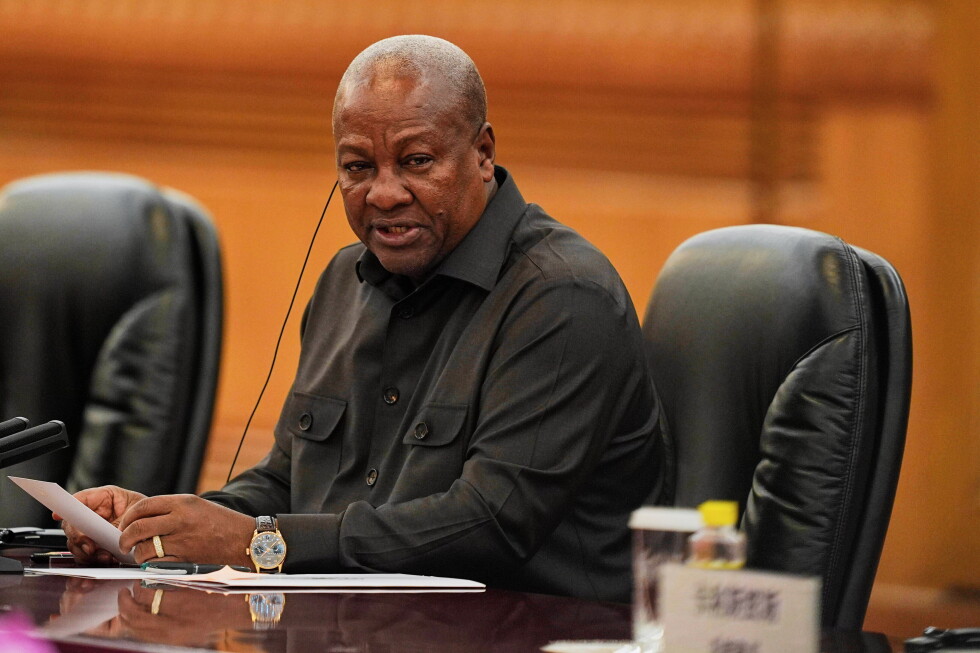
ACCRA, Ghana — A transnational coalition of human rights attorneys and advocacy organizations has launched a landmark legal challenge against the government of Ghana, alleging that West African nation has systematically violated the fundamental human rights of asylum seekers by facilitating their forced deportation from the United States back to the conflict-ridden origin nations these people fled. The filing on Tuesday marks the newest high-profile legal action targeting an African government that entered into a controversial third-country deportation agreement with the former Trump administration, which allowed the U.S. to offload non-citizen deportees to nations that are not their countries of birth or citizenship. The lawsuit was submitted to the ECOWAS Community Court of Justice, the regional judicial body for the Economic Community of West African States, and counts the Global Strategic Litigation Council — a broad network of legal practitioners and human rights advocates — among the core members of the coalition bringing the claim. This case marks the first ever legal action brought under a landmark 1979 regional human rights treaty that enshrines protections for free movement across West African borders. The legal challenge represents 27 of the at least 60 people the U.S. has deported to Ghana under the bilateral agreement that took effect in September 2025. According to an official statement released by the rights coalition, Ghana committed to accept these deportees, detain them upon arrival, and coordinate their onward transfer to their home nations — even though the vast majority of these asylum seekers had already received formal protection orders from U.S. immigration judges that barred their deportation to their origin countries due to credible fears of persecution. Most of the 27 named claimants were transferred onward from Ghana to their home nations within mere hours or days of landing, the Tuesday statement confirms, despite the asylum seekers explicitly notifying Ghanaian authorities of their valid U.S. court-ordered protections. Multiple claimants reported being kept in shackles for the entirety of their flight from the U.S. to Ghana. Upon arrival, they say they were held under constant armed guard in a range of facilities, including military camps, unregulated hotels, and airport holding cells, most in unsanitary, overcrowded, and dangerous conditions. The coalition’s core legal argument centers on Ghana’s deliberate violation of the international legal principle of non-refoulement, a binding global norm that prohibits nations from transferring people to territories where they face a proven risk of persecution, torture, or death. A Ghanaian government spokesperson did not issue an immediate response to requests for comment on the lawsuit from reporters. Ghana is not an outlier in these arrangements: it is one of at least nine African nations that have signed third-country deportation pacts with the U.S. Immigration rights advocates estimate that, under these largely untransparent agreements, the Trump administration deported thousands of asylum seekers and migrants to nearly two dozen third-party countries that are not the migrants’ nations of origin, as part of a broader hardline crackdown on unauthorized immigration. Immigration attorneys widely frame these third-country deportation deals as a deliberate legal loophole, designed to allow the U.S. government to bypass domestic asylum protections and indirectly force vulnerable asylum seekers back to the dangerous origin countries they fled. Medical assessments included as evidence in the new lawsuit document significant harm to the claimants: multiple of the 27 people named in the suit showed clinical signs of post-traumatic stress disorder (PTSD) and severe major depression linked to their ordeal. The legal team is asking the regional ECOWAS court to issue a number of remedies, including an immediate injunction halting all further onward transfers of deportees held under the agreement, an order compelling Ghana to publicly release the full, unredacted terms of the U.S. deportation deal, financial compensation for the harm inflicted on claimants, and a formal ruling barring Ghana from entering into any similar future agreements. The lawsuit against Ghana follows closely on the heels of another legal challenge brought earlier this month by rights attorneys against Equatorial Guinea, another African nation that signed an identical third-country deportation deal with the U.S. That case was filed before the African Commission on Human and Peoples’ Rights, Africa’s top regional human rights body, and leveles the same core accusation: that Equatorial Guinea violated international human rights law by facilitating the forced deportation of U.S.-expelled asylum seekers back to their high-risk home nations. This report was contributed by Sophie Banchereau, reporting from Dakar, Senegal.
-
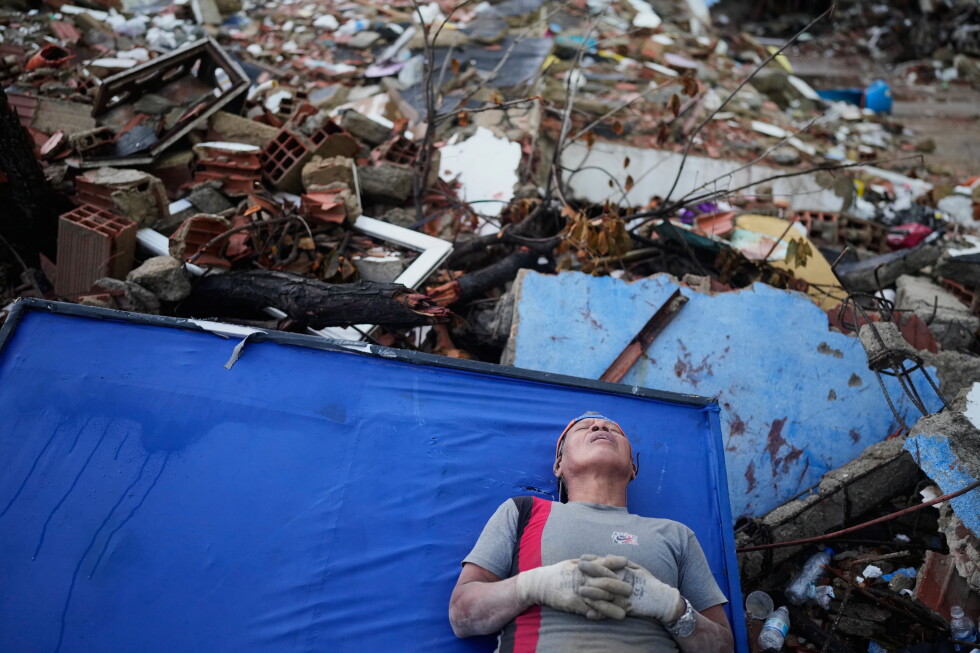
Aid workers warn of infectious diseases, overwhelmed hospitals after Venezuela quakes
Nearly seven days after a pair of powerful earthquakes struck Venezuela, international and local aid organizations are sounding the alarm that the country’s already crumbling public health system has been pushed past its breaking point. Damaged, understaffed medical centers are overwhelmed by a surge of injured survivors, while rapidly deteriorating sanitation conditions across disaster zones have created the perfect conditions for infectious disease outbreaks to take hold.
Rescue and recovery operations led by dozens of international and domestic search teams continue to comb through collapsed infrastructure, pulling additional bodies from rubble each day as the official government death toll has climbed past 1,700. While search operations remain focused on locating any remaining trapped survivors, aid leaders warn a full-blown humanitarian emergency is already developing among the thousands of Venezuelans who survived the quakes but lost their homes.
United Nations agencies have highlighted the growing public health risks facing displaced populations, who have spent days sleeping in open-air spaces or overcrowded, unsanitary emergency shelters. Carlotta Wolf, spokesperson for the UN refugee agency, confirmed Tuesday that official Venezuelan government figures put the number of displaced people affected by the quakes at more than 15,800, a number Wolf says will continue to climb as assessments progress. Thousands of suddenly homeless residents are now sheltering in vehicles, public parks, and other unregulated spaces, with no adequate emergency housing infrastructure available to accommodate them. Widespread food shortages are also plaguing residents in La Guaira, the hardest-hit state, Wolf added.
Speaking at a press briefing in Geneva on Tuesday, World Health Organization spokesperson Christian Lindmeier explained that low pre-existing vaccination coverage across Venezuela leaves displaced populations uniquely vulnerable to outbreaks of vaccine-preventable illnesses such as measles. The post-quake disruption to sanitation and water systems has also sparked a resurgence of mosquito-borne and waterborne diseases including dengue, yellow fever, and malaria.
Venezuela’s national healthcare system was already strained by decades of chronic underfunding and years of deep economic crisis before the earthquakes struck, and it is now operating far beyond its capacity to handle the sudden surge of traumatic injury cases, Lindmeier said. Official government data shows 38 hospitals across the country suffered major damage or were rendered unsafe by the quakes. WHO teams have completed assessments of 21 of those facilities so far, finding three are completely non-operational, six sustained significant structural damage, and the remainder are buckling under the unprecedented volume of patients.
The crisis is compounded by the loss of critical medical personnel: many specialist doctors, including senior maternity care staff in La Guaira, remain trapped or missing under collapsed buildings. “Our assessments found chaotic care delivery and patient flow, marked by extreme overcrowding, growing backlogs for urgent surgical procedures, and a complete breakdown of basic biosafety protocols,” Lindmeier said. The chaos has also led to the collapse of forensic and morgue services, leaving authorities unable to properly document and store recovered remains.
Venezuelan authorities have released daily updates on the human toll, reporting a confirmed count of 1,719 dead and more than 5,000 injured as of Monday. But independent experts warn the official count is almost certainly a significant undercount, as thousands of people remain unaccounted for, and hopes of finding additional survivors fade with each passing day. The government has not released an official count of missing people, and widespread damage to cellular communications and other critical infrastructure has made it extremely difficult to track how many people remain buried under rubble. One independent non-governmental digital tracking platform has listed more than 50,000 people as missing, though it remains unclear how many of those listings correspond to people who have not yet been accounted for by official teams.
This report was compiled by DeBre from Buenos Aires, Argentina, with additional reporting from the Associated Press. Follow AP’s full coverage of Latin America and the Caribbean at apnews.com/hub/latin-america.
-
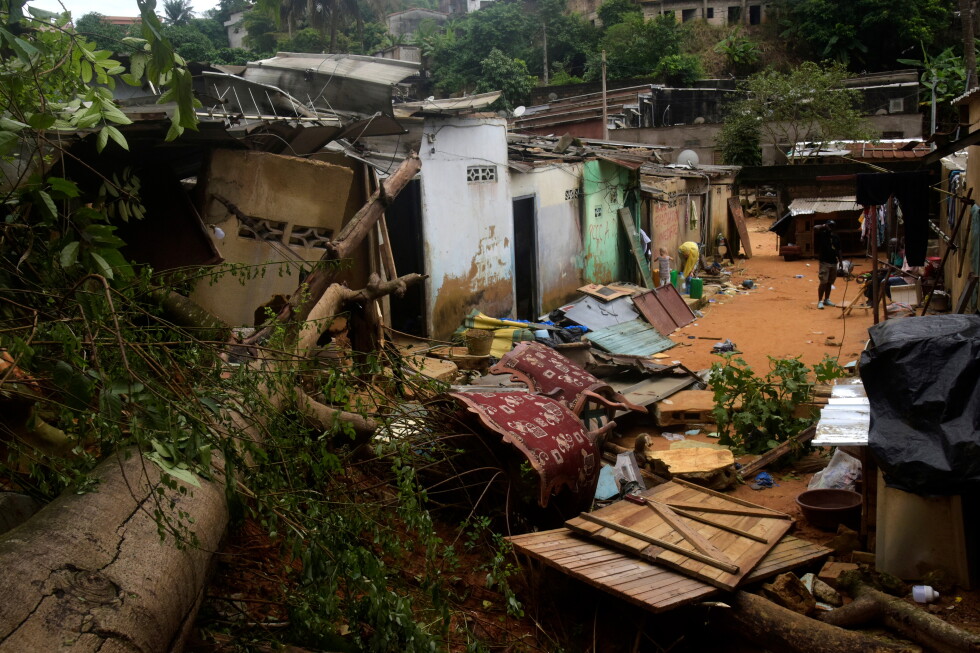
Floods in Ghana and Ivory Coast leave at least 24 dead following torrential rains
ACCRA, Ghana – Days of unrelenting torrential rainfall have unleashed catastrophic flooding and deadly landslides across the capital cities of West African nations Ghana and Ivory Coast, leaving at least 24 people dead as emergency responders race to evacuate hundreds of trapped residents from waterlogged structures, national authorities confirmed Tuesday.
In Ghana’s capital Accra and the adjacent industrial port city of Tema, the floodwaters swallowed entire buildings, swamped major roadways, and severed travel access to multiple hard-hit neighborhoods by Monday. The Ghana National Fire Service has recorded 12 confirmed fatalities in the country, including a mother and her young child who were swept away by rushing floodwaters in the densely populated Achimota-Agbogbloshie district, said service spokesperson Alex King Nartey in an interview with The Associated Press.
Across the border in Ivory Coast, the sustained downpour has caused devastating flooding that killed more than a dozen people, the vast majority of whom lived in the Attécoubé and Yopougon municipalities of Ivorian economic capital Abidjan, stated Minister of National Cohesion Myss Belmonde Dogo. Local media reports confirm that at least nine of those fatalities were crushed under collapsed building rubble in Abidjan’s Mossikro neighborhood, after days of rain that first began saturating the region on Saturday.
Footage circulating from Accra captures the urgent, community-led response to the disaster: local residents wade and swim through neck-deep floodwaters to pull trapped neighbors to safety, while dozens of vehicles sit abandoned on inundated roads that have become impassible. For emergency teams, reaching cut-off communities has presented a major logistical barrier that forced officials to request additional support from the country’s military, Nartey explained. As of Tuesday morning, dozens of residential neighborhoods remained partially submerged.
Ghana’s National Disaster Management Organisation reported that emergency alert calls began flooding agency communications starting around 7 a.m. Monday, as alarmed residents realized rising waters were seeping into their homes. “The whole place was flooded. It’s alarming,” said Mariam Dongyela Millah, the agency’s deputy director of communications.
Looking ahead, the Ghana Meteorological Agency has issued new warnings urging local residents to brace for additional heavy rainfall across Accra throughout the rest of the week.
This disaster underscores a long-documented pattern of deadly extreme weather across much of Africa. Deadly seasonal flooding is a recurring hazard across many regions of the continent, which the World Meteorological Organization ranks as one of the globe’s most vulnerable regions to climate-driven extreme weather events – despite the fact that African nations contribute only a tiny fraction of global greenhouse gas emissions that drive climate change.
-
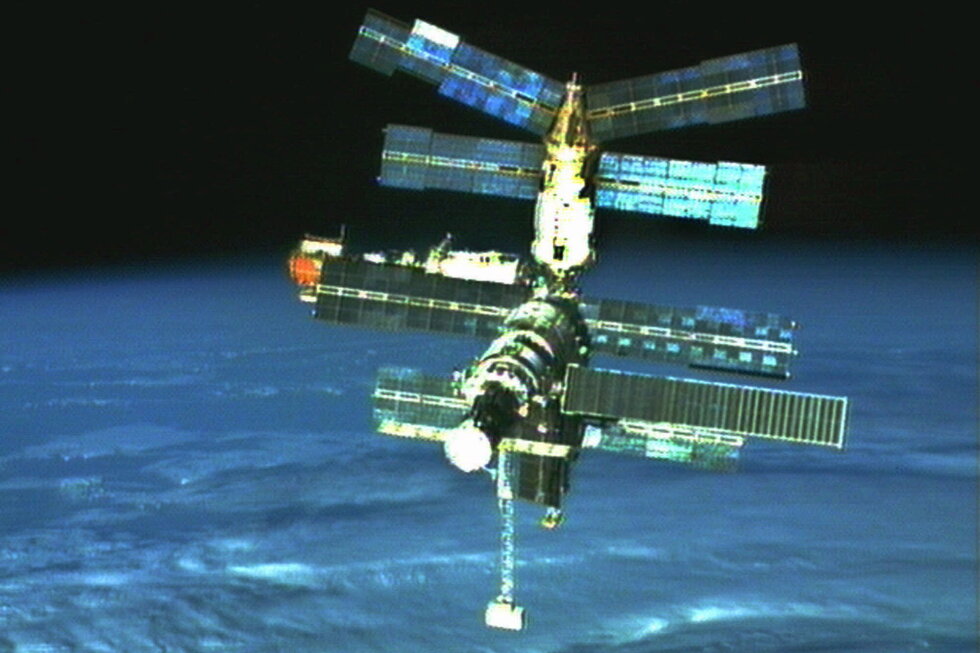
Abdul Ahad Momand, an Afghan air force pilot who served on the Mir space station, dies at 67
Abdul Ahad Momand, the trailblazing Afghan who made history as the first person from his country to reach outer space, has passed away at the age of 67 following a battle with cancer. His death, confirmed by close family and friends on June 21, came at a Stuttgart, Germany hospital, where he had resided since fleeing Afghanistan’s escalating civil war in 1992.
Widely celebrated as a national hero across Afghanistan, Momand’s passing drew widespread tributes from political leaders and ordinary citizens alike. Former Afghan President Ashraf Ghani shared his grief in a post on X, writing, “I am deeply saddened by the sudden death of Afghanistan’s first and only astronaut, Abdul Ahad Momand.” He extended his heartfelt condolences to Momand’s wife, children, and extended family, adding that the astronaut’s nine-day mission aboard the Mir space station helped Afghans temporarily set aside the deep pain and division of the 1980s civil conflict.
Momand’s journey to space began in 1988, when the 29-year-old Afghan Air Force pilot was selected to join a Soviet space initiative that flew representatives from Soviet-aligned nations into low Earth orbit. At the time, Afghanistan was under Soviet military occupation.
After completing months of rigorous spaceflight training, Momand launched alongside veteran Russian cosmonauts Vladimir Lyakhov and Valery Polyakov on the Soyuz TM-6 mission. Over nine days docked at the Mir space station, he carried out a slate of planned scientific experiments aligned with his pre-mission goals: mapping Afghanistan’s untapped mineral reserves, evaluating the country’s hydroelectric energy potential, studying glacial patterns, and assessing regional earthquake risk. Before his flight, he told Soviet media outlet *Sovietskaya Rossiya* that the data collected from orbit would directly benefit his home country’s long-term development.
A historically notable moment of his mission came when he broadcast a televised address to his fellow Afghans from orbit. In the message, he noted that national borders and the violence plaguing his homeland were invisible from space. “I would like to believe that such will be the situation on the land inhabited by my brothers and sisters, on the land of our fathers and mothers who have suffered so much during the years of the war,” he said at the time. During his flight, he also brought a copy of the Quran and read from it, a detail Ghani highlighted as a moment that introduced Afghanistan to the global community “with national colors and national words” and shared the country’s Islamic identity with the cosmos. Momand also added his native Pashto to the small list of languages ever spoken in space, a point of national pride that endures for many Afghans today.
His return trip to Earth almost did not go according to plan. Momand and Lyakhov were scheduled to return on Soyuz TM-5, but a last-minute technical issue pushed their landing back by 24 hours. The pair were briefly stranded in the cramped return capsule, facing potential shortages of food and oxygen before the issue was resolved and they landed safely.
Contemporary Associated Press reporting from the flight period notes that Momand, whose surname was alternately spelled Mohmand at the time, had previously participated in joint Soviet-Afghan counterinsurgency operations early in his military career, and had flown hundreds of combat attack missions before his selection for the space program.
Born in the Andar district of Afghanistan’s southeastern Ghazni Province, Momand received military training at institutions in both Afghanistan and the Soviet Union before his selection for the historic space mission.
Across Afghanistan, news of his death sparked widespread sorrow among residents who still regarded him as a unifying national icon. Zahir Ammar, a 35-year-old cosmology blogger based in Jalalabad, honored Momand’s legacy in a tribute, emphasizing the unprecedented nature of his achievement for the country. “Now, astronauts’ trips to (international space stations) have become commonplace, but during the time of the late Abdul Ahad Momand, this was a great achievement for Afghanistan,” Ammar wrote. He also voiced regret that Momand spent his final decades in exile, saying the astronaut’s lifetime of experience could have inspired a new generation of young Afghans interested in science and exploration.
As of the announcement of his death, no formal funeral or memorial service arrangements have been made public. Momand is survived by his wife, two daughters, and one son.
-
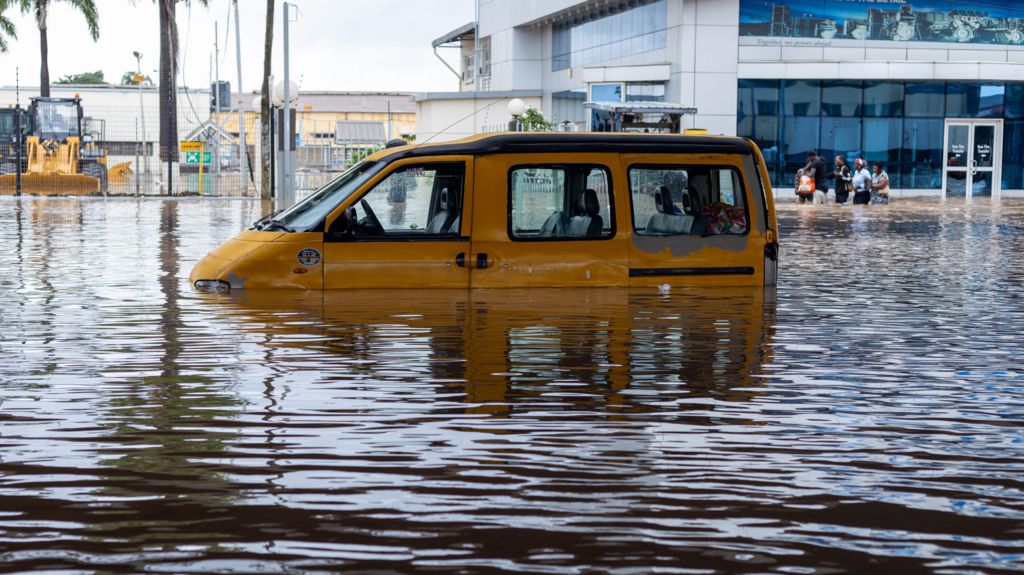
Flooding hits Ghana’s capital killing 13 people – with another storm forecast
In Ghana’s capital Accra, catastrophic flash flooding driven by an unprecedented torrential downpour has left at least 13 people dead, with authorities warning the death toll could climb further as search and recovery operations continue across the devastated city. The extreme weather event, which dumped roughly 140 millimeters of rain on the metropolis overnight Sunday – nearly three times the highest single-day rainfall recorded in 2025 – has already caused widespread destruction, submerging entire neighborhoods, destroying hundreds of structures, and leaving thousands of residents displaced or trapped. According to officials from the Ghana National Fire Service, one of the lead agencies coordinating rescue efforts, more than 470 people have been pulled from floodwaters to safety so far, with emergency response teams from the police, military, and National Disaster Management Organisation also deployed across hard-hit low-lying areas. Social media footage circulating from the region shows cars fully submerged under muddy floodwater and collapsed buildings, confirming the scale of the damage that has forced local markets and businesses across the capital to remain closed, with some small commercial operations completely washed away. As teams work to reach trapped residents, national officials have issued urgent public safety advisories, urging residents in flood-prone zones to relocate to higher ground immediately and avoid all unnecessary travel through inundated areas. “Stay indoors if you are in a safe location,” a statement from the Ghanaian president’s office read. “Do not attempt to cross flooded roads, whether on foot or in a vehicle. If your home is being inundated, move immediately to higher ground and call 112 for emergency assistance.” Compounding the risk to public safety, the flooding triggered an unexpected large fire at a local rubber factory shortly after the downpour began. Utility providers Ghana Grid Company Limited and the Electricity Company of Ghana have also enacted a temporary power shutdown across flood-impacted parts of the capital, noting that rising floodwaters have compromised critical infrastructure at multiple substations, creating life-threatening hazards for both workers and residents. The Ghana Meteorological Agency has amplified government warnings, forecasting additional heavy rain across southern Ghana – where Accra is located – from Tuesday morning through the afternoon, raising the specter of further flooding and worsening damage. Agency officials have also advised residents to avoid sheltering under trees, steer clear of downed or exposed electrical lines, and never walk or drive through standing floodwater. For many local residents, the disaster has already upended daily life and destroyed irreplaceable personal property. Philip Mensah, one flood-affected Accra resident, told reporters that his decades-long collection of 1970s vinyl records was entirely lost to floodwaters. Patience Naa Adjeley Adjei, a local schoolteacher, described hours of futile efforts to hold back water from entering her home, saying, “I have mopped my room more than eight times. I can’t even step out because my room is flooded, and outside is flooded.” While the extreme rainfall is the immediate trigger for the disaster, experts and officials alike point to longstanding structural issues that amplified the flood’s severity. Accra, one of Africa’s fastest-growing urban centers with a population of over 4 million according to the World Health Organization, has long struggled with inadequate drainage infrastructure, with clogged public gutters and widespread construction of unpermitted illegal structures on natural waterways preventing floodwater from receding. Following an aerial assessment of the damage on Monday, Ghana’s president ordered the immediate demolition of all illegal structures built on waterways, noting that “the irresponsible actions of a few individuals end up putting entire communities at risk.” Disaster and climate advocates warn the event is far from unexpected, linking the increasing frequency of extreme flooding in the region to both accelerating climate change and unplanned rapid urban expansion. This is not the first time Accra has faced catastrophic flooding: in 2015, a similar extreme weather event triggered a fuel station explosion that killed more than 150 people. Ewurabena Yanyi-Akofur, country director for WaterAid Ghana, called for urgent systemic changes to prevent future tragedies, noting that “what we are witnessing in Accra is not an isolated weather event, but part of a pattern intensified by climate change and rapid, unplanned urbanisation.” She added that stronger urban planning and pre-event preparedness measures are critical to safeguard communities before, during, and after extreme weather events strike.
-
South Africa deploys police for widespread protests by groups opposing illegal immigration
On Tuesday, thousands of South African protesters took to the streets across multiple provinces of the country, joining organized demonstrations demanding the immediate departure of all undocumented migrants from the nation’s borders. The demonstration, organized by several prominent local anti-illegal-immigration groups, set Tuesday as a non-negotiable deadline for all unauthorized migrants to leave South Africa, a framing that has put the country on edge amid lingering memories of violent unrest tied to similar past actions.
The organizing coalitions behind the protests, which include high-profile movements such as March and March, Operation Dudula, and Progressive Forces, argue that undocumented migrants exacerbate South Africa’s persistent systemic challenges. Protesters claim that migrants’ willingness to accept lower wage levels pushes native South African workers out of formal employment, while also blaming unauthorized immigration for driving spikes in violent crime and other social ills across the country. Bongani Cindi, one protester participating in the Johannesburg demonstrations, pushed back against common criticism that the movement is rooted in xenophobia, saying the groups are only raising legitimate concerns about domestic challenges. “We are not fighting anyone,” Cindi noted. “Our country has got a lot of problems. We have influx of illegal immigrants who are committing crimes that we can’t even take anymore. So we need them to leave us in peace, so we can sort our house.” Another Johannesburg protester, Nkele Thebe, echoed this sentiment, saying “After today, we’ll be dealing with our president and our nation. We don’t want an outsider to come interfere.”
This self-imposed deadline has not received any official recognition from South Africa’s national government, which has stressed that only formal state authorities hold the legal power to enforce the country’s existing immigration regulations. Ahead of the protests, President Cyril Ramaphosa held a closed-door meeting with leaders of several participating groups on Monday night, where he urged organizers and attendees to commit to peaceful, lawful demonstration action.
Despite the call for calm, security officials have taken extensive precautions to prevent a repeat of the violence that marred previous anti-immigration protests, when migrant-owned properties were targeted, foreign national businesses were vandalized, and public infrastructure was destroyed in unrest. South African police have deployed hundreds of trained officers to major protest hotspots, including the Gauteng provincial hub of Johannesburg, the KwaZulu-Natal coastal city of Durban, and Eastern Cape province, where past anti-immigration demonstrations turned deadly. Private security teams have also been deployed to at-risk areas to supplement official police resources. As of Tuesday morning, early reports confirmed gatherings of protesters in parts of Durban, as well as additional mobilization across North West and Free State provinces. In Johannesburg, many foreign-owned small businesses preemptively closed their doors ahead of expected protest activity.
The threat of renewed violence has already triggered a wave of voluntary repatriation among thousands of undocumented migrants, the vast majority of whom originate from neighboring southern African nations Zimbabwe and Malawi. Migrants have flocked to their respective national embassies and consulates across South Africa to request emergency transportation back to their home countries. Border crossing data shows a sharp increase in traffic at the Beitbridge border checkpoint connecting South Africa to Zimbabwe, with multiple daily buses carrying returning migrants departing South Africa. In Durban, thousands of Malawian citizens have already exited the country through a temporary repatriation center set up to process returning nationals.
-

Australian man charged with murder over death of a teenage girl in Thailand’s Pattaya
BANGKOK – Thai law enforcement officials announced Tuesday that an Australian man has been formally charged with murder and unlawful concealment of a corpse following the killing of a 17-year-old girl in one of Thailand’s most popular coastal tourist destinations. The case, which has drawn cross-border public attention, unfolded over four days before the suspect was taken into custody while attempting to flee the country.
The teenage victim was first reported missing to local authorities last Friday. Investigators later confirmed that the last confirmed sighting of the girl came from condominium security footage, which captured her entering the residential building alongside the accused, identified as Simon Peter Carman, in Pattaya. The beach resort city sits roughly 93 miles east of Thailand’s capital Bangkok, drawing millions of international visitors every year.
Following the pair’s entry to the condominium, additional surveillance footage shows Carman leaving the building alone, pulling a large hard-shell suitcase behind him. Investigators say he then loaded the bulky suitcase onto a motorbike and rode into a remote, unpopulated stretch of land parallel to a local railway line.
Authorities intercepted Carman in the early hours of Saturday at Bangkok’s international airport, just minutes before he was set to board a commercial flight bound for Perth, Australia. At the time of his arrest, he was only charged with the rape of a minor. But a quick search of the route captured on security footage led officers to the suitcase holding the victim’s body shortly after his arrest, prompting the addition of the far more severe murder and body concealment charges.
Under Thai criminal law, a conviction for premeditated murder carries the possibility of the death penalty. Kanoknan Sooksri, the lead Pattaya Police investigator assigned to the case, confirmed that Carman is currently being held in police custody and has been assigned a state-appointed defense attorney. The exact date of his first court appearance has not yet been finalized, and Carman has formally denied all charges brought against him.
Security footage published by local Thai media outlets purports to show the full timeline of the incident: early Thursday morning, Carman and the victim are seen holding hands as they walk into the condominium’s elevator. More than 12 hours later, Carman exits the building alone, dragging the dark-colored suitcase that would later be found holding the girl’s body. A second video clip circulating online, also released by Thai media, captures Carman during his initial interrogation by police.
In the recorded interrogation, Carman claimed to officers that he was only restraining the victim because she had become agitated and violent. He alleged that the teen threatened him with a knife after he attempted to hand her 500 Thai baht, the equivalent of roughly 15 U.S. dollars. “I had my wallet open to get the money out, and next thing there’s a knife to my face,” Carman told investigators in the clip.