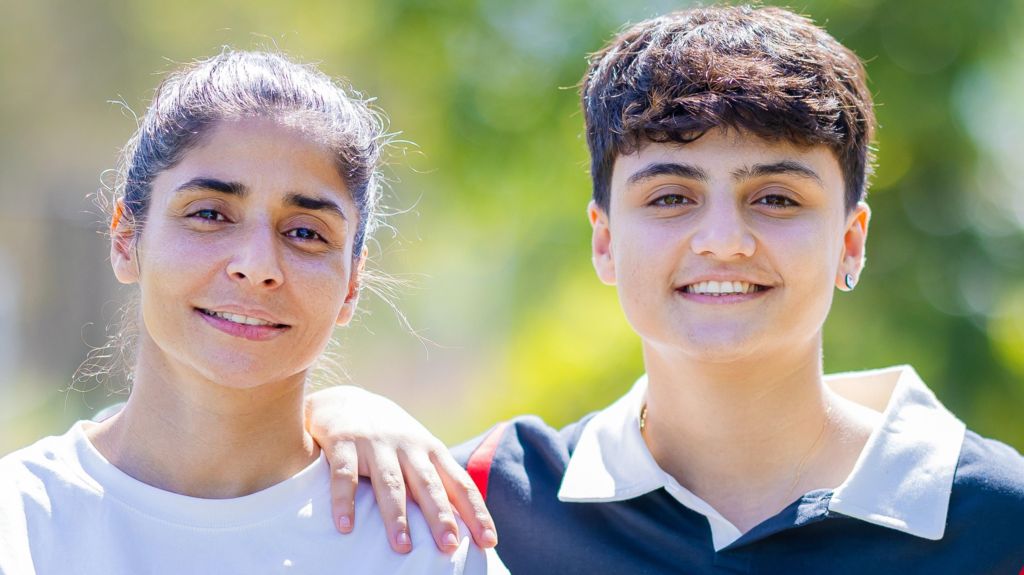
Two Iranian female footballers who have been granted political asylum in Australia have opened up about their new chapter, saying the country has given them a renewed chance to build a secure life where they can both live and compete without fear. Atefeh Ramezanisadeh and Fatemeh Pasandideh were part of a seven-member group of Iranian national team delegation that initially received humanitarian visas while participating in the 2024 Women’s Asian Cup hosted in Australia. In a surprise turn of events, the remaining five members of the group ultimately chose to return to Iran, reversing their initial decision to seek protection abroad.
The crisis surrounding the team began shortly after the squad declined to sing Iran’s national anthem ahead of their opening tournament match, a silent protest that came just days after joint air strikes by Israel and the United States sparked deadly conflict in Iran starting February 28. After the protest, footage emerged of an Iranian state television host labeling the players as “traitors” who deserved punishment for their silence during the anthem, triggering widespread international alarm over the players’ safety if they returned home.
In their first formal public statement since their asylum application was approved, Ramezanisadeh and Pasandideh expressed gratitude to supporters who have stood by them, while requesting space to adjust to their new lives. “At this stage, our primary focus is on our safety, our health and beginning the process of rebuilding our lives,” the joint statement reads. The pair added that they have been deeply moved by the warmth and generosity of Australia’s large Iranian diaspora community, saying that widespread community support has made them feel welcome and eased the isolation of their major life transition. They also extended thanks to the Australian government for granting them a safe haven in the country, and to Home Affairs department officials for their committed, personalized support throughout the visa and asylum process.
The two players have already begun integrating into Australia’s domestic football landscape, with recent photos showing them training with A-League Women side Brisbane Roar. They confirmed in their statement that they aim to continue pursuing elite professional football careers in their new home.
To understand the full context of the players’ decision, the sequence of events that unfolded during the Asian Cup offers critical context: after the anthem protest sparked backlash back home, the players were relocated from their original accommodation on the Gold Coast to Brisbane, roughly an hour’s drive north. It was there that they slipped away from the minders accompanying the Iranian delegation, seeking protection from the Australian Federal Police before starting their asylum claims.
Human rights activists have long raised allegations that the five players who chose to return to Iran faced extreme coercion, arguing that Iranian authorities made threats against their immediate family members remaining in the country to force the players to reverse their decision to seek asylum. Speaking at the height of the crisis earlier this year, Australian Home Affairs Minister Tony Burke acknowledged that the government could not ignore the immense external pressures that shaped each player’s impossible decision.
The Iranian government has pushed back sharply against the events, with the country’s sports ministry claiming that the return of the five players proved they had “defeated the enemy’s plans” through national unity and patriotism. The ministry also accused the Australian government of advancing foreign political agendas, claiming Canberra was “playing in Trump’s field.” Tasnim News Agency, an outlet closely affiliated with Iran’s Islamic Revolutionary Guard Corps, has further claimed that the two players who stayed were subjected to systematic “psychological warfare, extensive propaganda and seductive offers” from Australian actors to convince them to remain in the country.
The case has drawn global attention to the risks facing Iranian athletes who speak out against their government, and has sparked renewed debate over Australia’s humanitarian visa obligations for at-risk sportspeople from conflict zones.