分类: world

  • Pope brings Africa tour to Angola as Trump feud drags on

    Pope brings Africa tour to Angola as Trump feud drags on

    Pope Leo XIV has launched the third stop of his historic 11-day, four-nation African pilgrimage, arriving in Angola Saturday after wrapping up a high-profile three-day visit to Cameroon, where he delivered sharp social and political critiques amid a worsening war of words with former U.S. President Donald Trump over the ongoing Middle East conflict.

    The American pontiff, who was elected to the papacy in May 2025 after the passing of Pope Francis, marked the end of his Cameroon leg with a massive open-air mass at Yaoundé’s airport that drew more than 200,000 adoring worshippers, who greeted him with traditional songs and festive dances. Speaking in French during his homily, Pope Leo thanked the Cameroonian people for their warm welcome, before issuing a pointed call for the nation to find the courage to break from harmful long-standing habits and outdated power structures. His remarks came against the backdrop of 42 years of authoritarian rule by 93-year-old President Paul Biya, who has held power since 1982.

    Following the mass, Pope Leo departed midday for Angola’s capital Luanda, where he is scheduled to meet with President Joao Lourenco and deliver a policy address before wrapping up his visit on Tuesday. Only two other popes have traveled to the resource-rich southern African nation: John Paul II in 1992 and Benedict XVI in 2009, with roughly 44% of Angola’s population identifying as Catholic. Organizers and local officials expect tens of thousands of worshippers to travel across the country to catch a glimpse of the head of the global Catholic Church, which counts 1.4 billion followers worldwide.

    For many Angolans, the papal visit carries deep personal and national meaning. “It’s as if God were very close to us,” Helena Maria Miguel, a 40-year-old human resources manager based in Luanda, told reporters ahead of the pope’s arrival.

    Pope Leo’s consistent calls for global peace are expected to resonate particularly strongly in Angola, a nation that only emerged from a brutal 27-year civil war in 2002. The conflict broke out immediately after Angola gained independence from Portugal in 1975, leaving deep socioeconomic scars that persist decades later. Despite the country’s vast fossil fuel reserves, an estimated one-third of Angolans still live below the poverty line, with the national economy overly reliant on volatile global oil prices and long plagued by systemic corruption that has even reached the inner circle of former president Jose Eduardo dos Santos.

    Many local residents hope the pope’s visit will shine a light on the unmet needs of Angola’s young population. “There is a lot of suffering, a lot of poverty in Angola. I hope the pope will see with his own eyes the needs of the youth here,” said 33-year-old engineer Antonio Masaidi.

    The visit comes as Pope Leo has adopted a far more assertive public tone after facing repeated sharp criticism from Donald Trump, breaking from the more low-key, measured approach he took immediately after his election. Up until the public feud erupted, the new pope had positioned himself as more discreet than his predecessor, Pope Francis, who led the church from 2013 to 2025. Throughout the African tour, the pontiff has repeatedly called out global corruption, the exploitative plunder of Africa’s natural resources by foreign and domestic actors, and the unregulated risks of artificial intelligence, even as his public clash with Trump continues to unfold. After Trump’s Vice President JD Vance, a Catholic, publicly called on the Vatican to stay out of political affairs and “stick to matters of morality”, Pope Leo fired back Thursday, arguing the world is “being ravaged by a handful of tyrants” and doubling down on criticism of actors who misuse religious doctrine to justify armed conflict. During his time in Cameroon, he doubled down on these critiques, demanding local leaders root out graft and condemning “those who, in the name of profit, continue to seize the African continent to exploit and plunder it”.

    On Sunday, Pope Leo will lead a second massive open-air mass in Kilamba, a suburb of Luanda, where local authorities have built new infrastructure including a large public food court to accommodate the expected crowds of worshippers. In the afternoon, he will travel by helicopter to the riverside village of Muxima, roughly 130 kilometers southeast of the capital, which is home to a 16th-century church that has grown into one of southern Africa’s most important Catholic pilgrimage sites. The village, where enslaved Africans were once baptized before being forcibly shipped out of the continent, is currently the site of a multi-million-dollar government development project to build a new basilica and transform the area into a major international religious tourism destination.

    “It is a historic moment of grace, a moment of profound emotion, with tears in our eyes and gratitude in our hearts,” Father Mpindi Lubanzadio Alberto, rector of the Muxima shrine, told the Catholic outlet ACI Africa ahead of the visit. On April 20, the pope will travel more than 800 kilometers from Luanda to Saurimo, where he will visit a local retirement home and lead another mass before departing Angola the following morning. After wrapping up his time in Angola, Pope Leo will travel to Equatorial Guinea for the fourth and final stop of his 18,000-kilometer journey, which launched in Algeria earlier this month.

  • China-US youth mark 55th anniversary of ‘ping-pong diplomacy’

    China-US youth mark 55th anniversary of ‘ping-pong diplomacy’

    Fifty-five years after a historic table tennis exchange broke decades of ice between China and the United States, young players from both nations gathered in Yinchuan, the capital city of northwest China’s Ningxia Hui Autonomous Region, on Thursday to honor the legacy of what is now widely known as “ping-pong diplomacy”.

    Organized around the shared passion for table tennis that first connected the two peoples half a century ago, the commemorative event brought together young collegiate table tennis athletes from Northwestern United States and eight elite young players from China. Rather than sticking to rigid, country-versus-country competition formats, organizers reimagined the tournament to reflect the core values of the original diplomatic breakthrough: connection and mutual understanding.

    All players were split into two mixed transnational squads, named “Peace” and “Friendship”. In a symbolic twist that embodied the event’s spirit of cooperation alongside friendly competition, athletes paired with cross-national partners for doubles matches, and faced off against peers from the other country in singles rounds. This structure encouraged collaboration even as it highlighted the players’ sharp competitive skills.

    Throughout the day, participants displayed remarkable technical proficiency and exemplary sportsmanship, drawing warm, sustained applause from the local audience that turned out to watch the historic commemoration. Moving away from traditional hierarchical medal ceremonies that prioritize winning above all else, every athlete at the event received a custom commemorative medal in recognition of their role in advancing people-to-people exchange.

    Beyond the confines of the competition court, the gathering functioned as an informal platform for deep cultural exchange. Players discussed table tennis technique, swapped recommendations for favorite films, and shared personal stories, small interactions that helped bridge lingering cultural gaps and build new personal connections between the younger generations of both nations. Organizers noted that the event echoes the original 1971 ping-pong diplomacy, which proved that people-to-people exchange can lay the groundwork for greater mutual understanding between nations, even when official relations face challenges.

  • Son of 85-year-old French widow home after 16 days in US immigration custody says she needs rest

    Son of 85-year-old French widow home after 16 days in US immigration custody says she needs rest

    An 85-year-old French widow who endured a traumatic 16-day detention by U.S. immigration authorities has safely returned to her home country, where her family is now prioritizing her recovery and emotional healing. Marie-Thérèse Ross, who had married a retired American military veteran decades after he was stationed in France, was held by federal immigration officials for overstaying her 90-day visitor visa, a detention that has sparked diplomatic criticism from French officials.

    Speaking publicly outside Orvault, the western French town that has long been Ross’s home, her son Hervé Goix told reporters Friday that the family’s sole immediate focus is protecting Ross as she processes the harrowing experience. “To preserve her health and her rest, and for her to be able to rebuild herself,” Goix said, speaking alongside Ross’s three other children. “We are particularly relieved today to see our mother again, to have her back. She has necessarily gone through a difficult ordeal.”

    French Foreign Minister Jean-Noël Barrot confirmed Ross’s repatriation on Friday, issuing a sharp rebuke of U.S. Immigration and Customs Enforcement (ICE) over their handling of the case. Without going into further detail, Barrot said ICE’s treatment of Ross “was not in line” with French standards for detainee care, and “not acceptable to us.”

    Court documents trace the origins of the incident back to a bitter family estate dispute following Ross’s husband’s death. The retired soldier, who first met Ross when he was posted to France in the 1960s, married her last June, and she moved to the U.S. to join him. When he died of natural causes in January, a conflict over his estate erupted between Ross and her stepson — a U.S. federal employee. An Alabama judge later found the stepson had intervened to push for Ross’s immigration detention.

    According to U.S. Department of Homeland Security records, ICE agents took Ross into custody at her Alabama home on April 1. Detention records show agents arrested the elderly widow while she was wearing only a nightgown, and she was not allowed to bring her phone, passport, or any form of personal identification with her. She was transferred to a detention facility in Louisiana, where she remained for 16 days while French diplomatic officials lobbied for her release, raising repeated concerns about her health and well-being. Goix told the Associated Press that Ross had already begun the application process for a U.S. green card when she was detained.

    “the essential thing is that she is truly safe, that she regains her comfort, that she is surrounded by her children and grandchildren,” Goix added of the family’s priorities for Ross in the coming weeks.

    Orvault mayor Sébastien Arrouët, who spoke with Ross shortly after her return, told French reporters that the 85-year-old is overjoyed to be home. “she is delighted, she is happy, she is relieved,” Arrouët said. “Put yourselves in her place, in a country she knows a little bit, it all happened to her so suddenly. We don’t realize the psychological violence. She needs to process all this, and the most important thing is that she is back with us.”

  • Iran closes Hormuz Strait again over US blockade with ships mid-transit

    Iran closes Hormuz Strait again over US blockade with ships mid-transit

    The volatile standoff over one of the world’s most critical energy chokepoints shifted dramatically Saturday, as Iran’s military command announced it had reclosed the Strait of Hormuz just hours after initially reopening it, with more than a dozen commercial vessels mid-transit through the strategic waterway. This rapid reversal casts fresh uncertainty over U.S. President Donald Trump’s recent optimistic claims that a final peace deal to end the U.S.-Israeli war with Iran is “very close.”

    Tehran first declared the 21-mile strait, which normally carries roughly one-fifth of global oil and liquefied natural gas trade, open for transit on Friday, after a ceasefire agreement was reached to pause Israel’s war with Hezbollah in Lebanon. The announcement triggered immediate relief in global commodity markets, sending oil prices tumbling. But the reprieve was short-lived: President Trump insisted that the U.S. naval blockade of Iranian ports would remain in place until a comprehensive peace deal is finalized, a move that prompted Tehran to renew its threat to shutter the waterway.

    By late Saturday morning, Iranian state television, citing a statement from the country’s central military command, confirmed the strait had returned to its restricted status, with full strict management and control held by Iranian armed forces. The decision was explicitly framed as a direct response to the continued American blockade. At the time of the announcement, maritime tracking data showed multiple commercial vessels rushing through the narrow passage, hugging Iranian territorial waters as instructed by Tehran. Several of the ships identified themselves as Indian or Chinese, a move widely interpreted as a public signal of their neutrality in the conflict.

    As of 10:30 GMT Saturday, at least eight oil and gas tankers had successfully completed transit through the strait, but an equal number of vessels that had begun departing the Persian Gulf had already turned back to safer ports.

    The current two-week ceasefire in the U.S.-Israeli war, which was launched by the American-Israeli alliance on February 28, is set to expire in just four days. Despite the growing tensions over the strait, Trump has remained outwardly confident that a final agreement can be finalized quickly. He took to social media Friday to declare the day “GREAT AND BRILLIANT,” and repeatedly praised Pakistan, the lead mediator in the talks, for its diplomatic work.

    Pakistan’s top military leader, Field Marshal Asim Munir, wrapped up a three-day diplomatic visit to Tehran Saturday focused on advancing peace negotiations, where he held meetings with Iran’s highest-ranking leadership. While Munir conducted talks in Iran, Pakistani Prime Minister Shehbaz Sharif traveled to Saudi Arabia, Qatar, and Turkey to shore up regional support for the peace process. Egypt, another key diplomatic player in the negotiations, also expressed cautious optimism Saturday: Egyptian Foreign Minister Badr Abdelatty said Cairo and Islamabad expected to secure a final agreement “in the coming days.”

    Pakistan has emerged as the primary mediator throughout the conflict, hosting a marathon round of direct peace talks last weekend that was attended by U.S. Vice President JD Vance. A second round of negotiations is scheduled to take place in the Pakistani capital next week, with envoys from all sides aiming to end the conflict that began with a massive surprise attack by U.S. and Israeli forces. That pre-emptive strike, launched even as diplomatic talks were ongoing, killed Iranian Supreme Leader Ali Khamenei and dozens of senior Iranian government and military officials. The war quickly spread across the Middle East: Iran retaliated by targeting U.S. military and commercial interests across the Gulf, while Hezbollah entered the conflict by launching rocket attacks on northern Israel, dragging Lebanon into full-scale hostilities.

    In a sign that the broader ceasefire framework remains largely intact, Iran’s Civil Aviation Authority announced Saturday that the country’s airspace has been reopened, allowing international commercial flights to transit through eastern Iranian airspace once again.

    Even with ongoing diplomatic progress, two major sticking points remain unresolved in the talks: the future of Iran’s stockpile of near-weapons-grade enriched uranium, and the long-term status of the Strait of Hormuz. Both issues remain up in the air, despite conflicting claims from the two sides.

    Speaking to AFP by phone Friday, Trump claimed “we’re very close to having a deal,” and insisted there were “no sticking points at all” left in negotiations with Tehran. Later that same day, during a campaign event in Arizona, the president claimed Iran had already agreed to hand over its roughly 440 kilograms of uranium enriched to 60% purity — a level just short of what is required to build a nuclear weapon. “We’re going to get it by going in with Iran, with lots of excavators,” he told attendees.

    But Iran flatly contradicted Trump’s claims just hours before the president’s Arizona remarks. Iranian Foreign Ministry spokesman Esmaeil Baqaei told state television that the country’s enriched uranium stockpile, which Iran says was buried deep underground by U.S. bombing during the 12-day June 2025 war, will remain in Iran. “Iran’s enriched uranium is not going to be transferred anywhere,” Baqaei said, adding that “Transfer of Iran’s enriched uranium to the U.S. has never been raised in negotiations.”

    For ordinary Iranians, the conflict continues to disrupt daily life: internet monitor Netblocks confirmed Saturday that the nationwide internet blackout imposed at the start of the war has now entered its 50th day, leaving most Iranians cut off from the global digital network.

  • Pope wraps up Cameroon visit with Mass as he looks ahead to Angola

    Pope wraps up Cameroon visit with Mass as he looks ahead to Angola

    As the third stop of his ambitious four-nation tour of Africa gets underway, Pope Leo XIV has wrapped up his visit to Cameroon, leaving behind a wave of joyful devotion and a clear call for collective action to lift marginalized communities across the continent. On Saturday, the pontiff celebrated an open-air Mass at Yaounde’s international airport, drawing tens of thousands of worshippers — including 93-year-old Cameroonian President Paul Biya, the world’s oldest sitting head of state. Accounts from the scene describe a vibrant, crowded gathering, where even worshippers with limited mobility were carried to the service in wheelbarrows by loving family members, a testament to the deep impact of the pontiff’s visit on the majority-Christian nation.

    Cameroon, a former French colony where Catholics make up roughly one-third of the population, is just the second stop on Leo’s African journey. Throughout his time in the country, the pope centered his message on two core themes: encouraging disillusioned young people to hold onto hope for the future, and calling out wealthy and powerful elites for exploiting the continent’s land and people for private gain. In his final homily in Yaounde, delivered in French, Leo framed respect for human dignity as the non-negotiable foundation of a functional society.

    “For this reason, every community has the obligation to create and sustain structures of solidarity and mutual aid in which, when faced with crises — be they social, political, medical or economic — everyone can give and receive assistance according to their own capacity and needs,” he told the gathered crowd. He doubled down on earlier criticisms of systemic graft, denouncing the “chains of corruption” that block inclusive development across the continent, and condemning the “handful of tyrants” who fuel conflict and exploitation that leaves millions of Africans trapped in poverty.

    After closing the Cameroon leg of his tour, the pontiff departed Saturday for Luanda, the capital of southwestern Angola, where his visit will confront the nation’s layered, often painful history on multiple fronts. Angola won its independence from Portugal in 1975, but almost immediately descended into a 27-year civil war that only ended in 2002. Fought as a Cold War proxy conflict — with the U.S. and apartheid South Africa backing one faction, and the Soviet Union and Cuba supporting the other — the war claimed an estimated 500,000 lives and left deep physical and social scars that persist today.

    Today, Angola is one of Africa’s most resource-rich nations: it ranks as the continent’s fourth-largest oil producer, among the top 20 global oil producers, the world’s third-biggest diamond exporter, and holds substantial reserves of gold and other in-demand critical minerals. Yet despite this abundant natural wealth, 2023 World Bank data shows more than 30% of Angola’s 38 million people survive on less than $2.15 per day. Much of this inequality is tied to decades of systemic corruption: former long-time president Jose Eduardo dos Santos, who ruled the nation for 38 years until 2017, was accused of siphoning an estimated $24 billion in public funds — most from oil revenues — to his family and inner circle, while ordinary Angolans faced widespread poverty. Current President Joao Lourenco, who took power after dos Santos stepped down, has made anti-corruption campaigns and recovery of stolen public funds a central policy pledge, but critics argue his actions have largely targeted political opponents to consolidate power, leaving deep-rooted systemic graft unaddressed.

    For many ordinary Angolans, the pope’s visit carries expectations of messages that speak directly to the nation’s ongoing struggles. “I would like to hear a message of peace, a message of reconciliation,” Luanda resident Sergio Jose told reporters. “I would also like to hear good political messages and I would also like to hear that the pope would also talk about the upcoming elections in Angola.”

    Observers expect the pontiff to echo the themes of anti-corruption and equitable development he laid out in Cameroon during his time in Angola. The most anticipated event of his visit will be a trip Sunday to Muxima, a coastal town south of Luanda that is home to one of Angola’s most important Catholic shrines, the Church of Our Lady of Muxima. Built by Portuguese colonizers in the late 16th century as part of a fortress complex, the site was a central hub of the transatlantic slave trade, a tangible reminder of how the spread of Catholicism was intertwined with the colonization and exploitation of the African continent. As a former Portuguese colony, Angola was the epicenter of the transatlantic slave trade: more than 5 million enslaved Africans were shipped across the Atlantic from Angolan ports, more than from any other region on the continent.

    The visit to Muxima carries unique personal meaning for Pope Leo, the first U.S.-born pope in history. Genealogical research has confirmed the pontiff has both Black and white ancestors, including people who were held as enslaved people and people who owned enslaved people. He will pray the Rosary at the shrine, which has been a popular pilgrimage site since reports of an apparition of the Virgin Mary there in 1833.

    This report includes contributions from Imray, reporting from Cape Town, South Africa. The Associated Press’ religion coverage receives support through a collaboration with The Conversation US, with funding from Lilly Endowment Inc. The AP retains sole responsibility for all content.

  • DR Congo accepts first set of deportees from the US

    DR Congo accepts first set of deportees from the US

    In a major milestone for the Donald Trump administration’s hard-line campaign against unauthorized mass migration, the first group of 15 South American migrants expelled from the United States has touched down in the Democratic Republic of the Congo, marking the start of a controversial third-country deportation agreement between the two nations.

    The plane carrying the deportees landed at Kinshasa’s N’djili International Airport in the early hours of Friday. While the Congolese government released only limited details about the group in its official statement, an anonymous airport source speaking to the BBC confirmed most of the 15 are Colombian and Peruvian citizens — making them third-country nationals, meaning they hold no citizenship in either the United States or DR Congo.

    Kinshasa has moved quickly to clarify the terms of the arrangement, emphasizing that the migrants’ stay in the central African nation is strictly temporary. The Congolese government also explicitly stated Washington is covering all costs related to the migrants’ reception, support, and care during their stay, and that the deal does not represent a permanent relocation scheme or an outsourcing of U.S. migration policy. When the agreement first came to light earlier this month, Congolese officials framed the decision to accept the deportees as aligned with the country’s commitments to human dignity, migrant rights protection, and international solidarity. Migrants are being admitted under short-stay permits that comply with DR Congo’s existing foreign entry and residence laws, the government added.

    This deportation operation is part of a broader, long-running push by the Trump administration to expand third-country deportations as a core tool of its immigration crackdown. Prior to this arrangement with DR Congo, the U.S. has already sent expelled migrants to other African nations including Ghana, South Sudan, and Eswatini. Since Trump took office in January 2025, dozens of migrants have been relocated to third countries under this policy. A minority report from the U.S. Senate Foreign Relations Committee has raised new questions about the cost of the program, estimating that the Trump administration has likely spent more than $40 million (£30 million) on third-country deportations as of January 2026. The report notes the full total expenditure remains unknown, but confirms the U.S. has disbursed more than $32 million in direct funding to five partner countries: Equatorial Guinea, Rwanda, El Salvador, Eswatini, and Palau.

    When approached for comment, the U.S. State Department declined to discuss diplomatic communications with foreign governments, but reaffirmed the administration’s unwavering commitment to ending illegal mass migration and strengthening U.S. border security.

    Beyond the migration deal, the U.S. maintains multiple overlapping policy priorities with DR Congo. Washington is currently negotiating a critical minerals agreement with Kinshasa that would grant American companies greater access to DR Congo’s extensive reserves of strategically important metals, including cobalt, tantalum, lithium, and copper — all key inputs for electric vehicle batteries and renewable energy technology. The Trump administration also previously brokered a landmark peace deal between DR Congo and neighboring Rwanda to resolve years of conflict in eastern DR Congo, though full implementation of the agreement has remained an ongoing challenge.

    Most recently, following a new round of peace talks in Switzerland mediated by the U.S. and Qatar, both the Congolese government and the Rwanda-backed M23 rebel group have announced key confidence-building steps ahead of a permanent ceasefire. The two sides committed to allowing unimpeded access for humanitarian aid, protecting civilian populations and critical infrastructure, and launching formal monitoring of a permanent ceasefire. Negotiating delegates from both sides expressed cautious encouragement over the progress made toward ending the years-long conflict. Rwanda has consistently denied international evidence of its support for M23, claiming any military presence near the border is a defensive measure to counter threats from armed groups based in DR Congo.

    This report includes additional contributions from journalist Richard Kagoe.

  • Iran says it has closed Strait of Hormuz again over US blockade

    Iran says it has closed Strait of Hormuz again over US blockade

    CAIRO – Tensions around the strategically critical Strait of Hormuz have exploded into a fresh escalation just days after a tentative de-escalation, as Iran rolled back its decision to reopen the waterway and opened fire on passing commercial vessels Saturday. The sudden reversal comes in direct response to the United States’ refusal to lift its sweeping naval blockade of Iranian ports, a move that has thrown fragile ceasefire talks into jeopardy and reignited fears of a widening regional conflict that could upend global energy markets.

  • Water crisis grips South Sudan refugees

    Water crisis grips South Sudan refugees

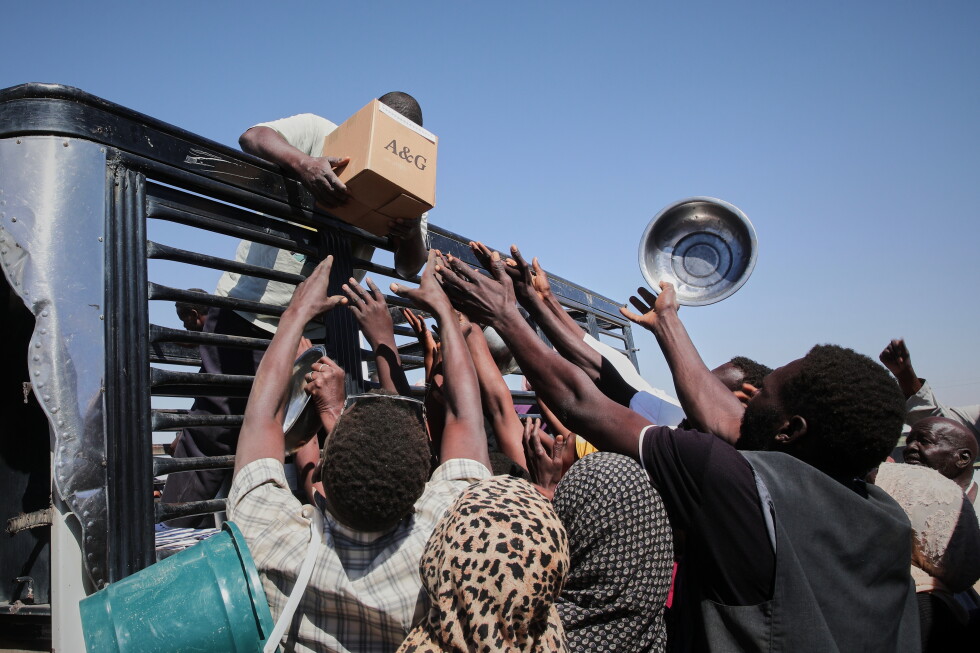
    As conflict continues to drive thousands of Sudanese civilians across the border into South Sudan, a rapidly escalating water crisis has pushed already vulnerable displaced populations to the brink of survival in the remote Upper Nile State settlement of Chemedi Payam.

    Long before the first light of day touches the arid landscape of Chemedi Payam, women and children clutching empty plastic buckets gather in long lines, waiting for water deliveries that may never materialize. For many of these displaced people, the daily fight for clean water consumes every waking hour, pushing other basic needs like meals to the background. “We wake up at 3:00 am local time and come here to look for water,” explained Amna Ibrahim, one of thousands of Sudanese refugees who fled cross-border conflict to seek safety in South Sudan. “We haven’t even had breakfast because we came early to fetch water.”

    Today, Chemedi is home to roughly 58,000 people, the vast majority of whom are Sudanese refugees and South Sudanese returnees fleeing neighboring violence. What makes this crisis particularly stark is that the settlement sits in close proximity to the Nile, one of the continent’s largest and most reliable water sources. Aid workers and local administrators emphasize that the shortage does not stem from a lack of available water, but from a catastrophic gap in critical infrastructure needed to safely extract, purify and distribute water to the scattered communities that make up the settlement.

    Most functional boreholes in the area are out of service, water storage capacity is drastically limited, and no large-scale water treatment systems exist to serve the growing population. Seasonal water collection points dry up entirely during extended dry seasons, leaving residents with two bad options: rely on sporadic water trucking deliveries, or turn to unsafe, unregulated water sources. For most households, consistent access to clean water depends entirely on aid-funded tanker operations, but humanitarian groups warn these life-sustaining services are being choked off by crippling funding shortfalls. “If the tanker doesn’t come, we don’t know what we will do,” said Zainab Yasin, another Sudanese refugee living in the settlement.

    Local authorities note that the sudden, rapid influx of thousands of people fleeing Sudan’s ongoing violence has completely overwhelmed the region’s already overstretched water infrastructure, which was inadequate to serve local populations even before the refugee crisis began. Beyond the immediate threat of dehydration and hunger, the lack of reliable clean water is undermining life-saving critical services, particularly for malnourished children and new and expecting mothers.

    At a primary healthcare clinic supported by the United Nations Children’s Fund (UNICEF) and its implementing partners, medical teams treat dozens of children suffering from severe acute malnutrition every day, alongside hundreds of pregnant and breastfeeding women. “Water is a major gap in Chemedi. Without it, our nutrition services cannot function properly,” said Jansuk Alex Sworo, a nutrition specialist working in the settlement. Sworo explained that the ongoing funding crisis for water services has left both the clinic and surrounding communities in a constant state of crisis. Currently, aid groups haul water 80 kilometers from the town of Renk to Chemedi, but this stopgap measure is financially unsustainable under current funding levels.

    With no other options available, large numbers of residents have been forced to turn to unsafe water sources, including untreated water from shallow unregulated wells and seasonal holding ponds that dry up within weeks of the dry season starting. This puts the entire population at high risk of outbreaks of waterborne diseases like cholera and typhoid.

    The impact of the crisis extends far beyond health outcomes, tearing apart access to education for refugee children. At the local primary school, 650 children are enrolled, most of them refugees, but classes are routinely cut short as early as 11 a.m. because of the lack of water for students and staff. “We have an issue with water here, and that is why we release learners at 11:00 am,” said head teacher Awadia Paulo Adowk. Some families have pulled their children out of school entirely, as every able family member is needed to join the daily search for water. “Sometimes we get water, and after two days, we don’t have anything to drink,” said Rasham Mohamed Sheikh Al-Din, a mother of eight whose children no longer attend classes regularly.

    Local government leaders and international aid workers are now urgently calling for expanded global financial and logistical support to address the growing unmet water needs of Chemedi’s vulnerable population, warning that without immediate intervention the crisis could quickly turn deadly.

  • Strait of Hormuz ‘open to commercial vessels’

    Strait of Hormuz ‘open to commercial vessels’

    A 10-day ceasefire between Israel and Hezbollah entered into force on Friday, April 17, 2026, spurring tentative de-escalation efforts across the Middle East that have already cleared the way for the full reopening of the strategically critical Strait of Hormuz to global commercial shipping. The breakthrough, brokered through behind-the-scenes diplomacy between the United States and Iran with Pakistan serving as a neutral mediator, has offered a glimmer of hope to thousands of displaced Lebanese residents, though deep divisions and unresolved core issues leave the truce highly vulnerable to collapse.

    Within hours of the ceasefire taking hold, both Washington and Tehran confirmed that the Strait of Hormuz — a chokepoint through which roughly 20% of the world’s global oil supplies transit daily — is now fully accessible for commercial vessel passage. In a post on Truth Social, U.S. President Donald Trump confirmed the reopening, emphasizing that the American military’s unilateral naval blockade on Iranian cargo will remain in place until a final bilateral agreement between the two nations is fully finalized. “The Strait of Hormuz is completely open and ready for business and full passage, but the naval blockade will remain in full force and effect as it pertains to Iran, only, until such time as our transaction with Iran is 100 percent complete,” Trump wrote in all caps.

    Iranian Foreign Minister Abbas Araghchi mirrored the announcement just minutes before Trump’s post, sharing on X that the waterway’s opening aligned with the new Lebanon ceasefire and would remain in effect for the full duration of the truce. Hezbollah lawmaker Ibrahim al-Moussawi later reinforced the link between the two developments, noting that the ceasefire would not have been possible without Iranian diplomatic pressure on Lebanon’s behalf, and that Tehran views the truce as equivalent to the decision to reopen the strait.

    On the ground in Lebanon, celebratory gunfire rang out across Beirut’s southern suburbs, Hezbollah’s traditional stronghold, as displaced families packed their belongings and began the journey back to their war-ravaged homes in southern Lebanon. For many returnees, the joy of the ceasefire was tempered by the scale of destruction left by weeks of fighting. “There’s destruction and it’s unlivable. We’re taking our things and leaving again,” Fadel Badreddine, who returned to survey his home with his wife and young son, told Reuters. “May God grant us relief and end this whole thing permanently.”

    Despite the initial calm, the ceasefire remains extraordinarily fragile. The Israeli military confirmed it had struck more than 380 Hezbollah targets across southern Lebanon in the lead-up to the truce, and remains on high alert to resume offensive operations at a moment’s notice. Israeli Prime Minister Benjamin Netanyahu has ruled out any withdrawal of Israeli troops from southern Lebanon, stating that the full disarmament of Hezbollah is a non-negotiable precondition for any long-term “historic peace agreement” between Israel and the Lebanese state. Al-Moussawi responded that Hezbollah will uphold its end of the truce so long as Israel halts all offensive attacks.

    Multiple regional and global stakeholders have welcomed the ceasefire, including Saudi Arabia and Oman, two key Gulf states with deep interests in regional stability. Riyadh has reaffirmed its unwavering support for Lebanese territorial integrity and national sovereignty, while Muscat has called on all parties to exercise restraint and avoid any actions that would violate the truce terms. Iran’s foreign ministry framed the ceasefire as a first step toward a broader regional de-escalation pact reached with the U.S. via Pakistani mediation.

    The conflict between Israel and Hezbollah, which erupted on March 2, has already claimed more than 2,000 lives to date, displacing hundreds of thousands of people on both sides of the border. Political analysts warn that a path to lasting peace remains elusive. Abed Abou Shhadeh, a Jaffa-based Israeli political commentator, noted that Israel has failed to achieve its core goal of disarming Hezbollah, and lacks a clear political roadmap for a lasting settlement with Lebanon. “History over the past 40 years has proven this is not something Israel can achieve,” Abou Shhadeh said. “The military recently acknowledged that fully disarming Hezbollah would require occupying all of Lebanon — a mission it lacks the troop strength to carry out.”

    For his part, Trump has announced that he held “excellent conversations” with both Netanyahu and Lebanese President Joseph Aoun, and has extended an invitation to both leaders to travel to the White House for high-stakes talks aimed at cementing a long-term deal. The U.S. president also added that if a final U.S.-Iran agreement is finalized in the Pakistani capital of Islamabad, he would be willing to travel there to attend the signing ceremony.

    Regional policy experts say Trump’s push for a rapid deal stems from a desire to avoid deeper U.S. entanglement in the Middle East ahead of potential broader fallout for global energy markets. “Trump is seeking an exit ramp from the Iran war before it brings greater repercussions for the US and the global energy market,” said Abas Aslani, a senior fellow at the Center for Middle East Strategic Studies in Tehran, speaking to Al Jazeera. “But it wouldn’t secure any strategic outcome for the US. There are some gaps that need to be bridged, but those differences remain.”

    In recent weeks, Trump has repeatedly stated that the conflict with Iran will end soon, but independent analysts say there is little concrete evidence to support that claim. U.S. Defense Secretary Pete Hegseth issued a sharp warning on Thursday, threatening that if Iran rejects a final deal, the U.S. military will launch targeted strikes against Iran’s critical infrastructure, including its national power grid and energy sector. Clay Ramsay, a researcher at the Center for International and Security Studies at Maryland, argued that the current U.S. administration is not positioned to negotiate a comprehensive, lasting settlement. “Trump has a political incentive to claim peace on his terms is imminent. That does not make it a reality,” Ramsay told Xinhua.

  • Haiti crisis worsens as nearly 6m face acute food insecurity

    Haiti crisis worsens as nearly 6m face acute food insecurity

    PORT-AU-PRINCE – A grim new UN-backed assessment published Thursday has laid bare the accelerating collapse of food security in Haiti, confirming that nearly 6 million Haitians will grapple with life-threatening acute hunger in the coming months. The findings underscore how persistent gang violence, mass internal displacement, and crippling economic instability have pushed the small Caribbean nation into one of the world’s worst ongoing humanitarian catastrophes.

    Per the Integrated Food Security Phase Classification (IPC), the international body that tracks global food insecurity, 5.8 million Haitians – accounting for more than half of the country’s total population – are currently classified as facing acute food insecurity. Of this vulnerable group, over 1.8 million have already reached the emergency hunger phase, requiring immediate life-sustaining food assistance to avoid widespread malnutrition and mortality.

    The IPC report attributes the deepening crisis to three interconnected drivers: rapidly deteriorating public security across the country, cascading economic shocks, and repeated breakdowns of local food markets and agricultural activities. Armed gang factions have expanded their territorial control across large swathes of Haiti in recent months, disrupting supply routes, forcing farming communities to abandon their lands, and displacing more than 1.4 million people internally. This mass displacement has stretched already limited local food supplies thin, pushing low-income and vulnerable households into extreme levels of hunger.

    While the latest IPC projection marks a small downward revision from an earlier forecast of 5.91 million acutely food-insecure people, humanitarian agencies caution that any minor progress remains extremely fragile. Analysts attribute the slight improvement to a combination of targeted international food assistance, easing national inflation rates, and better-than-expected harvests in a handful of Haiti’s agricultural regions. The United Nations World Food Programme (WFP) confirmed that consistent, sustained food aid interventions have lifted roughly 200,000 Haitians out of emergency-level hunger since last year.

    Still, aid leaders warn that these fragile gains are at immediate risk of reversal without a significant expansion of international support. In particular, the recent spike in global fuel prices triggered by ongoing tensions around the Iran conflict has driven sharp increases in transportation and agricultural production costs across Haiti, placing additional strain on humanitarian operations and household budgets.

    “Fighting hunger is essential to restoring stability in Haiti. We cannot build peace if families cannot feed their children,” Wanja Kaaria, WFP’s Country Director for Haiti, said in an official statement, emphasizing the urgent need for scaled-up global backing to prevent the crisis from spiraling further out of control.