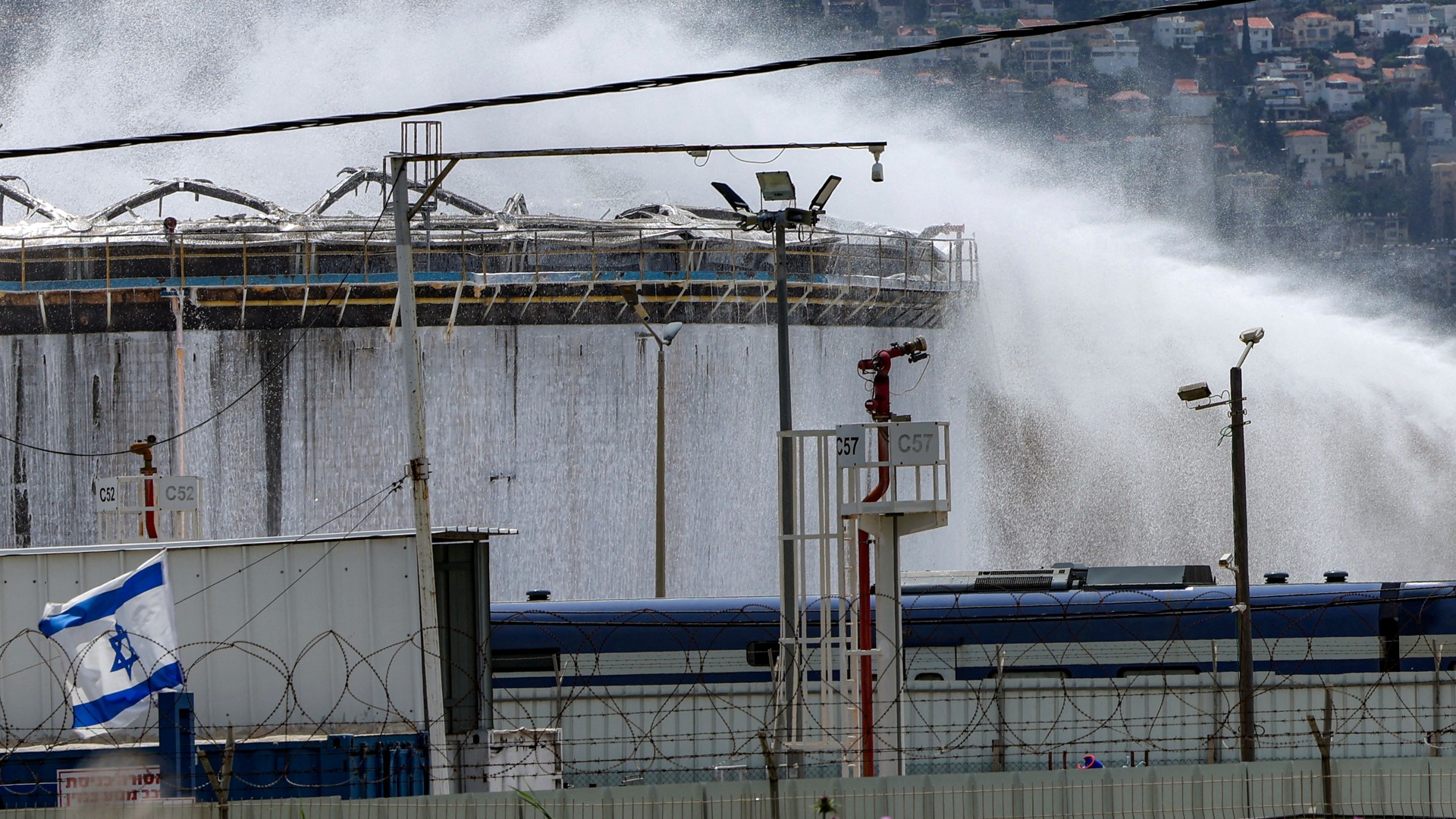
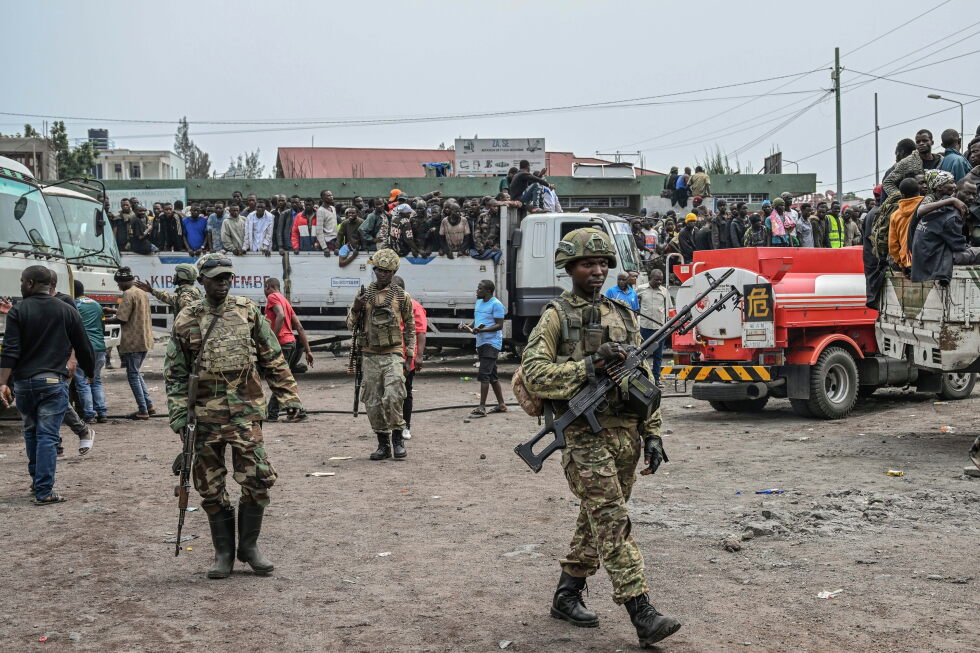
CAIRO – Tensions around the strategically critical Strait of Hormuz have exploded into a fresh escalation just days after a tentative de-escalation, as Iran rolled back its decision to reopen the waterway and opened fire on passing commercial vessels Saturday. The sudden reversal comes in direct response to the United States’ refusal to lift its sweeping naval blockade of Iranian ports, a move that has thrown fragile ceasefire talks into jeopardy and reignited fears of a widening regional conflict that could upend global energy markets.
分类: world
-

Water crisis grips South Sudan refugees
As conflict continues to drive thousands of Sudanese civilians across the border into South Sudan, a rapidly escalating water crisis has pushed already vulnerable displaced populations to the brink of survival in the remote Upper Nile State settlement of Chemedi Payam.
Long before the first light of day touches the arid landscape of Chemedi Payam, women and children clutching empty plastic buckets gather in long lines, waiting for water deliveries that may never materialize. For many of these displaced people, the daily fight for clean water consumes every waking hour, pushing other basic needs like meals to the background. “We wake up at 3:00 am local time and come here to look for water,” explained Amna Ibrahim, one of thousands of Sudanese refugees who fled cross-border conflict to seek safety in South Sudan. “We haven’t even had breakfast because we came early to fetch water.”
Today, Chemedi is home to roughly 58,000 people, the vast majority of whom are Sudanese refugees and South Sudanese returnees fleeing neighboring violence. What makes this crisis particularly stark is that the settlement sits in close proximity to the Nile, one of the continent’s largest and most reliable water sources. Aid workers and local administrators emphasize that the shortage does not stem from a lack of available water, but from a catastrophic gap in critical infrastructure needed to safely extract, purify and distribute water to the scattered communities that make up the settlement.
Most functional boreholes in the area are out of service, water storage capacity is drastically limited, and no large-scale water treatment systems exist to serve the growing population. Seasonal water collection points dry up entirely during extended dry seasons, leaving residents with two bad options: rely on sporadic water trucking deliveries, or turn to unsafe, unregulated water sources. For most households, consistent access to clean water depends entirely on aid-funded tanker operations, but humanitarian groups warn these life-sustaining services are being choked off by crippling funding shortfalls. “If the tanker doesn’t come, we don’t know what we will do,” said Zainab Yasin, another Sudanese refugee living in the settlement.
Local authorities note that the sudden, rapid influx of thousands of people fleeing Sudan’s ongoing violence has completely overwhelmed the region’s already overstretched water infrastructure, which was inadequate to serve local populations even before the refugee crisis began. Beyond the immediate threat of dehydration and hunger, the lack of reliable clean water is undermining life-saving critical services, particularly for malnourished children and new and expecting mothers.
At a primary healthcare clinic supported by the United Nations Children’s Fund (UNICEF) and its implementing partners, medical teams treat dozens of children suffering from severe acute malnutrition every day, alongside hundreds of pregnant and breastfeeding women. “Water is a major gap in Chemedi. Without it, our nutrition services cannot function properly,” said Jansuk Alex Sworo, a nutrition specialist working in the settlement. Sworo explained that the ongoing funding crisis for water services has left both the clinic and surrounding communities in a constant state of crisis. Currently, aid groups haul water 80 kilometers from the town of Renk to Chemedi, but this stopgap measure is financially unsustainable under current funding levels.
With no other options available, large numbers of residents have been forced to turn to unsafe water sources, including untreated water from shallow unregulated wells and seasonal holding ponds that dry up within weeks of the dry season starting. This puts the entire population at high risk of outbreaks of waterborne diseases like cholera and typhoid.
The impact of the crisis extends far beyond health outcomes, tearing apart access to education for refugee children. At the local primary school, 650 children are enrolled, most of them refugees, but classes are routinely cut short as early as 11 a.m. because of the lack of water for students and staff. “We have an issue with water here, and that is why we release learners at 11:00 am,” said head teacher Awadia Paulo Adowk. Some families have pulled their children out of school entirely, as every able family member is needed to join the daily search for water. “Sometimes we get water, and after two days, we don’t have anything to drink,” said Rasham Mohamed Sheikh Al-Din, a mother of eight whose children no longer attend classes regularly.
Local government leaders and international aid workers are now urgently calling for expanded global financial and logistical support to address the growing unmet water needs of Chemedi’s vulnerable population, warning that without immediate intervention the crisis could quickly turn deadly.
-

Strait of Hormuz ‘open to commercial vessels’
A 10-day ceasefire between Israel and Hezbollah entered into force on Friday, April 17, 2026, spurring tentative de-escalation efforts across the Middle East that have already cleared the way for the full reopening of the strategically critical Strait of Hormuz to global commercial shipping. The breakthrough, brokered through behind-the-scenes diplomacy between the United States and Iran with Pakistan serving as a neutral mediator, has offered a glimmer of hope to thousands of displaced Lebanese residents, though deep divisions and unresolved core issues leave the truce highly vulnerable to collapse.
Within hours of the ceasefire taking hold, both Washington and Tehran confirmed that the Strait of Hormuz — a chokepoint through which roughly 20% of the world’s global oil supplies transit daily — is now fully accessible for commercial vessel passage. In a post on Truth Social, U.S. President Donald Trump confirmed the reopening, emphasizing that the American military’s unilateral naval blockade on Iranian cargo will remain in place until a final bilateral agreement between the two nations is fully finalized. “The Strait of Hormuz is completely open and ready for business and full passage, but the naval blockade will remain in full force and effect as it pertains to Iran, only, until such time as our transaction with Iran is 100 percent complete,” Trump wrote in all caps.
Iranian Foreign Minister Abbas Araghchi mirrored the announcement just minutes before Trump’s post, sharing on X that the waterway’s opening aligned with the new Lebanon ceasefire and would remain in effect for the full duration of the truce. Hezbollah lawmaker Ibrahim al-Moussawi later reinforced the link between the two developments, noting that the ceasefire would not have been possible without Iranian diplomatic pressure on Lebanon’s behalf, and that Tehran views the truce as equivalent to the decision to reopen the strait.
On the ground in Lebanon, celebratory gunfire rang out across Beirut’s southern suburbs, Hezbollah’s traditional stronghold, as displaced families packed their belongings and began the journey back to their war-ravaged homes in southern Lebanon. For many returnees, the joy of the ceasefire was tempered by the scale of destruction left by weeks of fighting. “There’s destruction and it’s unlivable. We’re taking our things and leaving again,” Fadel Badreddine, who returned to survey his home with his wife and young son, told Reuters. “May God grant us relief and end this whole thing permanently.”
Despite the initial calm, the ceasefire remains extraordinarily fragile. The Israeli military confirmed it had struck more than 380 Hezbollah targets across southern Lebanon in the lead-up to the truce, and remains on high alert to resume offensive operations at a moment’s notice. Israeli Prime Minister Benjamin Netanyahu has ruled out any withdrawal of Israeli troops from southern Lebanon, stating that the full disarmament of Hezbollah is a non-negotiable precondition for any long-term “historic peace agreement” between Israel and the Lebanese state. Al-Moussawi responded that Hezbollah will uphold its end of the truce so long as Israel halts all offensive attacks.
Multiple regional and global stakeholders have welcomed the ceasefire, including Saudi Arabia and Oman, two key Gulf states with deep interests in regional stability. Riyadh has reaffirmed its unwavering support for Lebanese territorial integrity and national sovereignty, while Muscat has called on all parties to exercise restraint and avoid any actions that would violate the truce terms. Iran’s foreign ministry framed the ceasefire as a first step toward a broader regional de-escalation pact reached with the U.S. via Pakistani mediation.
The conflict between Israel and Hezbollah, which erupted on March 2, has already claimed more than 2,000 lives to date, displacing hundreds of thousands of people on both sides of the border. Political analysts warn that a path to lasting peace remains elusive. Abed Abou Shhadeh, a Jaffa-based Israeli political commentator, noted that Israel has failed to achieve its core goal of disarming Hezbollah, and lacks a clear political roadmap for a lasting settlement with Lebanon. “History over the past 40 years has proven this is not something Israel can achieve,” Abou Shhadeh said. “The military recently acknowledged that fully disarming Hezbollah would require occupying all of Lebanon — a mission it lacks the troop strength to carry out.”
For his part, Trump has announced that he held “excellent conversations” with both Netanyahu and Lebanese President Joseph Aoun, and has extended an invitation to both leaders to travel to the White House for high-stakes talks aimed at cementing a long-term deal. The U.S. president also added that if a final U.S.-Iran agreement is finalized in the Pakistani capital of Islamabad, he would be willing to travel there to attend the signing ceremony.
Regional policy experts say Trump’s push for a rapid deal stems from a desire to avoid deeper U.S. entanglement in the Middle East ahead of potential broader fallout for global energy markets. “Trump is seeking an exit ramp from the Iran war before it brings greater repercussions for the US and the global energy market,” said Abas Aslani, a senior fellow at the Center for Middle East Strategic Studies in Tehran, speaking to Al Jazeera. “But it wouldn’t secure any strategic outcome for the US. There are some gaps that need to be bridged, but those differences remain.”
In recent weeks, Trump has repeatedly stated that the conflict with Iran will end soon, but independent analysts say there is little concrete evidence to support that claim. U.S. Defense Secretary Pete Hegseth issued a sharp warning on Thursday, threatening that if Iran rejects a final deal, the U.S. military will launch targeted strikes against Iran’s critical infrastructure, including its national power grid and energy sector. Clay Ramsay, a researcher at the Center for International and Security Studies at Maryland, argued that the current U.S. administration is not positioned to negotiate a comprehensive, lasting settlement. “Trump has a political incentive to claim peace on his terms is imminent. That does not make it a reality,” Ramsay told Xinhua.
-

Haiti crisis worsens as nearly 6m face acute food insecurity
PORT-AU-PRINCE – A grim new UN-backed assessment published Thursday has laid bare the accelerating collapse of food security in Haiti, confirming that nearly 6 million Haitians will grapple with life-threatening acute hunger in the coming months. The findings underscore how persistent gang violence, mass internal displacement, and crippling economic instability have pushed the small Caribbean nation into one of the world’s worst ongoing humanitarian catastrophes.
Per the Integrated Food Security Phase Classification (IPC), the international body that tracks global food insecurity, 5.8 million Haitians – accounting for more than half of the country’s total population – are currently classified as facing acute food insecurity. Of this vulnerable group, over 1.8 million have already reached the emergency hunger phase, requiring immediate life-sustaining food assistance to avoid widespread malnutrition and mortality.
The IPC report attributes the deepening crisis to three interconnected drivers: rapidly deteriorating public security across the country, cascading economic shocks, and repeated breakdowns of local food markets and agricultural activities. Armed gang factions have expanded their territorial control across large swathes of Haiti in recent months, disrupting supply routes, forcing farming communities to abandon their lands, and displacing more than 1.4 million people internally. This mass displacement has stretched already limited local food supplies thin, pushing low-income and vulnerable households into extreme levels of hunger.
While the latest IPC projection marks a small downward revision from an earlier forecast of 5.91 million acutely food-insecure people, humanitarian agencies caution that any minor progress remains extremely fragile. Analysts attribute the slight improvement to a combination of targeted international food assistance, easing national inflation rates, and better-than-expected harvests in a handful of Haiti’s agricultural regions. The United Nations World Food Programme (WFP) confirmed that consistent, sustained food aid interventions have lifted roughly 200,000 Haitians out of emergency-level hunger since last year.
Still, aid leaders warn that these fragile gains are at immediate risk of reversal without a significant expansion of international support. In particular, the recent spike in global fuel prices triggered by ongoing tensions around the Iran conflict has driven sharp increases in transportation and agricultural production costs across Haiti, placing additional strain on humanitarian operations and household budgets.
“Fighting hunger is essential to restoring stability in Haiti. We cannot build peace if families cannot feed their children,” Wanja Kaaria, WFP’s Country Director for Haiti, said in an official statement, emphasizing the urgent need for scaled-up global backing to prevent the crisis from spiraling further out of control.
-

Russia has looted thousands of Ukrainian cultural objects in the war. Finding them is a challenge
When Russian troops withdrew from Kherson in late 2022 after Ukraine reclaimed the strategic southern Ukrainian city, Alina Dotsenko, director of the Kherson Art Museum, returned to her workplace to a devastating scene: nearly all of the institution’s collections had been stripped and carted away.
“ I stepped inside to find every storage unit gutted, every shelf bare. My legs couldn’t hold me, and I just slid down the wall, crying like a child,” Dotsenko recalled in an interview with the Associated Press.
Before Russia launched its full-scale invasion in February 2022, the Kherson Art Museum housed more than 14,000 artworks spanning global creative traditions from North American pieces to Japanese art. Multiple sources, including Dotsenko and citizen footage captured after the liberation, confirm that retreating Russian forces loaded the majority of the collection onto military trucks and transported it to Crimea, the Ukrainian peninsula illegally annexed by Moscow in 2014. To date, the whereabouts of nearly 10,000 missing artifacts remain unknown.
Today, this act of cultural plunder is back in the international spotlight as Russia pushes to rejoin global cultural circles, just months ahead of the 2024 Venice Biennale — one of the world’s most prestigious contemporary art events. For the first time since 2022, event organizers have cleared Russian representatives to participate, a move Ukraine has sharply condemned. Kyiv argues the biennale “must not become a platform to whitewash the war crimes Russia commits daily against the Ukrainian people and our cultural heritage.”
Unlike most cases of cultural looting across Ukraine, the Kherson Art Museum theft is uniquely well-documented, thanks to pre-war preparation by Dotsenko herself. Years before the invasion, the director launched a full-scale project to photograph every item in the museum’s collection, building a comprehensive digital archive. When Russian forces occupied Kherson, Dotsenko hid the archive’s hard drives in secret, and retrieved them intact after liberation.
This detailed record has turned the Kherson case into a top priority for Ukrainian prosecutors and Interpol, who are using the catalog to trace missing works and build legal cases against those responsible for the looting. Unfortunately, this level of documentation is extremely rare across the country.
Across Ukraine’s occupied and war-torn regions, most pre-war cultural collections lack complete, accessible digital records. Russian occupying forces have deliberately seized or destroyed original inventory logs and collection documentation, making it nearly impossible to meet the strict evidentiary requirements for international legal claims to recover lost artifacts.
The experience of the Donetsk Regional Art Museum reflects this widespread challenge. Halyna Chumak, the museum’s former director, fled Russian-controlled Donetsk in 2014, shortly after Moscow first seized parts of eastern Ukraine. She was only able to smuggle out a fraction of the museum’s collection catalogs, documenting just over 1,000 of the institution’s 15,000 total works. Over the course of a year, Chumak carried the fragile documents through multiple armed checkpoints, leaving most behind to avoid attracting suspicion from pro-Russian search teams.
A decade later, a team led by Ukrainian entrepreneur Oleksandr Velychko is working to digitize these surviving catalogs, a painstaking process that took more than three months to process just 400 works. Once complete, the digitized database will be turned over to Ukrainian authorities to serve as partial legal evidence for future ownership claims.
Ukraine’s Prosecutor General Office currently has 23 open criminal cases focused on cultural heritage crimes, covering 174 separate incidents of looting, destruction, and damage to cultural sites. Anna Sosonska, deputy head of the office’s war crimes unit, explained that the Kherson case stands out from the rest almost entirely because of Dotsenko’s surviving archive.
“Russian forces almost always take inventory books and all original collection documentation from museums they occupy,” Sosonska explained in an interview. Without these records, prosecutors must rely on open-source intelligence, tracing looted artifacts through social media posts, auction house listings, and other online traces — a slow, labor-intensive process that can rarely reconstruct entire stolen collections. Still, Sosonska emphasized that cultural heritage crimes fall under international humanitarian law and carry no statute of limitations, meaning investigations will continue long after active fighting ends.
The full scale of Ukraine’s cultural losses remains impossible to calculate accurately. As of March 2024, Ukraine’s Culture Ministry confirms Russia has destroyed or damaged more than 1,700 designated cultural heritage sites and 2,503 cultural infrastructure facilities, including high-profile targets like the Mariupol Drama Theatre. More than 2.1 million museum objects are still held in Russian-occupied Ukrainian territory, and more than 35,000 items have been confirmed looted from territories Kyiv has retaken since 2022.
Moscow has moved to formalize its control over stolen cultural property. In 2023, the Russian government amended national legislation to add 77 Ukrainian museums from occupied Donetsk, Luhansk, Kherson, and Zaporizhzhia regions to Russia’s official national cultural catalog. Critics call this move a deliberate attempt to cement illegal ownership and block the eventual return of looted works to Ukraine.
Tetiana Berezhna, appointed Ukraine’s Culture Minister in October 2023, has made widespread digitization of all Ukrainian cultural collections a core priority for her ministry. “If we had fully digitalized all collections before the invasion, we would know exactly how many objects were stolen and exactly what they look like,” she noted.
There are small signs of progress on accountability for these crimes. In March 2024, a Polish court approved the extradition of Russian national Oleksandr Butiahin to Ukraine, where he faces charges for conducting illegal archaeological excavations in occupied Crimea and smuggling ancient artifacts out of the site that Ukraine recognizes as its sovereign cultural heritage. Butiahin was arrested in Poland in 2023 at Ukraine’s request, and the ruling is still subject to appeal. If extradited and convicted, this would mark the first time a Russian national faces prosecution in Ukraine for crimes against Ukrainian cultural heritage in occupied territory.
For Dotsenko, who has dedicated 50 years of her life to the Kherson Art Museum, the fight to recover the collection is deeply personal. She recently spoke to the AP at a Kyiv exhibition featuring high-quality reproductions of the stolen paintings, many of which have not been seen by the public since 2022. “While these works remain in captivity, all of us hold out hope that this will be resolved in favor of the Kherson Art Museum,” she said. “I did not spend 50 years of my life building this collection for nothing.”
The Russian Culture Ministry did not respond to repeated requests for comment from the Associated Press on the allegations of looted Ukrainian art. In past statements, Russian-installed officials in occupied Ukrainian territories have described the removal of cultural artifacts as “protective measures” to save works from damage during fighting. Kirill Stremousov, the former Russian-installed deputy administrator of occupied Kherson who died shortly before the city’s liberation, claimed looted statues would “definitely return” to Kherson once active fighting ended.
-

Even the dead must make way as construction transforms Afghanistan’s capital
In a dusty residential and commercial neighborhood of central Kabul, what remains of Syed Murtaza Sadar’s life and livelihood stands as a stark testament to the human cost of Afghanistan’s push for infrastructure renewal. Where a two-story building once housed his family’s barbershop and public bath on the ground floor, and their home above, only scattered piles of broken brick and crumbled mortar remain. Sadar, a 25-year-old head of an extended family, says he was forced to tear down most of the structure with his own hands after municipal authorities ordered the property seized for road widening.
“This was our house, and now I am destroying it with my own hands,” Sadar explained pausing mid-work, his hands dusted with mortar. “It will be very difficult for us.”
The land expropriation that displaced Sadar’s family is part of a broad infrastructure initiative that the ruling Taliban administration has revived, originally drafted decades ago under the former U.S.-backed Afghan government. The plan aims to untangle Kabul’s crippling traffic congestion by expanding narrow, pothole-riddled streets, adding new flyovers, and constructing modern underpasses across the capital. When the plan was first proposed, it never moved past the drafting stage: bureaucratic gridlock, systemic corruption, and widespread violence during the Taliban insurgency derailed all construction work. Within months of the Taliban seizing control of Kabul in August 2021, following the chaotic withdrawal of U.S.-led coalition troops, the new municipal government prioritized reviving the stalled projects.
According to city officials, the progress has been substantial over the past four and a half years. Naimatullah Barakzai, Kabul municipality’s cultural affairs representative, announced at a recent press briefing that construction crews have completed roughly 280 miles of new roads across the capital, while expropriating more than 11,000 private properties to make way for the expanded network. For 2025 alone, the city has greenlit 233 new projects, with an allocation of more than 1.9 billion afghanis, equal to roughly $29 million in funding. Mohammad Qasim Afghan, the municipality’s head of planning, confirmed the budget allocation, noting that all road construction costs are covered entirely by local municipal funds. Barakzai added that Kabul’s municipal government has raised more than 28 billion afghanis (approximately $434 million) over the past four and a half years to fund the initiative, and property owners receive three months’ advance notice plus compensation at rates set by the city. More than 1.2 billion afghanis ($18.6 million) has been paid out to displaced property owners over the past year alone, per city data.
For affected residents, however, the compensation and long-term infrastructure benefits often do little to ease immediate hardship. After the initial round of demolition cleared the front of his street, Sadar says authorities ordered remaining property owners to tear down the rest of their structures themselves, leaving residents with little room to push back against the orders. His former business employed 25 local workers and supported five extended families, each with three to four children. Today, Sadar and his family live in rented accommodation, drawing down their limited savings while waiting for compensation to be fully processed. “If the government gives us money, God willing, I will be able to go back to work and buy or build a new house for myself,” he said. Even amid his displacement, Sadar acknowledges the urgent need for the project: the existing single-lane road running past his former neighborhood is so chronically congested that any trip across the city requires more than an hour of sitting in gridlock.
For a country grappling with widespread poverty and mass unemployment, the construction push has delivered one clear benefit: thousands of much-needed jobs for local workers. At the massive Baraki intersection construction site, project manager and civil engineer Obaidullah Elham says crews work around the clock, seven days a week, to complete a Turkish-designed $23 million flyover and underpass complex that will replace one of Kabul’s most congested junctions. The project employs 500 skilled and unskilled local workers, injecting much-needed income into a local economy reeling from international aid cuts and systemic economic collapse. Work on the 1,540-foot underpass began in July of last year and is already 80% complete, Elham said, standing beside a working excavator moving earth at the site. Construction on the flyover, only the second to be built in Kabul, started earlier this year.
The scope of the project has required clearing space even for longstanding community landmarks, including a 200-year-old graveyard in Kabul’s Qala-e-Khater neighborhood. The new planned road will cut directly through the historic burial ground, requiring the exhumation and relocation of hundreds of graves to a new section of the cemetery. Today, large rectangular empty holes mark where remains once rested, a quiet reminder of the project’s far-reaching impact.
Abdul Wadood Alokozay, a 21-year-old resident of the neighborhood, says his grandfather’s remains were among those moved. Alokozay’s extended family lost three properties in the area: a girls’ religious madrassa, and two multi-generational family homes, all of which were expropriated and leveled. “At first our family all were sad for this, that we lost our house,” Alokozay said. “It was even harder to tear it down ourselves, after we lived there for more than 20 years.” The family received roughly $13,000 in compensation for the three structures, with additional compensation promised for the land, and has since built a new three-story home on other family land overlooking the former property.
Shah Faisal Alokozay, a 30-year-old community representative and Abdul Wadood’s cousin, says plans for the connecting road have sat on city drawing boards for decades. “It’s a very important road, connecting east and north Kabul,” he explained. “So it is very important for the community.”
For Kabul’s new leadership, the infrastructure push represents both a practical solution to chronic urban congestion and a visible demonstration of the Taliban administration’s ability to deliver long-stalled public projects that the previous government could not complete. For displaced residents like Sadar, it is a complicated trade-off: short-term hardship and displacement in exchange for the promise of a more connected, less congested capital for future generations.
-

Strait of Hormuz ‘completely open’ and Iran will ‘never close’ it again, Trump announces
In a major development that calms one of the world’s most critical energy chokepoints, Iran and the United States announced Friday that the Strait of Hormuz — the waterway through which roughly one-quarter of all global oil shipments pass — will resume full commercial passage for all vessels during an ongoing ceasefire period, just days after heightened military tensions between the two nations and an Israel-US strike on Iranian targets.
Iranian Foreign Minister Abbas Araghchi confirmed the move in a post on X, noting that the decision aligns with the broader ceasefire agreement reached for neighboring Lebanon. “The passage for all commercial vessels through Strait of Hormuz is declared completely open for the remaining period of ceasefire, on the coordinated route as already announced by Ports and Maritime Organisation of the Islamic Rep. of Iran,” Araghchi wrote.
US President Donald Trump hailed the announcement as a landmark win for the global community in a series of posts on his Truth Social platform, calling it “A GREAT AND BRILLIANT DAY FOR THE WORLD!”
Trump clarified that while all commercial traffic is permitted to transit the strait, the unilateral US naval blockade targeting Iranian oil exports, implemented earlier this week, will remain in effect until all terms of the bilateral agreement between Washington and Tehran are fully finalized. “THE STRAIT OF HORMUZ IS COMPLETELY OPEN AND READY FOR BUSINESS AND FULL PASSAGE, BUT THE NAVAL BLOCKADE WILL REMAIN IN FULL FORCE AND EFFECT AS IT PERTAINS TO IRAN, ONLY, UNTIL SUCH TIME AS OUR TRANSACTION WITH IRAN IS 100% COMPLETE,” he wrote, adding that most core terms have already been negotiated and the finalization process is expected to move rapidly.
The US president also claimed Iran had committed to a permanent, future commitment that the strait will never be closed to international shipping, and that Iran has cleared or is in the process of removing all naval mines from the waterway with US support.
United Nations Secretary-General António Guterres joined in welcoming the reopening, framing the decision as “a step in the right direction” for de-escalating broader regional tensions.
However, a key caveat has emerged from the Iranian side, an anonymous Iranian official told Reuters: the reopening of the strait remains conditional on the United States upholding all existing ceasefire commitments. This stands in direct tension with Trump’s repeated public insistence that the Hormuz agreement is completely disconnected from the Israel-Lebanon ceasefire he brokered just one day prior.
Iran had previously demanded that any regional ceasefire deal must include protections for its allied militant group Hezbollah, which has been engaged in cross-border hostilities with Israel for months. Rejecting any linkage between the two deals in his Truth Social posts, Trump wrote, “This deal is not tied, in any way, to Lebanon, but we will, MAKE LEBANON GREAT AGAIN!”
The US leader also outlined terms of the nuclear component of the agreement, stating that the US will take possession of all enriched uranium dust created by recent US B-2 Bomber strikes on Iranian nuclear sites, adding that “No money will exchange hands in any way, shape, or form.” He further confirmed that the US will address the Hezbollah situation separately, and that Israel has been prohibited by Washington from conducting further bombing operations in Lebanon, saying “Israel will not be bombing Lebanon any longer. They are PROHIBITED from doing so by the USA Enough is enough!!!”
The Iranian official pushed back on Trump’s characterization of nuclear progress, telling Reuters that no final agreement has been reached on the details of outstanding nuclear issues, and that substantive negotiations are still required to lock in any agreements on that front.
In his series of Friday social media posts, Trump also thanked several regional and neighboring powers for their mediation and support: he singled out Pakistan for leading mediation efforts between Washington and Tehran, and expressed gratitude to Saudi Arabia, the United Arab Emirates and Qatar for their assistance throughout the negotiations. Notably absent from his list of thanks were Washington’s traditional European allies, whom Trump publicly criticized as unhelpful.
“Now that the Hormuz Strait situation is over, I received a call from NATO asking if we would need some help. I TOLD THEM TO STAY AWAY, UNLESS THEY JUST WANT TO LOAD UP THEIR SHIPS WITH OIL. They were useless when needed, a Paper Tiger! President DJT,” he wrote.
Trump’s rebuke came as an international summit focused on Strait of Hormuz maritime security was already underway in Paris, France. Speaking at the summit, British Prime Minister Keir Starmer announced that roughly 40 countries have agreed to speed up military planning operations to secure permanent freedom of navigation through the strait once a full, permanent end to hostilities is reached.
The current two-week ceasefire is scheduled to expire next week, though Trump has indicated he is open to extending the truce to allow for further negotiations. Starmer added that full details of the proposed international military security mission will be released publicly next week.
-

Pope Leo XIV’s visit to an African church linked to slavery reflects on his own complex heritage
On the banks of Angola’s Kwanza River stands a 430-year-old white-washed church that holds a deeply layered, painful history: built by Portuguese colonizers as part of a 16th-century fortress complex, the Church of Our Lady of Muxima long served as a critical node in the trans-Atlantic slave trade. Today, as Pope Leo XIV prepares to visit the site during his first papal tour of Africa, the stop has emerged as a symbolic moment of reckoning, reconciliation, and reimagining for the global Catholic Church.
-

Zimbabwe’s iconic stone birds were taken by colonialists. Finally, they’re all back home
For more than a century, a gap has sat in Zimbabwe’s national heritage: one of eight iconic ancient soapstone bird sculptures, looted by colonial invaders and scattered across the globe, remained outside the country’s borders. That changed this week, when the final missing Zimbabwe Bird touched down on home soil 137 years after it was ripped from its original place at the Great Zimbabwe ruins, in a landmark repatriation organized by neighboring South Africa.
Known globally as the Zimbabwe Bird, this stately eagle carving has been embedded in the country’s national identity for generations, featured prominently on Zimbabwe’s flag, banknotes, and official coat of arms. But few symbols carry as layered a history as this carving, one that traces a long arc of colonial theft, decades of diplomatic negotiation, and a growing global movement to return looted African cultural heritage.
The eight original bird sculptures were carved between the 11th and 15th centuries for Great Zimbabwe, a sprawling medieval stone city that gave the modern nation its name — Zimbabwe translates to “house of stone” in local languages, and the country remains celebrated worldwide for its contemporary stone carving tradition. The birds, ranging from 25 centimeters to 50 centimeters in height (and reaching more than a meter when mounted on their original columns), were placed on walls and stone monoliths to watch over the city.
Scholars have not reached a consensus on which ethnic group originally created the carvings, though many believe they are the work of ancestors of the Shona people, who make up Zimbabwe’s current majority population. The birds carry deep cultural and spiritual meaning: most experts agree they depict either the bateleur eagle (called *chapungu* in Shona, a sacred species to both Shona and Venda communities) or the African fish eagle. Plan Shenjere-Nyabezi, an archaeology professor at the University of Zimbabwe, calls the Zimbabwe Birds “the most significant archaeological treasures ever discovered in the country, powerful and cherished symbols of our national heritage.”
The theft of the final bird began in 1889, when European hunter Willi Posselt stumbled on the Great Zimbabwe ruins amid a wave of pre-colonial exploration. According to Posselt’s own writing, local people armed with spears and guns initially protested his removal of what he called the “best specimen” of the birds, but he ripped the carving from its column after exchanging blankets and other goods for access. He ultimately sold the sculpture to Cecil Rhodes, the infamous British imperialist who led the colonization of what is now Zimbabwe and Zambia. Rhodes displayed the bird as decorative art at his lavish Cape Town estate, where it remained for more than a century after his death in 1902.
Over the decades, the other missing birds slowly made their way home. After Zimbabwe gained independence in 1980, the new government launched a formal campaign to recover all eight carvings, with only two remaining within the country’s borders at the time. In a striking 1981 trade, South Africa’s apartheid government returned four birds it held in a national museum in exchange for a collection of 1,000 insect specimens from Zimbabwe’s Natural History Museum. Germany followed suit in 2003, repatriating a soapstone pedestal fragment that had been held in Berlin’s Ethnological Museum since 1907.
But the final bird held by South Africa was blocked for decades by a century-old legal barrier. When Rhodes died, his 1902 will vested his estate and all its contents to the South African government, and the 1910 Rhodes Will Act banned the sale or transfer of any of his possessions. Every request for repatriation from Zimbabwe was rejected on the basis of this law, according to South African Minister of Culture Gayton McKenzie.
This week, South Africa overcame that legal obstacle to complete the handover, alongside the repatriation of eight sets of Zimbabwean human remains exhumed by colonial researchers and held in a South African museum. McKenzie called the removal of the remains a product of “misguided colonial pseudoscience,” noting “these are not abstractions, but people… removed from their graves, their communities, and their homeland under the logic that their bodies were data.”
To get around the 1910 Act, South Africa initially arranged a two-year loan of the sculpture to Zimbabwe, but McKenzie has confirmed that the South African government is currently reviewing the century-old law to formalize permanent repatriation, and insists the bird will never be returned to South Africa. The handover was welcomed by Zimbabwean President Emmerson Mnangagwa, who called the moment “the return of a national icon.”
The repatriation marks a rare milestone in the global movement for the return of looted African artefacts: while most repatriations to date have come from European colonial powers including France, the Netherlands, Germany, and the United Kingdom, this transfer sees an African nation returning stolen heritage to another African country. Zimbabwe continues to push for the repatriation of other cultural items, including the skulls of 19th-century anti-colonial heroes believed to be held in the UK.
For Zimbabwean leaders and scholars, the return of the final bird is more than a cultural victory — it is a spiritual homecoming. The carving will be placed on permanent display at an on-site museum at the Great Zimbabwe UNESCO World Heritage Site, where it will join the seven other recovered birds for preservation. “The bird is Zimbabwe’s heritage… one should not have to travel to other countries to enjoy their own heritage,” said Shenjere-Nyabezi.
Edward Matenga, one of Zimbabwe’s leading scholars of the Zimbabwe Bird sculptures, described the handover as a “win-win” for both nations, calling it a cathartic step for South Africa to confront its colonial legacy. The arrival of the bird also came just days ahead of Zimbabwe’s independence anniversary, with Mnangagwa noting the timely homecoming: “Let the people of Zimbabwe come and witness. Let the children of this great nation see with their own eyes the symbol of their identity and let the world know Zimbabwe is a nation that respects its past.”
-

What does it take to survive in the Arctic? These rangers have an idea
Stretching across thousands of kilometers of frozen, unforgiving terrain, the Canadian Arctic is one of the most extreme environments on the planet, where temperatures can plummet to well below -40 degrees Celsius, wind chills can kill a healthy person in minutes, and vast expanses of sea ice and barren tundra offer few landmarks or safe havens. For those who patrol this remote border region year-round, survival is not a matter of luck—it is a set of hard-earned skills, cultural knowledge, and mental discipline passed down through generations. A recent BBC assignment embedded with Canadian military rangers in Canada’s northernmost territory offered a rare opportunity to learn these first-hand lessons about enduring and adapting to the world’s coldest inhabited landscapes.
Canadian Rangers, a reserve unit of the Canadian Armed Forces made up largely of Indigenous peoples who have called the Arctic home for millennia, have long been the backbone of sovereignty and rescue operations in the far north. Unlike conventional military units trained for large-scale combat, their core mission centers on patrolling remote borders, conducting search and rescue, supporting scientific research, and maintaining a persistent presence in regions inaccessible to most other government forces. To do this work, they rely on a blend of traditional Indigenous knowledge and modern practical skills that allow them to navigate and survive conditions that would defeat even experienced outdoor enthusiasts from more temperate climates.
During the embedding, rangers shared a range of critical lessons for surviving extreme Arctic conditions, starting with the non-negotiable rule of prioritizing layered, windproof clothing that traps heat without trapping moisture. Many visitors to the Arctic make the fatal mistake of overdressing for cold, leading to sweat that freezes against the skin once activity stops, rapidly dropping core body temperature. Rangers also emphasize the importance of constant situational awareness: thin sea ice can crack without warning, blizzards can roll in in minutes reducing visibility to zero, and even small cuts can become life-threatening when hypothermia already strains the body’s ability to regulate heat. Another key insight is the value of local ecological knowledge: reading wind patterns, animal behavior, and ice formations to predict weather changes and find safe routes across the tundra—a skill that cannot be learned from GPS alone, even with modern satellite technology.
Beyond practical skills, the rangers stress that mental resilience is just as critical as physical preparation. Isolation, months of total darkness in winter, and the constant pressure of managing risk in a harsh environment can take a significant psychological toll. The close-knit community bonds among rangers, rooted in shared cultural connection to the land, help them cope with these challenges and support one another through the harshest months. For the rangers, surviving the Arctic is not just about enduring it—it is about respecting the land and working with its natural rhythms, rather than fighting against it.
The insights shared by these rangers come at a time of rapid change in the Arctic, as rising global temperatures melt sea ice, open new shipping routes, and increase human activity in the region. As more researchers, industry workers, and travelers head into the far north, the traditional and practical survival knowledge held by Canadian Rangers has never been more relevant, offering a blueprint for safe, respectful engagement with one of the world’s last great wild landscapes.