分类: world

  • ‘I thought I might die’: A Palestinian mother’s account of Israeli detention

    ‘I thought I might die’: A Palestinian mother’s account of Israeli detention

    Even months after walking free in the Gaza Strip, Saeda al-Shrafi cannot outrun the nightmares of her 46 days in Israeli detention. Every night, she finds herself pulled back to the cramped, cold cell of Damon prison: the thud of military boots echoing down corridor concrete, shouted headcounts cutting through the dark, the bitter chill that seeped into her bones and never truly left. For the Palestinian mother of two, the trauma of her arrest and abuse remains an inescapable part of daily life.

    Shrafi’s ordeal began in late 2023, amid the mass forced displacement of civilians from northern Gaza following the outbreak of Israel’s military campaign. Like tens of thousands of other residents, she followed Israeli military instructions to travel south along what the army had advertised as a “safe corridor”, fleeing relentless air strikes that had already destroyed her home. She set out with her two young children — three-year-old Zain al-Din and one-year-old Adam — and her brother-in-law Youssef, desperate to reach safety. Before the war, she had lived a quiet life in the Jabalia refugee camp; her husband Mohammed, a local musician, had gone missing in the early weeks of the conflict.

    When the group reached an Israeli military checkpoint on Salah al-Din Street, a soldier called her out over a loudspeaker, singling her out by her purple shawl and ordering her to leave her children with Youssef and approach. “My one-year-old son, Adam, clung to my clothes in terror until I was forced to hand him to Youssef,” Shrafi told Middle East Eye in an account of her detention. “I began to cry, fearing it might be the last time I would see my children. I promised to return, not knowing if I could keep that promise.”

    As soon as she reached the soldiers, they bound her hands in shackles. Two female soldiers escorted her to a makeshift canvas search area, where they forced her to strip and subjected her to a violent, humiliating search. “They told me to take off my clothes, threw me to the ground, blindfolded me and beat me,” she recalled. When she repeatedly begged for information about her children, Israeli interrogators used them as leverage, telling her the children would only be returned to her if she confessed to involvement in the October 7 attacks — a claim Shrafi, a civilian housewife, immediately denied. After repeated beatings, she was dragged by her limbs and thrown onto a truck packed with other detained Palestinian civilians, beginning a journey that would end in months of abuse.

    Shrafi remained blindfolded through multiple transfers, enduring ongoing beatings and verbal insults from soldiers, before she was placed in a crowded holding cell with six other Palestinian women. The number of detainees grew steadily in the small space, and for a full week, she was given no information about where she was being held or what charges she faced. Her thoughts never strayed far from her children, and interrogations brought new threats: when Shrafi stuck to her denial of any militant ties, interrogators threatened to kill her children and bomb her extended family still in Gaza. By the end of repeated questioning, she says she was on the edge of psychologically breaking, telling a interrogator her children were already dead just to end the pressure.

    Instead of being released as they had been promised after interrogations, Shrafi and the other detainees were transferred to Dimona prison, a maximum-security facility in Israel’s Negev Desert. On arrival, guards made clear the brutality that awaited them. “You are in Dimona. You are in hell,” one guard whispered to her as she was processed. “They didn’t order us to move. They moved us by beating us and pulling our hair. I thought I might die under the torture,” Shrafi said.

    Conditions in the cell were catastrophic. Shrafi was placed in a cell roughly 2.5 meters long by 1.5 meters wide, a space that eventually held 12 Palestinian women detainees. The group was given barely enough food to survive, access to unclean drinking water, only one shared toilet for all the prisoners, no access to medical care, and a total ban on speaking to one another. “It was unbearable,” she said. During her time there, she witnessed a 24-year-old pregnant detainee from Gaza suffer a miscarriage in the cell’s toilet; the woman’s husband had already been killed by Israeli forces, and prison staff refused to provide her any medical care, leaving only the other detainees to comfort her.

    Frequent cell searches brought new psychological abuse. Guards mocked Shrafi when she cried, falsely telling her her entire family had been killed in Gaza, taunts that escalated until she collapsed from a panic attack. Promises of release were used repeatedly as a tool of torture: guards would tell the women they would be freed in days, only to reverse the decision, breaking down detainees’ sense of hope. When Shrafi was finally told she would be released, she did not believe the announcement at first.

    Even the days leading up to her release brought more abuse. After being ordered to hand back their prison uniforms, the women were transferred to another facility in Beersheba, where they spent three days blindfolded, forced to sit prostrate on the ground and beaten repeatedly. Shrafi says she was struck with military boots, while another woman beside her fainted from the physical strain of being held in the painful position for hours.

    On the morning of January 12, 2024, Shrafi and the other released women were handed over to the International Committee of the Red Cross in southern Gaza, and transported to Rafah, where dozens of families had gathered to wait for their loved ones. When she was reunited with her aunt, she learned the devastating scale of loss her family had suffered while she was detained: more than 50 of her relatives had been killed, including her brother Mansour and the brother-in-law she had travelled south with. The one piece of good news was that her two children were alive and safe. When they walked into the room, she held them close, barely able to believe she was seeing them again. Her youngest son Adam, who had been just a year old when she was taken, did not recognize her, and flinched away in fear.

    Shrafi’s experience is far from an isolated case. Since the start of Israel’s military campaign in Gaza in October 2023, Israeli forces have detained thousands of Palestinian civilians from Gaza during displacement operations and ground incursions. In the occupied West Bank, Israeli forces have also ramped up daily arrest raids, detaining dozens of Palestinians every week. As of April 2024, more than 9,600 Palestinian and Arab detainees are held in Israeli prisons, around half of them held without formal charge or trial. This figure does not include hundreds of civilians detained in temporary military facilities since the outbreak of the war.

    Marking Palestinian Prisoners’ Day on April 17, the Addameer Prisoner Support and Human Rights Association and other leading Palestinian human rights organizations released a statement warning that detainees currently held by Israel are facing “the harshest levels of torture, abuse, and extermination in the history of the Israeli occupation”. Over the past three years, the group reported, Israeli prison authorities have overseen “severe and widespread crimes” against thousands of Palestinian detainees. At least 89 detainees have been confirmed dead in custody since that period began, but rights groups say the true number of deaths caused by torture and neglect is far higher. Dozens of detainees taken from Gaza since October 2023 remain forcibly disappeared, with no information released to their families about their whereabouts or status.

    Today, even back with her surviving children, Shrafi carries the trauma of her detention with her constantly. She thinks daily of the hundreds of Palestinian women and men still held in Israeli prisons, enduring the same abuse she survived. “Palestinian prisoners live in a dark world of torture that can break a person’s mind,” she said. “I still hold on to the same wish I had in prison: that Palestinian prisoners will not be forgotten, and that they will be free soon.”

  • Mexico’s Sheinbaum denies ‘diplomatic crisis’ with Spain after conquest row

    Mexico’s Sheinbaum denies ‘diplomatic crisis’ with Spain after conquest row

    On a Saturday gathering of progressive leaders in Barcelona, Mexican President Claudia Sheinbaum moved to ease longstanding tensions over colonial history, stating publicly that there is “no diplomatic crisis” between Mexico and Spain after years of strained bilateral relations. Her remarks, delivered ahead of a meeting with Spanish Prime Minister Pedro Sánchez, came amid a carefully orchestrated rapprochement that ends an eight-year gap in visits by sitting Mexican presidents to the European nation.

    The friction between the two countries stretches back to 2019, when Sheinbaum’s predecessor Andrés Manuel López Obrador publicly demanded a formal apology from Spain for systemic human rights violations committed during the 16th-century conquest of Mexico, a campaign that saw Spanish conquistadors topple the Aztec Empire and leave hundreds of thousands dead from violence and imported disease. When no official apology was forthcoming, Sheinbaum made a sharp diplomatic gesture in 2024 by uninviting Spain’s King Felipe VI from her inauguration, prompting Madrid to recall all official representatives from the event.

    In recent months, however, a series of incremental steps have signaled a gradual warming of ties. During a March visit to a Madrid exhibition highlighting Indigenous Mexican women, King Felipe became the first Spanish monarch to openly acknowledge the harm of colonial rule, admitting that “a lot of abuse” occurred during the conquest, and that events judged by modern values cannot be a source of national pride. A month before that public acknowledgment, Sheinbaum had extended an invitation to the king to attend the 2026 FIFA World Cup, which Mexico will co-host alongside the United States and Canada. The Spanish royal palace confirmed Sheinbaum framed the tournament as a chance to highlight the deep, unique bonds between the two nations. This diplomatic shift follows a 2024 statement from Spanish Foreign Minister José Manuel Albares, who recognized the “pain and injustice” of shared colonial history and won praise from Sheinbaum for his candor.

    Following Sheinbaum’s comments in Barcelona, Spanish Economy Minister cast the Mexican president’s attendance at the summit as a “very important and positive sign of rapprochement” between the two nations, while Sánchez himself declined to comment on the current state of bilateral relations.

    The Barcelona gathering, formally the fourth edition of the “In Defence of Democracy” summit, brought together left-leaning global leaders to push back against a global surge in illiberal politics and extremist ideology. The event was deliberately convened to counter a parallel far-right rally held the same weekend in Milan, Italy, where leaders of Europe’s most prominent nationalist parties gathered to denounce immigration and European Union bureaucracy.

    Opening the summit, co-host Pedro Sánchez warned that democratic norms can no longer be taken for granted. “We are witnessing attacks on the multilateral system, one attempt after another to challenge the rules of international law, and a dangerous normalisation of the use of force,” he told attendees. His co-chair, Brazilian President Luiz Inácio Lula da Silva, launched a scathing critique of the United Nations Security Council, arguing the body has become dysfunctional under the influence of its five veto-wielding permanent members – the United States, China, Russia, France, and the United Kingdom – whom he labeled “lords of war.” “No president of any country in the world, however powerful, has the right to keep imposing rules on other countries,” Lula added.

    Across the Italian peninsula in Milan, thousands of supporters assembled for a rally organized by Patriots for Europe, the right-wing European Parliamentary grouping. The event featured major far-right figures from across the continent: Jordan Bardella, leader of France’s Rassemblement National and head of Patriots for Europe; Italian Deputy Prime Minister Matteo Salvini, the rally’s organizer; and Geert Wilders, leader of the Dutch far-right Party for Freedom. Among the absentees was Hungary’s outgoing Prime Minister Viktor Orbán, whose Fidesz party is part of the Patriots for Europe alliance. Orbán was ousted from power last weekend in Hungary’s general election by Péter Magyar, a former close ally turned political rival.

    In his address to the crowd, Bardella said attendees would focus on two core grievances: uncontrolled immigration and the mounting regulatory burden imposed by the European Commission and EU institutions on eurozone industry and national economies. Salvini doubled down on this anti-establishment rhetoric, framing the Patriots for Europe alliance as the only genuine opposition to “Brussels bureaucrats who serve a few businessmen and warmongers.”

  • Venezuela’s Maria Corina Machado draws a huge Madrid rally and rebuffs meeting with Spain’s Sánchez

    Venezuela’s Maria Corina Machado draws a huge Madrid rally and rebuffs meeting with Spain’s Sánchez

    MADRID – On a Saturday during her multi-nation European tour, exiled Venezuelan opposition leader María Corina Machado gathered thousands of supporters at a rally in Madrid’s iconic Puerta del Sol, while confirming she had turned down a planned meeting with Spain’s progressive Prime Minister Pedro Sánchez. The timing of the rejection carried sharp political irony: the same day Sánchez was hosting a high-profile summit of progressive leaders from across the globe who share his ideological alignment.

    Unlike Sánchez, who has long been an outspoken critic of former U.S. President Donald Trump, Machado has openly praised Trump’s January action that ousted long-time Venezuelan authoritarian leader Nicolás Maduro. Earlier this year, the opposition figure even awarded Trump her nomination for the Nobel Peace Prize, a step she says she has no regrets over, despite the Trump administration having largely sidelined her pro-democracy advocacy efforts.

    In comments to reporters after the rally, Machado justified her refusal to meet Sánchez, arguing that the proceedings of his Barcelona gathering of global progressive leaders made any such meeting inappropriate. She had previously stated her firm intention to return to Venezuela to continue her political work, though she declined to share specific details of when or how the return would be carried out, while openly acknowledging the immense challenges that would accompany any homecoming under current circumstances.

    Machado’s European tour has already included meetings with top leaders from France, Italy and the Netherlands, and it unfolds against a shifting political landscape in Venezuelan opposition circles. Interim President Delcy Rodríguez has remained in her temporary role beyond the original 90-day deadline set for her position, and the U.S. government has recently relaxed a number of sanctions targeting Rodríguez. Machado has been openly critical of Rodríguez’s leadership, framing her interim government as a force that perpetuates “chaos, violence and terror” in the country. She has repeatedly reaffirmed her commitment to holding free, democratic elections in Venezuela, saying she is confident such a transition is coming.

    Maintaining close ties to the former U.S. administration, Machado confirmed she is in permanent contact with Trump administration officials and says she trusts Washington’s phased approach to Venezuela following Maduro’s ouster. She went so far as to single out Trump as the only global head of state that has risked his own countrymen’s well-being to advance Venezuelan freedom, referencing the U.S. military operation carried out in January.

    The rally itself was backed by prominent local conservative opposition figure Isabel Díaz Ayuso, the regional leader of Madrid who is one of Sánchez’s most vocal domestic critics. Ayuso formally welcomed Machado earlier the same day before the main public gathering.

    Spain is home to more than 600,000 Venezuelan migrants, the largest concentration of Venezuelan people outside of the Americas. Most of these residents fled to Spain to escape political persecution, widespread violence, and Venezuela’s crippling economic collapse, with a majority settling in the capital city of Madrid.

    Among the attendees was 27-year-old Venezuelan migrant Grehlsy Peñuela, who says she still pins her hopes for her home country on Machado and her eventual return to Caracas. Peñuela carried signs bearing the photos of her two cousins, who she says are still being held as political prisoners in the Venezuelan capital. Like many migrant supporters at the rally, she says she would only consider returning to Venezuela if one condition is met: the full resignation of the country’s current ruling government.

  • Iran signals re-closure of Hormuz as it rejects uranium transfer abroad

    Iran signals re-closure of Hormuz as it rejects uranium transfer abroad

    A fresh standoff between the United States and Iran has thrown the strategically critical Strait of Hormuz back into crisis, as Tehran rejected Washington’s unsubstantiated claims of a planned enriched uranium transfer and threatened to reclose the global energy chokepoint if the U.S. naval blockade on Iranian ports remains in place. The escalation unfolded Saturday even as a small group of commercial vessels began transiting the waterway, marking days of fragile progress that has been put at sudden risk.

    The chain of tensions traces back to a U.S.-brokered 10-day ceasefire that halted Israel’s ongoing war in Lebanon, which prompted Iran to end its initial closure of the Strait of Hormuz this past Thursday. But just one day later, U.S. President Donald Trump announced that the American naval blockade imposed on Iranian ports earlier this week would remain in force until a comprehensive final agreement is reached between the two nations.

    In the wake of Trump’s announcement, Iran quickly reversed its earlier stance on opening the strait. Parliamentary Speaker Mohammad Bagher Ghalibaf emphasized in a post on X that the waterway would not stay open as long as the U.S. blockade remains in place. “What they call a naval blockade will definitely be met with an appropriate response from Iran,” Ghalibaf wrote. As of overnight, U.S. Central Command confirmed it had ordered at least 21 ships to turn away from the region since the blockade was first implemented.

    Hours before Iran issued its new threat, a convoy of eight commercial vessels — including one very large crude carrier (VLCC), oil product tankers, chemical carriers, and liquefied petroleum gas (LPG) carriers — was observed transiting Iranian waters south of Larak Island on Saturday morning, with additional vessels anchored in the Gulf preparing to follow the convoy. A spokesperson for Iran’s Islamic Revolutionary Guard Corps had previously stated that the limited passage was permitted under temporary negotiation terms, though it remains uncertain whether the initial convoy will be allowed to complete its full transit.

    The Strait of Hormuz is widely recognized as the world’s most important energy chokepoint, carrying roughly one-fifth of the global supply of crude oil and liquefied natural gas. The International Energy Agency has already warned that any extended closure would trigger the largest global energy supply disruption in history: cutting more than 10 million barrels of daily oil output and reducing global LNG supplies by 20 percent.

    Beyond the strait standoff, Tehran has issued a firm denial of a separate claim made by Trump Friday, in which the U.S. president stated that Iran had agreed to transfer its stockpile of enriched uranium to the United States. Trump told supporters at an Arizona rally that the U.S. would “very soon” retrieve what he called “nuclear dust” remaining from U.S.-Israeli strikes on Iranian nuclear sites in June 2024. “We’re going to get it together. We’re going to go in with Iran, at a nice leisurely pace, and go down and start excavating with big machinery… We’ll bring it back to the United States,” Trump said.

    Iran’s foreign ministry spokesperson Esmaeil Baghaei rejected the claim outright in comments to state television, saying: “Iran’s enriched uranium is not going to be transferred anywhere. Transferring uranium to the United States has not been an option for us.” Currently, Iran is estimated to hold more than 900 pounds of uranium enriched to 60 percent purity, just a step away from weapons-grade material. The Trump administration has repeatedly listed preventing Iran from developing a nuclear weapon as a core war goal, while Iran has consistently maintained its uranium enrichment program is exclusively for peaceful civilian energy and medical purposes.

    Negotiations between the two sides have also hit snags over other key sticking points, including the unfreezing of billions of dollars in Iranian assets held abroad. A senior Iranian official told Reuters that a preliminary agreement had been reached on the issue, but Trump denied any such deal Friday, saying “no money will exchange hands in any way, shape or form.” On nuclear terms, Washington has proposed a 20-year full suspension of all Iranian nuclear enrichment activity, while Tehran has countered with an offer of a three to five-year pause, according to anonymous sources familiar with the talks cited by Reuters. Two Iranian sources have noted preliminary signals of a possible compromise that would see part of Iran’s uranium stockpile removed, but no formal deal has been announced.

    The broader conflict that sparked this crisis began on February 28, when the U.S. and Israel launched a massive coordinated barrage of strikes on Iranian targets across the Islamic Republic. Tehran responded with its own strikes against Israeli and Gulf targets, and the initial closure of the Strait of Hormuz. Days after the conflict began, Israel launched a ground invasion of Lebanon, which has killed more than 2,000 Lebanese people to date.

    As tensions spike again, regional powers are ramping up diplomatic efforts to de-escalate. Pakistan concluded two parallel high-level diplomatic visits Saturday aimed at securing a permanent end to the conflict. Pakistani Army Chief Asim Munir completed a three-day visit to Tehran, where he held meetings with Iran’s president, foreign minister, parliament speaker, and top military commanders, according to an official statement from the Pakistani military. Separately, Pakistani Prime Minister Shehbaz Sharif wrapped up a three-day tour of Saudi Arabia, Qatar, and Turkey focused on building regional consensus for a peace deal.

    A second round of direct high-level talks between the U.S. and Iranian delegations is scheduled to take place in Islamabad next week. The first round, held last week, marked the highest-level face-to-face diplomatic engagement between the two nations in decades, with Ghalibaf and Iranian Foreign Minister Abbas Araghchi leading the Iranian delegation to the Pakistani capital.

  • Pope arrives in Angola on Africa tour overshadowed by Trump

    Pope arrives in Angola on Africa tour overshadowed by Trump

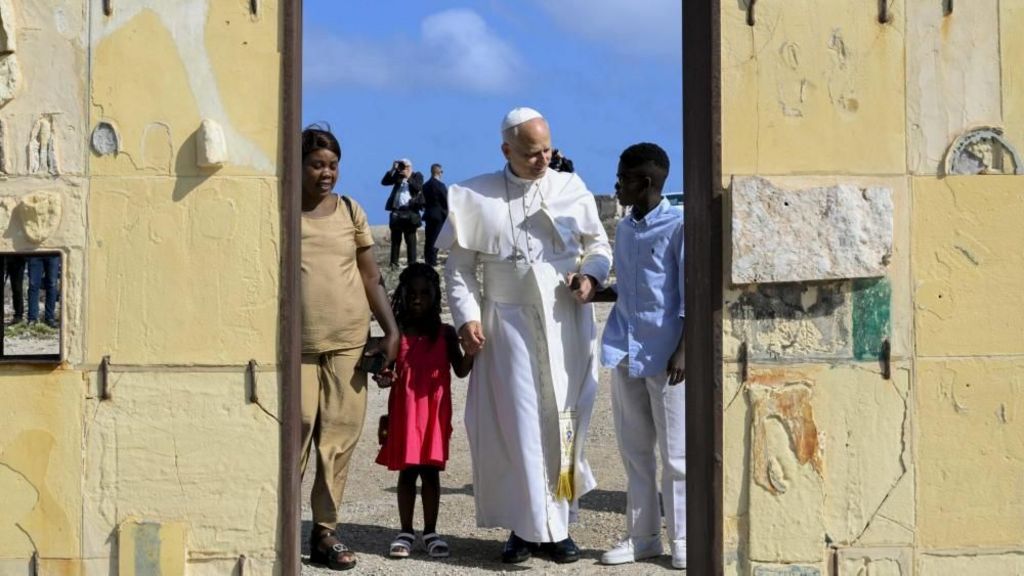
    Pope Leo XIV touched down in Angola on Saturday, kicking off the third stop of his 11-day four-nation African pilgrimage, even as he expressed regret that the entire trip has been overshadowed by a public verbal dispute with former U.S. President Donald Trump. After arriving in the coastal nation’s capital of Luanda, the pontiff made his way through cheering crowds lining motorcade routes in his popemobile for a scheduled meeting with Angolan President Joao Lourenco, following a concluding open-air mass that wrapped up his previous stop in Cameroon.

    Speaking to reporters aboard his flight from Cameroon to Angola, Pope Leo pushed back against widespread media narratives that framed a recent speech he delivered as a deliberate jab at Trump. During an address in Cameroon’s restive northwestern city of Bameroon, the epicenter of a 10-year separatist insurgency that has claimed thousands of lives, the pontiff condemned authoritarian tyrants for laying waste to global order. U.S. media outlets widely interpreted the remarks as a direct response to earlier criticism of the pope from Trump, but Pope Leo clarified that the full text of his speech was finalized long before Trump launched his public critique.

    “There’s been a certain narrative that has not been accurate in all of its aspects,” the pope told reporters. “And yet it was perceived as if I were trying to start a new debate with the president, which doesn’t interest me at all.” The dispute traces back to April 12, when Trump stated publicly that he was “not a big fan of Pope Leo,” and accused the American-born pontiff of recklessly engaging with Iran as the country pursues nuclear development capabilities. Pope Leo emphasized Saturday that he has no intention of engaging in a public back-and-forth with the U.S. political figure, noting that the focus of his African tour is meant to center on the challenges and needs of the continent, not transatlantic political sparring.

    Beyond the unwanted controversy, Pope Leo has used his tour, which launched in Algeria earlier this month, to deliver sharp warnings on a range of pressing global and regional issues: endemic corruption on the African continent, the systematic plunder of African natural resources by foreign and domestic actors, and the unregulated risks posed by rapid artificial intelligence development. In his opening address to Angolan government officials Saturday, the pontiff doubled down on these themes, condemning the destructive “logic of exploitation” that has created widespread social and environmental harm across the resource-rich nation.

    Angola ranks among Africa’s top crude oil exporters and holds vast reserves of diamonds and other minerals, but decades of extractive economic policy have left the country with crippling systemic inequality. World Bank data shows that roughly one-third of Angola’s 36.6 million residents, a majority of whom are young people, live below the $2.15-per-day international poverty line, with little of the nation’s natural resource wealth trickling down to working-class and low-income communities. Pope Leo also used his address to urge Angolan authorities to embrace open discourse, telling officials they “should not be afraid of dissent.”

    Lourenco’s socialist MPLA party has governed Angola continuously since the nation gained independence from Portugal in 1975, and human rights groups have repeatedly criticized the government for cracking down on freedom of expression, including harsh responses to peaceful public demonstrations. Last July, a three-day wave of looting and unrest broke out amid a national strike over fuel price hikes; roughly 30 people were killed in a subsequent police crackdown that drew widespread international condemnation, with hundreds of protestors arrested and jailed.

    For many of the hundreds of Angolans who lined the motorcade route Saturday, the papal visit carries personal significance: roughly 44% of Angola’s population identifies as Catholic, making the nation one of the largest Catholic-majority states in southern Africa. Pope Leo is only the third sitting pontiff to visit the country, following trips by John Paul II in 1992 and Benedict XVI in 2009. “There is a lot of suffering, a lot of poverty in Angola. I hope the pope will see with his own eyes the needs of the youth here,” said 33-year-old Luanda-based engineer Antonio Masaidi ahead of the visit.

    Looking ahead, Pope Leo is scheduled to lead a large open-air mass on Sunday in the Kilamba suburb of Luanda, before traveling by helicopter to the historic village of Muxima, a key Catholic pilgrimage site home to a 16th-century century church located roughly 130 kilometers southeast of the capital. On April 20, the pontiff will journey more than 800 kilometers from Luanda to Saurimo, where he will visit a local retirement home and celebrate a second mass before departing the next morning for the fourth and final stop of his African tour in Equatorial Guinea.

  • Pope says ‘tyrants’ speech was not aimed at Trump

    Pope says ‘tyrants’ speech was not aimed at Trump

    Pope Leo XIV touched down in Angola on Saturday, the latest stop on his multi-nation tour of Africa, and used the opportunity to clear up widespread misinterpretation of recent comments he made about global authoritarianism and military spending. The pontiff told reporters traveling with him that his earlier remarks criticizing world leaders he labeled “tyrants” for pouring billions of dollars into conflict were drafted two weeks before former U.S. President Donald Trump launched a high-profile public attack on him. There was never any intention, he stressed, to enter into a public debate with the American leader.

    The back-and-forth between the two figures began earlier this month, after Pope Leo publicly voiced criticism of the U.S.-Israeli military campaign in Iran and pushed back against Trump’s warning that an entire civilization would be destroyed if Tehran did not accept Washington’s demands to end the conflict and reopen the Strait of Hormuz. That critique prompted Trump to unleash a scathing social media attack on the first American-born pope, calling him “terrible for foreign policy,” “WEAK on crime,” and saying he was “not a big fan” of the pontiff. Trump also briefly shared an AI-generated image that depicted him as a Jesus-like figure before removing it, and later told reporters that while he accepted the Pope’s right to his own views, he retained the right to disagree.

    Days after Trump’s initial attack, Pope Leo delivered a speech in Cameroon, another stop on his African tour, that drew immediate scrutiny. In that address, he condemned leaders who “turn a blind eye to the fact that billions of dollars are spent on killing and devastation, yet the resources needed for healing, education and restoration are nowhere to be found.” He added, “The masters of war pretend not to know that it takes only a moment to destroy, yet often a lifetime is not enough to rebuild.” The pontiff also used the speech to denounce the nearly decade-long insurgency that has left a bloodstained trail of destruction across parts of Cameroon, decrying what he called “an endless cycle of destabilisation and death.”

    Many political analysts and media outlets quickly framed that speech as a direct response to Trump, a narrative the Pope pushed back on firmly Saturday. “A certain narrative that has not been accurate” has taken root, he told reporters, fueled by the political tension that emerged after Trump’s original criticism. “Which is not in my interest at all,” he added, emphasizing that entering political sparring matches with the U.S. leader was never his goal.

    The four-country African tour, which includes stops in 11 cities, marks Pope Leo’s second major international visit since his election to the papacy in 2024. The trip underscores the outsized importance of the Catholic faith across the African continent: 2024 Vatican data shows that more than 20% of the world’s 1.3 billion Catholics – approximately 288 million people – currently reside in Africa, a share that is projected to grow steadily in coming decades.

  • At least five killed in Kyiv as gunman opens fire and takes hostages

    At least five killed in Kyiv as gunman opens fire and takes hostages

    A horrific mass shooting in the Ukrainian capital Kyiv has left a minimum of five people dead and multiple others wounded, in an attack that unfolded in a busy residential district on April 19, Ukrainian President Volodymyr Zelensky has confirmed.

    The violence erupted in southern Kyiv’s Holosiivskyi district, local law enforcement officials confirmed. According to initial police accounts, the 58-year-old attacker first opened fire on random civilians on a public street, before retreating to a nearby supermarket and taking bystanders hostage.

    Ukraine’s Interior Minister Ihor Klymenko told reporters that after the gunman exchanged fire with responding officers from inside the supermarket, law enforcement teams moved in and fatally shot the attacker. All four hostages taken by the gunman were successfully rescued without fatal harm, President Zelensky confirmed.

    Kyiv Mayor Vitali Klitschko updated casualty figures to note at least 15 people suffered injuries in the attack, 10 of whom – including one minor child – have been admitted to local hospitals for ongoing medical care. Prosecutor General Ruslan Kravchenko clarified the breakdown of fatalities: four of the victims were killed during the initial street shooting, while one additional fatality occurred inside the supermarket.

    Kravchenko also confirmed that the attacker is a 58-year-old man originally from Moscow, Russia, and that he carried out the attack using a fully automatic firearm. Unconfirmed reports suggest the shooter may have detonated an explosive device, and responding authorities confirmed a fire broke out at the attacker’s local apartment following the shooting. The motive behind the attack remains under active investigation as of publishing.

  • France blames Hezbollah for French peacekeeper’s death in Lebanon

    France blames Hezbollah for French peacekeeper’s death in Lebanon

    Just two days after Israel and Lebanon agreed to a 10-day ceasefire to negotiate an end to six weeks of cross-border conflict, a deadly ambush targeting United Nations peacekeepers in southern Lebanon has left one French soldier dead and three more wounded, with French President Emmanuel Macron publicly holding the Iran-backed militant group Hezbollah responsible — an accusation the organization has forcefully denied.

    The fallen service member was identified as 24-year-old Staff Sergeant Florian Montorio, who died from a close-range gunshot wound during the attack Saturday in the Ghandouriyeh-Bint Jbeil region near the Israeli-Lebanese border. French Armed Forces Minister Catherine Vautrin confirmed in a post on X that Montorio’s unit was moving to resupply a UN Interim Force in Lebanon (UNIFIL) outpost that had been isolated by days of ongoing combat when they were ambushed by an armed faction. Despite Montorio’s comrades pulling him to safety under active fire, medical efforts to revive him were unsuccessful, Vautrin added.

    In his own public statement on X, President Macron said “Everything points to Hezbollah being responsible for this attack,” and called on Lebanese national authorities to immediately apprehend and prosecute those behind the killing. This is not the first French military fatality linked to the broader regional conflict sparked by the October 7 Hamas attacks: last month, another French soldier, Arnaud Frion, was killed by an Iranian-designed drone in Iraq’s Kurdistan region.

    Hezbollah, which has repeatedly denounced the upcoming ceasefire negotiations with Israel as a surrender of Lebanese sovereignty, quickly rejected all claims of involvement. In an official statement, the group said it “denies any connection to the incident that occurred with UNIFIL forces in the Ghandouriyeh-Bint Jbeil area,” and called for “caution in making judgments and assigning responsibilities” until the Lebanese army completes its official probe into the attack.

    Senior Hezbollah official Mahmud Qamati doubled down on the group’s opposition to the talks Saturday, describing the negotiations led by the Lebanese government as “a failure, weak, defeated… and submissive,” and stressed the organization would not be bound by any outcome of the discussions. Lebanese President Joseph Aoun has pushed back against Hezbollah criticism, saying the negotiations do not represent any concession of Lebanese interests, marking the first direct formal talks between Lebanon and Israel in decades.

    UNIFIL’s initial assessment echoed French claims that the attack was likely carried out by Hezbollah, with the peacekeeping force noting the gunfire came from non-state actors as peacekeepers cleared explosive ordnance from a local road to reach the cut-off outpost. UNIFIL added that the incident “may amount to war crimes,” and has launched an independent internal investigation into the attack. Both Lebanese President Aoun and Prime Minister Nawaf Salam have condemned the killing, with Salam ordering a national probe and Aoun pledging to hold all responsible parties accountable. In the wake of the attack, Macron held urgent phone calls with both Aoun and Salam to press for full guarantees of security for all UNIFIL personnel deployed in the country.

    Tensions around UNIFIL’s mission have escalated sharply since the Israel-Hezbollah border conflict began six weeks ago, when Hezbollah launched rocket attacks on Israel in solidarity with Hamas, drawing Lebanon into the broader regional war. The peacekeeping force, which has served as a neutral buffer between Lebanon and Israel for nearly 45 years, has repeatedly been targeted by both Israeli and Hezbollah forces during the current fighting. Last month, three Indonesian UNIFIL peacekeepers were killed: a preliminary UN investigation found one was killed by Israeli tank fire, while the other two died in an improvised explosive device attack widely linked to Hezbollah. In separate incidents earlier this year, Israeli troops destroyed surveillance cameras at UNIFIL’s headquarters, and just last week an Israeli tank rammed two UNIFIL patrol vehicles, causing damage but no injuries. UNIFIL’s current mandate is set to expire at the end of 2024, adding further uncertainty to the force’s future in the region.

  • UK police investigate an arson attempt on a building once used by the Jewish community

    UK police investigate an arson attempt on a building once used by the Jewish community

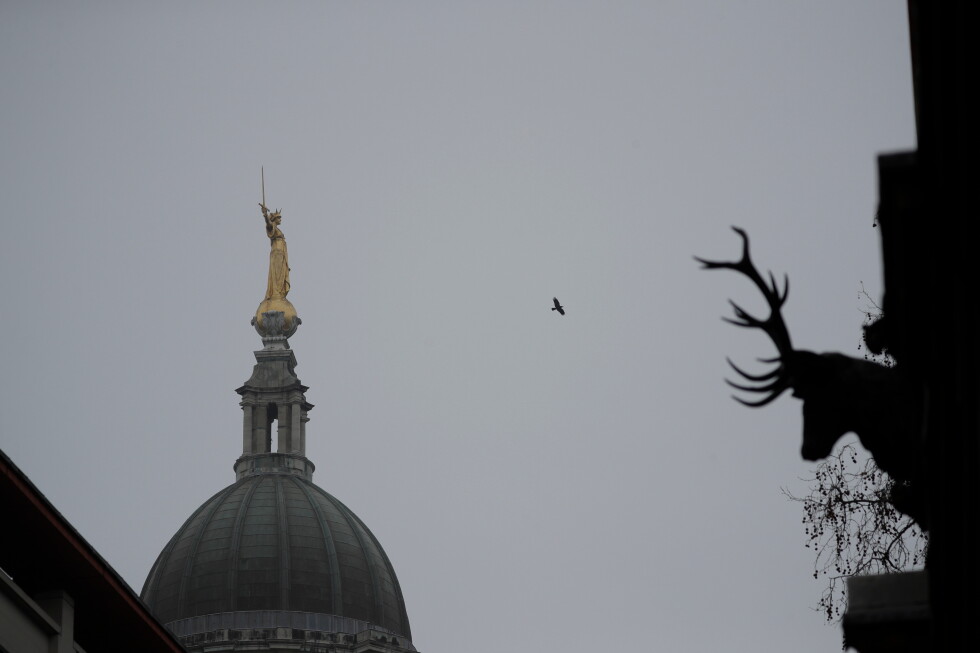
    LONDON – A coordinated investigation led by London’s counterterrorism policing unit is underway after a string of suspicious arson attempts targeting sites associated with London’s Jewish community and Iranian opposition groups across the city’s northwest districts.

    The most recent incident unfolded on Friday evening in Hendon, a residential neighborhood just a short distance from Golders Green, one of London’s most prominent Jewish population centers. Law enforcement officials confirmed that witnesses observed a male suspect drop a canvas bag holding three flammable liquid-filled bottles outside a former Jewish community facility. The suspect attempted to ignite the cache before fleeing the scene; the material failed to fully catch fire, and no injuries were reported. As of Saturday, no suspects have been taken into custody.

    This attempted attack is the latest in a series of arson incidents targeting relevant sites that have shaken the capital in recent weeks. On March 23, four vehicles belonging to a Jewish charity ambulance service were destroyed in a deliberate fire in Golders Green, four people have already been charged in connection with that attack. Just two days before the Hendon incident, two separate arson attempts were recorded across northwest London: one targeted a local synagogue, while the second saw an ignited container thrown into the headquarters of a Persian-language media organization based in Wembley. Three suspects – two adult men and one teenage boy – have been charged with arson over that incident. No people have been hurt in any of the five linked events.

    While detectives have not formally connected the Friday Hendon attack to the earlier incidents, counterterrorism officials have taken lead of the ongoing probe due to clear thematic and operational similarities across all events. Originally, investigating officers had not classified any of the attacks as confirmed terrorist acts, but the pattern of targeting has drawn significant attention from national security officials.

    A key line of ongoing inquiry centers on whether the attacks have any connection to the Iranian government. British authorities have repeatedly publicly accused Iran of leveraging criminal proxy networks to carry out covert attacks on European soil, specifically targeting Jewish community institutions and Iranian opposition media outlets operating in exile. The UK’s domestic intelligence agency MI5 previously disclosed that it foiled more than 20 potentially lethal Iran-backed plots against targets in the country in the 12-month period ending last October.

    Metropolitan Police have not released a detailed description of the Hendon suspect as of Saturday, and have appealed to any members of the public who witnessed suspicious activity in the area Friday night to come forward with information to aid the investigation.

  • Macron says 1 French soldier was killed and 3 injured in attack on peacekeepers in Lebanon

    Macron says 1 French soldier was killed and 3 injured in attack on peacekeepers in Lebanon

    BEIRUT, PARIS – A deadly ambush targeting United Nations peacekeeping forces in southern Lebanon has claimed the life of a French service member and wounded three more, triggering an urgent diplomatic response from French leadership just one day after a fragile 10-day ceasefire took hold along the Lebanon-Israel border.

    French President Emmanuel Macron confirmed the fatal attack in a social media statement Saturday morning, noting that all preliminary evidence points to Hezbollah bearing responsibility for the strike on the UN Interim Force in Lebanon (UNIFIL) patrol. The fallen soldier was identified as Staff Sergeant Florian Montorio, a 17th Parachute Engineer Regiment member based in the southwestern French city of Montauban. Macron added that the three injured service members have already been evacuated for medical care.

    “In this moment of grief, the entire nation bows in respect for our fallen comrade, and extends its unwavering support to Montorio’s family, as well as all French military personnel deployed to advance peace in Lebanon,” Macron wrote.

    This death marks the second French peacekeeper fatality in less than a month. In mid-March, a drone strike on a Kurdish military base in Iraq’s Erbil region killed Chief Warrant Officer Arnaud Frion and left six other French service members wounded.

    French Armed Forces Minister Catherine Vautrin later clarified details of the Saturday incident, confirming the ambush unfolded in the Deir Kifa region of southern Lebanon. The patrol was carrying out a critical operational mission: clearing a secure path to a UNIFIL outpost that had been cut off from supply and reinforcement for several days, amid escalating cross-border clashes between Hezbollah and Israeli forces that have roiled the region for months.

    Montorio was ambushed at close range by fighters from an armed group, Vautrin explained in a post on the social platform X. “He was struck immediately by a direct round from a light weapon. His comrades pulled him to cover under active enemy fire, but were unable to resuscitate him,” she wrote.

    Within hours of the attack, President Macron held separate urgent calls with Lebanon’s President Joseph Aoun and Prime Minister Nawaf Salam to deliver France’s formal demands. According to a readout from Macron’s office, the French leader called on Lebanese officials to launch a full, transparent investigation into the strike, rapidly identify the perpetrators and bring them to prosecution, and take all necessary measures to protect UNIFIL personnel, who operate under international mandate to maintain stability in the region and are never legitimate targets.

    Macron used the diplomatic exchange to reaffirm two core French priorities for the region: that all parties must fully comply with the newly implemented ceasefire, and that France remains deeply committed to upholding Lebanon’s full sovereignty, a pillar of broader stability across the Middle East that benefits all Lebanese citizens.

    The ceasefire that went into effect Friday was negotiated without input from Hezbollah, leaving international observers uncertain whether the group would respect the truce. Saturday’s fatal attack, which comes just 24 hours after the truce was supposed to take hold, has already raised new concerns about the durability of the pause in fighting.