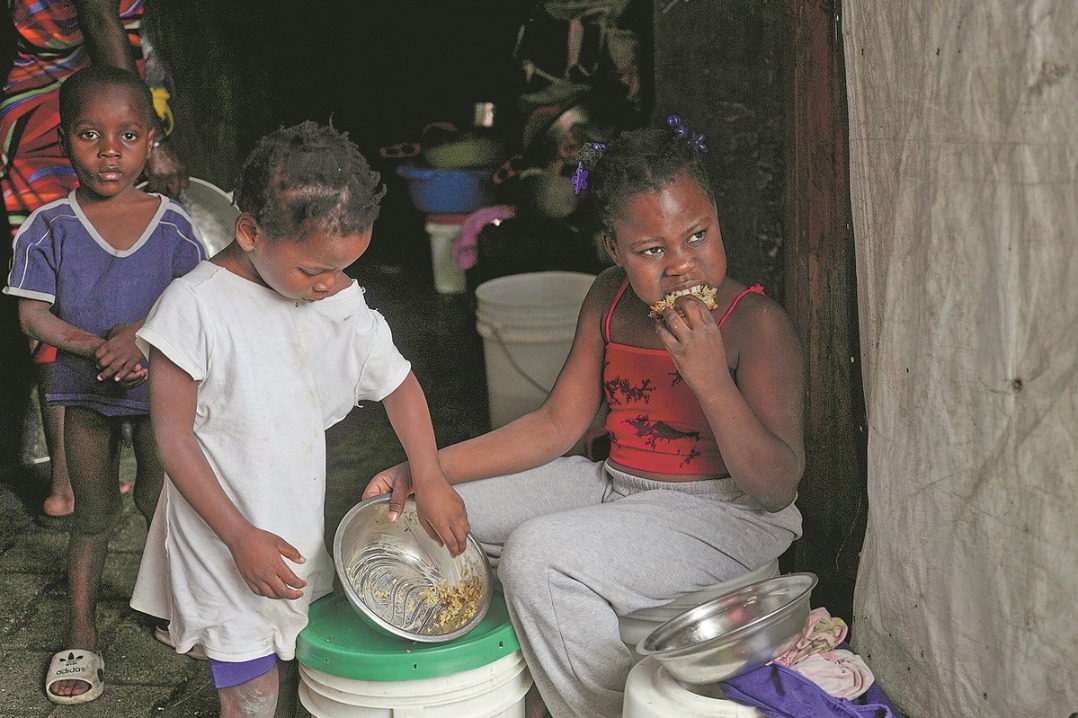
PORT-AU-PRINCE – A grim new UN-backed assessment published Thursday has laid bare the accelerating collapse of food security in Haiti, confirming that nearly 6 million Haitians will grapple with life-threatening acute hunger in the coming months. The findings underscore how persistent gang violence, mass internal displacement, and crippling economic instability have pushed the small Caribbean nation into one of the world’s worst ongoing humanitarian catastrophes.
Per the Integrated Food Security Phase Classification (IPC), the international body that tracks global food insecurity, 5.8 million Haitians – accounting for more than half of the country’s total population – are currently classified as facing acute food insecurity. Of this vulnerable group, over 1.8 million have already reached the emergency hunger phase, requiring immediate life-sustaining food assistance to avoid widespread malnutrition and mortality.
The IPC report attributes the deepening crisis to three interconnected drivers: rapidly deteriorating public security across the country, cascading economic shocks, and repeated breakdowns of local food markets and agricultural activities. Armed gang factions have expanded their territorial control across large swathes of Haiti in recent months, disrupting supply routes, forcing farming communities to abandon their lands, and displacing more than 1.4 million people internally. This mass displacement has stretched already limited local food supplies thin, pushing low-income and vulnerable households into extreme levels of hunger.
While the latest IPC projection marks a small downward revision from an earlier forecast of 5.91 million acutely food-insecure people, humanitarian agencies caution that any minor progress remains extremely fragile. Analysts attribute the slight improvement to a combination of targeted international food assistance, easing national inflation rates, and better-than-expected harvests in a handful of Haiti’s agricultural regions. The United Nations World Food Programme (WFP) confirmed that consistent, sustained food aid interventions have lifted roughly 200,000 Haitians out of emergency-level hunger since last year.
Still, aid leaders warn that these fragile gains are at immediate risk of reversal without a significant expansion of international support. In particular, the recent spike in global fuel prices triggered by ongoing tensions around the Iran conflict has driven sharp increases in transportation and agricultural production costs across Haiti, placing additional strain on humanitarian operations and household budgets.
“Fighting hunger is essential to restoring stability in Haiti. We cannot build peace if families cannot feed their children,” Wanja Kaaria, WFP’s Country Director for Haiti, said in an official statement, emphasizing the urgent need for scaled-up global backing to prevent the crisis from spiraling further out of control.