
Against the backdrop of a turbulent year marked by the U.S.-Israeli military campaign that eliminated dozens of Iran’s top political and military leaders, four distinct but interconnected developments have emerged to reshape the country’s geopolitical strategy, internal dissent, institutional power struggles, and national sports landscape. A rising cohort of hardline Iranian analysts affiliated with the country’s ruling establishment has carved out greater influence in policy discourse, advancing a controversial stance that unwavering military pressure on southern Gulf Arab states is the only viable path to securing meaningful economic and trade agreements with the bloc. Majid Shakeri, an analyst closely aligned with Parliament Speaker Mohammad Bagher Ghalibaf, laid out this position during a recent televised roundtable discussion, arguing that decades of diplomatic outreach to neighboring Gulf monarchies have produced nothing but empty promises. Shakeri emphasized that this hardline approach should apply equally to the United Arab Emirates (UAE), Qatar, and Saudi Arabia, noting that regional leaders have repeatedly pledged large-scale investment during high-level official meetings only to backtrack on commitments once Iranian policy shifts are pursued. He went a step further, arguing that Iran should sustain targeted strikes on U.S. military bases located across the region — particularly installations in the UAE — to force American forces to withdraw from the Persian Gulf and strengthen Tehran’s leverage in future economic negotiations. “Having a trade agreement with the Persian Gulf countries is not incompatible with continuing military pressure on them because previous experiences have shown that pursuing a neighbourhood policy with them leads nowhere,” Shakeri stated. Parallel to this geopolitical debate, grieving Iranian mothers have leveraged the sacred Shia Muslim mourning period of Ashura to openly commemorate their children killed during the January nationwide crackdown on anti-government protests, turning a religious observance of resistance against injustice into a public rebuke of state authorities. Ashura, which marks the 7th-century martyrdom of Imam Hussein, the Prophet Muhammad’s grandson, at the Battle of Karbala, has long carried dual meaning for Shia communities as both a time of collective mourning and a symbol of resistance against oppressive rule. In recent days, Persian-language media outlets have circulated widely shared videos showing these mothers publicly honoring their slain children, with informal mourning processions stopping outside victims’ homes to pay respects. One widely circulated clip captures the mother of 18-year-old Mani Safarpour, who was killed during unrest in southern Tehran, clutching her son’s portrait as mourners beat ceremonial drums, repeatedly crying out “My son, my dear son” while striking her head and chest in ritual grief. Another video records the mother of 22-year-old university student Matin Parvizi, who was shot dead in the northwestern city of Zanjan, speaking at her son’s graveside, drawing a direct parallel between modern Iranian authorities and the historical tyrant Yazid who ordered Imam Hussein’s killing. “The Yazids of our time shot my son in the back while his hands were in his pockets,” she said. “He had nothing with which to defend himself.” Official Iranian government figures put the total death toll from the January unrest at 3,117 people, but independent human rights organizations have challenged that count, documenting far higher casualties. The U.S.-based Human Rights Activists News Agency (Hrana) reports it has confirmed the identities of 6,488 killed protesters. Meanwhile, internal tensions have erupted within Iran’s legislative branch over the four-month-long suspension of parliament, with sitting lawmakers accusing Speaker Ghalibaf of an illegal power grab that sidelines the legislature and concentrates wartime decision-making exclusively in his own hands. Parliament has not held a public plenary session since February 28, the date the U.S. and Israel launched their current military campaign against Iranian targets. In recent weeks, criticism of the continued suspension has grown into open dissent among sitting lawmakers. Ghalibaf has justified the closure by claiming the decision was mandated by Iran’s Supreme National Security Council, but multiple lawmakers have directly refuted this claim, labeling it a falsehood. Conservative lawmaker Kamran Ghazanfari was among the most outspoken critics, noting: “We have repeatedly said that Mr Ghalibaf has been illegally keeping the parliament’s public sessions closed for the past four months.” Fellow lawmaker Ali Akbar Alizadeh echoed that skepticism, confirming that after official inquiries, neither the Supreme National Security Council nor its executive secretariat issued any formal order to shutter the legislature. Turning to the 2026 FIFA World Cup, Iran’s national football team has found itself at the center of a sharp divide in public assessment: eliminated from the knockout stage after drawing all three of its group matches, the team has won widespread praise from international fans and analysts for its performance under extraordinary external pressure, while domestic experts have lambasted its tactical shortcomings and the corrupt, government-aligned management that they blame for the early exit. As one of the tournament’s co-hosts, the United States imposed unprecedented barriers on the Iranian delegation: it barred the team from establishing a domestic training camp, denied visas to multiple technical and coaching staff members, and required the entire squad to cross the border into Tijuana, Mexico, for overnight stays after each match played on U.S. soil. International observers have largely framed the team’s ability to earn three draws against these odds as a remarkable achievement. Back inside Iran, however, leading football figures have dismissed these off-field challenges as a distraction, arguing that the elimination stems from deep structural flaws in Iranian football, including what they describe as a “mafia-like” governing structure controlled by government-backed interests. Former national player and veteran coach Mohammad Kalhor placed the blame squarely on the Iranian Football Federation, arguing that the shadowy network of interests has shaped both the selection of an over-age playing squad and the appointment of the current head coach. Assessing the team’s on-pitch performance, Kalhor told the Etemad newspaper: “In terms of tactics and style of play, our team did not perform well. The reason is that our national team had no plan to build attacks from the beginning to the end of the matches, except when we received a goal and had to attack. We had the ability to attack before that, but I do not know why it did not happen.” This report is compiled from an Iranian press review, and its content has not been independently verified by Middle East Eye.
分类: world
-
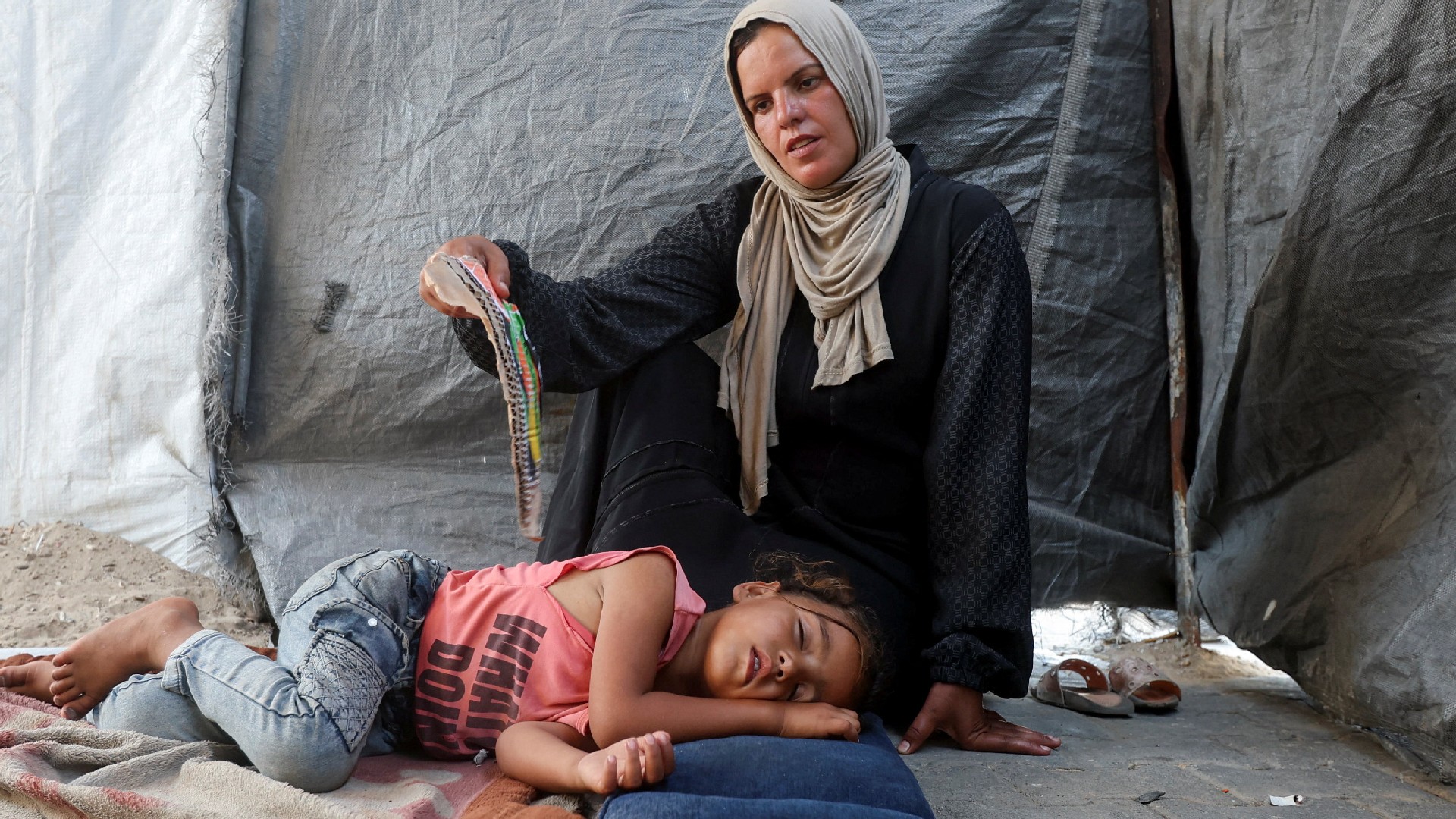
Trump’s Board of Peace says Unrwa has ‘no place’ in Gaza
A controversial proposal from former U.S. President Donald Trump’s Gaza-focused Board of Peace has thrown the future of humanitarian aid in the embattled enclave into question, with the group publicly asserting that the United Nations Relief and Works Agency for Palestine Refugees (UNRWA) has no place in a restructured Gaza.
In a social media post published on platform X, the Board framed its call for UNRWA’s ouster as a long-overdue break from decades of failed policy. “We are turning a page on the complex of perpetual aid dependency and conflict. The people of Gaza deserve better,” the post read. The statement shared and amplified a speech delivered Tuesday by U.S. envoy Jeff Bartos at the annual UN pledging conference for UNRWA, where Bartos urged donor nations to halt all direct funding to the agency and redirect their financial support to the Board of Peace instead.
“You can choose to fund incitement, terrorism, and stagnation, or you can choose to fund the Board of Peace, giving Gazans a path to peace, prosperity and real, durable change,” Bartos told attendees.
For over seven decades, UNRWA has stood as the backbone of Palestinian humanitarian support, serving roughly 5.9 million registered Palestinian refugees across Gaza, the Israeli-occupied West Bank, Jordan, Syria, and Lebanon. It is the lead UN agency operating in the occupied Palestinian territories, managing the vast majority of aid distribution across the blockaded Gaza Strip. Today, 2.2 million Gazans—nearly the entire population of the enclave—rely on UNRWA for basic needs including food, emergency shelter, primary healthcare, and primary education. Local and international aid groups alike depend on UNRWA’s extensive on-the-ground distribution networks to deliver their own assistance to vulnerable communities.
But since March 2025, an Israeli government ban on UNRWA operations within Israel and the occupied Palestinian territories has severely limited the agency’s ability to function, blocking UNRWA staff and direct aid shipments from entering Gaza and crippling its activities in the besieged enclave. UNRWA officials have confirmed that thousands of tons of aid, including enough food parcels, flour, and emergency shelter supplies to support hundreds of thousands of displaced people, are currently stuck in warehouses outside Gaza, unable to reach those in need due to the restrictions.
The Palestinian Authority has flatly rejected the Board of Peace’s calls, reaffirming that UNRWA remains “an indispensable lifeline” for all Palestinians and fulfills an “essential role” in delivering education, healthcare, and emergency assistance across the occupied territories.
The latest debate over UNRWA’s future unfolds against a backdrop of a rapidly deteriorating humanitarian crisis that has already drawn widespread international condemnation. In February, Israel’s High Court issued a temporary stay on a planned ban targeting 36 major international aid organizations, including Medecins Sans Frontieres, Oxfam, Save the Children, ActionAid, and the Norwegian Refugee Council. Those groups had received orders in December requiring them to comply with strict new regulatory requirements—including the full disclosure of all staff personal details—to continue operating in Gaza, a mandate many organizations have said is unworkable and puts their teams at severe risk.
A June 2025 report from the United Nations Office for the Coordination of Humanitarian Affairs (OCHA) painted a grim picture of conditions inside Gaza, describing the overall situation as “volatile and insecure.” The report noted that the vast majority of Gaza’s population is now confined to shrinking, massively overcrowded displacement camps and residential areas, where core public services are stretched far beyond capacity. Most residents lack consistent access to safe drinking water, and mountains of uncollected solid waste are piling up in residential neighborhoods, creating major public health risks.
The crisis has been deepened by progressively tighter Israeli restrictions on aid entry into the enclave. Currently, the Kerem Shalom crossing remains the only official entry point for approved humanitarian and commercial cargo bound for Gaza. Starting June 1, Israeli forces began redirecting all incoming humanitarian convoys through a newly built checkpoint, where deliveries have been consistently held up by long delays, heavy congestion, technical malfunctions, and extremely slow screening processes.
On Tuesday, Israeli media shed new light on the Board of Peace’s broader plans for Gaza, revealing that the group intends to launch so-called “Hamas-free humanitarian zones” in the enclave. Under the proposal, Palestinian civilians would be relocated to these designated zones while the Israeli military expands its full military control over the rest of the Gaza Strip. Israeli national newspaper Israel Hayom reported that the first such zone will open in Tel Sultan, near the southern Gazan city of Rafah, within the next several weeks, and will only house civilians confirmed to have no weapons and no affiliation with Hamas.
According to the report, the zone will be policed by a newly formed multinational contingent called the International Stabilisation Force (ISF), which will be equipped solely with non-lethal weapons and based at Israel’s Amitai Camp near the Gaza border, operating under the command of the Board of Peace. While the plan states that humanitarian aid will be delivered to the zones, no details have been released about how aid will be distributed, who will manage distribution, or whether existing international aid groups will be allowed to operate inside the sites.
-
Rescue teams in Venezuela cling to hope as US rebuffs criticisms of government earthquake response
CATIA LA MAR, Venezuela – One week after a pair of devastating earthquakes ripped through Venezuela’s northern coastal region, the acrid stench of smoldering wreckage and decomposing human remains hangs heavy over the flattened neighborhoods of La Guaira state, where international rescue teams continue to cling to faint hopes of pulling more survivors from tons of concrete and rubble.
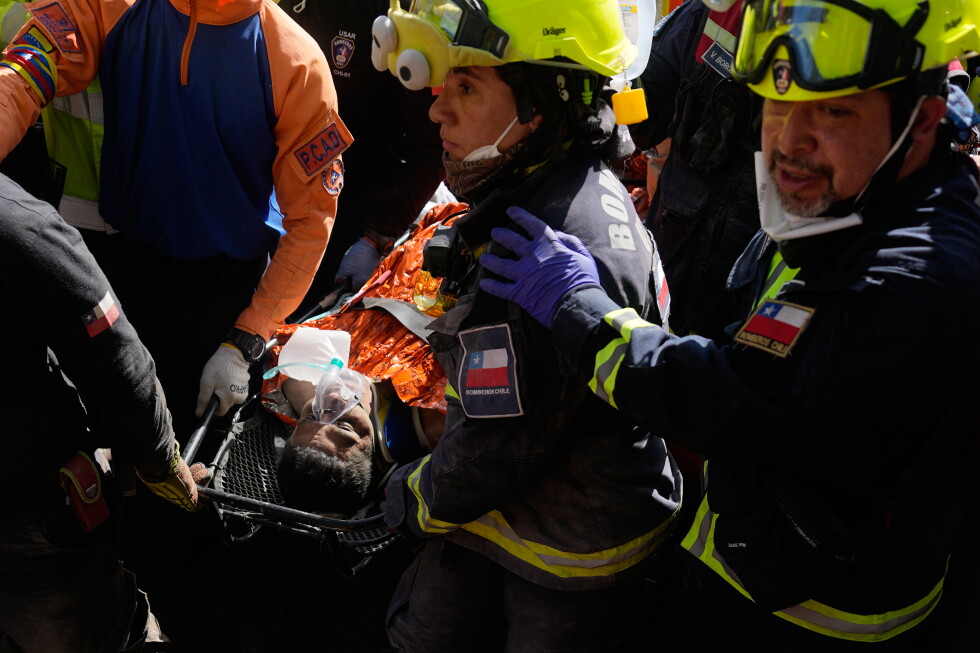
On Thursday morning, that faint hope became a rare moment of joy cutting through the pervasive despair that has shrouded the hard-hit port city of Catia La Mar. After 100 consecutive hours of painstaking excavation by search-and-rescue teams from across the Americas, crews pulled 43-year-old Hernán Alberto Gil Flores alive from the collapsed ruins of a local shopping mall, where he had been trapped for nearly eight full days. Rescuers say a narrow, stable air pocket kept Gil Flores alive, and he was able to stay hydrated and nourished using supplies that teams lowered through gaps in the rubble before reaching him. As he was carried out on a stretcher and loaded into an awaiting ambulance, crowds of onlookers who had gathered at the site burst into cheers, marking one of the few unqualified victories for rescue teams amid a relentless, devastating recovery effort.
The miracle rescue comes against a backdrop of staggering loss that has left the country reeling. As of Wednesday, Venezuelan government figures put the confirmed death toll at 2,295, with more than 11,000 people injured by the quakes. Thousands more remain unaccounted for, as desperate family members sift through wreckage searching for any sign of missing loved ones. Tens of thousands of displaced residents are now living in overcrowded emergency shelters or sleeping in the open air along the coast, a reality that has medical professionals sounding the alarm over a looming secondary public health crisis. With Venezuela’s already teetering national healthcare system stretched beyond its breaking point, untreated injuries and the spread of infectious disease threaten to push the death toll even higher in the coming weeks.
Beyond the human catastrophe, the disaster has amplified already fierce political pressure on interim Venezuelan President Delcy Rodríguez, whose government is facing widespread backlash from Venezuelans over what critics call an inadequate, under-resourced official response to the quakes. On the ground, civilian volunteer teams and international rescue efforts have outpaced official government action, drawing sharp condemnation from citizens grappling with the aftermath.
The criticism comes at a pivotal political moment for Rodríguez: her 180-day mandate as acting president was set to expire at the end of Thursday, leaving the country’s interim leadership status unclear amid a lack of transparency from government officials. Rodríguez, who previously served as vice president to Nicolás Maduro before Maduro was ousted by U.S.-backed opposition in January, has held the interim presidency with formal backing from the Trump administration. Under Venezuela’s constitution, an interim vice presidential appointment can only extend 90 days before requiring an additional 90-day extension from the National Assembly, which is controlled by Rodríguez’s party. If the seat is declared permanently vacant, the assembly has the authority to call a snap national election.
Despite growing domestic discontent over the disaster response, the Trump administration reaffirmed its full support for Rodríguez’s government on Wednesday. U.S. officials confirmed that roughly 900 American military personnel are currently deployed in Venezuela to support rescue and humanitarian relief operations. John M. Barrett, U.S. chargé d’affaires to Venezuela, pushed back against claims that Rodríguez’s administration had politicized disaster response efforts during a press call with reporters. “The U.S. response does require a high level of coordination with local authorities to be successful,” Barrett said. “And what I can say with confidence is that the local authorities have fully complied with our requests and have accelerated this massive humanitarian response.”
Gen. Francis Donovan, head of U.S. Southern Command, added that decades of systemic underinvestment in Venezuelan public infrastructure and social services had created pre-existing conditions that made responding to a disaster of this scale far more difficult for any sitting government. “It is a big problem for any leader to deal with a challenge of this magnitude,” Donovan noted.
Janetsky reported from Mexico City. Associated Press journalist Ben Finley contributed reporting from Washington D.C.
-
Papuan rebels say they shot dead US pilot and burned his plane
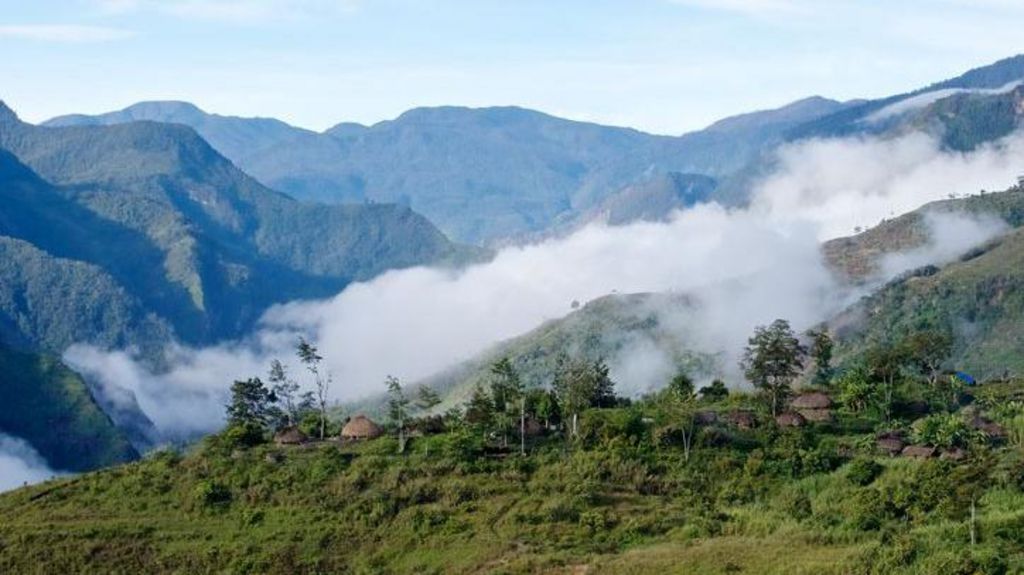
Decades-long separatist unrest in Indonesia’s resource-rich Papua region has taken a new violent turn, with the West Papua National Liberation Army (TPNPB) claiming responsibility for the fatal shooting of an American pilot and the subsequent burning of his aircraft in Highland Papua province.
According to TPNPB spokesman Sebby Sambom, the attack unfolded shortly after pilot Nicholas F. Gosselin landed the plane in Yahukimo region on Thursday. Sambom said the strike was carried out in fulfillment of the group’s pre-established ban on all civilian flights in the disputed area, a restriction imposed over allegations that civilian pilots have been actively ferrying Indonesian troops and military logistics to support government counterinsurgency operations.
“We immediately fired upon and burned the plane because it had violated the TPNPB ultimatum,” Sambom stated in a formal declaration from the group. He added that the killing was intended to send a clear message to all parties operating in the region: “We are prepared to fire upon any civilian aircraft across the Land of Papua that assists Indonesian military forces in transporting troops or military logistics.”
Sambom also laid out terms for the recovery of Gosselin’s body, requiring Indonesian authorities to enter the area without accompanying military or police personnel. In line with the group’s long-standing position, he called on the Indonesian government to enter into direct negotiations to resolve the decades-long sovereignty conflict that has defined the region since 1969, when Papua was formally incorporated into Indonesia. Separatist estimates claim the ongoing conflict has resulted in thousands of civilian deaths and widespread mass displacement of indigenous Papuan communities.
Indonesian official accounts have so far left key details of the incident unconfirmed. Authorities have verified that Gosselin’s plane was found burned at the Yahukimo airport, but have not independently confirmed Gosselin’s death nor the status of the seven passengers who were on board the aircraft at the time of the incident.
Indonesia’s Directorate General of Civil Aviation noted that no security threats were reported as the flight approached for landing, but all communication with the plane was lost immediately after it touched down. “Initial reports, from the director of the airport where the flight took off, state that pilot has died,” the agency’s official statement read. “The suspected cause of the incident is still awaiting further confirmation from the relevant authorities.”
Yusuf Sutejo, a spokesperson for Indonesia’s combined police-military counterinsurgency operation in the region, also said authorities could not yet confirm whether the aircraft was targeted in a rebel attack, nor provide any update on the condition of those on board. The U.S. Embassy in Jakarta and the U.S. State Department have been contacted for comment on the incident, but have not yet released an official statement as of press time.
This latest attack aligns with a pattern of targeting of foreign civilian pilots by the TPNPB in recent years. In 2024, a New Zealand pilot held hostage by the group for 19 months was released following extended negotiations between Indonesian and New Zealand officials. Just one month before that release, TPNPB gunmen killed another New Zealand helicopter pilot, Glen Malcolm Conning, who was shot dead shortly after landing in a remote Papuan village.
-
Watch: Man rescued from rubble eight days after Venezuela earthquake
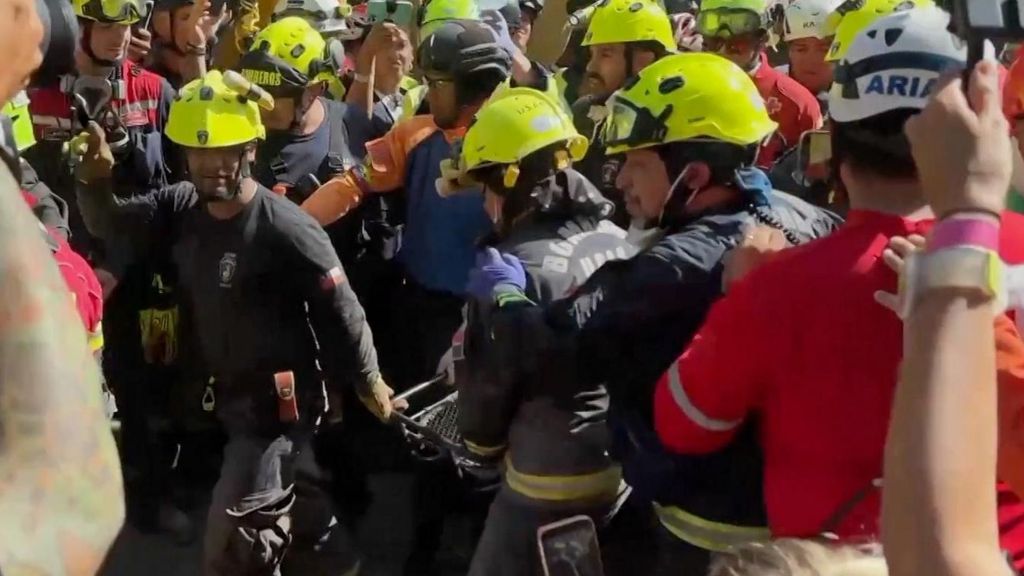
In a stunning tale of survival that has captured global attention, a 43-year-old Venezuelan security guard has been pulled alive from the remains of a collapsed building eight full days after twin earthquakes rocked the South American nation.
Rescue crews pulled Hernan Gil from the wreckage on Thursday, marking an extraordinary outcome for a search effort that many feared would only recover remains after more than a week trapped beneath fallen concrete and mangled infrastructure. The twin seismic events that struck Venezuela triggered the collapse of the multi-story structure where Gil was working, leaving him pinned and cut off from contact with the outside world.
The dramatic rescue, captured on video by emergency responders on the scene, has already spread widely across social media, with many viewers hailing it as a rare moment of hope in the aftermath of a disaster that brought widespread destruction and loss of life across affected regions of the country. Rescue teams have not yet released details on how Gil survived eight days without food, water, or access to open air, but medical teams have already taken him to a local hospital to evaluate his condition.
-
Venezuelan security guard pulled alive from building basement 8 days after twin quakes
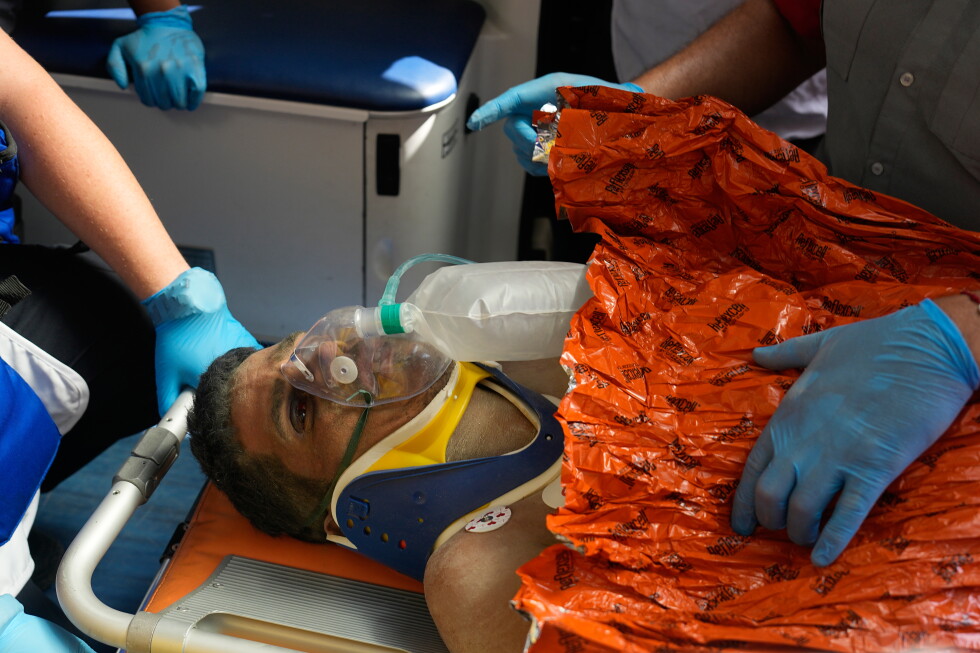
Eight days after a devastating pair of back-to-back earthquakes shook northern Venezuela, an international coalition of rescue teams pulled off a miraculous early Thursday extraction, pulling a trapped 43-year-old security guard alive from the collapsed rubble of a coastal shopping center. The successful rescue of Hernán Alberto Gil Flores has become a powerful symbol of hope amid widespread destruction that left thousands dead and countless communities shattered.
Gil Flores, a night-shift security guard stationed at the Galerías Playa Grande shopping center in Catia La Mar, a coastal town in the hard-hit La Guaira state, was inside his small on-duty cabin when the first magnitude 7.2 tremor struck on June 24. Just moments later, a second 7.5-magnitude quake hit, triggering the total collapse of the surrounding multi-story concrete structure. In a cruel twist of fate that saved his life, the small prefabricated security cabin remained intact, creating a narrow pocket of breathable air that shielded him from falling crushing debris for eight full days.
Costa Rican Red Cross specialized rescue teams first detected faint signs of life and established contact with Gil Flores over the weekend, sparking a coordinated round-the-clock extraction effort. Led by Chilean urban search and rescue firefighters, the operation brought together expert teams from the United States, Portugal, Mexico and multiple other nations, all united by a shared commitment: leave no survivor behind. “We were never going to leave him here,” confirmed Costa Rican Red Cross rescuer Minyar Collado ahead of the final extraction.
Rescue crews navigated a series of deadly hazards throughout the multi-day effort, including unstable, shifting structural rubble, torrential tropical downpours, and near-constant aftershocks that threatened to trigger further collapses. To keep Gil Flores stable as crews tunneled toward him, teams used a telescopic camera to maintain nonstop communication, and passed bottled water and liquid nutrients through a narrow drilled shaft to sustain him over the final three days of the operation. Veteran Chilean firefighter María Paz Campos talked the survivor through every step of the process, keeping him calm through the final agonizing hours of waiting. In pre-rescue footage released by Chilean firefighters, Gil Flores can be seen passing time sketching, before following instructions to put on protective goggles to shield his eyes from falling fine dust and concrete particles.
In a poignant detail shared by Collado, when rescuers first made contact, Gil Flores asked them not to inform his wife he was alive, worried that she would suffer additional heartbreak if he did not survive the extraction. For his spouse, Gusbimar González, the days after the quakes were filled with unrelenting despair, until the moment she learned the news: “when I learned he was alive, I saw a ray of light in the darkness,” she told the Associated Press. The couple share two children, aged 8 and 10, who had waited anxiously for news of their father.
When rescuers carried Gil Flores out on a stretcher covered with an orange protective tarp, teams from every participating nation broke into cheers, as crowds of onlookers lined the path to a waiting Red Cross ambulance. Members of the Costa Rican Red Cross team embraced each other, laughing through tears of relief at the successful outcome.
The twin June 24 shallow earthquakes that triggered the disaster left an unprecedented trail of destruction across northern Venezuela. More than 2,200 people were killed, over 11,000 were injured, and tens of thousands of buildings across the region were damaged or destroyed. La Guaira state, where Catia La Mar is located, bore the brunt of the catastrophe, but this unlikely rescue has given a shattered community a rare moment of hope in the wake of overwhelming tragedy.
-
South Africa and Ghana in diplomatic row over killing of migrant
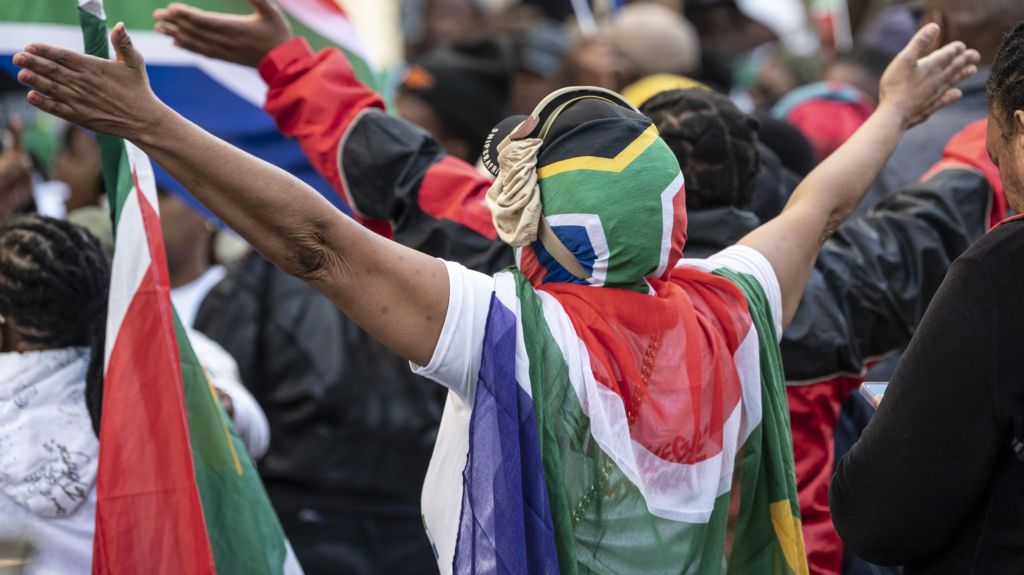
Tensions have flared into a full diplomatic dispute between South Africa and Ghana, sparked by conflicting claims over the death of a Ghanaian national amid a nationwide wave of anti-migrant unrest that has been building for months across South Africa. At the core of the disagreement are competing accounts of the death of 40-year-old Bashiru Isak, a Ghanaian tailor who had resided in South Africa for roughly two decades. Ghana’s Ministry of Foreign Affairs says it received deeply shocking reports that Isak was shot and killed at his workplace in Cape Town’s Khayelitsha township on Tuesday, the same day that anti-migrant groups held an unofficial deadline for all undocumented foreign nationals to leave South Africa. According to local Ghanaian media outlet Joy FM, the attackers confronted Isak at his shop, accusing him of taking employment opportunities from native South African citizens before opening fire. Ghana has formally rejected the killing, issued a diplomatic protest note to South African authorities, filed an official police complaint, and called for a full, transparent, and rapid investigation to hold all responsible parties accountable. The Ghanaian government has also stressed that South Africa must uphold its international commitments to protect the safety, dignity, and human rights of all foreign nationals residing within its borders, including Ghanaian citizens, and has begun arrangements to repatriate Isak’s remains to Ghana for burial while extending official condolences to his bereaved family. It has also issued a public advisory urging Ghanaian citizens who choose to remain in South Africa to stay alert and avoid areas deemed high risk for anti-migrant violence.
However, South African officials have categorically denied Ghana’s version of events, dismissing claims linking the reported killing to anti-migrant protests as a fabricated, false narrative. South Africa’s Justice Minister has publicly pushed back against Ghanaian authorities, criticizing them for spreading inaccurate information related to developments around irregular migration in the country. South African police confirm they have no official record of a murder occurring in Khayelitsha matching the details Ghana has provided, and have formally requested that Ghanaian authorities share any evidence or specific details they hold about the alleged incident to allow for a formal investigation.
South African police do confirm that they are probing the fatal shooting of a second Ghanaian national, 35-year-old Kwabena Boagen, whose killing took place one day before the reported Isak incident in Nyanga, a separate Cape Town township. According to police accounts, Boagen resided in the Khayelitsha area but worked in Nyanga, where the attack unfolded. Investigators say suspects entered the barbershop where Boagen worked, demanded an extortion payment from him, shot him, and then fled the scene. No arrests have been made in the case to date, and a post-mortem examination is currently being conducted in line with standard police procedures.
The disputed killing comes as anti-immigrant sentiment has reached new heights in South Africa, a nation that currently holds one of the highest unemployment rates globally, with official figures topping 30%. As Africa’s most industrialized and developed economy, South Africa has long drawn economic migrants from lower-income neighboring and regional countries, who often take up low-wage work that native citizens frequently decline. Anti-migrant groups organized mass marches across South Africa’s major cities on Tuesday, the date of their self-imposed deadline for all undocumented foreigners to leave the country. South African police reported that the majority of the protests were largely peaceful, but noted that around 900 people were taken into custody on Tuesday, with most arrests tied to immigration violations and incidents of looting.
Ahead of the deadline, multiple African governments including Ghana, Malawi, and Nigeria have begun repatriation operations to bring their citizens back home, after many migrant residents reported facing rising violence and intimidation targeting foreign nationals. South African officials confirm that as of this week, approximately 25,000 foreign migrants have already left the country to escape the growing hostile environment.
-
Watch: BBC at site of deadly Russian attack on Kyiv flats
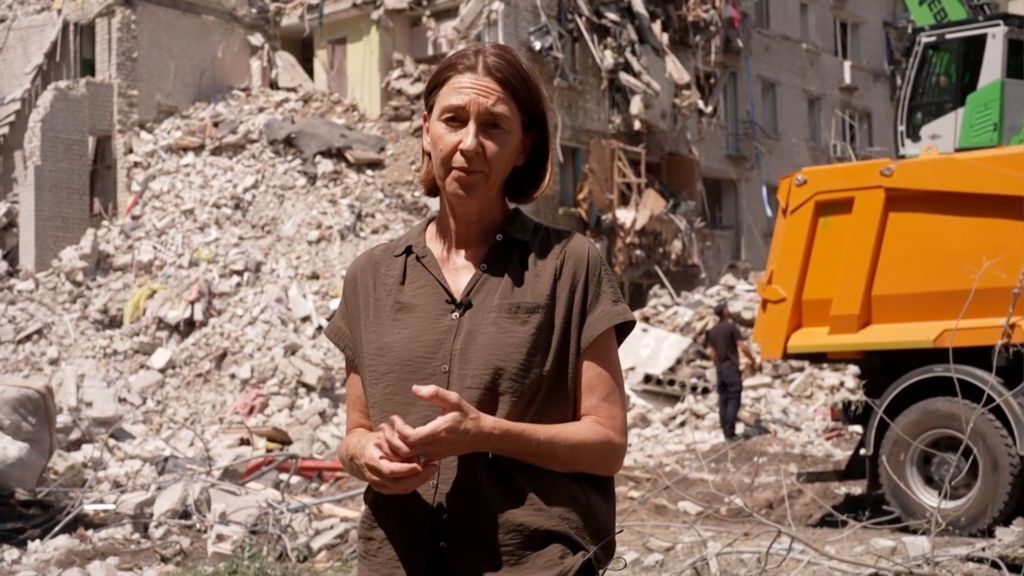
In the wake of a devastating Russian attack that left a residential neighborhood in Kyiv shattered, BBC correspondent Sarah Rainsford has traveled to the scene of the violence to document the aftermath. The target of the strike was a nine-story apartment building, a structure that once housed dozens of ordinary Ukrainian families going about their daily lives. Today, that building stands no more; it has been reduced to a sprawling pile of twisted concrete, broken glass, and splintered rebar, a stark physical reminder of the human cost of the ongoing conflict.
Rainsford’s on-site reporting captures the full scale of the destruction, offering audiences a first-hand look at the damage inflicted on civilian infrastructure in the Ukrainian capital. What was once a community of homes is now a scene of chaos, with rescue workers sifting through the debris in search of survivors and recovering the remains of those killed in the attack. The assault, which targeted a purely civilian site, has underscored the risks that ordinary residents of Kyiv face daily amid sustained Russian missile and drone strikes across the country.
As one of the few international correspondents still reporting regularly from within Ukraine during the full-scale invasion, Rainsford’s dispatch from the destroyed apartment block brings unfiltered, on-the-ground context to the attack, cutting through official statements to show the real-world impact of the violence on civilian populations.
-

German prosecutors charge a Ukrainian over Nord Stream pipeline explosions
Four years after coordinated undersea blasts tore through the Nord Stream natural gas pipeline network linking Russia and Germany, German federal prosecutors have officially brought criminal charges against a former Ukrainian army officer in connection with the attack, the office confirmed Thursday.
Per German privacy regulations, authorities are only identifying the suspect as Serhii K. The charges leveled against him include explosive endangerment, intentional property damage, disruption of public infrastructure, and acting as an accomplice to war crimes through the deliberate targeting of civilian assets, prosecutors outlined in an official public statement.
The September 26, 2022 bombings damaged both strands of the Nord Stream system, which were constructed to carry Russian natural gas to Western Europe via the Baltic Sea. The sabotage came at a moment of already sky-high global energy and geopolitical tension, just seven months after Russia launched its full-scale invasion of Ukraine. At the time of the attack, European nations were already racing to sever their long-standing energy ties to Moscow to cut off a key source of revenue for the Kremlin and pressure Russia to end its military campaign.
Prosecutors’ investigation confirms the alleged plot’s core objective was to permanently disable the pipeline network, cutting off Russia’s ability to earn critical foreign currency from gas exports to fund its military operations in Ukraine.
The case has progressed rapidly since authorities first took Serhii K. into custody. He was arrested in August during a raid on a vacation bungalow in a small Italian village, where he had been staying with family members. Law enforcement officials confirm he surrendered peacefully to arresting officers, and he was extradited to German custody to face investigation in November 2024.
Investigative findings show Serhii K. and other co-conspirators used a private yacht to carry out the attack, launching the vessel from the northern German port of Rostock. The yacht was rented from a German maritime company using forged identification documents and coordinated through a network of intermediaries, according to evidence gathered by prosecutors.
Of the two affected pipelines, the 2022 blasts ruptured Nord Stream 1 — for years Russia’s primary natural gas export route to Germany, which had already been shut off by Moscow just one month before the attack. The bombing also damaged the never-operational Nord Stream 2, which had its German certification halted by Berlin just weeks before Russia’s full-scale invasion, following widespread international pressure.
The Nord Stream project had drawn fierce criticism from the United States and many of its allies for years before the attack, with Western leaders repeatedly warning that the pipelines would increase Europe’s political and economic dependence on Russian energy. In the years following the blasts, Russia has leveled unsubstantiated accusations that the U.S. orchestrated the attack, claims Washington has repeatedly and firmly denied.
-
China says pilot crashed small plane into skyscraper for ‘personal reasons’
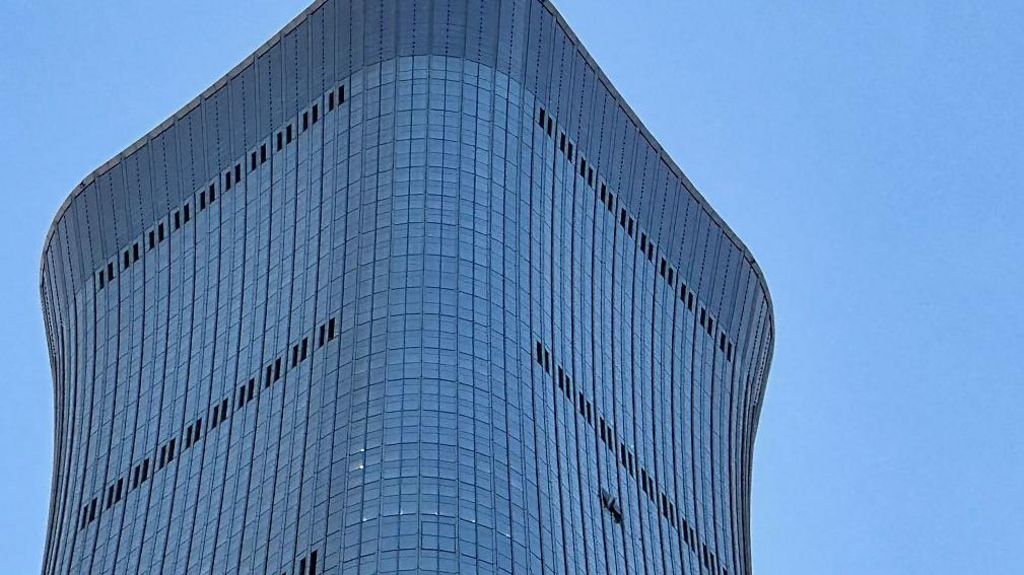
Last Friday, a small civilian aircraft crashed into CITIC Tower — Beijing’s tallest skyscraper, also known as China Zun — leaving the pilot dead and 13 other people injured, according to official statements released by local authorities in Beijing’s Chaoyang District on Thursday.
Nearly a week after the incident, authorities have released the full findings of their ongoing investigation, confirming that the 66-year-old pilot, identified only by his surname Liu, carried out the crash intentionally due to long-standing personal mental health struggles. A divorced freelance worker who lived alone in Beijing, Liu had reportedly lived with chronic insomnia and clinical anxiety for an extended period before the incident. Investigators found multiple references to ending his own life in Liu’s personal diary, leading the inquiry panel to conclude the crash was a deliberate act of endangering public safety driven by personal reasons.
The crash claimed Liu’s life at the scene. Of the 12 injured people hospitalized following the collision, one has already been discharged and the rest are receiving treatment, authorities confirmed.
Located just a few kilometers from Zhongnanhai, the headquarters of the Communist Party of China, the 109-story CITIC Tower is one of the most prominent high-rise structures in central Beijing. Amateur footage of the crash showing debris falling from the skyscraper spread rapidly across Chinese social media platforms in the hours after the incident, before most clips were removed as the investigation got underway. Even unrelated posts, photos and memes featuring the landmark were taken down in the aftermath of the crash, a move that drew attention from international observers.
Following the incident, multiple aviation operators told the BBC that national aviation regulators had ordered an immediate suspension of all light aircraft operations across parts of the country, a precautionary move to enhance security amid the ongoing investigation.
Flight tracking service Flightradar24 confirmed that the aircraft Liu was flying was an Aurora SA60L, a two-seat, single-engine light sport aircraft produced by Chinese domestic manufacturer Sunward Aircraft. Designed primarily for recreational flying, aerial photography and short touring trips, the plane measures 6.9 meters in length and has an 8.6-meter wingspan. Authoritative records show Liu earned his sport pilot license in 2021 and upgraded to a full private pilot license just two years before the crash, in 2024.
According to the official flight timeline, Liu took off from an airfield in Beijing’s Pinggu District on the day of the crash, completing a supervised training flight before departing on a solo flight. During the solo portion of his flight, Liu deliberately deviated from his pre-approved flight route and designated operating area, before losing contact with air traffic controllers at the airfield. Moments later, the plane collided with the CITIC Tower.