分类: world

  • UN voices hope for US-Iran talks resumption

    UN voices hope for US-Iran talks resumption

    Diplomatic efforts to de-escalate tensions between the United States and Iran are at a critical juncture this week, as the United Nations has publicly pushed for both sides to extend their existing temporary ceasefire and restart stalled dialogue.

  • South Korean fighter jets collided due to pilots snapping pictures, report finds

    South Korean fighter jets collided due to pilots snapping pictures, report finds

    A years-old investigation into a 2021 mid-air collision between two South Korean F-15K fighter jets has finally concluded, revealing a surprising root cause: two pilots were distracted by taking personal photos and shooting video of the flight. The Board of Audit and Inspection of Seoul, which launched the probe following an appeal from the involved pilot, released its full findings in a public report this Wednesday, laying out the full sequence of events that led to hundreds of thousands of dollars in damage.

    The collision unfolded during a routine training mission over South Korea’s central city of Daegu, as the two jets prepared to return to their base. The pilot flying the wingman aircraft, who was completing his final flight with his unit before a career transition, had planned to capture commemorative photos of the experience. He had even openly stated his intention to do so during the pre-flight briefing, and the audit board confirmed that informal in-flight photography for personal milestones was a widely accepted, unregulated practice among South Korean Air Force pilots at the time of the incident.

    Pulling out his personal mobile phone to snap photos mid-flight, the wingman pilot abruptly executed an ascent and roll maneuver to position his jet for a better shot. This sudden movement brought his aircraft far too close to the lead jet. In a frantic attempt to avoid an immediate full impact, the lead pilot ordered a rapid descent, but the two aircraft still collided. The lead jet suffered severe damage to its left wing, while the wingman jet’s tail stabilizer was heavily damaged. Miraculously, neither pilot was injured in the incident, but repair costs totalled 880 million South Korean won, equal to roughly $596,000 or £440,500.

    After the collision, the South Korean Air Force suspended the wingman pilot, who later left the service to take a pilot position with a commercial airline. The air force initially ordered the pilot to pay the full 880 million won in repair costs as a fine. The pilot contested this steep penalty, triggering the independent audit investigation to review the case.

    In his appeal, the wingman pilot admitted his sudden maneuver had directly caused the collision, but argued that the lead aircraft crew shared blame: he claimed the lead pilot had tacitly approved of the photo shoot, since the lead crew was aware the activity was taking place and had even decided to film his jet for the video. The audit board ultimately sided partially with the appellant, ruling that the pilot would only be required to pay 10 percent of the original fine – 88 million won.

    The board outlined two key reasons for reducing the penalty. First, it ruled that the South Korean Air Force carried partial institutional responsibility for the incident, due to its failure to implement clear rules and enforcement around personal device and camera use by pilots during active flight missions. Second, the board noted the pilot had an unblemished service record prior to the incident, and his quick action to safely land his damaged jet after the collision prevented far more severe damage and potential loss of life. The publicly released report did not include any information on potential disciplinary action against the other pilots involved in the incident.

  • The tiny, defiant Nile island caught in the heart of Sudan’s war

    The tiny, defiant Nile island caught in the heart of Sudan’s war

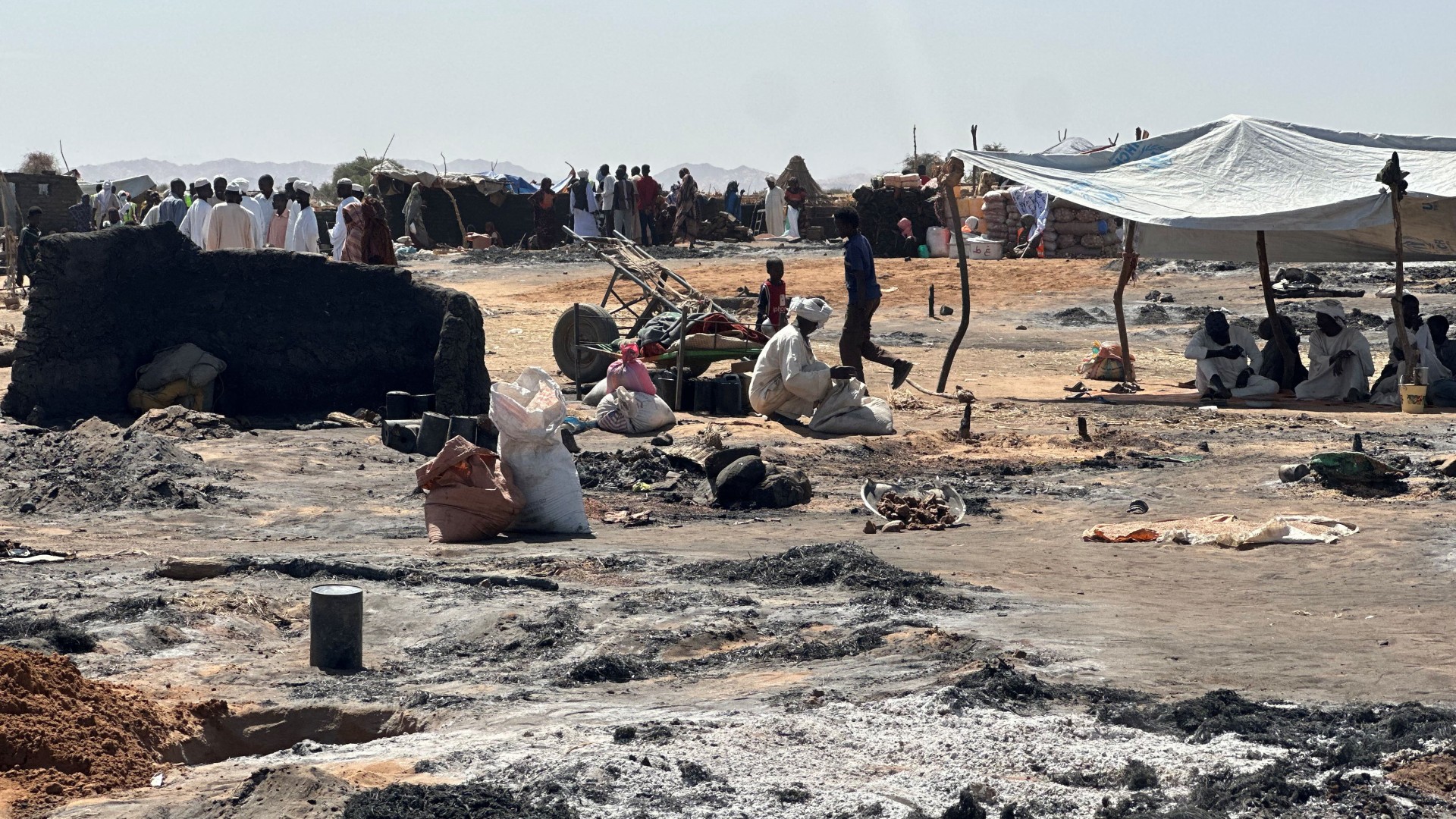
    Nestled at the confluence of Uganda’s White Nile and Ethiopia’s Blue Nile, right in the center of Sudan’s war-ravaged capital Khartoum, the crescent-shaped Tuti Island has begun the slow, fragile process of coming back to life. A year after the Sudanese army broke a nearly 24-month paramilitary siege that emptied most of the island’s streets and homes, the deep, unbreakable bond between residents and their ancient land is on full display.

    At 80-some years old, Al-Shubbak is one of the few who never left. When the Rapid Support Forces (RSF) clamped down on the only bridge connecting Tuti to the mainland in June 2023, turning the island into an open-air prison, she refused to flee. “I didn’t even move for the English when they colonised us,” she told AFP, her toothless smile undimmed by hardship. She still recites the generations-old battle cry of Tuti’s defenders: “Our fathers resisted the occupiers with stones. Though they met them with gunfire, they still could not take Tuti the green.”

    The war between Sudan’s national army and the RSF first erupted in Khartoum in April 2023, and Tuti, positioned directly across the river from the first flashpoints of conflict, bore an outsize share of the violence. For nearly two years, no supplies could enter or exit without RSF approval. Islanders were forced to pay exorbitant bribes just to access food, medicine, or fuel for water pumps — and to buy the right to leave. For 34-year-old day laborer Salaheldin Abdelqader, who escaped seven months into the siege and returned after the army recapture, that toll hit 350,000 Sudanese pounds, roughly $90 today, more than double a Sudanese doctor’s average monthly salary.

    Local elder Sheikh Mohamed Eid, who spent months using community donations to smuggle food to trapped residents to prevent mass starvation, was detained by the RSF for his activism. Thrown into a series of the paramilitary group’s notorious prisons, he watched fellow Tuti inmates die one by one before he was released nine months later. Retelling his story from his home, where a gaping hole in the roof left by an artillery shell still opens to the sky, Eid explained that for Tuti’s residents, leaving the island is not an option. “We’re like fish in the water, we can’t survive outside Tuti,” he said, noting that even former president Omar al-Bashir’s government, which tried for years to relocate the community to make way for luxury real estate developments, never succeeded in severing that tie.

    By the final months of the siege, out of Tuti’s estimated 30,000 pre-war residents, only Al-Shubbak’s family remained, staying behind to care for the bedridden matriarch and guard their ancestral land. “We stayed to guard our soil,” said her daughter Najat al-Nour, a 50-something Quran professor who calls those who fled a mistake. For many others, however, leaving was the only way to survive. Nosayba Saad and her family endured a year and a half of RSF occupation, during which fighters repeatedly broke into homes, stole valuables, threatened residents, and left many dead from stray gunfire. By the time her family paid to leave in October 2024, the RSF had begun seizing even the last of residents’ food stores.

    Today, after the army retook Khartoum and lifted the siege in March 2025, hundreds of former residents have returned. Boarded-up shops have reopened, farmers have walked back to their fertile orchards and vegetable fields that once supplied most of Khartoum’s fresh produce, and Friday prayers draw crowds to the 15th-century red-brick mosque that has stood on the island for hundreds of years.

    Still, the joy of homecoming is deeply bittersweet. Saad’s two uncles remain missing, presumed dead, and every family on Tuti carries the weight of loss. The iconic riverfront spot where the two Niles merge to form the single Nile flowing north to Egypt is now littered with unexploded mines, a permanent reminder of the siege’s violence. To the south, the gutted, bombed-out skyscrapers of central Khartoum loom on the horizon, a constant reminder of the terror the island endured.

    Yet as the sun sets over the Nile, turning the water a glowing orange, small signs of normalcy are returning. A squash farmer trundles home with a heavy sack of his first post-war harvest. A fisherman packs up his rods beside a family picnicking on the cleared waterfront. A young couple on a date asks for a photo, a memento of their first trip home to Tuti. For the first time in two years, the scent of jasmine and incense drifts across the island, a quiet testament to the resilience of a community that refused to let their home be taken.

  • Pope visiting Equatorial Guinea prison in spotlight after US migrant deportations

    Pope visiting Equatorial Guinea prison in spotlight after US migrant deportations

    As Pope Leo XIV wraps up an ambitious 11-day, four-nation African tour that spanned from North Africa’s Algeria to Southern Africa’s Angola, with a stop in Cameroon along the way, his final full day in the continent centers on a high-profile visit to one of Equatorial Guinea’s most notoriously troubled correctional facilities.

    On Wednesday, the pontiff traveled to the infamous Bata City prison, a stop that carries on the legacy of his predecessor Pope Francis, who made prison visits a core priority of his papacy. Francis launched these visits with a dual mission: to extend a message of hope to incarcerated people and affirm the Church’s solidarity with them, while also drawing global attention to systemic injustices including overcrowding, judicial misconduct, and inhumane confinement conditions.

    Leo XIV’s day began with an early morning Mass in Mongomo, a city in Equatorial Guinea’s far eastern region, before he traveled to Bata, the coastal nation’s most populous urban hub. Later in the day, he was also scheduled to lead a prayer service at a memorial honoring the victims of a 2021 military barracks explosion in Bata, a disaster widely attributed to government negligence.

    Longstanding concerns over systemic human rights and judicial abuses in Equatorial Guinea have framed the pontiff’s visit. Led by President Teodoro Obiang Nguema Mbasogo, who has held power since 1979, the country has faced consistent international condemnation over widespread corruption and authoritarian rule. While the United Nations human rights body welcomed Equatorial Guinea’s 2022 abolition of the death penalty, both global monitors and human rights organizations have repeatedly flagged deep flaws in the nation’s prison and justice systems.

    In its 2023 country report, the U.S. State Department documented a long list of violations, including extrajudicial and arbitrary killings, unlawful detentions, widespread political imprisonment, routine torture, life-threatening prison conditions, and a severe lack of judicial independence. Marta Colomer Aguilera, senior campaigner for Amnesty International’s West and Central Africa division, emphasized the organization’s deep alarm over the country’s human rights landscape. She confirmed that torture is routinely used to extract confessions or punish dissidents, human rights advocates face constant harassment, and the absence of judicial independence effectively eliminates any guarantee of fair trials.

    A particularly contentious issue that has taken center stage during the papal visit is the controversial third-country migrant deportation deal struck with the Trump administration, under which Equatorial Guinea has received millions of dollars to accept migrants deported from the U.S. who have no connection to the country. AP investigative reporting has confirmed at least 29 such migrants have been deported to Equatorial Guinea. While none were placed in the Bata prison, many remain in detention in the capital Malabo with severely limited access to legal representation and medical care. Others have been forcibly transferred back to their home countries, where they face targeted persecution.

    The Equatorial Guinean government has repeatedly denied allegations of human rights abuses, and has not issued any public response to questions regarding the migrant deportation agreement. Notably, Leo XIV, who was born in the United States, has previously condemned the Trump administration’s broader deportation policy as “extremely disrespectful” of human dignity.

    On the eve of the prison visit, 70 global and regional human rights organizations published an open letter urging the pope to use his platform to speak out explicitly about the third-country deportation scheme, and to pressure African nations to refuse complicity in the practice. The letter argues that these deportation arrangements bypass international humanitarian protections, leave vulnerable refugees exposed to arbitrary detention and coercion, and violate the international legal principle of non-refoulement, which prohibits sending people to territories where their lives or freedoms face direct threat.

    “The conditions under which these deportations have been carried out have also reflected a very troubling disregard for human life and safety. We call for the intercession of Pope Leo XIV to discourage African countries from being complicit in these violations and instead to protect these individuals,” the groups wrote.

    One of the letter’s signatories, EG Justice, is an organization that has long documented and condemned the detention of political prisoners in Equatorial Guinea. The group has called on Leo to leverage his global moral authority to address the issue directly. Tutu Alicante, the U.S.-based director of EG Justice, noted: “There are individuals — prisoners of conscience, and human rights activists — in detention whose cases raise serious humanitarian and due process concerns. At moments like this, sentence review and a real commitment to reform the judiciary can send a powerful signal of a willingness to turn a page toward justice and reconciliation.”

    Alicante acknowledged that the Equatorial Guinean government has taken minor, cosmetic steps to improve certain detention facilities in the months leading up to the papal visit, but emphasized these changes are temporary. “The real test will be whether humane conditions, access to medical care, and basic rights are sustained long after the papal visit concludes,” he said.

    This coverage of religious affairs from the Associated Press is produced through a collaboration with The Conversation US, with funding provided by Lilly Endowment Inc. The AP holds sole responsibility for all content.

  • Iran fires on container ship in Strait of Hormuz

    Iran fires on container ship in Strait of Hormuz

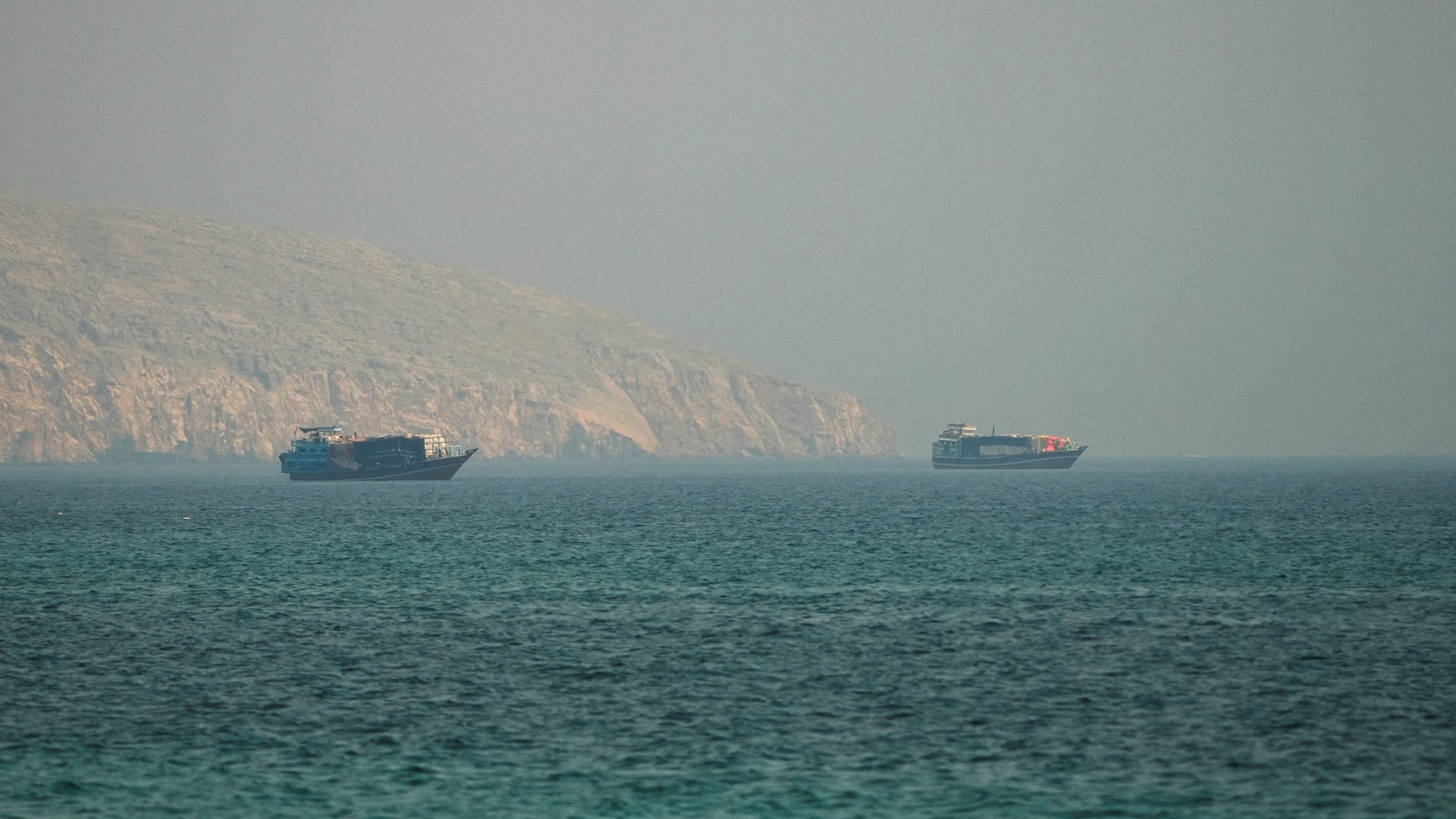
    In a sudden escalation of maritime tensions in the Persian Gulf’s critical chokepoint, Iran’s paramilitary Revolutionary Guard launched an unprovoked attack on a commercial container vessel transiting the Strait of Hormuz on Wednesday, damaging the ship just days after the United States seized an Iranian cargo ship and boarded a Tehran-linked oil tanker in the Indian Ocean over the weekend.

    The United Kingdom Maritime Trade Operations (UKMTO), the British military body that monitors commercial shipping activity across the region, confirmed the assault took place at approximately 7:55 a.m. local time in the strategic waterway, which handles roughly one-fifth of the world’s daily oil trade. According to UKMTO’s initial public advisory, the Revolutionary Guard gunboat that carried out the firing did not attempt to contact or hail the targeted container ship before opening fire, a departure from standard maritime protocols for stopping or inspecting vessels.

    Fortunately, the incident did not result in any casualties among the ship’s crew, and preliminary assessments found no risk of environmental damage stemming from the attack, UKMTO added. As of Wednesday, Iranian officials had not issued any immediate statement or acknowledgment of the assault on the vessel.

    The attack comes at a moment of already heightened friction between Iran and Western powers, and it comes on the same day that planned ceasefire talks between Iran and a group of armed militants based in Pakistan were expected to begin — talks that ultimately failed to materialize, creating another layer of instability across the broader Middle East. The assault also directly follows two separate U.S. actions targeting Iranian shipping over the preceding weekend: U.S. forces seized an Iranian container vessel after opening fire on it, and also conducted a boarding operation against an oil tanker linked to Iran’s sanctioned oil trade in the Indian Ocean. Analysts warn the tit-for-tat targeting of commercial shipping in one of the world’s most vital maritime chokepoints risks further escalating regional tensions and disrupting global energy supply chains already facing significant volatility.

  • Iranians have long sought work and relative stability in Turkey. The war could force some to return

    Iranians have long sought work and relative stability in Turkey. The war could force some to return

    For thousands of Iranians who built fragile new lives in neighboring Turkey, regional conflict has turned a precarious temporary existence into a daily fight for stability, separating families and forcing impossible choices between staying and returning to a homeland mired in violence.

  • Trump extends US ceasefire with Iran

    Trump extends US ceasefire with Iran

    WASHINGTON D.C. – U.S. President Donald Trump announced Tuesday that he will extend the ongoing temporary truce between the United States and Iran, just one day before the original two-week ceasefire was scheduled to expire Wednesday evening.

    In a public post shared to his social media platform Truth Social, Trump outlined the key factors that led to his decision to extend the pause in offensive actions. He cited two core drivers: the well-documented, widely anticipated deep internal political fracture within Iran’s governing institutions, and a formal request from top Pakistani leaders to hold off on any planned military strikes against Iran.

    “Upon the request of Field Marshal Asim Munir, and Prime Minister Shehbaz Sharif, of Pakistan, we have been asked to hold our Attack on the Country of Iran until such time as their leaders and representatives can come up with a unified proposal,” Trump wrote in the post.

    The U.S. president confirmed the ceasefire will remain in place indefinitely for the time being, staying active until Iranian representatives submit their unified proposal and bilateral discussions reach a conclusion, regardless of the final outcome of those talks.

    While offensive military operations will remain on hold, Trump emphasized that the U.S. military will maintain its current blockade of Iran and will stay fully postured to respond to any emerging threats. He noted U.S. forces remain “ready and able” to carry out any necessary actions if the negotiated process fails to deliver an acceptable outcome.

    The extension marks a temporary de-escalation of tensions between the two nations, which had spiked in recent weeks ahead of the original truce taking effect, and leaves the window open for diplomatic efforts to resolve ongoing disputes through negotiation rather than military conflict.

  • Phone tracking shows how Colombian mercenaries backed Sudan’s RSF – report

    Phone tracking shows how Colombian mercenaries backed Sudan’s RSF – report

    Three years into Sudan’s devastating civil war between the regular national army and the powerful Rapid Support Forces (RSF) paramilitary group, a groundbreaking new investigation has delivered the first definitive proof of direct United Arab Emirates (UAE) backing for the RSF through a network of Colombian mercenaries. A new report by the Conflict Insights Group (CIG), an independent security analysis organization, ties this mercenary network directly to the RSF’s brutal 2025 capture of the strategic North Darfur capital el-Fasher — a turning point in the conflict that triggered some of its worst atrocities.

    CIG director Justin Lynch emphasized that while the organization has long tracked growing evidence of extensive Emirati military support to the RSF, this investigation marks the first time that link has been proven beyond doubt. “We are making public what governments have long known — that there is a direct, operational link between Abu Dhabi and the RSF’s war effort,” Lynch said in the report’s introduction.

    To build its case, CIG combined multiple open-source intelligence methods, most notably tracking more than 50 mobile phones belonging to Colombian mercenary operatives active across Sudan between April 2025 and January 2026. The tracking relied on commercially available location technology originally built for targeted advertising, supplemented by flight logs, satellite imagery, social media content, and peer-reviewed academic research. The team traced mercenary movements through a clear logistical and training pipeline originating in Colombia and routed through UAE-controlled facilities.

    One of the most striking pieces of evidence comes from the devices themselves, which were overwhelmingly configured to Spanish, Colombia’s official language. Investigators traced one device from Colombia to Abu Dhabi’s Zayed International Airport, then to a dedicated Emirati military training facility in Ghayathi, where four other Spanish-language devices were also detected. Two of these devices later traveled to Sudan’s South Darfur state, with one moving on to Nyala, the RSF’s de facto capital in the region. While in Nyala — already identified by analysts as a key hub for RSF drone operations and Colombian mercenary activity — the device connected to public Wi-Fi networks explicitly named “ANTIAEREO” (Spanish for “anti-aircraft”) and “AirDefense.” In total, CIG documented more than 40 Spanish-language devices linked to mercenaries across the Nyala area.

    In another high-profile case, CIG tracked a Colombian mercenary’s device directly to el-Fasher during the final weeks of the RSF’s 18-month siege, which ended with the group seizing the city in October 2025. While operating inside el-Fasher, the device connected to a Wi-Fi network named “ATACADOR” — Spanish for “attacker.” Multiple other Colombian-linked devices were also detected in the city during the takeover, the report confirms.

    The mercenary network operates under the banner of the Desert Wolves brigade, with fighters serving as drone pilots, artillery operators, and combat instructors for the RSF. Multiple devices linked to brigade members connected to Wi-Fi networks named “DRONES” and “LOBOS DEL DISIERTO” — a Spanish spelling of “Desert Wolves.” According to Colombian digital outlet La Silla Vacía, the brigade is led by retired Colombian army Colonel Alvaro Quijano, who is based in the UAE and already subject to U.S. and UK sanctions for his role recruiting Colombians to fight in Sudan. The CIG report confirms the Desert Wolves are employed and funded by a UAE-based company with documented direct ties to senior Emirati government officials, matching evidence obtained by La Silla Vacía.

    Beyond Sudan, CIG also detected Spanish-language mercenary devices at two key regional logistics hubs tied to the UAE: a port in Somalia and a town in southeastern Libya that analysts have long identified as a key transit point for weapons flowing to the RSF, allegedly facilitated by the Emirates.

    The capture of el-Fasher stands as one of the bloodiest episodes of Sudan’s three-year civil war, which has already spawned the world’s worst active humanitarian crisis. Tens of thousands of people have been killed across the country, and more than 10 million have been forced to flee their homes. After the fall of el-Fasher, International Criminal Court prosecutors categorized the accompanying mass violence as war crimes and crimes against humanity, while United Nations investigators found the atrocities bore the “hallmarks of genocide.”

    “The scale of atrocities and the prolonged siege of el-Fasher would not have been possible without the specialized drone operations that these Colombian mercenaries provided to the RSF,” Lynch said, noting the mercenary network also directly supported the siege operation. The CIG report concludes that both the UAE and the Colombian mercenary network share responsibility for the war crimes committed in el-Fasher.

    The UAE has long rejected all claims that it provides military backing to the RSF, describing previous allegations as “false and unfounded” and condemning el-Fasher atrocities in the strongest terms. The BBC has requested comment from the Emirati government on the CIG’s new findings, and no response has been issued as of publication.

    Colombian President Gustavo Petro has previously condemned the recruitment of Colombian citizens to fight in Sudan, calling the mercenaries “spectres of death” and framing the recruitment network as a form of human trafficking. Estimates place the total number of Colombian mercenaries fighting for the RSF in the low hundreds. U.S. authorities have already imposed sanctions twice on Colombian nationals and linked firms for mercenary recruitment activity in Sudan — most recently just last week — and have confirmed Colombian fighters supported the RSF’s el-Fasher capture, but have not yet drawn a direct official link to the UAE.

    Independent analysts have long agreed that sustained foreign military and financial support for both the RSF and Sudan’s regular army has been the single most critical factor allowing the civil war to continue and expand over the past three years.

  • Mexico officials say Teotihuacán gunman carried material related to US mass shooting

    Mexico officials say Teotihuacán gunman carried material related to US mass shooting

    On April 21, 2026, a premeditated shooting at one of Mexico’s most iconic tourist landmarks, the ancient Pyramid of the Moon in the Teotihuacán archaeological complex, left one person dead and 13 others injured, prompting a swift response from national authorities who have moved to reassure the public ahead of this summer’s FIFA World Cup.

    According to official details released by Mexican leadership at a Tuesday press briefing, the attacker was 27-year-old Mexican national Julio César Jasso Ramírez. When he carried out the attack, he brought a loaded handgun, dozens of extra ammunition cartridges, a knife, and printed materials referencing notorious violent incidents that have occurred around the world. Top law enforcement officials confirmed that Jasso Ramírez planned and executed the attack entirely on his own, with no connections to larger extremist groups or organized criminal networks. After a standoff with responding law enforcement, the attacker ultimately died by suicide on the site.

    The dead victim of the attack was identified as a 32-year-old Canadian tourist. Thirteen other people ranging in age from 6 to 61 were injured in the shooting; seven of those injured suffered gunshot wounds, including two minor tourists from Colombia and Brazil. Responding officers included a member of Mexico’s National Guard and a local municipal police officer, who scaled the steep steps of the ancient pyramid to corner the attacker. The National Guard member shot Jasso Ramírez in the leg in an attempt to disable him before the attacker turned the gun on himself.

    Mexican President Claudia Sheinbaum told reporters that preliminary investigations show the attacker displayed clear signs of unaddressed psychological distress and had been radicalized by prior high-profile mass shootings carried out abroad. State of Mexico Attorney General José Luis Cervantes Martínez confirmed that among the attacker’s belongings, investigators found documents, imagery and written materials referencing the 1999 Columbine High School massacre in the United States. One eyewitness tourist told Reuters that Jasso Ramírez explicitly referenced the Columbine attack during the shooting, which took place exactly 27 years to the day after the 1999 massacre.

    Investigators added that the attack was far from impulsive. Jasso Ramírez had made repeated trips to the Teotihuacán complex, located roughly 50 kilometers (31 miles) northwest of Mexico City, in advance of the attack, and arrived at the site shortly before noon local time on Monday. Witness cell phone footage captured from the scene captured the chaos of the incident: visitors can be seen scrambling for cover as multiple gunshots ring out, while Jasso Ramírez can be heard making threats against crowds of tourists.

    In the aftermath of the attack, the entire Teotihuacán archaeological site — a UNESCO World Heritage Site that draws roughly 1.8 million visitors annually — was closed to allow for forensic investigation and security adjustments. President Sheinbaum announced the site will reopen to visitors on Wednesday with newly implemented enhanced security protocols. The president also acknowledged that prior to the attack, most Mexican archaeological sites including Teotihuacán did not have entrance security checkpoints in place. In response, she has ordered immediate security upgrades at all tourist and archaeological sites across the country, including the installation of permanent metal detectors at Teotihuacán and other high-traffic landmarks.

    With less than two months to go before the 2026 FIFA World Cup kicks off in Mexico City on June 11, President Sheinbaum moved quickly to reassure domestic and international audiences that security for the global tournament will be fully guaranteed. The president noted that she has already held in-depth talks with FIFA organizers to review logistics and security planning for the tournament. She emphasized that Mexico remains a safe destination for travelers, pointing to the 16 million international visitors that entered the country between January and February of 2026 as evidence of the country’s ongoing ability to welcome tourists safely.

  • Indonesia orangutan forest cleared for ‘carbon-neutral’ packaging firm

    Indonesia orangutan forest cleared for ‘carbon-neutral’ packaging firm

    A landmark joint investigation by Agence France-Presse (AFP) and non-profit investigative outlet The Gecko Project has uncovered massive deforestation of critically endangered orangutan habitat in Indonesian Borneo, linked to a supply chain that produces purportedly carbon-neutral packaging for major global consumer brands.

    The clearing, which took place across nearly 30,000 hectares of biodiverse rainforest in Central Kalimantan Province — an area almost three times the size of Paris — has unfolded between 2016 and 2024, according to satellite imagery analysis, government audit documents, trade records, and on-the-ground reporting from the investigation team. The timber is sourced from government-permitted industrial plantations, processed at Indonesia’s Phoenix Resources International (PRI) mill, and then shipped to pulp and paper manufacturer Asia Symbol, a subsidiary of Singapore-based multinational conglomerate Royal Golden Eagle (RGE).

    For years, RGE has positioned itself as a leader in sustainable supply chain management: the conglomerate pledged to eliminate deforestation from its operations by 2015, secured a $1 billion sustainability-linked loan in 2024, and is actively lobbying to regain Forest Stewardship Council (FSC) certification, which labels products as responsibly sourced. Asia Symbol, which supplies packaging to global pharmaceutical giant Haleon — maker of household brands Panadol and Sensodyne — also maintains a public no-deforestation policy.

    The investigation’s findings directly contradict these high-profile sustainability pledges. Analysts traced pulp from plantations that cleared old-growth rainforest, home to the last remaining populations of Bornean orangutans, all the way to Asia Symbol’s production facilities in China. Satellite data confirms that thousands of hectares of natural forest have been cleared to make way for fast-growing acacia and eucalyptus plantations operated by Industrial Forest Plantation (IFP), one of the top suppliers to the PRI mill. Trade data and ship tracking confirm that PRI has regularly shipped pulp to Asia Symbol’s Chinese mills since January 2025, with one 2024 shipment even celebrated with a formal welcome ceremony and ceremonial cannons at the Chinese port of Rugao.

    The environmental and human cost of the clearing has been severe for local communities. Indigenous and local residents who have relied on the Bornean rainforest for generations have lost access to traditional farming land and hunting grounds, with displaced residents forced to relocate to find work. Many families report that promised compensation for seized land has never materialized. Intact tree cover that once absorbed heavy rainfall has been removed, leading to a sharp increase in frequent and destructive flooding across the region. Local residents also report rising concerns over water pollution from plantation runoff, making once-safe river water unsafe to drink.

    “My eyes well up remembering how it was,” Agau, 69-year-old secretary of Humbang Raya village located inside the IFP concession, told AFP investigators. “It’s hard to find anything like it used to be. Our lives, our livelihood here, depend on the forest that we have. That is our only hope.” Ika Magdalena, a pregnant mother of three who lost her farm to the concession, added: “They’ve already damaged our crops, and they don’t want to take responsibility. It breaks our hearts, but they just stay silent.”

    Local government officials defended the concession, noting that IFP has not committed any formal violations of Indonesian forestry law and contributes tax revenue and reforestation funds to the region. But environmental campaigners say the permits prioritize corporate profit over community and ecological health, with almost none of the economic benefits of the concession reaching local residents. “Communities lose sources of livelihood, both food and income, and there are no alternative options,” said Bayu Herinata of the Central Kalimantan branch of Indonesian environmental group WALHI.

    In response to the investigation’s findings, Asia Symbol stated that it is committed to its no-deforestation policy and has launched a focused review of its sourcing from the PRI mill, noting that the complexity of global supply chains “creates real due diligence challenges.” The company also claimed that its carbon-neutral packaging produced for Haleon did not include pulp from the PRI mill, but failed to provide evidence of how it segregates pulp from different sources. IFP and PRI did not respond to multiple requests for comment from investigators.

    Environmental advocates say the case exposes a pattern of greenwashing by RGE, which has faced repeated allegations of deforestation and land conflict over the past decade. The company’s attempt to regain FSC certification stalled last year following allegations that affiliate staff attacked an Indigenous community, and a 2023 acknowledgement of deforestation in two other supply chain concessions never resulted in the promised policy changes. “Their commitments are nothing more than greenwashing to convince their buyers that they are cleaning up their act,” said Grant Rosoman, senior forest campaign advisor for Greenpeace International.

    Robin Averbeck, forest programme director at the Rainforest Action Network, added that RGE has leveraged its unfulfilled sustainability pledges to access billions of dollars in discounted green financing from global banks. “The findings of this investigation indicate that RGE is still very much in the business of deforestation,” Averbeck said.

    Following the release of the investigation, UK-based Haleon announced it would cut all ties with Asia Symbol. While the company stated its own internal investigations found no evidence of deforestation-linked material in its supply chain, it said it was “nevertheless very concerned by the allegations” and has ordered its suppliers to exclude all material from Asia Symbol and any other plantation linked to deforestation risk.

    Indonesia consistently ranks among the countries with the highest annual tree cover loss globally, according to Global Forest Watch. Deforestation in the country not only threatens endangered species like the Bornean orangutan and undermines global climate goals, but also increases the risk of deadly natural disasters. Last year, deforestation-fueled floods and landslides killed more than 1,000 people across Sumatra, a disaster the Indonesian government publicly acknowledged was worsened by forest loss, yet no major policy changes to curb deforestation have been implemented nationwide.