
The ongoing conflict in Sudan’s Darfur region has entered its third year of devastating violence, and the International Criminal Court (ICC) has announced a key milestone in its long-running investigation into alleged war crimes perpetrated by parties to the conflict. Speaking during a visit to refugee camps in neighboring Chad in an interview with the BBC, ICC Deputy Prosecutor Nazhat Khan confirmed Thursday that her team has secured a major investigative breakthrough, uncovering concrete evidence that directly connects ongoing atrocities on the ground to specific senior leaders.
分类: world
-
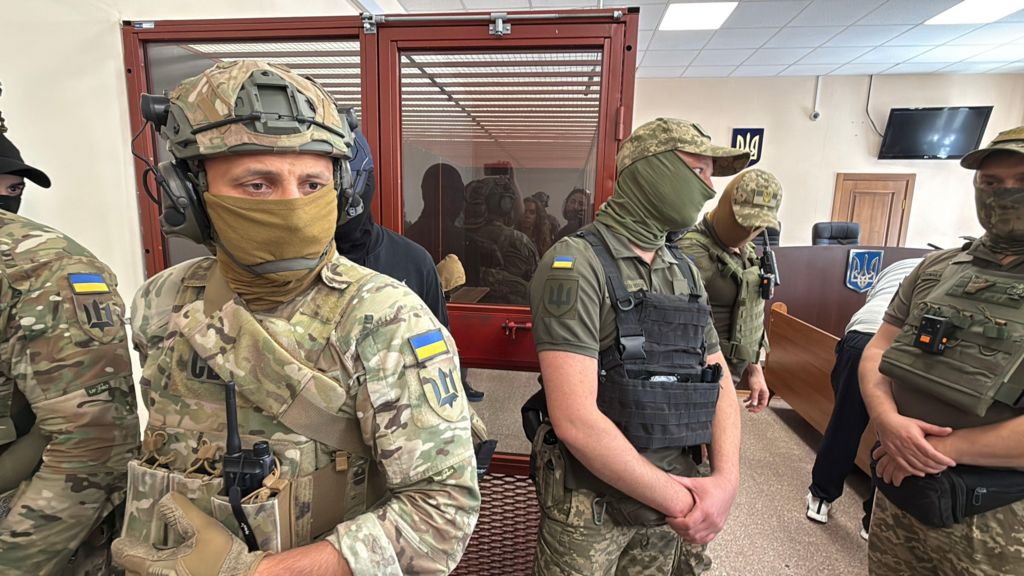
Ukrainian agent accused of murdering Monaco bomb suspect changes story
### High Security Court Appearance in Kyiv Holds Unprecedented Revelations
On Thursday, a heavily fortified Kyiv courtroom played host to a custody hearing that has sent shockwaves through Ukraine’s national security establishment, centered on a tangled cross-border case that connects a foiled assassination attempt in Monaco to the mysterious killing of the suspected would-be assassin on Ukrainian soil.
The defendant at the heart of the drama, 34-year-old Vladyslav Reut, is an active, decorated officer with Ukraine’s GUR military intelligence agency. Just days earlier, he had admitted to fatally shooting Anastasiia Berezovska, the 39-year-old woman identified as the prime suspect in last week’s bombing targeting sanctioned Ukrainian-born oligarch Vadim Yermolayev in Monaco. Reut even guided investigators to Berezovska’s hidden woodland grave west of Kyiv, concealed under a pile of tree branches. But in a dramatic reversal during Thursday’s hearing, Reut categorically denied pulling the trigger, shifting all blame to his co-defendant, 50-year-old Vitalii Zhykovych, a former officer with Ukraine’s SBU domestic security service.
Reut told the court he had only helped Zhykovych pick up Berezovska after she crossed into Ukraine from Poland by bus, just two days after the Monaco explosion and before her name was linked to the attack. According to Reut’s revised testimony, the pair drove Reut’s BMW to meet Berezovska on the Kyiv highway, with Zhykovych claiming they needed to hide her amid an unspecified criminal matter. Reut said Zhykovych produced a modified Makarov pistol from his backpack during the drive, and when Reut questioned the weapon, Zhykovych dismissed it as a precaution against panic. When the three reached a forest path near the village of Yuriv, Reut claimed Zhykovych ordered him to shoot Berezovska, threatening “it’s either her or us.” In Reut’s account, Zhykovych ultimately fired four fatal shots himself, after which the pair dug a grave and disposed of the gun and Berezovska’s belongings in a nearby lake.
Addressing why he initially confessed to the killing, Reut told the court he had acted out of fear: Zhykovych had threatened to harm his family if Reut did not take the blame, he claimed. “I have fought enemy combatants defending my country,” Reut emphasized to the court. “I would never intentionally murder an innocent civilian woman.”
The co-defendant’s legal team immediately rejected Reut’s new narrative. Anatoliy Ivanov, Zhykovych’s lawyer, described his client as a decorated patriot who fought against Russian-backed forces in eastern Ukraine in 2014 and participated in the defense of the Kyiv region following Russia’s 2022 full-scale invasion. Ivanov dismissed Reut’s claim that a low-ranking former SBU officer could force a serving GUR officer to participate in a murder, arguing Reut was only lying to avoid imprisonment. “He does not want to be imprisoned. I understand,” Ivanov said, while insisting his client “did not kill” Berezovska. Ivanov also raised the unsubstantiated possibility of Russian involvement, noting that Moscow has recruited Ukrainian intelligence agents in the past, saying “We’ve had a lot of such rats, unfortunately.”
Both suspects appeared in court heavily obscured: their hands were cuffed, they kept hoods pulled up over their heads and large masks covering most of their faces, leaving only their eyes visible. For the majority of the separate hearings, the pair sat hunched inside the courtroom’s fortified glass cage, their backs turned to assembled press cameras.
Prosecutors confirmed that investigators tracked Reut and Zhykovych quickly after identifying Berezovska as a suspect, using the dead woman’s phone records to zero in on the two men, before uncovering cash and cryptocurrency transfers they had made to Berezovska’s accounts. Prosecutor Dmytro Tkachuk told reporters the two men are accused of acting “jointly and in a coordinated fashion” and have both been formally charged with premeditated murder. While one suspect has disclosed information about a potential motive, Tkachuk said releasing that detail publicly would damage the ongoing investigation, adding “all versions are being considered” — including theories ranging from Russian interference to organized crime and corruption.
Yermolayev, the target of the Monaco bombing, made his fortune in the cognac and real estate industries, renounced his Ukrainian citizenship years ago, and was sanctioned by Kyiv for continuing business operations in Crimea after Russia’s 2014 annexation of the peninsula. To date, the full motive for the failed assassination attempt against him remains unconfirmed.
Ukrainian President Volodymyr Zelensky acknowledged the high-profile case Thursday evening, saying he would release “additional relevant reports” in the coming days as the investigation progresses. The judge rejected bail requests for both defendants, remanding them into custody to await further progress in the probe. For now, the case remains tangled in contradictory testimony and unanswered questions, creating a sensitive political and institutional challenge for Kyiv’s wartime government. -
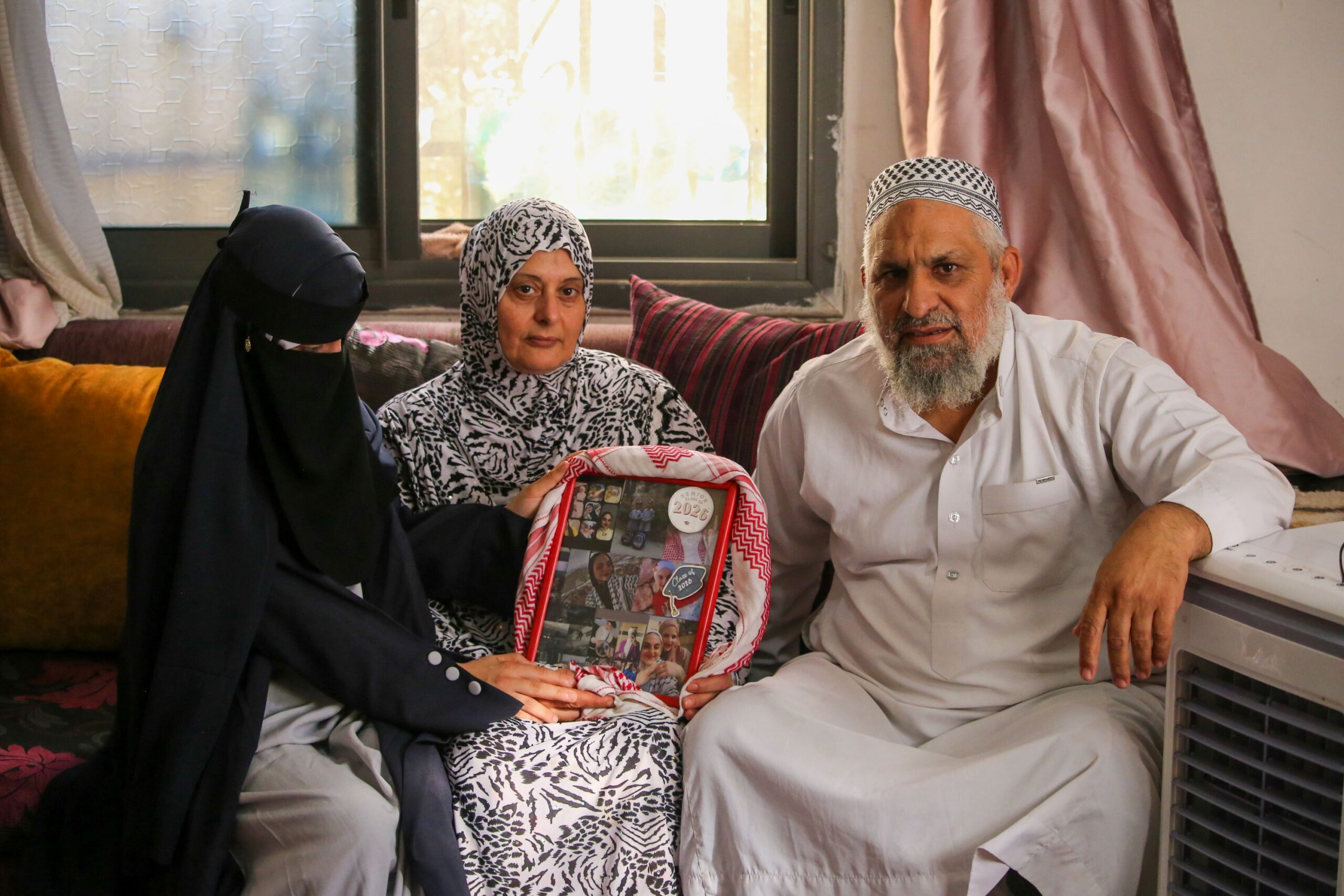
Teenage Palestinian girls held in Israeli prison have their futures put on hold
As thousands of Palestinian high school seniors wrap up their final exams this summer and step toward the next chapter of their academic journeys, two teenage girls from the occupied West Bank town of Tammun are confined behind the walls of Israel’s Damon Prison, their classroom seats empty and their carefully laid plans derailed by arrest over social media content. Seventeen-year-old Nada Bani Odeh was on the cusp of sitting for the tawjihi, Palestine’s rigorous national secondary school leaving exam, when Israeli forces raided her family’s home before dawn on February 12. Sixteen-year-old Ola Qutaishat, who had just finished 11th grade and was gearing up for her own final year of studies, was taken from her home in a nearly identical pre-dawn raid three months later, on May 24.
Gharam Abu Aisha, Nada’s mother, told Middle East Eye she initially assumed the soldiers who stormed her home had come for her husband, never expecting they would target her teenage daughter. “Then they asked, ‘Where is the tawjihi student?’” she recalled. Nada, who had already lost her older brother Wadie to Israeli forces months earlier, calmly complied with the soldiers’ orders, handed over her phone, and comforted her sobbing mother as she was led away. “Why are you crying? Even if I come back after a year or two, I’ll still come home and get the highest grades for you,” Nada told her mother, before turning back one last time to ask her to care for her younger sister.
Before her arrest, Nada was a quiet, high-achieving student who consistently ranked at the top of her class. She had long set her sights on acing the tawjihi, determined to fulfill the academic dream her brother never got the chance to complete. Even from behind bars, those ambitions remain her primary focus. Through lawyers and recently released prisoners, Nada sends messages home not asking about the endless delays in her court case, but about her grades, her classmates, and whether she will ever get the chance to pick up her studies where she left off. For Gharam, the daily absence of her daughter has left an irreplaceable void; the pair shared everything from long evening conversations to quiet drives after busy school days, and Gharam says she misses every part of their routine. “I’m proud of her,” she said. “I just want to hold her again.”
Ola’s story mirrors Nada’s in nearly every detail. On the night of her arrest, the 16-year-old had stayed up late studying English for an upcoming school exam, and her family went to bed expecting a completely ordinary morning. When armed soldiers woke the household, they separated family members, searched the home without explanation or a warrant, and handcuffed and blindfolded Ola in front of her distraught parents. When her father—still recovering from recent surgery—tried to intervene, soldiers pushed him back, while Ola begged them not to hurt him. Her sister clung to the teenager, pleading with the raiding party. “I kept telling them, ‘She’s only 16 years old. Why are you taking her?’” Ola’s sister recalled. “She wasn’t carrying anything. She wasn’t a threat. She was only thinking about her English exam.”
Like Nada, Ola remains in Damon Prison as her case crawls through the Israeli military court system, with every scheduled hearing ending in another delay. She faces allegations of incitement over social media posts, but no formal verdict has ever been issued. Her father told Middle East Eye that even the presiding military judge has questioned prosecutors over the lack of progress in the case, asking, “Why have you brought this girl here? Why isn’t the case ready?” Before her arrest, Ola dreamed of becoming a journalist, determined to give a voice to silenced Palestinians and share the reality of life under occupation with the world. That dream is now on indefinite hold.
Current data from the Israel Prison Service shows that as of late December, 351 Palestinian minors were being held in Israeli detention on so-called “security” grounds, with an additional 106 detained for illegal entry into Israel. Nada and Ola, two of the youngest female Palestinian prisoners in detention, are being held together in a separate section of Damon Prison, isolated from the adult prison population and confined to a small cell under constant surveillance. According to Palestinian lawyer Hasan Abadi, conditions inside the facility have deteriorated drastically since October 7, 2023, amounting to a systematic campaign of abuse against detainees. “Damon Prison has become a living grave for prisoners,” Abadi said. Cells lack adequate ventilation, food is nutritionally poor, medical care for sick prisoners is nonexistent, and basic supplies like clothing and cleaning products are unavailable. The facility is severely overcrowded: eight women are often forced to share a cell built for four, leaving half the population to sleep on the cold floor. For Nada and Ola, conditions are even harsher: held in complete isolation, the teenagers have no access to basic sanitary supplies even during menstrual periods, and have no privacy from constant surveillance.
“What is happening in Damon Prison is not merely a series of isolated violations, but a systematic regime of oppression, starvation, and humiliation aimed at breaking Palestinian women physically and psychologically,” Abadi explained. “With every testimony, it becomes increasingly clear that the prison is no longer just a place of detention, but an instrument of slow death carried out in cold blood. Despite all this suffering, the female prisoners continue to resist, holding on to the Quran, their stories, and their memories as a final shield protecting their humanity.”
Even amid the harsh conditions and uncertain legal processes, both teenage girls have retained their determination to return to their education. Nada continues to reassure her mother in every message that she will come home, finish her studies, and make her family proud—a promise that has kept both mother and daughter holding out hope for a return to the future they once planned.
-

Ghanaian influencer extradited to US over $8m scam targeting elderly Americans
A high-profile Ghanaian social media creator, known publicly as Abu Trica and legally named Frederick Kumi, has been transferred into U.S. custody to stand trial on allegations that he led a transnational romance fraud ring that stole more than $8 million from vulnerable elderly American citizens. Kumi has formally pleaded not guilty to all criminal charges brought against him.
Federal prosecutors in the U.S. allege that Kumi leveraged artificial intelligence technology to build convincing fake digital personas, which he then used to connect with potential targets on major social media platforms and popular dating websites. Over time, prosecutors claim he gained the trust of his victims before coercing them into sending large sums of money. If convicted on the two core charges—conspiracy to commit wire fraud and conspiracy to commit money laundering—Kumi faces a maximum sentence of 20 years behind bars.
The extradition, which was completed on a Delta Airlines flight Thursday, has sparked significant political and legal controversy in Ghana. Kumi’s defense attorney, Oliver Barker-Vormawor, told reporters that he appeared in a Ghanaian court on Thursday to file a formal challenge to the extradition, only to discover that authorities had already removed Kumi from the country hours before the court could issue a ruling. Barker-Vormawor has accused the Ghanaian government of bypassing required judicial oversight, arguing that the rushed extradition raises serious unresolved constitutional questions about the separation of powers in the West African nation. As of Monday, the Ghanaian government has not issued any public response to these allegations.
Long before his arrest, Kumi drew public suspicion for his habit of showcasing extravagant wealth to his more than 100,000 Instagram followers. He regularly posted photos of high-end luxury vehicles, stacks of cash, and upscale properties, which led many observers to question the legitimacy of his income sources—a question that U.S. authorities have now formally answered with fraud charges.
According to the prosecution’s narrative, the scam followed a well-documented pattern: Kumi and his co-conspirators would initiate frequent, emotionally intimate conversations with victims through online platforms, gradually building romantic connection. Once trust was established, the group would request money or high-value goods under false pretenses—often claiming the funds were needed for emergency medical care, travel costs to visit the victim, or to secure a fake high-return investment opportunity. All funds and valuables were routed to third-party accounts controlled by co-conspirators, after which Kumi allegedly split the illicit proceeds between his network of partners in both the U.S. and Ghana.
A native of the southern Ghanaian town of Swedru, Kumi was first taken into custody last year during a coordinated operation carried out jointly by Ghanaian and U.S. law enforcement. There remains a minor discrepancy over Kumi’s age: his legal team says he is 28, while U.S. prosecutors list his age as 31.
The prosecution of Kumi’s case is being carried out under the U.S. Elder Abuse Prevention and Prosecution Act, a federal law designed to increase penalties and priority for crimes targeting older adults. This extradition is the latest in a series of coordinated law enforcement actions by U.S. authorities cracking down on cross-border fraud networks based in West Africa that target elderly U.S. citizens. Just last week, another extradited Ghanaian fraudster, Joseph Kwadwo Badu Boateng—better known by his online alias Dada Joe Remix—pleaded guilty in a U.S. court to running romance and inheritance fraud schemes that stole from American victims. In December of last year, a U.S. court sentenced Nigerian fraud ringleader Oluwaseun Adekoya to 20 years in prison for his role in running a nationwide bank fraud and money laundering conspiracy that laundered more than $2 million in stolen funds.
-
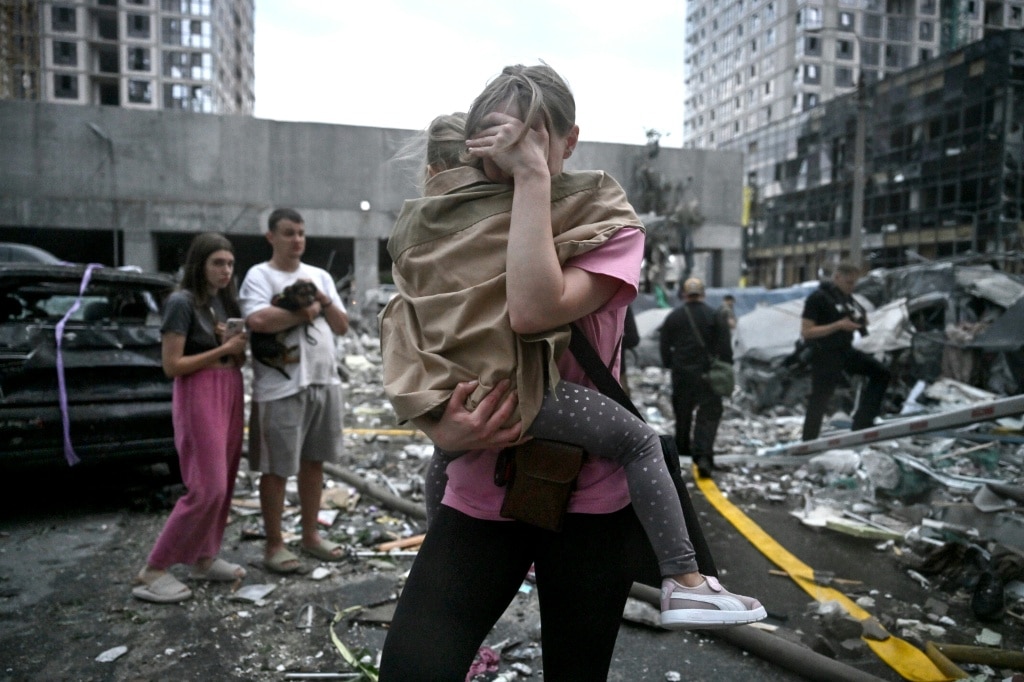
Nerves high in Kyiv as Russia escalates missile attacks
After more than four years of enduring Russia’s full-scale invasion, residents of Ukraine’s capital Kyiv are facing a sharp new spike in danger and anxiety, as Moscow escalates its missile assault with a wave of hard-to-intercept ballistic attacks that have upended the fragile daily routines civilians had built over years of conflict.
For 27-year-old student Oleksiy Virskovsky, the growing intensity of strikes pushed him to change a habit he had kept through hundreds of nights of attacks: he no longer skips trips to the neighborhood underground shelter. Speaking to Agence France-Presse, Virskovsky said Russian attacks on Kyiv have grown far more aggressive, massive, and intense in recent weeks. “It’s somehow become more frightening, and I’ve started going down to the shelter… I’ve begun to take safety more seriously than before,” he explained.
While Russia has targeted Kyiv with missile and drone strikes since the first day of its invasion, the latest wave of attacks relies heavily on ultra-fast ballistic missiles that Ukraine’s air defense systems struggle to shoot down. This new tactic has already claimed dozens of lives in July alone, with more than 50 residents killed so far this month. Two of the deadliest strikes on the capital across the entire four-year invasion occurred less than a week apart in early July.
During a large-scale assault overnight between July 5 and 6, Kyiv’s air defenses failed to intercept a single incoming ballistic missile — a troubling setback for a city long considered the best-defended in Ukraine. In another separate attack, a missile detonated over Kyiv’s skyline and jolted sleeping residents awake before the city’s air alert system could even trigger sirens. The early failure of the warning network, which normally sends multiple daily alerts via street loudspeakers, metro announcements and smartphone notifications, marked a rare and unexplained glitch that deepened public unease.
Ukrainian President Volodymyr Zelensky has publicly acknowledged the capital’s critical vulnerability: Kyiv does not have enough US-provided Patriot missile interceptors to fully shield the city from incoming strikes. At a recent NATO summit, US President Donald Trump signaled openness to allowing Ukraine to produce its own interceptors domestically, but key details of the plan remain undisclosed, and any domestically manufactured systems will take months to reach operational use.
In the gap between the rising threat and long-term solutions, Kyiv residents are scrambling to rewrite the unwritten safety rules they developed over four years of war. For years, many civilians relied on personal experience and social media tracking of incoming attacks to gauge the level of risk, allowing them to maintain a semi-normal daily routine. But ballistic missiles cut travel time to Kyiv to just a few minutes after launch, eliminating the window of time civilians previously had to react and reach safety.
The new urgency has sent thousands of residents flocking to the city’s metro network, Kyiv’s primary large-scale underground refuge, far earlier than they previously would. Many now head straight to stations immediately after finishing work, rather than waiting for an official air alert to be called. On nights when major attacks are anticipated, station platforms have become severely overcrowded, with civilians bringing pets, tents, air mattresses, baby prams and cots to settle in for the night.
Kyiv’s metro authority confirmed that more than 50,000 residents camped in the metro network during one recent major attack — the highest number of people seeking shelter there since the chaotic first months of the invasion in 2022. For Veronika Khudenko, a 22-year-old intern who has been in Kyiv for just one month from London, every night over recent weeks has been spent in the metro. “The latest attacks are very hard to bear, very nerve-wracking,” she told AFP. “It’s very hard to function during the day, because there is strong emotional pressure throughout the night.”
Not all residents can or choose to seek shelter in underground public spaces. Anna Nesterova, a 46-year-old podologist, says she prefers to remain at home during attacks, sheltering in the building’s entrance hallway, because she fears being trapped in a crowded underground space if a strike hits. “It’s more convenient for me and I feel calmer at home,” she said. Nesterova’s son joined the front lines immediately after he turned 18, so she says she feels a responsibility to stay calm for him.
Thirty-four-year-old Yulia Parkhomenko, a mother of two, also remains at home during strikes: the nearest metro station is too far from her residence, and there are no adequate private or public basements nearby. As soon as an air alert sounds, she gathers blankets and pillows, and hunkers down in the bathroom with her two children. “With each attack it’s getting more and more frightening,” she said. “And the scariest thing is for the children. My children are just very afraid.”
The escalating strikes have left the capital gripped by a new wave of chronic stress, as civilians adapt to a level of threat that has not been seen since the opening weeks of the invasion, four years ago.
-
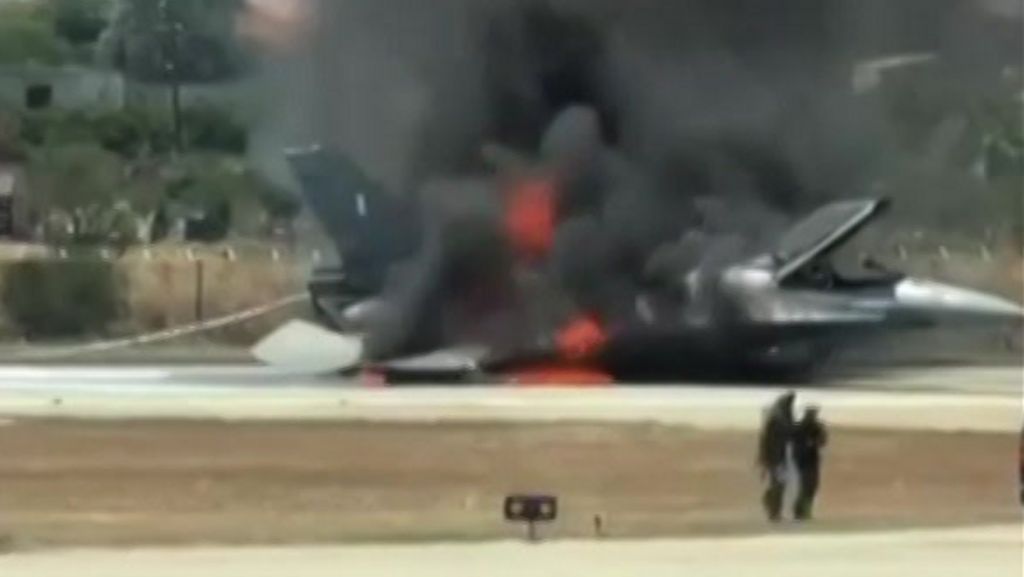
Greek F-16 fighter jet crash-lands at busy Zakynthos airport
At the start of Greece’s peak summer tourism season, a Hellenic Air Force F-16 fighter jet suffered a crash-landing and subsequent fire at Zakynthos International Airport on Thursday, triggering widespread flight disruptions at one of the country’s busiest holiday gateways. The incident unfolded at approximately 13:45 local time (10:45 GMT), while the aircraft was conducting a routine training mission, according to official statements from the Hellenic Air Force. Service officials confirmed the jet developed an unspecified technical fault mid-flight before it made the emergency landing, adding that the pilot escaped the incident in good health. An official probe into the root cause of the accident is already underway. Independent Greek media outlets including leading daily Kathimerini have shared additional details not yet confirmed by the air force: reports indicate the jet received an onboard fire alarm alert prior to landing, failed to deploy its landing gear during the emergency landing attempt, and slid for dozens of meters across the runway before coming to a stop and igniting into flames. Emergency crews including airport firefighters and personnel immediately responded to the scene, and social media footage circulating online shows the fighter jet engulfed in flames as responders worked to extinguish the blaze. The Hellenic Air Force later confirmed the jet belonged to the 335 Squadron of the 116th Combat Wing, which is based at Araxos Air Base in western Greece. Following the incident, the airport’s only operational runway was immediately shut down to allow for emergency response and recovery work. All remaining flights scheduled for Thursday were pushed back to at least 21:00 local time, affecting dozens of journeys that had been scheduled to depart and arrive hours earlier. The disruption comes at a critical time for Zakynthos, a popular Ionian Island tourist destination that welcomes thousands of international visitors each week at the start of summer, with the majority of inbound travelers coming from the United Kingdom. A specialized Hellenic Air Force recovery team was dispatched to the island to remove the damaged aircraft from the runway, with the goal of restoring full airport operations as quickly as possible.
-
Suspected Ebola patient placed in Equatorial Guinea hotel with deportees from the US, lawyers say
DAKAR, Senegal – Migrants deported from the United States and detained in an Equatorial Guinean hotel are sounding an urgent alarm: authorities have placed at least one suspected Ebola patient under quarantine in the same facility, according to statements from the detainees and the legal team representing them, released publicly Thursday.
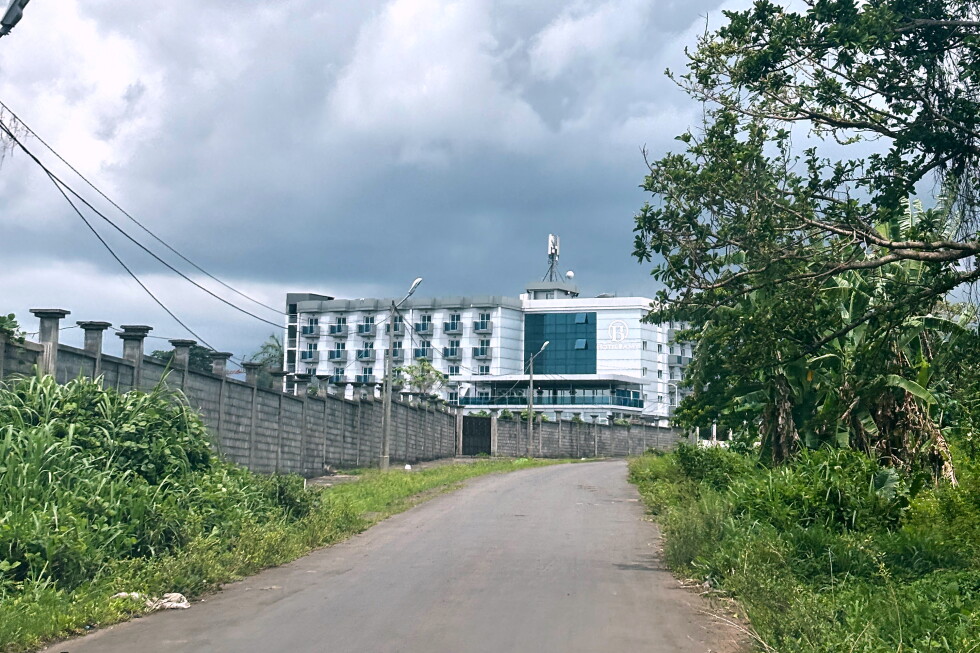
The isolated facility, a hotel located on a lush tropical island off Equatorial Guinea’s mainland coast, is owned by the country’s long-ruling, powerful president Teodoro Obiang Nguema Mbasogo. It currently holds 17 migrants originating from a range of African nations including Angola, Mauritania and Ethiopia, placed there under a little-known, non-transparent third-country deportation agreement struck with the former Trump administration.
Details of the dangerous co-location emerged from both a formal statement released by an international coalition of human rights lawyers and on-the-record interviews with two of the detained migrants, who spoke only on condition of anonymity over fears of violent retaliation from Equatorial Guinean authorities. According to their accounts, last week medical personnel wearing full hazmat suits brought a man suspected of carrying the Ebola virus to the hotel and quarantined him on a floor directly below the section where migrants are being held.
An ongoing rare Ebola outbreak is currently ravaging the central African nation of the Democratic Republic of Congo, where the outbreak was first declared in May and has already claimed more than 600 lives to date. While a small number of confirmed cases have been recorded in neighboring Uganda, Equatorial Guinea – which shares no border with Congo and sits roughly 1,885 kilometers away from the outbreak’s epicenter – has not reported any confirmed or even suspected Ebola cases of its own until this reported incident.
Despite that lack of prior risk, the two deportees told the Associated Press that an English-speaking doctor explicitly informed them the man being brought into the hotel was a suspected Ebola case and that they should take precautions. No further information about the patient’s status or risk mitigation steps for detainees was provided after that initial warning.
The legal coalition’s statement echoed the detainees’ accounts, confirming that the group had received “disturbing reports from multiple detained individuals that a person with a suspected case of Ebola was recently brought under quarantine into the same hotel complex where they are being held.” One detainee added that a second suspected Ebola patient, a woman, was transported to the same quarantine floor of the hotel this past Sunday, also identified by arriving medical staff as a potential Ebola case.
The Associated Press has reviewed video footage that appears to show medical workers clad in full protective biohazard gear transporting individuals into the hotel, which previously functioned as an isolation and quarantine center for COVID-19 patients during the height of the global pandemic.
“Things are getting worse every day,” one anonymous detainee shared in an interview. “It’s very confusing, no one is coming to talk to us. No one is informing us of anything. The hygiene is unimaginable.” Beyond the lack of information, neither masks, disinfectant spray, nor other basic protective supplies to reduce the risk of viral exposure have been provided to the 17 detainees, and no public health safety measures have been communicated to them, according to both legal representatives and the detainees themselves.
The detentions in Equatorial Guinea are part of a broader, largely secretive immigration policy enacted by the Trump administration, which entered into undisclosed third-country deportation agreements with nearly 24 nations. Under these deals, thousands of people deemed to be in the U.S. illegally are deported to countries that are not their countries of origin, as part of a sweeping crackdown designed to deter future unauthorized immigration. Immigration advocates and lawyers note that this policy acts as a legal loophole, allowing the U.S. to indirectly force asylum seekers back to their home countries even when their asylum claims would otherwise qualify for protection.
Equatorial Guinea is one of at least eight African nations that have signed onto these third-country deportation agreements with the U.S. After a $7.5 million deal was struck between the two governments, Obiang repurposed a family-owned hotel on Bioko Island, near the capital of Malabo, into an immigration detention facility for deported migrants. Legal representatives confirm that 13 men and 4 women are currently being held at the site, and all of them had received formal orders from U.S. immigration judges that should have prevented their removal to their home countries.
Earlier this month, the same coalition of international rights lawyers filed a formal legal complaint against Equatorial Guinea before the African Commission on Human and Peoples’ Rights, the continent’s top human rights oversight body. The complaint accuses the central African nation of forcibly deporting U.S.-deposited migrants back to their home countries, a move that violates core international human rights protections for asylum seekers.
In Thursday’s updated statement, the legal coalition added that they have also received repeated reports that multiple detainees with pre-existing serious medical conditions are being denied access to adequate medical care while in government custody.
Rich in oil reserves, Equatorial Guinea is counted among the wealthiest countries in Africa by per capita GDP, but it is also widely criticized for systemic rampant corruption and routine human rights violations, according to assessments from U.S. government officials. Independent political opposition and critical public discourse are virtually non-existent in the country, where the Obiang regime has been repeatedly accused by human rights organizations and the U.S. State Department of arbitrary detention, torture, and extrajudicial killing of political dissidents and activists who speak out against the government.
Notably, U.S. companies are the largest foreign investors in Equatorial Guinea’s oil sector, and the country’s military receives funding for training and equipment from the U.S. government.
-
France returns 23 Syrian treasures after 15 years as Macron visits Damascus
In a historic moment marking a new chapter of diplomatic and cultural engagement between France and post-Assad Syria, France has formally repatriated 23 ancient Syrian archaeological artifacts that were stranded abroad for nearly 15 years. The handover aligned with French President Emmanuel Macron’s groundbreaking trip to Damascus, the first official visit by a leader of a major Western nation since the ousting of Bashar Assad’s government at the end of 2024.
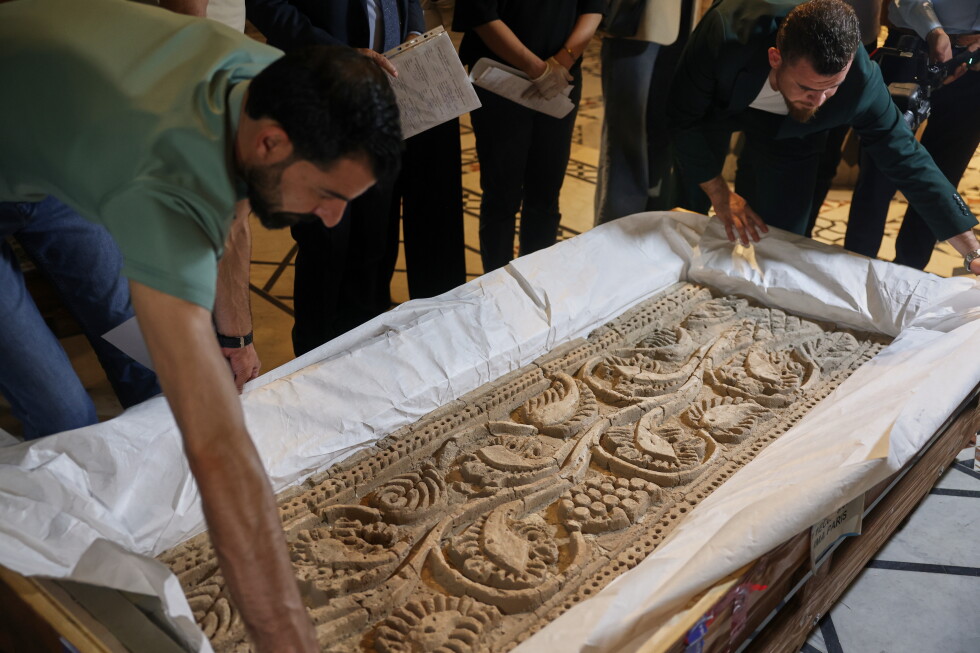
The full collection of relics, transported to Damascus on Macron’s official presidential aircraft on Tuesday, was formally delivered to Syria’s National Museum. The assortment of returned heritage objects spans thousands of years of Syrian history, including bronze artifacts from the Roman era, cultural pieces from the Byzantine and early Islamic periods, and a vividly hued mosaic panel that originally decorated the historic Umayyad Mosque in central Damascus. The artifacts were originally loaned to the Arab World Institute in Paris in 2011 for a temporary exhibition focused on Syrian cultural heritage, not long before Syria’s full civil war broke out.
According to Syria’s Foreign Ministry, the artifacts originated from leading museums across four major Syrian cities: Damascus, Aleppo, Latakia, and the war-ravaged ancient city of Palmyra. They remained in French custody after the two countries severed diplomatic relations during Assad’s decades-long rule. The ministry noted that France is the first nation to formalize such a cultural cooperation agreement with Syria as the new government launches a national campaign to recover all Syrian antiquities held in collections around the globe.
At a special opening exhibition at the National Museum showcasing two of the most prominent returned pieces, Ayman al-Nabo, deputy director-general of Syria’s Directorate-General of Antiquities and Museums, hailed the repatriation as a key milestone for the country’s cultural recovery. Nivine Saadeddine, a lead curator at the National Museum, emphasized that the returned artifacts encapsulate the breadth and depth of Syria’s millennia-long civilization. “They date from the ninth millennium B.C. to the 14th and 15th centuries A.D. Every object represents a distinct chapter in Syria’s history,” Saadeddine explained.
For Maamoun Abdulkarim, Syria’s former director-general of antiquities and museums who now serves as a professor of archaeology at the University of Sharjah in the United Arab Emirates, the long-awaited return closes a difficult chapter marked by years of war, diplomatic deadlock, and multiple failed efforts to bring the artifacts home. The 2011 loan was arranged as part of routine cross-cultural exchange between the two countries before the outbreak of full-scale conflict, Abdulkarim recalled. He first submitted a formal request for the artifacts’ repatriation in 2014, but received no official response from French authorities. Later, French officials clarified that they were unable to engage with representatives of Assad’s government, which had become widely diplomatically isolated and subject to sweeping international sanctions following the regime’s violent crackdown on anti-government protests and the subsequent civil war.
Abdulkarim shared that the United Nations cultural agency UNESCO’s Beirut office attempted to mediate the dispute in later years, but those efforts also fell through. The prolonged standoff even carried severe personal risks for Abdulkarim and his colleagues under the Assad regime. “We were interrogated by Bashar Assad’s security forces,” he said. “We were beaten and accused of being too lenient in protecting Syria’s antiquities. Had it not been for the correspondence we had sent to the institute proving we had repeatedly requested the artifacts’ return, we could have been imprisoned.”
Despite the years of hardship and delay, Abdulkarim welcomed the restart of formal cultural cooperation between the two nations. “I am very happy that, despite everything that happened, the war is over, Syria is reopening to the world and cultural exchange is returning,” he said.
Abdulkarim noted that a small number of Syrian artifacts have been repatriated under existing formal loan agreements even during the war and period of severed diplomatic ties. Around 2017, for example, Italy returned two Syrian artifacts that had been damaged by the Islamic State (IS) group, after completing restoration work for a Rome exhibition focused on the global destruction of cultural heritage. A smaller collection of Syrian artifacts still remains in Japan under a long-standing archaeological cooperation agreement stemming from joint excavation work conducted in the 1980s.
Still, the scale of Syria’s lost cultural heritage remains immense. Abdulkarim estimates that thousands of artifacts looted from archaeological sites across Syria during the 14-year conflict are currently held in private collections and museums across the globe. “Recovering them will require years of diplomatic work,” he said. He added that France’s decision to repatriate the 23 artifacts sends a hopeful signal to the international community and can encourage more widespread global cooperation to recover Syria’s stolen cultural legacy.
Syria’s rich cultural heritage suffered catastrophic damage across the nearly 14 years of conflict. Multiple UNESCO World Heritage sites, including the ancient desert city of Palmyra, were heavily damaged by fighting and intentional destruction by extremist groups. Other iconic landmarks, such as the medieval Crusader fortress of Crac des Chevaliers, still bear visible scars from years of combat. IS militants deliberately destroyed ancient temples, tombs, and monumental sculptures in Palmyra, labeling these irreplaceable cultural artifacts as symbols of idolatry, while the illegal trafficking of looted Syrian antiquities became a major source of funding for armed groups operating in the country.
-
Ukraine strikes Russian ships near Crimea, escalating attacks on fuel supplies
In a dramatic escalation of its campaign to cut off Russian supply lines to occupied Crimea, Ukraine’s unmanned military forces have launched a wave of coordinated naval drone strikes targeting Russian commercial and military shipping in the Sea of Azov and Black Sea, part of Kyiv’s self-declared “logistics lockdown” of the peninsula.
Robert Brovdi, commander of Ukraine’s drone forces who operates under the callsign Magyar, has reported that between July 6 and July 9, at least 25 vessels were hit and set ablaze across the Sea of Azov, an inland body of water connected to the Black Sea via the strategic Kerch Strait. Ukraine’s overall count of damaged or destroyed vessels stands at 36, most of which are part of Russia’s unregulated “shadow fleet” of commercial oil tankers that operate outside international shipping norms to evade Western sanctions. The exact number of damaged vessels remains unconfirmed by independent observers, as some ships may have been struck multiple times.
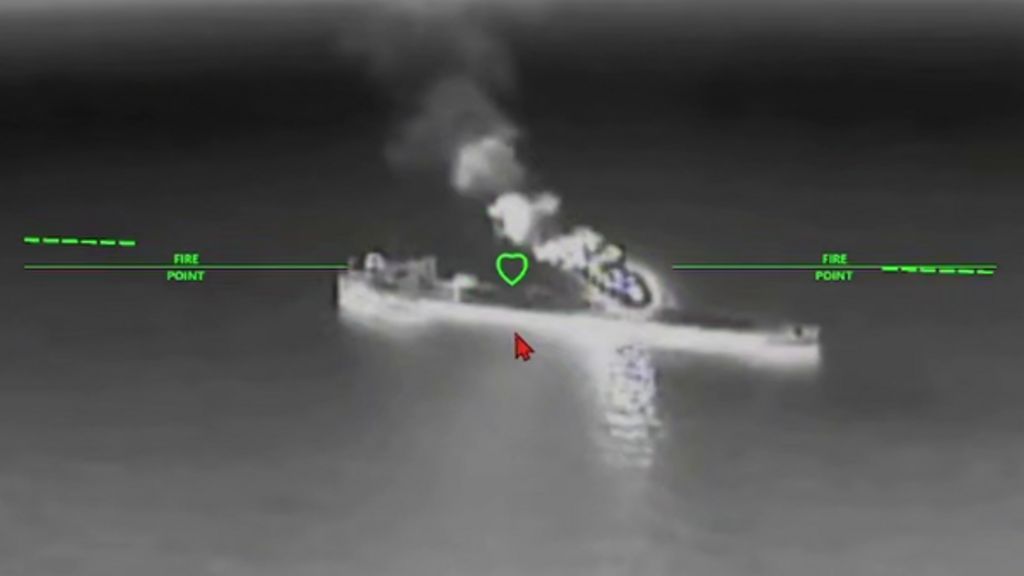
The Sea of Azov off Crimea’s northeastern coast has long been a hub for Russian oil shipping, anchored by an onshore fuel loading terminal at Kerch port on the Crimean peninsula. After Ukraine launched a strike on Kerch port last month, satellite analysis conducted by BBC Verify confirmed a sharp drop in the number of tankers anchored in the area in the days following the attack. Night-time drone footage of the latest wave of strikes began circulating on social media platforms early Tuesday, with Brovdi confirming daily strikes across the four-day window.
Independent evidence has backed up Ukraine’s claims. Satellite imagery captured on July 9 shows a large column of smoke rising from a vessel roughly 2.5 miles off Crimea’s coast, and NASA fire tracking data confirms an active blaze has burned at that location since July 6, matching Ukraine’s claim of an initial strike on that date. The same satellite image shows roughly 20 other vessels abandoning their positions in the Sea of Azov and moving south toward the Black Sea to avoid attack. Even leaving the Sea of Azov does not guarantee safety, however: On July 9, Ukraine’s general staff released footage of a naval drone strike on the sanctioned Russian tanker Blue off the coast of Yalta, a Black Sea resort city on occupied Crimea. The on-board drone footage shows the unmanned vessel evading defensive fire before approaching the tanker’s hull, where the recording cuts off.
Russia’s regional governor of Rostov, Yuri Slyusar, confirmed that two empty tankers were attacked in Taganrog Bay, the northeastern corner of the Sea of Azov, on July 8, adding that the vessels were still burning the following day. Brovdi confirmed that two tankers hit earlier in the week were carrying roughly 7,000 tons of fuel each from the Taganrog area to supply Russian forces and occupied Crimea. In addition to tankers, strikes have hit other commercial vessels: a passenger ferry named SKS One and a bulk carrier were attacked at Kerch port, with imagery of the damaged ferry posted to social media by Brovdi. Brovdi has also named specific vessels hit in the strikes, including the tankers Venera-3, Sanar-1, Sanar-17, Klimena, Thetis, Alexey Savrasov, and Penelopa.
This wave of maritime strikes coincides with a separate campaign of attacks on Russian oil infrastructure deep inside Russian territory, which has exacerbated widespread fuel shortages across more than 90% of Russia’s regions, including major cities Moscow and St. Petersburg. Ukrainian President Volodymyr Zelensky has defended the strategy, arguing that targeting Russian energy infrastructure is a legitimate response to Russian strikes on Ukrainian territory, and that Russian civilians must “feel that it is their state that is waging war.” Zelensky also confirmed recent attacks on two oil depots in the Tver and Stavropol regions, hundreds of kilometers from the front lines, as well as a major oil terminal in Rostov region, widely reported to be the Yug Rusi terminal near Taganrog Bay. Russia has responded to the ongoing shortages by implementing diesel export bans, and long queues at filling stations have been reported across the country’s largest urban centers.
The strikes mark a major escalation of Ukraine’s campaign to choke off all supply routes to occupied Crimea, which Russia annexed in 2014 in a move unrecognized by most of the international community. Ukraine has already disrupted Russian land supply routes to the peninsula, and the latest attacks target the remaining maritime supply lines that Moscow relies on to meet Crimea’s energy needs. In late June, Russian President Vladimir Putin publicly stated that Crimea requires 70,000 tons of fuel per month, and promised to secure steady supplies via both land and sea corridors. The total volume of fuel carried by the tankers hit in the Sea of Azov strikes exceeds this monthly requirement, representing a significant setback to Putin’s pledge.
Russian pro-military commentators have openly acknowledged the severity of the setback, criticizing the Russian Black Sea Fleet for failing to provide protection for commercial shipping. The popular pro-war Telegram channel “Military Informant” described unescorted tankers as effectively an open “shooting gallery” for Ukrainian drone operators, noting that the Black Sea Fleet is no longer capable of defending commercial traffic in the region. Another prominent pro-military blogger, Mikhail Zvinchuk of the Telegram channel Rybar, confirmed that the Black Sea Fleet has retreated to its base at Novorossiysk and largely abandoned patrols of the Sea of Azov and northern Black Sea around Crimea. For Russian-occupied Crimea, where local authorities already face ongoing disruptions to power and transport networks, the loss of critical fuel supplies is expected to deepen existing crises, with fuel rationing already in place in much of the region.
International reaction to the escalation has been mixed. During a meeting with Zelensky on the sidelines of the NATO summit in Ankara on July 8, U.S. President Donald Trump characterized Ukraine’s naval drone strategy as an escalation of the conflict, but added that “it’s also an escalation that can help lead to an end.” As of mid-July, the intensity of attacks shows no sign of slowing: Brovdi claimed that Ukrainian forces hit 12 separate tankers in a single night between July 8 and July 9, and Russian pro-war sources have not disputed either the details of the claim or the authenticity of the attack footage released by Ukraine.
-

Eswatini receives 11 people deported from the US as part of migration crackdown
MBABANE, Eswatini – The southern African kingdom of Eswatini has welcomed a fourth cohort of deportees transferred from the United States under a bilateral third-country hosting agreement, with 11 new arrivals entering the country this week, the Eswatini government confirmed in an official statement released Thursday.
Acting government spokesperson Thabile Mdluli stated that the majority of this latest group hail from other African nations, and will remain in Eswatini on a temporary basis while the government upholds their fundamental human rights. “The government reaffirms that, during their temporary stay in the Kingdom, the fundamental rights of the third-country nationals will be respected and protected in accordance with the laws of the Kingdom of Eswatini and the Kingdom’s international obligations,” Mdluli noted in the statement.
Mdluli also added that Eswatini has put in place layered security protocols to protect both the nation’s territorial integrity and the safety of its permanent residents for the duration of the deportees’ stay. Multiple officials familiar with the arrangement have confirmed that the 11 new arrivals will be temporarily housed at Matsapha Maximum Security Prison.
The Trump administration launched the third-country deportation program as a core part of its broader immigration enforcement crackdown, with rights advocates reporting that thousands of migrants who cannot be directly returned to their home countries have been transferred to nearly 24 nations around the globe, most across the African continent. Alongside Eswatini, countries including the Central African Republic, Equatorial Guinea, Sierra Leone, and the Democratic Republic of Congo have accepted groups of third-country deportees under these often-unpublicized bilateral deals.
Eswatini, a landlocked southern African nation of roughly 1.2 million people that shares borders with South Africa and Mozambique, first began accepting these U.S.-deported third-country nationals in 2025 when the bilateral agreement entered into force. To date, this newest group marks the fourth cohort of deportees received by the kingdom, making it one of the most active African participants in the Trump administration’s program.
To date, Eswatini has not publicly released the full terms of its agreement with the U.S. government, nor has it disclosed key details including the full nationalities of all deportees, their individual immigration legal statuses, or the exact length of time they are expected to remain in the kingdom. Only two previously transferred deportees have left Eswatini, returning to their home countries of Cambodia and Jamaica.
The deal has sparked significant pushback from both international human rights organizations and domestic Eswatini civic groups, with critics calling out the lack of transparency around the agreement and the absence of formal parliamentary oversight. Domestic civic groups have already launched legal action against Eswatini authorities, challenging the legality of detaining foreign deportees in prison without formal criminal charges. Eswatini officials have confirmed that the deportees can be held for up to 12 months before they are repatriated to their home countries.
Mzwandile Masuku, a prominent Eswatini human rights lawyer, argued that the ongoing transfers highlight deep gaps in institutional accountability within the kingdom. He warned that the untransparent practice could risk becoming normalized as a global immigration policy precedent if left unchallenged.
In response to criticism, the Eswatini government has defended its participation in the agreement, framing the arrangement as an expression of the kingdom’s humanitarian commitments while emphasizing that all activities under the deal adhere to Eswatini’s national sovereignty and domestic laws.
Associated Press reporter Michelle Gumede contributed reporting from Johannesburg, South Africa.