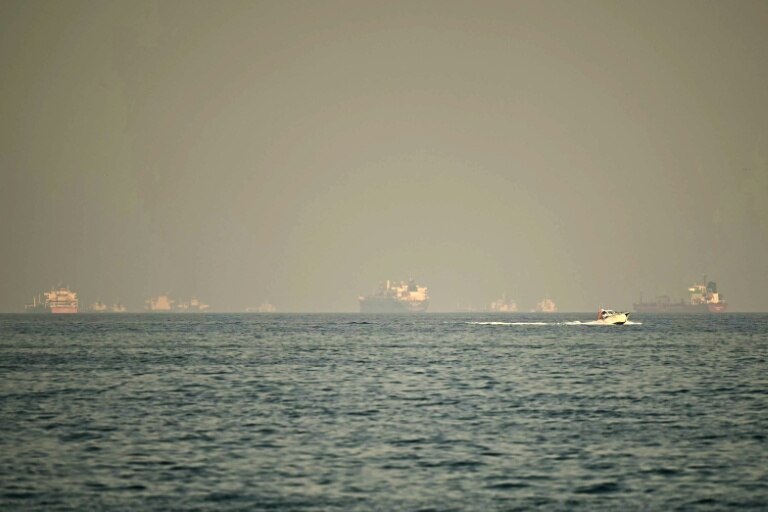
Tensions have surged again around one of the world’s most critical global trade chokepoints, after Iranian forces seized two container vessels and opened fire on a third in the Strait of Hormuz on Wednesday, according to international maritime monitors and Iran’s own Islamic Revolutionary Guard Corps (IRGC). The escalatory incident marks the latest disruption to commercial shipping in the waterway amid the ongoing regional war between Iran and a US-Israeli coalition.
Britain’s official maritime security agency, UK Maritime Trade Operations (UKMTO), first confirmed that an IRGC gunboat fired on a container ship 15 nautical miles northeast of Oman’s coast. The attack caused heavy structural damage to the vessel’s bridge, though no crew injuries, fires, or environmental contamination were reported, and all seafarers on board were confirmed unharmed. British maritime security firm Vanguard Tech identified the targeted vessel as a Liberia-flagged container ship, which the firm says had received formal notification that it had clearance to transit the strait. Iranian state news agency Tasnim, however, countered that the ship ignored repeated warnings from Iranian armed forces before the attack.
In a separate official statement, the IRGC confirmed that its naval units intercepted two vessels it accused of violating a naval blockade Iran imposed on the strait after the outbreak of war on February 28, when US and Israeli forces launched strikes on Iranian targets. The IRGC said the two ships were stopped in the Strait of Hormuz, seized, and redirected to Iranian territorial waters. Iranian state broadcaster IRIB named the captured vessels as the MSC Francesca and the Epaminondas, both container ships operated by Swiss-based shipping giant MSC. The IRGC alleged the MSC Francesca has ties to Israel, while the Epaminondas was operating without required transit permits and had been tampering with its navigation systems. Data from independent ship-tracking platform MarineTraffic confirms both vessels came to a stop near the Iranian coast on Wednesday, and notes the two ships had been anchored in the Persian Gulf since the conflict began. The MSC Francesca operates on a trade route connecting India, the Persian Gulf, and the Mediterranean, while the Epaminondas serves a line linking India to the U.S. East Coast with stopovers in the United Arab Emirates. MSC has not yet issued a public statement in response to repeated requests for comment.
A third separate incident unfolded the same day roughly eight nautical miles off Iran’s western coast, where UKMTO reports another container ship came under fire and stopped in the water. No damage was reported in that attack. Vanguard identified the vessel as the Panama-flagged container ship Euphoria, which was traveling outbound from the Strait of Hormuz at the time of the incident. Subsequent tracking data shows the Euphoria has since exited the strait and is now en route to Jeddah, Saudi Arabia.
The international community has swiftly condemned Wednesday’s actions. Arsenio Dominguez, Secretary-General of the United Nations’ International Maritime Organization (IMO), called the seizures and attacks “unacceptable” in a post on X. “I once again call for these reckless actions to cease and for any ships and innocent seafarers to be released immediately,” Dominguez wrote.
The Strait of Hormuz, which connects the Persian Gulf to the Arabian Sea, is the only maritime outlet for a large share of the world’s global oil and natural gas exports, making its security critical to global energy and trade markets. Since the outbreak of the regional war between Iran and the US-Israeli coalition, Iran has heavily restricted commercial transit through the strait, while the U.S. military has enforced a counter-blockade of Iranian ports. The incident comes just one day after U.S. President Donald Trump announced that a bilateral truce between the U.S. and Iran, first implemented on April 8, would be extended.