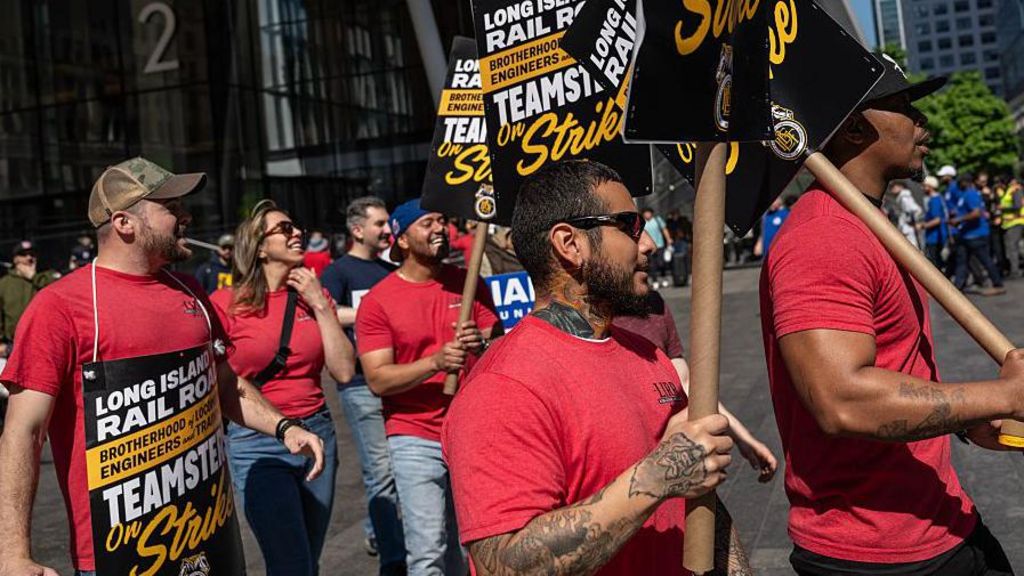
As the first work stoppage on the Long Island Rail Road in three decades stretched into its second day Sunday, hundreds of thousands of daily commuters across the New York metropolitan region braced for crippling travel disruptions at the start of the workweek, after union and management officials failed to schedule new negotiations to resolve a bitter dispute over wages and working conditions.
Around 3,500 unionized workers walking off the job at LIRR — the busiest commuter rail system in North America — launched the strike Saturday, when contract talks between labor leaders and the Metropolitan Transportation Authority, which oversees the rail line, collapsed without a resolution. It is the first full strike on the line since a two-day stoppage in 1994, ending a 30-year period of uninterrupted service.
MTA officials have issued urgent warnings that there is no viable replacement for regular LIRR service, advising daily commuters to plan for remote work whenever possible to avoid gridlock. Limited shuttle bus service is being operated for passengers who have no alternative travel options, but the agency has cautioned that widespread severe congestion and lengthy delays are unavoidable throughout the affected region.
The work stoppage has already upended travel plans and public events across the city and Long Island. The New York Mets, who play their home games at Citi Field in Queens adjacent to LIRR lines, issued an advance alert to ticket holders for weekend games warning of significant transit access challenges.
Commuters already began feeling the impact within hours of the strike’s launch. Ramses Brye, a Queens resident, told CBS News — the US news partner of the BBC — that he learned of the walkout mid-trip on his way to an overnight work shift. “I took the train at midnight. That was the last time, and then I looked at the TrainTime app at like 12:30, and, like, yeah, they’re definitely on strike,” Brye said.
Another regular commuter from Long Island reported that his usual daily trip into Manhattan took far longer Saturday, forcing him to take two connecting buses from Port Washington to reach the city center.
New York Governor Kathy Hochul has publicly pushed both sides to return to the negotiating table, warning that a prolonged shutdown would spill over to impact local businesses and disrupt the routines of hundreds of thousands of residents who rely on the line for daily travel.
Union representatives have framed the strike action as a last resort after years of frozen wages for their members. “To every LIRR passenger whose trip is disrupted, know that the MTA left us no choice but to strike,” said Gil Lang, General Chairman of the LIRR General Committee at the Brotherhood of Locomotive Engineers and Trainmen, one of the unions participating in the walkout. “After three years without raises, we cannot make any more compromises to cover for the MTA’s mismanagement,” Lang added.
MTA chair and CEO Janno Lieber pushed back on the union’s demands in his public comments, arguing that the agency cannot responsibly approve a contract that would destabilize its operating budget. “And we refuse to make a deal that puts it on riders and taxpayers to fund outsized wage increases – far beyond what anyone else at the MTA is getting – and for folks who are already the highest-paid railroad workers in the country,” Lieber said.
With no formal talks scheduled for Sunday, the prospect of the strike continuing into Monday’s morning rush hour — the busiest travel period of the workweek for the line — grows increasingly likely.