分类: politics

  • What to know about contenders who could replace Keir Starmer as Britain’s Labour leader

    What to know about contenders who could replace Keir Starmer as Britain’s Labour leader

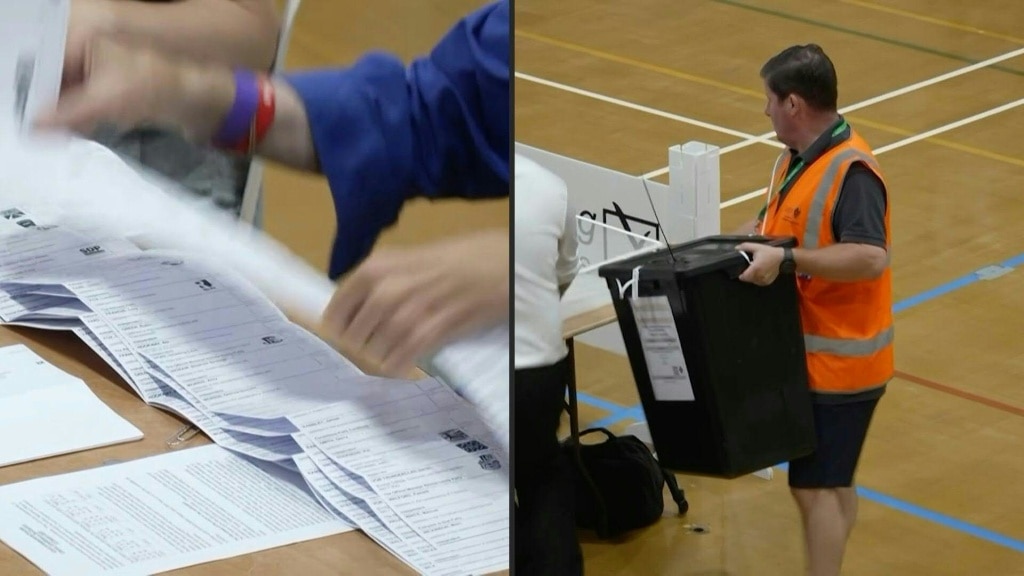
    LONDON – Just months after Keir Starmer’s Labour Party took national power, the British prime minister’s hold on the nation’s top office is facing unprecedented turmoil, triggered by a devastating string of losses in last week’s local government elections that have amplified long-simmering anger within his own party over a controversial ambassadorial appointment.

    The poor local election performance has emerged as a breaking point for Starmer, whose credibility has already been damaged by widespread backlash over his decision to appoint veteran Labour figure Peter Mandelson as the UK’s ambassador to the United States. The appointment sparked outrage over Mandelson’s well-documented personal ties to disgraced financier and convicted sex offender Jeffrey Epstein, a scandal that has lingered and eroded trust in Starmer’s judgment among lawmakers and voters alike.

    Already, dozens of sitting Labour Members of Parliament have publicly called for Starmer to step down, clearing the way for an open leadership contest to select a new party leader who would immediately assume the role of prime minister. So far, Starmer has repeatedly refused to resign, stating publicly that he intends to remain in post, and no formal challenge to his leadership has yet been formally registered with the party. While no candidate has yet emerged as the clear frontrunner to replace Starmer if a vacancy opens up, several senior Labour figures have been flagged as the most likely contenders for the leadership.

    Wes Streeting, 43, currently serves as the UK’s Health Secretary, and is widely viewed as one of the current government’s most effective and charismatic public communicators. He has been handed the responsibility of delivering one of Labour’s core election pledges: fixing the chronically underfunded and overstretched National Health Service. Rumors of Streeting’s leadership ambitions have circulated for years, and they burst into public view last year, when allies of Starmer reportedly briefed British media that the prime minister would aggressively fend off any attempt to oust him – with most media speculation at the time pointing directly to Streeting as the would-be challenger. Since being elected to Parliament in 2015, Streeting has repeatedly denied any secret plot to replace Starmer, dismissing such claims as completely unfounded “nonsense.”

    Another top potential candidate is Angela Rayner, the former deputy prime minister with a well-known working-class origin story. Now 46, Rayner grew up in public social housing, left formal schooling at age 16, and became a teen mother, a background that has shaped her political brand as a voice for working people. Before entering Parliament in 2015, she was a prominent trade union organizer, and she aligns with the left wing of the Labour Party. She rose quickly through the party’s ranks during Labour’s years in opposition, and was elected deputy party leader in 2020. Rayner holds substantial grassroots support across the party, but she was forced to resign from the current cabinet last year after acknowledging she had underpaid tax on a property purchase. She remains waiting for the outcome of an official parliamentary inquiry into the tax controversy, a cloud that hangs over any potential leadership bid. In the wake of new revelations about Mandelson’s ties to Epstein from newly released Epstein documents, Rayner led a rebellion of backbench Labour lawmakers that forced the government to allow Parliament’s Intelligence and Security Committee to take control of decisions over which related documents will be declassified and released to the public.

    Andy Burnham, 56, the popular center-left mayor of Greater Manchester and a former national cabinet minister, has long been marked as a potential challenger to Starmer. But his path to the leadership hit a major setback in February, when the national Labour Party blocked him from standing as the party’s candidate in a recent parliamentary by-election. By longstanding constitutional convention, the UK prime minister must be a sitting member of the House of Commons, so Burnham’s supporters are pushing for any leadership contest to be delayed, which would give him time to win a seat in Parliament through a future by-election. Burnham brings extensive experience from past Labour governments, having previously served as both culture secretary and health secretary in previous national administrations.

    Ed Miliband, 56, the current Energy Secretary and a former Labour Party leader, is another experienced potential contender. Miliband led the party for five years during its time in opposition, but his tenure ended after Labour lost the 2015 general election. Miliband has publicly downplayed any interest in returning to the top party leadership role, but he remains one of the most experienced and well-respected senior figures in the current Labour cabinet.

    Rounding out the list of likely contenders is Home Secretary Shabana Mahmood, 45, who holds one of the most high-stakes roles in the current government, with oversight of immigration policy, law enforcement, and domestic security. Her moves to strengthen border controls and crack down on unauthorized immigration have made her a favorite among centrist and right-leaning members of the Parliamentary Labour Party.

  • Starmer faces mounting pressure to resign as he meets UK Cabinet in crunch talks

    Starmer faces mounting pressure to resign as he meets UK Cabinet in crunch talks

    LONDON — Just eight months after securing a landslide general election victory, British Prime Minister Keir Starmer is fighting for his political survival, confirming to his Cabinet on Tuesday that he refuses to step down even as internal dissent within his own Labour Party reaches a fever pitch.

    The current crisis erupted last week after the Labour Party suffered devastating losses across local elections nationwide. Political analysts warn that if the poor performance is replicated in a future national vote, the party could be swept out of power in a historic rout. The disappointing results laid bare long-simmering frustrations with Starmer’s leadership, triggering a wave of calls for his departure from within party ranks.

    So far, more than 70 Labour backbench members of Parliament — nearly one-fifth of the party’s total representation in the House of Commons — have publicly called on Starmer to either resign immediately or outline a clear timeline for his exit. Notably, no lawmaker has yet launched a formal leadership challenge against Starmer, a move that would require meeting a minimum threshold of parliamentary support under party rules. Even so, the number of lawmakers calling for change signals deep and widespread discontent across the party.

    The rebellion gained traction on Tuesday when junior minister Miatta Fahnbulleh resigned from her post in the housing, communities and local government department. A prominent figure on the Labour left, Fahnbulleh issued a public statement urging Starmer to “do the right thing for the country” and make way for new leadership. In her resignation notice, she argued the current government has failed to deliver the transformative change voters mandated in last year’s general election, and has not governed with a clear, consistent set of core Labour values. “Nor have we governed as a Labour Party clear about our values and strong in our convictions,” she wrote.

    Starmer’s rapid drop in popularity since his July 2024 landslide victory stems from a range of interconnected issues. Critics point to repeated policy missteps, a widespread perception that the prime minister lacks a clear governing vision, ongoing stagnation in the British economy, and major questions over his political judgment — most notably his controversial appointment of Peter Mandelson as U.K. Ambassador to the United States, despite Mandelson’s well-documented personal ties to convicted sex offender Jeffrey Epstein.

    Last week’s local election results also underscored a dramatic shift in the United Kingdom’s political landscape: the traditional two-party system long dominated by Labour and the Conservative Party is fracturing, with Labour losing significant support to both the right-wing populist Reform UK (an anti-immigration party) and the left-leaning Green Party, which campaigned on an eco-populist platform.

    Opening Tuesday’s emergency Cabinet meeting, Starmer acknowledged his responsibility for the poor local election results but immediately doubled down on his commitment to stay in office. He reminded his ministers that Labour’s internal rules require a formal leadership challenge to gather the support of at least one-fifth of the party’s sitting MPs — a threshold that currently stands at 81 signatures, a mark challengers have not yet hit — and that no formal ousting process has been triggered.

    “The country expects us to get on with governing,” Starmer told the gathering. “That is what I am doing and what we must do.”

    Under British law, the next national general election is not required to be held until 2029, and the UK political system allows parties to replace a sitting prime minister mid-term without triggering a national vote. Starmer has already moved to shore up his position, launching his fightback with a combative speech to detractors on Monday. He is also set to push forward with an ambitious slate of new legislative proposals, which will be formally announced by King Charles III during the State Opening of Parliament on Wednesday, in a bid to regain momentum and reframe his premiership.

    Danica Kirka contributed reporting from London.

  • Ukraine officials name Zelenskyy’s ex-chief of staff as a suspect in money-laundering probe

    Ukraine officials name Zelenskyy’s ex-chief of staff as a suspect in money-laundering probe

    KYIV, Ukraine — In a move that sends significant ripples through Ukraine’s political landscape amid its bid for European Union membership, two of the country’s leading anti-corruption watchdogs have formally named former presidential chief of staff Andriy Yermak as an official suspect in a large-scale money laundering investigation.

    The National Anti-Corruption Bureau of Ukraine and the Specialized Anti-Corruption Prosecutor’s Office made the announcement public via the Telegram messaging platform late Monday, detailing that the alleged scheme involves roughly 460 million Ukrainian hryvnia, equal to around $10.5 million. Investigators confirmed that the case remains active and ongoing, with the formal suspect designation coming before any official criminal charges are filed.

    Yermak, who stepped down from his post in November, previously served as Ukraine’s lead negotiator in high-stakes talks with the United States. His resignation came amid a growing political scandal that has emerged as the most significant challenge to President Volodymyr Zelenskyy’s administration since Russia launched its full-scale invasion of the country in 2022.

    Once one of Zelenskyy’s closest and most trusted confidants, Yermak held considerable power within the Ukrainian government. Zelenskyy for months resisted widespread calls to remove Yermak from his role, a fact that makes the current corruption probe deeply politically damaging for the president as he works to advance Ukraine’s EU accession agenda. Long-standing systemic corruption is widely cited as one of the key barriers slowing Kyiv’s progress toward membership, a process that is already projected to take years to complete.

    Investigators allege that Yermak was complicit in laundering illicit funds through a series of construction projects located in the outskirts of Kyiv. Authorities executed a search of Yermak’s personal residence back in November, and no additional suspects have been publicly named as part of the investigation to date.

    Zelenskyy has so far declined to issue any public comment on the anti-corruption agencies’ announcement. His press spokesperson, Dmytro Lytvyn, stated that with the investigation still unfolding, it is too premature to draw any definitive conclusions about the case. A final decision on whether to file formal criminal charges against Yermak could still be months away, according to official updates.

    At the time of Yermak’s departure from the presidential office, Zelenskyy framed the resignation as part of a broader restructuring of his administration, publicly thanking Yermak for his work leading international peace negotiations.

  • BJP leader back to head India’s Assam state for second time in a row

    BJP leader back to head India’s Assam state for second time in a row

    In a landmark political event held in Guwahati this week, senior Bharatiya Janata Party leader Himanta Biswa Sarma officially took the oath of office for a second consecutive term as Chief Minister of India’s northeastern state of Assam. The ceremony drew high-profile attendees, including Prime Minister Narendra Modi, multiple federal cabinet ministers, and BJP chief ministers from across the country, alongside thousands of supporters gathered from across Assam.

    Sarma’s return to power follows a landslide victory for the BJP-led alliance in the recent Assam Assembly elections, held on April 9. The ruling coalition secured a commanding majority, with the BJP itself winning 82 of the 126 available seats, and its regional allies adding an additional 20 seats to the coalition’s total. This result extends the BJP’s uninterrupted control of Assam, which began when the party first won power in the state in 2016.

    Widely regarded as one of the key architects of the BJP’s explosive growth in India’s northeast, a region once dominated by regional smaller parties and the national Indian National Congress, Sarma has been central to reshaping the state’s political landscape over the past decade. Just 10 years ago, the BJP held less than 12% of the popular vote in Assam; today, that share has climbed to 38%, a shift political analysts largely credit to Sarma’s organizational work and strategic leadership.

    Sarma’s political career has been defined by striking longevity and strategic influence. Representing the Jalukbari constituency on the outskirts of Guwahati, Assam’s largest city, he has held the seat continuously since 2001, even after switching political affiliation. Prior to joining the BJP in 2015, Sarma was a top Congress leader and cabinet minister under former long-serving Chief Minister Tarun Gogoi. When he left the Congress alongside dozens of loyal legislators, the departure dealt a crippling blow to the state Congress party that has yet to fully recover, a moment widely viewed as the turning point for the BJP’s expansion across the entire northeast region.

    In the years after joining the BJP, Sarma built his reputation as the party’s most effective behind-the-scenes organizer during former Chief Minister Sarbananda Sonowal’s tenure from 2016 to 2021, helping the party forge alliances with local groups and extend its influence into neighboring northeastern states including Arunachal Pradesh, Manipur, and Tripura. He first assumed the office of Chief Minister in 2021, and this latest election victory has significantly solidified his standing as one of the most powerful leaders within the national BJP.

    Within the party, Sarma’s success is attributed to his relentless campaigning style, robust grassroots organizational control, and implementation of high-impact public welfare programs. Supporters hail him as a results-driven administrator who has prioritized core infrastructure development, including expanding road and bridge connectivity across the state. One of his most popular initiatives, the Orunodoi scheme, delivers direct monthly financial assistance to low-income women households, earning broad support among marginalized communities.

    However, Sarma’s tenure and political rise have not been without intense controversy. Critics argue that his political messaging has increasingly leaned into divisive rhetoric centered on long-running debates over migration and communal identity, issues that have dominated Assam politics for generations. The state has grappled with political tensions around illegal immigration from neighboring Bangladesh for decades, with debates over language, land rights and indigenous identity shaping every recent election cycle.

    Opposition parties and human rights organizations have repeatedly accused Sarma’s BJP government of systematically targeting religious minority communities, particularly Bengali-speaking Muslims. Policies pursued by his administration related to unregulated Islamic schools and child marriage have sparked fierce political pushback, and earlier this year, a deleted AI-generated deepfake video shared by the state BJP party showed Sarma shooting at images of political opponents wearing traditional Muslim skull caps, drawing widespread condemnation from opposition and civil society groups. Sarma and national BJP leaders have rejected these accusations, framing their policies as necessary measures to protect indigenous Assamese culture and address the ongoing crisis of illegal migration.

    Despite these ongoing controversies, Sarma has emerged as one of the most influential BJP leaders in eastern India, and has become an increasingly prominent campaign surrogate for the party across national elections. Alongside Sarma, four other legislators – two from the BJP and two from its regional alliance partners – were also sworn in as cabinet ministers for the new state government this week.

    Political analysts say Sarma’s winning electoral strategy in Assam rests on three core pillars: identity politics, targeted outreach to key voter blocs, and tangible development progress. “The BJP has worked to bring indigenous communities closer to a broader Hindu identity, while portraying certain minority groups as outsiders,” explained Akhil Ranjan Dutta, a professor of political science at Gauhati University. “At the same time, under Sarma’s leadership the party has effectively engaged women, young voters, farmers and small business owners through targeted welfare schemes and messaging tailored directly to their needs. Development also played a major role – improvements to roads and rural connectivity have significantly boosted the party’s appeal across the state.”

  • How Keir Starmer could be replaced as UK prime minister after Labour suffers local election drubbing

    How Keir Starmer could be replaced as UK prime minister after Labour suffers local election drubbing

    LONDON – Just eight months after securing a landslide national general election victory, British Prime Minister Keir Starmer finds himself locked in a battle to hold onto his office, following a catastrophic string of losses for his Labour Party in last week’s local elections. Political analysts warn that if the poor local election performance is replicated at the next national vote, Labour will be swept out of power entirely.

    Starmer has borne the brunt of growing frustration within the party over plummeting public approval, with multiple factors driving the downward trend. Critics point to a string of poorly executed policy missteps, a widespread perception that the prime minister has failed to articulate a clear, compelling long-term vision for the country, and ongoing turbulence in the British economy. Additional questions have been raised about Starmer’s political judgment, most notably over his decision to appoint Peter Mandelson as British ambassador to Washington, despite Mandelson’s well-documented connections to convicted sex offender Jeffrey Epstein.

    While the next UK general election is not constitutionally required to be held until 2029, British parliamentary rules allow a governing party to replace its leader mid-term without triggering a full national vote. A growing bloc of Labour lawmakers is now pushing for an immediate leadership change, arguing it is the only way to steady the beleaguered government and fend off electoral threats from both the far right and far left of UK politics.

    “We have to change and we have to do it quickly,” said Labour Member of Parliament Catherine West. “We have to lay out a timetable and we have to turn this ship around.” Despite the growing calls for departure, ousting a sitting Labour leader is far from a simple process, as the party has no recent institutional history of removing mid-term leaders, unlike the main opposition Conservative Party.

    There are multiple pathways that could lead to Starmer’s exit, varying widely in complexity. The most straightforward scenario would see Starmer voluntarily announce his resignation, which would automatically trigger a formal leadership contest. Such an announcement could come as soon as this week, if Starmer’s own Cabinet members deliver a clear message at their weekly Tuesday meeting that he has lost the confidence of the parliamentary party.

    If Starmer steps down immediately, the Cabinet and Labour’s National Executive Committee would appoint an interim prime minister and interim party leader, typically a figure not running in the leadership contest. Current Deputy Prime Minister David Lammy is widely seen as a likely fit for this temporary role.

    Under Labour’s formal rulebook, any candidate for leader must secure the backing of at least one-fifth of the party’s sitting House of Commons lawmakers – a threshold that currently stands at 81 supporters. More than 70 Labour MPs have already publicly called on Starmer to lay out a departure timetable, a clear signal of widespread internal discontent, even though no formal challenge has yet been launched.

    Once candidates meet the parliamentary support threshold, they must then secure backing from 5% of local Labour constituency parties, or from at least three major affiliated groups including trade unions and cooperative societies. After that, eligible party members and affiliate representatives vote through a ranked-choice electoral system, with the first candidate to win a majority of votes declared the winner. The final step would see King Charles III formally invite the new leader to form a government and take office as prime minister.

    Thus far, Starmer has shown no willingness to step aside. On Monday, he reaffirmed his refusal to resign, arguing that leaving office mid-term would “plunge the country into chaos”. If Starmer digs in, he could still face a formal leadership challenge from one or more sitting Labour MPs.

    West was the first lawmaker to openly signal a potential challenge, saying Saturday that she would launch a leadership bid if the Cabinet failed to remove Starmer by Monday. She has acknowledged that she currently falls far short of the 81 parliamentary backers needed to force a contest, framing her move instead as an effort to pressure higher-profile potential contenders to enter the race.

    Unlike the Conservatives, which removed sitting prime ministers Margaret Thatcher in 1990 and Boris Johnson in 2022, Labour has no recent tradition of mid-term leader ousters. No sitting Labour prime minister has ever been forcibly removed from office, though former prime minister Tony Blair did announce his planned resignation in 2006 following years of low-level internal pressure.

    If a formal challenge is launched, any eligible candidates would need to meet the same support thresholds outlined above, while Starmer would automatically be placed on the ballot as the incumbent leader.

    Multiple high-ranking Labour figures are already seen as potential contenders if a leadership contest opens up. Health Secretary Wes Streeting has long been linked to leadership ambitions, as has former deputy prime minister Angela Rayner, who stepped down from her post last year after admitting she underpaid taxes on a property purchase; an official investigation into the matter is still ongoing.

    Andy Burnham, the widely popular mayor of Greater Manchester, is often cited as one of the strongest potential candidates, but he is currently ineligible to stand for leader because he does not hold a seat in Parliament. Earlier this year, Labour party officials blocked Burnham from running in a special parliamentary by-election, but political insiders say a path could be cleared if Starmer signals he will step down by Labour’s annual autumn conference in September. In that scenario, a sitting Labour MP in a safe seat could resign to trigger a by-election, giving Burnham a chance to win a seat in the Commons. Even that would be no guarantee, however, given the scale of Labour’s recent losses in local contests.

  • France seeks to move beyond colonial ties by meeting African leaders in Kenya

    France seeks to move beyond colonial ties by meeting African leaders in Kenya

    In a landmark shift marking a profound reorientation of France’s engagement with the African continent, French President Emmanuel Macron joined Kenyan President William Ruto to co-host the first-ever Africa Forward Summit in Nairobi, Kenya’s capital, this week. The gathering represents a strategic break from decades of Paris-centered or Francophone Africa-only summits, coming amid growing anti-French sentiment and eroding French influence in its traditional West African former colonial sphere. Over 30 African heads of state, top business leaders including Nigerian billionaire Aliko Dangote, and executives from major French firms gathered for the two-day event focused on expanding cross-continental economic partnership.

    Macron used his opening address to announce a $27 billion package of new French investments across priority African sectors, ranging from energy transition, digital innovation and artificial intelligence, to the blue maritime economy and sustainable agriculture. The French president emphasized that the investment initiative is projected to generate an estimated 250,000 new jobs on both the African continent and in France, framing the partnership as a two-way street rather than a one-sided donor relationship. “Africa is succeeding. It’s the youngest continent in the world… and needs investment to become more self-reliant,” Macron told attendees at the Nairobi Convention Centre. He added that France is not only seeking to invest in African markets, but is actively encouraging leading African business leaders to expand their investments into the European country.

    The summit comes against a decades-long backdrop of criticism that France has maintained neocolonial-style political, economic and military control over its former African colonies decades after they gained independence in the 1960s. Tensions have boiled over in recent years in West Africa, where military juntas that seized power in Burkina Faso, Mali and Niger all expelled French counter-insurgency troops and pivoted to closer security ties with Russia; none of the three nations’ leaders are in attendance at the Nairobi summit. France now only maintains one operational military base on the continent, based in Djibouti at the entrance to the Red Sea. Ahead of the summit, Macron defended the drawdown of French military presence, framing the withdrawal from unwelcome stations as a deliberate step respecting African sovereignty, not a defeat. “When our presence was no longer wanted after the coups, we left. I’m convinced that we must let these states and their leaders, even putschists, chart their own course,” he said.

    By choosing to co-host the summit in English-speaking Kenya rather than a traditional Francophone African nation, French officials are sending a clear signal that Paris is expanding its African partnerships beyond its old colonial sphere. Kenyan Foreign Minister Musalia Mudavadi framed the location as a deliberate rejection of the colonial-era divisions that split African nations into Anglophone, Francophone and Lusophone blocs, which he argued have long hindered cross-continental integration. “Having this summit being held in a non-French-speaking African country on the continent, to me, is a very, very big message that we should not be looking at engagements on the basis of the official languages that are spoken in those countries,” Mudavadi told the BBC. He added that the summit, which covers both peace and security and broad economic cooperation, is a deliberate move to “start speaking as one” and focus on the future rather than rehashing colonial history. Kenyan officials note that as a former British colony, Kenya shares no direct colonial history with France, making it an ideal neutral diplomatic bridge for the event, a point echoed by Foreign Affairs Principal Secretary Korir Sing’oei, who described Kenya as a natural “bridge-builder” for pan-African engagement.

    Analysts broadly frame the summit as a deliberate strategic repositioning for France, which is competing with growing influence from other global powers including China, Russia and Turkey across the African continent. Gilles Yabi, a Senegal-based independent political analyst specializing in Franco-African relations, told the BBC that the shift reflects not just a reaction to deteriorating ties in West Africa, but a long-running recognition that France needs to pursue new, dynamic markets beyond its traditional sphere of influence. “It’s not only a reaction of France to the deteriorating relationship with some countries in West Africa. It’s also a trend that has been there for some time because France realises that it has to look for new markets, dynamic markets and looking beyond traditional former colonies of West and Central Africa,” Yabi explained.
    Beverly Ochieng, a senior analyst at global risk advisory firm Control Risks, argues that France is moving away from reliance on military influence toward a soft-power and economic engagement strategy. “France is repositioning and softening its presence and reputation. Rather than relying mainly on military influence, she believes that France is increasingly using business, investment and soft power to maintain its relevance on the continent. France is looking to leverage already recognisable commercial brands, cultural presence and its weight in the European Union to mobilise economic initiatives,” Ochieng explained.

    For Kenya, the summit offers significant potential economic and diplomatic gains: France is already Kenya’s fourth-largest source of foreign direct investment, with French brands including retail giant Carrefour already well-established across Nairobi’s more affluent neighborhoods, and French firms active in Kenyan transport, energy and retail infrastructure. Kenyan officials are actively seeking new foreign investment in infrastructure, renewable energy and digital technology, and have already held early exploratory talks with French counterparts about potential future cooperation on nuclear energy to diversify Kenya’s long-term energy mix. Last month, Nairobi also approved a new five-year renewable defense cooperation agreement with France, covering intelligence sharing, Indian Ocean maritime security and joint disaster response operations.

    The summit was not without controversy: during a public event, Macron drew criticism on social media after he interrupted a speaker to chide audience members for holding side conversations, saying “There is a total lack of respect” and urging disruptive attendees to move their discussions to private meeting rooms. Some social media users slammed the outburst as evidence that France has not abandoned its old colonial habit of lecturing African partners, while others argued the French president was well within his rights to call for order during formal proceedings.

    Macron struck a clear new tone for Franco-African relations in an address at the University of Nairobi ahead of the summit’s official opening, stressing that Paris now recognizes Africa’s demand for full sovereignty and no longer seeks to dictate policy to African nations. “Africa needs investment to become more sovereign. This is a continent that I no longer want France to view as a private preserve, where business leaders supposedly have all the rights or guaranteed contracts simply because it’s Francophone Africa,” Macron said. “The continent no longer… needs or wants to hear European leaders telling them what their countries need.” French Ambassador to Kenya Arnaud Suquet noted that France has long-standing ties with the East African nation, saying “it is not as if France has just discovered Kenya yesterday” ahead of the high-profile gathering, framing the summit as a deepening of already robust bilateral relations.

  • Albanese government to spend $600m on multi-year Bondi response

    Albanese government to spend $600m on multi-year Bondi response

    Nearly six months after the deadly December 14 terror attack at Bondi Beach that claimed 15 lives, most of them Jewish, the Albanese government has formally detailed a $604.2 million multi-year funding package in its 2026-27 federal budget, released on Tuesday, to boost Jewish community security, expand national counter-terrorism capacity, and combat rising anti-Semitism across Australia. The five-year allocation, which includes $8.1 million in permanent annual funding after the initial period, will be distributed across dozens of key stakeholders, from peak Jewish representative bodies and educational institutions to counter-terrorism police units and regulatory agencies. More than $120 million of the total package will be allocated over four years to the Executive Council of Australian Jewry to upgrade community-wide security infrastructure, with $22 million of that sum drawn from the Confiscated Assets Account established under the Proceeds of Crime Act over three years. An additional $46.7 million over the same four-year period will go toward upgrades for major Jewish communal and cultural sites, including the Hakoah Club and the National Jewish Memorial Centre, as well as a targeted non-competitive grant program for local projects led by Chabad of Bondi. Roughly $5 million in targeted support is earmarked for affected stakeholders including Lewis’ Continental Kitchen, a Jewish business that was firebombed in a separate earlier attack, Jewish youth camps across the state of Victoria, and directly impacted survivors and families of victims of the Bondi Beach attack. A further $42.9 million allocated over two years will fund immediate and accessible mental health support services for community members affected by the attack and rising hate violence. Ahead of the federal budget announcement, the government already revealed an $80 million two-year investment to establish a new national counter-terrorism center dedicated to addressing the growing crisis of online radicalization among young Australians. When combined with new allocations in the 2026-27 budget, total spending targeting anti-Semitism and violent extremism in this fiscal cycle tops $207 million. This allocation includes almost $70 million for the Australian Federal Police’s National Security Investigations teams, as well as sustained funding for cross-agency initiatives: a teacher resource hub managed by the Department of Education, and a hate group monitoring framework developed by the Department of Home Affairs. Another $32.6 million in 2026-27 will fund national public awareness campaigns designed to strengthen national security and reinforce social cohesion across diverse Australian communities. The long-running Together for Humanity interfaith education program will also receive a $20 million four-year investment to extend and expand its reach, while public broadcaster SBS will get $3 million over three years to continue its *SBS Examines* podcast series focused on hate and extremism. The newly launched Royal Commission on Anti-Semitism and Social Cohesion, which held its first public hearings last week, will also receive sustained resourcing, with more than $131 million allocated to the Attorney-General’s Department from the 2025-26 fiscal cycle to support the commission’s work. The budget also confirms continued funding for national firearms licensing reforms, though the government has declined to disclose the specific total amount, stating that public release would prejudice ongoing negotiations with state and territory jurisdictions over funding levels. In addition, the budget sets aside a contingency reserve for the stalled National Gun Buyback Scheme, which has faced significant delays and pushback from multiple state and territory governments since it was proposed. The scheme has already received partial funding, and the new contingency allocation aims to support its implementation moving forward.

  • New Zealand moves to halt lawsuits over climate damage

    New Zealand moves to halt lawsuits over climate damage

    In a controversial policy shift that has drawn sharp criticism from climate campaigners, New Zealand’s center-right government confirmed plans Tuesday to amend national legislation to block courts from holding private companies legally liable for climate change damage connected to their greenhouse gas emissions.

    Justice Minister Paul Goldsmith announced the change, pointing specifically to an ongoing high-profile lawsuit filed by Indigenous Māori climate activist Michael Smith, which targets six major New Zealand firms, including dairy industry giant Fonterra, over their contribution to climate-related environmental harm. Goldsmith argued that civil tort law—the legal framework under which such compensation claims are filed—is ill-equipped to address a systemic issue like climate change, which intersects with complex environmental, economic, and social priorities. He added that allowing such lawsuits to proceed would create crippling uncertainty that undermines business confidence across the country.

    “The courts are not the right venue to resolve claims of climate harm,” Goldsmith said, confirming the amendment will explicitly bar courts from issuing findings of liability for climate damage tied to greenhouse gas emissions.

    Smith, the activist leading the pending case, condemned the government’s move as a direct attack on democratic principles. Speaking to Radio New Zealand, he warned that if parliament can intervene to cancel an active court case simply because it has become politically inconvenient, no individual’s legal claims can ever be considered secure. The proposed law change is widely expected to pass parliament, as the ruling national coalition holds a clear majority of legislative seats.

    The announcement is the latest in a series of rollbacks of climate-friendly policies by the current administration, which took office in 2023. Since assuming power, the government has scrapped a popular clean car discount designed to boost electric vehicle adoption, reversed a nationwide ban on new offshore oil and gas exploration, and implemented a streamlined fast-track approval process for new mining permits.

    The government’s 2025 emissions target has also faced separate legal pushback. In January, officials announced a goal to cut carbon emissions 51% below 2005 levels by 2035—an almost negligible adjustment from the previous administration’s target of a 50% cut by 2030. In March, two major environmental legal groups, Lawyers for Climate Action and the Environmental Law Initiative, sued Climate Change Minister Simon Watts, arguing the weak, delayed target fails to meet the government’s legal obligations to cut emissions. New Zealand’s long-term legally binding target remains net-zero greenhouse gas emissions by 2050, excluding agricultural and waste methane.

    Globally, climate litigation has emerged as a key tactic for activists and affected communities to push for greater accountability from major emitters and governments. From South Korea to Germany, courts around the world have increasingly accepted climate liability cases, pushing both public and private actors to strengthen their climate action. New Zealand’s proposed law change marks one of the most explicit efforts by a national government to block this growing trend of climate accountability.

  • Canberra teen allegedly motivated by ‘nationalist, racist extremism’ hit with additional charges over alleged plan to commit terror attack

    Canberra teen allegedly motivated by ‘nationalist, racist extremism’ hit with additional charges over alleged plan to commit terror attack

    A 17-year-old Canberra resident, already in custody on earlier firearm and terrorism-related charges, has been hit with two new, historic charges in the Australian Capital Territory (ACT) in connection to an alleged far-right extremist plot to carry out a deadly terror attack against random civilians. This development marks the first time any individual has been charged with terrorist act planning in the ACT’s history.

    The teenager was first taken into custody by law enforcement in November 2023, when authorities executed a search warrant at his residential property. During that operation, investigators seized a cache of prohibited items: explosive precursor chemicals, gas masks, military-style tactical clothing, a replica imitation firearm, printed extremist ideological material, and the teen’s personal mobile phone. He has remained in detention ever since his initial arrest.

    On Tuesday, the teen made a brief first appearance at the ACT Children’s Court to face the newly filed charges: one count of preparation and planning for a terrorist act, and a second count of transmitting violent extremist material. In a joint official statement, the Australian Federal Police (AFP), ACT Policing, and Australia’s national security agency ASIO confirmed that additional evidence uncovered during the ongoing investigation justified the expanded charges.

    Authorities allege the planned attack was targeted at people unknown to the teenager, and was driven by ideological views aligned with violent nationalist and racist extremism. AFP Assistant Commissioner Peter Crozier, who leads the force’s counter-terrorism division, described the radicalization of young Australians by online extremist propaganda as a deeply alarming trend for the country.

    “Violent extremist material is circulated deliberately by terrorist networks to sow violence, hate, and deep division within Australian society,” Crozier explained in his statement. He emphasized that the AFP and its national security and law enforcement partner agencies remain unwavering in their work to protect Australian communities. “It is our core mandate to defend and protect the Australian public, and we will relentlessly pursue any actor that seeks to undermine our democracy or fracture our social cohesion,” he added.

    Crozier also highlighted the shared responsibility of non-law enforcement stakeholders in countering youth radicalization, saying: “We strongly emphasise the important role that parents, schools, social services and technology companies have in preventing access to violent extremist material by our youth.”

    ACT Policing Deputy Chief Police Officer Richard Chin echoed this focus on prevention and early intervention, noting that community safety remains the top priority for the local Joint Counter Terrorism Team (JCTT). “We are focused on limiting the accessibility of violent extremist material and promoting education and awareness for those in frontline protective roles, including parents, educators and health care providers in the ACT, to maximise prevention and early intervention options,” Chin said.

    Chin pointed out that parents and teachers are often the first adults to notice warning signs of radicalization in young people. Strengthening awareness and building confidence within trusted, supportive community networks, he explained, is a core strategy to stop young people from being exposed to harmful extremist influences and stop radicalization before it leads to violence.

  • Exit fee increased for tourists, health spending spree in federal budget

    Exit fee increased for tourists, health spending spree in federal budget

    The Albanese government has introduced a suite of policy changes and targeted funding commitments in its newly released 2026-27 federal budget, headlined by a planned increase to Australia’s international departure charge for all outbound passengers.

    From January 1 next year, the passenger movement charge applied to every person leaving Australia via air or sea — regardless of citizenship or future return plans — will rise by $10 to a total of $80. To avoid disrupting travel planning, a six-month transition period will be implemented, meaning passengers who purchased their tickets before the fee hike takes effect will not be required to pay the extra $10.

    Government projections estimate the increased exit fee will generate approximately $755 million in additional revenue over the five-year period starting from 2025-26. Implementing the change will come with a one-off administrative cost of $700,000 for the Department of Home Affairs in the coming financial year. Alongside this departure fee increase, the government is also forecasting a significant jump in revenue from inbound visa application charges, predicting total earnings of $6.18 billion in 2026-27, up from the previous year’s projected $4.66 billion.

    Beyond border charge adjustments, the budget allocates funding to a wide range of policy sectors spanning emergency management, renewable energy transition, public health, and cultural initiatives.

    In emergency management, the government has committed $6 million to roll out AusAlert, a new national emergency warning system set to launch in October. The system will deliver geographically targeted emergency alerts to local communities and first responders during natural disasters and crisis events, improving early warning and response capacity.

    For clean energy and sustainability, the federal government is continuing its support for a national solar panel recycling pilot scheme. The initiative, which first received $25 million in last year’s budget, aims to cut electronic waste as the country transitions to renewable energy, with plans to establish up to 100 dedicated solar panel collection sites across the nation. Separately, Australia Post will receive $40.5 million to speed up the electrification of its national delivery fleet, funding the purchase of new electric trucks, vans, and postal bicycles.

    Public health and social services receive substantial new permanent and one-off funding in this budget. In a historic move, the government is committing $431 million in permanent ongoing funding to the Public Dental Services for Adults agreement, allocating $107.8 million annually to deliver accessible, critical dental care for eligible low-income and vulnerable adult patients.

    Life Education Australia, a not-for-profit that delivers school-based health education across the country, will receive $1.7 million to develop new learning modules covering mental health and wellbeing, online safety, and respectful relationships. The Maggie Beer Foundation, a group focused on improving nutrition for aged care residents, will get more than $7 million to upgrade food quality in aged care facilities across Australia. Melbourne’s Royal Children’s Hospital will receive a $2 million boost for its Good Friday Appeal, which supports preventative health projects and expands access to pediatric healthcare in regional areas. Additionally, the government has set aside more than $68 million over three years to support Australia’s goal of eliminating HIV transmission by 2030, with funding focused on expanding access to HIV treatment for people who do not qualify for Medicare coverage.

    Cultural and civic initiatives also receive targeted support. A total of $10 million has been allocated to fund Australia Day celebrations across the country, including a $4.5 million community events stream that supports local councils and not-for-profit organisations to host local activities on January 26. Additional funding is specifically reserved for events in regional and remote areas, where residents often face barriers to attending large celebrations in capital cities. Canberra’s Museum of Australian Democracy will also receive $3 million to plan and host national commemorations for the centenary of the opening of Old Parliament House, scheduled for 2027.