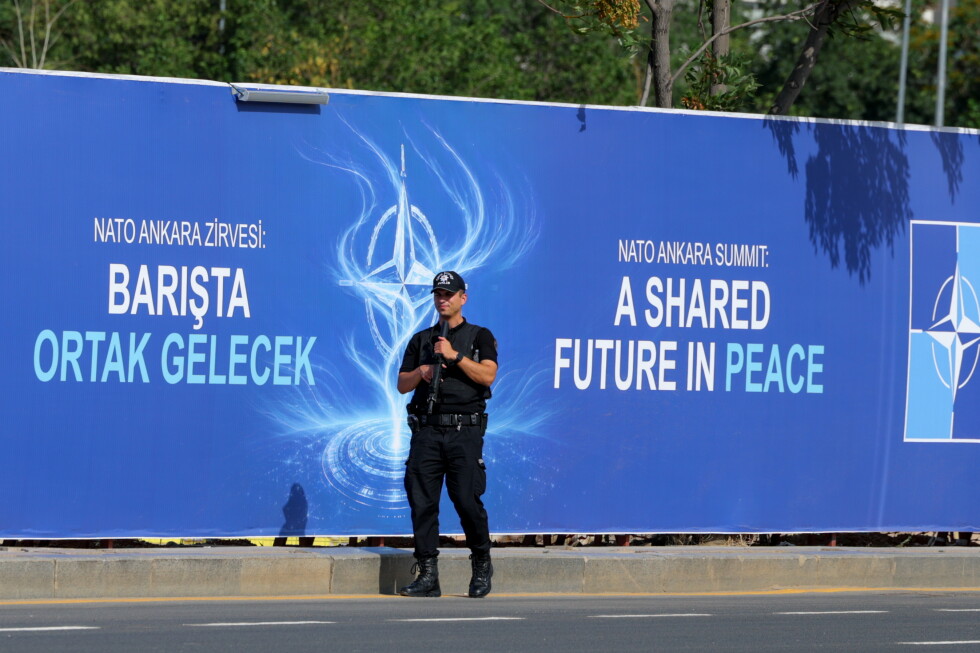
As leaders of the world’s largest military alliance gather in Ankara, Turkey this week for a critical two-day NATO summit, the bloc finds itself at an unprecedented crossroads, driven by a shifting U.S. security posture that has shaken long-standing trans-Atlantic trust. U.S. President Donald Trump’s opening demand for “loyalty” from alliance members has set a tense tone for the gathering, coming after several NATO partners refused to grant American forces access to their domestic military bases for strikes targeting Iran amid the ongoing regional conflict sparked by the U.S.-Israel war. Trump has publicly singled out major European powers — Britain, France, Germany, Italy and Spain — for criticism over their reluctance to back U.S. military action in the Middle East, deepening divisions ahead of formal talks.
Ordinarily, a NATO summit serves as a highly symbolic showcase of shared commitment to collective defense, reaffirming the core Article 5 pledge that an attack on one member is an attack on all. This year, however, the trans-Atlantic bond is more fragile than it has been in decades, as the U.S. pulls back from its decades-long role as the primary security guarantor for Europe. The summit has been framed around the official theme of “a stronger Europe in a stronger NATO,” with the Trump administration pushing for a sweeping overhaul it has dubbed “NATO 3.0” — though the full details and implications of this restructuring remain unclear, with delegates hoping to hash out concrete plans over the course of the two-day meeting.
Hosting the event is Turkish President Recep Tayyip Erdogan, who has welcomed leaders to his sprawling Bestepe Presidential Compound on the outskirts of Ankara. In preparation for the summit, Turkish authorities completed a high-profile conversion of an old military airfield into a new commercial airport specifically to accommodate visiting delegations, and have implemented unprecedented security measures across the capital. Air defense systems are on high alert, tens of thousands of police officers have been deployed to duty, adjacent residential neighborhoods have been closed to civilian traffic, and some public sector workers have been granted time off to keep key transport corridors clear. All public gatherings in the area have been banned, and pre-summit security sweeps have resulted in more than a dozen detentions — including two working journalists, according to the Turkish Journalists Association.
The summit’s official schedule brings together a wide range of global partners beyond the alliance’s 32 member states. On Tuesday evening, Erdogan will host a formal dinner in his compound’s “Winter Garden,” with top officials from Indo-Pacific partners Japan, South Korea, Australia and New Zealand in attendance, alongside Ukrainian President Volodymyr Zelenskyy. Parallel to the dinner, foreign ministers will convene the newly established NATO-Ukraine Council, while defense ministers will hold separate talks with their Indo-Pacific counterparts. An additional working session with officials from Gulf Arab states is also planned, and Trump is scheduled to hold a one-on-one meeting with Syrian President Ahmad al-Sharaa. The only closed working session for NATO heads of state alone will take place on Wednesday morning, scheduled to last just three hours, with a short public summary of outcomes expected immediately after the meeting concludes.
Two core issues top the formal summit agenda, starting with defense spending — a long-running point of friction between the U.S. and its European allies, where Washington has consistently pressured partners to increase their military investments. Ahead of the gathering, NATO Secretary-General Mark Rutte highlighted that European allies and Canada increased their collective defense spending by 20% in 2025, marking one of the largest annual jumps in modern alliance history. Even so, this progress is not expected to satisfy the Trump administration, after leaders committed at the last summit to match U.S. defense spending levels as a share of gross domestic product. The 2026 U.S. military budget totals $901 billion, equal to roughly 3.3% of U.S. GDP — a target most European allies remain far from meeting.
Beyond spending targets, NATO is aiming to showcase progress on modernizing its military capabilities, converting the billions in new public investment into cutting-edge military equipment adapted to 21st-century warfare. A dedicated defense industry forum will be held on the summit’s sidelines on Tuesday, bringing together senior alliance officials and industry leaders to accelerate weapons production and drive innovation in emerging defense technologies. The second top formal agenda item is ongoing military and humanitarian support for Ukraine, which is now entering its fifth year of full-scale war against Russian invasion. European allies and Canada currently cover the vast majority of Ukraine’s defense needs, including approximately 90% of the country’s national air defense systems.
Despite the formal agenda, most of the behind-the-scenes debate is expected to center on two unaddressed tensions: the future of U.S. troop levels in Europe, and the escalating regional fallout from the war between Israel and Iran. European allies and Canada have been repeatedly caught off guard by Trump’s sudden announcements of troop cuts over the past 18 months, and are seeking clear reassurance about Washington’s long-term security commitment to the continent. Just ahead of the summit, the Pentagon surprised allies by announcing a six-month review of the entire U.S. military presence in Europe, which will assess both European progress toward self-defense and whether the U.S. retains full, unimpeded access to military bases and overflight rights across the alliance.
NATO as an institution has not taken an active role in the ongoing war against Iran, and the alliance has no collective agreement with the U.S. on shared use of member bases or airspace, even though individual members have reached bilateral arrangements with Washington. At a joint public appearance with Rutte on June 24, Trump doubled down on his criticism of allied reluctance to join the U.S. campaign, telling reporters “We don’t need their money — we don’t need anything. I just want loyalty.” The demand has left many alliance members confused: NATO’s founding treaty already enshrines equal commitment to collective security through Article 5, the core mutual defense guarantee that forms the foundation of the entire organization. What additional terms of loyalty the U.S. president is seeking remains undetermined, leaving allies to navigate a summit defined more by uncertainty than shared purpose.