分类: politics

  • Starmer faces endgame as Wes Streeting launches ‘coup’ to beat rivals to the top job

    Starmer faces endgame as Wes Streeting launches ‘coup’ to beat rivals to the top job

    British Prime Minister Keir Starmer is currently fighting to retain his hold on Downing Street, with political insiders widely predicting his premiership could end in a matter of days as rival factions within the Labour Party scramble to position his successor.

    During a Tuesday morning Cabinet meeting held at 10 Downing Street, the embattled prime minister pushed back against growing pressure to step down, telling his senior ministerial team that the Labour Party’s formal leadership challenge process had not yet been activated. “The country expects us to get on with governing. That is what I am doing and what we must do as a Cabinet,” Starmer told attendees, according to accounts of the closed-door meeting.

    But few senior officials in London’s Whitehall government district believe Starmer can cling to power for much longer. His bloc of loyal allies has shrunk rapidly in recent days, and more than 80 Labour MPs spanning every ideological faction of the party have publicly and privately called on him to acknowledge his leadership is finished. The unrest spilled into open revolt on Monday night, when five junior ministerial aides resigned from their government posts in protest of Starmer’s continued tenure.

    With Starmer’s position hanging by a thread, a bitter power struggle has erupted between the centre-right and soft-left wings of the Labour Party over who will take the top job, multiple party sources confirmed to Middle East Eye.

    Health Secretary Wes Streeting, a figure aligned with the party’s centre-right, is moving quickly to force Starmer out before soft-left opponents can organize a coordinated campaign, Labour insiders say. Streeting’s push has already drawn accusations of an undemocratic power grab from left-wing party figures.

    One of the most high-profile potential challengers from the soft left is Greater Manchester Mayor Andy Burnham, who has spent weeks quietly building support for a leadership bid among sitting Labour MPs. Burnham’s path to the premiership faces major structural barriers, however: he currently does not hold a seat in the House of Commons, a requirement for the office of prime minister in the UK.

    To resolve this obstacle, an unnamed Labour MP is reportedly preparing to resign their parliamentary seat to clear a path for Burnham. If the MP steps down, Burnham would need to win a subsequent by-election to enter the Commons before he could launch a formal leadership challenge. A further complication comes from the Green Party, which has indicated it will mount a aggressive left-wing campaign to defeat Burnham in any by-election he contests.

    Another leading soft-left contender is Angela Rayner, Starmer’s former deputy leader, who has positioned herself as a unifying candidate for the party’s progressive wing. Rayner stepped down from the Cabinet last September after revelations she underpaid stamp duty on her £800,000 coastal vacation property. One senior soft-left Labour insider warned Middle East Eye that opposition researchers have compiled damaging information on Rayner that would be released if she takes power, saying “there is a truck load of dirt on Rayner waiting to be unloaded if she becomes PM.” The insider compared Rayner’s potential short-lived premiership to that of Conservative former Prime Minister Liz Truss, who resigned after just 49 days in office.

    Energy Secretary Ed Miliband, another veteran soft-left politician, has been urged by dozens of MPs to launch his own leadership bid, though he has so far declined to comment publicly on his plans. Some party figures have floated the idea of a joint Burnham-Miliband ticket to unify the soft left against Streeting’s faster-moving campaign. The soft left as a whole is working against the clock, as it needs time to organize its base while Streeting pushes for an immediate ousting of Starmer.

    John McDonnell, a veteran left-wing Labour MP and former Shadow Chancellor, publicly condemned Streeting’s maneuver on Tuesday morning via social media, writing that Streeting “has launched coup for fear of a democratic process & whilst candidates are blocked”. Labour Together, the influential centrist think tank that was instrumental in getting Starmer elected Labour leader, is widely understood to be backing Streeting to retain its hold on power after Starmer departs.

    Streeting faces his own major headwinds in a leadership contest, however. He is widely tied to former senior Labour minister Peter Mandelson, a once-powerful party figure who was disgraced earlier this year for his long-standing close personal ties to convicted sex offender and disgraced financier Jeffrey Epstein. Streeting, who has previously been described as a protégé of Mandelson, has struggled to distance himself from the scandal. Most critically, Streeting’s popularity among rank-and-file Labour Party members is far lower than his leading rivals: a recent survey conducted by the progressive think tank Compass found 42 percent of Labour members backed Burnham in a potential leadership race, compared to just 11 percent who supported Streeting.

    For Streeting, that means his only realistic path to power is to force a leadership vote before Burnham can resolve his by-election barrier and gain the ability to contest the leadership.

  • Putin hails Russia’s test launch of a new ballistic missile and calls it the world’s most powerful

    Putin hails Russia’s test launch of a new ballistic missile and calls it the world’s most powerful

    On a Tuesday in Moscow, Russian military officials carried out a successful test launch of the new Sarmat intercontinental ballistic missile (ICBM), a key milestone in the Kremlin’s years-long campaign to modernize its aging nuclear strategic forces. The announcement came just days after President Vladimir Putin claimed that the nearly three-year full-scale conflict in Ukraine was drawing to a close, delivering a high-profile display of Moscow’s nuclear military capabilities to the West.

    Speaking after the test, Putin confirmed that the nuclear-capable Sarmat missile – codenamed “Satan II” by Western defense analysts – will enter official combat service with Russia’s strategic nuclear forces by the end of 2025. The new system is engineered to replace the Soviet-designed Voyevoda ICBM, a decades-old platform that has formed the core of Russia’s land-based nuclear deterrent for generations.

    Putin emphasized the Sarmat’s unprecedented destructive power, describing it as “the most powerful missile in the world.” He noted that the combined explosive yield of the system’s multiple independently targetable reentry vehicles is more than four times greater than that of any comparable ICBM fielded by Western nuclear powers. The missile boasts a maximum range of more than 35,000 kilometers, or 21,700 miles, enabling it to strike targets anywhere on the globe via suborbital flight, and incorporates advanced design features that allow it to penetrate even the most sophisticated prospective Western missile defense networks. Compared to its Soviet-era predecessor, the Sarmat also delivers dramatically improved targeting accuracy, Putin added.

    This test marks the second publicly acknowledged successful test of the Sarmat, after development began back in 2011. Reports indicate the program suffered a major setback in 2024, when a test launch ended in a large accidental explosion at the test site. The Sarmat is one of several next-generation strategic nuclear systems Putin first unveiled in a 2018 address, when he claimed the new weapons would render any U.S.-built missile defense systems completely ineffective.

    The test launch fits into a broader pattern that has played out since Putin ordered the full-scale invasion of Ukraine in February 2022: the Russian leader has repeatedly emphasized his country’s nuclear capabilities to deter Western nations from expanding military and political support for Kyiv. Just three days before the test, Putin oversaw the annual Victory Day military parade on Moscow’s Red Square, marking the 1945 defeat of Nazi Germany in World War II. Notably, the 2025 parade broke with nearly 20 years of tradition by excluding all heavy weapons and armor, a shift widely interpreted as a security measure to reduce vulnerability to Ukrainian cross-border attacks.

    Since Putin first took office in 2000, upgrading Russia’s Soviet-era nuclear triad – the three-pronged force of land-based ICBMs, nuclear-armed submarine-launched missiles, and nuclear-capable strategic bombers – has been a core national security priority. To date, the Kremlin has overseen the deployment of hundreds of new land-based ICBMs, commissioned new nuclear-powered ballistic missile submarines, and completed modernization work on its fleet of strategic bombers. Beyond the Sarmat, multiple other next-generation nuclear systems have reached deployment or are in late-stage development:
    – The Avangard hypersonic glide vehicle, capable of reaching speeds up to 27 times the speed of sound, has already entered operational service.
    – The new Oreshnik intermediate-range ballistic missile, which can be fitted with either conventional or nuclear warheads, has already been used twice in conventional strikes against targets in Ukraine. With a maximum range of 5,000 kilometers (3,100 miles), the system can reach any target across the entire European continent.
    – Development of the Poseidon, a nuclear-powered underwater drone designed to carry a massive thermonuclear warhead, is in its final stages. The system is engineered to detonate offshore near enemy coastal cities, generating a catastrophic radioactive tsunami that would render large swathes of coastline uninhabitable for decades.
    – The Burevestnik nuclear-powered cruise missile, also in late-stage development, boasts effectively unlimited range thanks to its miniature atomic reactor propulsion system. The design allows the missile to loiter for days outside enemy air defenses, bypassing traditional defensive networks to strike targets from unexpected directions.

    Putin framed the development of these new systems as a forced response to U.S. policy dating back to 2001, when Washington withdrew from the Anti-Ballistic Missile Treaty, a Cold War-era agreement between the U.S. and Soviet Union that limited the deployment of national missile defense systems. Russian military strategists have long warned that a U.S. national missile shield could create an incentive for Washington to launch a pre-emptive nuclear strike against Russia, counting on the shield to intercept the small number of Russian warheads that would survive an initial first strike.

    “We were forced to consider ensuring our strategic security in the face of the new reality and the need to maintain a strategic balance of power and parity,” Putin stated Tuesday.

    Russia’s ongoing nuclear modernization push has already triggered reciprocal action from the United States, which has launched a costly multi-billion dollar upgrade of its own nuclear arsenal. The move comes at a time of historic erosion in bilateral nuclear arms control: the last remaining binding treaty limiting the size of the two countries’ nuclear arsenals, New START, expired in February 2025. For the first time in more than 50 years, there are no legal caps on the world’s two largest nuclear stockpiles, fueling widespread international concern that the world is now entering an unconstrained new nuclear arms race.

  • Israeli army chief warns reserve forces could ‘collapse’ amid manpower crisis

    Israeli army chief warns reserve forces could ‘collapse’ amid manpower crisis

    Israeli military chief of staff Eyal Zamir has delivered a stark, urgent warning to Israeli lawmakers that the Israel Defense Forces (IDF) could see its entire reserve force collapse within a matter of months if the government fails to immediately pass sweeping conscription and service extension legislation, multiple Israeli media outlets have confirmed. Speaking during a closed-door classified session of the Knesset’s Foreign Affairs and Defence Committee on Monday, Zamir laid out an urgent set of policy demands, including raising mandatory active military service from 30 months to 36 months, expanding overall recruitment pools, and updating outdated reserve duty requirements to address the growing shortfall.

    Zamir’s projection painted a grim picture for the IDF’s force structure: by January 2027, the scheduled reduction of mandatory service to 30 months will strip the service of thousands of additional frontline combat troops, creating a gap so severe that “the reserve army will collapse into itself,” according to comments reported by Israeli outlet i24news. The top uniformed official stressed that after nearly three years of constant combat operations across multiple fronts, the IDF is already grappling with a critical manpower shortage that threatens to undermine the military’s ability to carry out future missions. “I do not deal with political or legislative processes,” Zamir told the committee. “I am engaged in multi-front warfare and in defeating the enemy. In order to continue doing that, the IDF urgently needs more soldiers.”

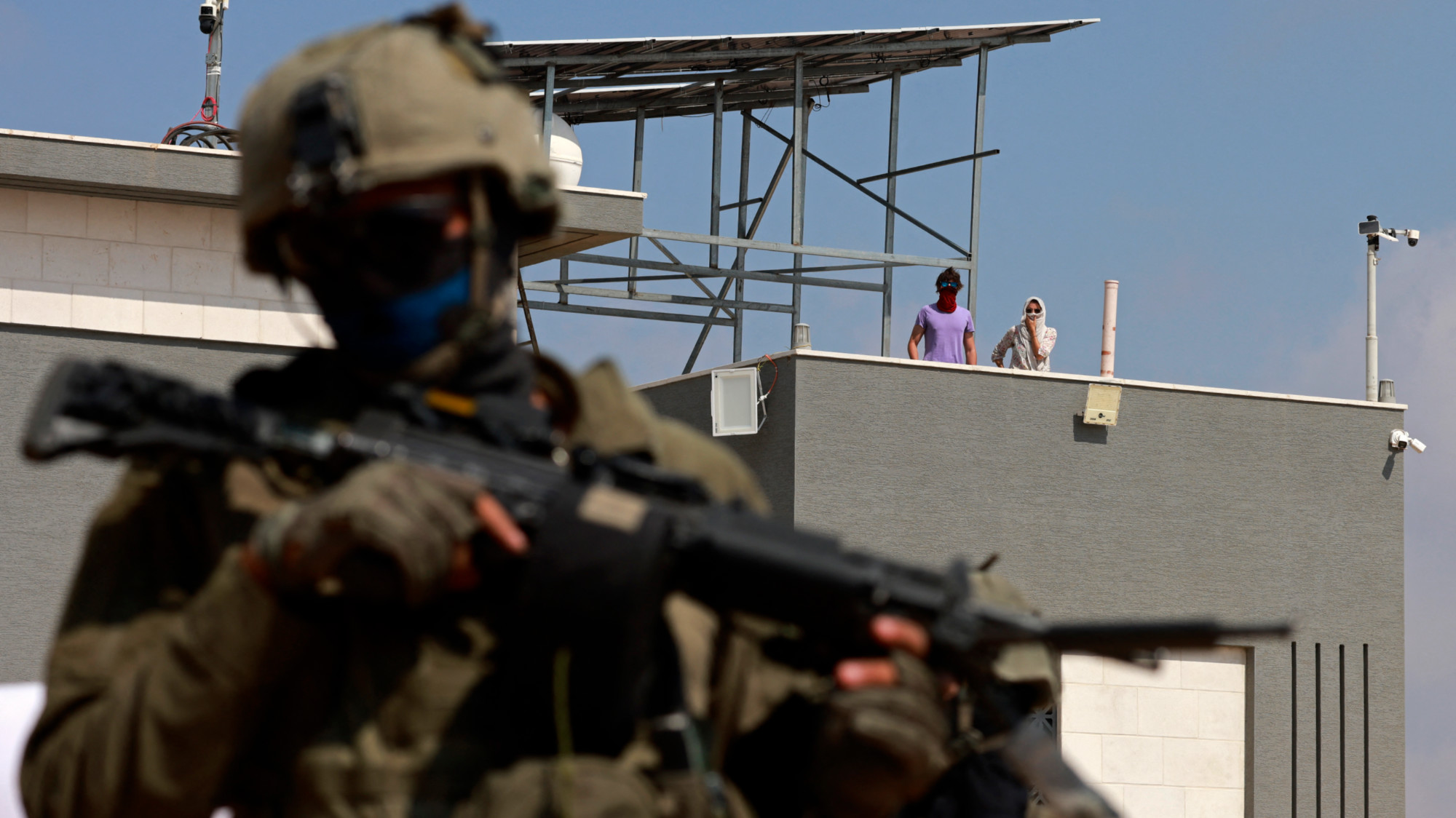
    Per Israeli news outlet Ynet, Zamir confirmed the IDF is already operating at “the lower threshold in terms of manpower,” as prolonged large-scale military campaigns continue to drain personnel resources. Monday’s warning comes just weeks after Zamir first notified the government that the IDF needs an additional 15,000 troops, between 7,000 and 8,000 of whom are required for frontline combat roles. This need has grown more pressing in recent weeks after the Israeli government approved construction of 30 new illegal outposts in the occupied West Bank, all of which require dedicated military protection for residents and operations.

    A senior official from the IDF Manpower Directorate added further context Sunday, noting that if mandatory service is not extended, reservists could be forced to serve between 80 and 100 days of active duty annually, a burden that many observers believe will lead to widespread retention issues. Just one day after the Manpower Directorate’s comments, Israel Hayom reported that the Knesset committee had extended the active call-up order for roughly 400,000 reservists through the end of the current month. While the IDF has attempted to alleviate the shortage over the past 18 months by recruiting 8,000 new troops through an accelerated career-service program, Israeli financial newspaper The Marker reported that the initiative has failed to meaningfully reduce the strain on existing personnel. As of today, an estimated 100,000 reservists remain on active duty, placing unprecedented pressure on Israel’s reserve force structure.

    Opposition politicians across the ideological spectrum have seized on Zamir’s comments to attack Prime Minister Benjamin Netanyahu’s governing coalition, arguing that the government’s failure to end longstanding military conscription exemptions for ultra-Orthodox Jewish communities is directly responsible for the worsening manpower crisis. Gadi Eisenkot, a former IDF chief of staff and opposition figure, accused the government of “evading responsibility and prioritizing political considerations over the country’s security.” Writing on social platform X, Eisenkot added: “A government that does not demand conscription for everyone at such a critical moment for Israel is a government that does not deserve to remain in office for even one more day.”

    Former Israeli Prime Minister and current opposition leader Naftali Bennett echoed Eisenkot’s criticism, stating that the ongoing draft exemptions are “costing the lives of our soldiers.” Bennett pointed to the scale of the unmet personnel demand: “There are 100,000 healthy ultra-Orthodox young men who, because of politics, are not being drafted.”

    Public debate over ultra-Orthodox conscription exemptions has exploded in intensity in Israel since October 2023, as expanded operational demands across Gaza, the West Bank, and northern border with Lebanon have stretched the IDF’s personnel capacity to breaking point. Senior military leaders and politicians from across the political divide have repeatedly called for an end to the exemptions to close the manpower gap, but Netanyahu’s coalition has been unable to advance new conscription legislation due to deep internal divisions within his ruling alliance.

    Avigdor Liberman, leader of the right-wing Yisrael Beiteinu party, called the failure to mandate ultra-Orthodox conscription “a devastating blow to the security and future of the State of Israel.” Yair Golan, leader of the opposition Democrats party and a retired senior IDF officer, went further, accusing the government of “selling out the country’s security simply to preserve ultra-Orthodox draft evasion. This is simply a betrayal of our soldiers,” Golan said.

    The ongoing manpower crisis has also amplified a separate contentious debate over the recruitment of women into combat units. During his testimony to the Knesset committee, Zamir pushed back against opposition from religious leaders, reaffirming the IDF’s commitment to recruiting women for combat roles. “Women are an inseparable part of the IDF’s strength,” he stated.

    Last month, leading religious-Zionist rabbis issued a formal warning that continued recruitment of women into mixed-gender combat units would drive members of their communities to refuse military service. “Under no circumstances can we allow our male and female students to serve in mixed-gender frameworks that place them in impossible situations,” one rabbi declared during an emergency conference of religious-Zionist leaders. A second rabbi added: “We will not serve in a field unit in a setting where there is mixing with women.”

    Days after that conference, Israel’s public broadcaster Kan 11 reported that three religious Israeli soldiers had already refused to report for duty at a northern Israel military base after a female service member was assigned to the same post, marking the first public case of protest-related refusal tied to the mixed-gender debate.

    With the Netanyahu government deadlocked on passing new conscription legislation, Israeli security analysts and researchers have floated a series of unorthodox alternative proposals to address the IDF’s critical manpower shortage. In February, two researchers at the Jerusalem Institute for Strategy and Security, a prominent right-leaning security think tank, proposed the creation of a foreign legion modeled on the longstanding unit operated by the French military. The researchers argued that increasing recruitment from global Jewish diaspora communities would not meet the IDF’s current needs, and instead called for allowing “the enlistment of non-citizen volunteers” to build a new auxiliary fighting force. While the pair acknowledged that the proposal “will likely make many Israelis uncomfortable,” their report argued that “there is no compelling reason to forgo the assistance of foreign volunteers in advancing the Zionist project.”

  • Trump ‘very disappointed’ in Kurds who just ‘take, take, take’

    Trump ‘very disappointed’ in Kurds who just ‘take, take, take’

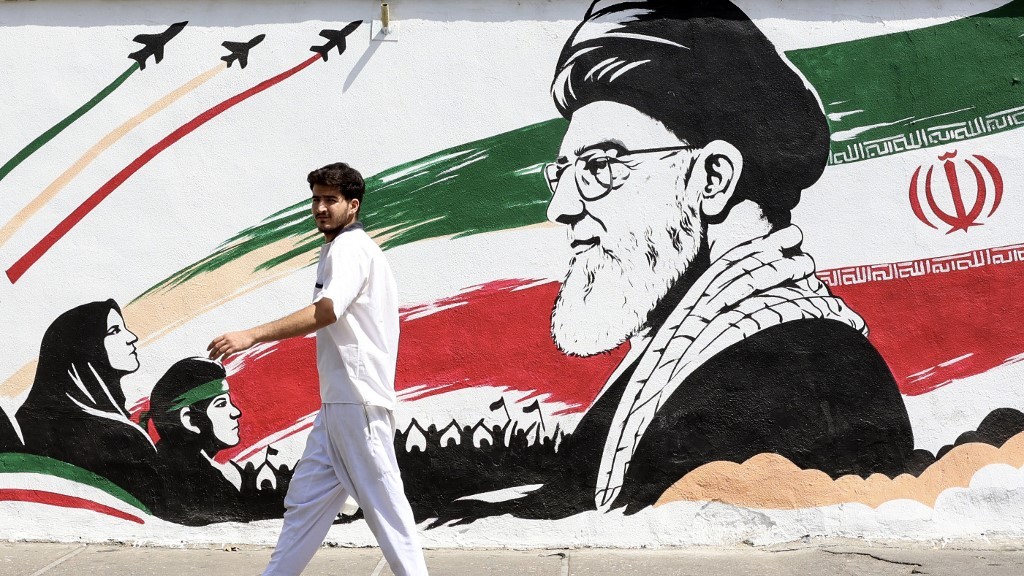
    Weeks after the United States and Israel launched their large-scale military assault on Iran starting in late February, former U.S. President Donald Trump has publicly slammed Iranian Kurdish groups, saying he is “very disappointed” in their failure to provide military backing to Iranian opposition forces. His remarks at the White House Monday came amid persistent unconfirmed media reports that the Central Intelligence Agency had supplied weaponry to Kurdish opposition factions to deploy against the Iranian government, claims that Kurdish leaders have repeatedly and flatly denied.

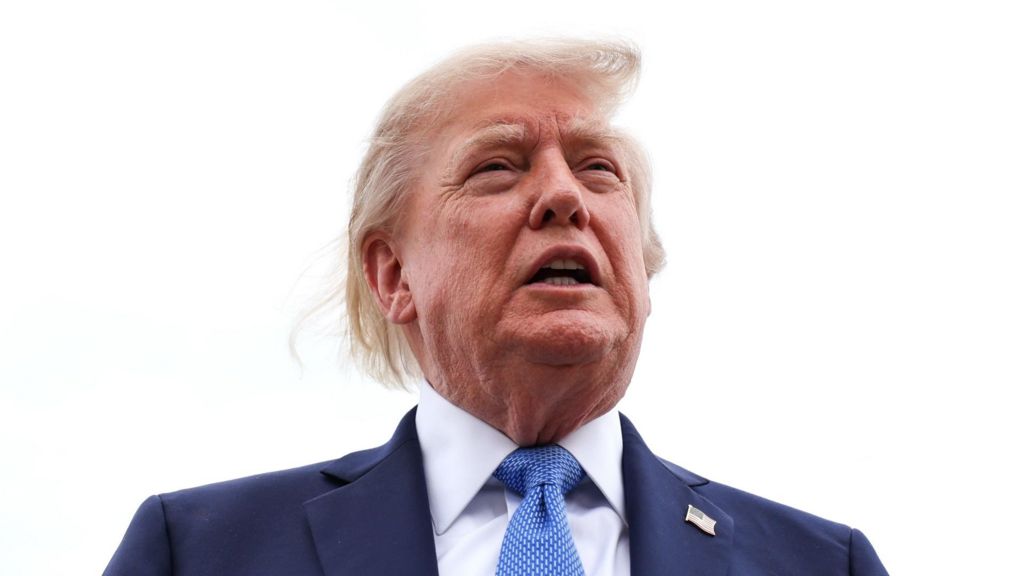
    In his comments, Trump painted a critical picture of the Kurdish groups, saying, “The Kurds take, take, take. They have a great reputation in Congress. Congress says they fight hard. They fight hard when they get paid.” These latest critical remarks mark a sharp shift from Trump’s own conflicting public statements on the issue just weeks earlier, highlighting the chaotic alignment of U.S. policy around the Iran conflict.

    Shortly after the U.S.-Israeli offensive began in early March, Trump confirmed to Reuters that he would openly support a Kurdish offensive against the Iranian government, a comment that aligned with widespread media reports of CIA arms shipments to Kurdish factions. However, just days later, Trump backtracked entirely, telling reporters he had explicitly instructed Kurdish groups not to join the conflict. “They’re willing to go in, but I’ve told them I don’t want them to go in,” he stated at the time.

    These contradictory statements from the U.S. head of state have left Iranian Kurdish party leaders caught off guard. The factions collectively maintain roughly 6,000 armed fighters based primarily in northern Iraq, and none of the groups have entered the ongoing U.S.-Israeli war against Iran to date.

    Mustafa Mawloudi, deputy secretary-general of the Kurdistan Democratic Party of Iran (PDKI) — one of the largest Iranian Kurdish opposition groups — told independent outlet Middle East Eye that his organization has neither received U.S. weapons nor shipped arms to activists inside Iranian Kurdistan, referred to locally as Rojhalat. “A proof of this is that we cannot send arms through Iraq to our people,” Mawloudi explained, noting that cross-border arms shipments would create serious legal complications for the group, which is based in Iraq’s northern Kurdish autonomous region.

    Tensions have spiked dramatically in the border region since the U.S.-Israeli offensive began. Data compiled by independent Kurdish news outlet Rojhelat Info shows that Iran and its allied militias have launched nearly 700 missile and drone strikes targeting Iraqi Kurdistan since February 28. At least 15 people have been killed in these attacks, according to the data. Roughly 170 of those strikes have specifically targeted bases of Iranian Kurdish opposition groups, killing six opposition fighters to date.

    The back-and-forth rhetoric from Trump comes on the heels of major unrest inside Iran just months earlier: in late December, widespread nationwide anti-government protests spread across the country, lasting roughly two weeks before Iranian security forces violently suppressed the demonstrations amid a total national internet blackout.

  • EU agrees to sanctions on Israeli settlers after Hungary’s new government lifts veto

    EU agrees to sanctions on Israeli settlers after Hungary’s new government lifts veto

    After months of diplomatic deadlock, the European Union has finally moved forward with targeted sanctions against violent Israeli settlers in the occupied West Bank, a breakthrough made possible when Hungary’s new government reversed a veto held by the country’s former pro-Israel right-wing administration.

    For months, the EU’s plan to penalize settlers amid a sharp spike in anti-Palestinian attacks had been held up by Viktor Orban, the former Hungarian prime minister and a longstanding close ally of Israel, who blocked the proposal after settler violence surged across the occupied territory starting in October 2023. Orban’s tenure ended when he lost re-election in April, and his successor Peter Magyar moved quickly to end the stalemate, clearing the path for a formal vote.

    The sanctions package received final approval during a meeting of EU foreign ministers from all 27 member states on Monday. Under the terms of the new measures, three individual Israeli settlers and four settler organizations will be targeted, though the identities of those affected have not yet been released to the public. The sanctions also extend to leading figures from Hamas, the Palestinian militant group that controls the Gaza Strip.

    EU High Representative for Foreign Affairs Kaja Kallas emphasized that the long-delayed action marked a shift from stalled negotiations to tangible policy. “It was high time we move from deadlock to delivery… extremisms and violence carry consequences,” Kallas stated. She also acknowledged that broader, more sweeping measures — including a French-Swedish proposal for a full trade embargo on goods from illegal Israeli settlements — failed to gather enough backing from EU member states to move forward.

    French Foreign Minister Jean-Noel Barrot welcomed the decision, praising the bloc’s action in a social media statement. “The EU is sanctioning the main Israeli organisations guilty of supporting the extremist and violent colonisation of the West Bank,” Barrot wrote, adding, “These most serious and intolerable acts must cease without delay.”

    Israeli officials were swift to condemn the sanctions, issuing harsh pushback within hours of the announcement. Israeli Foreign Minister Gideon Saar called the measures “unacceptable” and “without any legal or factual basis.” Far-right Israeli Security Minister Itamar Ben Gvir went further, labeling the EU’s decision antisemitic.

    “To expect the antisemitic union to make a moral decision is like expecting the sun to rise in the west. While our enemies perpetrate attacks and murder Jews, the European Union is trying to tie the hands of those who defend themselves,” Ben Gvir wrote in a social media post. He added that “the settlement enterprise will not be deterred. We will continue to build, to plant, to defend, and to settle throughout the entire land of Israel.”

    The EU’s move comes as Israeli settlement expansion in the occupied West Bank has accelerated dramatically in the months following Israel’s military campaign in Gaza. The hardline government led by Prime Minister Benjamin Netanyahu has introduced a raft of policies to expand settlements, approving new construction at a record-breaking pace. In April, Israeli media reports revealed that the Israeli cabinet secretly authorized an unprecedented number of new settlements amid rising regional tensions with Iran, approving 34 new outposts in a single decision — that number is more than half of the total settlements approved in 2025, the previous record-setting year for expansion.

    Under international law, all Israeli settlements built in the West Bank, territory captured by Israel in the 1967 Six-Day War, are widely recognized as illegal. The United Nations, the International Court of Justice, and most of the global community have repeatedly reaffirmed this position, though Israel rejects the classification and has continued to expand its presence in the territory.

  • Ministers take office in Hungary’s first non-Orbán government in 16 years

    Ministers take office in Hungary’s first non-Orbán government in 16 years

    In a landmark political shift that reshapes both Hungary’s domestic trajectory and European Union dynamics, Péter Magyar’s new 16-member cabinet was officially sworn into office on Tuesday in Budapest, completing the full transfer of power away from Viktor Orbán, who led Hungary with a nationalist-populist agenda for 16 years. This historic handover follows a stunning electoral upset last month, where Magyar’s pro-European Tisza Party secured an unprecedented two-thirds parliamentary majority — a result unmatched in Hungary’s post-Communist history.

    Magyar, a 45-year-old lawyer who assumed the prime ministership on Saturday, moved through parliamentary confirmation hearings for his cabinet in just two days, a deliberate timeline that signals his urgency to dismantle the political system Orbán built over nearly two decades. Tisza’s landslide victory gave the party 141 of the 199 total seats in parliament, pushing Orbán’s long-ruling Fidesz party from 135 seats to just 52, with the far-right Mi Hazánk movement holding the remaining six seats.

    In remarks delivered moments after his cabinet’s swearing-in inside Hungary’s parliament, Magyar drew a clear line between his administration and his predecessor’s leadership. Stating that the new government would “be the government of all Hungarians” and act as “a servant of the nation and not of the prime minister”, he directly challenged the concentrated power that defined Orbán’s tenure. He outlined his core mandate: undoing the “destruction, division, backwardness and loss of trust” accumulated over the past 20 years, and rebuilding Hungary into a “functioning, livable and self-reliant country”.

    A top priority for Magyar’s electorate is holding former Fidesz officials and their affiliated business allies accountable for alleged widespread corruption and misconduct during Orbán’s administration. To advance this goal, the new government plans to establish a National Asset Recovery and Protection Office, a dedicated body tasked with investigating and recovering public funds misused under the previous regime. Magyar has also committed to Hungary joining the European Public Prosecutor’s Office, a move that will allow EU investigators to probe cross-border fraud and the mismanagement of EU funding allocated to the country.

    Media reform is another immediate policy focus: Magyar has vowed to suspend programming at Hungary’s public broadcaster, long decried as a partisan mouthpiece for Fidesz, until full editorial objectivity can be guaranteed. He has also called on all senior public officials appointed during Orbán’s tenure — including the Hungarian president, attorney general, head of the national media authority, and chief justice of the Constitutional Court — to resign by May 31 to clear the way for independent appointments aligned with democratic norms.

    Structurally, the new government expands the cabinet from 12 ministries under Orbán’s final administration to 16, with standalone portfolios for health, environmental protection, and education, all of which were merged into larger departments under the previous government. This restructuring is part of a broader overhaul of state institutions, with Magyar prioritizing the restoration of democratic governance and the rule of law, both of which eroded significantly during Orbán’s time in power.

    Beyond domestic reform, Magyar’s administration is set to transform decision-making dynamics within the EU. Orbán frequently used veto power to block bloc-wide initiatives, most recently blocking new support packages for Ukraine, creating repeated deadlock for the union. The new Hungarian government has made unlocking approximately 17 billion euros ($20 billion) in frozen EU funds its top foreign policy priority. The funds, frozen by the EU over rule-of-law and corruption concerns during Orbán’s tenure, are critically needed to revitalize Hungary’s stagnant economy, which has seen little to no growth for four consecutive years.

    In a Facebook video posted the day before the cabinet swearing-in, new Hungarian Foreign Minister Anita Orbán, a career diplomat and foreign policy expert, confirmed that her ministry’s core mission will be to “bring EU funds home” and “consolidate Hungary’s place in Europe and in the EU”. Other key cabinet appointees include former Shell executive István Kapitány, who takes on the role of Minister of Economy and Energy, and former Erste Bank economist András Kármán, who serves as Minister of Finance. This report included contributions from AP correspondent Don McNeil reporting out of Brussels and AP writer Béla Szandelszky based in Budapest.

  • Trump due in China for superpower summit with Xi

    Trump due in China for superpower summit with Xi

    In a landmark diplomatic moment marking the first visit by a sitting US president to China in nearly ten years, former and current President Donald Trump is set to arrive in Beijing on Wednesday for a critically important bilateral summit with Chinese President Xi Jinping, against a backdrop of simmering tensions fueled by the February US-led war on Iran that has added new strains to the already fraught relationship between the world’s two largest economies.

    This upcoming meeting, the first between the two leaders on Chinese soil since Trump’s 2017 visit, will feature two days of high-stakes negotiations scheduled for Thursday and Friday, wrapped into a packed official itinerary that includes a formal state banquet and a ceremonial tea reception with senior Chinese officials. The agenda for the talks covers a wide range of longstanding and newly emergent flashpoints, from long-running disputes over US arms sales to self-ruled Taiwan and Chinese export controls on critical rare earth minerals to the two countries’ deeply interconnected but often contentious trade relationship. The ongoing conflict in the Middle East will also take a top spot on the discussion list: a senior anonymous US administration official confirmed to reporters earlier this week that Trump will push Xi to make concessions on Iran, as the White House pursues a negotiated deal to end the two-month-old conflict.

    In the lead-up to the summit, signs of heightened security were already visible across Beijing on Tuesday. AFP correspondents on the ground reported that uniformed police were deployed to monitor major urban intersections, while transit authorities conducted routine ID checks for passengers on the city’s metro system, a common security step ahead of major high-level diplomatic events. Ordinary Chinese residents expressed a range of outlooks on the landmark meeting. 24-year-old Nanjing native Wen Wen, who was traveling through Beijing when speaking to AFP, called the visit a major event for global relations. She said she expected the summit to deliver at least some tangible progress, and shared her hope that both nations can work toward lasting peace despite widespread recent global instability.

    Bilateral trade ties between Washington and Beijing have remained rocky for years, though the two sides have upheld a one-year truce in their costly tariff war, an agreement struck during Trump and Xi’s last meeting in South Korea last October. Trump has long criticized China’s persistent large trade surplus with the US, a grievance that led him to impose sweeping tariffs on hundreds of billions of dollars worth of Chinese goods during his first term in office. Accompanying Trump on his Beijing trip is a high-profile delegation of top American business leaders, including Tesla CEO Elon Musk and Apple CEO Tim Cook, according to White House announcements.

    The summit comes at a moment of significant economic uncertainty for China, which has battled years of sluggish domestic consumer spending and a prolonged systemic debt crisis in its once-booming real estate sector, issues that have weighed on global growth projections. Not all ordinary Beijing residents are optimistic about a quick resolution to longstanding bilateral rifts. Li Jiahao, a 30-year-old manager of a karaoke bar in central Beijing, told AFP he does not expect the meeting to solve every issue in US-China ties, though he remains hopeful for positive incremental outcomes. “Coming here and actually resolving the issues are two different things,” he explained. “China and the United States both have responsibilities as major powers. Only through friendship can we achieve mutual development and become stronger.”

    The Iran war, launched jointly by the US and Israel on February 28, has thrown a new set of complications into the already tangled relationship between the two global powers. Trump previously delayed this Beijing trip once to focus on managing the conflict, which has effectively shut down commercial shipping through the strategic Strait of Hormuz, a critical global energy chokepoint, for more than two months. China is Iran’s largest customer for crude oil, but the Trump administration has imposed sweeping unilateral sanctions to cut off all Chinese purchases of Iranian energy. Just on Monday, the US Treasury Department expanded those sanctions, blacklisting 12 individuals and entities—several based in Hong Kong—that it accuses of facilitating the sale and shipment of Iranian oil to Chinese buyers. When asked about the new sanctions at a Tuesday press briefing, Chinese Foreign Ministry spokesman Guo Jiakun reaffirmed Beijing’s position that “China firmly opposes illegal unilateral sanctions.”

    Another core sticking point for Chinese leadership remains longstanding US military support for Taiwan, the self-governing democratic island that Beijing claims as an inalienable part of its territory. Speaking on Monday, Trump said he was open to discussing US arms sales to Taiwan during the summit, and claimed his personal relationship with Xi would prevent any Chinese military invasion of the island. “I think we’ll be fine. I have a very good relationship with President Xi. He knows I don’t want that to happen,” Trump told reporters.

  • Musk, Cook and other prominent US executives invited to join Trump on trip to China

    Musk, Cook and other prominent US executives invited to join Trump on trip to China

    A senior anonymous White House official has confirmed that a roster of high-profile U.S. leaders spanning big tech, aerospace, finance and agriculture will accompany former President Donald Trump on his official trip to Beijing this week, where Trump is set to hold pivotal bilateral talks with Chinese President Xi Jinping. The U.S. delegation departs Tuesday, with trade disputes and artificial intelligence governance emerging as two core agenda items, alongside discussions focused on the ongoing Iran crisis.

    Among the most closely watched attendees is Elon Musk, the eccentric billionaire CEO of electric vehicle giant Tesla and aerospace firm SpaceX, who once chaired Trump’s short-lived Department of Government Efficiency. The agency, which drew widespread controversy from its launch, wound down operations last November, following Musk’s exit from the role in spring 2025. Musk’s presence on the trip comes after a very public falling out with Trump last summer: the social media mogul, who also owns platform X, made unsubstantiated claims that the U.S. government hid information linking Trump to disgraced convicted sex offender Jeffrey Epstein, triggering a fiery public war of words. Musk later walked back portions of his remarks, acknowledging he regretted several of his public posts about the president on X.

    Today, Musk has shifted his focus back to managing his global business portfolio, which includes substantial manufacturing and sales operations in China that he has visited multiple times. He is currently navigating a slew of legal challenges outside the U.S. as well: French prosecutors are pursuing criminal charges against Musk and X over allegations that the platform failed to moderate child sexual abuse material, hosted harmful deepfakes and disinformation, and allowed the platform’s AI chatbot Grok to amplify content that denies crimes against humanity. He is also engaged in a high-profile civil trial against OpenAI CEO Sam Altman, centered on competing visions for the future of artificial intelligence development.

    Another key figure in the delegation is Apple CEO Tim Cook, whose 15-year tenure leading the world’s most valuable company is set to conclude on September 1, when he will hand the CEO role to John Ternus, Apple’s current head of hardware engineering, and transition to the position of executive chairman. During Cook’s leadership, Apple grew exponentially: the company’s market capitalization swelled by more than $3.6 trillion, driven by booming global demand for iPhones and Apple’s expanding ecosystem of consumer technology.

    Throughout his time at Apple’s helm, Cook has repeatedly had to navigate the shifting tides of U.S.-China trade relations, particularly during Trump’s previous and current presidential terms when the White House launched sweeping tariff measures targeting Chinese goods. In Trump’s first term, Cook successfully negotiated exemptions for iPhones and other core Apple products from the initial round of tariffs. In the current second term, Trump has pushed for Apple to move all of its iPhone manufacturing out of China and back to the U.S., and imposed new tariffs on the devices. Cook has managed to mitigate the financial impact of these measures by shifting production of U.S.-bound iPhones to India, and securing additional exemptions after committing Apple to a $600 billion U.S. investment over the course of Trump’s second term.

    Aerospace industry leader Kelly Ortberg, CEO of Boeing, is also part of the delegation. Ortberg took the top job at Boeing in 2024, stepping in to lead the American manufacturing giant as it grappled with overlapping legal, regulatory, production crises that triggered severe financial losses. Last year, Ortberg publicly downplayed the impact of the escalating U.S.-China trade war on Boeing’s recovery, arguing that tit-for-tat tariffs would not derail the company’s efforts to return to stable growth or meet delivery targets for Chinese airlines, which had paused acceptance of new Boeing jets amid rising trade tensions.

    The trade conflict escalated sharply in April 2025, when Beijing raised import tariffs on U.S. goods to 125% in retaliation for the Trump administration’s hike of tariffs on Chinese-made products to 145%. For Boeing, the U.S.’s largest exporter, the new tariffs would more than double the cost of its commercial passenger jets, which already sell for tens of millions of dollars apiece. However, the impact has been softened in recent years by Boeing’s gradual reduction of direct finished aircraft exports to China, making the market less central to its bottom line than it once was. Ahead of the Beijing trip, Boeing confirms it has been holding ongoing negotiations with Chinese officials over a potential large-scale new aircraft order.

    The delegation also includes a dozen other top C-suite leaders from across major U.S. industries: BlackRock Chairman and CEO Larry Fink, Blackstone co-founder, Chairman and CEO Stephen Schwarzman, Cargill Chairman and CEO Brian Sikes, Citi Chairman and CEO Jane Fraser, Coherent CEO Jim Anderson, GE Aerospace Chairman and CEO H. Lawrence Culp, Goldman Sachs Chairman and CEO David Solomon, Illumina CEO Jacob Thaysen, Mastercard CEO Michael Miebach, Meta President and Vice Chairman Dina Powell McCormick, Micron Chairman, President and CEO Sanjay Mehrotra, Qualcomm President and CEO Cristiano Amon, and Visa CEO Ryan McInerney.

    Reporting from Washington D.C. contributed by Aamer Madhani.

  • Israel passes law to publicly try and execute Palestinians linked to 7 October attacks

    Israel passes law to publicly try and execute Palestinians linked to 7 October attacks

    On Monday, Israel’s legislative body the Knesset passed a sweeping new bill by a landslide 93-0 vote that creates a framework of public special trials and allows the imposition of the death penalty for Palestinian detainees linked to the deadly October 7, 2023 attacks that sparked the ongoing Gaza war. The rare unanimous cross-political support for the controversial measure highlights the unified hardening of Israeli political sentiment in the months following the assault.

    Israeli Justice Minister Yariv Levin framed the parliamentary vote as a historic turning point for the current governing body, arguing that the legislation would deliver long-awaited accountability for individuals accused of perpetrating or aiding the attacks. Under the new law, a special judicial body operating in the structure of a military court will oversee an estimated 200 to 300 open cases involving detainees accused of involvement in the October 7 events.

    All indictments will be filed at a Jerusalem-based military court, with charges ranging from terrorism and murder to genocide, incitement to armed conflict and charges of undermining Israeli state sovereignty. A key provision of the bill permanently bars any detainee accused or convicted of connection to the attacks from being included in future prisoner exchange agreements, ensuring that convicted individuals will face either permanent life incarceration or execution.

    Per the legislation’s structure, the Israeli Army Chief of Staff will hold the authority to appoint military prosecutors to the special court. Judicial panels will be made up of three judges, with a requirement that at least one panel member has previously served as the head of a military court. The bill also explicitly overrides standard Israeli criminal procedure and evidence rules, granting courts permission to bypass core due process steps including formal evidence collection requirements, witness testimony cross-examination and formal plea bargain arrangements when issuing convictions and sentences.

    A separate amendment to the legislation creates a specific protocol for carrying out death sentences against Palestinians convicted under the new law, distinguishing it from a broader death penalty law for Palestinian prisoners approved by the Knesset in a 62-48 vote back in late March. That earlier bill also faced widespread international calls for withdrawal before its passage.

    The latest legislation has triggered fierce pushback from human rights organizations, Palestinian advocacy groups and legal analysts across the globe. Critics warn that the bill comes amid a documented surge in mass arrests of Palestinians on broadly defined terrorism charges, as well as growing reports of torture, abuse and fatalities in Israeli custody since the launch of Israel’s military campaign in Gaza.

    Palestinian prisoners’ rights organizations have labeled the new law an “unprecedented act of savagery”, arguing that it formalizes systemic extrajudicial killing of detainees amid a rapidly escalating crisis of abuse inside Israeli detention facilities. Multiple prominent Israeli human rights groups, including Adalah, the Public Committee Against Torture in Israel (PCATI), HaMoked and Physicians for Human Rights-Israel, have also joined in condemning the legislation. These groups warn that the bill enshrines a discriminatory legal framework that systematically denies Palestinians equal protection under Israeli law, strips them of fundamental fair trial rights, and removes existing legal safeguards against torture and cruel, inhuman treatment.

  • 85-year-old French widow caught in Trump’s immigration crackdown describes her detention

    85-year-old French widow caught in Trump’s immigration crackdown describes her detention

    For 85-year-old Marie-Thérèse Ross, the haunting memory of Louisiana’s immigration detention center does not fade. The French widow of a U.S. military veteran, whose arrest in an Trump-era immigration enforcement sweep drew global outrage, now recounts her harrowing 16 days in federal custody from her home in a Nantes suburb, where she is recovering after being released and repatriated to France.

    Ross’s journey to detention began with a late-in-life love story that brought her across the Atlantic. Decades after meeting William Ross, a retired American soldier stationed in France in the 1950s when she worked as a NATO secretary, the pair married in Alabama in April 2025. Their quiet new life together was cut short when William died of natural causes just three months later in January 2025, triggering a bitter estate dispute with Ross’s stepson, a U.S. federal employee. Court records have linked the stepson’s intervention directly to Ross’s subsequent immigration detention.

    The arrest came abruptly on the morning of April 1. Ross, still dressed in her bathrobe, pajamas and slippers, was grabbed by five plainclothes immigration officers who pounded on her Alabama home’s doors and windows before cuffing her and forcing her into a waiting vehicle. She told the Associated Press she barely understood what was happening as it unfolded. Two days after her arrest, she was transferred to the Louisiana detention facility where she would spend more than two weeks locked in a dormitory-style unit with 58 other women, the vast majority of whom were migrant mothers.

    What struck Ross most deeply, beyond the strict facility rules and the constant, aggressive yelling from guards that she described as condescending and dehumanizing, was the nightly sound no one can block out: the wailing of separated children. “At night, when everything else went quiet, the crying started,” she recalled. “Children crying, and even babies. There are infants in this jail.” Many of her cellmates had no idea where their own children had been placed after they were detained, a reality Ross called unforgivable. “I think it’s terrible for a woman not to know where her children are,” she said. Even with the facility’s clean facilities and passable food, the dehumanizing treatment of detainees left a permanent mark, shifting her entire worldview of U.S. politics and the country she once admired.

    Even in the trauma of detention, Ross found small moments of solidarity among the detained women. They called her “Grandma” for her advanced age, and looked after her through the nights. “During the night, if my bed cover slipped away, I felt a small hand putting it back,” she said. “I didn’t know who it was, but they pampered me because I was older than them.” She still wears a hand-woven friendship bracelet one anonymous detainee gave her as a gift, a memento she keeps close.

    French officials publicly pushed for Ross’s release, with the foreign minister saying that the enforcement tactics used by U.S. Immigration and Customs Enforcement fell far short of French human rights standards. She was released within weeks of her arrest and returned home to western France to be with her family. But the experience has left her with lasting trauma: family members report she struggles with memory gaps and ongoing emotional distress, and Ross says she will seek specialized care in France for symptoms consistent with post-traumatic stress disorder.

    Ross, whose late husband was a vocal supporter of Donald Trump and who used to watch conservative Fox News alongside him daily, says her firsthand experience has completely upended her view of the United States. She once saw the U.S. as a beacon of freedom, “where people are not arrested based on how they look, and where those who are detained are treated fairly and with respect.” Now, she says that belief is shattered. Pointing to the majority South American women she was detained with, she said “Their only fault was to be South American. None of them deserved to be locked up like this.”

    The U.S. Department of Homeland Security has confirmed Ross had overstayed her 90-day tourist visa at the time of arrest, but has not responded to repeated AP requests for comment on her arrest or conditions at the facility. For her part, Ross has kept the promise she made to the women she left behind in Louisiana: “When I left this jail in Louisiana, I told them that if I ever had the chance to speak about them, I would do it, to help them.” Today, she continues to advocate for the migrant mothers still detained, their names and faces etched into her memory.