分类: politics

  • He was a refugee – now he’s Lord Mayor of Bristol

    He was a refugee – now he’s Lord Mayor of Bristol

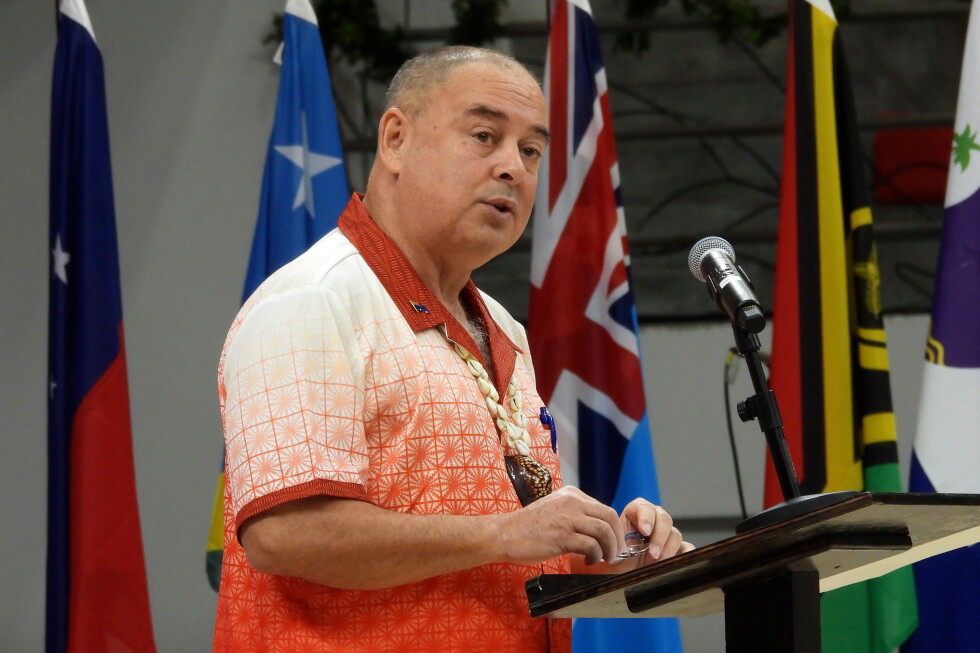
    Fifteen years after putting down roots in Bristol’s St Jude’s neighborhood, a former Somali refugee is poised to take on one of the city’s highest civic honors. Green Party councillor Yassin Mohamud, who has represented the Lawrence Hill ward since 2021, will be sworn in as Bristol’s new Lord Mayor in a ceremony at City Hall, succeeding outgoing Conservative incumbent Henry Michallat.

    Mohamud’s journey to civic leadership began 20 years ago, when he left Somalia to reunite with family members who had already settled in Bristol. Recounting his early days as a new arrival, he reflected on the steep challenges of building a new life from scratch, navigating barriers to secure housing, employment and stable footing. What made the difference, he says, was the targeted guidance he received from local community members. That early support shaped his lifelong commitment to lifting up other new arrivals and marginalized residents.

    After starting out as a volunteer, Mohamud went on to earn a degree from the University of Plymouth before holding multiple public sector roles, including a position with Bristol City Council. Today, he counts himself as a proud Bristolian, with a family that has grown up and put down roots in the city. “My children were born in Bristol. We are a Bristol family,” he emphasized.

    His path into local politics grew directly out of his community and voluntary work, fueled by personal experience of the struggles that face many working-class and migrant residents in the city. As a councillor for Lawrence Hill, one of Bristol’s more deprived wards, Mohamud has already led high-profile response efforts for local residents. In November 2023, he was on the frontlines supporting hundreds of residents after Barton House was evacuated over dangerous major structural faults that threatened a building collapse. Even months later, many displaced families continue to live with the trauma of the displacement, Mohamud says. He hopes the incident will push the city to learn from technical and administrative missteps, and he has made improving local governance accountability a key personal priority.

    Mohamud says his unique background as a refugee, a member of Bristol’s black and minority ethnic community, and a representative of a low-income ward will define his tenure in the ceremonial role of Lord Mayor, a post that rotates annually between the city’s four major political groups: the Greens, Labour, Conservatives and Liberal Democrats. While the role is mostly ceremonial, with responsibilities including chairing full council meetings and representing Bristol at major civic events such as the Remembrance Sunday parade and the annual Lord Mayor’s Christmas Appeal for Children, Mohamud plans to center his tenure on a core mission.
    “Unity is the biggest priority for the city, working with all the parties and for all our communities,” he said. When he takes office, he aims to bring “unity, working together and helping each other” to the role, fulfilling the public service mission he set out when he first entered office: to listen, serve, and collaborate with Bristol residents to build a city where every person has the opportunity to thrive.

    A core focus of his tenure will be lifting up residents in the city’s most deprived communities, many of whom are former refugees like himself. He wants to send a clear message that migrant residents are full, contributing members of the Bristol community, and that any path is open to them: “They are no longer refugees, they are Bristolians and are part of the city. They can be anyone they want to be: as doctors, engineers, Lord Mayor.”

  • Trump brushes aside Taiwan concerns ahead of Xi meet

    Trump brushes aside Taiwan concerns ahead of Xi meet

    As U.S. President Donald Trump prepares for his first visit to Beijing as U.S. president since 2017, set to run from Wednesday to Friday, the upcoming summit has emerged as a defining test of bilateral relations between the world’s two largest economies, with long-simmering tensions over Taiwan, trade and Iran policy taking center stage. Speaking to reporters in the Oval Office on Monday, Trump addressed one of Beijing’s most contentious flashpoints: U.S. arms sales to the self-governing island, which China claims as part of its sovereign territory. When asked whether Washington would continue its longstanding policy of selling defensive weapons to Taipei, the president declined to give a direct answer, saying only, “I’m going to have that discussion with President Xi. That’s one of the many things I’ll be talking about.” Drawing on his personal rapport with the Chinese leader, Trump expressed confidence that a Chinese military incursion into Taiwan was unlikely, despite growing regional anxiety. “I don’t think it’ll happen. I think we’ll be fine. I have a very good relationship with President Xi. He knows I don’t want that to happen,” he said, though he acknowledged China’s geographic proximity to the island far outpaces that of the United States. Ahead of the visit, China has struck a conciliatory yet firm tone, framing the high-level meeting as an opportunity to anchor bilateral ties amid global volatility. “China is willing to work with the United States in the spirit of equality, respect, and mutual benefit, to expand cooperation, manage differences, and inject more stability and certainty into a volatile and intertwined world,” foreign ministry spokesman Guo Jiakun told reporters Monday in Beijing. In response to Trump’s comments, Taiwan’s foreign ministry reaffirmed its commitment to deepening security cooperation with Washington, Taipei’s primary international security backer, and advancing robust defensive capabilities. “We will continue to strengthen cooperation with the United States and build effective deterrence capabilities in order to jointly maintain peace and stability in the Taiwan Strait,” the ministry said. U.S. policy on Taiwan is rooted in longstanding frameworks: Washington officially recognizes only Beijing, but domestic law requires it to provide defensive arms to Taiwan, and the 1982 Six Assurances bar Washington from consulting Beijing on arms sales to the island. Ahead of Trump’s trip, a bipartisan group of U.S. senators led by Jeanne Shaheen, top Democrat on the Senate Foreign Relations Committee, is pressing the president to immediately approve a $14 billion arms package for Taipei, emphasizing in a letter that “American support for Taiwan is not up for negotiation.” The call came days after Taiwan’s parliament approved a $25 billion defense spending bill – a step that aligns with Trump’s longstanding push for global allies to increase their own defense spending, though the final budget fell short of the Taipei government’s original proposal. Beyond Taiwan, the visit will also tackle long-running frictions over trade and Iran policy. Trump originally delayed the trip amid the ongoing U.S.-Israel campaign against Iran, which has so far rejected Trump’s appeals for a new nuclear agreement. The United States has imposed unilateral sanctions aimed at halting all global purchases of Iranian oil, and China – Tehran’s largest international oil customer – has emerged as a flashpoint on this issue. On Monday, just days ahead of the Beijing summit, the U.S. Treasury Department announced new sanctions targeting 12 individuals and entities it accuses of facilitating the shipment and sale of Iranian oil to China. The sanctions move comes as Treasury Secretary Scott Bessent prepares to lay groundwork for the presidential talks during a scheduled meeting with Chinese Vice Premier He Lifeng, Beijing’s top trade negotiator, in Seoul this Wednesday. The meeting will mark a key follow-up to the last face-to-face encounter between Trump and Xi, which took place in October on the sidelines of a regional summit in South Korea. At that meeting, the two leaders agreed to a one-year truce in the bruising U.S.-China trade war that had pushed tariffs on hundreds of billions of dollars worth of bilateral goods above 100 percent. The upcoming summit is expected to place heavy focus on Trump’s goal of expanding U.S. trade access to the Chinese market, and the president will travel to Beijing accompanied by a cohort of top American business leaders, including Tesla CEO Elon Musk – once a public critic of Trump – and Apple CEO Tim Cook. Israeli Prime Minister Benjamin Netanyahu has already added another layer of tension to the talks, saying in a Sunday interview with CBS News’ 60 Minutes that he is dissatisfied with Beijing’s transfer of missile technology to Iran. On the Iran issue, China has reiterated its longstanding position, with Guo saying Monday that Beijing’s stance on the country is “consistent” and that it will continue to play a “positive role” in pushing for a ceasefire and diplomatic peace talks.

  • Narenda Modi tells Indians to stop buying gold, work from home, as Iran war dents economy

    Narenda Modi tells Indians to stop buying gold, work from home, as Iran war dents economy

    The ongoing US-Israeli military campaign against Iran is now sending ripple effects through the global economy, and India — the world’s fourth largest energy consumer — is already feeling the strain. On Sunday, Indian Prime Minister Narendra Modi delivered a public appeal urging citizens across the country to cut back on petrol and diesel usage, halt gold purchases for 12 months, and reduce foreign travel to shore up the nation’s strained foreign exchange reserves and avert widespread energy shortages.

    Up to this point, India has avoided implementing domestic price increases or supply rationing for petrol and diesel, unlike many other emerging economies facing global energy market shocks. However, the government has already moved to raise prices for liquefied petroleum gas (LPG), the primary cooking fuel used by hundreds of millions of Indian households. The country sources roughly 60 percent of its total LPG imports from Qatar, the United Arab Emirates, and Saudi Arabia, and 90 percent of these shipments pass through the Strait of Hormuz — a critical global chokepoint that has been effectively shut down by overlapping US and Iranian blockades amid the ongoing conflict.

    Modi’s public appeal marks a clear shift in policy signaling, indicating New Delhi is preparing for impending energy shortages and broad-based price increases that will extend beyond cooking fuel to transportation fuels. Speaking at an event in the southern state of Telangana, the prime minister outlined concrete steps for households and commuters to reduce consumption. “We have to reduce our use of petrol and diesel. In cities with metro lines, we should try to travel by metro…If we must use a car, then we should try to carpool,” Modi stated.

    Beyond balancing energy supplies, the appeal is rooted in urgent efforts to protect India’s foreign currency holdings, which have come under severe pressure from soaring global energy prices tied to the Iran conflict. “We must also place a strong emphasis on saving foreign exchange, as petrol and diesel have become so expensive globally,” Modi added.

    In a notable departure from typical policy messaging, the prime minister specifically called for a one-year pause on domestic gold purchases, a culturally embedded preference across India where the precious metal is a traditional store of value and a staple gift for weddings and major life events. Like crude oil, global gold transactions are denominated in U.S. dollars, meaning rising domestic gold demand directly draws down foreign reserve holdings. New Delhi previously imposed higher tariffs on gold imports back in 2022 to curb demand and conserve dollars, a policy that has only been partially effective.

    India’s structural reliance on foreign energy sources leaves it uniquely vulnerable to the current Middle East crisis: the country imports 90 percent of its total crude oil needs and 50 percent of its natural gas. Surging global energy prices driven by conflict-related supply disruptions have already eaten into India’s foreign exchange reserves, putting heavy downward pressure on the Indian rupee. While the rupee is not officially pegged to the U.S. dollar, capital outflows and rising import costs have driven the currency to a record all-time low against the greenback just last week.

    To stabilize the rupee, the Reserve Bank of India has already stepped into foreign exchange markets, selling off U.S. dollar reserves to support the rupee’s value. Compounding the pressure, India relies heavily on dollar remittances from Indian workers based in Gulf states, particularly the United Arab Emirates. The conflict has hit regional tourism hard, and that slowdown has already reduced remittance flows into India.

    Modi also called on Indian businesses and workplaces to reinstate the energy-saving remote work policies that were widely adopted during the height of the COVID-19 pandemic. “We should prioritise work from home, online conferences, and virtual meetings again,” he added.

  • Ex-Philippine leader Duterte’s drug war enforcer escapes ICC arrest

    Ex-Philippine leader Duterte’s drug war enforcer escapes ICC arrest

    A high-stakes political and legal standoff is unfolding in the Philippines this week, after a sitting senator who once led the implementation of former President Rodrigo Duterte’s deadly anti-drug campaign sought shelter inside the national Senate to avoid an impending arrest warrant issued by the International Criminal Court (ICC).

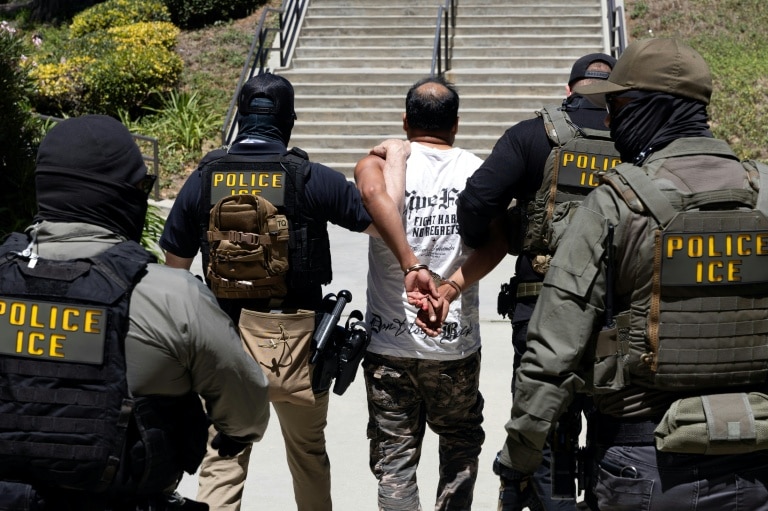
    Filipino Senator Ronald “Bato” dela Rosa, who previously served as national police chief under the Duterte administration, was spotted fleeing into the Senate building on Monday, narrowly evading pursuing agents from the country’s National Bureau of Investigation (NBI). Footage from Senate security cameras, shown to sitting lawmakers, captured NBI officers chasing dela Rosa up multiple staircases and along an internal corridor shortly after he arrived at the complex. Following a hours-long standoff between NBI officials and Senate authorities, the NBI chief announced that law enforcement would not move to detain dela Rosa while he remained under the chamber’s protective custody.

    The ICC unsealed its arrest warrant for dela Rosa hours after he entered the Senate. The warrant charges dela Rosa as an “indirect co-perpetrator” in crimes against humanity linked to the anti-drug campaign, accusing him of direct responsibility for the extrajudicial killings of at least 32 people between 2016 and 2018. Thousands of suspected drug users and dealers were killed nationwide during the crackdown launched by Duterte after he took office in 2016. This development comes two months after Duterte himself was taken into ICC custody in The Hague following his arrest in March 2025.

    Dela Rosa has publicly stated that he will remain on Senate premises and take every possible step to avoid being extradited to the Netherlands to face trial. His legal team has already filed a petition with the Philippine Supreme Court seeking to block his arrest, arguing that no valid domestic judicial warrant has been issued for his detention. On Tuesday morning, the senator addressed supporters who had gathered outside the Senate building, urging them to maintain a continuous vigil outside the complex until the Supreme Court issues its ruling.

    In a direct challenge to President Ferdinand Marcos Jr., whose political bloc has been locked in a bitter feud with the Duterte political dynasty, dela Rosa called on Marcos to file domestic criminal charges against him if he believes the senator is guilty of wrongdoing. “If I have an obligation, I will answer it in the local court, not a foreign one,” dela Rosa told reporters, echoing longstanding objections to ICC jurisdiction over Philippine citizens raised by Duterte and his allies.

    The standoff comes at a moment of extreme political tension in the Philippines, as relations between the Duterte and Marcos political clans collapse after three years of uneasy alliance. The two blocs ran together on a unified ticket to win the 2022 national election, but their partnership has fractured entirely in recent months. On Monday, the same day dela Rosa fled into the Senate, the 24-member chamber, which is currently controlled by Duterte allies, elected a new Senate president, Alan Peter Cayetano, who immediately confirmed that the body would only recognize arrest warrants issued by domestic Philippine courts. In contrast, allies of Marcos hold a majority in the country’s lower House of Representatives, which voted earlier on Monday to impeach incumbent Vice President Sara Duterte, Rodrigo Duterte’s daughter, for a second time.

    Sara Duterte, who is currently the leading front-runner in polling for the 2028 presidential election, has publicly accused Marcos of using ICC arrest warrants and impeachment proceedings as political weapons to weaken her ahead of the upcoming vote. Rodrigo Duterte and his allies have repeatedly rejected the ICC’s jurisdiction over the drug war cases, pointing to the Philippines’ 2019 withdrawal from the Rome Statute, the international treaty that established the court. However, judges from the ICC Pre-Trial Chamber rejected that legal argument just last month, ruling that the alleged crimes under investigation took place between 2011 and 2019, a period when the Philippines remained a full member of the court. That ruling cleared the legal path for the court to move forward with arrests and an eventual trial for Duterte and his top aides.

  • New Trump sanctions on Chinese firms: leverage on Xi or overkill?

    New Trump sanctions on Chinese firms: leverage on Xi or overkill?

    Just days ahead of U.S. President Donald Trump’s scheduled state visit to China, the Biden administration (under Trump’s second term) has rolled out a fresh round of unilateral sanctions targeting multiple companies and individuals linked to mainland China and Hong Kong. Washington accuses these parties of aiding Iran in acquiring components for drones and ballistic missile systems, a move that has already stoked new bilateral tensions just as high-level diplomatic talks are set to begin.

    Announced by the U.S. Treasury Department on May 8, the latest punitive measures are part of Washington’s ongoing “Economic Fury” campaign aimed at disrupting Tehran’s weapons procurement networks. The Office of Foreign Assets Control (OFAC) placed a total of 10 individuals and entities across the Middle East, Asia, and Eastern Europe on its sanctions blacklist, while the U.S. State Department issued separate designations for four additional entities linked to Iran’s conventional arms programs. Washington claims the operation targets networks that supply critical materials and components for Iran’s Shahed-series unmanned aerial vehicles and long-range ballistic missile programs.

    The China and Hong Kong-linked sanctions cover four distinct categories of alleged activity. First, in the aerospace materials sector, Hitex Insulation Ningbo Co. Ltd. and its legal representative Li Genping stand accused of supplying or attempting to supply millions of dollars worth of carbon fiber, honeycomb fabric, and other high-spec aerospace-grade materials to Pishgam Electronic Safeh Company, an Iranian entity already blacklisted by the U.S. Second, three trading firms — Yushita Shanghai International Trade Co Ltd, Hong Kong-based AE International Trade Co Ltd, and HK Hesin Industry Co Ltd — are alleged to have facilitated procurement for Iran’s Center for Progress and Development, which the U.S. rebranded from its previously designated Center for Innovation and Technology Cooperation. Third, Mustad Ltd is accused of enabling financial transactions tied to weapons procurement worth millions of dollars by the Islamic Revolutionary Guard Corps (IRGC). Finally, two Chinese geospatial technology firms — Meentropy Technology Hangzhou Co Ltd (operating as MizarVision) and The Earth Eye Co (Beijing Mumei Starry Sky Technology Co Ltd) — were sanctioned for allegedly providing satellite imagery to support Iranian military operations.

    The designation of the two satellite firms comes on the heels of a separate unproven allegation that Beijing has already publicly denied. On April 15, the *Financial Times* cited leaked Iranian military documents to claim Iran had secretly acquired a Chinese-built satellite called TEE-01B, which it claimed would give the IRGC Aerospace Force improved targeting capabilities for U.S. military facilities across the Middle East. The outlet reported the satellite was launched from Chinese territory and transferred to Iranian control in late 2024. Notably, the May 8 sanctions did not address other recent unconfirmed media reports alleging Chinese shipments of missile-related materials to Iran. In early March, *The Washington Post* claimed two cargo ships owned by a previously sanctioned Iranian shipping firm had departed a Chinese chemical storage port carrying suspected rocket fuel precursor materials bound for Iran. *The Telegraph* followed with an April 3 report claiming five vessels carrying sodium perchlorate — a key precursor for solid-fuel rocket propellant, enough to build hundreds of ballistic missiles — had been sighted at or near Iranian ports.

    This latest round of sanctions marks an escalation from measures imposed by OFAC just weeks earlier. In late April, the agency sanctioned Hengli Petrochemical (Dalian) Refinery Co Ltd over allegations it purchased Iranian crude oil, alongside roughly 40 shipping companies and vessels accused of moving Iranian crude via a shadow tanker fleet. The May 8 action is far more sensitive, however, because it targets alleged support for Iran’s weapons supply chain rather than just Iran’s oil export revenue. It also comes after Trump issued a blunt warning on April 8 that any country supplying military equipment to Iran would face a 50% across-the-board tariff on all goods exported to the U.S., with no exceptions or exemptions.

    The timing of the announcement carries deliberate political weight. Trump is scheduled to travel to Beijing for meetings with Chinese President Xi Jinping from Wednesday to Friday, with Iran, cross-Strait relations, trade, and U.S. export controls expected to top the list of sensitive agenda items. Beijing formally confirmed the upcoming visit for the first time during a regular press briefing by Foreign Ministry spokesperson Guo Jiakun on Monday.

    Guo emphasized that the visit will mark the first trip to China by a sitting U.S. president in nearly nine years, noting that “President Xi will have in-depth exchanges of views with President Trump on major issues concerning China-U.S. relations and world peace and development.” He added that head-of-state diplomacy plays a critical guiding role in bilateral relations, and that Beijing stands ready to work with Washington to expand mutually beneficial cooperation, manage differences constructively, and bring greater stability to an increasingly volatile global order.

    Despite Beijing’s constructive framing, many Chinese analysts argue the sanctions have cast a clear shadow over the upcoming summit. “The U.S. seems to believe that with Trump’s visit already locked in, it can impose new sanctions to boost its bargaining position, regardless of how China feels,” wrote a Shandong-based columnist who goes by the pen name Xiaoliu. “But China’s swift, forceful legal countermeasures, paired with Iran’s confident response, make clear that other parties have no intention of following Washington’s script,” she added, referencing Beijing’s recent move banning domestic firms and banks from complying with U.S. sanctions targeting independent Chinese refiners. “Sanctions and counter-sanctions have become a normalized tool in the China-U.S. rivalry. At such a sensitive moment, Washington’s choice to play this card again raises a question: is this a clever tactical calculation, or an arrogant misjudgment that could backfire? When Trump’s plane lands in Beijing, will the shadow of these sanctions hang over the negotiating table?”

    A Guangdong-based commentator surnamed Chen echoed this criticism, noting that this pattern of pre-summit pressure is nothing new. “This is not the first time the U.S. has taken such unilateral action on the eve of high-level exchanges. Ahead of past bilateral meetings, Washington has often used sanctions or tough rhetoric to create leverage. This time, using Iran-related issues to sanction Chinese entities reflects the same game-playing mentality,” he said. Chen added that this approach will not deliver the outcomes Washington wants, and will only erode the foundation of mutual trust between the two powers. If Washington truly wants to use the visit to improve bilateral ties, he argued, it should show sincerity rather than applying coercive pressure ahead of talks.

    The sanctions come as Washington and Beijing have been negotiating a potential trade package to announce during the summit. Reuters reported on May 7 that the two sides are working to establish a new bilateral Board of Trade mechanism, designed to identify opportunities to expand bilateral commerce without compromising either side’s national security or critical supply chains. The proposed deal is also reported to include potential Chinese purchases of U.S. agricultural goods, Boeing commercial aircraft, and American energy exports including coal, crude oil, and natural gas. Observers note that Trump’s ability to secure formal Chinese commitments for increased U.S. purchases could have a direct impact on Republican efforts to retain control of both the House and Senate in November’s midterm elections.

    The dispute unfolds against a backdrop of fragile regional security in the Middle East, where a U.S.-Iran ceasefire brokered by Pakistan remains on shaky ground. The original two-week ceasefire agreed on April 8 was extended as indirect and direct talks continued via Pakistani mediation, but Trump has yet to secure the core outcome Washington has demanded: the permanent elimination or verifiable neutralization of Iran’s enriched uranium stockpile.

    In recent weeks, Iran has deepened diplomatic engagement with Beijing. Chinese Foreign Minister Wang Yi hosted his Iranian counterpart Seyyed Abbas Araghchi for meetings in Beijing on April 23 and again on May 6, where Araghchi briefed Chinese officials on the latest status of U.S.-Iran negotiations and Tehran’s planned next steps. During the April meeting, Wang noted that China and Iran have supported one another for years, deepened political mutual trust, expanded practical cooperation, and stood together against unilateralism and coercive diplomacy, making the strategic value of their bilateral ties more prominent than ever. During the May 6 talks, Araghchi stressed that political crises cannot be resolved through military force, saying Iran will defend its national sovereignty and dignity while continuing to pursue a comprehensive, lasting settlement through peaceful negotiation. He added that Iran trusts China’s role in preventing further escalation and hopes Beijing will continue to work toward advancing regional peace. “China is a trustworthy strategic partner of Iran,” Wang reaffirmed in response. “China is willing to consolidate and deepen political mutual trust with Iran, maintain and strengthen high-level exchanges, deepen mutually beneficial cooperation across all fields, and continue to advance the China-Iran comprehensive strategic partnership.”

    A Jiangsu-based commentator writing under the pen name Jingting Guoji noted that the U.S. had prepped a response even before Araghchi arrived in Beijing on May 5, and would have moved quickly to expand sanctions, intercept shipments, or rally allies to pressure China had Beijing and Tehran struck a new military agreement. But Araghchi adopted a shrewd diplomatic approach, he argued: instead of requesting new weapons, Iran asked Beijing to support the development of a new regional security framework for the Middle East. “Iran showed great diplomatic wisdom by not falling into the ‘military confrontation’ trap set by the U.S.,” Jingting wrote. “Instead, it engaged Washington at the political and diplomatic level, using the balance of power between major powers to win greater strategic space for itself.” He added that Wang’s public response made clear China’s attitude and determination to support a new security architecture for the region.

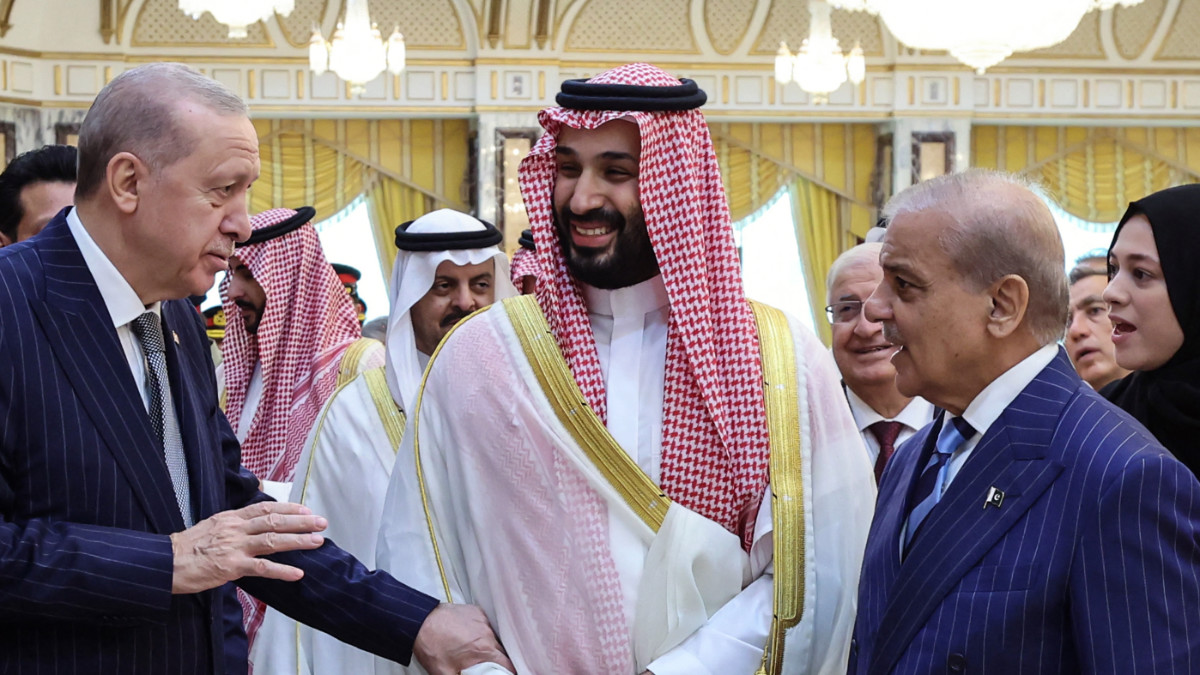
    For years, Beijing has advanced a proposal for a new inclusive Middle East security framework as a core component of its regional diplomacy. Unlike the U.S.-led security order that relies on military blocs and great power rivalry, Beijing’s approach centers on balancing relations with all major regional powers, including Saudi Arabia, Pakistan, Turkey, and Egypt, to foster collective security through dialogue and cooperation. A commentary from Hong Kong-based pro-Beijing outlet Flamingwheels noted that Pakistan has also played a skillful diplomatic role as ceasefire mediator, noting that in late April, Islamabad passed the *Territorial Transit Goods Ordinance 2026* to open six dedicated land transit routes for third-country goods to enter Iran via Pakistani territory. The new routes not only deliver economic benefits to local Pakistani communities but also give the China-Pakistan Economic Corridor (CPEC) and the port of Gwadar an expanded strategic role amid the ongoing regional crisis.

    Chinese media reports note that while the U.S. military blockade of Iranian ports has now lasted nearly a month, China continues to ship an estimated 100 to 150 containers of goods to Iran per week via cross-continental rail. The trains depart from Xi’an and travel through Kazakhstan and Turkmenistan before reaching Tehran, though this volume accounts for only around 5% of the total seaborne cargo Iran received before the blockade was imposed.

  • Trump and Xi appear intent on keeping deep differences over Iran war from overshadowing China summit

    Trump and Xi appear intent on keeping deep differences over Iran war from overshadowing China summit

    As U.S. President Donald Trump departs Washington for Beijing this Tuesday to hold a critically important bilateral meeting with Chinese President Xi Jinping, the diplomatic landscape ahead of the summit is already marked by carefully calibrated expectations and unresolved frictions over the two-month-old Middle East conflict that has closed the Strait of Hormuz.

    For weeks, the Trump administration has mounted a diplomatic push to convince Beijing to deploy its massive economic leverage as the world’s top importer of Iranian oil to pressure Tehran into accepting Washington’s terms to end the conflict, or at minimum to reopen the strategically vital Strait of Hormuz, through which 20% of global crude oil shipments passed before the war began. That push has so far failed to deliver tangible shifts in China’s posture, forcing the White House to temper expectations ahead of the meeting.

    Trump’s own public framing of China’s role has been inconsistent: he has alternately criticized Beijing for failing to do more to align Iran with U.S. objectives, while also acknowledging that Xi’s government helped de-escalate tensions last month when it nudged Iran back to the ceasefire negotiating table after talks collapsed. Faced with this stalemate, the administration has made the deliberate choice not to let disagreements over Iran derail progress on other core priorities in the complex U.S.-China relationship, from long-simmering trade disputes to Chinese cooperation on blocking the export of illegal fentanyl precursors to the United States.

    “We don’t want this to be something that derails the broader relationship or the agreements that might come out of our meeting in Beijing,” U.S. Trade Representative Jamieson Greer told Bloomberg Television last week, confirming the administration’s strategic prioritization of broader bilateral goals over immediate progress on Iran.

    The run-up to the summit has been marked by new friction, however: the U.S. has imposed new sanctions on Chinese entities tied to Iran just days before Trump’s arrival. The State Department announced sanctions Friday on four entities, including three China-based firms, accusing them of providing sensitive satellite imagery that supports Iranian military strikes against U.S. forces in the Middle East. This action followed earlier Treasury Department sanctions targeting Chinese oil refineries and shippers accused of purchasing Iranian crude, cutting the targeted companies off from the U.S. financial system and penalizing any third parties that conduct business with them.

    Beijing has pushed back forcefully against the sanctions, labeling them “illegal unilateral pressure.” For the first time since it was enacted in 2021, China has activated its blocking statute, which prohibits all Chinese entities from recognizing or complying with the U.S. sanctions measures.

    From Beijing’s perspective, China has already taken measured diplomatic steps to support de-escalation. Publicly, Beijing says it seeks an immediate end to the conflict, and it has worked behind the scenes to support Pakistan’s efforts to broker a peace deal. According to Ahmed Aboudouh, a Middle East and China expert at London-based think tank Chatham House, Beijing has also sent quiet signals of disapproval to Iran over its decision to close the strait, as well as to the U.S. over its naval blockade of Iranian shipping.

    “They are very cautious, risk-averse, and they don’t want to be involved in anything that would drag them into something that they don’t consider their problem,” Aboudouh explained of China’s restrained approach.

    Days ahead of the summit, Chinese Foreign Minister Wang Yi hosted his Iranian counterpart Abbas Araghchi in Beijing, where Wang explicitly defended Iran’s sovereign right to develop civilian nuclear energy. Xi has also offered implicit criticism of U.S. policy in the conflict, arguing that upholding international rule of law must be a global priority, adding that rules “must not be selectively applied or disregarded,” and the world must not be allowed to revert “to the law of the jungle.”

    Despite the open frictions over Iran and new sanctions, both sides have made clear they are invested in avoiding a full breakdown of bilateral ties, and both are eager to protect the fragile trade truce reached last October to avert a return to the full-scale tariff war that rattled global markets last year.

    On the eve of his departure, Trump downplayed disagreements with Beijing over the conflict, telling reporters that Xi also wants to see the Strait of Hormuz reopened. “He’d like to see it get done,” Trump said of the Chinese leader.

    Analysts note that Xi also has strong incentives to compartmentalize the Iran dispute to avoid damaging other core Chinese interests. China relies on the Strait of Hormuz for roughly half of its crude oil imports and nearly one-third of its liquefied natural gas imports, according to Chinese customs data, meaning the closure directly harms China’s energy security. Beijing is also keen to avoid further deterioration of U.S.-China ties that would add new headwinds to China’s already slowing economy.

    “I think for Xi, a win is continued stability without surrender,” said Craig Singleton, senior director for the Foundation for Defense of Democracies’ China program. “He wants the summit to validate China’s superpower status, preserve the tariff predictability, and to reaffirm that Washington has to deal with Beijing on Beijing’s terms.”

    This is not the first time tensions over the conflict have threatened the recent relative stability in U.S.-China relations. The U.S. government says China has long supported Iran’s ballistic missile program through exports of dual-use components that can be used in missile production. Last month, Trump threatened to impose a 50% broad tariff on Chinese goods after reports emerged that Beijing planned to ship new air defense systems to Iran, but he backed away from the threat almost immediately after saying he received written assurance from Xi that no weapons would be delivered to Tehran. Days later, Trump made the cryptic claim that the U.S. Navy had intercepted a Chinese vessel carrying a “gift” for Iran, though he has never offered further details to clarify the statement.

    “There have been moments where it seemed like it was going to spill over,” said Patricia Kim, co-leader of the Assessing China Project at the Brookings Institution. “But I think, again, the two sides are pretty invested in not allowing this to destabilize the broader relationship.”

    Top Trump administration officials have argued that the conflict and strait closure actually damage China and its regional neighbors far more than the United States, which is far less dependent on Middle Eastern energy exports than it once was. “China is an export-driven economy. That means they depend on other countries to buy from them,” Secretary of State Marco Rubio told reporters last week, arguing that reopening the waterway is clearly in Beijing’s own interest. “You can’t buy from them if you can’t ship it there, and you can’t buy from them if your economy is being destroyed by what Iran is doing.”

    Even so, China has shown no willingness to wade deeper into the conflict or openly align with U.S. policy, a dynamic that suggests little progress on the issue is likely to emerge from this week’s summit. “It will be difficult to get the Chinese deeply involved under any circumstances,” said Kurt Campbell, a former deputy Secretary of State during the Biden administration and chairman of The Asia Group. “They will want to be careful because they can see political quicksand as well as the next guy.”

    Reporting for this article was contributed by Associated Press writers Didi Tang in Washington, Adam Schreck in Dubai, United Arab Emirates, and David Rising in Bangkok.

  • Ceasefire on ‘life support’, Trump says, as he rejects ‘stupid’ Iranian peace offer

    Ceasefire on ‘life support’, Trump says, as he rejects ‘stupid’ Iranian peace offer

    On a tense Monday at the White House, former U.S. President Donald Trump launched a sharp public rejection of a recently tabled peace proposal from Iran, dismissing the plan as “stupid garbage” and warning that the month-long ceasefire between U.S.-Israeli forces and Iran that has held since early April is barely clinging to survival. Despite the harsh rhetoric, however, Trump left a narrow door open to eventual diplomacy, noting that despite multiple rounds of on-again off-again negotiations, a final negotiated settlement remains within reach.

    “I think it’s very possible. I’ve had a deal with them four or five times; they change their mind,” Trump told reporters, accusing Iran’s senior leadership of acting in bad faith and labeling the regime “very dishonorable.”

    Details of Iran’s 14-point proposal, which was submitted to mediators on May 10, emerged earlier via Iran’s state-run IRNA news agency. The framework includes two non-negotiable core demands: financial compensation for the widespread physical and infrastructure damage inflicted during the 40-day U.S.-Israeli military campaign against the Islamic Republic, and formal international recognition of Iran’s full sovereignty over the strategically critical Strait of Hormuz, through which nearly 20% of global oil supplies pass daily.

    Within hours of Trump’s public remarks, the U.S. Department of the Treasury followed up with a new round of punitive measures, blacklisting 12 individuals and business entities that agency officials accuse of facilitating illicit shipments of Iranian crude oil to Chinese markets. The sanctions package, branded “Operation Economic Fury” by the Treasury, targets a network of shipping and trading firms spread across multiple global hubs to cut off revenue streams the U.S. says fund Iranian military programs, regional proxy groups, and nuclear development.

    “As Iran’s military desperately tries to regroup, [Operation] Economic Fury will continue to deprive the regime of funding for its weapons programs, terrorist proxies, and nuclear ambitions,” Treasury Secretary Scott Bessent said in an official statement. “Treasury will continue to cut the Iranian regime off from the financial networks it uses to carry out terrorist acts and to destabilize the global economy.”

    The sanctioned entities include two Hong Kong-based firms, Blue Ocean Limited and Sanmu Limited, three Dubai-based operations: Ocean Allianz Shipping, Blanca Goods Wholesaler, and Universal Fortune Trading, as well as Atic Energy FZE based in Sharjah, United Arab Emirates, and Oman’s Zeus Logistics Group.

    Iran quickly responded to the developments, with parliamentary speaker Mohammad Bagher Ghalibaf reaffirming that Iranian military forces are at full readiness to repel any new U.S. attack if hostilities resume. At the same time, Ghalibaf emphasized in a post on X that there is no path to peace outside of recognizing the core legitimate rights of the Iranian people that are laid out in the country’s 14-point proposal. Any attempt to bypass these demands will only lead to repeated failure, he warned, adding that delays from the U.S. side will only deepen the financial burden on American taxpayers.

    Seeking to pre-empt public anxiety that his rejection of Iran’s peace plan could trigger a resumption of full-scale war and a subsequent spike in global energy prices, Trump told CBS News in a separate interview Monday that he is proposing to temporarily suspend the federal gasoline tax to offer financial relief to U.S. consumers. The current federal tax stands at 18 cents per gallon (roughly 4.7 cents per liter). As of Monday, the average U.S. retail price of gasoline hit $4.55 per gallon, with much higher rates recorded in major coastal and urban centers including New York City, Washington D.C., and Los Angeles.

    The 40-day U.S.-Israeli military campaign against Iran, which launched on February 28, has already taken a heavy toll on Trump’s domestic political standing. By late April, his national approval rating plummeted to 34 percent, the lowest point of his current term. A new Reuters-Ipsos poll released Monday shows only a marginal uptick to 36 percent. The survey also reveals deep public dissatisfaction with Trump’s handling of the conflict: two-thirds of respondents said Trump has failed to clearly explain to the American public why the war was launched in the first place, and a matching share reported that the conflict has already negatively impacted their personal household finances.

    This coverage is provided by Middle East Eye, an independent outlet offering in-depth reporting on the Middle East, North Africa, and surrounding regions.

  • Trump ally Kari Lake tapped to be US ambassador to Jamaica

    Trump ally Kari Lake tapped to be US ambassador to Jamaica

    In a series of White House personnel announcements made Monday, former President Donald Trump has tapped his close political ally Kari Lake to serve as the next United States Ambassador to Jamaica, while also nominating Cameron Hamilton to take the helm of the U.S. Federal Emergency Management Agency (FEMA).

    Lake, a former local television journalist who built her political profile around embracing Trump’s unsubstantiated 2020 election fraud claims, most recently led the Trump administration’s push to restructure the federally funded international broadcaster Voice of America (VOA), part of the U.S. Agency for Global Media (USAGM). If the U.S. Senate confirms her nomination, the appointment will bring an end to her tenure as the top official overseeing USAGM, the agency that supervises VOA’s global operations.

    During her time at USAGM, Lake acted under a presidential executive order to initiate layoffs for hundreds of employees at the 83-year-old international broadcaster. Trump has long positioned himself as a outspoken critic of VOA, repeatedly claiming the outlet holds a systemic left-wing ideological bias. Founded in 1942, VOA currently distributes news content across the globe in nearly 50 different languages.

    Shortly after the White House made the nomination public, Lake issued a statement of gratitude on social media, emphasizing her existing familiarity with the Caribbean nation. “Jamaica is a country I know very well, full of incredible people,” she wrote, adding that if confirmed, she looks forward to advancing three core priorities: deepening the bilateral partnership between the United States and Jamaica, advancing U.S. national interests in the region, and expanding the longstanding people-to-people friendship between the two nations.

    Lake’s path to the nomination is rooted in her rise in Republican politics following a 22-year career as a anchor at a Phoenix-based Fox News affiliate. She left journalism in 2021 to launch a Republican bid for Arizona governor, a race she ultimately lost. During that campaign, she gained Trump’s backing by aggressively repeating his false claims that the 2020 presidential election was marred by widespread fraud. After her own gubernatorial defeat, she similarly refused to accept the results, filing multiple unsuccessful lawsuits to overturn the outcome and making fraud claims that led to a high-profile defamation lawsuit against her. She later mounted an unsuccessful campaign for an Arizona U.S. Senate seat before being tapped to lead VOA shortly after Trump returned to office in 2024.

    Alongside Lake’s nomination, Trump also announced his pick of Cameron Hamilton to lead FEMA, an agency that has faced significant internal turmoil in recent months. Hamilton’s return to the top FEMA post comes roughly one year after the Trump administration removed him from the same role, after he pushed back against discussions of potentially closing the agency and defended its core function. Currently, FEMA is still recovering from the fallout of a 75-day partial shutdown of the Department of Homeland Security, which concluded on April 30, and has already seen a large-scale exodus of departing employees in recent months.

  • Epstein files on display at New York pop-up exhibit, all 3.5 million pages

    Epstein files on display at New York pop-up exhibit, all 3.5 million pages

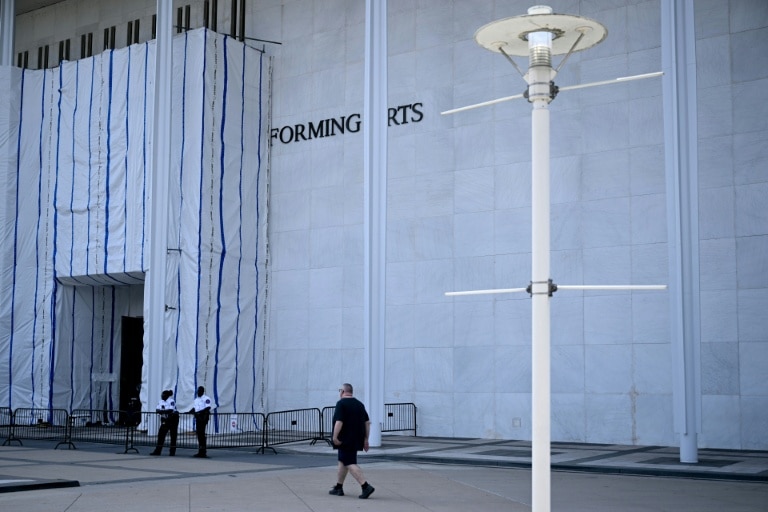
    A U.S.-based transparency and pro-democracy nonprofit has launched a provocative temporary pop-up exhibition in Manhattan’s Tribeca neighborhood, centered entirely on a complete physical printout of every Jeffrey Epstein-related document released by the U.S. Department of Justice. Organized by the Washington D.C. Institute of Primary Facts, the exhibition, officially named “The Donald J. Trump and Jeffrey Epstein Memorial Reading Room,” houses roughly 3.5 million pages of court and investigative files, bound into 3,437 individually numbered volumes arranged floor-to-ceiling on custom shelves. The display comes as a direct outcome of the 2024 Epstein Files Transparency Act, which mandated the public release of all government-held records connected to the disgraced financier and convicted sex offender.

    On the institute’s official website, the organization frames the physical installation as a confrontation against opaque government record-keeping, stating plainly: “The truth is hard to deny when it’s printed and bound for you to see.” While registration is open to any member of the public wishing to visit the space, access to the bound volumes remains heavily restricted. A processing error by the Department of Justice left the names of multiple Epstein victims unredacted in the released files, barring general public access per privacy regulations. Only accredited journalists and legal professionals working on related cases are granted permission to review the documents on-site.

    A secondary focal point of the pop-up is a dedicated exhibit exploring the decades-long public relationship between former President Donald Trump and Epstein, who died by suicide in a federal prison in 2019 while awaiting trial on federal child sex trafficking charges. Court records and public accounts confirm the pair moved in overlapping social circles for years before a reported falling out over a 2004 real estate transaction, after which Trump publicly distanced himself from Epstein. Since the full release of the Epstein files began, Trump’s repeated appearances in the records have sparked widespread speculation, though the former president has consistently denied any improper conduct connected to Epstein or his activities.

    Project co-creator David Garrett explained the installation’s core mission in an interview with Agence France-Presse, noting the group’s focus on in-person public education to highlight perceived systemic corruption and threats to U.S. democratic norms. Garrett argued that the Trump administration’s handling of the Epstein file release has been marked by unnecessary delays and intentional obfuscation, with many critics accusing senior justice department officials of covering up the full extent of Trump’s ties to Epstein. “We’re a pro-democracy organization, with the goal of educating the public using these kinds of sort of pop-up museums and other in-real-life experiences to help people understand the corruption in the United States, the dangers to democracy,” Garrett said. He added that the group aims to spur sustained public pressure to force full accountability for the handling of the Epstein case and related records: “there needs to be real public outcry” over the government’s conduct, he said, “and what we attempted to do here was to create, or help to create public outcry to have real accountability.”

    The temporary exhibition will remain open to the public at its Tribeca location through May 21.

  • What to know about Trump-Xi summit with trade, Taiwan and Iran on the agenda

    What to know about Trump-Xi summit with trade, Taiwan and Iran on the agenda

    WASHINGTON — Ahead of the much-anticipated bilateral summit between Chinese President Xi Jinping and U.S. President Donald Trump, officials from both major powers have emphasized that bilateral relations have held broadly steady in recent months, with both sides prioritizing the preservation of that stability going into the meeting. Yet even as consensus around stability holds, the world’s most consequential bilateral relationship faces a sprawling roster of intractable disputes with no clear path to quick resolution, leaving analysts skeptical that major breakthroughs will emerge from the talks. From tech competition to the long-simmering Taiwan issue, and now the Iran conflict, every topic on the agenda carries high global stakes.

    Henrietta Levin, a senior fellow at the Center for Strategic and International Studies’ Freeman Chair in China Studies, noted that both sides share a core agreement on the value of U.S.-China stability. Beyond that foundational consensus, however, the future of the relationship grows far more complex, she said, making limited progress the most likely outcome of the leaders’ meeting.

    ### Trade: A Fragile Truce Holds, But Core Issues Remain Unresolved
    The U.S.-China trade conflict first erupted during Trump’s first term, and escalated sharply last April when the U.S. president announced 34% tariffs on all Chinese goods in a move he labeled “Liberation Day.” China responded quickly with reciprocal tariffs and targeted countermeasures, including new restrictions on its rare earth exports. The tit-for-tat escalation pushed bilateral tariffs as high as 145% before both sides acknowledged the unsustainable economic damage and agreed to a trade truce, pausing most punitive economic measures.

    The two leaders first extended the truce for an additional year during an October meeting in South Korea, with China committing to increased soybean purchases from American agricultural producers and the U.S. cutting existing tariffs by more than half. Zhao Minghao, an international relations professor at Shanghai’s Fudan University, explained that China’s approach has centered on pushing back against U.S. tariffs while working to preserve overall bilateral stability.

    While some observers expect the two sides to announce a new comprehensive trade agreement during the summit, Zhao cautioned that such a deal would not mark a permanent end to the trade conflict, and would include conditional terms. Last year’s truce failed to resolve any core structural disputes, nor did it return bilateral economic relations to their pre-trade war status. China has since implemented new export permit requirements for rare earths, a regulation that allows Beijing to tighten shipments at any time.

    Wendy Cutler, vice president of the Asia Society and a former U.S. trade negotiator, noted that this summit lacks the intensive pre-meeting bilateral engagement that characterized past high-level talks. In April, Beijing introduced a new regulatory framework to counter foreign sanctions targeting Chinese companies, which instructs affected domestic firms to ignore extraterritorial U.S. restrictions — a directive already applied to a Chinese petroleum refinery processing Iranian crude in defiance of American sanctions. Cutler described the current trade arrangement as a “fragile truce,” noting that even if the truce is extended, both sides have continued to take targeted actions against one another’s economic interests. The White House has also confirmed that leaders will discuss a proposal for a new bilateral “Board of Trade” to maintain ongoing economic dialogue between the two powers.

    ### Advanced Semiconductors: Export Restrictions Push China Toward Self-Reliance
    U.S. restrictions on exports of advanced computer chips and related manufacturing technology to China were first introduced during Trump’s first term, and the issue remains a major point of friction ahead of the summit. Leading American chip designer Nvidia has lobbied the Trump administration to relax export curbs, with founder Jensen Huang arguing that continued access to American chips would leave Chinese artificial intelligence firms dependent on U.S. technology.

    However, growing export restrictions have only accelerated Beijing’s push to develop a domestic, self-sufficient semiconductor industry. In written comments, Zhao noted that China’s position has shifted subtly in recent years: Beijing now prioritizes advancing its domestic chip sector over continued reliance on American advanced semiconductor imports.

    ### Taiwan: Beijing Labels the Issue the ‘Biggest Risk’ to Bilateral Ties
    Two weeks before the summit, Chinese Foreign Minister Wang Yi told U.S. Secretary of State Marco Rubio that while overall bilateral relations remain stable, the Taiwan question remains the single biggest threat to U.S.-China ties. Beijing reaffirmed ahead of the meeting that Taiwan would be a top priority for discussions.

    The Taiwan issue has lingered since the 1949 Chinese civil war, which split the two sides. Beijing claims the self-ruled democratic island as part of its sovereign territory, and tensions have risen steadily since the election of Tsai Ing-wen from the independence-leaning Democratic Progressive Party (DPP) in 2016. Beijing cut off official communication with Tsai’s administration and has stepped up military pressure, conducting nearly daily naval and air patrols near the island in recent years. Current Taiwanese President Lai Ching-te, also a member of the DPP, has faced repeated criticism from Beijing, which has depicted him as a separatist in state propaganda accompanying large-scale military exercises around the island.

    The U.S. is legally required to provide Taiwan with defensive military hardware, but maintains a longstanding policy of “strategic ambiguity” over whether it would intervene militarily if China attempts to take the island by force. Recent comments from Trump confirming he discussed arms sales to Taiwan with Xi have renewed uncertainty over U.S. policy toward the island. Zhao suggested a limited pragmatic compromise could be on the table: a framework of reciprocal restraint, under which the U.S. would reduce arms sales to Taiwan in exchange for China cutting back military drills targeting the island. Few analysts expect a permanent resolution to the issue to emerge from the summit.

    ### The Iran Conflict: U.S. Pushes for Chinese Influence, Beijing Remains Cautious
    As the international community awaits a ceasefire in the Iran conflict that has disrupted global energy markets, the issue is set to be added to the summit agenda. Beijing has positioned itself as an unofficial mediator in the conflict thanks to its close political and economic ties to Tehran, but has so far avoided deep direct involvement. China has publicly criticized the U.S. and Israel over the ongoing war.

    Levin argued that Beijing has little incentive to resolve a regional crisis that Washington created: “I don’t think China has any interest in solving the problems the U.S. has created for itself in the Middle East,” she said. Ahead of the summit, U.S. Treasury Secretary Scott Bessent publicly called on China to pressure Iran to reopen the Strait of Hormuz, a critical global energy chokepoint, and accused Beijing of funding terrorism through its purchases of Iranian crude. Speaking to Fox News, Bessent said: “Iran is the largest state sponsor of terrorism, and China has been buying 90% of their energy, so they are funding the largest state sponsor of terrorism. Let’s see if China steps up with some diplomacy and get the Iranians to open the strait.”