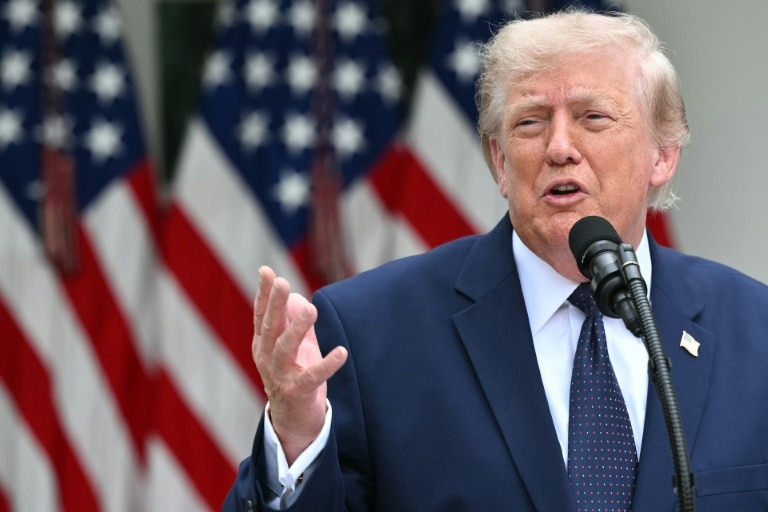
As U.S. President Donald Trump touched down in Ankara for a critical two-day NATO summit, alliance leaders are pulling out all the stops to ease tensions with the American leader, whose recent public fury over European responses to the U.S.-Iran conflict has cast a shadow over the gathering. The summit, hosted at Turkey’s sprawling presidential palace, comes exactly one year after NATO members committed under U.S. pressure to ramp up collective defense spending to five percent of GDP, a target that forms the centerpiece of allies’ efforts to placate Trump.
NATO Secretary General Mark Rutte has pushed back against Trump’s criticism, insisting that European allies are already delivering on their spending pledges, moving to take greater ownership of continental defense in the face of Russian threats. “Just one year later, we already see transformational progress,” Rutte told reporters on the eve of the summit, framing the shift as the dawn of “NATO 3.0: A stronger Europe in a stronger NATO.”
Trump departed Washington late Monday alongside Secretary of State Marco Rubio and Defense Secretary Pete Hegseth, arriving in Turkey still stinging from European restrictions on U.S. forces using regional bases for strikes against Iran. In the weeks leading up to the summit, he has lashed out at allies for moving too slowly to meet his demands, writing in a Truth Social post last week: “Ridiculous for the U.S.A. to continue along this one-sided path when the relationship is not reciprocal. They were not there for us!!!”
To demonstrate progress to the U.S. president, NATO has prepared a suite of high-profile announcements, capped by the unveiling of tens of billions of dollars in new arms deals at an industry forum opening the summit on Tuesday. Canada reinforced the alliance’s push Monday when it announced a multi-billion-dollar contract to build its new submarine fleet with Germany’s Thyssenkrupp Marine Systems, a move Ottawa framed as a deliberate step to deepen defense ties with European NATO allies. A senior anonymous European diplomat summed up the moment bluntly: “This is showtime.”
Diplomatic efforts to keep Trump in a constructive mood are leaning on his established warm relationship with Turkish President Recep Tayyip Erdogan, paired with a sustained charm offensive from Rutte. European leaders’ top priority is avoiding a public clash that would further erode NATO’s credibility, after Trump spent months casting doubt on the U.S.’s long-standing commitment to the alliance’s collective defense clause. Still, tensions remain high: Trump has had high-profile fallouts with a string of European leaders in recent months, most recently Italian Prime Minister Giorgia Meloni, leaving plenty of room for unexpected friction.
On the Iran front, European allies led by France and Britain have attempted to meet Trump halfway by drafting a plan for a joint naval mission in the Strait of Hormuz, and have repositioned vessels closer to the region to stand by for deployment. But leaders have declined to commit fully to the mission, saying they need clearer clarity on the fragile interim U.S. deal with Tehran before moving forward. For many European capitals, the summit has also underscored a growing acceptance of a long-term shift: the U.S. is steadily drawing down its military commitment to the alliance, and Europe must take greater responsibility for its own security. Washington has already made clear it expects allies to lead conventional defense on the continent, and recently announced cuts to the military assets it makes available to NATO commanders.
Beyond internal alliance shifts, the summit will also center on continued support for Ukraine, which European allies have taken over almost entirely after Trump rolled back U.S. military aid to Kyiv. Ukrainian President Volodymyr Zelensky, who will attend Tuesday’s leaders’ dinner and hold one-on-one talks with Trump, is set to secure a NATO commitment from European backers to maintain at least 70 billion euros ($80 billion) in annual military aid to Ukraine for both 2026 and 2027. Ahead of the summit, Zelensky urged NATO to take “strong decisions” to boost Ukraine’s air defenses, following a devastating Russian airstrike that killed nearly 30 civilians across the country. The Ukrainian leader will also push Trump, who held a pre-summit phone call with Russian President Vladimir Putin, to pressure Moscow to return to the table for substantive peace negotiations, while making the case that Kyiv is gaining ground in the war.