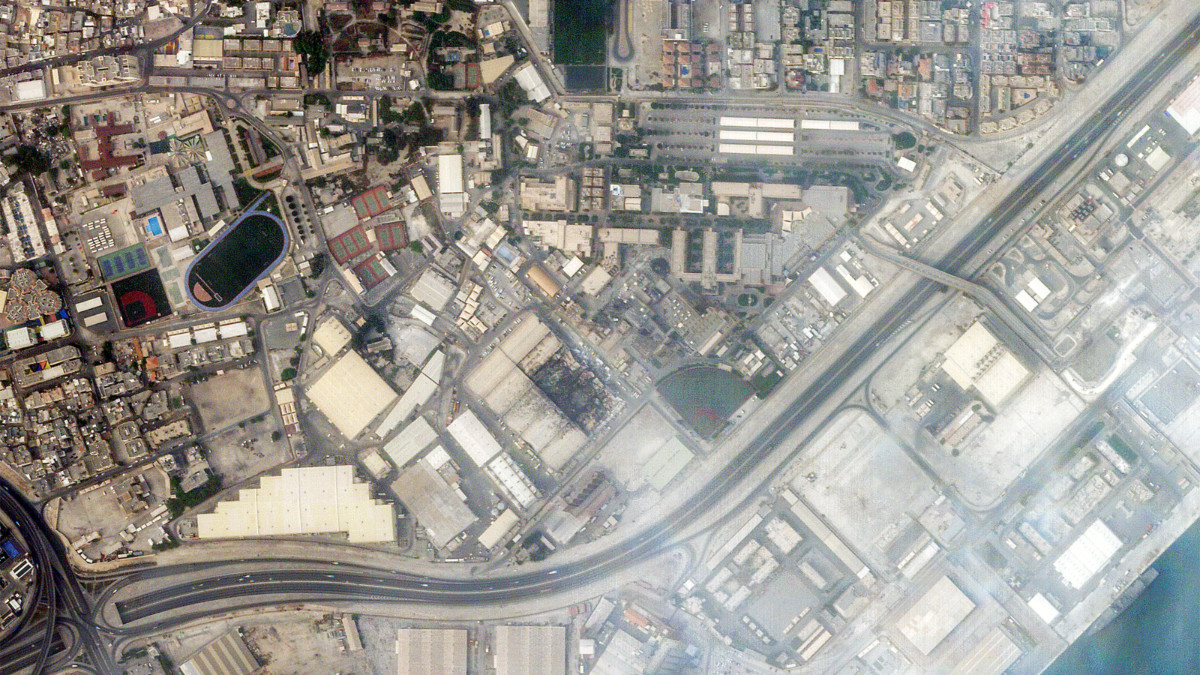
In a recent webinar hosted by the Jewish Institute for National Security of America, retired General Frank McKenzie, the former leader of United States Central Command (Centcom), has thrown his weight behind a radical restructuring of American military basing across the Middle East, arguing that existing positions in the Gulf are dangerously exposed to Iranian missile and drone attacks and should be shifted westward to Israel and nearby regional partners.
McKenzie, who oversaw all US military operations across the Middle East from 2019 to 2022, questioned the strategic logic of maintaining Centcom’s forward headquarters at Qatar’s al-Udeid Air Base, located just 100 miles from Iranian territory. “No one in their right mind would ever put the Centcom forward headquarters 100 miles away from Iran, yet that’s where it is,” he stated during the discussion.
During his tenure as Centcom commander, McKenzie revealed that he and a cohort of senior defense officials formally presented a proposal to the Biden administration in 2022 calling for the dispersal of US forces currently concentrated in Gulf states including the United Arab Emirates, Kuwait, Qatar and Bahrain. The plan advocated moving key command and presence assets west to locations including Israel and Egypt, positions that would be far less vulnerable to pre-emptive Iranian strikes in the event of open conflict. According to McKenzie, the Biden administration “aggressively” rejected the proposal out of hand.
The former Centcom chief characterized the current American basing architecture in the Gulf as an outdated “artefact” of bygone strategic eras. The network grew out of Cold War-era efforts to deter Soviet expansion into the oil-rich region, and was later expanded to support US counter-insurgency campaigns in Iraq and Afghanistan. Today, he argued, this legacy structure no longer aligns with the core strategic threat facing US forces in the region: advanced Iranian strike capabilities. “[The US] strategy does not match the reality on the ground,” he emphasized.
McKenzie’s warnings align with a June report published by Middle East Eye (MEE), which cited multiple unnamed former senior US officials and regional analysts who concluded that widespread basing restructuring is inevitable due to the vulnerabilities Iran demonstrated during recent regional conflicts. MEE was the first outlet to report that the US secured access to Saudi Arabia’s Taif Air Base in March, after Iranian strikes heavily damaged the major US facility at Prince Sultan Air Base southeast of Riyadh. Across the Gulf coast, key US installations in Bahrain (home to the US Fifth Fleet), Qatar, Kuwait and the UAE all sustained significant damage from Iranian strikes, effectively pushing American assets away from the Gulf coastline.
Open source analysts and US officials have long debated the full operational impact of Iranian strikes on Gulf bases, but McKenzie cautioned that publicly available satellite imagery can paint a misleading picture of a damaged base’s functionality. Even if critical underground infrastructure such as fuel systems and runways remain intact after an attack, the destruction of above-ground assets including hangars, radar stations and troop barracks can severely degrade a base’s operational capacity, he explained.
McKenzie acknowledged the core strategic tradeoff at the heart of the basing debate: proximity to potential adversaries cuts response time for military operations, but it also leaves forces open to devastating rapid strikes that can disable assets before they can be deployed. To balance this tradeoff, he proposed a revised model that retains access to Gulf partner facilities for temporary uses such as refueling, as a show of solidarity with longstanding Arab allies, but shifts permanent long-term presence to more secure western locations including Israel, Egypt and Saudi Arabia’s Red Sea coast.
For McKenzie, Israel stands out as the most attractive option for new basing for two key reasons. First, it would impose far fewer restrictions on US access, basing rights and overflight permission – collectively referred to as ABO – compared to Gulf Arab states. Second, Israel offers far more robust integrated air defense capabilities to protect bases from Iranian strikes than any Gulf partner.
The issue of ABO restrictions is particularly consequential, McKenzie explained. When the US first built its Gulf basing network, host nations initially refused to allow American forces to use their territory or airspace to launch strikes on Iran. While Saudi Arabia and the UAE later relaxed these rules to allow US strikes under the Trump administration, The Wall Street Journal has reported that Riyadh later reversed course and vetoed new proposed attacks on Iran as regional conflict escalated. “Of all the countries, one thing that’s significant is the [host] country…they’re going to want to have a say in where those jets go when they take off,” McKenzie said. “Probably Israel is the place where you’re going to have the fewest ABO restrictions on your aeroplanes. That’s why Israel is a particularly attractive location.”
This report draws on original independent coverage from Middle East Eye, a publication specializing in in-depth, independent reporting and analysis of the Middle East, North Africa and surrounding regions.