分类: politics

  • Blow to Anthony Albanese as One Nation soars in first major post-budget polling

    Blow to Anthony Albanese as One Nation soars in first major post-budget polling

    Australia’s ruling Labor government has suffered a significant political setback, with a new post-budget poll revealing a dramatic surge in support for right-wing populist party One Nation that has shaken the country’s political landscape.

    The latest Roy Morgan survey, carried out between May 13 and 14 among 2,300 registered voters via text messaging, is the first major independent poll released since Labor handed down its controversial 2026-27 federal budget, which included proposed changes to negative gearing and capital gains tax rules for housing investors. The data shows One Nation has overtaken Labor on primary vote support, hitting 32 per cent compared to Labor’s 28.5 per cent.

    When looking at two-party preferred voting, the poll shows One Nation and Labor are neck-and-neck: 49 per cent of respondents said they would back One Nation against Labor, leaving the incumbent government with just a tiny, statistically insignificant edge. When matched against the center-right Coalition, One Nation claimed a narrow 51 per cent to 49 per cent two-party preferred lead. For context, the Coalition currently trails far behind both One Nation and Labor on primary votes, sitting at just 45 per cent, giving One Nation a clear lead over the traditional major conservative party.

    The poll also delivers a damning verdict on the performance of Prime Minister Anthony Albanese and Treasurer Jim Chalmers. A 59 per cent majority of Australian voters disapprove of Albanese’s job performance, compared to just 40 per cent who approve. For Chalmers, disapproval stands at 57 per cent. This dissatisfaction cuts across demographic lines: it spans both genders, every age bracket, and nearly all Australian states. Only Tasmania recorded a narrow majority of approval for the Prime Minister.

    A breakdown of voter motivation highlights stark differences between the two parties’ support bases. For Labor voters, top drivers are shared values around social justice and fairness, cited by 42 per cent, and alignment with party policy, named by 39 per cent. In contrast, 58 per cent of One Nation voters said cutting immigration was their core motivation, while 52 per cent identified their vote as a rejection of the two long-dominant major parties.

    One Nation’s rising electoral momentum comes off the back of a recent milestone for the minor party: it recently secured only its second ever lower house seat, with David Farley winning the seat of Farrer vacated by former Liberal leader Sussan Ley. The Coalition has already promised to repeal Labor’s controversial housing tax changes if it wins office, adding further volatility to the policy debate.

    Most critically, the poll projections indicate that if a general election were held now, the most likely outcome would be a hung parliament, regardless of whether One Nation faces off against Labor or the Coalition. This result points to a sustained collapse in support for Australia’s traditional major parties, and a growing shift toward anti-establishment politics in the country, with the 2026-27 budget’s contentious tax changes acting as a catalyst for One Nation’s latest surge.

  • Gunfire chaos as Philippine senator resists ICC arrest: What we know so far

    Gunfire chaos as Philippine senator resists ICC arrest: What we know so far

    Manila, the Philippines — A chaotic eruption of gunfire inside the Philippine Senate this week has plunged the country’s already fractured political landscape into open crisis, capping a weeks-long standoff over an International Criminal Court (ICC) arrest warrant for a close ally of former president Rodrigo Duterte and exposing the deepening rift between the country’s two most powerful political dynasties.

    The crisis centers on Senator Ronald “Bato” dela Rosa, one of Duterte’s most loyal long-time associates. As chief of the Philippine National Police from 2016 to 2018, dela Rosa served as the public face of Duterte’s brutal nationwide war on drugs, a campaign that left thousands of suspected drug users and small-scale dealers dead. Human rights organizations have documented hundreds of cases of extrajudicial summary executions during the crackdown, leading the ICC to open a crimes against humanity investigation into the campaign.

    The ICC unsealed its arrest warrant for dela Rosa on Monday this week, coinciding with the senator’s first appearance on the Senate floor after months of unexplained absence from public life. The development came months after Duterte himself was taken into custody and transferred to The Hague in March 2025 to face his own ICC charges connected to the drug war. Though Duterte withdrew the Philippines from the ICC during his presidency in 2019, the tribunal has maintained it retains jurisdiction over crimes committed before the withdrawal, including thousands of drug war deaths that dated back to Duterte’s time as mayor of Davao City.

    Within days of the warrant being made public, dela Rosa sought protective refuge within the Senate, filing a petition with the Philippine Supreme Court to block local authorities from executing the ICC’s order. On Wednesday, the high court rejected his request for an immediate temporary restraining order, giving President Ferdinand “Bongbong” Marcos Jr.’s administration 72 hours to submit its official response to the petition.

    Hours after the Supreme Court’s ruling, dela Rosa took to Facebook Live to issue a public appeal, warning supporters he had received intelligence that authorities were en route to arrest him. “I am calling for your help: let us not have another Filipino brought to The Hague like President Duterte,” he told viewers. Roughly 60 minutes later, multiple gunshots rang out on the Senate’s second floor, triggering panic across the complex.

    Chaotic scenes unfolded live on national television: journalists and legislative staff scrambled for cover, the entire Senate building was placed under immediate lockdown, and heavily armed security personnel in flak jackets cordoned off the entire premises. Initial conflicting accounts emerged over the source of the gunfire: Senate Secretary Mark Llandro Mendoza told local reporters that agents from the National Bureau of Investigation (NBI) had attempted to enter the building and fired shots while retreating. But NBI director denied the claim, stating no agents had been deployed to the Senate that day.

    Interior Secretary Jonvic Remulla later entered the building to meet with legislative leaders, and emerged alongside newly installed Senate President Alan Peter Cayetano to confirm no injuries were reported. The pair confirmed shots had been fired but declined to name potential perpetrators, noting an official investigation was still ongoing. By the following morning, police announced they had detained at least one person in connection with the shooting. President Marcos addressed the nation in a YouTube video shortly after the incident, calling for calm and promising a full probe. “We will get to the bottom of this… Was this encounter part of destabilisation? We will need to know,” he said.

    The gunfire incident is the most visible escalation of a rapidly worsening political power struggle between the Marcos and Duterte political clans, an alliance that collapsed spectacularly after the two groups won the 2022 national election in a landslide. Just this week, the House of Representatives — where Marcos allies hold a majority — voted to impeach Vice President Sara Duterte, Rodrigo Duterte’s daughter and Marcos’ top political rival, over allegations of corruption and plots to assassinate the president. The articles of impeachment were formally transmitted to the Senate on the same day the shooting occurred, and the chamber will now act as an impeachment court with the power to remove Sara Duterte from office and bar her from running for president in the 2028 election.

    Dela Rosa’s surprise return to the Senate this week also upended the chamber’s power balance: his presence helped secure enough votes to install Cayetano — a former Duterte foreign minister and vice presidential running mate — as the new Senate president. The 24-member Senate is now controlled by a majority bloc composed of dela Rosa and other Duterte allies, leaving Marcos-aligned senators in the minority. The overlapping crises of the ICC arrest standoff, impeachment trial, and now the Senate shooting have brought long-simmering tensions between the two dynasties to a head, leaving the Philippines facing one of its most unstable political periods in recent history.

  • Chinese-linked ships cross Strait of Hormuz on eve of Trump-Xi meeting

    Chinese-linked ships cross Strait of Hormuz on eve of Trump-Xi meeting

    In a development that overlaps with a high-stakes diplomatic visit to China by former U.S. President Donald Trump, multiple vessels connected to China passed through the strategically critical Strait of Hormuz within a 24-hour window this week, adding a new layer of complexity to already tense global discussions around the ongoing Iran conflict. The most closely monitored of these vessels is a Chinese-owned supertanker loaded with two million barrels of Iraqi crude oil. Ship tracking data confirms the tanker completed its passage through the strait on Wednesday, before disabling its automatic identification system transponder while navigating the Gulf of Oman — a move that has drawn heightened international attention to its movements.

    The Strait of Hormuz, the world’s most important chokepoint for global oil and gas trade, has emerged as the central flashpoint in escalating tensions between Iran and the United States. In a bid to assert full territorial authority over the waterway, Iran has moved to impose transit tolls on commercial vessels passing through the strait, while the U.S. has enforced a sweeping blockade banning any vessels with ties to Iran — or ships that have paid Iran the required transit fee — from global shipping markets. Open-source intelligence analysts, working with publicly available maritime tracking data, confirmed that a total of six other Chinese-linked vessels completed their transit of the strait just one day before the supertanker’s passage. That group included five oil tankers and one vessel carrying liquefied petroleum gas. As of this reporting, there is no public confirmation confirming whether any of the Chinese-linked vessels paid the required toll to Iran, though Iranian authorities have previously publicly confirmed they accept Chinese yuan as a valid form of payment for transit fees.

    The timing of these transits coincides with Trump’s arrival in Beijing on Wednesday, kicking off a two-day official visit to meet with Chinese President Xi Jinping. While negotiations over bilateral business and trade agreements between the world’s two largest economies top the official agenda, the escalating conflict over Iran and the status of the Strait of Hormuz are expected to dominate behind-the-scenes discussions. Speaking to reporters ahead of his departure for Beijing, Trump acknowledged that Iran would feature prominently in his talks with Xi, even as he downplayed the need for Chinese cooperation to reach a favorable deal for the U.S. with the Iranian government. “We have a lot of things to discuss. I wouldn’t say Iran is one of them, to be honest with you, because we have Iran very much under control,” Trump told reporters ahead of the trip.

    U.S.-China relations are already defined by broad systemic competition, with the two global powers vying for influence in areas ranging from artificial intelligence innovation to critical mineral supply chains and cross-strait relations around Taiwan. U.S. policy has failed to force Iran into submission on nuclear and regional security issues, a development that has been quietly welcomed by Beijing, but China has not remained a passive bystander to the conflict. According to exclusive reporting from Middle East Eye, the first outlet to break the story, China supplied advanced air defense systems to Iran in the aftermath of the June 2025 conflict between Iran and Israel, which concluded with U.S. military strikes on Iranian nuclear infrastructure. MEE further reported that on the eve of a planned February 2026 attack, China delivered kamikaze drones to Iranian forces. These reports were later corroborated by The New York Times, which confirmed shipments of Chinese shoulder-fired air defense systems arrived in Iran this past April. The Financial Times has also reported that Iranian forces used a sophisticated Chinese surveillance satellite to target U.S. military bases stationed across the Gulf region.

    Despite its military and logistical support for Iran, experts note that Beijing’s core strategic goal remains a negotiated resolution to the conflict that would reopen the Strait of Hormuz to full commercial traffic, a move critical to stabilizing global energy markets on which China’s economy depends. “China and the US are aligned in opposing Iran having a nuclear weapons and seeing the Strait of Hormuz reopened,” Ahmed Aboudouh, an associate fellow at Chatham House and head of the China Studies research unit at the Emirates Policy Center, told Middle East Eye.

    This aligns with recent public diplomatic moves from Beijing. Chinese state media confirmed on Wednesday that China’s top diplomat, Foreign Minister Wang Yi, urged Pakistan to expand its mediation efforts between Iran and the United States in a call with Pakistani Foreign Minister Ishaq Dar on Tuesday. Wang emphasized the need to resolve the issue of the strait’s reopening “properly”, adding that “China will continue to support Pakistan’s mediation efforts and make its own contribution toward this end,” according to China’s official state news agency Xinhua.

  • ‘Rogue state behaviour’: Israel carrying out covert influence operations in Canada, report says

    ‘Rogue state behaviour’: Israel carrying out covert influence operations in Canada, report says

    A groundbreaking new report released by Canadians for Justice and Peace in the Middle East (CJPME) has leveled serious allegations against Israel, claiming the country operates a far-reaching, deeply rooted covert influence campaign across Canada – and that the Canadian federal government has so far declined to classify these activities as foreign interference. The advocacy group has put forward a slate of urgent policy recommendations, urging Ottawa to formally name Israel as a high-priority foreign threat actor on par with nations like China and India, expel Israeli diplomatic personnel, and impose a full ban on Israeli-manufactured spyware.

    In the 187-page report, CJPME argues that while cross-national lobbying in pursuit of national interest is a standard global practice, Israeli activities in Canada cross critical ethical and legal lines due to their consistent lack of public disclosure. The report lays out five detailed, documented case studies of covert operations, all structured to reshape Canadian public opinion, bend regulatory policy, and manipulate media narratives through hidden local intermediaries. CJPME’s findings draw on corroborating reporting from respected Canadian and international outlets, including Canadian investigative newsroom The Breach, left-leaning investigative site Press Progress, The Globe and Mail, The Toronto Star, Israeli outlet Haaretz, and The New York Times.

    The first documented incident centers on undisclosed polling conducted in the weeks after the October 7, 2023, Hamas attacks on southern Israel. According to the report, Toronto-based public relations firm Aurora Strategies carried out the poll on behalf of the Israeli consulate, without disclosing the Israeli government’s funding or involvement. The poll used intentionally biased framing to skew results in support of Israel’s military campaign in Gaza, and Liberal Party insiders reportedly discussed sharing the unpublished results directly with Prime Minister Justin Trudeau’s office before its public release.

    A second case dates back to a 2019 Canadian Federal Court ruling that labeled “Product of Israel” labeling for goods produced in illegal Israeli settlements in the occupied West Bank as misleading to consumers. The report confirms that Israel’s Ministry of Justice quietly contracted a Toronto-based law firm to intervene in the legal proceedings, with firm staff even drafting pre-written talking points for Canadian federal officials to use on the issue. The covert effort was designed to pressure the Canadian government to appeal the ruling and preserve the labeling system that benefits Israeli settlement producers.

    Third, the report details so-called “propaganda junkets” organized by the Israeli government, which use Canadian domestic groups as unacknowledged proxies to fly Canadian politicians and other influential public figures to Israel on all-expense-paid trips. CJPME emphasizes that the lack of transparency around these trips enables hidden influence-building, noting that many unelected influential participants face no mandatory disclosure requirements comparable to elected lawmakers. The report draws a parallel to the 1985 ban on paid trips to Apartheid-era South Africa implemented by former Prime Minister Brian Mulroney, arguing that even full transparency would not erase the ethical harm of these covert trips – even as some Conservative MPs defied Mulroney’s voluntary ban decades ago.

    The fourth case focuses on a large-scale disinformation operation uncovered in 2024, run by Israel’s Ministry of Diaspora Affairs targeting Canadian audiences. According to the report, the Israeli government hired a Tel Aviv-based political marketing firm to build fake English-language websites – including one platform branded “United Citizens for Canada” – alongside hundreds of artificial intelligence-powered fake social media accounts generated using ChatGPT. These accounts spread anti-Muslim racist messaging framed as pro-Israel content, portraying Muslim communities as a threat to Western society as part of a broader Israeli strategy to suppress global pro-Palestinian advocacy beyond its borders. At the time the operation was uncovered, Canadian officials confirmed that they viewed the fake platforms as foreign interference and validated core elements of the allegations when raising concerns with Israeli authorities, but no public accountability measures have ever been implemented.

    The final case outlined is what CJPME terms a campaign of transnational repression targeting Canadian activists who publicly criticize Israeli policy. The report documents that this campaign includes coordinated surveillance, ideological profiling, and doxxing – the public release of private personal information – of Palestinian solidarity organizers in Canada. In recent months, the report notes, Israel’s Ministry of Diaspora Affairs has pushed a narrative framing all opposition to Israel’s ongoing blockade of Gaza as tied to a conspiracy organized by Hamas and the Muslim Brotherhood. Israel’s ambassador to Canada, Iddo Moed, has publicly called on the Canadian government to restrict specific civil liberties related to pro-Palestinian advocacy, which CJPME describes as open lobbying to curtail core Canadian democratic rights. To counter this surveillance effort, the report recommends a full ban on the purchase and use of Israeli spyware tools including NSO Group’s Pegasus, Cytrox’s Predator, and Paragon Solution’s Graphite, all of which have been used to track and target government critics globally.

    Beyond the spyware ban, CJPME’s full set of recommendations calls on the Canadian government to leverage its existing legal and diplomatic tools to counter foreign interference, including expelling Israel’s ambassador to Canada and other implicated diplomatic staff, and imposing targeted sanctions on all actors involved in the covert influence campaigns. “A holistic approach to countering illicit Israeli influence will require holding Israeli state officials accountable while finding ways to discourage Canadian participation in these schemes,” the report concludes.

  • ‘Promised to us’: The Israelis dreaming of settling south Lebanon

    ‘Promised to us’: The Israelis dreaming of settling south Lebanon

    Nearly 18 months after a cross-border incursion that ended in forced removal by Israeli military forces, Ori Plasse still recalls the rush of what he calls a ‘homecoming’ in southern Lebanon. For the 51-year-old contract farmworker and veteran West Bank settlement activist, that short, unauthorized trip only reinforced a decades-long ideological belief: the entire region between the Nile and Euphrates rivers, including modern-day southern Lebanon, was divinely promised to the Jewish people, and Israeli civilians must claim it.

    Plasse is one of the growing ranks of Uri Tzafon – Hebrew for ‘Awake, North Wind’ – a far-right fringe settler movement co-founded in 2024 by Anna Sloutskin, a 37-year-old research biologist who lives in an Israeli settlement in the occupied West Bank. Sloutskin launched the group in honor of her brother, Israel Sokol, an Israeli soldier killed in Gaza earlier that year, who she says harbored a lifelong dream of settling in Lebanon’s green, snow-capped northern landscapes.

    Today, the movement counts dozens of member families and has built a robust online presence, with more than 600 followers on its WhatsApp channel and over 900 on Telegram, where it shares invites to strategy meetings and maps marking what it claims are ancient Jewish settlements across southern Lebanon. Its core goal is unambiguous: push the Israeli border north to the Litani River, which sits roughly 30 kilometers inside current Lebanese territory, bar the return of Lebanese civilians displaced by recent conflict, and formally annex the area as part of the State of Israel.

    “The IDF goes in, conquers, and clears. And afterwards we must not withdraw, but settle,” Sloutskin explained from a hilltop lookout dedicated to her brother near the Karnei Shomron settlement in the northern West Bank. For Sloutskin, establishing permanent Israeli civilian settlement in southern Lebanon is not just an ideological quest – it is a core national security imperative that would break the cycle of cross-border attacks from the Iran-backed Hezbollah group.

    The ongoing conflict between Israel and Hezbollah has already displaced more than one million Lebanese people from the south. After Israeli forces invaded parts of southern Lebanon earlier this year, a ceasefire took hold in mid-April, and bilateral negotiations are currently underway in Washington to resolve the border dispute. The Israeli military has not ruled out keeping troops in the area long-term, but has given no timeline for a potential withdrawal.

    While the Israeli government has not publicly endorsed the movement’s plan to settle southern Lebanon, it has already greenlit massive expansion of illegal Israeli settlements in the occupied West Bank, where far-right cabinet ministers have openly called for full annexation of the territory. More than 500,000 Israelis currently live in settlements across the West Bank (excluding East Jerusalem) that are deemed illegal under international law, alongside roughly three million Palestinian residents.

    Sloutskin claims the movement already has quiet backing from some sitting Israeli lawmakers and even cabinet ministers. Last month, the group posted a photo of a meeting between Sloutskin and Environmental Protection Minister Idit Silman, with a caption confirming the territorial takeover agenda was raised during the discussion. Plasse added that the movement plans to court more political support ahead of Israel’s general elections scheduled for later this year, though he acknowledged that most politicians have so far offered only vague, non-committal responses.

    The movement has already attempted small-scale, direct action to advance its goals. A year and a half ago, Plasse and a small group of activists crossed into Lebanon through an open border gate to plant trees and pitch a tent, hoping to jumpstart a new settlement outpost – a tactic that echoes the rapid growth of informal outposts across the occupied West Bank. He was quickly escorted out by Israeli soldiers, but he calls the experience transformative. In February 2025, the group organized another tree-planting event along the border, posting photos of smiling children beside Israeli flags and protest placards. Two participants crossed the border fence during the event, prompting a public condemnation from the Israeli military, which called the incident a criminal act that endangered both civilians and service members.

    At his home in northern Israel’s Moshav Sde Yaakov, Plasse keeps a shipping container stocked with supplies for future settlement construction: mattresses, sleeping bags, plastic sheeting, and a vintage book of maps showing Israel’s claimed borders stretching from Egypt to Iraq. He also proudly displays a certificate of appreciation for Gaza settlement activism, signed by high-profile far-right Israeli officials including National Security Minister Itamar Ben Gvir and Knesset Deputy Speaker Limor Son Har-Melech.

    Though settling southern Lebanon remains a fringe position within Israeli society today, both Sloutskin and Plasse say they are confident their agenda will gradually move into the mainstream. In their view, popular pressure from grassroots activists is what will ultimately drive territorial change. “Ultimately, it has to be the people who want it,” Sloutskin said. “The people must lead.”

  • Record complaints filed over UK press smear of anti-genocide artist Misan Harriman

    Record complaints filed over UK press smear of anti-genocide artist Misan Harriman

    A coordinated smear campaign targeting high-profile British photographer and Southbank Centre chair Misan Harriman by right-wing UK news outlets has triggered an unprecedented wave of public complaints to the nation’s media regulator, shattering all previous records for public pushback against inaccurate press coverage.

    The public complaint drive, organized by media accountability platform NewsCord, crossed the 50,000-submission mark in just 48 hours after launching, and has now collected more than 80,000 signatures demanding regulatory action. This total triples the earlier all-time high of roughly 25,000 complaints submitted to the Independent Press Standards Organisation (Ipso) over Jeremy Clarkson’s 2022 defamatory column about Meghan Markle in *The Sun*, marking a historic moment for public demands for press accountability in the UK.

    The campaign against Harriman, an Oscar-nominated photographer, long-time social justice activist and prominent pro-Palestine voice, erupted after he posted two pieces of content to social media earlier this month. First, he raised a factual question after a late April stabbing attack in London’s Golders Green: why had both police and most mainstream media outlets failed to mention that the attack included a third victim, a Muslim man, when coverage uniformly focused only on the two Jewish men stabbed later the same day? Second, he shared a short video reflecting on Reform UK’s strong local election performance, which included a contextual quote from iconic Jewish-American writer Susan Sontag about human behavior and political extremism.

    Right-wing outlets distorted both posts to manufacture false accusations against Harriman. They labeled his factual observation about the unreported third victim a baseless “conspiracy theory,” despite clear evidence backing his claim: the Metropolitan Police’s official public statement about the attack only referenced two victims, and major outlets including Sky News, Channel 5 and the BBC all omitted the Muslim victim from their initial headlines. Outlets then took Sontag’s quote, pulled from Harriman’s video completely out of context, and falsely claimed he had compared Reform voters to Nazis.

    Within a single week, four major right-wing outlets – *The Telegraph*, the Daily Mail, GB News and the Daily Express – published near-identical hit pieces repeating these false claims, with Reform UK MP Robert Jenrick publicly calling for Harriman to be removed from his post as chair of the publicly funded Southbank Centre.

    The smear campaign has sparked widespread backlash across British public life. More than 250 high-profile celebrities have signed an open letter organized by the non-profit Good Law Project backing Harriman, with signatories including Gary Lineker, Louis Theroux, Annie Lennox, Greta Thunberg and Mark Ruffalo. As of press time, the open letter has gathered more than 15,000 total signatures from members of the public.

    The open letter condemns the campaign as “entirely without foundation in fact,” noting its core goal is to “traduce and marginalise Misan” and send a warning to other public figures that speaking out on contentious issues will result in targeted harassment. It adds: “We believe that safeguarding freedom of expression is essential to a healthy democracy. And that trying to silence critics of Israel by smearing them as antisemitic does not protect Britain’s Jewish community.”

    A separate cross-party group of 20 UK parliamentarians has also written to Culture Secretary Lisa Nandy to denounce the coordinated attack. The lawmakers note that outlets selectively edited Harriman’s words to “whipping up a furore to engineer an ever-growing environment of cancel culture,” adding that the campaign, led by right-wing media and backed by right-wing politicians, aims to close open debate and further marginalize minority communities. Signatories of the parliamentary letter include crossbench peer Baroness Sayeeda Warsi, Labour MPs John McDonnell and Naz Shah, and Green Party co-leaders Adrian Ramsay and Carla Denyer. The letter also raises alarms about a growing trend of pressuring public institutions to cut ties with figures engaging in legitimate political discourse, a practice that deepens social division rather than fostering cohesion.

    Nima Akram, founder of NewsCord, told Middle East Eye that the coordinated nature of the hit pieces is no accident: the outlets share a common political project focused on “weakening publicly-funded culture, attacking pro-Palestine voices, and using cultural figures as proxies for pressuring Labour into right-wing policy.” Akram stressed that Ipso has a clear responsibility to investigate the campaign, arguing that if the regulator cannot enforce its own accuracy rules against a misinformation drive of this scale, UK press regulation is effectively meaningless. If outlets are allowed to get away with defaming a Black pro-Palestine activist for asking a factually correct question and quoting a well-known writer, Akram said, it will set a dangerous precedent that creates a playbook for silencing all dissenting voices in public life.

    For his part, Harriman pushed back against the smears, saying: “We have reached the point where truth itself is being crushed by the very institutions that are supposed to uphold it. I will never whisper about the oppressed. I stand with truth, I stand by my right to use my voice to help others.” A veteran social justice advocate, Harriman serves as an ambassador for Save the Children, was nominated for Amnesty UK’s People’s Human Rights Champion award, and has long advocated against genocide in Sudan, the Democratic Republic of Congo and Gaza. He is also widely known for his photography of pro-Palestine ceasefire marches, including a viral 2024 image of a Muslim man and a Jewish man holding a joint ceasefire sign that was auctioned to raise funds for Palestinian aid.

    NewsCord is formally calling on Ipso to launch a full investigation into all four outlets involved in the smear campaign, and to require the outlets to issue public acknowledgements and corrections of their misleading reporting.

  • US citizen convicted of running secret Chinese ‘police station’ in NYC

    US citizen convicted of running secret Chinese ‘police station’ in NYC

    In a high-stakes federal trial that underscores growing tensions over cross-border law enforcement activities on US soil, a 64-year-old US resident has been found guilty of running what federal prosecutors describe as the first proven secret Chinese police station operating on American territory.

    Following a seven-day jury trial in New York’s Southern District Federal Court, Lu Jianwang, also known by the name Harry Lu, was convicted on two core charges: conspiring to act as an unregistered illegal agent for China’s Ministry of Public Security (MPS), and obstruction of justice for destroying evidence related to the operation once an investigation was launched. Prosecutors confirmed that Lu now faces a maximum sentence of 30 years behind bars when he is sentenced at a later date.

    Court documents and trial testimony laid out that Lu launched the outpost in early 2022, taking over an entire floor above a ramen shop in Manhattan’s bustling Chinatown neighborhood to house the operation. His co-defendant, Chen Jinping, already pleaded guilty to the same conspiracy charge in December 2024 and is currently awaiting his own sentencing. When the Federal Bureau of Investigation launched a formal probe into the station in 2022, Lu and Chen deliberately deleted text communications exchanged with a senior MPS official to cover up their activities, according to prosecution arguments. The Chinatown station was ultimately shut down later that same year after the investigation became public.

    Lu’s conviction arrives the same week that a California municipal mayor resigned from office after being hit with separate charges of acting as an unregistered illegal agent for the Chinese government, marking two high-profile legal actions connected to alleged Chinese influence operations in the US within days of one another.

    James C. Barnacle Jr., assistant director in charge of the FBI’s New York field office, said in a statement following the verdict that Lu deliberately used the New York station to target Chinese dissidents living in the United States to advance the Chinese government’s political priorities.

    Rights groups have documented more than 100 similar unauthorised outposts linked to Chinese authorities across 53 countries around the world. These organizations allege that the stations are used to monitor, threaten, and intimidate Chinese nationals living overseas, including pro-democracy activists who have relocated to the United States to escape political persecution.

    Chinese government officials have repeatedly pushed back against these accusations, insisting that the facilities are innocuous “service stations” created to provide routine administrative support to Chinese citizens living abroad. Beijing says the services offered include pandemic-related support and processing driver’s license renewals, rather than political surveillance or harassment.

  • Trump’s meeting with Xi comes with much fanfare in China, but major breakthroughs may be elusive

    Trump’s meeting with Xi comes with much fanfare in China, but major breakthroughs may be elusive

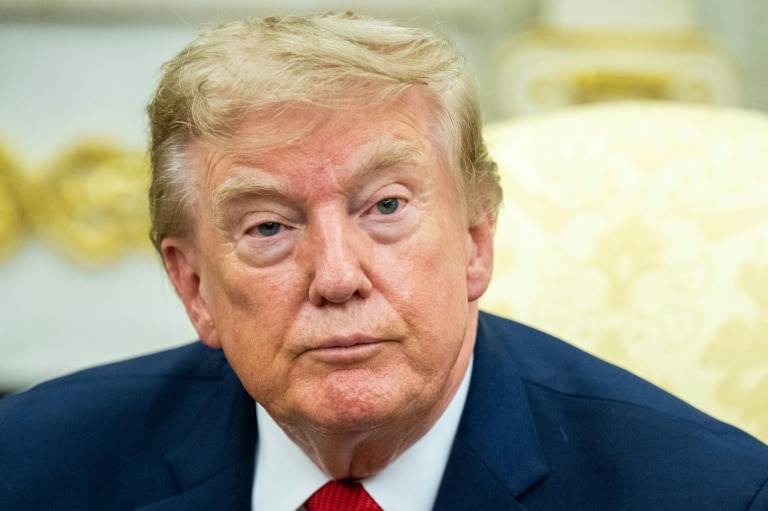
    BEIJING – When former U.S. President Donald Trump launched the most intensive segment of his official visit to China on Thursday, diplomatic observers and policymakers on both sides entered the diplomatic summit braced for more symbolic spectacle than substantive progress. Key sticking points from bilateral trade to U.S. policy toward Taiwan and the ongoing conflict in Iran have created low expectations for landmark agreements, even as the visit unfolds against a backdrop of carefully curated ceremonial pageantry.

    Trump’s arrival in the Chinese capital Wednesday evening opened with an elaborate formal welcome ceremony. His motorcade processed down central Beijing thoroughfares lined with alternating American and Chinese national flags, past towering skyscrapers illuminated with large red Chinese characters reading “Beijing Welcome.” After the procession, the U.S. president traveled to his downtown accommodation with no public engagements scheduled for the rest of the evening.

    On Thursday, Chinese leader Xi Jinping is scheduled to meet Trump for an official welcoming ceremony at the Great Hall of the People, China’s top legislative venue located on the western edge of Tiananmen Square, which also hosts major state and cultural events. Following the opening ceremony, the two leaders will hold a one-on-one bilateral working meeting, after which Trump will tour the Temple of Heaven, a 15th-century imperial religious complex once used by Ming and Qing dynasty emperors to perform annual rituals for good harvest, that carries deep symbolic meaning for traditional Chinese concepts of cosmic order. The day will conclude with a formal state banquet hosted in Trump’s honor. A working meeting over tea and lunch is scheduled for the pair on Friday.

    The White House has pushed back against low expectations, maintaining that Trump entered the trip with clear goals to secure tangible outcomes before his departure. Senior administration officials have hinted that potential trade-related announcements could come during the visit, including a expected Chinese commitment to increase purchases of American agricultural goods including soybeans and beef, as well as U.S.-manufactured commercial aircraft. The Trump administration is also pushing to formalize a new bilateral Board of Trade designed to address longstanding commercial frictions between the two global economic powers through ongoing structured dialogue.

    Yet concrete details of any potential agreements remain elusive, even as geopolitical friction over the Iran conflict adds an extra layer of complexity to talks. China’s longstanding close economic ties to Iran have put Beijing at odds with Washington’s policy goals in the region, creating a major point of tension ahead of the summit.

    Trump’s three-day Beijing trip comes as the Iran conflict continues to dominate domestic U.S. political discourse, stoking growing fears of economic weakness in the U.S. as the country enters a heated midterm election cycle. With November’s congressional elections approaching, Trump’s Republican Party is fighting to retain control of both chambers of Congress, and the economic fallout from the Iran war has emerged as a top voter concern. The U.S.-led conflict with Iran has resulted in the effective closure of the Strait of Hormuz, a critical global chokepoint for oil and natural gas shipments, leaving energy tankers stranded and driving sharp spikes in global energy prices that threaten to undermine global economic growth.

    The extended, structured schedule of one-on-one engagement between Trump and Xi, set against the backdrop of formal diplomatic events, will create ample opportunity for the two leaders to tackle the full slate of thorny bilateral and global issues on the agenda. Beyond Iran and trade, those topics include the longstanding dispute over Taiwan and a proposed three-way nuclear arms limitation pact between the United States, China and Russia.

    Despite the open agenda, most diplomatic analysts expect little progress beyond ceremonial pleasantries and the mutual public praise that Trump and Xi have exchanged consistently for years. Jim Lewis, a technology policy fellow at the Center for European Policy Analysis, predicted that neither side will make meaningful headway on the two most contentious foreign policy issues up for discussion. “Trump will press the Chinese to help him on Iran. They’ll be unwilling. The Chinese will press Trump to make concessions on Taiwan. We’ll see what we get out of that,” Lewis explained.

    Back in Washington, domestic political tensions over the Iran conflict deepened Wednesday, when Senate Republicans again blocked Democratic legislation aimed at ending U.S. hostilities in Iran. The vote saw a rare party break from Alaska Republican Senator Lisa Murkowski, who crossed party lines to vote with Democrats, becoming the third Senate Republican to oppose continued U.S. military engagement in the conflict.

    As the world’s largest buyer of Iranian crude oil, China’s position on Iran is a core priority for the Trump administration. Trump has publicly downplayed suggestions that he will push Xi to take stronger action to pressure Iran to reopen the Strait of Hormuz, though senior White House officials have confirmed that the president will make that case to Xi in closed-door negotiations.

    The president has also stressed that concerns over U.S. economic fallout will not soften his demands in negotiations over Iran, even amid a fragile current ceasefire. When asked as he departed the White House whether the financial strain on ordinary American households would factor into his Iranian negotiations, Trump responded bluntly: “Not even a little bit.”

    “I don’t think about Americans’ financial situation. I think about one thing: We cannot let Iran have a nuclear weapon,” Trump said, adding that he believes “every American understands” that priority.

    The Trump administration has struggled to present a consistent public message on inflation and the Iran conflict, however. Vice President JD Vance told reporters Wednesday that Trump remained “laser focused” on tackling inflation, pushing back against the president’s own explicit comments that the U.S. economy was not a factor in resolving the war. When asked about Trump’s comments, Vance claimed, “Well, I don’t think the president said that. I think that’s a misrepresentation of what the president said.”

    Discussions over trade and Taiwan are also expected to be tense. The status of Taiwan looms large over the summit: China has long claimed the self-governing island as part of its sovereign territory, and Beijing has strongly objected to U.S. plans to sell advanced military weapons to Taipei. The Trump administration has already approved an $11 billion arms package for Taiwan, but has not yet moved forward with implementing the sale. Trump has also openly expressed greater ambivalence about U.S. commitments to Taiwan, a shift that has sparked widespread speculation about whether he could be open to rolling back American support for the island democracy.

    Taiwan is the world’s leading producer of advanced semiconductors, which are critical components for cutting-edge artificial intelligence development. Trump has sought to advance new trade deals with Taiwan that would incentivize increased chip manufacturing within the United States.

    Trump personally invited Jensen Huang, CEO of leading chipmaker Nvidia, to join him on Air Force One during a refueling stop in Alaska en route to Beijing. Huang is one of a dozen high-profile CEOs from the technology, defense, finance and agricultural sectors joining Trump’s official delegation. Other senior members of the U.S. delegation include Secretary of State Marco Rubio, Treasury Secretary Scott Bessent, Defense Secretary Pete Hegseth, as well as Trump’s son Eric Trump and daughter-in-law Lara Trump. Tesla and SpaceX CEO Elon Musk, who previously led Trump’s initiative to cut federal staffing and shrink the size of the federal government, is also part of the delegation.

    The U.S. and China reached a bilateral trade truce last year that eased tit-for-tat threats of steep new tariffs on each other’s goods. The White House says ongoing discussions have shown mutual interest in extending the agreement, though it remains unclear whether any formal announcement of an extension will come during this visit.

    Trump has said he will press Xi to grant greater market access to U.S. firms in China, saying he will urge his Chinese counterpart to “‘open up’ China so that these brilliant people can work their magic.” He is also seeking to extend an existing agreement that allows China to continue exporting rare earth minerals to the United States, a deal that has so far prevented Beijing from restricting global rare earth supplies in response to Trump’s earlier tariff threats.

    Senior U.S. officials have also confirmed that Trump will raise the proposal for a three-way nuclear arms pact between the U.S., China and Russia that would place caps on each nation’s nuclear arsenal, an idea that Beijing has previously viewed with open skepticism.

    Associated Press writer Seung Min Kim in Washington contributed reporting to this article.

  • US news reports of gloomy Iran war intel assessments anger Trump

    US news reports of gloomy Iran war intel assessments anger Trump

    A growing rift has erupted between the Trump White House and major U.S. news outlets after independent reporting revealed that classified U.S. intelligence assessments directly contradict the administration’s public claims that Iran’s military capabilities have been completely destroyed. The confrontation has sparked fresh alarms over escalating attacks on press freedom from the Trump administration, as policymakers face growing scrutiny over the trajectory of the ongoing conflict with Iran.

    The New York Times first broke the story on Tuesday, citing declassified internal assessments compiled earlier this month that draw a sharp distinction between the Trump administration’s upbeat public narrative and the confidential briefings provided to senior policymakers. According to the report, U.S. spy agencies have confirmed that Iran has rapidly reestablished operational access to the vast majority of its key missile infrastructure, including primary launch sites, mobile deployment units, and underground storage facilities that the administration claimed had been wiped out in joint U.S.-Israeli bombardment campaigns.

    Most concerning for senior national security officials, the assessments note that 30 out of Iran’s 33 active missile sites positioned along the Strait of Hormuz — one of the world’s most critical global energy chokepoints — are now fully operational once again. The reactivation of these sites puts U.S. naval vessels and commercial oil tankers transiting the strategic waterway at direct risk, the report added.

    The Times’ reporting followed a similar exclusive published one week earlier by The Washington Post, which outlined a confidential Central Intelligence Agency analysis delivered to top administration policymakers. The CIA assessment concluded that Iran’s economy could withstand a sustained U.S. naval blockade for a minimum of three to four months before encountering crippling hardship, contradicting administration claims that the blockade would force Tehran to capitulate in short order.

    The Post’s reporting also confirmed the core findings of the later New York Times assessment, noting that the broader U.S. intelligence community has determined that Iran retains the vast majority of its ballistic missile capacity despite weeks of intensive joint bombing campaigns. Citing an unnamed senior U.S. official, the outlet reported that Iran still holds roughly 75 percent of its pre-conflict inventory of mobile missile launchers and approximately 70 percent of its original stockpile of operational missiles. The official added that Iranian forces have successfully recovered and reopened nearly all of their underground weapons storage sites, repaired damaged missiles, and even completed assembly of new missiles that were near completion when the conflict began.

    Within hours of the Times’ publication, President Donald Trump took to his Truth Social platform to lash out at the reporting. Trump, who has repeatedly claimed Iran has been left with no functional military capacity, denounced the outlets’ reporting as “virtual TREASON,” arguing that the claims of intact Iranian military capabilities are false and outrageous. “They are aiding and abetting the enemy!” Trump wrote, doubling down on his original claim that “Iran has ‘no Navy, their Air Force is gone, all Technology is gone, their ‘leaders’ are no longer with us, and the Country is an Economic Disaster.”

    Beyond the divergence between public claims and classified intelligence on Iran’s capabilities, multiple independent reports have also revealed that the Trump administration has drastically understated the damage Iranian counterstrikes have inflicted on U.S. military assets across the Persian Gulf. In a report published late last month, NBC News cited three unnamed U.S. officials, two congressional aides, and an additional source familiar with the damage assessment, which found that U.S. bases and equipment suffered far more extensive damage than the administration has publicly acknowledged. The outlet added that repair costs are expected to reach into the billions of dollars.

    A subsequent Washington Post analysis of open-source satellite imagery reinforced these findings, documenting that Iranian strikes have damaged or destroyed at least 228 structures and pieces of equipment at U.S. military installations across the Middle East since the outbreak of hostilities. Targets have included aircraft hangars, troop barracks, fuel depots, fixed-wing aircraft, and critical infrastructure including radar systems, communications networks, and air defense installations — a scale of destruction vastly larger than the U.S. government has publicly admitted.

    Foreign policy analysts have already concluded that the Trump administration’s Iran strategy has suffered a major strategic failure 10 weeks into the conflict. Writing on Wednesday, Brookings Institution foreign policy scholar Phil Gordon argued that “10 weeks in, the strategic failure is undeniable” for the administration. Gordon warned that the greatest ongoing risk stems from the president’s inability to accept a setback: “The risk now is that having missed the opportunity to declare victory after the first few weeks, Trump can’t accept defeat and humiliation so will keep looking for the next quick fix, thereby likely only making things worse.”

    Top Trump administration officials have doubled down on attacks against the press for publishing the unflattering disclosures. Pentagon Secretary Pete Hegseth has already labeled U.S. media outlets “unpatriotic” and warned reporters to “think twice” before publishing classified information that contradicts the administration’s narrative. Earlier this week, The Wall Street Journal revealed that the U.S. Department of Justice issued subpoenas to the outlet’s journalists in March seeking records tied to their Iran war coverage.

    Katie Fallow, deputy litigation director at the Knight First Amendment Institute at Columbia University, called the subpoenas the latest example of the administration’s escalating campaign against press freedom. “Time and again, the administration has shown itself willing to disregard the First Amendment and long-standing limits on the use of government power to go after news outlets that publish embarrassing or critical information about the government,” Fallow said.

  • US commerce secretary details “off-putting” interaction with Epstein in testimony

    US commerce secretary details “off-putting” interaction with Epstein in testimony

    A congressional investigation into the late convicted sex offender Jeffrey Epstein has made public sworn interview transcripts from two high-profile figures: U.S. Commerce Secretary Howard Lutnick and Gateway Computers co-founder billionaire Ted Waitt. As of the release, neither man has faced any accusations of misconduct related to Epstein’s alleged criminal network from victims or investigative bodies.

    In his transcribed voluntary testimony before the House Oversight Committee on May 6, Lutnick outlined three brief encounters with Epstein, who was once his next-door neighbor in New York City. The commerce secretary, widely known as the key architect of the Trump administration’s global tariffs policy, told investigators that his first introduction to Epstein came in 2005, when he and his wife were invited to coffee at Epstein’s Manhattan home. During a tour of the residence, the couple was shown a room fitted with only a massage table and surrounded by candles. When Lutnick asked how often Epstein received massages there, the disgraced financier responded with a suggestive remark: “Every day and the right kind of massage.”

    Lutnick told the panel he found the comment deeply off-putting, and he and his wife left the property immediately after the exchange. He added that he made an explicit decision right then to cut off all personal and professional ties with Epstein, a statement he had previously given to congressional investigators. But newly released court documents from the U.S. Department of Justice’s Epstein investigation earlier this year revealed a previously undisclosed visit Lutnick made to Epstein’s private Caribbean island in 2012, years after he claimed to have severed all contact. The revelation sparked bipartisan demands for Lutnick’s resignation from the Trump Cabinet.

    During his recent testimony, Lutnick offered an explanation for the 2012 visit. He told the committee that Epstein’s staff reached out to his group unexpectedly while he was on a family vacation in St. Thomas, located just a short distance from Epstein’s private island. Lutnick said the unprompted contact left him unnerved, noting: “Without any communication for years, [how] would he inexplicably know where I’m going? It’s unsettling, actually.” The commerce secretary confirmed that he, his family, another couple and their children, plus accompanying staff, accepted the invitation for lunch. He emphasized that the group only dined outdoors on the island’s grounds and never entered any of the property’s buildings, describing the visit as unremarkable: “We sat outside, had lunch. It was boring. We left.” Lutnick also acknowledged one additional brief, casual interaction with Epstein in 2011 focused on construction scaffolding, which he described as completely meaningless and inconsequential.

    Alongside Lutnick’s transcript, the committee also released the record of its April 30 interview with Waitt, the billionaire tech entrepreneur. Waitt detailed his six-year romantic relationship with Ghislaine Maxwell, Epstein’s convicted co-conspirator, which ran from 2004 to 2010. Waitt told investigators he had very limited direct contact with Epstein and never witnessed any illegal or harmful activity during his relationship with Maxwell.

    Waitt told the panel he understood Maxwell’s role with Epstein to be that of an estate manager, responsible for overseeing the financier’s multiple properties and staff. He added that he always felt uncomfortable with the dynamic between the pair, noting that Epstein held clear sway over Maxwell, who consistently deferred to him: “He did seem to have significant influence over her, she always kind of look[ed] up to him and I was not comfortable with that.” Waitt also confirmed that their relationship overlapped with Epstein’s 2008 guilty plea in Florida to charges related to the prostitution of a minor. He said Maxwell was subpoenaed to testify in the case during that time, and that she was visibly stressed by the legal proceedings but repeatedly denied any personal involvement in Epstein’s crimes.

    Waitt stated that he and Maxwell never cohabitated, as he maintained a primary residence in California while she lived mostly in New York. He denied having any knowledge of abuse or misconduct by either Epstein or Maxwell, and said he had no awareness of Maxwell ever traveling to Epstein’s private island during their relationship. He added that Maxwell was not publicly identified as a co-conspirator in Epstein’s crimes until after their relationship ended, and he did not learn of the formal charges against her until she was arrested by federal authorities.