分类: politics

  • Latvian PM resigns after row over stray Ukrainian drones

    Latvian PM resigns after row over stray Ukrainian drones

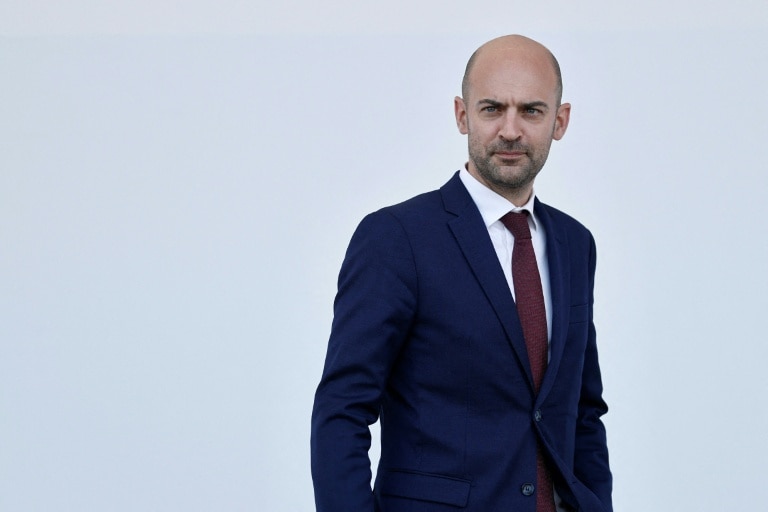
    A sudden political upheaval has shaken the Baltic nation of Latvia, where Prime Minister Evika Silina has formally stepped down after her ruling four-party coalition collapsed earlier this week, triggered by a controversy over stray Ukrainian drones bound for Russia that entered Latvian airspace.

    The chain of events that ended Silina’s premiership began on May 7, when three unmanned aerial vehicles crossed into Latvia’s eastern territory. This marked the second unintended drone incursion recorded in the country since the start of 2026. Both Latvian and Ukrainian officials have confirmed the drones were originally launched by Ukrainian forces targeting Russian positions, but signal jamming interference knocked them off course, leading them to stray across the border.

    Of the three errant drones, one crashed onto undamaged ground, a second hit an unoccupied oil storage facility near the eastern Latvian town of Rezekne, and the third transited Latvian airspace before exiting. No casualties or injuries were reported in the incidents, but public anger quickly grew over what local residents described as a delayed and inadequate official response. Residents told reporters that Latvia’s emergency cell broadcast alert system was not activated until a full hour after the first crash near Rezekne, leaving local communities unaware of potential risk.

    Last week, Silina moved to take decisive action: she dismissed Defence Minister Andris Spruds over his handling of the incursion, criticizing his response as insufficient and naming an immediate replacement for the post. In response, Spruds’ party, the Progressives, withdrew all its legislative and governing support from Silina’s ruling coalition, effectively collapsing the government just five months ahead of the scheduled October 2026 general election.

    Speaking to reporters on Thursday, Silina hit back at what she described as political posturing from her former coalition partners. “Seeing a strong candidate for the post of defence minister… political windbags have chosen a crisis,” she said, adding: “I am resigning but I am not giving up.” Silina also justified her dismissal of Spruds by pointing to broader performance issues across Latvia’s defence sector. Noting that Latvia currently allocates 5% of its gross domestic product to national defence — one of the highest shares among NATO members — she argued that this level of investment demands far greater accountability and tangible results for the Latvian public.

    First appointed prime minister in September 2023, Silina led a centrist four-party coalition that maintained unwavering support for Ukraine in its war against Russian invasion. Like its Baltic neighbors Estonia and Lithuania, Latvia has grown increasingly concerned about potential Russian territorial aggression since Moscow launched its full-scale invasion of Ukraine in 2022. In response, the country has sharply expanded its defence spending and procurement, and reintroduced compulsory military service in 2023, just one year after the full-scale invasion began.

    Latvian President Edgars Rinkevics has announced he will make a formal decision on the fastest possible pathway to forming a new caretaker government on May 15, as the country prepares for its upcoming general election this autumn.

  • Malaysia slams Norway for revoking export license for a naval missile system

    Malaysia slams Norway for revoking export license for a naval missile system

    In a sharp rebuke that has highlighted growing friction over international defense contracts, Malaysian Prime Minister Anwar Ibrahim has publicly condemned Norway’s decision to revoke an export license for a key naval missile system earmarked for the Royal Malaysian Navy, warning the unilateral move risks eroding long-term trust in European defense contractors. The dispute centers on the Naval Strike Missile (NSM) system and related launcher components, which were contracted to equip Malaysia’s upcoming fleet of littoral combat ships as a core part of the Southeast Asian nation’s ongoing military modernization drive.

    Speaking Thursday, Anwar confirmed he conveyed Malaysia’s “vehement objection” to the cancellation directly during a phone conversation with Norwegian Prime Minister Jonas Gahr Støre. In an official statement released after the call, the Malaysian leader emphasized that Kuala Lumpur has met every contractual obligation for the deal, which was first signed in 2018, with unwavering consistency and good faith. “Malaysia has honored every obligation under this contract since 2018: scrupulously, faithfully and without equivocation,” Anwar said. “Norway, it appears, has not felt compelled to extend us the same courtesy and demonstration of good faith.”

    Per Malaysia’s national news agency Bernama, Kongsberg Defense & Aerospace AS, the Norwegian manufacturer of the NSM anti-ship missile system, has distanced itself from the policy move, stating that all export licensing decisions fall exclusively under the jurisdiction of the Norwegian government. As of Thursday, Oslo has not issued any public statement addressing the license revocation or Anwar’s criticisms.

    Malaysian Defense Minister Mohamed Khaled Nordin revealed to local media outlets that the Malaysian government had already completed payments for nearly 95% of the total contract value before Norwegian authorities blocked the shipment in March. Without the NSM systems, Malaysia’s littoral combat ship modernization program faces significant delays, which Anwar says will undermine the navy’s operational readiness and carry unforeseen consequences for the regional military balance.

    The Malaysian prime minister stressed that signed international defense contracts are binding, formal agreements, not disposable arrangements to be changed at random. “Signed contracts are solemn instruments. They are not confetti to be scattered in so capricious a manner,” Anwar said. “If European defense suppliers reserve the right to renege with impunity, their value as strategic partners flies out the window.”

    In response to the cancellation, Khaled confirmed that Malaysian officials are currently reviewing all available legal pathways, including potential claims for financial compensation from the Norwegian side, to resolve the breach of contract.

  • Philippine senator wanted by the International Criminal Court flees from Senate

    Philippine senator wanted by the International Criminal Court flees from Senate

    MANILA, Philippines — A high-stakes political crisis has gripped the Philippines this week, after a sitting Philippine senator facing International Criminal Court (ICC) charges of crimes against humanity slipped out of the heavily guarded Senate compound amid chaotic gunfire between security personnel and government law enforcement agents, senior government officials confirmed Thursday.

    Ronald dela Rosa, 64, a former national police chief under ex-President Rodrigo Duterte, had taken shelter inside the Senate compound Wednesday to avoid execution of an ICC arrest warrant unsealed just days earlier. The chaos that cleared his escape path began Wednesday night, when Senate security personnel opened multiple volleys of gunfire during a heated confrontation with a National Bureau of Investigation (NBI) agent assigned to serve the warrant. In the confusion that followed the shootout, dela Rosa managed to slip past security and leave the compound undetected.

    Shortly after the incident, President Ferdinand Marcos Jr. addressed the nation in a late-night televised broadcast, urging the public to avoid panic and stressing that authorities would conduct a full, transparent investigation into the escape. Law enforcement sources confirmed that one line of active inquiry centers on suspicions the gunfight was deliberately orchestrated to create a diversion and cover for dela Rosa’s exit.

    In a public press briefing Thursday, Senate President Alan Cayetano — a close political ally of the Duterte family — pushed back against claims of foul play, insisting “there is no obstruction of justice” in the incident. Cayetano argued that because no ICC arrest warrant had been officially presented to the Senate leadership, dela Rosa was under no legal obligation to remain on the premises and was free to leave at his own discretion. Political critics have rejected this explanation, however, and are calling for Cayetano and the Senate’s top security official to be held legally and politically accountable for facilitating the fugitive senator’s escape.

    Dela Rosa’s legal troubles are directly tied to the deadly national anti-drug crackdown launched by Duterte when he held the presidency from 2016 to 2022. Duterte himself was taken into ICC custody last March to face trial in The Hague on separate charges of crimes against humanity stemming from the same campaign. The unsealed ICC warrant against dela Rosa, made public Monday, accuses him of direct responsibility for the crime against humanity of murder, linked to the killings of no fewer than 32 people between July 2016 and April 2018 — the period when dela Rosa led the Philippine National Police and oversaw implementation of Duterte’s anti-drug initiative.

    Both Duterte and dela Rosa have repeatedly denied authorizing extrajudicial killings, though Duterte openly publicly threatened drug suspects with death throughout his time in office.

    The escape comes amid escalating open political conflict between the Duterte political bloc and the Marcos administration, a rift that lays bare deep enduring divisions within Philippine politics. The tension has escalated rapidly in recent days: Vice President Sara Duterte, Rodrigo Duterte’s daughter and current second-in-command of the country, has openly accused Marcos of orchestrating the “kidnapping” of her father and his illegal transfer to the international court. On Monday, the Marcos-allied majority in the House of Representatives voted to impeach Sara Duterte over allegations of unexplained illicit wealth, misuse of public funds, and a public threat to assassinate President Marcos, his wife, and the House speaker if she were killed amid the deepening political feud. Sara Duterte has denied all wrongdoing, but has declined to respond to the specific allegations against her in detail. Cayetano announced Thursday that the Senate will convene as an impeachment trial court as early as next Monday to begin preparations for the vice president’s trial.

    The current Senate leadership shakeup that set this chain of events in motion also ties directly to the dela Rosa case. Just this Monday, Cayetano reclaimed the Senate presidency after securing the support of 13 out of the body’s 24 senators. His razor-thin majority was secured after dela Rosa — who had been absent from Senate proceedings for months over fears of imminent arrest — made a surprise appearance at Monday’s leadership vote, arriving at the compound in Cayetano’s own vehicle. After the vote concluded, NBI agents moved to serve the ICC arrest warrant on the senator, who immediately fled to the Senate plenary hall and was taken into protective custody by his allied senators before the Wednesday night escape.

  • In pictures: Trump hosted by Xi Jinping in Beijing on two-day summit

    In pictures: Trump hosted by Xi Jinping in Beijing on two-day summit

    On a landmark diplomatic visit to China’s capital Beijing, former U.S. President Donald Trump held a series of formal talks and scheduled engagements with Chinese President Xi Jinping across Thursday and Friday, marking a high-profile gathering that drew global attention to the trajectory of U.S.-China relations.

    Trump touched down in Beijing Wednesday evening aboard Air Force One, where he was received on the red carpet by Chinese Vice President Han Zheng, alongside local youth waving both U.S. and Chinese national flags in a display of ceremonial welcome. The following day, a formal arrival ceremony was co-hosted by Xi and Trump at Beijing’s Great Hall of the People, where the two leaders exchanged an opening handshake before walking the red carpet together and conducting a formal inspection of impeccably drilled Chinese honor guard troops. Rows of cheering children lined the route, waving small national flags and carrying floral bouquets to greet the visiting delegation. Following the ceremony, the U.S. leader was treated to a guided tour of the 15th-century Temple of Heaven, one of China’s most iconic historic landmarks, alongside Xi.

    A standout detail of Trump’s delegation is the roster of top American technology and finance leaders joining the trip, signaling a focus on commercial and technological ties between the two global powers. Attendees include Apple CEO Tim Cook, Tesla and SpaceX founder Elon Musk, BlackRock CEO Larry Fink, and Nvidia co-founder and CEO Jensen Huang, who was confirmed as a last-minute addition to the delegation. Huang’s presence carries particular weight, as Nvidia has been at the center of ongoing U.S.-China technology trade tensions in recent years. Trump’s son Eric Trump also accompanied the delegation.

    In his opening remarks to kick off the highly anticipated bilateral talks, Xi emphasized that the entire world was closely monitoring the outcomes of their meeting, noting that “currently transformation not seen in a century is accelerating across the globe and the international situation is fluid and turbulent.” Responding in his own opening comments, Trump called the opportunity to meet with Xi “an honor,” reflecting on the productive working relationship the two leaders built in the past. “We’ve gotten along, when there were difficulties we worked it out. I would call you and you would call me,” Trump said. “People don’t know, whenever we had a problem we worked it out very quickly.”

    After two hours of closed-door discussions, the two leaders traveled together to the Temple of Heaven, a 600-year-old imperial religious complex that once served as the site where Ming and Qing dynasty emperors held annual rituals to offer sacrifices and pray for abundant harvests. Now a UNESCO World Heritage Site and top international tourist destination, the ancient landmark provided a symbolic backdrop for the diplomatic meeting. Posing for photos in front of the complex’s iconic main prayer hall, Trump praised the site and the country, telling Xi “Great place, incredible. China’s beautiful.”

  • Angus Taylor eyes ‘generational’ change, but Pauline claims he’s seeing orange

    Angus Taylor eyes ‘generational’ change, but Pauline claims he’s seeing orange

    In a high-stakes address to Australia’s House of Representatives delivered shortly after 7:30 pm Thursday, Opposition Leader Angus Taylor laid out the Coalition’s far-reaching policy blueprint for tackling the country’s soaring cost of living, locking in a series of contentious pledges that have already divided political circles across the nation.

    Against a backdrop of a federal budget shaped by global volatility stemming from the Middle East conflict – one where the ruling Labor government has pushed forward sweeping reforms to housing investor tax breaks including changes to capital gains tax and negative gearing, policies the Coalition has already promised to reverse if elected – Taylor’s reply positioned the opposition as a sharp alternative to Labor’s agenda. Prime Minister Anthony Albanese has framed Labor’s tax changes as a critical step to rebalance Australia’s increasingly unaffordable housing market and improve equity for first-time buyers, but Taylor rejected that framing outright, labeling the new levies on housing and small business a “stealth raid” on hardworking Australians striving to improve their financial standing, an unfair assault on personal aspiration.

    The most eye-catching proposal in the Coalition’s plan is a hard cap on net overseas migration, tied directly to the annual number of new housing completions across the country. Taylor stressed that under a future Coalition government, “Never again will a government be able to bring in more people than our housing can support. That’s our commitment.” To address the current national housing shortfall, Taylor confirmed migration levels would be held “significantly below” the cap for the first several years of a Coalition term, delivering what he called “one of the biggest cuts to immigration in Australian history.” He declined to release a precise numerical target ahead of the next election, arguing that setting a fixed figure now would be reckless, and hit out at Labor for consistently overshooting its own migration targets, drawing jeers from government benches in response.

    Beyond the migration cap, the Coalition laid out a suite of further border and visa policy changes: the existing Australian Values Statement will become an enforceable condition for visa approval, permanent visa holders will be legally required to learn English, enhanced border screening will be implemented to block radical extremists, Temporary Protection Visas will be reinstated to crack down on what Taylor called “frivolous protection claims” via a formal list of safe countries deemed free of persecution, and the government will move to process and deport 70,000 visa overstayers who have no legal right to remain in the country. “Those who criticise the law being enforced must explain why their sympathies lie with illegal overstayers instead of with migrants and Australians who abide by the law,” Taylor said.

    On housing, the Coalition plans to unblock stalled residential construction projects and inject $5 billion into supporting core infrastructure including new roads, water networks and sewage systems. Taylor said these investments, paired with deep cuts to burdensome regulatory red tape, will unlock 400,000 new homes and reduce the cost of a newly built home by as much as $70,000. Taylor also targeted the 2,000-page National Construction Code introduced under Labor, arguing its thousands of overlapping rules add tens of thousands of dollars to new build costs, with the Coalition aiming to shrink the code to roughly 200 pages. Additional deregulation is planned for the Environmental Protection and Biodiversity Conservation Act as well.

    On tax policy, the Coalition introduced its Tax Back Guarantee, which will index the two lowest income tax thresholds to inflation starting in the 2028-29 financial year. Taylor explained this reform will fully protect 85% of Australian income earners, delivering an estimated $250 in relief in the first year of the policy, growing to more than $1,000 annually by the fourth year. Starting in 2031-32, the two highest tax thresholds will also be indexed to inflation, extending full protection from bracket creep to all Australian taxpayers, a change Taylor described as once-in-a-generation tax reform. For small businesses with annual turnover under $10 million, the policy makes the immediate asset deduction of up to $50,000 a permanent measure, to encourage ongoing business investment.

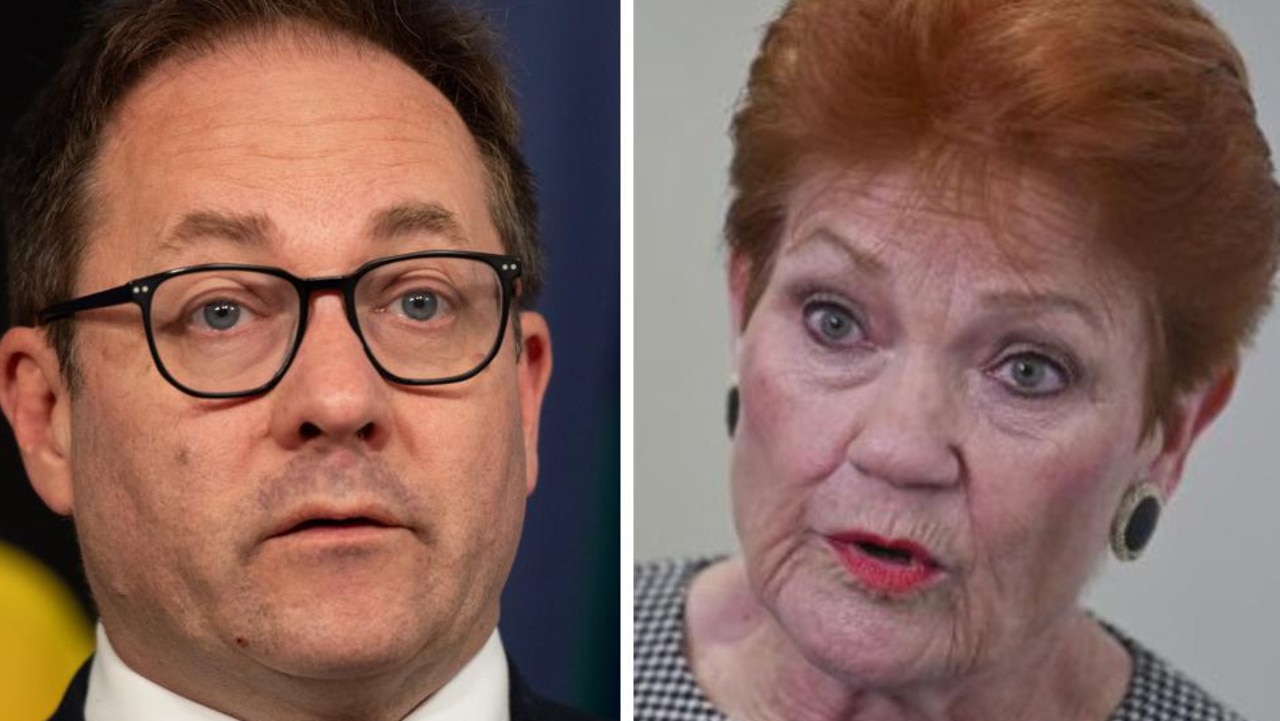
    In a further contentious shift, Taylor confirmed the Coalition will restrict access to the National Disability Insurance Scheme (NDIS) and 17 other welfare programs exclusively to Australian citizens, excluding permanent residents from accessing these benefits. “My message is this: If you commit to Australia, then Australia will commit to you,” Taylor said. “After all, the taxes paid by hard working Australians should support Australians.” The policy drew immediate mixed reactions even across the political sphere: One Nation leader Pauline Hanson quickly claimed the entire budget reply was “replete with One Nation policies,” arguing the Coalition had stolen longstanding One Nation proposals after previously dismissing the minor party as having no workable ideas. But senior Coalition figures defended the plan, with Shadow Treasurer Tim Wilson telling the ABC the policy aligns with a growing global shift among European nations, arguing “it has to be on the basis of they come, commit and contribute” to access public benefits. Liberal Senator Sarah Henderson told Sky News the policy of restricting welfare to citizens is “right and proper,” though she declined to specify how much taxpayer money the change would save.

    On economic and fiscal policy, Taylor announced that a future Coalition government would deposit 80 cents of every dollar in resource revenue that exceeds forecast projections into a new Future Generations Fund. The fund will be used to pay down Labor’s projected $1 trillion in national debt and fund new nation-building infrastructure projects, with 25% of fund allocations directed to regional communities that Taylor said have been neglected by the current Labor government. Taylor also rejected Labor’s tax breaks for electric vehicles, noting the majority of benefits flow disproportionately to high-income households, and confirmed the Coalition would collaborate with the Albanese government on NDIS reform, an unusual point of bipartisan agreement in an otherwise combative address.

    On national security, Taylor argued that in an era of global “coercion, crisis, and conflict,” Australia must prioritize greater self-reliance. A Coalition government will develop a formal National Security Strategy and appoint a dedicated National Security Adviser, with defense as the central pillar of the strategy. Unlike Labor, which projects to hit the 3% of GDP defense spending target by 2033 via a planned $53 billion spending increase over 10 years, Taylor committed the Coalition would meet the 3% of GDP target immediately, accusing Labor of accounting trickery to delay the investment.

    Overall, Taylor’s address stayed largely aligned with the Coalition’s longstanding policy priorities: pushing back against high mass migration levels, criticizing big government overspending, and highlighting the growing cost of living crisis that has made the traditional Australian dream of a single-income earner saving for a home deposit increasingly out of reach for many. Taylor closed by outlining his core vision for the country: “to revive the freedom that Australians have lost under Labor. Not a government-directed economy – a free-enterprise economy. Not bigger government – better government.”

  • British PM battles to stay in power amid rebellion

    British PM battles to stay in power amid rebellion

    Just months after ending 14 years of Conservative Party rule with a historic 2024 general election victory, Britain’s Prime Minister Keir Starmer finds himself locked in a desperate battle to retain his job, as internal party unrest triggered by disastrous local election results paves the way for a potential leadership challenge from his former deputy, Angela Rayner.

    The crisis erupted last week when Labour suffered catastrophic losses across regional and local polls. Voter backlash stripped the party of its decades-long control of the devolved Welsh Parliament for the first time in history, while it failed to close the gap with the pro-independence Scottish National Party at the Scottish Parliament in Edinburgh. Far-right Reform UK and left-wing Green Party made massive gains at Labour’s expense, reflecting widespread public discontent with Starmer’s performance over his 22 months in office. To date, four junior government ministers have resigned, more than 80 Labour members of Parliament have publicly called for his departure, and yet Starmer has remained defiant, vowing to hold onto power despite the growing mutiny within his own party. “I know I have my doubters, and I know I need to prove them wrong, and I will,” he stated during a defiant appearance earlier this week.

    A major new development upended the crisis on Thursday, when Rayner announced that UK tax authority HM Revenue & Customs (HMRC) had cleared her of allegations of deliberate wrongdoing connected to a past tax affair. The 46-year-old left-wing working-class champion was forced to step down from her posts as deputy prime minister and housing secretary in September over an underpayment of property duty on a southern England flat purchase, which also found her in breach of the ministerial code. On Thursday, she confirmed that HMRC had exonerated her of claims she intentionally sought to evade tax, after she settled £40,000 ($54,000) in outstanding tax obligations. “I welcome HMRC’s conclusion, which has cleared me of any wrongdoing,” Rayner said in an official statement. “I set out to pay the correct amount of tax. I took reasonable care and acted in good faith, based on the expert advice I received, and HMRC has accepted this.”

    The clearance removes a major barrier to Rayner entering a leadership contest, prompting widespread speculation that she could soon throw her hat into the ring. While she has stopped short of directly calling for Starmer’s resignation and told media she would not be the one to trigger a leadership race, she told *The Guardian* that she would step into “whatever role I can” to deliver the change party members and voters demand. Earlier this week, she issued a blunt assessment of Labour’s electoral collapse, writing “What we are doing isn’t working, and it needs to change.”

    Beyond Rayner, other potential challengers are also positioning for a run. Multiple UK media outlets reported Thursday that Health Secretary Wes Streeting, a 43-year-old figure popular with Labour’s centrist and right-wing factions, was preparing to resign imminently to launch a leadership bid. Streeting is unpopular with the party’s left-wing base, which broadly favors Rayner or Greater Manchester Mayor Andy Burnham for the top job. However, Burnham is currently ineligible to run, as he does not hold a seat in the Westminster Parliament.

    Under Labour Party rules, any candidate seeking to challenge Starmer must secure the backing of 81 Labour MPs – equal to 20% of the party’s parliamentary cohort – to trigger a formal leadership contest. With more than 80 MPs already having called for Starmer to step down, the threshold is within reach for a coordinated challenge, leaving Britain’s government facing a period of unprecedented political instability just six months into its first term after ousting the Conservatives.

  • Hungary summons Russian ambassador to protest attack in Ukraine near its border

    Hungary summons Russian ambassador to protest attack in Ukraine near its border

    BUDAPEST — In a move that signals a sharp break from the pro-Kremlin policies of Hungary’s previous administration, new Prime Minister Péter Magyar has summoned Russia’s top envoy to Budapest to answer for a massive Russian drone assault that struck western Ukraine’s Transcarpathia region, just across Hungary’s northern border.

    The Wednesday attack was part of one of the longest and largest Russian air barrages of the war to date. Ukrainian President Volodymyr Zelenskyy confirmed that Moscow launched more than 800 drones across 20 Ukrainian regions, hitting Transcarpathia directly. The multi-hour assault left at least six civilians dead and dozens more injured, among them multiple children.

    Transcarpathia hosts a large ethnic Hungarian community, making the strike a direct matter of national concern for Budapest. Russian Ambassador Evgeny Stanislavov was scheduled to meet with Hungarian Foreign Minister Anita Orbán at the foreign ministry at midday Thursday, where top Hungarian officials will deliver a formal rebuke of the attack.

    “The Hungarian government strongly condemns the Russian attack on Transcarpathia,” Magyar announced publicly during a Wednesday press briefing in southern Hungary’s Ópusztaszer, confirming the diplomatic summons. “She will tell him the same and ask for information on when Russia and Vladimir Putin plan to finally end this bloody war that began more than four years ago,” the prime minister added.

    As of Thursday morning, the Kremlin has not issued any public response to the summons.

    The diplomatic action is widely viewed as a defining turning point in Hungarian foreign policy. For 16 years, former Prime Minister Viktor Orbán maintained unusually close ties to Moscow, even after Russia’s 2022 full-scale invasion of Ukraine, defied widespread EU and NATO consensus to isolate the Kremlin. That era ended in April, when Magyar defeated Orbán in a historic general election, ending the former leader’s long hold on power. Since taking office, Magyar has pledged to roll back Orbán’s legacy, prioritizing rooting out systemic corruption and aligning Hungary more closely with EU and NATO collective security goals.

    Zelenskyy welcomed Hungary’s new stance, calling the summons a powerful, important signal from Budapest. “Moscow has once again shown itself to be a common threat not only to Ukraine, but also to neighbouring countries and Europe as a whole,” Zelenskyy wrote on social media, thanking Magyar for his firm stance.

    The diplomatic summons comes amid already heightened tensions between Moscow and Budapest. In March, ahead of the election that unseated Orbán, Ambassador Stanislavov published a public Facebook open letter to Magyar, denying Russian interference in Hungarian politics to support Orbán, a long-time Kremlin ally. “It’s really not worth scaring Hungarians with imaginary Russian threats,” Stanislavov wrote at the time, adding that the Russian embassy’s only goals were maintaining normal bilateral relations, pursuing mutually beneficial cooperation where possible, and protecting the interests of Russian and Hungarian citizens.

    This report includes contributions from correspondent McNeil in Brussels.

  • Latvian prime minister resigns after controversy over stray Ukrainian drones

    Latvian prime minister resigns after controversy over stray Ukrainian drones

    RIGA, Latvia – A dramatic political shift unfolded in the Baltic state of Latvia this week, as center-right Prime Minister Evika Silina tendered her resignation Thursday after her left-leaning coalition partner, the Progressives Party, withdrew its parliamentary support, stripping the ruling government of its working majority.

    The collapse of the three-party ruling coalition traces back to growing tensions over a series of high-profile incidents involving stray drones, which Latvian officials have linked to Ukraine’s ongoing conflict with Russia. The crisis first boiled over last week, when Defense Minister Andris Spruds, a Progressives Party member appointed through the coalition agreement, was forced to step down after losing confidence from both the prime minister and the Latvian public.

    Explaining her decision to remove Spruds over the weekend, Silina stated that the repeated drone incursions had exposed a critical failure at the top of the defense sector. “The drones incidents clearly demonstrated that the political leadership of the defense sector has failed to fulfill its promise of safe skies over our country,” she said Sunday.

    The most notable of the incursions occurred on May 7, when two drones presumed to be Ukrainian crossed the Latvian border. One of the unmanned aerial vehicles crashed at a domestic fuel storage facility, triggering widespread public alarm over border security gaps. Spruds had argued that the drones, originally targeting Russian positions, strayed into Latvian territory by accident. But critics pushed back on that assessment, pointing out that this incursion was just one of several similar events across the three Baltic states that have occurred since March. Every incident, critics argue, has laid bare critical weaknesses in Latvia’s ability to detect and respond to cross-border military threats, eroding public trust in the government’s national security commitments.

    Long before the drone crisis, the tripartite coalition – which also included a agrarian political party – had already been fraying for months, strained by disagreements across a range of policy and political issues. Silina’s exit from office also comes just five months ahead of Latvia’s scheduled general elections this October, leaving a period of political uncertainty as the country moves toward a national vote.

    In a public post on X Thursday announcing her resignation, Silina emphasized her commitment to national interests, saying, “My priority has always been, and remains, the well-being and security of Latvia’s people. Parties and coalitions change, but Latvia endures. And my responsibility to society comes above all else.”

    Latvian President Edgars Rinkevics, who holds the constitutional authority to appoint a new prime minister, will convene talks with representatives of all parliamentary political parties on Friday to chart a path forward for forming a new government.

    In a recent comment on the drone incidents, Ukrainian Foreign Minister Andrii Sybiha offered a counter-explanation for the incursions. Speaking Sunday, Sybiha claimed that the stray drones were the result of Russian electronic warfare operations intentionally diverting Ukrainian drones away from their intended targets inside Russia. To help prevent similar future events, Sybiha offered Ukraine’s full technical and intelligence support to Baltic states and Finland to shore up their airspace security.

    Related cross-border security issues have been rising in the region in recent months: Latvia’s security service recently reported that two individuals had set fire to train infrastructure connected to Russian logistics, and a prominent Russian academic specializing in North Korea studies was expelled from the country following a short detention period.

  • UK leadership contenders expected to launch bids to unseat prime minister after days of maneuvering

    UK leadership contenders expected to launch bids to unseat prime minister after days of maneuvering

    LONDON — British Prime Minister Keir Starmer is facing an imminent open challenge to his leadership of the ruling Labour Party, as two high-profile political figures have cleared the path for a leadership contest set to unfold Thursday.

    Wes Streeting, the current UK Health Secretary, has secured the required number of endorsements from Labour Members of Parliament to formally launch a challenge against Starmer for both party leadership and the office of prime minister, according to close allies of the Health Secretary. Streeting is expected to make his official challenge announcement later Thursday.

    The second major development came from former Deputy Prime Minister Angela Rayner, who confirmed Thursday she has resolved outstanding tax disputes with UK tax authorities that forced her resignation from the Cabinet in September 2024. Speaking to the Guardian, Rayner said Starmer needs to “reflect on” his hold on the premiership, adding that she stands ready to take part in any leadership contest triggered by Streeting’s challenge. A prominent figure aligned with Labour’s left wing, Rayner has long pushed for more aggressive progressive policies including a higher minimum wage and increased taxation on the wealthiest Britons.

    Calls for Starmer’s resignation have mounted rapidly over the past week after the Labour Party recorded catastrophic losses in nationwide local and regional elections. The poor election outcome amplified widespread voter frustration over what many see as the glacial pace of policy change under Starmer’s 10-month-old government.

    Despite the growing mutiny within his own party, Starmer has remained defiant, pledging publicly to hold onto his position. He has warned that opening a leadership contest at this juncture would throw the British government into crippling chaos, at a moment when the administration should be prioritizing urgent national and global issues: the ongoing UK cost of living crisis and the ongoing conflict in the Middle East.

    Under formal Labour Party rules, any candidate seeking to challenge the incumbent party leader must secure the public support of at least 81 of the party’s 403 sitting House of Commons MPs. In recent days, more than that threshold of Labour lawmakers have publicly called for Starmer to step down, clearing the signature hurdle for any challenger.

    Both Streeting and Starmer hail from the moderate faction of the centre-left Labour Party, a dynamic that could split establishment party support in a contest. Beyond Streeting and Rayner, other potential candidates are already being tipped to enter the race. Andy Burnham, the popular and widely respected Mayor of Greater Manchester, has emerged as a frequent name in leadership speculation, though he currently sits outside Parliament — a requirement for any Labour leader. Sources close to Burnham indicate that a sitting Labour MP could step down to trigger a by-election that would allow Burnham to win a parliamentary seat ahead of any leadership vote. Burnham fueled speculation this week when he canceled his regular weekly appearance on BBC local radio, citing a need to “prioritize discussions arising from last week’s elections.”

  • Watch: What happened on day one of Trump’s China visit?

    Watch: What happened on day one of Trump’s China visit?

    On Thursday, the first day of former U.S. President Donald Trump’s official visit to China, Beijing rolled out a warm ceremonial welcome for the visiting American delegation. The opening moments of the trip featured smiling, cheering Chinese children who gathered to greet Trump, alongside a formal military parade organized to honor the high-profile diplomatic visit.

    Following the opening ceremonial events, Trump held an extended nearly two-hour closed-door meeting with Chinese President Xi Jinping. The kickoff of the visit marked a key moment in bilateral diplomatic engagement between the world’s two largest economies, setting the stage for further discussions on trade, security, and cross-border issues that shape the U.S.-China relationship.