分类: politics

  • Princess Catherine wraps up Italy visit with pasta class

    Princess Catherine wraps up Italy visit with pasta class

    After months of gradual reintroduction to public life following cancer treatment, Britain’s Princess Catherine has wrapped up her first official overseas visit since her 2024 cancer diagnosis, closing out the two-day trip to Italy with a hands-on pasta-making workshop in the scenic region around Reggio Emilia.

    The 44-year-old Princess of Wales, who confirmed her cancer was in remission in January 2025, crafted traditional tortelli — a regional stuffed pasta comparable to ravioli — at a countryside farmhouse hotel outside the northern Italian city. Working alongside local chef Ivan Lampredi, the princess kneaded dough, added savory filling, and cut out the signature pasta shapes, joking at one point, “Sorry, I’m very slow,” to which the chef offered a reassuring response.

    The entire trip centered on one of Catherine’s longstanding advocacy priorities: early childhood education, a cause deeply personal to her as the mother of three children — Prince George, 12, Princess Charlotte, 11, and Prince Louis, 8. On the morning before the pasta workshop, she visited a local preschool that employs nature-based learning methodologies, as well as an educational center designed to teach young children about sustainable recycling practices.

    When Catherine arrived in Reggio Emilia on Wednesday, hundreds of enthusiastic local onlookers lined the streets to greet her with cheers, marking a warm welcome for the princess’s first foreign official outing in more than two years. Her previous overseas royal engagement came in December 2022, when she accompanied her husband Prince William, the heir to the British throne, to Boston for the annual Earthshot Prize awards ceremony focused on environmental innovation.

    Catherine first shared her cancer diagnosis publicly in March 2024, announcing that she had begun a course of preventative chemotherapy while opting not to disclose the specific type of cancer. She stepped back from most public duties during her treatment, before revealing in early 2025 that her cancer was in remission. Since that announcement, she has slowly resumed public engagements, building up to this full overseas working visit.

    A long-time champion for early childhood development, Catherine founded the Royal Foundation Centre for Early Childhood in 2021, an initiative dedicated to raising global awareness of how foundational early life experiences shape long-term health and outcomes for children.

  • As Trump targets offshore wind, a look at the global industry by the numbers

    As Trump targets offshore wind, a look at the global industry by the numbers

    As the global offshore wind industry hits new milestones of rapid growth, a sudden policy shift from the Donald Trump administration has put the emerging U.S. offshore wind sector on uncertain footing. Just as the American industry was positioned for explosive expansion after years of incremental progress, Trump has moved aggressively to curtail development, prioritizing expanded fossil fuel production over clean energy transition goals that most major economies have embraced.

    Offshore wind holds enormous untapped potential for the United States, with abundant consistent wind resources along the country’s long coastlines capable of delivering massive volumes of carbon-free electricity to population centers. Currently, six projects are at varying stages of operation: three are already fully online, while three more have begun delivering partial power as they wrap up construction and final pre-operational testing. More than 40 federal offshore wind leases have already been awarded to developers, but the Trump administration has moved to buy back a number of these leases, offering financial payouts to energy companies that agree to abandon their offshore wind projects. Beyond lease buybacks, the administration has put in place a series of additional regulatory and administrative roadblocks to slow the industry’s growth, as it doubles down on supporting fossil fuel production.

    This policy direction stands in stark contrast to global trends, where dozens of nations are rapidly scaling up offshore wind to meet rising electricity demand while cutting greenhouse gas emissions that drive climate change. Notably, China — the host of the international summit Trump is attending this week — is the undisputed global leader in offshore wind development, accounting for more than half of all new capacity forecast to come online globally over the next five years.

    Unlike coal, oil, and natural gas, which release heat-trapping greenhouse gases when burned, wind turbines generate electricity without contributing to global warming. Data from the Global Wind Energy Council (GWEC) outlines the stark gap between the U.S. policy shift and global progress: as of 2025, 19 national markets across the world have operational offshore wind capacity, led by China, followed by the United Kingdom and Germany in cumulative installed capacity and project count. Beyond the top three, the Netherlands, Taiwan, Denmark, Belgium, France, Vietnam, South Korea, Japan, Sweden, the U.S., Norway, Finland, Italy, Portugal, Ireland, and Spain are all either operating or actively developing projects.

    Last year alone, China added 6.6 gigawatts of new offshore wind capacity, pushing its total installed capacity to 48.4 gigawatts by the end of 2025. Globally, 2025 saw 9.3 gigawatts of new offshore wind connected to grids — a 16% increase from 2024, enough to power 10.2 million homes. Cumulative global offshore wind capacity now stands at a level capable of powering the equivalent of 102 million homes worldwide. Looking ahead to 2026–2030, GWEC forecasts that China will account for 56% of all new global offshore wind capacity additions, while the European Union will contribute 29% and the United States is projected to add just 5% — a share that could shrink further following Trump’s recent restrictions.

    For the U.S., the current operational fleet includes three completed projects: the nation’s first offshore wind farm, Block Island Wind Farm off the coast of Rhode Island; Dominion Energy’s Coastal Virginia Offshore Wind pilot project, the first located in federal waters; and South Fork Wind, the first large-scale U.S. offshore wind farm delivering power to New York. Three additional projects are in late-stage development: Massachusetts’ Vineyard Wind, Rhode Island’s Revolution Wind, and the full-scale Coastal Virginia Offshore Wind project adjacent to the existing pilot off Virginia Beach. Of these three, Vineyard Wind is the furthest along and is expected to reach full commercial operations in the coming months, and has already become the first project completed during the Trump administration.

    In December, the Trump administration issued a stop-work order for all five under-construction East Coast offshore wind projects, pausing work on the three late-stage projects plus New York’s Empire Wind and Sunrise Wind, citing unproven national security concerns. Developers and affected states immediately filed legal challenges, and federal courts ultimately ruled in favor of the projects, allowing all five to resume construction after finding the administration had failed to demonstrate an imminent national security risk that justified halting work.

    Beyond clean climate benefits, the U.S. offshore wind industry already delivers tangible economic and consumer benefits that are at risk under the new restrictions. According to the American Clean Power Association, the sector currently supports 18,000 domestic jobs across the country. The full-scale Coastal Virginia Offshore Wind project, the largest operational wind farm in the U.S. to date, already started delivering power to the grid in March and will eventually provide enough electricity for 660,000 homes across the state, which hosts critical U.S. military infrastructure and a major global data center hub. For Massachusetts, the Vineyard Wind project is projected to save electricity customers a total of $1.4 billion over 20 years, and already undercut competing energy sources on wholesale markets to lower rates for consumers during last winter. The 800-megawatt project can power 400,000 Massachusetts homes with clean energy.

    Industry data shows that offshore wind development has already spurred $25.5 billion in domestic investment across U.S. ports, steel production, transmission infrastructure upgrades, shipbuilding, workforce training, and research and development, according to the Oceantic Network, a non-profit advancing offshore energy development. The domestic supply chain for the sector already includes more than 1,000 American companies across at least 40 states. Oceantic’s analysis finds that canceling just one 1-gigawatt offshore wind project in the Northeast would result in nearly $10 billion in lost economic activity from foregone jobs and investments, while also eliminating long-term energy savings for local ratepayers.

    Internationally, the sector continues to break records: the world’s largest currently operational offshore wind farm, the UK’s Hornsea 2 located in the North Sea 55 miles off Yorkshire’s coast, features 165 turbines and can power more than 1.4 million U.K. homes across its 178-square-mile footprint. An even larger UK project is currently under construction that will surpass Hornsea 2’s capacity.

    The Associated Press’ climate and environmental reporting receives financial support from multiple private foundations, with the AP retaining full editorial control over all content. More information on the AP’s philanthropic partnership standards, supporter list, and funded coverage areas is available at AP.org.

  • Greece says new biometric checks are active for non-EU travelers, but some could pass without scans

    Greece says new biometric checks are active for non-EU travelers, but some could pass without scans

    ATHENS, Greece – Amid swirling confusion over travel rules ahead of the peak summer tourism season, Greek authorities have clarified that the new EU-mandated biometric screening system for non-European Union travelers at the country’s entry points is fully functional, directly contradicting earlier reports of a temporary seasonal exemption for British visitors. The clarification comes as Greece, one of Europe’s top tourism destinations, balances European regulatory obligations with the economic urgency of supporting its critical travel industry.

    Responding to queries from the Associated Press on Thursday, the Greek Foreign Ministry confirmed that no official notification of nationality-based temporary waivers has been issued. “We have not received any further update or clarification as to whether, for example, specific nationalities are temporarily exempt from the relevant procedure,” the ministry stated.

    The biometric screening framework, officially named the EU Entry-Exit System (EES), launched at Greek airports and border crossings on April 10 as part of a bloc-wide rollout that replaces traditional ink passport stamps with digitally stored biometric data, including facial photographs and electronic fingerprint records. The system is designed to streamline border security and track cross-border travel more efficiently across the Schengen area.

    Confusion over exemptions first emerged after a visit by Greek officials to the United Kingdom, during which informal comments suggested British travelers – who make up one of the largest tourist groups visiting Greece annually – would be waived from the requirement for the 2024 summer travel season. Even the UK Foreign Office updated its official travel guidance to reflect this initial claim, noting that “Greek authorities have indicated that they will not collect biometric data (fingerprints and photos) for UK travelers as part of EES. Follow the advice of authorities on the ground.”

    That informal understanding was quickly corrected by senior Greek and EU officials, who made clear that temporary suspensions of the system are only permitted during periods of extreme peak passenger congestion at specific individual entry points, and are never granted on the basis of nationality or country of origin. In short, no national group will be automatically exempt from the screening requirement.

    Even with that clarification, many non-EU travelers may still avoid the biometric check process in practice this summer. European Union rules allow for temporary pauses in biometric collection during the early rollout phase of the system to prevent crippling airport delays that could disrupt travel. Last week, Greek police reaffirmed that the EES is in full operation, but added that authorities would “take all necessary measures to ensure the smooth flow of visitors … making full use of provisions in Union legislation” – a nod to the potential temporary suspensions at busy airports when passenger numbers surge.

    The confusion around the rule has stoked anxiety among private Greek tour operators, who worry that added screening requirements could deter last-minute travel bookings from the UK – a key market for Greek tourism. Operators also note that the requirement creates a clear disparity between non-EU travelers and EU citizens, who face no routine passport checks when moving within the Schengen bloc.

    Tourism is one of the largest drivers of the Greek economy, accounting for a substantial share of national output. In 2023 alone, nearly 38 million international travelers visited the country, pumping 23 billion euros ($25 billion) into Greece’s 204-billion-euro national economy. Germany topped the list of source markets with nearly 6 million visitors, followed closely by the United Kingdom with 4.9 million. The upcoming summer travel season is widely seen as critical to sustaining the country’s post-pandemic economic growth.

  • What to know about Xi’s warning to Trump over the ‘Taiwan Question’

    What to know about Xi’s warning to Trump over the ‘Taiwan Question’

    In a high-stakes diplomatic summit between Chinese leader Xi Jinping and former U.S. President Donald Trump, Beijing has delivered its starkest warning to Washington in recent years over the long-running Taiwan dispute, emphasizing that mishandling the issue could trigger direct confrontation between the two global powers.

    According to an official readout released by China’s Ministry of Foreign Affairs, Xi framed the Taiwan question as the single most sensitive and consequential issue shaping the future of bilateral relations between Beijing and Washington. Striking an uncompromising tone, Xi stated that Taiwan independence and cross-Strait peace are fundamentally incompatible, incompatible as fire and water. He added that a constructive approach to the issue would pave the way for overall stability in U.S.-China ties, while mismanagement would lead to open clashes and even full conflict that would put the entire bilateral relationship in catastrophic jeopardy.

    The historically separate governance of China and Taiwan dates back to the end of the Chinese civil war in 1949, when defeated Nationalist Party forces retreated to the island after the Communist Party claimed victory on the mainland. Over the following decades, Taiwan transitioned from decades of martial law to a fully functional multi-party democracy, a status that Beijing has never recognized. China continues to claim the self-governing island of 23 million people as an integral part of its territory, reserving the right to retake it by force if necessary. Cross-Strait relations have deteriorated sharply since 2016, when Tsai Ing-wen of the pro-sovereignty Democratic Progressive Party was elected president of Taiwan. Beijing responded by cutting off all official bilateral dialogue with Taipei, and in recent years has ramped up military pressure, deploying warships and fighter jets to air and sea spaces close to the island on an almost daily basis. Beyond military coercion, Beijing has also successfully poached a number of Taiwan’s remaining formal diplomatic allies, steadily isolating the island on the global stage.

    The U.S. maintains no official diplomatic relations with Taiwan but is the island’s largest and most critical unofficial ally, bound by domestic law to ensure Taiwan has the capability to defend itself against potential aggression. For decades, Washington has maintained a policy of “strategic ambiguity”, refusing to explicitly confirm whether it would intervene militarily if China launched an attack on the island. Following Xi’s comments, then-U.S. Secretary of State Marco Rubio reaffirmed that long-standing U.S. policy on Taiwan remained unchanged, while warning that a military seizure of Taiwan by force would be a catastrophic mistake for Beijing.

    Beyond its geopolitical significance, Taiwan holds a critical position in the global tech supply chain: it is the world’s leading manufacturer of advanced semiconductors, AI servers, and high-precision instruments, and the global AI boom of recent years has pushed the island’s top technology firms to record-breaking revenue and profit levels.

    Regional analysts note that Xi’s unusually stern rhetoric reflects growing anxiety in Beijing over shifting U.S. policy and deepening ties between Washington and Taipei. In December preceding the summit, the Trump administration announced an $11 billion arms package for Taiwan — the largest ever offered to the island — and Trump has repeatedly pressured Taipei to increase its own defense spending.

    William Yang, senior Northeast Asia analyst at the International Crisis Group, explained that Beijing’s forceful readout of the summit carries a clear signal. “If China had secured any meaningful concession on Taiwan from Trump, it would have been reflected in Beijing’s official statement. The absence of any such mention and the relatively stern tone suggest Trump may not have budged on Taiwan in principle,” Yang said.

    Ma Chun-wei, a scholar of cross-Strait relations at Taiwan’s Tamkang University, added that Beijing is also concerned that the Trump administration has begun to deviate from long-standing standardized diplomatic language on the Taiwan issue. While the U.S. has for decades acknowledged Beijing’s position on Taiwan while maintaining unofficial ties with the island, the Trump administration’s December national security strategy only reaffirmed a commitment to opposing any unilateral change to the status quo, a framing that experts say leaves room for interpretation that worries Beijing.

    For Xi, Ma noted, taking a hard line on the Taiwan issue is also a matter of domestic political credibility: “For Xi Jinping, he must show that the Taiwan issue is in China’s hands. He must demonstrate this image, or else he would be criticized,” Ma explained.

    The report was filed from Bangkok by AP correspondents, with additional contributions from Simina Mistreanu in Bangkok and Michelle L. Price in Washington.

  • Why were Alex Murdaugh’s murder convictions overturned?

    Why were Alex Murdaugh’s murder convictions overturned?

    One of the highest-profile criminal cases in recent United States history has taken a dramatic legal turn: the South Carolina Supreme Court has overturned Alex Murdaugh’s convictions for the murder of his wife and son, and has mandated that he stand trial again. This unexpected development has drawn widespread attention to systemic questions about judicial conduct and the integrity of high-stakes criminal proceedings, with legal analysts and the public alike dissecting the ruling’s far-reaching implications.

    Murdaugh, a former prominent personal injury lawyer from a powerful South Carolina legal dynasty, was found guilty in 2023 of murdering his wife Margaret “Maggie” Murdaugh and their 22-year-old son Paul Murdaugh at the family’s hunting estate in 2021. The trial captivated national media, shining a light on the decades-long influence of the Murdaugh family in South Carolina’s legal and political circles, as well as a web of financial fraud and alleged misconduct that had already entangled Alex Murdaugh. Following the guilty verdict, he was sentenced to two consecutive life terms in prison.

    In his explanation of the court’s ruling, BBC correspondent Bernd Debusmann points to a key controversy that undermined the original trial: the misconduct of the lead law enforcement officer who led the investigation into the Murdaugh killings. The court found that the officer, who had been accused of multiple instances of corrupt and unethical conduct in other cases, failed to disclose critical information about his own history of problematic behavior to the defense during the original trial’s jury selection process. This failure, the supreme court ruled, violated Murdaugh’s constitutional right to a fair and impartial trial, a core protection in the U.S. criminal justice system.

    The ruling has reignited debates across the country about the standards of conduct for law enforcement in high-profile cases, as well as the safeguards in place to prevent wrongful convictions. Legal experts note that the supreme court’s decision does not acquit Murdaugh of the murder charges; it simply orders that the case be retried with a new jury, free from the procedural irregularities that marred the first proceeding. As the legal process moves forward, the case continues to hold national attention, with observers waiting to see how the new trial will unfold and whether it will bring a definitive conclusion to a case that has already shaken South Carolina’s legal establishment to its core.

  • Polish capital makes history with the first same-sex marriage registration

    Polish capital makes history with the first same-sex marriage registration

    In a landmark step for LGBTQ+ equality in Central Europe, Poland’s capital Warsaw marked a historic milestone Thursday by issuing its first official transcription of a same-sex marriage, acting in compliance with binding court orders that mandate recognition of same-sex unions legally registered in other European Union member states.

    The process set in motion months ago, when the European Court of Justice, the EU’s highest judicial body, ruled last November that Poland must formally recognize same-sex marriages completed in other EU nations, even though Poland’s domestic legislation does not currently allow for same-sex marriage within its borders. That top EU ruling was subsequently upheld and applied this March by Poland’s Supreme Administrative Court, which ordered local authorities to recognize the 2018 marriage of two Polish men that was legally registered in Germany.

    Warsaw Mayor Rafał Trzaskowski, a prominent center-left political figure, confirmed the breakthrough in a public announcement Thursday. “This morning we issued the first transcription of a marriage certificate for a same-sex couple, in accordance with the court rulings,” Trzaskowski stated. Going beyond the mandatory court order, the mayor also pledged that Warsaw would take a proactive approach to recognizing future same-sex marriages contracted by Polish couples in other EU countries, even in cases where no individual court ruling has been issued for a specific couple.

    The move aligns with commitments from Poland’s new prime minister, Donald Tusk, whose centrist government took office late last year with a pro-EU, pro-equality agenda. Speaking earlier this week, Tusk confirmed that his administration was working to speed up implementation of the court rulings across the country. Addressing directly to same-sex couples in Poland, Tusk offered a public apology for decades of marginalization. “I apologize to all those who, for many years, felt rejected and humiliated,” he said.

    Tusk also called on public officials across the country to uphold equal treatment for LGBTQ+ Poles, regardless of their own personal beliefs. “I appeal to all officials to respect the dignity of each individual and to remember that these people live around us, among us, near us, and that they deserve the same feelings of respect, dignity and love as any other person,” he emphasized.

    The milestone comes after decades of grassroots advocacy by LGBTQ+ activists in Poland, where national law has long banned both same-sex marriage and formal civil partnerships for same-sex couples. Crucially, the recent court rulings do not require Poland to fully legalize same-sex marriage domestically, a distinction that has softened some opposition from conservative groups. Tusk’s government ran on a platform that included legalizing civil unions for same-sex couples, a key campaign promise that has hit a wall in recent months. The proposal faces persistent pushback from hardline conservative factions within Tusk’s own governing coalition, as well as firm opposition from Polish President Karol Nawrocki, a devout Catholic who has repeatedly voiced opposition to LGBTQ+ equal rights measures.

    This development comes amid a broader push for LGBTQ+ protections across the European Union, where the European Commission has recently moved forward with a proposed ban on the controversial practice of gay “conversion therapy”, a discredited practice aimed at changing an individual’s sexual orientation.

  • Flattery and fanfare as Trump welcomed to China – but thorny issues remain

    Flattery and fanfare as Trump welcomed to China – but thorny issues remain

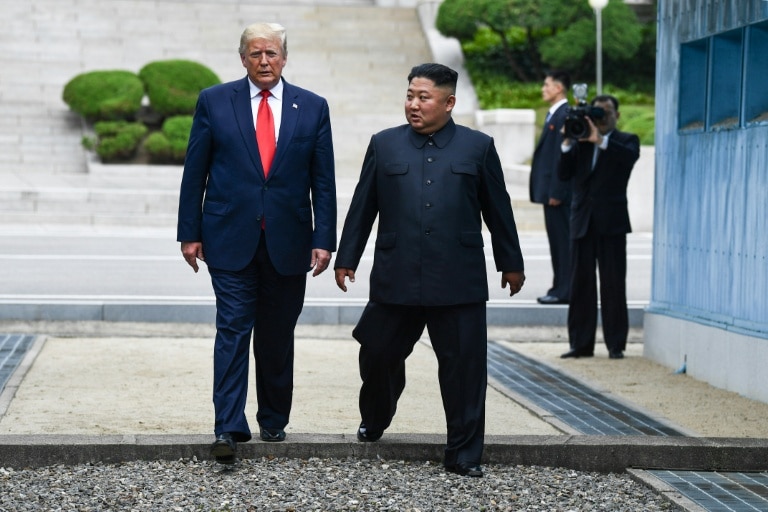
    Nine years after his last trip to China during his first presidential term, former and returning U.S. President Donald Trump touched down in Beijing for a landmark summit that could redefine the trajectory of relations between the world’s two most powerful rival nations. Chinese President Xi Jinping rolled out a meticulously orchestrated, grand ceremonial welcome for Trump outside the Great Hall of the People, complete with a military honor guard, 21-gun salute, and a military band playing the U.S. national anthem. As Trump walked the receiving line, he twice paused to greet crowds of waving schoolchildren holding both Chinese and American flags, before sharing a warm, informal greeting with Xi, patting Xi’s arm in a gesture of goodwill that drew attention from observers.

    In unscripted remarks after their initial handshake, Trump offered effusive praise for his host, telling Xi, “You’re a great leader. I say it to everybody.” During a later cultural tour of the 600-year-old Temple of Heaven, he commented to reporters that China is a beautiful country, and opened his remarks at that evening’s state banquet by calling the high-level talks a “cherished” opportunity to connect. This warm reception marks a striking departure from Trump’s long-held rhetorical posture toward China, which he built his 2016 political brand around by taking a hardline stance. During his first campaign, he infamously claimed China was “raping” the United States economically; in 2020, he doubled down, saying China had “ripped off the United States like no one has ever done before” and labeled the COVID-19 pandemic the “Chinese virus”. Ahead of his return to office, he pledged to force China to “pay” for what he framed as unfair trade practices.

    At the peak of the U.S.-China trade war in the preceding year, the two powers imposed reciprocal tariffs totaling over 100% on each other’s goods. A fragile truce followed the escalation, and this summit was framed around three core unanswered questions: whether the truce will hold, what long-term trade deal will replace it, whether Beijing can help broker a diplomatic resolution to the ongoing Iran crisis that has blocked the Strait of Hormuz, and how the two powers will navigate the long-simmering tensions over Taiwan – the self-governing island that China claims as its sovereign territory, and which the U.S. maintains unofficial diplomatic and defense ties with.

    Beijing’s elaborate welcome was not just a gesture of hospitality to Trump and the 30 top American CEOs accompanying him on the trip; it was a deliberate display of geopolitical strength broadcast to audiences across the United States and the entire globe. Almost immediately after talks got underway, Chinese state media released comments from Xi that made clear Taiwan remains a major flashpoint that could derail progress between the two sides. When reporters pressed both leaders on whether they had discussed Taiwan during their Temple of Heaven visit, neither leader responded to the question.

    John Delury, senior fellow at the Asia Society’s Center on US-China Relations, framed the summit as a visible marker of shifting global power dynamics. “We are witnessing a historical change,” Delury explained. “I hesitate to put too much on this specific summit, but the inexorable rise of China to a place where it is legitimately rivaling the U.S. – that is now happening before our eyes. Beijing is now the second world capital.”

    Xi has positioned himself as a steady, predictable global leader in contrast to what many global observers frame as Trump’s mercurial policy style. In the years since Trump’s first term, China has expanded its global trade reach dramatically, pre-emptively building new economic partnerships to offset the risk of renewed U.S. tariffs. Over the past year, China demonstrated its economic leverage during the trade war: it matched Trump’s tariffs tit-for-tat, and restricted exports of rare earth minerals – critical inputs for advanced global manufacturing – forcing Washington to return to negotiations and agree to lower tariff rates.

    Today, China controls 30% of global manufacturing output, processes over 90% of the world’s rare earth minerals, and produces between 60% and 80% of global supplies of solar panels, wind turbines and electric vehicles. Xi has indicated he believes this summit has already made clear to the U.S. and the world just how deeply dependent global economies are on Chinese manufacturing and technology. While ongoing international concerns over China’s human rights record and its close diplomatic ties to Russia and North Korea persist, those issues have been pushed to the background amid Trump’s broader reshaping of the global world order. Many global analysts now see the trajectory of global power shifting in China’s favor.

    China enters these talks with a clear upper hand, as Trump faces domestic political headwinds of his own, including sinking approval ratings, and international pressure over the ongoing Iran crisis that has shut down the Strait of Hormuz – a critical global energy shipping lane whose closure has sent shockwaves through the global economy. Trump has publicly said he is counting on Beijing’s help to reopen the corridor. As Iran’s largest trading partner with decades of close diplomatic ties to Tehran, Beijing holds significant influence over the Iranian government. If Xi can help push Tehran toward negotiations to de-escalate the crisis, that would give China even greater leverage in talks with the U.S.

    U.S. Secretary of State Marco Rubio framed the U.S. position ahead of the trip, telling Fox News, “It’s in their interest to resolve this. And we hope to convince them to play a more active role.” But analysts widely agree China will demand major concessions in exchange for cooperation on Iran. According to Chinese state media, Xi has already made clear to Trump during closed-door talks that the Taiwan issue has the potential to spark direct conflict between the two powers. Analysts expect Xi will pressure the U.S. to delay or halt arms sales to Taiwan – a requirement that would put Washington in a difficult position, as it is legally bound to provide the island with defensive military capabilities. Officials in Taipei are closely watching the summit’s outcome with significant anxiety.

    This visit differs from Trump’s first trip to China in key ways: unlike his first visit, when former First Lady Melania Trump accompanied him, this trip centers heavily on the high-powered U.S. business delegation, which includes some of the biggest names in American tech and industry: Tesla CEO Elon Musk, Apple CEO Tim Cook, and Nvidia CEO Jensen Huang, all of whom attended the opening state banquet.

    Trump has centered his trade demands around pushing China to further open its domestic markets to increased access for U.S. companies. As of the end of the first day of talks, few concrete details of any potential deal have been released to the public. A preliminary White House statement only confirmed that the two sides “discussed ways to enhance economic cooperation”, including expanding U.S. firms’ access to the Chinese market and facilitating Chinese investment in U.S. domestic industries. On the Iran issue, the statement added that “both countries agreed that Iran can never have a nuclear weapon” and “the Strait of Hormuz must remain open to support the free flow of energy”.

    Additional talks between the two leaders are scheduled for the following day, which are expected to yield more concrete details on potential agreements. For Trump, a tangible diplomatic win from the summit is critical to boost his sinking domestic approval ratings back home. Xi, for his part, has signaled China is open to expanding cooperation in trade and agriculture, a move widely interpreted as a signal Beijing is prepared to increase purchases of U.S. soybeans, beef, and Boeing commercial aircraft.

    The two leaders have agreed to a new framing of the bilateral relationship as “constructive, strategic and stable”, a positioning that will guide U.S.-China ties for the next three years. At the same time, China is grappling with its own serious domestic economic challenges, including rising youth unemployment, uneven post-pandemic growth, a persistent real estate sector crisis, and record high levels of local government debt. While Beijing seeks a global order less centered on U.S. hegemony, it still has a critical strategic interest in maintaining stable, functional relations with Washington.

    At the close of the opening day’s state banquet, after remarking that he had received a “magnificent welcome like no other” in Beijing, Trump formally invited Xi to visit Washington D.C. for a return summit in September. Xi struck a unifying tone in response, saying that the “great rejuvenation of the Chinese nation” and Trump’s campaign slogan “Make America great again” can progress hand in hand. He closed his remarks with a toast to the future of both nations, ending the evening with a single word: “Cheers.”

  • US federal judge blocks US sanctions against UN’s Francesca Albanese

    US federal judge blocks US sanctions against UN’s Francesca Albanese

    In a landmark ruling that upholds core free speech principles, a US federal judge issued a temporary preliminary injunction on Wednesday halting the Trump administration’s sanctions against Francesca Albanese, the United Nations Special Rapporteur on Palestine, finding the punitive measures likely violated her constitutional right to free expression.

    Albanese was targeted with US sanctions in July 2025, just weeks after she published a sweeping, critical report on June 30 that condemned Israel’s military campaign in Gaza. In that document, she identified over 60 major global firms — including tech giants Google, Amazon, and Microsoft — alleging the companies were complicit in shifting Israel’s occupation-based economy into what she framed as an economy of genocide. The report called on the International Criminal Court (ICC), national judicial bodies worldwide to launch investigations and prosecute implicated corporate leaders and companies, and urged UN member states to impose targeted sanctions and asset freezes on the entities named.

    The sanctions imposed on Albanese carried severe practical consequences: she was barred from entering the United States, and was shut out of the US banking system, cutting off access to basic financial services. The legal challenge to the sanctions was brought by Albanese’s husband Massimiliano Cali, a senior World Bank economist based in Tunisia, who filed the civil suit on behalf of himself, Albanese, and the couple’s US citizen daughter. The complaint argued that the Trump administration had unlawfully seized Albanese’s accessible assets without adhering to due process, violated existing US sanctions legislation, and effectively de-banked her, leaving her unable to meet routine daily needs.

    In his opinion accompanying the injunction order, US District Judge Richard Leon emphasized that safeguarding free speech is always aligned with the public interest. The judge further ruled that Albanese’s status as a non-US resident does not strip her of protections under the First Amendment to the US Constitution, noting that the administration targeted her specifically because of the content and message of her public criticism.

    Albanese celebrated the court’s decision in a public post on X, writing, “BREAKING! US court has suspended the US sanctions against me! As the judge says: ‘Protecting the Freedom of speech is always just the public interest’. Thanks to my daughter and my husband for stepping up to defend me, and everyone who has helped so far. Together we are One.”

    The ruling comes amid growing international solidarity with Albanese. Earlier that month, on May 7, Spanish Prime Minister Pedro Sanchez awarded the UN expert the Order of Civil Merit in a clear show of support. A day before that honor, Sanchez formally asked the European Commission to activate the EU’s Blocking Statute, a regulation designed to protect EU individuals and institutions from extraterritorial US sanctions, to shield both the ICC and the United Nations from US punitive measures.

  • Germany’s Merz calls for more investment, less subsidies in EU budget

    Germany’s Merz calls for more investment, less subsidies in EU budget

    A pivotal debate over the future of the European Union’s long-term budget has taken center stage at the 2026 Charlemagne Prize ceremony in Aachen, Germany, where Chancellor Friedrich Merz has called for sweeping structural reform to align the bloc’s spending with 21st-century challenges. The event, which honored former European Central Bank President Mario Draghi for his decades of work advancing European integration, became a platform for confronting longstanding frictions over EU fiscal policy and competitiveness.

    The 27 EU member states are currently locked in tense negotiations over the 2028-2034 multiannual budget. A bloc of so-called frugal nations, led by Germany and the Netherlands, has already pushed back against a substantial spending increase proposed by the European Commission, the EU’s executive body. Speaking at the award ceremony Thursday, Merz, a conservative leader, argued that the EU’s current budget framework is hopelessly outdated. “We cannot meet the challenges of the 21st century with a 20th-century budget,” he declared, echoing growing frustration across the bloc over stagnant budget structures that have not shifted in decades.

    Merz backed a landmark 2024 competitiveness report from Draghi, which warned that the EU risks falling behind global rivals the United States and China without a fundamental shift in policy. He criticized that the EU budget’s core content and structure has remained virtually unchanged for generations, with more than two-thirds of all EU funding still allocated to redistribution programs and direct subsidies. For decades, the EU has leaned heavily on these subsidies and redistribution mechanisms to offset economic disruptions from internal trade integration and support less wealthy eastern European member states as the bloc expanded. But Merz argued this model is no longer fit for purpose, calling for an overall reduction in unnecessary budget spending and a major reallocation toward investments that boost EU competitiveness and collective defense.

    Despite backing Draghi’s call for increased joint investment, Merz drew a firm line against the funding mechanism Draghi proposed: collective debt issuance by all EU member states. “Excessive indebtedness threatens sovereignty and limits the capacity to act,” Merz stated. Analysts widely note the comment also carries weight for domestic German politics, where the country relaxed its long-standing strict constitutional “debt brake” rules only last year, after years of adhering to rigid fiscal limits, to fund increased defense and infrastructure investment.

    In his acceptance speech for the Charlemagne Prize, which recognizes individuals who work to advance European unity, Draghi offered a sharp critique of the bloc’s overreliance on external free trade deals as a growth driver — a long-standing priority for German economic policy. Draghi argued that pursuing new trade agreements is far easier than tackling “unfinished work at home,” a reference to the EU’s incomplete single market. He noted that reform requires confronting entrenched vested interests that benefit from fragmented energy markets and an incomplete single market, choices European leaders have long avoided.

    Draghi, who also served as Italian prime minister from 2021 to 2022 and led the ECB from 2011 to 2019, is widely credited with preventing the collapse of the euro during the 2010s eurozone debt crisis. His successor at the head of the ECB, Christine Lagarde, reinforced his calls for urgent action in a speech delivered the night before the ceremony, noting that global competition has shifted dramatically. “The United States and China have entered a new age of industrial strategy and geopolitical competition — intensified by tariff wars and rare-earth battles — and all this amid the worst energy crisis on record,” Lagarde said, echoing Draghi’s warning that the EU must act fast to avoid falling behind in global competitiveness.

  • Former Nigerian minister sentenced to 75 years in rare corruption verdict

    Former Nigerian minister sentenced to 75 years in rare corruption verdict

    In a landmark conviction that has sent shockwaves through Nigeria’s political landscape, former Nigerian Power Minister Saleh Mamman has been handed a 75-year prison sentence for laundering 33.8 billion naira (equivalent to roughly $24.7 million), marking one of the rare high-profile convictions of corrupt senior officials in the West African nation.

    The 68-year-old ex-minister, who led Nigeria’s power sector from 2015 to 2021 under former President Muhammadu Buhari’s administration, was found guilty last week on 12 separate corruption charges. Prosecutors proved that Mamman used privately owned front companies to siphon and launder public funds allocated for government-backed power infrastructure projects.

    In an unusual turn of proceedings, the Abuja High Court handed down the sentence on Wednesday in absentia. Nigeria’s lead anti-graft agency, the Economic and Financial Crimes Commission (EFCC), confirmed that Mamman has gone missing, and has been untraceable since the guilty verdict was issued. Just days after his conviction, the court issued a formal arrest warrant for the former minister on Monday. Mamman has not issued any public response to the charges or conviction.

    What makes the case even more remarkable is the timing: just weeks before his sentencing, Mamman officially announced his intention to run for governor of Taraba State in Nigeria’s 2027 general election, running on the ticket of the country’s ruling All Progressives Congress (APC). He made the announcement in a social media post, writing that he had picked up his Expression of Interest and Nomination Forms “with a deep sense of responsibility and unwavering commitment” to serve the state.

    Buhari, whose administration campaigned on a promise to crack down on endemic public sector corruption, ultimately removed Mamman from his cabinet in a 2021 reshuffle following what the presidency described as an “independent and critical self-review” of government performance.

    Along with the prison sentence, the high court ordered Mamman to repay 22 billion naira ($16 million) of the laundered funds to the Nigerian government. His conviction is part of a broader ongoing anti-corruption crackdown by the EFCC targeting former senior government officials. The agency is currently pursuing investigations into other high-profile figures, including former Justice Minister Abubakar Malami and former Humanitarian Affairs Minister Sadiya Umar Farouq, who was recently declared a wanted person by the EFCC. Both officials have denied all allegations against them.

    The verdict has also reignited long-simmering public anger over Nigeria’s ongoing national electricity crisis, a problem Mamman was tasked with solving during his tenure as power minister. Despite being one of Africa’s largest energy producers, Nigeria suffers from chronic, nationwide power shortages that bring frequent, extended blackouts to residential and commercial areas across the country. Millions of households and businesses are forced to rely on expensive private fuel-powered generators, and soaring global fuel prices have left countless Nigerians unable to afford the cost of backup power, deepening economic hardship across the country.