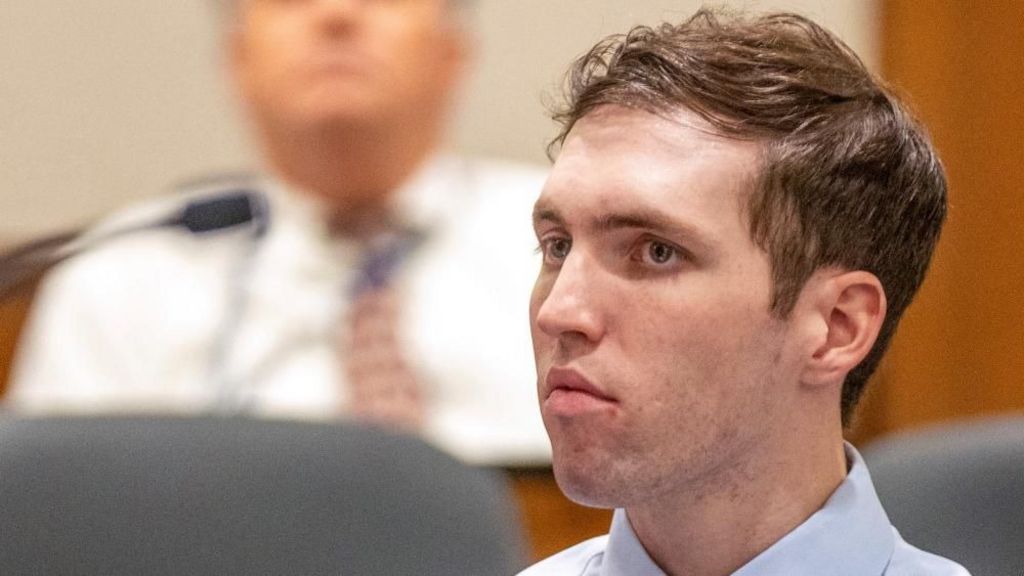
A Utah preliminary court hearing for the accused killer of high-profile conservative activist Charlie Kirk unfolded dramatic new details Thursday, as prosecutors released recorded testimony from the defendant’s former roommate tying 23-year-old Tyler Robinson directly to the September 2025 shooting. This marked the fourth day of witness testimony in the high-profile capital case, where prosecutors are working to establish probable cause to move the case to a full trial.
In a pre-recorded investigative interview played for the court, Lance Twiggs — who shared a St. George apartment with Robinson at the time of the killing — outlined a months-long timeline of clues that Robinson had been preparing for an attack, followed by an explicit confession to the crime after the shooting. Twiggs told investigators that in the months before Kirk was killed, Robinson asked to borrow an engraving tool, claiming he planned to etch bullets for a family hunting and camping trip. He also testified that Robinson regularly listened to political talk radio while commuting to his job as an electrician, mostly focusing commentary on former President Donald Trump and new legislative proposals, but that he never once heard Robinson mention Charlie Kirk’s name or discuss LGBTQ issues, the topic the activist often centered in his public speaking.
On the morning of the shooting, Twiggs said Robinson left the apartment far earlier than his usual routine, departing around 4 a.m. Twiggs assumed he was traveling to a distant work site and thought nothing of it. Hours later, after news broke that Kirk had been fatally shot during a public university event in Orem, over three hours north of St. George, Robinson sent Twiggs a series of startling text messages. He first told Twiggs to stop what he was doing and check underneath his keyboard, then directly admitted to the killing when Twiggs pressed him for clarity. When Twiggs asked why he had carried out the attack, Robinson replied: “I’d had enough of his hatred. Some hate can’t be negotiated out.”
Twiggs’ testimony also laid bare Robinson’s movements after the shooting. The defendant texted from near the campus, explaining he had stowed his rifle in bushes after changing clothes, and was waiting for an opportunity to retrieve the weapon without being seen by law enforcement. He complained about loud crickets, worried police sniffer dogs would locate the hidden firearm, and noted that a marked police squad car was parked near the drop site, forcing him to wait in his car scrolling social media for over an hour before abandoning the plan to retrieve the weapon. Robinson then told Twiggs he was driving back to their shared apartment from Orem. When Twiggs woke up the next morning, Robinson was already at the apartment, and again confirmed the confession when asked in person. Twiggs testified that Robinson cried, expressed deep regret for the killing, and spent the day distracting himself with routine tasks. Robinson also told his roommate he planned to turn himself in to authorities.
That account aligns with previous testimony from Utah State Bureau of Investigation agent Brian Davis, who told the court Wednesday that Robinson arrived at the Washington County Sheriff’s Office around 9 p.m. that same day, accompanied by his parents and a family friend, to surrender to law enforcement.
Portions of Twiggs’ recorded interview and the full set of text messages have been redacted, with some sensitive sections only shown to people inside the courtroom and barred from public release. A days-long legal debate preceded the release of the evidence, with attorneys for media outlets and Kirk’s surviving family, Erika Kirk, arguing for public access, while the defense pushed for tighter restrictions. Judge Tony Graf ultimately ruled that the redacted versions of the evidence could be released publicly.
Robinson has not yet entered a formal plea in the case. Prosecutors are expected to wrap up presentation of all evidence against him by Friday, after which the judge will rule on whether sufficient probable cause exists to move the case forward to a full jury trial. If convicted, Robinson could face the death penalty. The defense has repeatedly objected to prosecution evidence throughout the preliminary hearing; earlier this week, after the prosecution presented an FBI forensic report linking Robinson’s DNA to a rifle, screwdriver and towel recovered near the crime scene, defense attorneys spent hours cross-examining the forensic analyst to question testing protocols, analytical interpretation and margins of error.