分类: politics

  • ICE releases wife of US soldier and Afghanistan veteran from detention

    ICE releases wife of US soldier and Afghanistan veteran from detention

    A months-long immigration drama that sparked national outrage over the treatment of military families has come to a temporary resolution, after U.S. Immigration and Customs Enforcement freed Deisy Rivera Ortega, the wife of a decades-long U.S. Army Afghanistan veteran, from custody, her legal representative has confirmed to the BBC.

    Rivera Ortega, a native of El Salvador, was taken into immigration custody on April 14 during a routine scheduled immigration check-in in El Paso, Texas, that she attended alongside her husband, Sgt. Jose Serrano. Serrano, who has served the U.S. military for nearly 28 years and was born a U.S. citizen in Puerto Rico, told reporters his wife’s detention left him deeply distraught.

    In an official statement following the release, the couple’s attorney Matthew James Kozik simply said, “We celebrate her release.” Footage shared with CBS News shows Serrano driving away from the detention facility with Rivera Ortega in the passenger seat, confirming she had been freed and the pair were returning home.

    At the time of her arrest, the couple was in the process of applying for parole-in-place, a federal program specifically designed to allow spouses of active-duty service members and veterans to remain in the U.S. while their immigration applications are processed. Court and legal documents provided to the BBC show the pair married in 2022, had compiled all required documentation covering their marriage, employment, and immigration status ahead of the appointment, and complied fully with all check-in requirements.

    Serrano recalled that during the meeting, officials flagged what they claimed was an issue with their submitted paperwork. After escorting the couple down a hallway, officers separated Rivera Ortega and took her into custody without prior warning.

    In the wake of the arrest, the Department of Homeland Security (DHS) characterized Rivera Ortega as a “criminal illegal alien”, noting she crossed the U.S.-Mexico border without inspection in 2016 and was convicted of a federal illegal entry offense. A 2019 immigration judge ordered her removal to El Salvador, but simultaneously granted her withholding of removal protection under the U.N. Convention Against Torture, which bars immigration authorities from deporting her to El Salvador over credible concerns she would face severe harm if returned.

    This legal protection left immigration officials in a position to consider deporting Rivera Ortega to Mexico instead, a move that Serrano and Kozik said officials actively explored after her arrest.

    The case quickly drew political pushback, with U.S. Sen. Tammy Duckworth, an Illinois Democrat and Iraq War veteran, personally placing a call to DHS Secretary Markwayne Mullin on Wednesday to raise concerns over the detention, according to Duckworth’s office.

    In a public statement after the release, Duckworth said, “I am so incredibly grateful for Deisy’s release and for her to be reunited with her family. Deisy was doing everything ‘the right way’: attending her military parole in-place interview when she was detained by ICE with no warrant and no explanation. There is no higher betrayal to our heroes than to have one of their family members deported by the same nation they sacrificed to defend.”

    DHS has not yet responded to repeated requests for comment from the BBC, including inquiries about Duckworth’s outreach to Mullin and the details of Rivera Ortega’s release.

    This incident marks the second high-profile case in April of ICE detaining the spouse of an active-duty U.S. service member. Earlier that month, Annie Ramos, the Honduran-born wife of Sgt. Matthew Blank who was brought to the U.S. as a child, was held in ICE custody for five days before being released.

  • A political dynasty heiress and a former trade minister advance to Peru’s presidential runoff

    A political dynasty heiress and a former trade minister advance to Peru’s presidential runoff

    LIMA, Peru — After final vote tallies were certified Friday, Peru has locked in its two candidates for the June 7 presidential runoff election, pitting a scion of one of the country’s most powerful political families against a nationalist former trade minister who has vowed to upend Peru’s long-standing mining policy. This runoff will shape the future of a nation that has seen eight presidents in just a decade, grappling with widespread public anger over crime and corruption even as its resource-driven economy holds strong against chronic political instability.

    Final official results from the April 12 first-round vote confirm that conservative Keiko Fujimori, leader of the Fuerza Popular party and daughter of disgraced former president Alberto Fujimori, secured first place with 17.18% of the vote. Trailing narrowly at 12.03% was nationalist congressman Roberto Sánchez of the Juntos por el Perú party, who edged out 33 other contenders to claim the second runoff spot. Both candidates have centered their campaigns on addressing Peru’s skyrocketing violent crime rate, which ranks as the top concern for most Peruvian voters.

    The first-round election was marred by widespread logistical failures, including widespread ballot shortages that left thousands of eligible voters both in Peru and overseas unable to cast their ballots on election Sunday. Authorities responded by extending voting for more than 52,000 Lima voters on Monday, as well as for Peruvian citizens registered in two U.S. voting locations: Orlando, Florida, and Paterson, New Jersey. Ballot access issues have already spurred an official investigation, with police raiding the former election chief’s home and a Peruvian court setting a mid-May deadline for the completion of official vote counting.

    The election unfolded against a backdrop of soaring violent crime and persistent corruption scandals that have left most Peruvian voters deeply disillusioned, with widespread public distrust of nearly all candidates’ integrity and preparedness to lead. In response to voter anger, dozens of first-round candidates put forward hardline crime proposals, including plans for mega-sized prisons, restricted inmate meals, and a return of the death penalty for serious offenses.

    Against this turbulent political landscape, Peru’s economy has emerged as an unexpected bright spot. As the world’s second-largest copper producer, the country has posted consistent 3% annual growth across 2024 and 2025, defying predictions that the constant turnover of presidents—three have held office since October alone—would derail economic performance. The mining sector that drives this growth is now one of the biggest points of contention between the two runoff candidates.

    The upcoming June contest echoes Peru’s 2021 presidential runoff, which also featured Fujimori as a candidate. That year, she faced off against rural schoolteacher and political outsider Pedro Castillo, whom Sánchez has openly supported and even emulates by wearing Castillo’s signature wide-brimmed campaign hat. Castillo defeated Fujimori by a narrow margin of roughly 42,000 votes, fueled by overwhelming support from low-income rural communities, but his presidency ended in impeachment and arrest in December 2022 after he attempted to dissolve Congress to block an impeachment vote.

    This marks Fujimori’s fourth run for the presidency. She has run on a promise of a hardline crackdown on rising crime, but her record is contradictory: her party supported legislation in recent years that legal experts say undermines criminal prosecutions, including measures that eliminated preliminary detention for certain offenses and raised the legal bar for seizing assets tied to organized crime. Sánchez has pledged to repeal these same laws, while also promising to strengthen police intelligence units to combat extortion, a crime that has increased fivefold across Peru in the last five years.

    On economic policy, Sánchez has broken with the market-friendly policies that have defined Peru for the last two decades. His core proposal is a sweeping overhaul of the country’s mining sector: he has promised to renegotiate existing contracts with foreign mining firms to increase state tax revenues, grant rural indigenous communities partial ownership stakes in mines operating on their land, and ban harmful open-pit mining operations. Political analysts note these reforms face steep odds, however, as Sánchez’s party does not currently hold a majority in congress.

    Will Freeman, a Latin America Studies fellow at the Council on Foreign Relations, noted that Fujimori holds a key structural advantage: she is one of Peru’s only remaining national career politicians, heading the country’s only enduring political organization with a full nationwide infrastructure. Freeman argued this structure could help her deliver on crime policy, but that her track record suggests any crackdown would be inconsistent. He pointed to the irony of Fujimori’s history: in the 2010s, her party supported anti-organized crime legislation that prosecutors later used to open corruption investigations against Fujimori herself, leading the party to roll back many of those same anti-crime measures in subsequent years.

    The winner of the June 7 runoff will be sworn in for a five-year presidential term on July 28.

  • Ukraine can down Russian drones en masse. But missiles are a problem

    Ukraine can down Russian drones en masse. But missiles are a problem

    A devastating seven-hour Russian aerial assault on Ukraine’s capital Kyiv earlier this week that killed 24 civilians and left residential buildings in ruins has laid bare a critical and dangerous divide in Ukraine’s air defense capabilities, nearly four years into the full-scale invasion.

    After years of constant combat, Ukraine has honed an extremely effective homegrown network to combat Russian long-range drones – a success that has drawn admiration even from advanced global militaries. In this latest wave of attacks, Russia launched 675 drones and 56 missiles targeting Kyiv and other populated areas. Ukraine’s integrated defense system, which combines electronic jamming technology, anti-aircraft artillery, fighter jets and helicopters, and small interceptor drones, managed to shoot down all but 22 of the incoming drones, a 97% success rate. President Volodymyr Zelensky publicly commended his air forces for achieving a 94% overall drone interception rate across recent attacks.

    But when it comes to Russian ballistic and cruise missiles, the picture is drastically different. Fifteen of the 56 missiles fired in this week’s barrage penetrated Ukrainian defenses, and Ukrainian officials confirm these missiles were responsible for nearly all of the attack’s civilian casualties and structural damage. This gap exposes a chronic, acute shortage of the advanced Western anti-missile systems and their costly ammunition that Ukraine needs to stop incoming projectiles.

    “The real damage was done by missiles, especially in Kyiv,” said Sergii Beskrestnov, an advisor to Ukraine’s defense minister, following the assault. Zelensky echoed the assessment, acknowledging that “the most difficult challenge is defending against ballistic missiles.”

    Zelensky has repeated urgent calls to Western allies for additional support, pushing for faster arms deliveries through the PURL procurement platform that partner nations use to source U.S.-made weapons for Kyiv. Shortly after the attack, British Defense Secretary John Healey announced London would speed up deliveries of British air defense and counter-drone systems to Ukraine. But a growing global shortage of anti-missile ammunition, exacerbated by concurrent defense demands in the Middle East, has left Ukraine in a precarious position.

    The most capable system Ukraine operates against ballistic missiles is the U.S.-made Patriot battery, whose PAC-3 interceptor missiles cost roughly $4 million apiece. The U.S. only produces around 600 of these interceptors annually, and multiple interceptors are often required to destroy a single incoming missile. Zelensky noted that Middle Eastern allies recently used 800 PAC-3 interceptors to fend off Iranian drone and missile attacks – a total number Ukraine has never had access to across its entire four-year war. One senior Ukrainian official told AFP bluntly that the interceptors “have become harder to find.”

    Even before this latest massive barrage, Ukrainian air force spokesman Yuriy Ignat told local media that ammunition was already being rationed due to persistent supply chain issues. “The launchers that are part of certain units and batteries are half-empty — and that’s putting it mildly,” Ignat said, adding that stockpiles were already depleted after Russia’s sustained winter campaign targeting Ukraine’s energy infrastructure. He added that Ukrainian negotiators are often forced to beg allies for as few as five to 10 additional Patriot interceptors at a time.

    While short-term solutions remain scarce, long-term and even some medium-term pathways do exist. Ukraine’s proven track record defeating Iranian-designed drones has caught the attention of wealthy Gulf nations, which have faced repeated attacks from the same type of drones. On multiple diplomatic visits to the region, Zelensky has signed several new air defense cooperation agreements, with details still under wraps. He has publicly proposed a trade: Ukraine shares its hard-earned anti-drone expertise with Gulf states, in exchange for Patriot ammunition or investment in Ukraine’s domestic defense production. Lockheed Martin, the manufacturer of the Patriot system and PAC-3 interceptors, has also announced plans to ramp up production over the next seven years to meet global demand. Over time, Ukraine can also expand its own domestic defense production with Western backing.

    Yet for the immediate threat Russia poses, options are severely limited, according to Jade McGlynn, a research fellow in the Department of War Studies at King’s College London. “Bluntly I can’t see any significant solution or significant improvement that is available in the short term, beyond just giving Ukraine more of the air defence systems that are a bit more available than the Patriots,” McGlynn told AFP.

  • Trump says Xi is considering a detained pastor’s case, but freeing activist Jimmy Lai is ‘tough’

    Trump says Xi is considering a detained pastor’s case, but freeing activist Jimmy Lai is ‘tough’

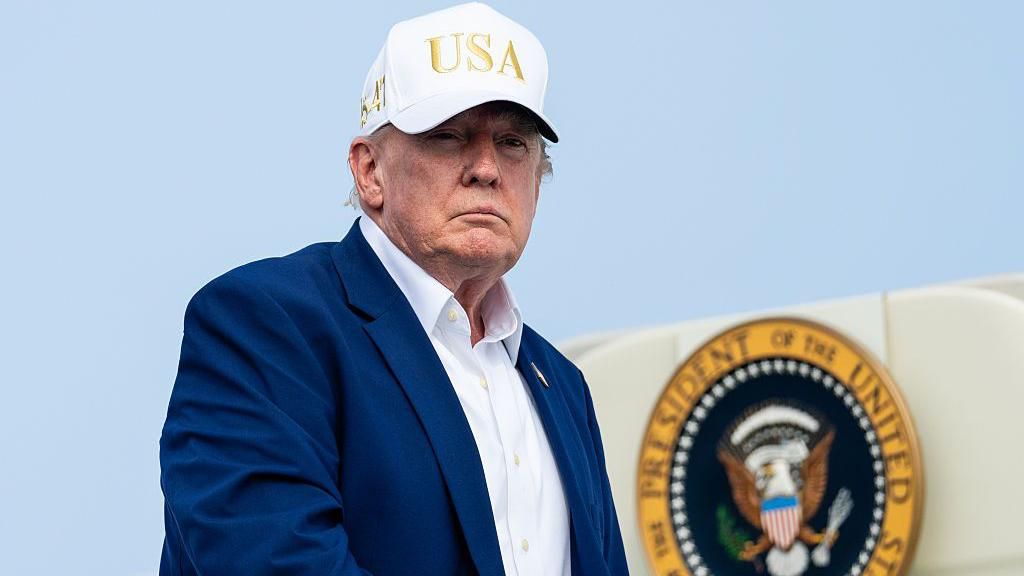
    During a media briefing aboard Air Force One while returning from his official visit to China in November 2017, then-U.S. President Donald Trump disclosed that he had raised the cases of two high-profile detained individuals — underground church pastor Ezra Jin Mingri and imprisoned Hong Kong pro-democracy activist Jimmy Lai — with Chinese President Xi Jinping. Trump told reporters that Xi committed to giving serious consideration to Jin’s case, but characterized Jimmy Lai’s legal situation as a far more complex issue that would be difficult to resolve.

    Jin, the leader of Beijing’s Zion Church, one of China’s largest unregistered house churches that operates outside of state-sanctioned religious frameworks, was taken into custody in October 2017. His detention was widely interpreted by international observers as part of a broader, escalating crackdown on unapproved religious practice across the country. “He said he’s gonna strongly consider the pastor,” Trump confirmed to reporters traveling with him.

    In contrast to the tentative openness around Jin’s case, Trump noted that Xi described Jimmy Lai’s situation as a particularly “tough one.” Lai, a 78-year-old former media tycoon and founder of the now-shuttered pro-democracy outlet Apple Daily, has remained a vocal critic of the Chinese Communist Party and Beijing’s policies toward Hong Kong for decades. He was ultimately convicted in February 2021 on charges of conspiracy to collude with foreign forces and publication of seditious material under the sweeping 2020 National Security Law imposed by Beijing on Hong Kong, and sentenced to 20 years in prison. His prosecution and the shutdown of his newspaper came in the wake of large-scale anti-government protests that roiled Hong Kong in 2019, and the crackdown that followed has effectively silenced most organized dissent in the former British colony.

    Despite the very different outlooks Trump outlined for the two men, the families of both Jin and Lai have publicly expressed gratitude to the Trump administration for bringing their cases to the highest levels of diplomatic discussion. Grace Jin Drexel, Jin’s daughter, called the development nothing short of miraculous in a written statement to the Associated Press. “We could not be more grateful to President Trump and his skillful administration for pressing the case!” she wrote, adding that the family and supporters were “overjoyed” by the news.

    Claire Lai, Jimmy Lai’s daughter, also thanked Trump for his administration’s commitment to advocating for her father’s release even amid Trump’s cautious assessment of the case. “He has earned his reputation as liberating the unjustly detained and I am confident he and his administration will be the ones to free my father,” she said in a message to the AP. She framed potential release of her father as a critical opportunity for Xi to demonstrate good will to the international community, calling it the only just and honorable course of action.

    Human rights activists have long noted that under Xi Jinping’s leadership, Beijing has grown increasingly unwilling to release high-profile detainees detained over dissent or human rights-related activities. The most prominent recent example came in 2017, when Nobel Peace Prize laureate Liu Xiaobo died of liver cancer in a Chinese hospital despite repeated calls from Western governments to allow him to travel abroad for life-saving treatment.

    International observers widely view Jimmy Lai’s case as a symbolic marker of the erosion of civil liberties in Hong Kong, a outcome that runs counter to the autonomy and protections Beijing promised the territory under the 1997 handover agreement from British rule. Foreign governments including the United States and United Kingdom have repeatedly raised concerns about Lai’s detention and prosecution, though the Hong Kong government has repeatedly maintained that his conviction had no connection to press freedom, framing it as a standard criminal matter. Just days before Trump’s comments, China’s foreign ministry reaffirmed its position that Lai was a key organizer of anti-China activities intended to destabilize Hong Kong, and that all affairs related to Hong Kong are strictly China’s internal business, off-limits to foreign interference.

    This report was compiled from contributions from Tang reporting out of Washington, with additional reporting from AP journalist Emily Wang in Washington.

  • Hungary’s new PM symbolically removes fences erected around Orbán’s former offices

    Hungary’s new PM symbolically removes fences erected around Orbán’s former offices

    BUDAPEST, Hungary – In a highly symbolic act marking Hungary’s post-Orbán political transition, new Prime Minister Péter Magyar personally took down security fencing surrounding the former prime ministerial office on Budapest’s historic Castle Hill Friday, opening the landmark Karmelita building to public access after years of restricted entry. The former Catholic monastery, which commands sweeping views of the Danube River, became an indelible symbol of Viktor Orbán’s 16-year authoritarian-leaning rule after the former prime minister cordoned the site off from the public in 2021.

    Standing before reporters as he pushed open the newly removed barriers, Magyar framed the move as a tangible break from the previous regime. “There is no place for cordons in Hungary after the change of regime,” he stated. Magyar emphasized that the site was constructed and renovated with public money from Hungarian taxpayers, making it rightfully belong to the people of the country rather than being locked away for exclusive government use.

    Magyar and his center-right Tisza party swept to power in a landmark April election, ousting Orbán after 16 years in office and securing a two-thirds parliamentary supermajority that grants the new government a clear mandate to deliver on its promise of sweeping institutional reform. Since taking office, the new administration has already moved forward on key campaign pledges: rolling back the concentrated executive power Orbán built, restoring eroded democratic checks and balances, cracking down on widespread public corruption, and recovering misappropriated state funds from the previous era.

    In a recent disclosure, the new government has already exposed details of luxury private renovations carried out on former government officials’ offices at public expense. Unlike his predecessor, Magyar plans to relocate the prime minister’s official office to the administrative district on the opposite bank of the Danube, leaving the Karmelita building open for public use while national authorities finalize a long-term plan for the site’s future.

    The Karmelita building will remain open to visitors for an extended period, with an official booking website already launched to accommodate public tours. Magyar noted that several structures within the Castle Hill district have already completed long-delayed renovations, while other restoration projects are still ongoing. He added that opening the landmark to the public will likely spark new public discussions and ideas about how the site can best serve the Hungarian people going forward, though he declined to share specific proposals for its permanent use.

    Beyond domestic institutional reform, Magyar has made mending frayed relations with the European Union a top foreign policy priority, with the explicit goal of restoring Hungary’s full standing within the community of Western democracies. To advance anti-corruption efforts, the new government plans to establish a specialized National Asset Recovery and Protection Office, which will be tasked with investigating allegations of misused public funds from Orbán’s tenure and working to recover stolen assets for the Hungarian state.

  • Trump says he ‘made no commitment either way’ to Xi on Taiwan

    Trump says he ‘made no commitment either way’ to Xi on Taiwan

    Following two days of high-stakes bilateral talks in Beijing between U.S. President Donald Trump and Chinese President Xi Jinping, the long-simmering Taiwan issue has once again taken center stage in U.S.-China relations, with Trump emerging with an intentionally ambiguous position that leaves key questions about Washington’s policy unanswered.

    Traveling back to Washington aboard Air Force One, Trump confirmed to reporters that the topic of Taiwan dominated a large portion of his discussions with Xi. For decades, China has claimed the self-governing island of Taiwan as an inalienable part of its sovereign territory, and Beijing has repeatedly declined to rule out the use of military force to assert its control. Trump told reporters that Xi directly raised the question of whether the United States would come to Taiwan’s defense in the event of a conflict, a core query that cuts to the heart of cross-strait and U.S.-China tensions. In response, Trump said he avoided taking a clear position, telling Xi: “I don’t talk about that.”

    The biggest immediate uncertainty created by the talks centers on a previously approved U.S. arms sales package to Taiwan, a deal that drew fierce condemnation from Beijing when it was announced late last year. The $8 billion package includes cutting-edge military hardware, from advanced rocket systems to a range of offensive and defensive missiles. Trump confirmed that he and Xi debated the proposed sale at length during the summit, and announced that he has not yet made a final decision on moving forward with the transfer. “I will make a determination over a fairly short period,” the U.S. president said, noting he plans to hold a conversation with Taiwanese President Lai Ching-te before finalizing his choice.

    Washington’s long-standing approach to the Taiwan question has long required a delicate diplomatic balancing act. U.S. law formally mandates that the United States provide Taiwan with the necessary capabilities to defend itself, and the island has been an unofficial U.S. ally in the Indo-Pacific for decades. At the same time, successive U.S. administrations have worked to nurture diplomatic and economic ties with Beijing, avoiding explicit moves that would trigger full diplomatic rupture with China. This fragile balance has come under growing strain in recent years, as China has significantly expanded large-scale military exercises around Taiwan, stepping up pressure on the island’s government and stoking regional anxiety that has caught Washington’s attention.

    According to Chinese state media coverage of the closed-door talks, Xi framed the Taiwan issue as the single most consequential matter shaping the future of U.S.-China ties. Xi warned that if the question is mismanaged, it could lead to direct confrontation and even open conflict between the two global powers. When asked by reporters whether he believed a conflict over Taiwan could break out between the United States and China, Trump downplayed the risk. “No, I don’t think so. I think we’ll be fine,” he said, adding that “[Xi] doesn’t want to see a war.” Trump also emphasized that Xi holds firm views on the issue, saying Xi “feels very strongly” about the island and does not support any move toward formal Taiwanese independence. Repeating his ambiguous position, Trump stated: “I made no commitment either way” on the core policy questions around Taiwan.

    When pressed directly by reporters on whether the United States would defend Taiwan if it came under military attack, Trump again refused to give a clear answer. “I don’t want to say that. I’m not going to say that,” he said. “There’s only one person that knows that. You know who it is? Me.” He reiterated that Xi had directly asked him about the defense question during their bilateral meeting, and he had once again declined to outline a clear position.

    For its part, Taiwan’s foreign ministry moved quickly to respond to the outcomes of the summit. Taiwanese Foreign Minister Lin Chia-lung stated that the island’s diplomatic team had been closely monitoring all discussions between Trump and Xi throughout the summit, and that Taiwan has maintained open, steady lines of communication with the United States and other international partners. Lin said Taiwan’s priority is to ensure that its long-standing relationship with the United States continues to deepen in a stable manner, and that all of Taiwan’s core national interests are protected. He reaffirmed that Taiwan has consistently positioned itself as a defender of peace and regional stability in the Indo-Pacific, and placed blame for rising cross-strait tensions on Beijing, accusing China of escalating regional risk through what he called “aggressive military actions and authoritarian oppression.”

    The summit’s outcomes leave the future of U.S. policy toward Taiwan unclear, with observers across the globe waiting for Trump’s upcoming decision on the arms sales package to signal which direction Washington will lean on the issue in the coming months.

  • Watch: What did we learn from Trump’s visit to China?

    Watch: What did we learn from Trump’s visit to China?

    After months of anticipation and diplomatic preparation, former U.S. President Donald Trump has wrapped up a condensed two-day official visit to Beijing, where he participated in a series of closed-door and public meetings with Chinese President Xi Jinping focused on addressing a range of pressing bilateral and global issues. The summit, framed by observers as a high-stakes engagement, came amid a backdrop of shifting economic tensions, evolving geopolitical alignments, and shared global challenges that demanded direct dialogue between the world’s two largest economies.

    During the visit, both leaders took the opportunity to lay out their respective policy priorities, exchange perspectives on long-standing bilateral sticking points, and explore areas where collaborative action could yield mutual benefits. While the short timeframe of the trip limited the scope for sweeping, breakthrough agreements, diplomatic insiders noted that the face-to-face interaction itself served a critical purpose: reducing the risk of miscommunication that can escalate into larger conflicts between the two nuclear-armed powers. Trade and economic relations, one of the core focal points of the discussions, saw both sides reiterate their commitment to fairer, more balanced commercial exchange, though concrete details of any new frameworks remained under wraps following the conclusion of the summit. Beyond economic issues, leaders also touched on regional security concerns, global climate action, and people-to-people exchanges that form the foundational layer of the bilateral relationship.

    Foreign policy analysts have underscored that the visit marked a key moment in bilateral diplomatic engagement, highlighting the continued importance of direct, high-level dialogue even when disagreements persist. While the full outcomes of the talks will unfold in the weeks and months following the summit, the successful completion of the visit laid the groundwork for continued engagement between the two governments on issues that carry global implications.

  • Latin American nationals deported by the US to Congo face an uncertain future

    Latin American nationals deported by the US to Congo face an uncertain future

    Fifteen Latin American asylum seekers who were deported to the Democratic Republic of Congo under the former Trump administration’s hardline, widely panned migration crackdown are now stranded in a country they never knew existed, facing an impossible choice no protected refugee should ever have to make. For the 29-year-old Colombian woman at the center of this case, who spoke to the Associated Press on condition of anonymity out of fear of retaliation, what was supposed to be a search for safety after fleeing persecution has devolved into what she describes as an unending nightmare—an outcome far removed from Congolese President Félix Tshisekedi’s dismissive description of their situation as “living the Congolese dream.”

    The Colombian woman’s account lays bare the severe human cost of the opaque third-country deportation deals the Trump administration struck with at least eight African nations. Legal experts widely frame these agreements as a deliberate legal loophole designed to bypass longstanding U.S. asylum protections. The woman’s case mirrors that of dozens of other deportees: she had already received a formal protection order from a U.S. immigration judge, which barred her forcible return to Colombia, where she faced threats from armed groups and ongoing abuse at the hands of a former government-linked partner.

    Her journey to this crisis began in 2024, when she fled Colombia for Mexico, secured a U.S. border appointment through the official government system, and successfully established a credible fear of persecution at an Arizona port of entry that qualified her for asylum processing. For 18 months, she remained in U.S. Immigration and Customs Enforcement detention, where she described routine dehumanization: repeated racist abuse from officers, punitive solitary confinement, revoked access to basic amenities like showers, and a complete loss of personal privacy even when using restroom facilities. In May 2025, a federal judge granted her formal protection under the U.N. Convention Against Torture, confirming she could not be safely repatriated to Colombia. She won her release from detention in February 2026 and relocated to Texas, where she was required to wear a GPS monitoring device as a condition of her release. But at her first routine check-in with ICE, she was taken back into custody immediately.

    All officials told her was that a third country had agreed to accept her, she recalled. Less than three weeks later, she was strapped into a 24-hour charter flight to Congo—her destination was only disclosed to her 24 hours before departure. “When they told me they were going to deport me, I almost fainted,” she said. She and the 14 other Latin American deportees arrived in Kinshasa on April 17, their hands and feet shackled throughout the entire journey.

    Since her arrival, the woman and the other deportees have been confined to a locked hotel compound near Kinshasa’s N’djili Airport, housed in tidy white bungalows with all current costs covered by the Congolese government, according to the UN-affiliated International Organization for Migration, which oversees the group’s daily management. Deported migrants are only permitted to leave the hotel compound once per week, and every trip is strictly chaperoned by IOM staff—there is no unsupervised movement, even for routine errands like grocery shopping or banking. “They choose where we go and what we buy,” the woman explained. While IOM has organized recreational activities including painting classes, music groups and volleyball matches, many deportees have lost interest in the repetitive routine. The woman spends most of her time alone in her room, making late-night calls to her 10-year-old daughter who remains in Colombia, constantly uncertain of when she will see her again.

    With their three-month Congolese visas set to expire imminently, there is still no clear plan for their future, leaving the group in total legal and personal limbo. IOM has presented the woman with two unworkable options: accept “assisted voluntary return” to Colombia, where the U.S. judge already confirmed she faces extreme danger, or remain permanently in Congo with absolutely no financial, housing or social support from any agency. “What would one do in a completely unknown place, without a place to live and without knowing what to do?” she asked. She has experienced persistent stomach illness from the unfamiliar food, cannot speak French or Lingala—two of the most common languages in the country—and feels deeply unsafe in a setting that is entirely alien to her. “They treat us like we’re children,” she added. “The worst part is having to go through all of that without having committed any crime, simply for going to another country to ask for safety and protection.”

    Alma David, the woman’s U.S.-based attorney, has condemned the entire process as a fundamental violation of U.S. domestic law and international human rights obligations. “By deporting them to a third country with no opportunity to contest being sent there, the U.S. not only violated their due process rights but our own immigration laws and our obligations under international treaties,” David explained. She noted that current ICE policy allows for deportation to any third country that provides blanket diplomatic assurances it will not persecute deportees, requiring no additional screening, no advanced notice to the deportee, and no individual risk assessment.

    The full terms of the deal between the U.S. and Congo remain undisclosed. While other participating African nations have received millions of dollars in compensation for accepting deportees, Tshisekedi claimed earlier this month that Congo agreed to the arrangement as a free “act of goodwill between partners,” with no financial payment. Many regional analysts attribute Kinshasa’s willingness to comply to ongoing U.S. diplomatic pressure over the M23 rebel insurgency in eastern Congo, where Washington has openly condemned Rwanda’s support for the rebel group. Tshisekedi has downplayed the crisis, noting that the migrants are technically free to leave Congo at any time, and quipped that “they dreamed of living the American dream, and now they are living the Congolese dream.”

    Congolese human rights organizations have rejected the agreement as a blatant violation of international refugee law. The Kinshasa-based Institute for Human Rights Research has described the migrants’ confinement as “arbitrary detention by proxy for the United States.” The AP’s investigation has already uncovered similar abuses across other participating African nations, including a gay Moroccan asylum seeker deported to Cameroon, where same-sex relations remain criminalized nationwide.

    In response to requests for comment on the Colombian woman’s case, the U.S. Department of Homeland Security declined to answer specific questions. The agency has previously defended third-country deportation agreements, claiming they “ensure due process under the U.S. Constitution” and are a necessary tool to remove “criminal illegal aliens” whose home countries refuse to accept their repatriation. A recent U.S. court ruling that found the U.S. likely acted illegally in the deportation of another Colombian man to Congo has left the woman and her legal team uncertain what, if any, relief it will provide her case.

    In a statement on its involvement, an IOM spokesperson confirmed the organization provides humanitarian assistance to deportees based on individual vulnerability assessments, including protection support, service referrals and general wellbeing outreach, but declined to share further details. The organization offers assisted voluntary return services that cover travel documents, flight costs, transit and temporary housing for those who agree to go back to their home countries, and has stressed it plays no role in selecting which migrants are deported. IOM also reserves the right to end its assistance if “minimum protection standards” are not met, the spokesperson added. For now, the Colombian woman remains trapped, cut off from her family and her future, with no clear path forward.

  • The misread storytelling behind Xi Jinping’s speeches

    The misread storytelling behind Xi Jinping’s speeches

    For decades, widespread misunderstanding of China has persisted across much of the Western world. Mainstream public discourse and media coverage too often fixate on a simplistic “China threat” framework, with critics routinely focusing on perceived flaws in China’s political system and debates over personal freedoms while overlooking how China has risen to become a global power capable of competing on the world stage alongside the United States. At the root of this persistent disconnect, experts argue, is a long-standing habit of filtering China’s actions through a strictly Western-centric lens that fails to capture the domestic context and framing of Chinese policy.

    A striking example of this divergent interpretation can be seen in how upcoming summits between sitting U.S. presidents and Chinese leadership are covered: while Chinese audiences receive summit coverage framed around diplomatic cooperation and mutual respect, Western analysts often dissect every word from China’s leader for hidden agendas, coded threats, and veiled provocations. This narrow approach, however, leads many analysts to overlook the intentional rhetorical tools the Chinese government uses to explain and legitimize its actions to both domestic and global audiences.

    A new collaborative research project led by scholars from the University of Sydney and France’s Gustave Eiffel University offers a fresh, innovative framework for unpacking China’s grand strategy: close analysis of the intentional political storytelling woven into top Chinese leadership’s major public addresses. This work fits into a growing body of modern scholarship that frames contemporary geopolitics as increasingly a contest of competing narratives, where global powers shape global and domestic perceptions through how they tell stories about themselves and other nations.

    To conduct their analysis, the research team examined four key major speeches delivered by Chinese President Xi Jinping between 2021 and 2023, treating each address as a structured narrative and dissecting its core plots, central characters, and linguistic choices to uncover the underlying strategic messaging behind the text.

    Political storytelling is far from a modern innovation. As far back as ancient Athens and Rome, statesmen relied on deliberate, powerful rhetoric to persuade their audiences, with the philosopher Aristotle formalizing rhetoric’s three core persuasive pillars: logical argument (logos), emotional appeal (pathos), and speaker credibility (ethos). Modern rhetorical theorist Kenneth Burke expanded this work, arguing that shared rhetoric builds collective purpose between leaders and their publics, but can also be used to draw dividing lines between in-groups and out-groups. Communications scholar Michael Kent later built on this foundation to identify 20 recurring “master plots” that storytellers across cultures and eras have used to craft compelling, persuasive narratives, including core arcs like quest, adventure, transformation, rivalry, and sacrifice.

    Applying Kent’s master plot framework to Xi’s speeches, the research team identified five core recurring narrative arcs that consistently shape official Chinese strategic messaging:

    First, the adventure plot. In Xi’s 2021 speech marking the 100th anniversary of the founding of the Chinese Communist Party, he recounts how the Chinese people waged a courageous struggle to lift the nation from the peril of foreign occupation and internal collapse. This narrative frames China’s modern rise as a generations-long collective journey toward national strength and shared prosperity, marked by repeated setbacks and hard-won breakthroughs. It leans on shared national memories of hardship and endurance to build collective solidarity among domestic audiences.

    Second, the quest plot. Xi’s addresses consistently frame China’s modern development as a collective quest toward the difficult, unprecedented goal of national rejuvenation, led exclusively by the Chinese Communist Party. In his 2022 report to the 20th National Party Congress, Xi emphasized that China’s path forward has no pre-written instruction manual or off-the-shelf template, framing the nation’s effort as an unprecedented historical undertaking. This narrative is designed to inspire unified national purpose, patriotic sentiment, and collective pride among domestic listeners.

    Third, the transformation plot. In his 2023 address to the 14th National People’s Congress, Xi outlined China’s historic transformation from a nation humiliated by foreign interference to a country that has stood up, grown prosperous, and now emerged as a strong global power, framing national rejuvenation as an inevitable historical outcome. Unlike generic stories of change, this transformation narrative positions China’s rise as a natural, organic evolution built on decades of gradual reform and collective sacrifice by the Chinese people.

    Fourth, the rivalry plot. This narrative centers on framing both internal and external threats to China’s stability and sovereignty. In two of the four speeches analyzed, Xi referenced ongoing efforts by foreign powers to “blackmail, contain, blockade, and exert maximum pressure on China,” drawing connections to the historical period of foreign domination that caused widespread suffering for the Chinese people. In the 100th anniversary CCP speech, Xi warned that any power that attempts to undermine China’s interests will “find themselves on a collision course with a great wall of steel forged by over 1.4 billion Chinese people.” This narrative reinforces the message that China must remain united and vigilant against outside pressure.

    Fifth, the narrative of collective and international goodwill. Unlike romantic love plots, this arc centers on the loyalty, dedication, and gratitude the Chinese leadership holds for supporters both at home and abroad. For example, in the 100th anniversary speech, Xi extended heartfelt thanks to global communities and individuals who have extended friendship to the Chinese people and supported China’s efforts in revolution, development, and reform.

    This intentional narrative messaging carries powerful impact for domestic Chinese audiences. It is reinforced consistently across state media, popular cultural products, and national patriotic education curricula to reach the widest possible audience. The recurring contrast between past national hardship and modern national strength helps shape public perception of China as a peaceful but resolute global actor.

    For international audiences, unpacking these narrative frameworks also offers critical insight into how China frames its own actions and anticipates its future policy responses. For example, China’s consistent narrative of historical humiliation and the centrality of defending national sovereignty helps explain the country’s uncompromising stance on the Taiwan issue, and reinforces the Chinese Communist Party’s domestic legitimacy on the question of territorial integrity. Importantly, the research team notes that this narrative framing does not predetermine that military conflict over Taiwan is inevitable: any future decision on the issue will depend on a wide range of strategic factors, including careful risk calculation, China’s deep economic interdependence with the global economy, and the catastrophic potential consequences for the entire region and its people.

    Narrative analysis alone cannot fully predict or explain every Chinese policy choice, as complex strategic and economic calculations remain central to all major decisions. However, the framework offers a rare, clear window into the core strategic thinking of China’s top leadership – an insight that is particularly valuable for understanding policy direction in China’s political system.

  • Norway defends its decision to cancel missile system sale to Malaysia

    Norway defends its decision to cancel missile system sale to Malaysia

    In a move that has triggered sharp diplomatic pushback from Kuala Lumpur, Norway’s Ministry of Foreign Affairs confirmed Friday it has pulled export licenses for a advanced naval missile system destined for Malaysia, citing new restrictions that limit sales of its most sensitive defense technologies exclusively to allied nations and close strategic partners.

    The revoked licensing blocks delivery of the Naval Strike Missile (NSM) system and its accompanying launcher components, which were earmarked for Malaysia’s ongoing littoral combat ship initiative, a core part of the Southeast Asian country’s broader naval modernization agenda. Malaysian Prime Minister Anwar Ibrahim has issued a stern warning that the unilateral reversal of a finalized contract risks eroding long-term trust in European defense suppliers among countries in the Indo-Pacific.

    Responding to questions from the Associated Press, the Norwegian foreign ministry explained that the policy shift comes amid sweeping changes to the European and global security landscape over recent years. To adapt to these new conditions, Oslo has implemented strengthened oversight frameworks for defense technology exports, resulting in the new restriction: “Exports of some of the most sensitive Norwegian-developed defense technologies will be limited to our allies and closest partners. It is regrettable that this affects Malaysia.”

    Malaysia first signed the procurement contract for the NSM anti-ship missile system back in 2018 with Kongsberg Defense & Aerospace AS, Norway’s leading state-affiliated defense contractor. The missiles were designed to be integrated onto Malaysia’s new fleet of modular littoral combat ships, which are intended to boost the country’s maritime surveillance and coastal defense capabilities.

    Anwar revealed Thursday that he had already conveyed Malaysia’s formal strong protest during a direct phone call with his Norwegian counterpart, Prime Minister Jonas Gahr Støre. He emphasized that Oslo’s last-minute cancellation would not only undermine Malaysia’s military operational readiness, but also create lasting uncertainty about the reliability of European defense partners if signed, legally binding agreements can be overturned without warning.

    In blunt remarks, Anwar pushed back against the unilateral decision: “Contracts are not confetti to be scattered in so capricious a manner. If European defense suppliers reserve the right to renege with impunity, their value as strategic partners flies out the window.”

    The Norwegian foreign ministry confirmed that Støre had walked through the reasoning behind the policy shift during his conversation with Anwar. Despite the export restriction, the ministry reiterated that Norway “greatly values its relationship with Malaysia” and remains committed to maintaining ongoing cooperation and open constructive dialogue with Malaysian government authorities.

    To date, Malaysia has already disbursed 95% of the total contract value to the Norwegian contractor. Malaysian officials confirmed this week that the government is currently reviewing all available legal pathways to address the canceled delivery, including pursuing formal compensation claims for losses incurred from the policy change.