分类: politics

  • India and UAE sign defence and energy deals during Modi’s state visit

    India and UAE sign defence and energy deals during Modi’s state visit

    During Indian Prime Minister Narendra Modi’s official state visit to the United Arab Emirates on Friday, New Delhi and Abu Dhabi signed a suite of new bilateral agreements focused on defence cooperation and petroleum security, India’s Ministry of External Affairs (MEA) confirmed via a post on the social platform X. The new agreements are framed as an expansion of the two nations’ longstanding Comprehensive Strategic Partnership, according to official comments shared by MEA spokesperson Randhir Jaiswal.

    The visit yielded seven key bilateral outcomes, covering energy, defence and economic development. These include a new collaborative partnership between India’s state-run Strategic Petroleum Reserves Limited (ISPRL) and the Abu Dhabi National Oil Company (ADNOC), the formal establishment of a bilateral Strategic Defence Partnership, and a $5 billion development investment pledge from the UAE to India.

    Indian media reports document that in direct talks with UAE President Mohamed bin Zayed Al Nahyan, Modi issued a forceful condemnation of recent cross-border strikes targeting the UAE, which were carried out by Iran in retaliation for ongoing US-Israeli military operations against Iran. “India stands shoulder-to-shoulder with the UAE in every situation, and it will continue to do so,” Modi stated during the meeting.

    The high-stakes diplomatic meeting unfolds against a backdrop of severe energy instability for India, which is currently grappling with supply disruptions sparked by the escalated US-Israeli conflict with Iran. The South Asian nation relies on foreign imports to meet roughly 90% of its total crude oil demand, and recent disruptions to shipping traffic through the Strait of Hormuz—a critical global energy chokepoint that handles a large share of India’s oil imports—have cut the country’s commercial oil inventories by 15%, according to analysis from the Times of India.

    Last week, Modi publicly called for nationwide austerity measures to curb energy consumption, urging Indian citizens to adopt work-from-home arrangements, cut back on unnecessary international travel, and postpone gold purchases to reduce foreign energy outlay. But the prime minister’s appeal has drawn sharp pushback from Indian opposition parties and independent critics, who accuse Modi of prioritizing energy-intensive campaign events—including large-scale election rallies and roadshows for his ruling Bharatiya Janata Party (BJP)—while ignoring the country’s deepening economic and energy crisis.

    Since March 2025, widespread public protests have erupted across India over soaring liquified petroleum gas (LPG) prices and persistent supply shortages. Demonstrators highlight that the energy crunch has already triggered widespread job losses, small business closures, and sharp spikes in the price of essential daily goods, putting severe strain on low- and middle-income households.

    Modi’s UAE visit came just one day after New Delhi hosted a BRICS diplomatic gathering that included Iranian Foreign Minister Abbas Araghchi and other senior global envoys. Iranian state media reports that during the BRICS meeting, Araghchi publicly accused the UAE of direct involvement in US-Israeli military strikes against Iran, noting that Abu Dhabi failed to issue even a formal condemnation of the attacks when they first began. Araghchi’s comments followed emerging independent reports of undisclosed Emirati military strikes on Iranian targets, which have fueled claims of growing military coordination between the UAE, the United States and Israel.

    Friday’s bilateral agreements between India and the UAE reinforce a web of existing security and economic ties that also connect New Delhi to Tel Aviv. Since 2023, India has been a core member of the I2U2 Group, a quadrilateral strategic partnership that also includes Israel, the UAE and the United States. Throughout Israel’s military campaign in Gaza, which has been widely labeled as genocidal by international observers, India has steadily deepened its military and economic cooperation with Israel.

    This report was originally produced by Middle East Eye, an independent media outlet specializing in original, in-depth coverage of the Middle East, North Africa and surrounding regions.

  • Moscow court orders Euroclear to pay compensation to Russia’s central bank over seized assets

    Moscow court orders Euroclear to pay compensation to Russia’s central bank over seized assets

    A Moscow arbitration court has fully upheld a massive $249.7 billion damages claim brought by the Russian Central Bank against Euroclear, the European Union-based securities clearing institution that holds the vast majority of the bloc’s frozen Russian sovereign assets, Russian media outlets confirmed Friday. The legal action stems from sweeping EU sanctions imposed on Moscow following the 2022 full-scale invasion of Ukraine, which locked the Russian Central Bank out of accessing and managing its more than $200 billion in reserves held with Euroclear.

  • Israeli-born Dutch politician calls for violence worse than Gaza against Palestinians

    Israeli-born Dutch politician calls for violence worse than Gaza against Palestinians

    A controversial Israeli-born right-wing Dutch politician has ignited a national firestorm after calling for European borders to be shut to Palestinian refugees through the use of lethal, excessive force, drawing formal accusations of incitement to violence and widespread condemnation across the Dutch political spectrum.

    Gidi Markuszower, who split from Geert Wilders’ far-right Party for Freedom (PVV) earlier this year to launch his own nationalist party, The Dutch Alliance, made the inflammatory remarks during a recorded video interview with independent Dutch media platform Left Laser.

    During the discussion about the entry of Palestinian asylum seekers to the Netherlands, Markuszower repeatedly insisted that force must be used to block their arrival. “We need to stop them with force, even more force than they are fleeing from,” he said. “The Netherlands and all of Europe must turn them away at the border with force.” When pressed by the interviewer to clarify whether this meant using greater violence than the Israeli military currently employs in Gaza, Markuszower affirmed, “If necessary, with force.”

    When asked directly if that would mean border security forces shooting unarmed Palestinians attempting to cross into the country, Markuszower did not back down. “With force, yes,” he replied. Pressed further on whether Royal Netherlands Marechaussee border guards should use service rifles to shoot people seeking entry, the lawmaker doubled down: “They do not have a valid visa, so they have no right to enter. If they persist in trying to cross, you have to defend yourself. Use maximum force.”

    Markuszower went even further in his anti-Palestinian rhetoric, claiming that roughly 90% of Palestinians vote for Hamas and are inherently committed to a “culture of destruction.” He added that Palestinians should remain in “Arabia” or “wither away” in the Gaza Strip, echoing far-right tropes that have drawn widespread rebuke from human rights groups.

    The Rights Forum, a leading Dutch human rights organization, has announced it will file a formal criminal complaint against Markuszower for incitement to violence against asylum seekers. The group labeled the lawmaker’s comments “morally reprehensible,” arguing that in a democratic constitutional state, such dangerous rhetoric demands review by the Public Prosecution Service and adjudication by the courts.

    The controversy comes amid ongoing debate over asylum policy in the Netherlands. Data shows that just under 6,000 people applied for asylum in the country during the first quarter of 2026, with roughly 1,100 applicants listed as holding “unknown nationality” – a classification that includes Palestinian refugees, as the Netherlands does not formally recognize Palestinian statehood.

    This is not the first time Markuszower has been mired in controversy over extremist rhetoric and security concerns. Born in Tel Aviv, he previously served as a spokesperson for the Dutch branch of Israel’s ruling Likud Party. In 2024, Wilders’ far-right incoming government planned to appoint Markuszower as deputy prime minister and migration minister, but withdrew the nomination following undisclosed security concerns flagged by Dutch intelligence services. This marks a decades-long pattern: in 2010, Markuszower dropped out of a parliamentary race after intelligence linked him to an unnamed foreign security service, widely reported by local media to be Israel’s Mossad. Despite that scrutiny, he won election to the Dutch Senate in 2015 and to the House of Representatives two years later. He has also been detained by police on weapons possession charges, though he was never ultimately prosecuted. In 2023, he drew outrage for claiming “the African jungle” was coming to the Netherlands “en masse.”

    This latest set of remarks has drawn sharp condemnation from across mainstream Dutch political parties this week. Jesse Klaver, leader of the center-left GroenLinks-PvdA alliance, called the comments “deeply abhorrent language, an absolute low point” for Dutch politics. Jan Paternotte, a senior lawmaker with the social liberal Democrats 66 party, echoed the criticism, saying: “What complete idiocy. Stop this dangerous contest of outbidding the radical right.”

    The report was originally published by Middle East Eye, an independent media outlet covering the Middle East and North Africa region.

  • Israeli activists protest at New York Times building after article exposes rape of Palestinians

    Israeli activists protest at New York Times building after article exposes rape of Palestinians

    A fresh wave of controversy erupted this week over a high-profile investigative report published by the *New York Times*, which detailed horrific accounts of sexual violence and rape committed against Palestinian detainees by Israeli personnel in state-run prisons. On Thursday, dozens of pro-Israel activists gathered outside the *New York Times* headquarters in midtown Manhattan to stage a public demonstration against the outlet’s coverage, amplifying long-simmering anger over the piece.

    Video footage of the protest, circulated widely on the social platform X, showed demonstrators carrying banners that demanded an end to antisemitic sentiment and framed anti-Zionist ideology as a direct threat to Jewish lives. Central to the protestors’ demands was the immediate firing of Nicholas Kristof, the veteran *New York Times* journalist who authored the controversial report.

    Kristof’s published investigation featured harrowing, firsthand testimonies from survivors that detailed brutal abuse: Palestinian prisoners described being sexually assaulted with dogs, penetrated with carrots, and sustaining severe rectal tearing from beatings with batons. In response to the report, high-profile Israeli influencers and sitting political figures quickly pushed back, dismissing the testimonies as a modern iteration of the blood libel — a centuries-old antisemitic falsehood that was repeatedly used to justify mass violence against Jewish communities across medieval and early modern Europe.

    After the *New York Times* reaffirmed its commitment to the reporting and stood by Kristof’s work, Israel’s Ministry of Foreign Affairs announced Thursday that it would pursue legal action against the American newspaper.

    Claims of systemic sexual abuse against Palestinian detainees are not new: multiple independent human rights organizations have documented such abuses for years, and allegations featured in Kristof’s report have already been verified by independent regional outlet Middle East Eye. Past incidents of abuse have exposed deep rifts within Israeli society: multiple Israeli media personalities have publicly trivialized the use of dogs in sexual assaults against Palestinian detainees, and when Israeli prosecutors attempted to bring charges against soldiers accused of rape, widespread public backlash from hardline groups ultimately forced the release of the accused. In a high-profile example of public support for the accused soldiers, thousands of Israelis joined so-called “right to rape” demonstrations in the aftermath of the abuse allegations.

    One of the most striking developments in related investigations came in November, when Israeli authorities arrested a military prosecutor charged with leaking footage that documented the rape of a Palestinian detainee. Separately, Yifat Tomer-Yerushalmi, the Israeli military’s chief military advocate, staged a fake suicide attempt while reportedly attempting to dispose of a mobile phone that held incriminating evidence connected to the case. The Israeli military subsequently launched a formal criminal investigation into the evidence leak.

    Most recently, in March of this year, the United Nations Independent Commission of Inquiry on the Occupied Palestinian Territory released its own findings, confirming it had uncovered evidence of widespread, systematic sexual violence perpetrated by Israeli officers against Palestinian people, dating back to the start of military operations in Gaza. The commission’s final report documented dozens of cases of rape and sexual assault against male Palestinian detainees, including accounts of abuse involving electrical probes used to burn anal tissue, and the insertion of objects including fingers, sticks, broom handles and vegetables into detainees’ anuses and rectums.

  • Pentagon halts deployments to Poland and Germany to cut troop numbers in Europe, AP sources say

    Pentagon halts deployments to Poland and Germany to cut troop numbers in Europe, AP sources say

    Widespread confusion and bipartisan backlash have followed the Pentagon’s unexpected order to cancel thousands of scheduled U.S. troop deployments to Europe, a move that has amplified long-simmering tensions between the Trump administration and key NATO allies amid disputes over U.S. strategy in the Iran war. Multiple senior U.S. defense officials, speaking on condition of anonymity to discuss sensitive military planning, have confirmed details of the drawdown, which aligns with President Donald Trump’s early May executive order to cut roughly 5,000 active-duty troops from the U.S. European theater.

    The core of the order signed by Defense Secretary Pete Hegseth directed the Joint Chiefs of Staff to reposition a full brigade combat team out of Europe. That directive ultimately led to the cancellation of the planned deployment of 4,000 soldiers from the U.S. Army’s 2nd Armored Brigade Combat Team, 1st Cavalry Division, based out of Fort Hood, Texas. The unit had been scheduled to depart for Poland this week, but the deployment was scrapped at the last minute. Alongside the Poland cancellation, the order also halted an upcoming rotational deployment of a long-range rocket and missile battalion to Germany.

    The Trump administration had initially framed the European troop reduction as a cut limited exclusively to U.S. forces stationed in Germany, a positioning that followed public criticism of U.S. policy from German Chancellor Friedrich Merz. Merz had previously stated that the U.S. had been “humiliated” by Iranian leadership and condemned the administration’s lack of a clear strategy for the ongoing Iran war. The sudden inclusion of Poland in the cuts caught both European allies and many U.S. military personnel on the continent off guard: multiple U.S. officials based in Europe confirmed they had no advance warning the Poland deployment would be halted, with one senior officer describing an emergency briefing called with just 20 minutes’ notice on Monday to outline the change. Some troops had already arrived in Poland when the order came down, while others still stateside were told to stand down only hours before they were scheduled to depart for the airport. Most of the unit’s heavy equipment had already been shipped to European ports and remains in transit limbo, officials added.

    Polish authorities have moved quickly to downplay the impact of the cancellation, framing the move as a logistical adjustment rather than a targeted snub. Polish Prime Minister Donald Tusk said Friday that he had received formal assurances from the Trump administration that the decision would not erode Poland’s national security or NATO deterrence capabilities on the alliance’s eastern flank. The move also contradicts public assurances Trump gave as recently as September, when Polish President Karol Nawrocki visited the White House. At that meeting, Trump explicitly stated he had no plans to withdraw U.S. troops from Poland, even offering to increase the U.S. presence if Warsaw requested it. Poland has long positioned itself as a leading U.S. ally within NATO, and currently meets the alliance’s 2% of GDP defense spending target, hitting a planned 4.7% of GDP in 2025 – the highest share among all NATO members. Defense Secretary Hegseth has previously referenced Poland as a “model ally” for its defense spending commitments. Currently, roughly 10,000 U.S. troops are present in Poland, the vast majority on rotational deployments, with only around 300 permanently stationed in the country, per data from the U.S. Congressional Research Service.

    Pentagon spokesman Joel Valdez defended the drawdown in a public statement, arguing that the decision followed a “comprehensive, multilayered process” and was not an impulsive last-minute adjustment. But senior Army leaders acknowledged to Congress on Friday that formal discussions on halting the Poland deployment only began two weeks ago, with the final decision coming just days before the unit was scheduled to depart. The chaotic rollout has drawn sharp criticism from lawmakers across the U.S. political spectrum, with both Democrats and Republicans arguing the move sends a dangerous message to U.S. allies and emboldens Russian President Vladimir Putin, whose forces launched one of the deadliest strikes on Kyiv this week in the four-year-old full-scale invasion of Ukraine.

    Nebraska Republican Rep. Don Bacon, who said he spoke to Polish officials Thursday, told reporters that Warsaw had been completely “blindsided” by the cancellation, calling the decision “reprehensible” and “an embarrassment to our country.” House Armed Services Committee Chair Mike Rogers, an Alabama Republican, added that the administration failed to fulfill its requirement to consult with Congress ahead of the drawdown, leaving lawmakers in the dark about the full scope of the changes. “So we don’t know what’s going on here,” Rogers said. “But I can just tell you we’re not happy with what’s being talked about.”

    U.S. officials have sought to soften concerns about a full U.S. withdrawal from the continent. Speaking at a security conference in Tallinn, Estonia, on Friday, U.S. Undersecretary of State for Arms Control and International Security Thomas G. DiNanno said the drawdown plans were public and transparent, noting that “the U.S. isn’t going anywhere.” “We’ll continue to work with the Pentagon and work with our partners to make sure we get the right fit and right mix of what’s happening here on the ground,” DiNanno said.

    A NATO spokesperson also sought to downplay security risks, saying the canceled deployment would not disrupt the alliance’s existing deterrence and defense plans on the eastern flank, pointing to increased force contributions from Canada and Germany that offset the change. But retired Lieutenant General Ben Hodges, former commanding general of U.S. Army Europe, warned the uncoordinated drawdown causes long-term damage to alliance cohesion. “This move reinforces the perception that the United States just does things without consultation with allies,” Hodges said, adding that eroding partner trust will ultimately harm U.S. defense industry interests in the region long-term.

    One senior U.S. official confirmed that after the drawdown is complete, the overall U.S. military presence in Europe will return to pre-2022 levels, before Russia launched its full-scale invasion of Ukraine. The drawdown comes as the Trump administration has repeatedly pressed European allies to take greater responsibility for their own security, including support for Ukraine, a shift that has deepened rifts between Washington and longstanding transatlantic partners amid ongoing disputes over the Iran war.

  • US charges Iraqi national accused of plotting at least 18 terror attacks in Europe

    US charges Iraqi national accused of plotting at least 18 terror attacks in Europe

    MANHATTAN, N.Y. — Federal law enforcement authorities have secured terrorism-related charges against an Iraqi man accused of orchestrating a sprawling, Iran-linked plot to carry out violent attacks targeting Jewish communities and Western interests across three continents, court documents unsealed Friday confirm.

    Mohammad Baqer Saad Dawood Al-Saadi, the 48-year-old suspect, stands accused of planning no fewer than 18 separate terrorist attacks across Europe, all framed as retaliation for U.S. military engagement in the Middle East. The alleged plots included plans to firebomb a major bank in Amsterdam and carry out stabbings targeting Jewish civilians in London, according to the unsealed complaint filed in Manhattan federal court.

    Beyond European targets, prosecutors allege Al-Saadi was actively developing plans to strike a synagogue in New York City as recently as last month. He is also accused of sharing visual intelligence — including photographs and detailed location maps — of Jewish community centers in Los Angeles, California, and Scottsdale, Arizona, to an undercover law enforcement agent, marking the sites as planned targets.

    The complaint also ties Al-Saadi to two high-profile violent attacks in Canada earlier this year: a targeted assault on a Canadian synagogue and a March shooting at the U.S. consulate general in Toronto.

    Al-Saadi faces four separate federal charges: conspiracy to provide material support to two U.S.-designated foreign terrorist organizations, Kata’ib Hizballah, an Iraqi Shia militant group backed by Tehran, and the Islamic Revolutionary Guard Corps (IRGC) of Iran; conspiracy to commit acts of terrorism transnationally; providing material support to these terrorist acts; and conspiracy to bomb a facility of public use.

    Court records confirm Al-Saadi was arrested by Turkish law enforcement before being extradited to U.S. custody. He was transferred to a federal detention facility in Brooklyn Thursday evening, and has been held in solitary confinement since his arrival, according to his defense counsel.

    During his initial court appearance this week, Al-Saadi did not make any on-the-record statements. Through his attorney, Andrew Dalack, he has claimed he is being wrongfully detained as a political prisoner and prisoner of war, asserting persecution by U.S. authorities over his past personal ties to Qasem Soleimani, the former top commander of the IRGC Quds Force who was killed in a U.S. drone strike in Baghdad in January 2020.

    Under standard federal procedures, Al-Saadi was not required to enter a formal plea at his initial hearing. He remains in federal custody as of Friday, though his legal team has signaled he may file a motion for bail at a later date.

  • Salesman Trump leaves China with very little in his bag

    Salesman Trump leaves China with very little in his bag

    For former US President Donald Trump, few experiences rankle more than being overshadowed – especially during a high-stakes appearance on one of the most prominent stages of his second presidential term: Beijing. While Trump’s inner circle has pushed back against the idea, Nvidia CEO Jensen Huang did exactly that during Trump’s long-awaited trip this week, a reality that has not gone unnoticed by global financial markets.

    As analysts predicted, the first visit by a sitting US president to Beijing in eight years delivered abundant ceremonial fanfare, but few tangible diplomatic breakthroughs. Chinese President Xi Jinping extended enough concessions to allow Trump to frame the trip as a success back in Washington, including agreements to explore cooperation to ease trade tensions and, critically, pursue an end to the ongoing war in Iran.

    The real center of attention, however, was Trump’s delegation of more than 30 chief executives, whose combined companies hold a total market capitalization of roughly $20 trillion – a sum equivalent to China’s entire annual gross domestic product. This corporate entourage, assembled to push for greater access to the world’s second-largest economy, ultimately drew more global attention and interest than the summit’s headlining political leader, who has long craved the spotlight.

    No corporate leader captured more attention than Huang, a last-minute addition to the delegation who joined the presidential delegation mid-journey, catching up to Air Force One at a refueling stop in Alaska. Huang’s late inclusion has been widely interpreted as a sign that the Trump administration is going to great lengths to accommodate Beijing, as the chip giant seeks regulatory approval to sell its cutting-edge H200 AI chips to Chinese buyers.

    Amanda Hsiao, an analyst at Eurasia Group, notes that Huang’s last-minute participation makes a potential near-term announcement of Chinese approval for a first batch of H200 chip imports far more likely than previously expected – a shift that runs counter to earlier market projections.

    This development carries major implications for the global AI boom that has pushed global stock markets to record all-time highs. For Trump’s Beijing trip, Huang’s progress could end up being the most durable achievement of the entire visit. A breakthrough on AI chip trade would be a landmark win for Nvidia, which is currently approaching an unprecedented $6 trillion market valuation.

    While the summit produced preliminary talks of Boeing aircraft orders, increased Chinese purchases of US soybeans, and a reciprocal visit by Xi to Washington later this year, the most pressing high-stakes issues – including unfettered access to Chinese rare earth minerals, coordinated AI governance standards, and reopening the Strait of Hormuz to commercial shipping – were deferred to future negotiations.

    As former US Congressman Adam Kinzinger observed on his YouTube channel, Xi received Trump like a polite host entertaining a salesperson, and that particular salesperson appears to be returning to the US with very few concrete deals to show for the trip.

    At this stage, global markets are in a holding pattern. It will be several months before it becomes clear whether the diverse delegation of tech, finance, and defense executives – which also includes Tesla’s Elon Musk, Apple’s Tim Cook, and the leaders of Boeing, Citi, and Goldman Sachs – will deliver tangible results from the meetings.

    One major wild card is that Trump enters these negotiations with far less political and economic leverage than he anticipated at the start of 2026. Much of the outcome hinges on whether Trump’s increasingly unpredictable White House avoids disruptive new policies, such as additional sweeping tariffs on Chinese goods, an escalation of the Middle East conflict, or other sudden policy shifts that could roil global markets.

    During his meeting with the US corporate delegation, Xi affirmed that China would continue opening its domestic economy to foreign investment. Trump described his bilateral talks with Xi as “great” and struck a broadly optimistic tone in public remarks, and the warm, welcoming visual of the summit has already provided a modest boost to global investor sentiment.

    Beneath the positive optics, however, significant uncertainty remains. Xi issued a stark warning that mismanagement of the Taiwan question could lead to direct military confrontation, a statement that served as a clear wake-up call for geopolitical risk analysts. The moment also put Trump in an awkward position: standing alongside Xi, he declined to even respond to reporters’ questions about the Taiwan issue.

    Economists are also grappling with the implications of Xi’s reference to the “Thucydides trap,” the theoretical risk that a rising power will inevitably go to war with an established ruling power, framing the dynamic between the world’s two largest economies, which together account for $53 trillion in annual GDP. Even as Xi acknowledged this historic risk, he called for building a “constructive, strategic and stable relationship” between the two global powers.

    To be sure, the simple fact that the leaders of the US and China met face-to-face and held constructive dialogue this week is an unambiguous positive for the global economy. That milestone alone counts as a meaningful economic win after years of escalating tensions.

    Yet what has been lost in much of the post-summit coverage is Trump’s defining policy goal across both of his presidential terms: forcing China into a sweeping “grand bargain” trade deal that would pressure Beijing to make deep structural economic concessions. After days of photo opportunities and diplomatic pleasantries in Beijing, that core goal appears more elusive than ever.

    Carlos Casanova, an economist at Union Bancaire Privee, notes that a major diplomatic breakthrough remains improbable in the medium term. “More plausible are modest gestures, including calibrated moves toward a tariff truce in select categories and assurances on critical-materials access,” he explained.

    As US-China working-level talks resume in the coming weeks, rare earths are a top candidate for a small-scale agreement. Chinese rare earth exports surged 197% year-over-year in April, up from just 3.3% growth in March, a trend that highlights both Washington’s dependence on Chinese supplies and Beijing’s gesture of goodwill ahead of the summit.

    Casanova adds that a “mutual understanding to maintain a stable supply in exchange for restraint on punitive measures would be a logical, market-friendly outcome, especially given vast investments in artificial intelligence that have fueled the stellar performance of equity markets in the United States.”

    Still, just as with unresolved tensions around Iran and the Strait of Hormuz, global markets cannot ignore the underlying risks that remain after the 2025 trade escalation. China retains the ability to at any time restrict exports of rare earth minerals, which are critical inputs for electric vehicles, LED displays, lithium-ion batteries, military radar systems, semiconductors, and smartphones.

    Beijing could also choose to deepen its strategic partnership with Iran, including ramping up crude oil purchases from Tehran, providing military equipment assistance, and expanding intelligence sharing. It could also cancel Boeing’s planned 200-plane order, or shift agricultural purchases back to Brazilian soybean suppliers.

    As Trump returns to a White House grappling with internal disarray, his core MAGA base is unlikely to be impressed by the trip’s outcomes. Since taking office for his first term in 2017, Trump has repeatedly promised to force China into a subordinate trade position and demonstrate US dominance. The results so far tell a different story: China’s GDP has grown by $8 trillion since 2017, even amid years of escalating US tariffs and trade restrictions.

    Despite US tariffs reaching as high as 145% on Chinese goods in 2025, China closed the year with a record $1.2 trillion annual trade surplus.

    For Trump, the political calculus is clear: only a high-profile, transformative trade victory over China can justify the last 15 months of tariff volatility, elevated inflation, and economic disruption to his most loyal supporters. The current trip delivered nothing close to that.

    The Iran war that Trump launched alongside Israel in late February further complicated his negotiating position in Beijing. The resulting surge in global oil prices, combined with ongoing inflation from tariffs, has left Trump’s national approval ratings at historic lows.

    Now, he returns to Washington with little more than an agreement to continue talking about a potential framework for a future deal. In the aftermath, the Trump administration is likely to face critical headlines highlighting the gap between Trump’s bold pre-trip rhetoric and the minimal concrete progress achieved in Beijing.

    Additionally, with Republicans facing midterm Congressional elections this November, the party is vulnerable to attacks that it has been too soft on China, given the deference the Trump administration showed to Xi’s inner circle during the summit. Trump also risks being boxed in by the diplomatic agreement he reached with Beijing.

    Bill Bishop, a veteran China analyst who publishes the Sinocism newsletter, points out that Xi’s inner circle “wants a period of strategic detente and this concept could realize that on terms favorable to them for the rest of Trump’s second term.”

    Bishop adds that “any future US moves to address PRC industrial overcapacity, tighten technology controls, etc. could then be cast by Beijing as violations of the new ‘constructive China-US relationship of strategic stability’ to which the two leaders personally agreed.”

    While China faces significant domestic headwinds, including a persistent property sector crisis, Xi has leveraged the Trump era to position China as a more stable global economic partner open for foreign business. It will take time to determine whether this week’s Beijing summit marks another soft power victory for Xi’s economic governance model.

    What is clear is that Xi will need to do more to convince American households, already grappling with persistent inflation, that China has not undercut US economic interests at home.

  • Takeaways from Trump’s trip to China: Taiwan, a new framework for relationship and flattery for Xi

    Takeaways from Trump’s trip to China: Taiwan, a new framework for relationship and flattery for Xi

    After three days of uncharacteristic public restraint during his official visit to China, former U.S. President Donald Trump broke his silence on the most sensitive topic of the trip only after departing Beijing for Washington. What was expected to center heavily on trade and the U.S.-Israel conflict in Iran instead became dominated by urgent discussion of Taiwan, the flashpoint that continues to shape the core of U.S.-China bilateral relations.

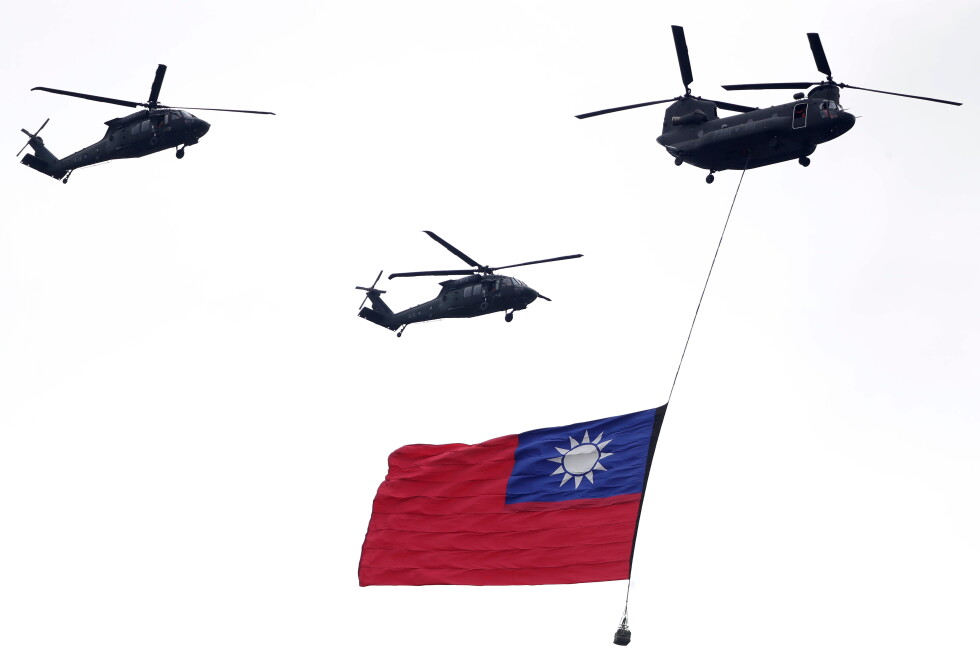
    Chinese President Xi Jinping opened the high-stakes summit with a clear, firm warning: any misstep by Washington in its approach to the self-governing island, which Beijing claims as an inalienable part of its territory, could lead to open confrontation between the two global powers. While Trump made no public response to the warning during his time on Chinese soil, he opened up about the conversation to reporters aboard Air Force One once en route home, revealing that Xi’s strong opposition has pushed him to reconsider a previously planned major U.S. arms sale to Taipei.

    ### Taiwan Policy: Strategic Ambiguity Remains, Arms Sale Decision On Hold

    Heading into the trip, Trump had already signaled growing ambivalence toward U.S. support for Taiwan during his second term, sparking widespread speculation that he might scale back long-standing American backing for the island democracy. Secretary of State Marco Rubio had publicly reaffirmed that there was no shift in Washington’s approach, but observers warned that Trump, famous for unscripted off-the-cuff remarks, could trigger unintended major consequences with a single comment. In the end, he remained publicly silent on the issue while in Beijing, even after Xi framed it as the most critical issue in bilateral ties.

    The $11 billion weapons package for Taiwan was authorized by Trump’s Republican administration back in December, but it has not yet been implemented. A separate $14 billion arms sale was approved by Congress in January, and it cannot move forward until Trump formally submits it for congressional review. When asked if he would move ahead with the sale, Trump told reporters: “President Xi and I talked a lot about Taiwan. He does not want to see a fight for independence because that would be a very strong confrontation. I heard him out, but I didn’t make a comment.”

    Trump struggled to recall the name of Taiwanese President Lai Ching-te during the press exchange, and emphasized that “The last thing we need right now is a war that’s 9,500 miles away.” When pressed on whether the U.S. would intervene militarily if China attacked Taiwan, he declined to give a direct answer — a position that aligns with decades of U.S. “strategic ambiguity” policy, which commits Washington to ensuring Taiwan has the means to defend itself but does not explicitly state what military action the U.S. would take if Beijing launches an attack.

    ### Iran Conflict: Beijing Offers Potential Mediation

    The conflict in Iran, initially expected to dominate the summit agenda, was discussed in substantive terms between the two leaders. The war has already driven a sharp spike in global oil prices, and a prolonged conflict threatens to push the global economy into recession. Trump told reporters that Xi agreed a nuclear-armed Iran would pose a dangerous threat to global security, and that both sides agreed the Strait of Hormuz — a critical global oil chokepoint — must be reopened. Trump added that Xi even offered to help broker a diplomatic end to the conflict.

    Chinese officials have not yet confirmed that mediation offer publicly. Beijing’s public stance has been that any resolution must “take into account the concerns of all parties on the Iran nuclear issue.” Trump has argued that China should play a larger role in ending the conflict, given its heavy dependence on energy imports from the Middle East. If Beijing does step up its engagement, it could mark a major breakthrough for U.S. efforts to reach a sustainable resolution to the war.

    ### A New Framework for Bilateral Ties

    Following the summit, Chinese authorities announced that the two leaders had agreed on a new vision for bilateral ties: a “constructive China-U.S. relationship of strategic stability.” According to the Chinese Foreign Ministry, this framework will guide relations for the remainder of Trump’s current term, focusing on expanding areas of cooperation, setting boundaries for competition, and managing differences through dialogue.

    Helena Legarda, a China analyst at the Berlin-based Mercator Institute for China Studies, described the framework as an effort “to keep the relationship on an even keel” after years of rising tensions. George Chen, a partner at global consultancy The Asia Group, noted that this framing represents a shift from the previous Democratic administration of Joe Biden, which framed the U.S.-China relationship primarily as one of strategic competition.

    ### Trade Deals: Big Promises, Few Concrete Details

    Trump traveled to Beijing accompanied by a delegation of top U.S. business leaders, including Boeing CEO, Nvidia chief Jensen Huang, and SpaceX CEO Elon Musk. The president announced that major new trade agreements had been reached, including a pending deal for China to purchase 200 Boeing aircraft. But he left Beijing without any formal, signed announcement of the deal. Earlier proposals for large Chinese purchases of U.S. soybeans and beef also remain pending.

    Speaking to reporters aboard Air Force One, Trump added that China could eventually purchase up to 750 Boeing aircraft if the initial order proceeds smoothly, with 450 General Electric engines included in any expanded deal. Like all large bilateral accords, the final details will determine the actual impact of any agreements. During Trump’s first term, he oversaw a high-profile signing ceremony in Beijing for nearly $250 billion in deals, but not all of the pledges made at that time were ultimately fulfilled.

    ### Diplomatic Tone: Trump’s Unreciprocated Praise for Xi

    From the start of his visit, Trump offered consistent, effusive praise for Xi Jinping, with no matching level of public flattery in return from the Chinese leader. Trump called Xi a “great leader,” said the two countries would share a “fantastic future together,” and described it as an “honor” to be Xi’s friend, calling the Chinese leader “warm.”

    Xi is not known for public effusiveness, and Trump himself acknowledged in a pre-trip Fox News interview that Xi is “all business.” In his public remarks, Xi called Trump’s visit “landmark” and said it had deepened mutual trust, and offered a more subtle gesture of goodwill: he promised to send rose seeds to the White House, matching the variety grown in the garden of his Beijing residence where the two leaders held talks over tea. Xi noted that hosting Trump at the residence was a gesture to reciprocate the hospitality Trump extended when Xi visited his Mar-a-Lago estate in Florida back in 2017.

    Reporting for this article was contributed by Leung in Hong Kong, Mistreanu and Wu in Bangkok, and Superville in Washington.

  • Palestinian ambassador Husam Zomlot to run for Fatah’s central committee

    Palestinian ambassador Husam Zomlot to run for Fatah’s central committee

    On the 78th anniversary of the Palestinian Nakba, a landmark date carrying deep collective meaning for displaced Palestinians globally, Husam Zomlot — the long-serving Palestinian ambassador to the United Kingdom — has officially declared his candidacy for a seat on the Central Committee of Fatah, the foundational and most influential Palestinian political movement.

    Zomlot, a Palestinian refugee who was born and raised in the Gaza Strip, shared the formal announcement of his candidacy via his personal Instagram account on May 15, 2026. The date of his declaration was intentionally chosen to align with the annual commemoration of the Nakba, the 1948 event that saw more than 750,000 Palestinians forcibly displaced from their historic homeland during the establishment of the State of Israel, a catastrophe that remains the core trauma of the Palestinian national experience.

    Throughout the ongoing Israeli military campaign in Gaza that has killed tens of thousands of Palestinian civilians and triggered a massive humanitarian crisis, Zomlot has emerged as one of the most visible and articulate Palestinian voices in Western media, consistently advocating for the Palestinian perspective to global audiences. His candidacy has already drawn high-profile backing, including an endorsement from Suha Arafat, the widow of Yasser Arafat — the iconic Palestinian leader who founded Fatah back in 1959. Today, Fatah remains the dominant political force governing the occupied West Bank through the Palestinian Authority (PA), which was established under the 1993 Oslo Accords.

    Muhammad Shehada, a commentator and visiting fellow at the European Council on Foreign Relations, publicly lauded Zomlot’s announcement on the social platform X, formerly Twitter. “Husam has become one of the most prominent Palestinian voices in the West, at the forefront of dismantling decades of lies & myths, leading marches on the streets of London, & excelling at advocacy & strategic communications,” Shehada wrote. “If he succeeds, it’d inject new blood in Fatah & mark a new generation entering the top leadership of Palestinian politics.”

    Fatah has held a central role in Palestinian politics for more than six decades, but the movement’s standing among the Palestinian public has declined sharply in recent years. Critics have pointed to the PA’s security crackdowns on Palestinian militant organizing in the West Bank, as well as its perceived failure to take meaningful action to stop frequent Israeli military incursions and settler attacks on Palestinian communities in the occupied territory. Even amid this dip in popularity, Fatah still retains broad support across Palestinian society, with imprisoned Fatah leader Marwan Barghouti consistently ranked as the most popular political figure among all Palestinians.

    This report was originally published by Middle East Eye, a media outlet that produces independent, on-the-ground coverage of the Middle East and North Africa region.

  • Dozens of European nations sign off on new interpretation of rights convention in migration cases

    Dozens of European nations sign off on new interpretation of rights convention in migration cases

    BRUSSELS, May 20 (Rewritten) — In a landmark meeting held Friday in Chisinau, the capital of Moldova, all 46 member states of the Council of Europe have formally adopted a non-binding political declaration that reinterprets the landmark European Convention on Human Rights for migration-related cases, including a controversial provision that explicitly allows member states to establish deportation processing centers, officially called return hubs, in non-member third countries. The agreement comes as growing political pressure from right-wing and conservative national governments across the continent has pushed for stricter, more enforceable measures to curb irregular migration and streamline cross-border deportation processes.