分类: politics

  • Sci-fi or battlefield reality? Ukraine’s bet on swarm drones

    Sci-fi or battlefield reality? Ukraine’s bet on swarm drones

    Four years into Russia’s full-scale invasion of Ukraine, a once-dystopian vision of future warfare – coordinated swarms of AI-powered drones that can communicate with one another and attack targets without direct human control – is moving from science fiction toward potential battlefield reality. Ukraine has positioned itself as a global pioneer in drone warfare, and swarm drone technology has become one of the most discussed and debated innovations in the country’s rapidly evolving defense sector.

    Industry leaders, military officials and defense experts gathered recently at the Drone Autonomy conference, hosted by the Lviv-based defense coalition Iron Cluster at an undisclosed location in the western Ukrainian city to discuss the technology’s progress and future. Military expert Yury Fedorenko emphasized the widespread urgency across Ukraine’s defense community to advance the technology, telling attendees: “No matter who you speak to, they always say: show them to us. Where are they, we want to see!”

    The concept of drone swarms – groups of uncrewed aerial vehicles that can collaborate to complete pre-defined missions independent of constant human input – has sparked a mix of excitement and apprehension across Ukraine’s military and defense circles. Volodymyr, callsign “Colt”, head of civil-military cooperation for Ukraine’s 412th brigade, noted that military stakeholders have awaited the technology for years, saying: “The only question is when it will happen.”

    Ukrainian military and defense industry representatives confirm that Kyiv has made tangible progress in developing the widely discussed technology, though many agree full mass deployment remains years away. Even so, the strategic benefits of fully operational drone swarms are clear for Ukraine: a small team of operators would be able to launch dozens or hundreds of attack drones in a single coordinated wave, overwhelming Russian air defense systems and helping counterbalance Moscow’s significant advantage in frontline manpower. Most importantly, proponents argue, the technology would reduce the number of Ukrainian soldiers exposed to lethal frontline danger.

    “The main purpose is to save the lives of our servicemen,” Andrii Lebedenko, deputy commander-in-chief of Ukraine’s armed forces, told AFP. “Today we have such projects. They’re not large-scale, but they’re growing… mass deployment is possible in the coming years.”

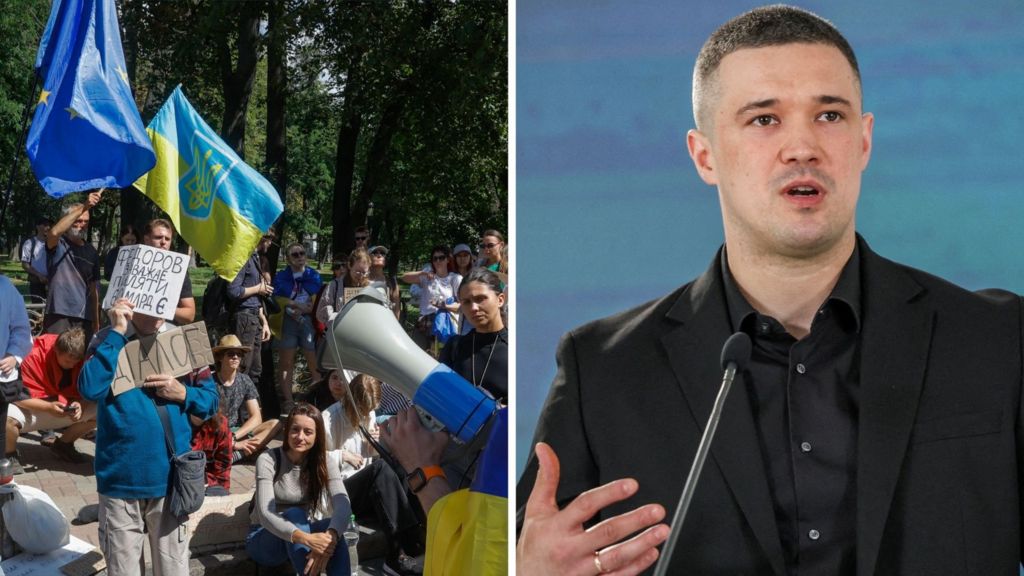
    Ukraine’s Defense Minister Mykhailo Fedorov has made advancing cutting-edge military technology a top priority to fend off Russian attacks, including the launch of the country’s Defense AI Center A1. Danylo Tsvok, head of the center, confirmed that swarm drone systems are currently in the testing phase, adding that many details of the program remain confidential for operational security.

    One of the leading players in the sector is Swarmer, a Ukrainian-American defense firm that listed on the U.S. Nasdaq exchange earlier this year. CEO Alex Fink told AFP the company has deployed early-generation swarm technology on frontline combat operations since April 2024. Its current systems allow multiple drones to autonomously navigate to a target area, after which either human pilots take over for final targeting, or operators select targets and the drones complete the strike independently. Fink stressed that human control remains a core safeguard, saying: “It’s definitely not at the point where we can trust technology to make strategic decisions or even make tactical decisions about what’s a valid target. We don’t want our systems to make that decision. We want the humans to be in charge.”

    Despite widespread enthusiasm, some defense experts have expressed skepticism that the technology is as far along as proponents claim, arguing that the concept of drone swarms has been overhyped largely because of its association with popular sci-fi storytelling. Yaroslav Azhnyuk, head of Ukrainian defense firm Fourth Law which specializes in drone autonomy, noted that full autonomous drone capability extends far beyond just coordinated swarms, covering navigation, target identification, and strike execution for all drone types. He compared the current focus on swarms to obsessing over the italic text button in Microsoft Word instead of developing the entire software platform.

    Azhnyuk framed the global race for full drone autonomy as a defining competition of the current era, comparing it to the World War II-era Manhattan Project that developed the first nuclear weapons. “Imagine if either the Nazis or the Russians got the nuclear bomb first. That would have been a very, very different world,” he said. “Now imagine if they get the full autonomy first.”

    That threat is not an abstract one: Russia has already identified AI and drone technology as top military priorities, and a 2026 report from Center for Strategic and International Studies expert Kateryna Bondar found that Russia has “likely fielded a fully autonomous unmanned system in combat”. For Ukrainian stakeholders, the stakes of the race could not be higher. Anton Melnyk, co-founder of defense industry investment firm MITS Capital, put it bluntly: “Either we will achieve this – the Armed Forces of Ukraine, together with various NATO partners – or the enemy will.”

  • Coalition would ‘rip the guts out’ of social housing but mum on tax costs, Albanese claims

    Coalition would ‘rip the guts out’ of social housing but mum on tax costs, Albanese claims

    Australia’s political landscape has erupted into fresh tensions over the 2024 federal budget, with Prime Minister Anthony Albanese launching a scathing attack on the federal opposition Coalition’s policy agenda, which he claims will dismantle critical affordable housing initiatives while refusing to disclose the full cost of its planned tax cuts.

    The verbal clash followed Opposition Treasurer Angus Taylor’s Thursday budget reply speech, where he outlined what he framed as ‘generational’ tax reform for Australia. The centrepiece of Taylor’s proposal is indexing the nation’s two lowest income tax brackets to inflation to curb the impact of bracket creep – the process that pushes workers into higher tax brackets as wages rise with inflation, acting as a stealth tax increase. The plan also includes repealing Labor’s recently passed changes to capital gains tax and negative gearing rules, with the indexation policy set to expand to higher tax brackets in coming years.

    Speaking to media on Friday, Albanese slammed the Coalition for failing to put a clear price tag on the reform, noting Taylor had only stated the total cost would ‘depend on inflation’ without offering a concrete figure. He went further to accuse the opposition of directly targeting Australia’s affordable housing supply: his core criticism is that the Coalition plans to scrap Labor’s signature Housing Australia Future Fund, a AUD 10 billion initiative designed to accelerate the construction of desperately needed social and affordable housing across the country. ‘He doesn’t say how much these measures would cost but could say that he would rip the guts out of essential housing programs,’ Albanese told reporters.

    Drawing a clear distinction between his government’s priorities and the opposition’s, Albanese argued that Taylor and the Coalition are singularly focused on countering the rising electoral threat of One Nation, rather than advancing national development. ‘We’re interested in building our nation. That’s the difference,’ he said. Albanese dismissed the entire Coalition tax plan as unserious, adding ‘Angus Taylor has no solutions. He comes up with a whole range of things without any costings that can’t be taken seriously.’

    For his part, Taylor defended the Coalition’s proposal in an interview with the ABC, arguing that targeting lower tax brackets delivers broad benefits to all working Australians, regardless of their total income. ‘We think the most important tax brackets are the lower ones which by the way benefits absolutely everybody. Everyone gets access to that, to those lower tax brackets, even if you’re in higher tax brackets,’ he explained. Taylor pushed back against criticism of the staggered rollout of indexation, noting that responsible budget management requires a phased approach, and claimed that savings from cutting what the Coalition calls Labor waste would offset the cost of the tax changes.

    He argued that bracket creep under Labor has eroded living standards for working and middle-income Australians, calling the policy a ‘sneaky tax’ that allows the government to expand its size without explicit public approval. Beyond tax reform, Taylor also announced a suite of other Coalition policies if elected: a AUD 50,000 instant asset write-off for small businesses with annual turnover below AUD 1 million, a policy to tie net permanent migration levels directly to annual housing completions to ease housing market pressure, and a restriction blocking new permanent residents from accessing social welfare.

    The budget response was not limited to the major parties: One Nation leader Pauline Hanson delivered her own separate reply to the Senate on Thursday night, echoing criticism of bracket creep as a stealth tax that erodes working Australian incomes. Hanson argued that Labor’s AUD 250 Working Australians Tax Offset would be completely wiped out by bracket creep driven by high inflation, calling the policy a political trap designed for future elections. One Nation has put forward its own proposals to end bracket creep via full indexation of all tax brackets, and to remove Goods and Services Tax from insurance and housing construction materials to ease cost of living pressures.

    The political clash comes as the Coalition faces growing pressure from the resurgent One Nation, which is siphoning support from conservative voters ahead of the next federal election, making the opposition’s policy positioning on cost of living and housing a critical electoral battleground.

  • How the fall of Starmer will reshape British policy on Israel

    How the fall of Starmer will reshape British policy on Israel

    As speculation builds over the race to replace Keir Starmer as British prime minister, one critical issue has so far been sidelined by political commentators: Starmer’s controversial handling of Israel’s military campaign in Gaza and ongoing settlement expansion in the occupied West Bank. For now, media coverage has fixated on candidate horse-trading and critiques of Starmer’s governing style, but political insiders agree this dynamic will shift dramatically once the leadership contest formally gets underway. When it does, Starmer’s approach to the Gaza crisis will emerge as one of the race’s defining flashpoints.

    Across the Labour Party, a growing consensus holds that whoever succeeds Starmer will need to adopt a far more uncompromising stance toward Israel, with potential policy shifts ranging from targeted sanctions on illegal West Bank settlements and a ban on settlement goods to sweeping, state-level sanctions against Israel itself. Senior Labour figures have already framed the issue as a critical electoral and moral turning point for the party. “Labour’s refusal to properly oppose Israel’s actions in Gaza is one of the key issues that has appalled huge numbers of former Labour voters and driven them away from the party,” Labour MP Richard Burgon told Middle East Eye. Fellow MP Kim Johnson echoed that sentiment, noting: “Any future leader must demonstrate a clear willingness to challenge the Israeli government over the continued violence in Gaza and illegal settlement expansion in the West Bank. I will be looking closely at where any future leader stands on these issues. This includes their willingness to take tough, principled action and their independence from foreign interests in the form of financial backing.”

    The field of likely contenders has begun to take shape, with former Health Secretary Wes Streeting, Deputy Prime Minister Angela Rayner, and Energy Secretary Ed Miliband all tipped as potential candidates. Currently, Greater Manchester Mayor Andy Burnham has emerged as the early frontrunner, should he win the upcoming by-election in Makerfield — a seat vacated by former Starmer ally Josh Simons. Burnham holds overwhelming popularity among Labour’s grassroots membership, but his record on Israel and Middle East policy is nuanced.

    As a regional mayor, Burnham has not shaped national Labour policy on the conflict, and he has never positioned himself as a strident pro-Palestine advocate in the mold of former leader Jeremy Corbyn. He joined Labour Friends of Israel (LFI) in 2015, during his first unsuccessful run for the party leadership, when he stated his first overseas visit as leader would be to Israel and described the Boycott, Divestment, Sanctions (BDS) movement as “spiteful.” Yet even then, Burnham criticized Israeli leadership, calling Benjamin Netanyahu’s 2015 re-election “depressing” and noting that Palestine would require increased international support. After the October 7 2023 Hamas attack, Burnham broke sharply with Starmer’s pro-Israel line, calling for an immediate ceasefire just weeks into the war — at a time when Labour MPs were ordered not to support parliamentary ceasefire votes. He has since cited lessons from the 2003 Iraq War, which he voted for as a young MP, to justify his stance: “the US-UK action resulted in huge harm to innocent civilians,” he has said, adding that those experiences shaped his opposition to the Gaza campaign. Most analysts agree that as prime minister, Burnham would almost certainly toughen Britain’s stance on Israeli violations of international law.

    Ed Miliband, Labour leader between 2010 and 2015, has also signaled he would take a harder line than Starmer. Like Burnham, Miliband has long identified as a friend of Israel and opposed boycott campaigns, but he broke with Conservative government policy during the 2014 Israeli bombing of Gaza, which killed more than 1,400 Palestinian civilians. He sharply criticized then-Prime Minister David Cameron’s “inexplicable silence” on “the killing of innocent Palestinian civilians caused by Israel’s military action,” calling Cameron’s position outright wrong. That same year, Miliband backed unilateral recognition of Palestinian statehood, a policy rejected by the Tories. Within Starmer’s cabinet, sources confirm Miliband was a leading voice pushing Starmer to formally recognize a Palestinian state, a step Starmer ultimately took in September 2025. He also successfully lobbied Starmer privately to block the U.S. from using British bases to strike Iran in February 2026, before Starmer partially reversed his decision. For her part, Angela Rayner has been publicly tied to Starmer’s Gaza position as deputy prime minister, but has a longstanding record of supporting Palestinian statehood recognition.

    The most politically ambiguous contender is Wes Streeting, whose stance on the issue has shifted dramatically in recent years. A longstanding member of LFI who meets regularly with the group in Westminster, Streeting has received more than £20,000 in donations between 2021 and 2025 from Trevor Chinn, a 90-year-old philanthropist awarded the Israeli Presidential Medal of Honour in 2024 for his service to the state. Immediately after October 7, Streeting followed the official Labour line, repeating Israel’s unsubstantiated claim that Hamas used civilians as human shells and refused to back a ceasefire. In January 2024, he even dismissed South Africa’s genocide case against Israel at the International Court of Justice as a “distraction” from diplomatic efforts.

    But in recent months, Streeting has rebranded himself as a critic of Israel. Anonymous Labour sources claim he privately pushed Starmer for a more pro-Palestinian stance while serving in cabinet. Last September, he stated that Israel’s actions in Gaza were “leading Israel to pariah status.” Then in February 2026, private text correspondence between Streeting and former U.S. ambassador Peter Mandelson was leaked — a move multiple Labour sources believe Streeting orchestrated to boost his leadership prospects. In the July 2025 texts, Streeting warned he could “become toast at the next election” in his marginal Ilford North seat, admitting: “Israel is committing war crimes before our eyes … the Israeli government talks the language of ethnic cleansing, and I have met with our own medics out there who describe the most chilling and distressing scenes of calculated brutality against women and children.” He called Israel a rogue state, arguing: “Let them pay the price as pariahs with sanctions applied to the state, not just a few ministers.”

    Critics have slammed Streeting for hypocrisy, noting he remained in a cabinet that cooperated with Israel even while holding these private beliefs. But the leak itself signals a key political shift: Streeting calculates that taking a hard line against Israel will benefit his campaign, a calculation rooted in his own 2024 election experience, where he held Ilford North by fewer than 600 votes against a pro-Palestine independent challenger.

    This shift reflects broader pressure across the party: grassroots Labour members are far more critical of Israel than the parliamentary party, with a June 2025 poll finding nine out of ten rank-and-file members believe the UK should take a much harder line against Israel than the current government. Once the contest begins, all candidates will face intense pressure from members to publicly address Starmer’s handling of Gaza, a record marked by inconsistency and criticism from the left.

    Under Starmer, the UK has conducted at least 518 spy flights over Gaza during Israel’s campaign, sharing intelligence with Israel despite government claims the flights were solely for locating hostages. The Starmer government has also permitted British dual nationals to serve in the Israeli military, and approved $169 million in military exports to Israel in the three months after imposing a partial arms embargo — more than the entire volume of military exports approved by the Conservative government between 2020 and 2023. While Starmer broke with previous Tory policy by dropping the UK’s objection to International Criminal Court jurisdiction over Israel, imposing a partial arms embargo, and sanctioning far-right Israeli ministers Itamar Ben Gvir and Bezalel Smotrich, he has walked back repeated attempts to label Israeli actions a breach of international law, refused to accuse Israel of war crimes, and allowed the U.S. to use British bases for 2026 strikes on Iran, a move legal experts describe as illegal. Domestically, Starmer’s government outlawed pro-Palestine direct action group Palestine Action as a terrorist organization, arresting thousands of supporters — including many elderly activists — despite a High Court ruling that the ban was unlawful.

    All of these policies will be put to the test during the leadership contest, with candidates forced to answer tough questions: Does Israel qualify as an apartheid state? Has it committed genocide in Gaza? Will they continue to support Labour Friends of Israel? Will they ban settlement goods, impose a full arms embargo, reverse the Palestine Action ban, or block U.S. use of British bases for future strikes against Iran?

    These questions are not just internal party business. Labour faces growing electoral pressure from the left from the Green Party, which has positioned itself as the leading UK political voice opposing British support for Israel and participation in U.S.-led Middle East wars. Leading pollster John Curtice noted after recent local elections that the Greens have done far more damage to Labour’s vote share than the right-wing Reform Party, with Gaza a top driver of that defection.

    The next Labour leader will face a clear choice: double down on Starmer’s strategy of courting right-leaning voters, or shift left to recoup disaffected voters lost to the Greens by returning to Labour’s historic roots of supporting marginalized and occupied populations. Even candidates with long pro-Israel records like Streeting now recognize that taking a harder line on Israel is politically beneficial, as his leaked texts make clear.

    The end result is inevitable: whoever wins the contest will rewrite Britain’s Israel policy. Even if Starmer survives his current leadership crisis, he will likely be forced to adjust his stance to shore up support from the party’s left. For Labour, a break from Starmer’s approach is not just morally necessary, it is politically smart, argues Burgon: “Sanctioning Israel to bring the government into line with its legal obligations under international law would not only be the right thing to do, it would also be popular. And if Labour under a new leader wants to convince people it has genuinely changed, then such a clear break with the failures of the Starmer era on Gaza will be essential.”

  • Brutal raid on woman’s birthday party highlights rise of Russian vigilante group

    Brutal raid on woman’s birthday party highlights rise of Russian vigilante group

    It was meant to be a celebration: Katya, a 30-year-old events organizer from the northern Russian city of Arkhangelsk, was moments away from blowing out the candles on her birthday cake at a rented nightclub when the attackers arrived. Dressed in masks, the group stormed the venue, launching a violent physical and verbal assault on Katya and her guests. “They called us faggots and lesbians. I could hear violence from every corner,” Katya recalled in an interview with BBC World Service’s investigative team. Her own mother, she added, was forced to get down on all fours during the attack.

    The raid was not the work of random thugs. It was coordinated by Russkaya Obshina, the largest and most active nationalist vigilante network in Russia, which operates to advance President Vladimir Putin’s political agenda of erasing Western liberal influences and cementing so-called traditional family values across the country. In a striking pattern documented by the investigation, local law enforcement officers joined the vigilantes during the operation.

    The group claimed the raid was carried out to search for evidence of illegal LGBT “propaganda,” a criminalized offense under Russian law. No such evidence was ever found, but Katya was still taken into custody for interrogation. Nine months after the attack, she was convicted of blasphemy, with the prosecution pointing to a single red neon light shaped like a crucifix hanging on the nightclub wall as evidence of her crime. She was sentenced to 200 hours of court-ordered community service.

    During her interrogation, Katya says a law enforcement officer told her she did not align with traditional Russian values and that there was “something wrong with her.” The case was amplified by local media and the group’s social media channels, triggering waves of severe online harassment that have left Katya living in constant fear. “For 10 years, I lived in a certain rhythm. It made me happy, it was my life. What do you feel when a part of you is taken away? You feel loss,” she told the BBC. Despite the risk of further targeting, Katya chose to share her story to expose the group’s tactics.

    Over 12 months of reporting, the BBC World Service spoke to six current and former members of Russkaya Obshina, as well as dozens of people harmed by the group’s actions. The investigation, which also incorporated analysis of more than 21,000 social media posts from the group’s public channels between 2020 and 2025, paints a clear picture of a rapidly expanding movement of ideologically driven nationalist and religious activists who carry out coordinated raids on private businesses, event venues, migrant communities, abortion clinics and other spaces they claim violate their strict traditional worldview. After launching their raids, the group pressures law enforcement to prosecute their targets.

    Migrants are among the group’s most frequent targets: the BBC’s analysis found that one in four of the group’s social media posts focus on migrants, and often include virulent racist language. In videos posted online, group members can be seen confronting migrants at their workplaces and public spaces, publicly accusing them of criminal activity.

    When contacted by the BBC for comment, Russkaya Obshina did not directly respond to the investigation’s specific claims, instead disputing the BBC’s ability to contact current and former members. “Even though Russkaya Obshina is an informal community of people, with no legal entity and no formal membership, the BBC’s great thinkers have somehow ‘found’ former and current members of the Obshina… If you grab anyone off the street and call them a member of the Obshina, you can put any nonsense you like into their mouth,” the group said in a social media post addressing the investigation.

    One former member, a wounded ex-soldier who left the group just two months before the BBC’s interview and asked to be identified only as Dimitry, fits the profile of many members. After returning from the front lines in Ukraine, he said he joined the group to find a new sense of purpose, channeling his military training into what he frames as defending Russian culture from “foreign intrusion.” “People from other cultures come in and Russkaya Obshina responds like an antibody, stopping them harming the organism. You could say Russkaya Obshina is like a kind of doctor,” he explained.

    The group has received explicit backing from influential Russian institutions. Last year, the Russian Orthodox Church, a close political ally of the Putin government, formally advised all of its bishops to build partnerships with Russkaya Obshina, codifying existing informal ties and granting the unregistered vigilante group greater public legitimacy.

    Political analysts broadly agree that the group could not operate at its current scale without implicit approval from the Kremlin. For years, the Russian government has framed the country as a guardian of traditional conservative values in contrast to Western liberalism, a policy that hardened dramatically after Putin launched the full-scale invasion of Ukraine in February 2022. In November 2022, Putin signed a formal decree dedicated to preserving “traditional Russian spiritual and moral values” nationwide. Russkaya Obshina has been a vocal supporter of the war in Ukraine, and in December 2024, the group formed a joint military unit deployed to the front lines alongside the far-right Espanola brigade, which has already been sanctioned by the UK government.

    Contrary to the group’s claims that it operates without formal financial backing, documents reviewed by the BBC’s investigative unit BBC Eye link the network to funding from two high-profile figures with close ties to the Kremlin, routed through multiple charitable foundations. The first major funder identified in the documents is a foundation run by Igor Khudokormov, a Russian sugar magnate whose agriculture conglomerate Prodimex is a leading Russian food producer and a major trading partner with the European Union, according to U.S. trade data. Khudokormov has close personal ties to Deputy Prime Minister Dmitry Patrushev, son of former Federal Security Service director Nikolai Patrushev, a core member of Putin’s inner circle.

    Tom Keatinge, a finance and security expert at the UK-based Royal United Services Institute, said that Khudokormov’s backing of a group engaged in human rights abuses and military activity in Ukraine raises urgent questions for European companies and governments that trade with his firm. “Do you want… a Russian company providing critical materials into the food chain, especially [one run by someone]… funding the sort of activity he’s funding? That’s a question governments and companies have to answer,” Keatinge said. Khudokormov did not respond to the BBC’s request for comment.

    The second funder named in the documents is Sergei Mikheev, a prominent pro-Kremlin media commentator who has reportedly collaborated with the Kremlin and Russian intelligence on election campaigns across former Soviet states. Mikheev denied the claim, telling the BBC, “The charitable foundation I established, the ‘Sergei Mikheev Charity Foundation,’ has never transferred any funds to Russkaya Obshina. Any documents allegedly confirming this are fake.”

    The BBC’s analysis of the group’s social media content found that the first recorded raid was carried out in May 2023. Between that date and the end of 2025, the group documented more than 900 raids across Russia, with local law enforcement joining roughly 300 of those operations. Reporters note the total number is almost certainly an undercount, as the group does not publicize all of its activity on public channels. To map the activity of Russian nationalist groups, the BBC built a custom multi-agent AI system, which cross-analyzed social media content from more than 10 similar nationalist networks, finding that Russkaya Obshina maintains a far larger street-level presence than any comparable group.

    While Russkaya Obshina has attempted to frame itself as part of Russia’s official network of registered civilian patrol groups that assist police with public order, the group remains unregistered, despite police participation in its raids. Sergei Ognerubov, who leads a registered civilian patrol in St. Petersburg that has allowed some Russkaya Obshina members to join his organization, criticized the group for its unregulated, extralegal tactics. “If you want to tackle migration, join us and do it legally. Simply running into some market in masks isn’t fighting migration – that’s more like petty hooliganism,” he said.

    Alexander Verkhovsky, a Moscow-based researcher focused on Russia’s far right, noted that the group’s extralegal intimidation tactics themselves violate Russian law, despite its claims to uphold order. “Russkaya Obshina – which claims to uphold law and order – mainly operates through intimidation which is itself illegal” in this context, he said.

    In response to the BBC’s investigation, the Russian Embassy in London defended the group, saying “The broad public support [Russkaya Obshina] enjoys reflects the… growth of interest in national culture and historical traditions” and “it would appear that… civic engagement in Russia provokes irritation among those who seek to denigrate and discredit our country.”

    For Katya, the consequences of the raid have been irreversible. She has stopped hosting the alternative community events that defined her career and personal life for a decade, and her daily routine remains upended by the harassment and conviction. Today, she lives with constant fear of further targeting, but remains one of the few voices willing to publicly speak out about the vigilante network’s growing power.

  • Trump insists US-China relations are in a good place despite differences as he wraps up Beijing trip

    Trump insists US-China relations are in a good place despite differences as he wraps up Beijing trip

    BEIJING – As U.S. President Donald Trump concluded his fast-paced diplomatic visit to China on Friday, he remained steadfast in his public framing that relations between the world’s two largest economies are strong and improving, even as deep, unresolved divisions over flashpoint issues from Taiwan to the Iran conflict continue to test bilateral ties.

    On his final day in the Chinese capital, Trump took to social media to claim that Chinese President Xi Jinping had praised his “tremendous successes” in office. He also sought to clarify Xi’s recent comment describing the U.S. as a potentially declining power, arguing the remark was directed exclusively at his predecessor Joe Biden, not his own administration.

    Yet Trump’s upbeat assessment of the U.S.-China relationship runs headlong into tangible disagreements that dominated closed-door negotiations this week, with no sign of breakthrough on the most contentious items on the agenda.

    ### Taiwan: Core Interest Sparks Sharp Warnings
    The Taiwan question emerged as the most sensitive topic of this week’s talks, with Chinese officials confirming that Xi privately warned Trump that mishandling differences over the self-governing island could push the two global powers into open confrontation.

    For Beijing, Taiwan has long been framed as an non-negotiable core national interest, and Chinese leaders have ramped up this messaging in recent weeks amid growing defense cooperation between Washington and Taipei. Secretary of State Marco Rubio, who joined the U.S. delegation for negotiations, emphasized that longstanding U.S. policy toward Taiwan remains unchanged, warning that any attempt to seize the island by force would be a catastrophic error, while also noting that Beijing’s tough rhetoric on the issue follows longstanding diplomatic norms.

    The current state of play on Taiwan exposes conflicting strands of Trump’s policy toward the island. In December, his administration approved a record $11 billion arms package for Taiwan – the largest ever offered to the democracy – but the deal has yet to be implemented, and Trump has publicly questioned the value of U.S. security commitments to Taipei. He has complained that Taiwan “stole” the U.S. semiconductor industry and repeatedly demanded the island pay full cost for American military protection, while using tariff threats and incentives inherited from the Biden administration to pressure Taipei into committing to massive new investments in U.S. semiconductor manufacturing and multi-billion dollar purchases of American crude oil and liquefied natural gas. These inconsistent stances have fueled widespread speculation that Trump could be willing to scale back U.S. support for Taiwan in exchange for concessions on other issues.

    Ma Chun-wei, a specialist in cross-strait relations at Taiwan’s Tamkang University, explained that growing defense ties between Washington and Taipei have directly prompted Beijing’s harder line on the issue. “For Xi Jinping, he must show that the Taiwan issue is in China’s hands. He must demonstrate this image, or else he would be criticized,” Ma noted.

    ### The Iran Conflict: Disagreement Over Global Energy Security
    The ongoing war in Iran, which has effectively closed the critical Strait of Hormuz chokepoint for global oil trade, also featured prominently in Thursday’s two-hour talks between the two leaders at Beijing’s Great Hall of the People.

    Trump told Fox News in an interview that both he and Xi agreed the Strait of Hormuz – which carried roughly 20% of the world’s global oil supplies before the war began in February – must be reopened to meet global energy demand. Trump claimed that Xi privately offered to mediate to help end the conflict, though details of any potential Chinese role remain unclear, particularly given Beijing’s longstanding strategic partnership with Tehran. The U.S. has repeatedly pressed China to use its unique leverage as Iran’s largest trading partner to pressure Tehran into negotiating an end to the war, but Beijing has shown little public willingness to take steps that would damage its relationship with the Iranian government.

    “He’d like to see the Hormuz Strait open,” Trump said of Xi. “He said if I can be of any help whatsoever, I would like to help.” Trump added that Xi also opposes the imposition of tolls on ships transiting the strait and signaled China could increase purchases of American oil to reduce its reliance on Gulf energy supplies in the future.

    Just days before arriving in Beijing, Trump downplayed the urgency of resolving the Iran conflict during talks with Xi, telling reporters “we have Iran very much under control” and framing the issue as a lower priority. But senior administration officials struck a different tone ahead of the meetings, arguing that it is directly in China’s economic interest to help end the war. Rubio noted that the conflict has driven up global energy prices, slowing consumer demand around the world and leading to fewer purchases of Chinese goods, which harms China’s export-driven economy. While Beijing has so far cushioned the impact of the energy crisis using its strategic oil reserves, economists warn that that buffer is not unlimited, and prolonged disruption to global energy markets could cause significant damage to Chinese economic growth.

    On another longstanding point of friction, the White House still maintains that China could do more to crack down on the flow of Chinese-made precursor chemicals to Mexican drug cartels, which are used to produce illicit fentanyl that has caused a public health crisis across thousands of American communities.

    ### Trade and Business: Expectations of Potential Deals Ahead of Departure
    Heading into the visit, White House officials signaled that Trump would not conclude the trip without tangible progress on trade, suggesting new announcements could be coming before his departure for Washington. The U.S. side is pushing for formal Chinese commitments to increase purchases of American soybeans and beef, while Trump confirmed Friday that Xi had indicated China would move forward with a purchase of 200 Boeing commercial jets.

    According to a White House readout of Thursday’s talks, the two leaders discussed expanding Chinese agricultural imports from the U.S. and exploring opportunities for reciprocal investment expansion. The Trump administration is also pushing to establish a new bilateral Board of Trade to address ongoing commercial disputes between the two countries.

    Chinese Premier Li Qiang struck a conciliatory tone during separate talks with American business leaders, including Elon Musk of Tesla, Tim Cook of Apple and Nvidia CEO Jensen Huang – all of whom joined Trump’s delegation for the visit. “China and the United States have been able to maintain frank and smooth dialogue and communication and actively safeguard a stable and healthy bilateral relationship” despite global upheaval, Li said.

    As Friday wraps up, Trump and Xi are scheduled for additional informal talks at Xi’s official Beijing residence before the U.S. president departs for the return trip to Washington, with no clear sign that the two sides have bridged the deep divides that continue to shape the world’s most important bilateral relationship.

  • Anas al-Tikriti, British-Iraqi founder of Cordoba, denied entry to Canada

    Anas al-Tikriti, British-Iraqi founder of Cordoba, denied entry to Canada

    A high-profile British-Iraqi interfaith activist was turned away from Canadian soil and detained for 11 hours at Montreal-Pierre Elliott Trudeau International Airport earlier this week, in a move that has sparked intense debate over freedom of speech and political pressure shaping Canadian border policy. Anas al-Tikriti, founder of the London-based Cordoba Foundation, an organization dedicated to fostering cross-cultural dialogue between Western nations and Muslim communities, had been scheduled to address a national convention hosted by the Muslim Association of Canada in Toronto between May 16 and 18 before his entry was blocked. He was ultimately deported back to London following hours of questioning by Canadian border officials. In a formal statement released after his deportation, al-Tikriti described his detention as a prolonged, unfocused process marked by repetitive questioning that mirrored queries he had already completed on his Electronic Travel Authorisation (ETA) application form. Among the repeated questions, he said, was what he called the absurd and demeaning inquiry asking if he had ever been linked to narcotics networks, terrorist organizations or criminal groups. Al-Tikriti added that at no point did officials ask to discuss his planned remarks at the convention, his academic or political views, or the purpose of his visit. When he volunteered to provide additional context or clarification for his travel, the overseeing officer explicitly declined to hear any further information. “It was clear to me within the first three hours that they had no intention of allowing me into Canada, and that the hours that followed were a search for a pretext,” al-Tikriti said in his statement. By the afternoon of his arrival, officials had settled on a justification for the denial: they claimed al-Tikriti had provided false information on his ETA application when he stated he had never been refused a visa by another country, pointing to a 2023 U.S. visa refusal as evidence of the inaccuracy. Al-Tikriti has strongly pushed back on this claim, stating unequivocally that he did not intentionally misstate his travel history on the form. The activist founded the Cordoba Foundation in 2005, and the organization works to build intercultural dialogue and provides strategic and security policy advice to political stakeholders working on Middle East issues. The designation has long been a point of controversy: in 2014, the United Arab Emirates, where al-Tikriti spent his adolescence and early adulthood, labeled the Cordoba Foundation as a terrorist organization – a classification that rights advocates argue is politically motivated. Al-Tikriti has also been targeted by state surveillance in the past: in 2021, forensic analysts confirmed his personal iPhone had been compromised by Pegasus, the powerful military-grade spyware developed by Israeli cybersecurity firm NSO Group, with evidence pointing to the UAE as the actor behind the hack. The Muslim Association of Britain has publicly linked the Canadian decision to ongoing political pressure around the Israel-Palestine conflict, arguing the entry ban was pushed by bad-faith actors seeking to silence public criticism of Israel’s military campaign in Gaza, which critics have labeled a genocide. The organization added that the incident raises serious, troubling questions about the state of free speech in Canada, and the growing trend of targeting activists who publicly advocate for Palestinian human rights. Al-Tikriti echoed that sentiment in his statement, saying he would have respected Canadian authorities more if they had been transparent about the real reason for his denial. “I would, frankly, have had more respect for the Canadian immigration authorities had they simply said so. That they were under pressure not to admit me,” he said. “That my views on Palestine were unacceptable to them. That my criticism of Israel’s crimes against humanity was intolerable.”

  • Getting to yes on reopening Hormuz

    Getting to yes on reopening Hormuz

    The ongoing indirect negotiations between Iran and the United States, mediated by Pakistan, have hit a fresh impasse following Tehran’s response to Washington’s latest peace proposal and former President Donald Trump’s outright rejection of the deal. At the heart of the deadlock is Iran’s insistence on asserting exclusive sovereignty over the Strait of Hormuz – a demand that stands in direct conflict with established international maritime law, and has thrown global energy markets into turmoil.

    The dispute over Hormuz’s status is a secondary outcome of the current conflict, not its root cause, and it cannot be resolved as a bilateral issue between the two nations. Free and unimpeded transit through the strait is an internationally recognized right held by all maritime states, making it a matter of global concern rather than a bargaining chip between Tehran and Washington. Experts widely agree that separating the Hormuz question from other outstanding disagreements between the two powers is the most logical path forward. Restoring unconditional transit through the chokepoint is critical to reversing what has become the most severe disruption to global petroleum supplies in modern history, and to securing long-term navigation freedom after the bulk of U.S. military forces withdraw from the region.

    Right now, the ongoing blockage has already triggered a global energy crisis, pushing up prices for crude oil, agricultural fertilizers, and a wide range of consumer and industrial goods worldwide. With every additional day of restricted shipping, supplies continue to dwindle, and price pressures are projected to intensify. That makes urgent diplomatic action to fully reopen the strait a top global priority.

    To understand the legal framework governing Hormuz, it is important to place it in context alongside other critical global maritime chokepoints, including the Strait of Gibraltar, the Strait of Malacca, and the Bab-el-Mandeb. Like these waterways, the Strait of Hormuz is extremely narrow: the 12-nautical-mile territorial seas of coastal states Iran and Oman actually meet in the middle of the shipping channel. To codify navigation rights for such strategic international straits that connect two open bodies of water, the 1994 UN Convention on the Law of the Sea (UNCLOS) – ratified by 168 nations – explicitly requires that coastal states may not block or suspend transit passage through international straits. They are also prohibited from charging tolls or discriminating against shipping from any country. While the United States has never formally ratified UNCLOS, it has long abided by this provision and many others, recognizing them as codification of centuries of customary international maritime law.

    This legal regime functioned smoothly in the Strait of Hormuz for years before the current conflict broke out. Restoring full compliance with UNCLOS rules must be a core non-negotiable international objective. The precedent matters: if Iran is allowed to charge transit tolls or assert exclusive control over Hormuz, coastal states controlling other chokepoints around the world will almost certainly follow suit, driving up global trade costs dramatically. Already, a former Indonesian finance minister has publicly floated the idea of charging tolls for ships passing through the Strait of Malacca, a key route for trade between Asia, Europe, and the Middle East. Major global trade routes could easily see multiple tolled chokepoints if the Hormuz precedent is broken.

    In the wake of Israeli and U.S. strikes on Iran earlier this year, Tehran declared the central navigation channel, which runs through Omani territorial waters, to be dangerous due to alleged mining. This forced all commercial shipping to reroute to the Iranian side of the strait, giving Tehran greater control over traffic and opening the door to potential transit fees. The U.S. responded with its own naval blockade of Iranian shipping in mid-April, a move that followed logically from Tehran’s actions.

    Today, both sides remain convinced that their respective blockades give them greater negotiating leverage, that time is on their side, and that the opposing party will eventually be forced to concede to their demands. Iran’s push for a new regulatory regime and exclusive sovereignty over the strait directly contradicts internationally accepted maritime law, while the U.S. has tied the resolution of the Hormuz dispute not just to a full reopening of the waterway, but also to the outcome of other contentious issues on the negotiation table.

    Weeks into the opposing blockades, both sides have demonstrated they are capable of maintaining their restrictions against challenges from the other. The net result is that commercial transit through the strait has slowed to a tiny fraction of pre-crisis volumes. A coalition of nations led by France and the United Kingdom has indicated it is prepared to deploy a symbolic naval presence to defend freedom of navigation, but it will only act after the broader conflict is resolved. This leaves the world in a dangerous holding pattern – so what actionable path forward exists to break the deadlock?

    A temporary, mutually agreed opening that allows shipping to use channels along both the Iranian and Omani coasts while mine-clearing operations proceed in the central channel would immediately address the urgent humanitarian issue of freeing dozens of commercial ships and their crews currently trapped in the Persian Gulf. This could be achieved as part of a ceasefire extension, or negotiated as a standalone humanitarian corridor similar to the 2022 Black Sea Grain Initiative that allowed Ukrainian grain exports during the war. However, such a measure would only be a temporary fix, not a permanent resolution to the underlying dispute.

    The core of the problem is that two nations are clashing over a right that belongs to the entire international community. While individual major powers including China have called for the strait to be reopened, there has been no unified collective action from the global community to date.

    A more effective, permanent path forward would be a coordinated, high-impact diplomatic initiative by a large coalition of UNCLOS member states demanding the immediate restoration of the UNCLOS maritime regime in the Strait of Hormuz. This coalition would need to include countries with influence over both Iran and the United States to carry weight. Logically, leadership for this initiative should come from small and middle-sized Asian economies that are most heavily dependent on unimpeded Hormuz transit, but it must also include major powers including China, India, and key European economies. Crucially, the initiative would be strictly diplomatic, and would not take sides in the broader Iran-U.S. conflict – its only demand would be compliance with existing, widely accepted international law.

    Would this proposal gain traction with both parties? It is possible that both sides would embrace the initiative as a face-saving way out of their current mutual stalemate, providing a clear path to a mutually acceptable agreement. The UNCLOS-based solution fully preserves Iran’s and Oman’s sovereignty over their territorial waters and islands within the strait, just as it preserves sovereignty for the parties that control other international straits: for example, Morocco, Spain, and the United Kingdom share sovereignty over the Strait of Gibraltar in line with UNCLOS, just as Indonesia and Malaysia do for the Strait of Malacca.

    It is possible that Iran’s insistence on full control is merely a bargaining tactic to gain leverage in other areas of negotiation, but ultimately Tehran must accept that no unique exception can be made for Hormuz that deviates from the rules applied to every other international strait in the world.

    Neither side would surrender meaningful leverage by accepting this multilateral proposal: both have already proven their military capability to block the strait, a capability that would remain intact even if the current blockade were lifted. At the same time, both sides would see immediate economic and political gains from reopening the waterway to full commercial traffic.

    Separating the Hormuz issue also allows negotiators to turn their full attention to the original core dispute between the two nations: Iran’s enriched uranium program. This is a complex, high-stakes negotiation that requires specialized technical expertise. As Trump has noted, the issue is less immediately pressing than the Hormuz blockage, since Iran’s existing enriched uranium stockpiles are deeply buried and under close international monitoring. Ultimately, the two parties should be able to agree on a clear core goal: full Iranian compliance with the Treaty on the Non-Proliferation of Nuclear Weapons within a defined timeframe.

    If a resolution can be reached through this multilateral UNCLOS-based approach, the ongoing Iran-U.S. negotiations could serve as a tentative but transformative first step toward a broader restructuring of the Middle East regional order. The first major breakthrough of this kind came in the late 1970s, with the historic peace deal between Israel and Egypt, followed later by normalization with Jordan. Extending that difficult peace process to include Iran may seem even more ambitious today than the Egyptian-Israeli reconciliation seemed in the years immediately after the 1973 Yom Kippur War. But if pursued with patience and consistent commitment, this diplomatic effort would mark a truly unprecedented step forward for Middle East peace.

  • US Supreme Court restores abortion pill access for now

    US Supreme Court restores abortion pill access for now

    In a high-stakes decision that will shape abortion access across the United States for the coming months, the U.S. Supreme Court has ruled that mail delivery of the abortion pill mifepristone can remain legal while broader litigation over the drug’s regulatory status moves through the court system. The emergency order, issued Thursday, blocks harsh restrictions imposed by a lower appellate court that would have required patients to obtain the pill in person, delivering a temporary win to reproductive rights advocates after weeks of uncertainty.

    The case stems from a lawsuit filed last October by the state of Louisiana, which aimed to halt all mail distribution of mifepristone. Louisiana argued that the U.S. Food and Drug Administration’s policy allowing nationwide mail access interfered with the state’s strict total abortion ban, writing that “Every abortion facilitated by FDA’s action cancels Louisiana’s ban on medical abortions and undermines its policy that ‘every unborn child is human being from the moment of conception and is, therefore, a legal person.” In early May, the 5th U.S. Circuit Court of Appeals responded to the suit by temporarily reinstating a long-suspended rule requiring in-person pickup of the drug.

    Within days, Danco Laboratories and GenBioPro, the two companies that manufacture mifepristone, asked the Supreme Court to intervene to block the appeals court’s restrictions while the legal process moves forward. Thursday’s ruling, which is known as a “stay,” grants that request: the restrictions on mail access will remain off the table until the Supreme Court decides whether it will take up the full emergency appeal from the manufacturers. That decision could come as late as next year, meaning current access rules will stay in place for months.

    The order came out of the court’s emergency docket and was issued without a full accompanying explanation, but it revealed a familiar split among the justices. The court’s two most conservative members, Justices Clarence Thomas and Samuel Alito, issued dissents opposing the decision to keep mail access open. In his written dissent, Thomas argued that because mifepristone distribution by mail is classified as illegal under Louisiana state law, the drug manufacturers have no right to challenge the lower court’s order, writing that they are not entitled to “based on lost profits from their criminal enterprise.”

    The long-running legal battle over mifepristone comes against a shifting regulatory and legal landscape for abortion access in the U.S. Mifepristone, the first medication in the FDA-approved two-drug regimen for early pregnancy termination, has become the most common method of abortion across the country in recent years, and its availability via mail is particularly critical for patients living in the more than 20 states that have banned or severely restricted abortion since 2022.

    The current rules allowing mail access date back to 2023, when the FDA made permanent a pandemic-era policy that lifted the requirement for in-person dispensing of the drug, first implemented in 2021. That policy change came just months after the Supreme Court’s 2022 decision overturning *Roe v. Wade*, the landmark 1973 ruling that had established a constitutional right to abortion nationwide. The 2022 ruling handed authority to regulate abortion to individual states, leading dozens of conservative-led states to implement near-total or total bans.

    Last year, the Supreme Court unanimously rejected an earlier attempt to restrict mifepristone access, but that ruling explicitly left the door open to future legal challenges targeting the drug’s availability. Thursday’s order is the first major outcome from the wave of new challenges that followed, and it keeps the current access model intact for the immediate future.

  • Trump to seek tangible trade wins in Xi summit

    Trump to seek tangible trade wins in Xi summit

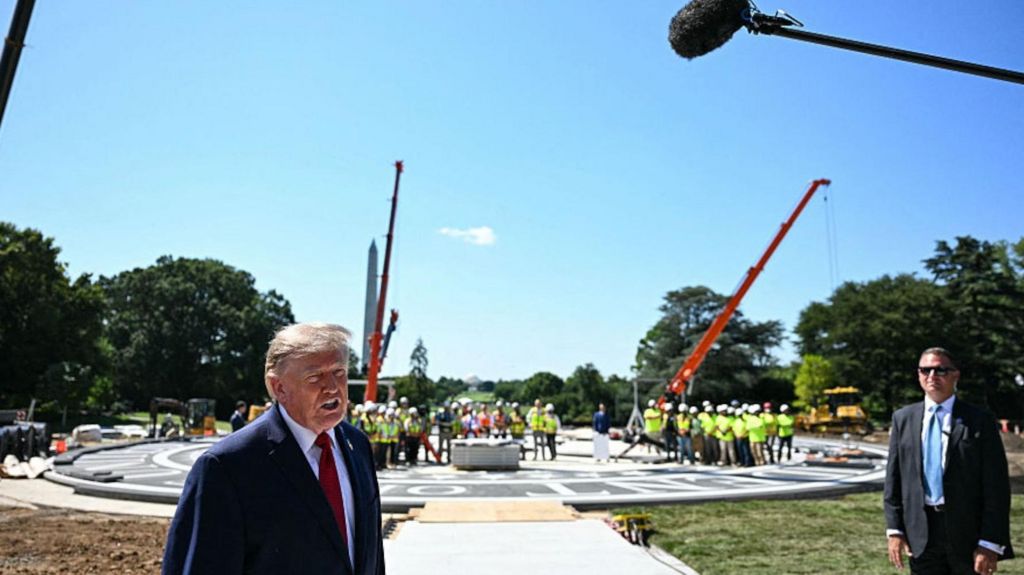
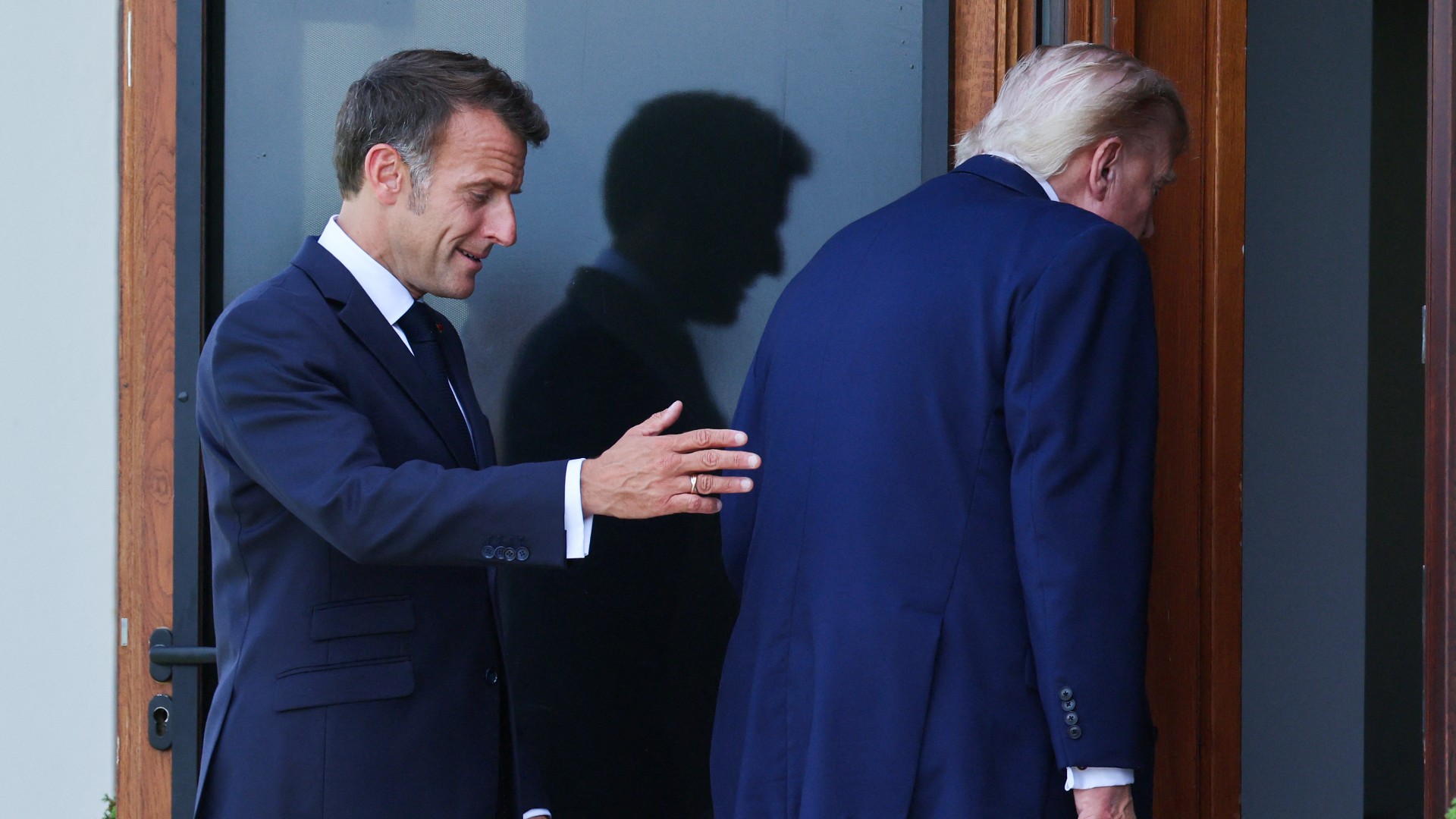
    When U.S. President Donald Trump arrived in Beijing for his landmark summit with Chinese leader Xi Jinping — the first visit by a sitting American president in nearly a decade — high expectations for breakthrough progress on trade and bilateral relations hung over the meetings. But after a day of ceremonial handshakes and official banquets, a blunt warning from Xi over the sensitive issue of Taiwan overshadowed the proceedings, as the U.S. delegation heads into the final day of talks on Friday focused on securing tangible trade and geopolitical wins.

    On the trade front, Trump is seeking to lock in major commercial agreements across key sectors ranging from agriculture and commercial aviation to cutting-edge artificial intelligence. He is joined on the trip by a roster of top American business leaders, including Tesla CEO Elon Musk and Nvidia chief Jensen Huang, highlighting the private sector’s stake in improved bilateral commercial ties. Ahead of Friday’s trade-focused discussions, Trump previewed one high-profile deal in an interview with Fox News, confirming that China has agreed to purchase 200 Boeing commercial jets. Markets reacted cautiously to the announcement, however: shares of Boeing dipped immediately after the reveal, as investors had anticipated a larger, more substantial purchase agreement.

    Beyond commercial deals, the Trump administration is also pushing for progress on geopolitical flashpoints, most notably the ongoing Middle East conflict and its impact on global energy supplies. In his Fox News interview, Trump said that Xi gave him clear reassurance that China will not provide military aid to Iran amid the ongoing war, a key win for the U.S. administration. “He said he’s not going to give military equipment… he said that strongly,” Trump told reporters, adding that Xi shares the U.S. goal of keeping the Strait of Hormuz — the critical maritime chokepoint through which 20% of the world’s oil supplies pass — open to global shipping. The White House later confirmed in a brief official readout that both leaders “agreed that the Strait of Hormuz must remain open to support the free flow of energy.” This issue has already upended the summit schedule: Trump was originally scheduled to travel to Beijing in late March, but postponed the trip over tensions linked to the Hormuz closure.

    Talks between the two global powers are also set to address the emerging framework for AI governance, with U.S. Treasury Secretary Scott Bessent telling CNBC that the world’s two leading AI powers are negotiating to establish “guardrails” for responsible development and deployment of the technology. Despite this opening for dialogue, longstanding frictions remain: U.S. export controls on advanced AI semiconductors and related technology to China remain one of the most contentious issues in bilateral trade relations.

    Diplomatic undercurrents have shaped the tone of the summit from the start. While Trump has repeatedly praised Xi, calling him a “great leader” and a “friend,” the Chinese side has responded with relatively muted diplomatic overtures. That dynamic shifted sharply on Thursday, when Xi delivered an uncharacteristically blunt warning that any missteps on the Taiwan issue could push the two nuclear-armed superpowers into open conflict. Trump declined to address Xi’s Taiwan warning when questioned by reporters Thursday, but Bessent said the president would share more details of his position “in the coming days.”

    The two leaders also touched on long-term great power dynamics during their first day of talks, with Xi referencing the so-called Thucydides Trap — the theory that a rising power will inevitably clash with an existing dominant power. Xi emphasized that Beijing and Washington have the ability to transcend this historical risk, avoiding conflict despite their growing competition. In a post on his Truth Social platform early Friday, Trump framed Xi’s reference to great power shifts through a domestic political lens, noting that Xi “very elegantly referred to the United States as perhaps being a declining nation.” Trump claimed that Xi’s observation was not aimed at his own administration, which he says has overseen an “incredible rise” for the U.S., but rather at the tenure of his predecessor Joe Biden. “Two years ago, we were, in fact, a Nation in decline,” Trump wrote. “Now, the United States is the hottest Nation anywhere in the world, and hopefully our relationship with China will be stronger and better than ever before!” He added that Xi “congratulated me on so many tremendous successes.”

    As the two leaders enter the final day of negotiations, observers are watching to see whether the summit will deliver on Trump’s promises of tangible wins, or whether lingering disputes over Taiwan, AI trade controls, and the Middle East will overshadow any potential progress.

  • What happens next in the Alex Murdaugh case?

    What happens next in the Alex Murdaugh case?

    Once one of South Carolina’s most powerful legal figures, Alex Murdaugh, convicted of orchestrating the 2021 murders of his wife Maggie and son Paul, will face a retrial after the state’s highest court unanimously threw out his original murder convictions. The landmark ruling hinged on a finding of unfair trial bias, caused by improper interference from the trial court clerk that undermined the integrity of the first jury proceedings.

    In its unanimous decision, the South Carolina Supreme Court confirmed that court clerk Rebecca Hill improperly influenced the jury by instructing members to “watch [Murdaugh] closely” and discount his testimony. The ruling noted Hill had “placed her fingers on the scales of justice”, and months after the original conviction, she published a tell-all book about the high-profile proceedings. The case, which has gripped national public attention for years, has spawned a dedicated podcast, feature documentary, television miniseries and multiple books, cementing its status as one of the most followed true crime cases in recent U.S. history.

    Following the ruling, Murdaugh’s defense team has celebrated the decision and expressed full confidence in securing an acquittal at retrial. At 56 years old, Murdaugh was already serving two consecutive life sentences for the 2021 murders, and he remains incarcerated on separate, untouched convictions for extensive financial crimes that include a 27-year state sentence and 40-year federal sentence for stealing millions of dollars from client settlement funds to feed a years-long opioid addiction. Those financial convictions have not been challenged or overturned in this ruling. Defense attorneys Dick Harpootlian and Jim Griffin confirmed their client maintains his total innocence in the murders, and has ruled out any possibility of a plea deal to avoid a new trial.

    Speaking to media outlets, Griffin shared that Murdaugh feels “grateful” and “surprised” by the court’s decision, and is deeply relieved to have the label of convicted murderer of his wife and son formally removed. Harpootlian added that because the original jury was improperly lobbied to convict, a new, unbiased jury will give Murdaugh a fair shot at acquittal. The state supreme court’s ruling also placed critical new restrictions on the use of evidence related to Murdaugh’s financial crimes in the upcoming retrial, finding that original prosecutors overstepped by overemphasizing the financial convictions as a supposed motive for murder. The new trial must strictly limit discussion of financial wrongdoing to only what directly supports the prosecution’s case, and exclude inflammatory, non-relevant details of the fraud offenses, which Murdaugh has already admitted to committing.

    Prosecutors have confirmed they will move forward with a retrial rather than appeal the decision to the U.S. Supreme Court. Lead prosecutor Creighton Waters told *Good Morning America* that retrying the case as soon as possible is the best path forward for justice. South Carolina Attorney General Alan Wilson echoed that commitment in an official statement, vowing to “aggressively seek to retry Alex Murdaugh for the murders of Maggie and Paul as soon as possible”.

    Looking ahead to the proceedings, key procedural questions remain unresolved. A new trial will require an entirely new jury, but finding impartial jurors in Colleton County, the case’s original jurisdiction where nearly all residents followed the first trial closely, is expected to be extremely difficult. Legal experts note a change of venue to another county across South Carolina is highly likely, with some observers joking that only an off-world venue could guarantee a fully unbiased jury given the case’s massive global media coverage. It also remains unclear whether Murdaugh, who took the stand in his own defense during the first trial, will testify again in the retrial, with his attorney declining to confirm that detail.

    While Murdaugh remains behind bars for his intact financial convictions, there is a path to his eventual release if his legal team secures further victories: he could still appeal his financial convictions, and if those were overturned alongside an acquittal in the murder retrial, he would be eligible for immediate release. Prosecutors have not yet set a firm timeline for the new trial, noting that complex high-profile cases move slowly, comparing the legal process to a marathon rather than a sprint. For context, Maggie and Paul Murdaugh were found dead in June 2021, Alex Murdaugh was not arrested for their murders until July 2022, and his first trial began six months after that arrest.