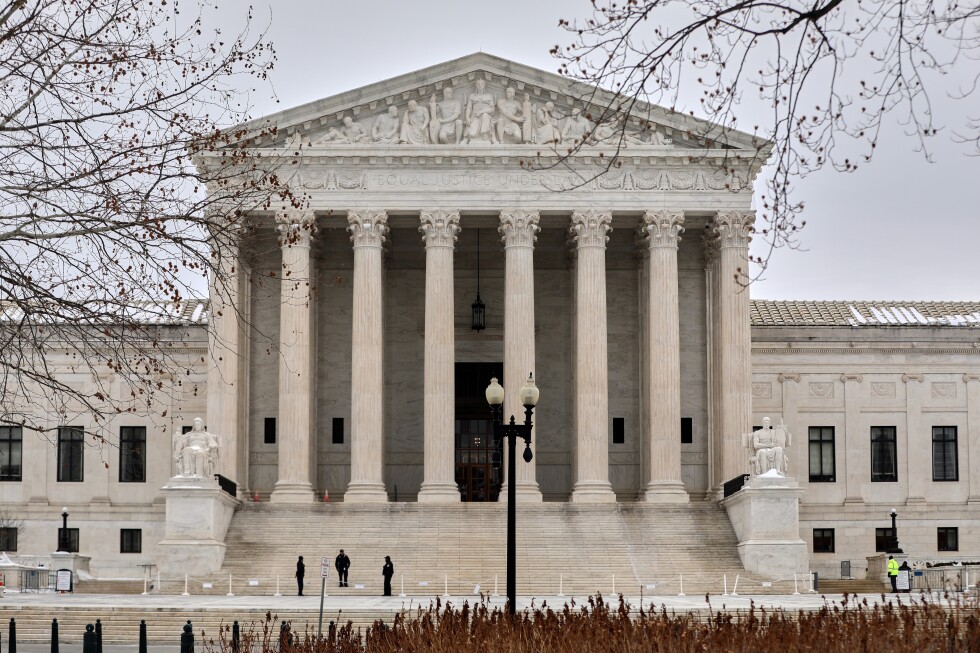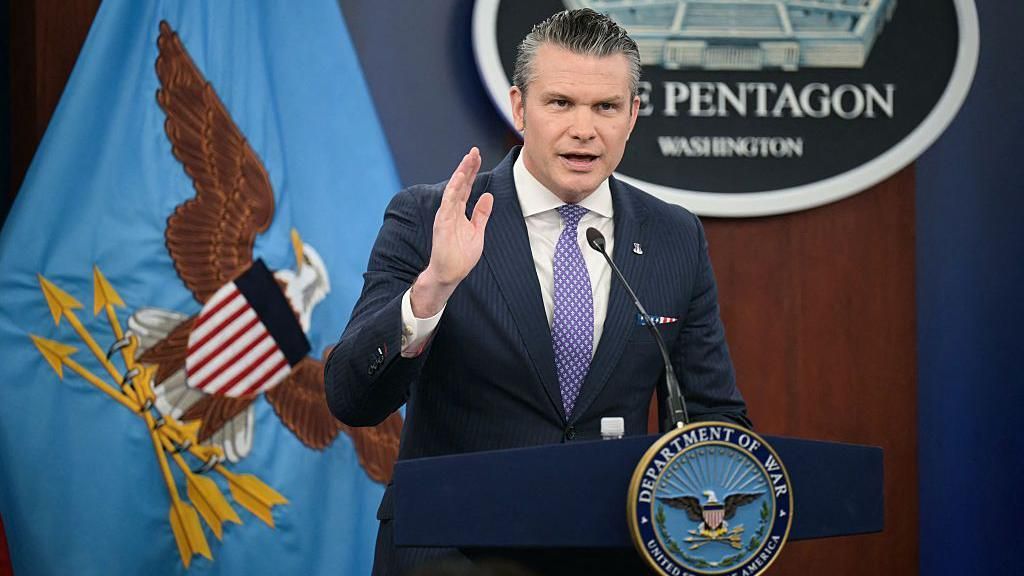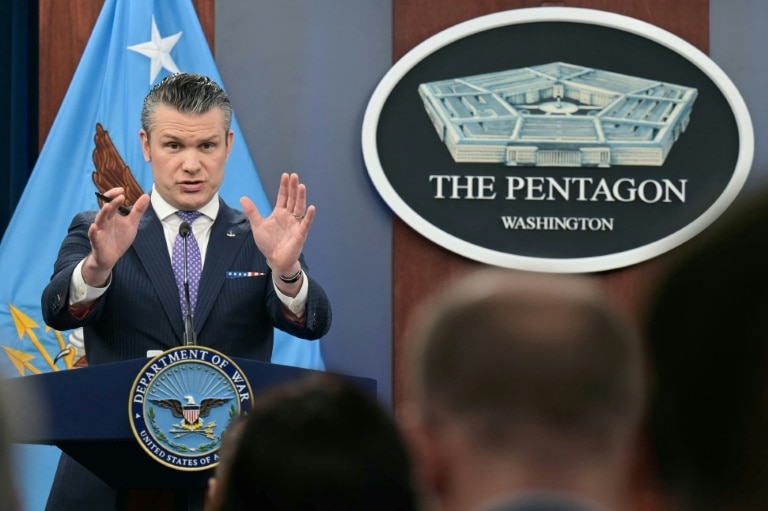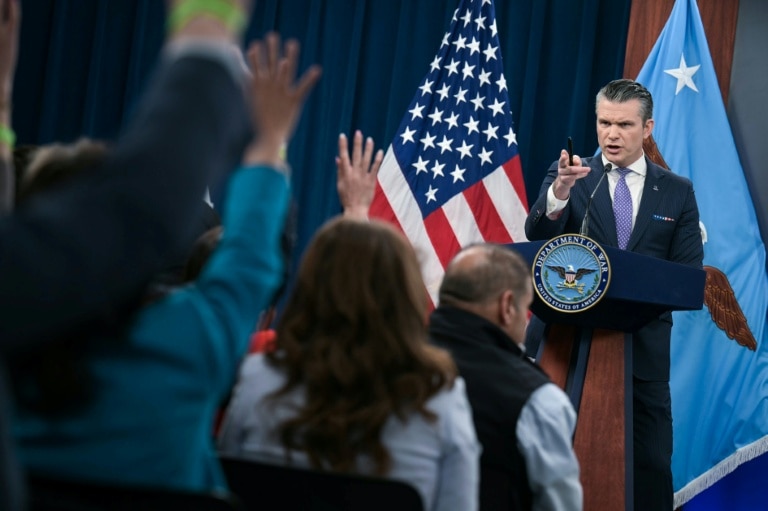
In a dramatic legislative setback, the US House of Representatives failed to pass the ROTOR Act on Tuesday despite strong bipartisan support, following last-minute objections from the Pentagon. The aviation safety legislation, which had previously gained unanimous Senate approval in December, fell just one vote short of the required two-thirds majority under fast-track voting procedures.
分类: politics
-

Zimbabwe rejects ‘lopsided’ US health aid deal over data concerns
Zimbabwe has formally declined a substantial health assistance package from the United States valued at $367 million, citing concerns over data sovereignty and inequitable terms. The decision emerged through a leaked government memorandum from December, revealing President Emmerson Mnangagwa’s characterization of the proposed five-year agreement as “lopsided.”
According to government spokesperson Nick Mangwana, the rejection stemmed from Washington’s demands for unrestricted access to Zimbabwe’s biological samples and health data for research and potential commercial applications, without guaranteeing reciprocal benefits. “Zimbabwe was being asked to share its biological resources and data over an extended period, with no corresponding guarantee of access to any medical innovations—such as vaccines, diagnostics, or treatments—that might result from that shared data,” Mangwana stated.
The US Embassy in Zimbabwe expressed disappointment, noting that the funding would have supported critical programs addressing HIV/AIDS treatment and prevention, tuberculosis, malaria, maternal and child health, and disease outbreak preparedness. US Ambassador Pamela Tremont announced the “difficult and regrettable task of winding down our health assistance in Zimbabwe,” highlighting that the US had provided over $1.9 billion in health funding to the country over the past two decades.
This development occurs within the broader context of the Trump administration’s foreign aid restructuring, which has emphasized bilateral government-to-government agreements while reducing support for multilateral institutions. The US withdrawal from the World Health Organization (WHO) and pursuit of direct health pacts with African nations have raised concerns about existing global health frameworks. Zimbabwe pointed to the WHO’s Pathogen Access and Benefit Sharing scheme as a more equitable alternative for future pandemic response.
Notably, Kenya’s High Court suspended a similar US health agreement in December over data safety concerns, indicating a growing pattern of scrutiny regarding health data sovereignty in US-Africa relations. Despite the rejection, Zimbabwe emphasized that its decision “should not be misconstrued as anti-American sentiment” and expressed willingness to continue dialogue on future cooperation that respects “the sovereignty and dignity of both nations.”
-

UK leader Starmer faces an electoral test after Epstein fallout shakes his grip on power
British Prime Minister Keir Starmer confronts a pivotal political challenge as his Labour Party battles to retain a historically secure parliamentary seat in northwest England. The Thursday special election in Gorton and Denton, a Greater Manchester constituency under Labour control for a century, has evolved into an unexpected three-way contest that threatens to expose the Prime Minister’s vulnerability across the political spectrum.
The election pits Labour local councilor Angeliki Stogia against two insurgent candidates: Matthew Goodwin of the hard-right anti-immigration Reform UK party and Hannah Spencer of the progressive Green Party. Current polling and betting markets indicate an exceptionally tight race, with a Labour victory now considered a potential ‘man-bites-dog’ upset according to University of Manchester political science professor Rob Ford.
This electoral battle unfolds against a backdrop of significant leadership challenges for Starmer. Since leading Labour to a landslide victory in July 2024, the Prime Minister has struggled to deliver promised economic growth, repair deteriorating public services, and address the ongoing cost-of-living crisis. These difficulties were compounded recently by the scandal involving former UK ambassador to Washington Peter Mandelson, whose connections to convicted sex offender Jeffrey Epstein sparked internal party rebellion and the resignation of key staff members.
The Gorton and Denton constituency’s diverse demographics—combining traditional working-class neighborhoods, university students, and Muslim residents—create particularly fertile ground for challengers. Reform UK has gained traction among disaffected former Labour voters, while the Green Party has expanded its appeal beyond environmental issues to include support for Palestinian causes and drug legalization, attracting left-leaning voters disillusioned with Labour’s centrist shift.
A defeat for Labour would intensify questions about Starmer’s leadership strategy, particularly the party’s decision to block popular Greater Manchester Mayor Andy Burnham from running. The outcome may also validate criticisms that the government’s attempts to appeal to potential Reform UK supporters through stricter immigration policies have alienated its liberal base.
With the next national election not required until 2029, Starmer’s most immediate threat comes from within his own party. While the Prime Minister recently survived a leadership challenge, political analysts suggest that poor performance in upcoming May elections for Scottish and Welsh parliaments could reignite internal opposition to his leadership.
-

Orbán orders extra security at energy sites, claiming Ukraine plots disruptions
BUDAPEST, Hungary — Hungarian Prime Minister Viktor Orbán has ordered heightened security measures at critical energy facilities following allegations that Ukraine intends to disrupt Hungary’s energy infrastructure. The directive includes military deployment and enhanced police patrols around power plants, distribution stations, and control centers.
The escalating tensions stem from conflicting accounts regarding interruptions in Russian oil deliveries through the Druzhba pipeline, which traverses Ukrainian territory. Budapest claims Kyiv is deliberately withholding shipments, while Ukrainian officials maintain that the pipeline sustained damage during a Russian drone attack, making repairs hazardous amid ongoing hostilities.
Orbán, who maintains Europe’s closest relationship with the Kremlin, characterized Ukraine’s actions as ‘an oil blockade’ designed to pressure Hungary. In a social media address, he asserted that national security intelligence indicated preparations for further disruptive actions, though no specific evidence was provided to substantiate these claims.
The energy dispute occurs against a backdrop of broader geopolitical tensions. Hungary recently vetoed a new EU sanctions package against Russia and threatened to block a €90 billion EU loan package for Ukraine. Orbán has pledged to obstruct all EU assistance measures to Kyiv until oil shipments resume.
Additionally, the Hungarian government has implemented a drone operations ban in Szabolcs-Szatmár-Bereg County, which borders Ukraine, citing security concerns.
The confrontation unfolds just weeks before Hungary’s April 12 parliamentary elections, where Orbán’s Fidesz party faces its most significant challenge since returning to power in 2010. The prime minister has launched an extensive media campaign portraying Ukraine as an existential threat to Hungarian interests, while opposition parties accuse him of leveraging the crisis for political gain.
-

Global governance seminar held in Geneva, marking launch of English edition of Volume I of ‘China’s Governance under Xi Jinping’s Leadership’
GENEVA – A significant symposium on international governance frameworks convened at the Palais des Nations in Geneva on Tuesday, simultaneously marking the global release of the English version of ‘China’s Governance under Xi Jinping’s Leadership: Volume I.’ The event, collaboratively organized by Xinhua News Agency and China’s Permanent Mission to the United Nations Office in Geneva, attracted approximately 200 delegates from UN agencies, international bodies, diplomatic corps, research institutions, and commercial enterprises.
Tatiana Valovaya, Director-General of the UN Office at Geneva, emphasized in her keynote address that the Global Governance Initiative (GGI) put forward by Chinese President Xi Jinping in September 2025 underscores the critical importance of diplomatic dialogue, sustainable development, and mutually beneficial international partnerships. Valovaya acknowledged China’s substantial role in reinforcing multilateral frameworks and urged nations to collaborate in establishing more equitable, inclusive, and efficient international cooperation systems. She reaffirmed the UN’s unique position as the sole global platform where all nations can collectively address shared challenges.
Chinese Ambassador Jia Guide, Permanent Representative to the UN Office in Geneva, highlighted the contemporary challenges facing global governance, noting that unilateral approaches, trade protectionism, and hegemonic tendencies are eroding multilateral structures. Ambassador Jia revealed that China’s GGI has garnered endorsement from over 150 nations and international organizations, demonstrating widespread international consensus. He reiterated China’s commitment to enhanced coordination with global partners to advance more just and equitable governance mechanisms.
Xinhua News Agency President Fu Hua presented the newly released publication, describing it as a comprehensive documentation of China’s governance innovations and achievements under President Xi’s leadership. The volume provides detailed insights into policy implementations and personal leadership qualities that have shaped China’s development trajectory. President Fu confirmed Xinhua’s ongoing dedication to promoting global governance concepts through multilateral media partnerships and think tank collaborations, aiming to effectively communicate China’s contributions to global governance reform.
Concurrently, Xinhua unveiled a specialized think tank report titled ‘Upholding International Justice and Jointly Addressing World Turbulence – Focusing on China’s Solution to Global Governance,’ further elaborating on China’s perspectives regarding contemporary international challenges.
-

Trump says prefers to solve Iran confrontation via diplomacy
In his inaugural State of the Union address for his second term, President Donald Trump articulated a preference for diplomatic engagement to resolve ongoing tensions with Iran. Speaking before a joint session of Congress at the U.S. Capitol on Tuesday, the President revealed that negotiations are currently underway between the two nations.
Trump indicated Tehran’s apparent willingness to reach an agreement, though he emphasized a critical unresolved element in the discussions. “They want to make a deal,” the President stated, “but we haven’t heard those secret words, ‘We will never have a nuclear weapon.’”
The address marked Trump’s first major foreign policy declaration since beginning his second term, signaling continuity in his administration’s approach to Iran while keeping military options available. The speech focused heavily on national security concerns, with Iran’s nuclear ambitions representing a central theme in the administration’s international security agenda.
Observers noted that the President’s comments reflected a strategic balancing act—maintaining pressure through sanctions while keeping diplomatic channels open. The administration’s Iran policy has remained consistent since Trump’s withdrawal from the Joint Comprehensive Plan of Action (JCPOA) in 2018, demanding a more comprehensive agreement that addresses Iran’s ballistic missile program and regional activities alongside nuclear limitations.
-

Trump claims Iran working on missiles that could hit US, says he prefers diplomacy
President Donald Trump utilized his State of the Union address on Tuesday to assert that Iran is actively pursuing advanced missile technology capable of striking the continental United States. The declaration marks a significant escalation in rhetoric regarding Tehran’s military capabilities.
During his nationally televised speech, Trump stated, ‘Iran has already deployed missiles threatening European territories and our overseas military installations. They are now advancing their program to construct missiles with potential reach to American soil.’ This claim appears to contradict established intelligence assessments regarding Iran’s current technological capabilities.
According to defense analysis from the U.S. Congressional Research Service, Iran’s existing ballistic missile arsenal consists primarily of short- and medium-range systems with maximum ranges of approximately 1,850 miles (3,000 kilometers). The geographical reality places the continental United States at a distance exceeding 6,000 miles from Iran’s western borders, making any immediate threat technologically implausible.
The U.S. Defence Intelligence Agency had previously projected in 2025 that Iran could potentially develop a militarily viable intercontinental ballistic missile by 2035, but only if Tehran made a strategic decision to pursue such capability—a determination that intelligence officials had not confirmed.
Despite the confrontational rhetoric, Trump emphasized his preference for diplomatic solutions, noting that Washington and Tehran have engaged in two rounds of negotiations aimed at establishing a replacement for the nuclear agreement that the Trump administration abandoned during its first term. These talks have encountered significant obstacles, particularly regarding American demands for complete uranium enrichment cessation and limitations on Iran’s ballistic missile program and regional activities—conditions that Iranian officials have consistently rejected.
The diplomatic efforts occur against a backdrop of substantial U.S. military deployment to the Middle East, including two aircraft carrier groups, numerous additional naval vessels, combat aircraft, and other assets. Trump has repeatedly warned that military action remains an option should diplomatic efforts fail, with the next round of negotiations scheduled for Thursday.
-

Zelenskyy says Ukrainian officials to meet Trump envoys in Geneva for more Russia talks
GENEVA – A high-level Ukrainian delegation is scheduled to engage in pivotal discussions with American representatives on Thursday, marking a significant diplomatic effort ahead of anticipated trilateral negotiations involving Russia. President Volodymyr Zelenskyy confirmed the meeting during a Wednesday media briefing, highlighting its importance within the broader context of ongoing conflict resolution efforts.
Rustem Umerov, Secretary of Ukraine’s National Security and Defense Council, will lead discussions with key U.S. figures including Steve Witkoff, special envoy for former President Donald Trump, and Jared Kushner, Trump’s son-in-law. The Geneva meeting, confirmed by Umerov’s press secretary Diana Davytian, occurs alongside separate nuclear negotiations between the United States and Iran in the same diplomatic hub.
This diplomatic engagement continues a pattern of U.S.-mediated peace initiatives that previously brought Russian and Ukrainian officials to negotiation tables in Abu Dhabi and Geneva earlier this year. Despite these efforts, substantial breakthroughs remain elusive as Russia’s comprehensive invasion approaches its fifth anniversary without resolution of fundamental disagreements.
According to Zelenskyy, Thursday’s agenda will focus on developing a comprehensive postwar recovery framework for Ukraine and coordinating preparations for upcoming trilateral discussions with Moscow representatives. Additionally, Umerov has been authorized to explore potential prisoner exchange mechanisms during the talks.
The diplomatic developments occur against a backdrop of continued military confrontation. Ukrainian forces have achieved notable advances along the 1,250-kilometer eastern front in recent months, described by the Institute for the Study of War as the most significant territorial gains since 2024. However, analysts note these advances face limitations due to personnel shortages and are unlikely to evolve into major offensive operations.
Simultaneously, Ukraine has maintained its campaign of long-range drone strikes against military and infrastructure targets within Russian territory. These operations have drawn measured criticism from the U.S. State Department, particularly regarding attacks affecting American oil interests in Kazakhstan through strikes on the Russian port of Novorossiysk.
The human cost of the conflict was further emphasized by recent casualties on both sides. Russian officials reported four fatalities and ten injuries from a Ukrainian drone strike on a Smolensk region fertilizer plant, while Ukrainian authorities confirmed four civilian deaths and a child injured from Russian drone attacks in Zaporizhzhia district.
Zelenskyy reiterated Ukraine’s resilience during commemorations of the invasion’s fourth anniversary, asserting that Russian forces have neither defeated Ukraine nor broken the national spirit despite military advantages and sustained attacks on civilian areas.
-

Fact-checking Trump’s longest ever State of the Union
In his lengthiest congressional address to date, President Donald Trump addressed U.S. lawmakers for one hour and forty-seven minutes, declaring that “the country is winning again” while highlighting his administration’s economic and policy achievements. The speech, among the longest delivered to Congress in decades, centered on economic revitalization, immigration control, and foreign policy accomplishments.
Economic indicators presented a mixed picture: while inflation has moderated to 2.4% as of January 2026—down from 3% during President Biden’s final year—certain Trump policies have faced criticism for potentially exacerbating price pressures. Harvard economists estimated that tariffs implemented in 2025 elevated consumer price inflation by approximately 0.92 percentage points.
The President specifically highlighted declining prices for grocery items, noting beef prices were “starting to come down significantly,” though government data revealed a 15% increase in beef prices over the twelve months to January 2026. Egg prices demonstrated a more substantial decline, falling 34% during the same period.
Employment figures reached record levels with 158 million people employed, though the employment-to-population ratio slightly declined from 60.1% to 59.8% since Biden’s departure. The unemployment rate edged upward from 4.1% to 4.3% over the same timeframe.
Immigration claims received partial validation, with Homeland Security confirming zero migrant releases into the U.S. for nine consecutive months. Border apprehensions plummeted to 6,070 in January 2026—a dramatic reduction from the 124,215 recorded under Biden in January 2024.
The administration’s assertion of ending eight international conflicts underwent rigorous verification. While Trump successfully brokered an Israel-Hamas ceasefire, several referenced conflicts involved minimal actual combat or pre-dated his administration. The White House list included disputes between Pakistan-India, Rwanda-DRC, Thailand-Cambodia, Armenia-Azerbaijan, Egypt-Ethiopia, and Serbia-Kosovo, though many represented brief flare-ups rather than sustained military engagements.
Investment tracking showed discrepancies between presidential claims and official data. While Trump referenced trillions in manufacturing investments, the White House’s own tracker documented $9.7 trillion—substantial yet significantly lower than asserted. Experts noted included pledges might not materialize, particularly given recent tariff disruptions.
Voter fraud allegations lacked substantiation, with Heritage Foundation records identifying only 1,620 proven cases nationwide since 1982. Multiple studies indicate non-citizen voting remains exceptionally rare in U.S. elections.
-

Analysis: Trump’s main themes and who he hoped to win over
In a comprehensive examination of former President Donald Trump’s State of the Union address, political analyst Daniel Bush identifies two dominant policy pillars that formed the cornerstone of his presidential agenda. The address strategically emphasized economic revitalization and immigration reform as interconnected national priorities.
The economic portion of the speech highlighted tax reforms, deregulation policies, and trade agreement renegotiations as mechanisms for boosting American job creation and GDP growth. Simultaneously, the immigration segment focused on border security enhancements, enforcement mechanisms, and merit-based immigration reforms, presenting them as essential components for protecting American workers and economic interests.
Bush’s analysis reveals how these themes were carefully crafted to appeal to distinct voter demographics: economic messages targeted working-class Americans and business communities, while immigration rhetoric resonated with voters concerned about national security and cultural preservation. The address framed these issues not as separate concerns but as mutually reinforcing elements of a comprehensive America First governance approach.
The strategic emphasis on these particular issues reflected calculated political positioning designed to consolidate Trump’s base while attempting to sway undecided voters who prioritized economic stability and immigration control. The speech’s architecture demonstrated how policy messaging can serve dual purposes of governing philosophy and electoral strategy.