分类: politics

  • Analysis: Trump’s main themes and who he hoped to win over

    Analysis: Trump’s main themes and who he hoped to win over

    In a comprehensive examination of former President Donald Trump’s State of the Union address, political analyst Daniel Bush identifies two dominant policy pillars that formed the cornerstone of his presidential agenda. The address strategically emphasized economic revitalization and immigration reform as interconnected national priorities.

    The economic portion of the speech highlighted tax reforms, deregulation policies, and trade agreement renegotiations as mechanisms for boosting American job creation and GDP growth. Simultaneously, the immigration segment focused on border security enhancements, enforcement mechanisms, and merit-based immigration reforms, presenting them as essential components for protecting American workers and economic interests.

    Bush’s analysis reveals how these themes were carefully crafted to appeal to distinct voter demographics: economic messages targeted working-class Americans and business communities, while immigration rhetoric resonated with voters concerned about national security and cultural preservation. The address framed these issues not as separate concerns but as mutually reinforcing elements of a comprehensive America First governance approach.

    The strategic emphasis on these particular issues reflected calculated political positioning designed to consolidate Trump’s base while attempting to sway undecided voters who prioritized economic stability and immigration control. The speech’s architecture demonstrated how policy messaging can serve dual purposes of governing philosophy and electoral strategy.

  • Oversight assisted 14th Five-Year Plan

    Oversight assisted 14th Five-Year Plan

    As China prepares for its annual ‘Two Sessions’ political gatherings in March, national political advisers are finalizing policy recommendations informed by extensive grassroots research. Jin Hua, a member of the Chinese People’s Political Consultative Conference (CPPCC) National Committee from Qinghai’s Haixi Mongol and Tibetan Autonomous Prefecture, has conducted thorough field investigations into elderly care challenges in high-altitude regions.

    Her research at rural mutual-aid elderly care centers in Dulan county revealed that despite the construction of over 140,000 rural elderly care facilities during the 14th Five-Year Plan period (2021-2025), seniors in remote plateau areas require more specialized support. While increased state investment has provided adequate nursing beds for disabled elderly, institutions face low occupancy rates and staffing shortages due to harsh climatic conditions and traditional attitudes toward institutional care.

    Jin emphasized the urgency of establishing village-level elderly care teams to ensure remote seniors receive assistance when needed. For the upcoming CPPCC session, she will propose guidelines for plateau medical-nursing institutions including critical emergency oxygen supply services.

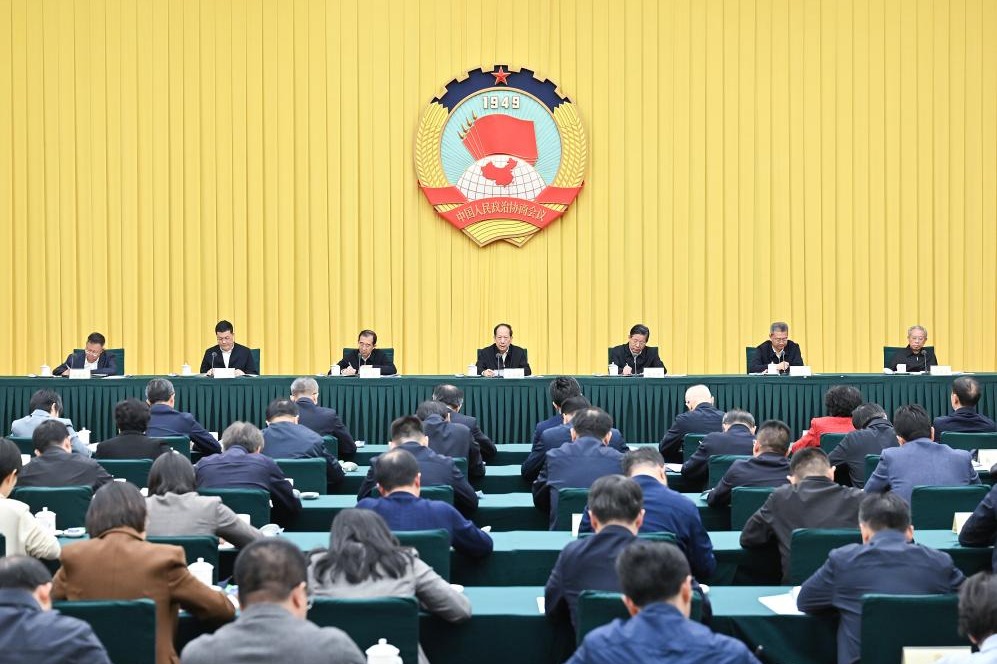
    The CPPCC National Committee’s preparatory work builds upon five years of systematic oversight conducted from 2021-2025. During this period, the committee executed continuous supervisory activities across ten key areas including business environment optimization, black soil conservation, development of the Guangdong-Hong Kong-Macao Greater Bay Area, elderly-friendly social transformation, veterans’ benefits, rural habitat improvement, and sports-education integration.

    This oversight mechanism involved 47 grassroots inspection tours led by CPPCC vice-chairpersons with participation from 779 committee members, resulting in 48 specialized reports and 323 governmental recommendations that facilitated implementation of 25 laws and regulations.

    Meanwhile, Clarence Ling Chun-kit, a CPPCC National Committee member from Hong Kong, has focused his research on youth development and enterprise expansion. Having conducted investigations at the Dagang Oilfield in Tianjin, Hainan Free Trade Port, and interregional economic exchanges, Ling plans to submit proposals addressing the integration challenges Hong Kong youth face in the Greater Bay Area, particularly regarding cultural adaptation and career development.

    Ling emphasized that young people represent a vital force for national development and praised China’s consultative democracy system for ensuring the ‘scientific soundness and rigor’ of national policies. Approximately 2,100 CPPCC National Committee members will convene in Beijing in March, where the formulation of the 15th Five-Year Plan (2026-2030) will serve as a central focus of deliberations.

  • Modi’s Israel visit to test India’s priorities in the Middle East

    Modi’s Israel visit to test India’s priorities in the Middle East

    Indian Prime Minister Narendra Modi has embarked on a pivotal two-day diplomatic mission to Israel, marking his first visit since the outbreak of the Gaza conflict. The carefully orchestrated itinerary features high-level engagements with Israeli Prime Minister Benjamin Netanyahu and President Isaac Herzog, including a scheduled address before the Knesset—Israel’s parliamentary body. Notably absent from the agenda are meetings with Palestinian leadership, underscoring the complex geopolitical calculations underlying this visit.

    The diplomatic engagement occurs against a backdrop of escalating regional tensions, including heightened US military presence and nuclear tensions with Iran. Despite these challenges, both nations are prioritizing the strengthening of defense, technology, and trade partnerships that have flourished under Modi’s decade-long leadership. The relationship reached a historic turning point during Modi’s groundbreaking 2017 visit, the first by an Indian prime minister, which established new paradigms for counter-terrorism cooperation and defense procurement—making India one of Israel’s largest arms customers.

    Netanyahu characterized the visit as ‘historic,’ emphasizing on social media platform X that ‘the bond between Israel and India is a powerful alliance between two global leaders. We are partners in innovation, security and a shared strategic vision.’ Modi reciprocated by affirming India’s commitment to ‘the enduring friendship with Israel, built on trust, innovation and a shared commitment to peace and progress.’

    However, the visit faces domestic political challenges in both nations. Israeli opposition parties have threatened to boycott Modi’s Knesset address amid an ongoing judicial reform controversy, while Indian opposition leaders have criticized the government’s perceived abandonment of Palestinian solidarity. India maintains its official support for a two-state solution while navigating relationships with Iran and other Middle Eastern nations critical of Israel.

    According to Kabir Taneja of the Observer Research Foundation, ‘India’s indigenous defense technology is still lagging on many fronts, especially as warfare becomes more automated and technology driven. Given tensions with Pakistan and China, India does not have the luxury of not seeking the best technological equipment.’ Regional stability remains critically important for India’s connectivity and energy security interests, ensuring Modi will carefully balance his praise for Israeli relations with preservation of India’s broader Middle Eastern partnerships.

  • Hungary’s Orbán stakes his reelection on anti-Ukraine message

    Hungary’s Orbán stakes his reelection on anti-Ukraine message

    BUDAPEST, Hungary — As Hungary approaches a pivotal April 12 election, Prime Minister Viktor Orbán is leveraging an aggressive disinformation campaign to redirect voter attention from domestic economic concerns toward neighboring Ukraine. With his right-wing Fidesz party trailing behind center-right challenger Péter Magyar in independent polls, Orbán’s government has launched a taxpayer-funded media blitz featuring AI-generated imagery of Ukrainian President Volodymyr Zelenskyy depicted alongside European officials in what appears to be a demand for financial support.

    The campaign’s central message—”We won’t pay!”—directly challenges European Union efforts to sustain Ukraine amid Russia’s ongoing invasion. Orbán positions himself as protecting Hungarian interests against what he characterizes as EU warmongering, suggesting alignment with Ukraine could economically cripple the nation and force Hungarian youth into military conscription.

    This rhetoric escalated Monday when Hungary blocked the EU’s 20th sanctions package against Russia and vowed to veto further pro-Ukraine policies until resumed oil shipments via Ukraine are guaranteed. Orbán’s administration claims Russian oil disruptions resulted from Ukrainian actions, though Kyiv attributes the January pipeline damage to Russian drone strikes.

    Analysts note Orbán’s strategy mirrors previous successful election tactics where external threats were emphasized over domestic shortcomings. András Rácz, Russia expert at the German Council on Foreign Relations, observed: “Populists often define an imaginary enemy and offer protection. Ukraine has been ideal from this perspective.”

    The campaign emerges amid Fidesz’s weakening position following political scandals, including a presidential pardon for a child sexual abuse case accomplice that triggered resignations. Challenger Magyar, a 44-year-old former Fidesz insider, has capitalized on these controversies while campaigning on economic issues, anti-corruption measures, and restoring Hungary’s Western alliances.

    Despite government-controlled media amplifying anti-Ukraine narratives, dissenting voices emerged during recent Budapest demonstrations where hundreds commemorated the invasion’s anniversary. Liberal Mayor Gergely Karácsony condemned Orbán’s approach as “a betrayal not only of Ukraine, but of Hungary’s national interest,” while Ukrainian students in Hungary criticized the billboards as politically motivated misinformation funded by Hungarian taxpayers.

  • India’s Modi is making his second official visit to Israel to meet with Netanyahu

    India’s Modi is making his second official visit to Israel to meet with Netanyahu

    Indian Prime Minister Narendra Modi arrived in Jerusalem on Wednesday for a pivotal two-day diplomatic mission aimed at deepening security, economic, and technological cooperation with Israel. The visit marks a significant moment in bilateral relations as both nations seek to reinforce their strategic partnership amid ongoing regional instability.

    Modi’s itinerary includes high-level discussions with Israeli Prime Minister Benjamin Netanyahu and President Isaac Herzog, followed by an address to the Israeli parliament. The Indian leader characterized the relationship as ‘a robust and multifaceted Strategic Partnership’ that has ‘significantly strengthened in recent years’ in a pre-visit statement on social media platform X.

    Netanyahu, who previously described himself and Modi as ‘personal friends,’ emphasized the importance of economic and security collaboration, particularly in emerging technologies including artificial intelligence and quantum computing. The Israeli leader noted both countries are building ‘an axis of nations committed to stability and progress.’

    The timing of Modi’s visit provides Israel with valuable international backing as it faces deteriorating relations with traditional allies following the Gaza conflict that erupted in October 2023. India represents Israel’s second-largest trading partner in Asia, with bilateral trade reaching $3.62 billion during the 2025 fiscal year according to India’s Commerce Ministry.

    This diplomatic engagement continues the momentum established during Modi’s groundbreaking 2017 visit—the first by an Indian prime minister to Israel—and Netanyahu’s reciprocal trip to India the following year. The growing partnership signals a notable evolution in India’s foreign policy, which historically supported Palestinian causes and only established full diplomatic relations with Israel in 1992.

    While Modi quickly expressed solidarity with Israel following Hamas’ October 2023 attack, India recently joined over 100 nations in criticizing Israel’s expanded measures in the occupied West Bank that further weaken the Palestinian Authority’s limited governance capabilities.

  • US and South Korean militaries will have joint drills in March as tensions with North Korea escalate

    US and South Korean militaries will have joint drills in March as tensions with North Korea escalate

    SEOUL, South Korea — The United States and South Korean militaries have officially confirmed their upcoming annual Freedom Shield joint military exercises, scheduled for March 9-19. This announcement comes during a period of heightened diplomatic tensions with nuclear-armed North Korea, which has consistently condemned such drills as rehearsals for invasion.

    The Freedom Shield exercises represent one of two major annual command post simulations conducted by the allies, alongside the Ulchi Freedom Shield drills in August. These computer-simulated exercises are designed to enhance combined operational capabilities through evolving war scenarios and contemporary security challenges. The March drills will be complemented by the Warrior Shield field training program, aimed at increasing tactical realism and combat preparedness, according to Colonel Ryan Donald, public affairs director for U.S. Forces Korea.

    This military preparation unfolds as North Korea conducts a significant political conference where leader Kim Jong Un is anticipated to outline his strategic domestic, foreign policy, and military objectives for the coming five years. Experts suggest Kim may use this platform to reinforce his hard-line stance toward South Korea, demand the removal of denuclearization preconditions for talks, and announce further integration of nuclear and conventional forces.

    The timing is particularly sensitive given North Korea’s rapidly advancing nuclear weapons program, which now includes systems capable of targeting U.S. allies in Asia and potential long-range missiles reaching American territory. Despite South Korean President Lee Jae Myung’s expressed desire for inter-Korean engagement and hopes that former President Trump’s anticipated visit to China might facilitate renewed diplomacy, North Korea has repeatedly rejected calls to resume denuclearization talks.

    Colonel Jang Do-young of South Korea’s Joint Chiefs of Staff clarified that while the exercises won’t simulate responses to nuclear attacks, they will include training specifically aimed at deterring nuclear threats. The allies continue to discuss specifics of the field training component, with participation numbers typically reaching thousands of personnel.

    The regional security landscape is further complicated by intensifying U.S.-China competition, prompting Washington to encourage Seoul to assume a greater defense burden against North Korea as America shifts focus toward China. Meanwhile, Kim Jong Un has prioritized relations with Russia, providing military support for Moscow’s war in Ukraine, potentially in exchange for aid and technological assistance.

  • Trump insists Joint Chiefs chair on board for Iran military move

    Trump insists Joint Chiefs chair on board for Iran military move

    President Donald Trump conceded Monday that a U.S. military offensive against Iran would prove catastrophic for the Middle Eastern nation’s civilian population, even as his administration actively contemplates assault options. This admission emerged alongside reports indicating private cautions from General Dan Caine, Chairman of the Joint Chiefs of Staff, regarding the substantial risks associated with attacking Iran—a country of over 90 million inhabitants.

    In a Truth Social post, Trump contested media narratives suggesting General Caine expressed reservations about potential military engagement. Contrary to these reports, Trump asserted that the general maintains a steadfast focus on victory, stating Caine would “lead the pack” if commanded to execute military operations. The president—who terminated a landmark diplomatic agreement with Iran during his initial term—added that failure to secure a new accord would result in “a very bad day for that Country and, very sadly, its people.”

    This recognition of potential civilian devastation contrasts sharply with the rhetoric of war advocates who promote regime change as beneficial for Iran’s population. The National Iranian American Council emphasized the urgency of the situation, noting Trump’s own acknowledgment of dire consequences for Iranian civilians.

    Legislative efforts are underway to prevent unauthorized military action, with the House of Representatives preparing to vote on a resolution requiring congressional approval for Iran engagement. However, the measure faces slim prospects of reaching the president’s desk. Recent polling indicates minimal public support for initiating conflict, with only 21% of Americans endorsing military action against Iran.

    According to New York Times reporting, the administration is considering a phased approach involving initial targeted strikes followed by expanded operations if Iran refuses to abandon its nuclear program. Behind-the-scenes negotiations explore a potential compromise allowing limited nuclear enrichment exclusively for medical research purposes. This diplomatic initiative unfolds as U.S. military assets, including aircraft carrier groups and strike aircraft, mass within operational range of Iranian territory.

    General Caine’s reported concerns extend beyond humanitarian considerations to practical military limitations. The Washington Post revealed the general warned that munitions stockpiles have been significantly depleted by ongoing support for Israel and Ukraine, potentially complicating any major operation against Iran.

    The administration’s trajectory toward potential conflict has drawn substantial criticism from policy experts. Matt Duss of the Center for International Policy condemned prospective military action as “an illegal act of war,” noting the abandonment of previous justifications related to protecting Iranian protesters. Duss urged congressional intervention to clarify that the president lacks authorization for employing armed forces against Iran.

  • Watch: Iran, Olympics and partisan divisions among takeaways from Trump speech

    Watch: Iran, Olympics and partisan divisions among takeaways from Trump speech

    President Trump’s highly anticipated address to a joint session of Congress became a multifaceted political spectacle that highlighted both international tensions and domestic divisions. The speech, delivered before the nation’s highest legislative body, featured several notable confrontations with political rivals alongside carefully staged moments with special guests.

    The administration’s hardline stance toward Iran emerged as a significant foreign policy focus, with the President articulating a confrontational approach toward Tehran’s regional activities. This position signals continued strain in U.S.-Iran relations following the collapse of the nuclear agreement and increasing Middle East tensions.

    In a notable departure from security matters, the address also touched upon international sports diplomacy, specifically addressing Olympic participation. This unexpected inclusion demonstrated the administration’s broader approach to leveraging international sporting events within its foreign policy framework.

    The proceedings revealed deep partisan fractures, with visible divisions between Republican and Democratic responses throughout the address. These political schisms were particularly evident during exchanges between the President and opposition lawmakers, creating a stark visual representation of the current polarized political climate in Washington.

    The carefully orchestrated event included both planned and spontaneous moments that underscored the ongoing political tensions within the Capitol. Special guests provided symbolic backing to certain policy positions, while the presence of political adversaries created several tense exchanges that highlighted the challenges of governance in a divided government.

  • Ejections, shouting and hockey players – Key moments from Trump’s big speech

    Ejections, shouting and hockey players – Key moments from Trump’s big speech

    President Donald Trump delivered the longest State of the Union address in history, presenting a mixture of triumphant rhetoric and confrontational remarks before a sharply divided Congress. The speech occurred during a critical period marked by escalating tensions with Iran, significant legal setbacks for the administration’s tariff policies, and growing concerns about economic affordability that could impact upcoming midterm elections.

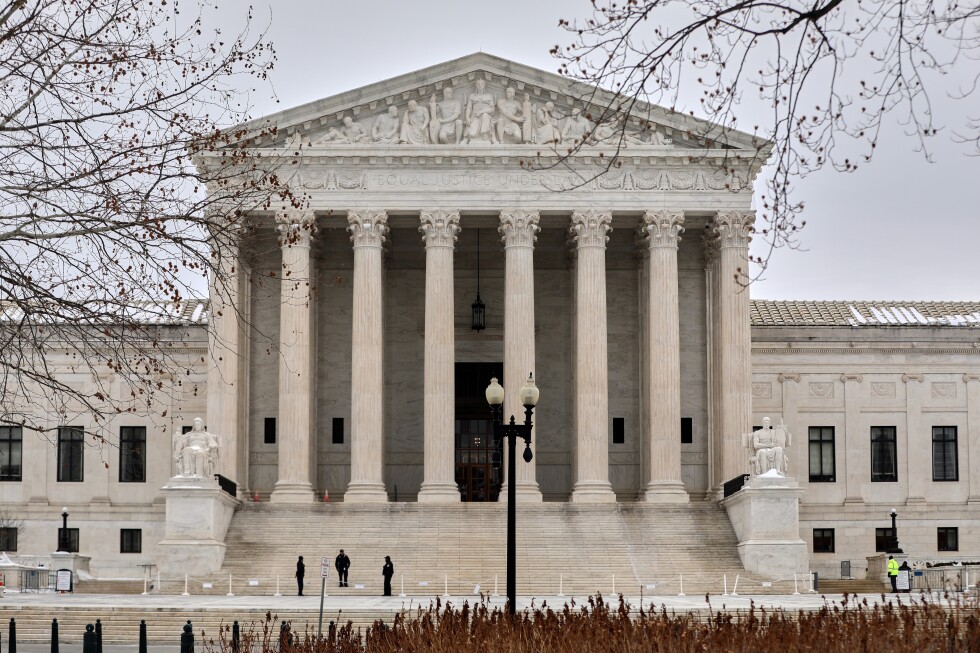
    The event showcased remarkable tensions between the executive and judicial branches. Notably absent were five of the nine Supreme Court justices, following Trump’s previous criticism of their decision to strike down his global tariffs. During the address, Trump shared a visibly strained moment with Chief Justice John Roberts before directly criticizing the Court’s ruling on tariffs as “disappointing” and “unfortunate.” The president announced alternative measures using Section 122—a rarely invoked law allowing 15% tariffs for 150 days without immediate congressional approval—while suggesting these tariffs might eventually replace income taxes.

    Partisan divisions dominated the chamber atmosphere. Dozens of Democrats boycotted the event entirely, while remaining opposition members staged vocal protests. Representative Al Greene was escorted out for displaying a sign referencing racist social media content previously shared by Trump. Congresswomen Ilhan Omar and Rashida Tlaib repeatedly shouted accusations of lying during the president’s remarks on immigration and Somali-American communities.

    The address featured patriotic highlights including the celebration of the U.S. men’s hockey team’s Olympic gold medal victory. Goalie Connor Hellebuyck received the Presidential Medal of Freedom announcement, though Trump sparked controversy by joking about potential impeachment if he didn’t invite the women’s team—later extending that invitation during his speech.

    Throughout the evening, Trump emphasized national protection themes, deliberately highlighting partisan divides by asking Republicans to stand for policies opposed by Democrats, whom he called “crazy” for their lack of support. The event culminated with plans for America’s 250th anniversary celebrations while underscoring the profound political polarization characterizing current American politics.

  • German leader arrives in China to press for fair trade and help ending Ukraine war

    German leader arrives in China to press for fair trade and help ending Ukraine war

    German Chancellor Friedrich Merz commenced a pivotal two-day diplomatic mission to Beijing on Wednesday, engaging with China’s senior leadership to address critical issues spanning economic equity and global security. The visit marks Merz’s inaugural trip to China since assuming office in May 2023, occurring amidst a flurry of Western diplomatic engagements with Beijing.

    Merz emphasized the European consensus approach to China relations prior to departure, stating: “Our message from a European perspective remains consistent: We seek a partnership with China that is balanced, reliable, regulated, and equitable. This represents both our proposal and our expectation from Chinese counterparts.”

    The Chancellor’s agenda focuses on two primary concerns: ensuring fair market access for German corporations within China’s economy and soliciting Beijing’s influence to help resolve the ongoing conflict in Ukraine. Merz acknowledged China’s indispensable role in global governance, noting that “major international political challenges cannot be addressed today without Beijing’s involvement.”

    This diplomatic engagement occurs against a backdrop of growing European apprehension regarding China’s economic practices. Germany witnessed an 8.8% surge in Chinese imports reaching €170.6 billion ($201 billion) last year, while German exports to China declined by 9.7% to €81.3 billion ($96 billion). European leaders seek increased Chinese manufacturing investment within their territories while urging China to address industrial overcapacity affecting sectors like electric vehicles and solar panels.

    Xinhua News Agency characterized the relationship as vital, stating: “As major economies championing multilateralism during turbulent times, China and Germany bear shared responsibility for maintaining global supply chain stability and opposing protectionism.” The visit represents another chapter in China’s diplomatic outreach as it seeks allies to counter former President Trump’s tariff policies and challenges to established international institutions.