分类: politics

  • Nepali migrant workers influence polls, but can’t vote

    Nepali migrant workers influence polls, but can’t vote

    As Nepal prepares for its first parliamentary elections on March 5th following September’s youth-led uprising that toppled the government, a critical democratic paradox emerges: the nation’s 2.5 million overseas workers significantly influence electoral outcomes despite being systematically excluded from voting themselves. This Himalayan republic’s political landscape remains fundamentally shaped by migrant laborers who constitute 7.5% of the population and generate remittances equivalent to over one-third of GDP, yet cannot participate in the democratic process they financially sustain.

    The September revolution, fueled by economic despair and vanishing opportunities, highlighted the growing influence of Nepal’s diaspora community. According to government statistics, these migrant workers—dispersed across Gulf nations, Saudi Arabia, India, and Malaysia—serve as primary breadwinners for their families back home. Political parties actively court this excluded constituency recognizing their powerful influence over domestic voting patterns through financial support and digital advocacy.

    Ganesh Gurung of Nepal’s Policy Research Institute observes: ‘As the main economic providers, migrant workers wield substantial influence over family voting decisions. Their robust social media engagement consistently demonstrates profound frustration with successive governments.’ A recent survey by migrant rights organizations Shramik Sanjal and LAPSOJ revealed nearly 90% of overseas workers maintain strong interest in voting, with indirect participation through family recommendations and online campaign support becoming commonplace.

    Despite clear democratic demand, systemic barriers persist. Legal challenges to a 2017 election ruling have stagnated, with no functional system for embassy voting, postal ballots, or electronic participation. The interim government installed after September’s uprising expressed support for electoral reform but failed to implement changes before the imminent elections. Election Commission spokesman Prakash Nyaupanem cited procedural limitations: ‘The system couldn’t be modified without legal foundation and comprehensive training—these elections were organized under extreme time constraints.’

    Historical context reveals prolonged stagnation. The Supreme Court’s 2018 directive for reform produced no ‘significant development’ according to human rights lawyer Barun Ghimire. A drafted 2023 voting act collapsed due to budgetary constraints and electronic voting security concerns, as confirmed by an anonymous former Electoral Commission member.

    The political influence of excluded migrants already manifests dramatically. The Rastriya Swatantra Party (RSP)—which made migrant voting rights a central platform—shocked establishment parties by becoming parliament’s fourth-largest force in 2022. That same year, Balendra Shah leveraged migrant support to win Kathmandu’s mayoral race and now stands as RSP’s prime ministerial candidate. National Network for Safe Migration representative Nilambar Badal confirms: ‘Shah secured victory primarily through pressure from overseas Nepalis who influenced Kathmandu voters.’

    Shah told AFP he would address voting rights if elected, stating migrants ‘should get voting rights.’ Comparative international models demonstrate feasibility, with former chief election commissioner Neil Kantha Uprety noting: ‘With sufficient governmental and commission willingness, the election timeline could have been extended to include overseas Nepalis.’

    Despite current exclusion, lawyer Ghimire remains optimistic: ‘Change appears inevitable. The mere existence of this debate represents progress.’ He envisions transformative democratic impact once inclusion occurs: ‘One million concentrated votes could reshape the political landscape and ensure genuine accountability from elected officials.’

  • Hong Kong to contribute in various areas under national 15th Five-Year Plan: HKSAR financial chief

    Hong Kong to contribute in various areas under national 15th Five-Year Plan: HKSAR financial chief

    Hong Kong’s Financial Secretary Paul Chan has announced the establishment of a high-level cross-bureau task force that will spearhead the special administrative region’s integration with China’s national 15th Five-Year Plan. This marks the first time Hong Kong will develop its own comprehensive five-year strategic blueprint in synchronization with national development objectives.

    During Wednesday’s budget address, Chan detailed how the national plan explicitly supports Hong Kong’s enhanced integration into China’s development framework while strengthening its global position as an international financial, shipping, and trade hub. The strategy additionally targets Hong Kong’s transformation into an international innovation and technology center alongside establishing itself as a global talent acquisition hub.

    The financial secretary emphasized Hong Kong’s distinctive advantages in artificial intelligence, life sciences, financial technology, and renewable materials research. He outlined how the city’s robust financial ecosystem will drive ‘Finance+’ initiatives—leveraging financial services to bolster real economic sectors and foster synergistic growth between finance and technological innovation.

    Chan highlighted Hong Kong’s unique institutional advantages under the ‘one country, two systems’ framework, positioning the territory as both a ‘super connector’ and ‘super value-adder’ in China’s high-level opening-up strategy. The city’s world-class aviation, shipping, and logistics infrastructure will facilitate international business expansion and foreign investment attraction.

    The talent development strategy encompasses both attracting elite global researchers through Hong Kong’s internationally renowned universities and nurturing local expertise, aligning with national goals for integrated education-technology-talent development.

  • Citing AP investigation, new bill seeks to prohibit DHS from using full-body restraints

    Citing AP investigation, new bill seeks to prohibit DHS from using full-body restraints

    A groundbreaking legislative initiative has emerged in the U.S. House of Representatives seeking to prohibit the Department of Homeland Security from utilizing the controversial WRAP restraint system. The Full-Body Restraint Prohibition Act, introduced by Illinois Democratic Representative Delia Ramirez on Wednesday, would permanently ban future acquisitions of the device while establishing stringent oversight and reporting protocols.

    The legislative action follows an extensive Associated Press investigation that documented multiple instances of U.S. Immigration and Customs Enforcement deploying the WRAP apparatus during deportation flights since 2020. According to the findings, individuals were frequently restrained in the device for extended periods, sometimes spanning several hours.

    Representative Ramirez condemned the practice, stating that the WRAP “fuels destruction in our communities and human suffering” and characterizing the legislation as a critical step toward ending “the pain and violence caused by DHS.”

    The California-manufactured device, produced by Safe Restraints Inc., has become the subject of numerous federal lawsuits alleging that improper application constitutes punishment and torture. Advocacy groups have raised alarms about ICE’s failure to document WRAP usage in accordance with federal force reporting requirements, creating significant transparency gaps regarding the true scope of implementation.

    Beyond immigration enforcement contexts, the AP investigation identified twelve fatal incidents over the past decade where autopsies determined WRAP usage by local law enforcement agencies contributed to prisoner deaths. This pattern has drawn concern from DHS’s own civil rights division, which voiced internal reservations about the device in a 2023 report.

    Financial records reveal DHS has allocated $268,523 to Safe Restraints Inc. since initial purchases began during the Obama administration in late 2015, with contracts extending through June 2025. Notably, approximately 91% of this expenditure occurred during the two Trump administrations.

    Safe Restraints CEO Charles Hammond defended the product as a “safer, more humane, pain-free alternative to other restraint methods,” warning that elimination would force a return to “alternative restraints and tactics proven to cause pain, injury and even fatalities.” The company developed a modified version specifically for ICE with adaptations for prolonged use during flights and extended transportation.

    However, the AP investigation found ICE personnel routinely deploy the WRAP under circumstances far exceeding manufacturer guidelines. Multiple detainees reported being restrained in the device after already being shackled, often as intimidation or punishment for requesting legal counsel or expressing deportation fears.

    The mounting evidence has prompted significant political response, with eleven Democratic U.S. senators dispatching a formal letter to immigration officials citing “serious human rights concerns” following the AP’s October investigation. DHS has declined repeated requests for comment regarding WRAP usage practices and the newly proposed legislation.

  • Spain declassifies files on 1981 attempted coup in effort to dispel conspiracy theories

    Spain declassifies files on 1981 attempted coup in effort to dispel conspiracy theories

    In a significant move toward historical transparency, the Spanish government has declassified and released 153 previously secret files related to the failed military coup of February 23rd, 1981—a pivotal event that threatened the nation’s nascent democracy. The long-awaited documents, which caused such public anticipation that they temporarily crashed the government’s webpage upon release, include police reports, judicial investigations, transcripts of official conversations, and reactions from foreign governments.

    The attempted coup, occurring just six years after the death of dictator Francisco Franco, saw armed Civil Guard officers storm the parliament building during a swearing-in ceremony, taking lawmakers hostage in an effort to restore authoritarian rule. Their failure is widely attributed to King Juan Carlos I, who delivered a decisive televised address denouncing the rebellion and ordering military forces to remain in their barracks. This action cemented his reputation as the guardian of Spanish democracy for decades.

    However, the newly released archives appear to contain no definitive evidence supporting persistent conspiracy theories that the king had prior knowledge of or involvement in the plot. Instead, they reveal several previously undisclosed operational details: six members of the intelligence services were implicated in the scheme, and security forces estimated that a potential raid on the occupied parliament could have resulted in 80 to 110 fatalities.

    The document release also includes international messages of support received after the coup’s failure, notably a communication from Britain’s Queen Elizabeth II expressing relief at the “final result.” The current administration under Prime Minister Pedro Sánchez characterized the decades-long classification as a “historical anomaly” and stated that transparency would help dispel false narratives while posing no risk to individuals involved.

  • Iran rejects US claims on missile programme as ‘big lies’

    Iran rejects US claims on missile programme as ‘big lies’

    Iran’s Foreign Ministry has vehemently rejected recent United States claims regarding its military capabilities and domestic unrest, characterizing the allegations as deliberate falsehoods. Ministry spokesman Esmaeil Baqaei utilized social media platform X to formally denounce what he termed ‘big lies’ perpetuated by American leadership.

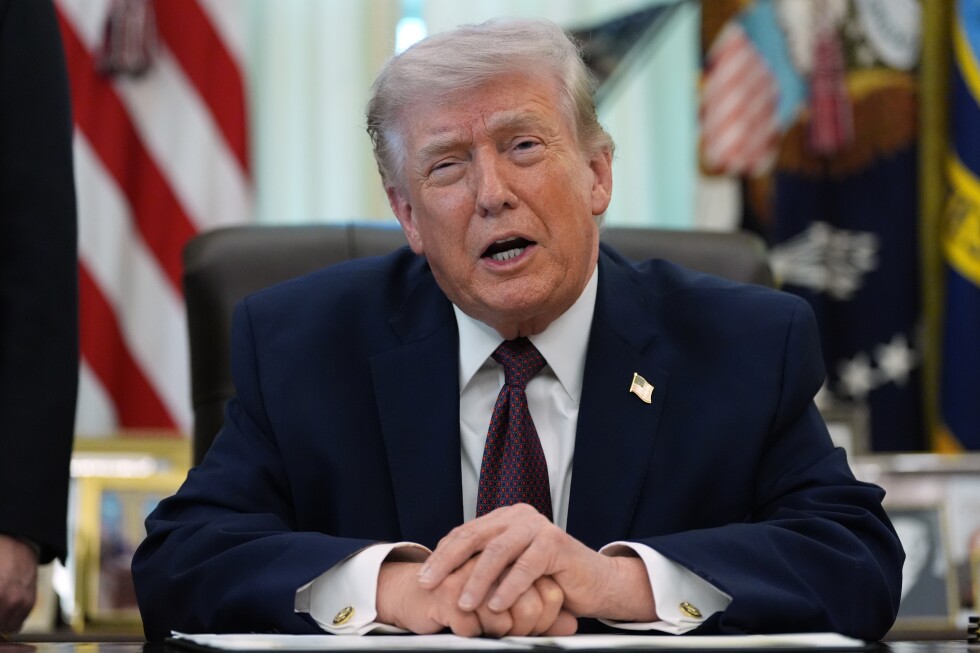
    The strong rebuttal came in direct response to statements made by President Donald Trump during his State of the Union address, where he asserted that Tehran was actively developing long-range missile systems capable of reaching American territory. Trump additionally reiterated his administration’s firm stance against Iranian nuclear weapons development, accusing Iranian leaders of pursuing ‘sinister nuclear ambitions.’

    Contrary to these claims, Iranian officials maintain that their nuclear program remains exclusively peaceful in nature. Foreign Minister Abbas Araghchi previously clarified in an Al Jazeera interview that while Iran lacks the technical capability to target the United States directly, it would respond to any American military aggression by striking US bases throughout the Middle East region.

    A significant point of contention emerged regarding casualty figures during January’s civil unrest. Trump alleged that Iranian authorities had killed approximately 32,000 protesters, while Iranian officials acknowledge approximately 3,000 fatalities, attributing these to what they describe as US and Israel-fueled ‘terrorist acts.’ Independent verification from the US-based Human Rights Activists News Agency documents over 7,000 deaths, with warnings that the actual toll may substantially exceed this figure.

    The escalating war of words occurs amidst heightened regional tensions, with Iran maintaining military alertness against potential US or Israeli operations. This exchange represents the latest chapter in the ongoing diplomatic confrontation between Tehran and Washington, with both nations presenting starkly contradictory narratives regarding Iran’s military programs and internal affairs.

  • Trump keeps world waiting on his plans for Iran after State of the Union

    Trump keeps world waiting on his plans for Iran after State of the Union

    Amidst the largest U.S. military deployment to the Middle East since the 2003 Iraq invasion, President Donald Trump has signaled a preference for diplomatic engagement with Iran rather than military confrontation. During his historic State of the Union address, Trump notably avoided making a comprehensive case for potential military action, instead emphasizing his openness to negotiation while maintaining consistent demands for Iranian nuclear transparency.

    The diplomatic landscape is reaching a critical juncture as envoys prepare for the third round of negotiations this month in Geneva. Trump’s top envoy Steve Witkoff and son-in-law Jared Kushner are expected to engage in talks that could determine whether the two nations can bridge their significant differences. A diplomat familiar with the process warned that failure to secure an acceptable agreement text from Tehran could prompt military action shortly after the negotiations.

    Central to the discussions remains Trump’s insistence that Iran explicitly declare it will never pursue nuclear weapons—a demand that appears partially met by Iranian Foreign Minister Abbas Araghchi’s recent statement on social media that “Iran will under no circumstances ever develop a nuclear weapon.” However, verification mechanisms and Iran’s ballistic missile program continue to present substantial obstacles.

    The current negotiations differ significantly from previous rounds, with International Atomic Energy Agency head Rafael Grossi playing an expanded role in technical discussions. Iran has offered new proposals including diluting its highly enriched uranium, which at 60% purity approaches weapons-grade concentration. The involvement of Ali Larijani, secretary of Iran’s Supreme National Security Council and senior adviser to Supreme Leader Ayatollah Ali Khamenei, signals the seriousness of Tehran’s engagement.

    Complicating the diplomatic calculus are Trump’s controversial claims about Iranian domestic unrest, including an unsubstantiated assertion that authorities killed approximately 32,000 protesters—a figure dramatically higher than the 3,100 acknowledged by Tehran and the 7,000 documented by HRANA activists. Iranian officials immediately denounced these statements as “big lies.”

    Analysts note that both nations face unprecedented pressures: the Islamic Republic confronts severe economic sanctions and internal legitimacy challenges, while the Trump administration balances its anti-interventionist base against concerns about Iran’s regional ambitions and nuclear capabilities. As the clock counts down toward decisive negotiations, the world watches to see whether diplomacy can prevail over military escalation in one of the world’s most volatile regions.

  • Iran negotiators head to Geneva for US talks, president strikes hopeful tone

    Iran negotiators head to Geneva for US talks, president strikes hopeful tone

    A high-level Iranian delegation led by Foreign Minister Abbas Araghchi departed for Geneva on Wednesday to resume critical negotiations with the United States, creating a pivotal moment for Middle East diplomacy. The talks occur against a backdrop of heightened military tensions and conflicting statements from both nations regarding Iran’s nuclear and missile capabilities.

    Iranian President Masoud Pezeshkian expressed cautious optimism about the diplomatic process, stating he maintained a “favorable outlook for the negotiations” while emphasizing Iran’s commitment to moving beyond the current “neither war nor peace” situation under the guidance of Supreme Leader Ali Khamenei.

    The diplomatic engagement follows President Donald Trump’s State of the Union address where he accused Tehran of pursuing “sinister nuclear ambitions” and developing missiles capable of threatening European targets and U.S. bases overseas. Trump asserted he would “never allow the world’s number one sponsor of terror to have a nuclear weapon” while preferring diplomatic solutions.

    Iranian officials promptly dismissed these allegations as “repetition of ‘big lies’.” Technical assessments indicate Iran’s missile range currently reaches approximately 2,000-3,000 kilometers, falling significantly short of continental United States targets.

    The negotiations represent the first major diplomatic engagement since previous talks collapsed following Israel’s attack on Iran and subsequent military exchanges. Recent weeks have seen substantial U.S. military deployments to the region, including two aircraft carrier groups, amplifying concerns about potential conflict.

    Tehran residents expressed divided perspectives, with some predicting inevitable conflict while others believed American threats represented mere bluffing. One homemaker noted the devastating humanitarian consequences war would bring, acknowledging current hardships while questioning whether conflict might at least provide clarity.

    International security analysts suggest the massive military buildup may have created political complications for the U.S. administration, as failure to secure an agreement following such demonstrative force deployment could impact presidential credibility.

  • UK parliamentary speaker says he tipped off police over possible Mandelson flight risk

    UK parliamentary speaker says he tipped off police over possible Mandelson flight risk

    LONDON — The Speaker of Britain’s House of Commons, Lindsay Hoyle, has publicly acknowledged informing metropolitan police authorities about potential flight risk concerns regarding Peter Mandelson, the former UK ambassador to the United States currently embroiled in a high-profile leak investigation connected to the late financier Jeffrey Epstein.

    This revelation follows Mandelson’s dramatic arrest at his North London residence on Monday under suspicion of misconduct in public office. The veteran politician, who previously held senior Cabinet ministerial positions, underwent extensive interrogation for over nine hours before being released on bail early Tuesday.

    Legal representatives for Mandelson have characterized the arrest as an unnecessary escalation, citing pre-existing arrangements for voluntary cooperation with police inquiries. The law firm Mishcon de Reya stated their client’s “overriding priority is to cooperate with the police investigation and to clear his name.”

    Speaker Hoyle addressed Parliament members regarding his decision to share information with law enforcement, emphasizing his constitutional responsibility to relay relevant intelligence while expressing regret about subsequent media coverage. “Upon receipt of information that I felt was relevant, I passed this on to the Metropolitan Police in good faith, as is my duty and responsibility,” Hoyle stated, adding that further commentary would be inappropriate during an active investigation.

    The development occurs within days of similar investigative actions involving Prince Andrew (now Andrew Mountbatten-Windsor), who likewise faces allegations of improperly sharing government information with Epstein. Both cases emerged following the US Justice Department’s release of over three million documents related to Epstein’s activities.

    Evidence suggests Mandelson, 72, potentially provided Epstein with sensitive government information during his tenure as a senior minister between 2009-2010, including discussions about post-financial crisis asset sales and banking bonus tax policies. Financial records indicate Epstein transferred $75,000 to Mandelson or his husband in 2003-2004, though the former ambassador disputes recalling such transactions and questions document authenticity.

    Notably, neither Mandelson nor Prince Andrew face allegations related to sexual misconduct, distinguishing their cases from the broader Epstein scandal that involved numerous sexual abuse charges prior to Epstein’s 2019 prison suicide.

  • Brazil’s Supreme Court to rule in the killing of a Rio councilwoman

    Brazil’s Supreme Court to rule in the killing of a Rio councilwoman

    SAO PAULO — Brazil’s Supreme Court convened Wednesday for a historic ruling determining the fates of five defendants charged in the politically charged 2018 assassination of Rio de Janeiro councilwoman Marielle Franco and her driver Anderson Gomes. The case continues to resonate deeply across the nation’s political spectrum.

    The defendants include former congressman Chiquinho Brazão; his brother Domingos Brazão, previously a member of Rio’s government watchdog; their assistant Robson Calixto Fonseca; police investigator Rivaldo Barbosa; and former police officer Ronald Paulo Alves Pereira. All have maintained their innocence regarding the drive-by shooting that killed the 38-year-old human rights activist and politician.

    Justice Alexandre de Moraes, recently prominent in the coup case that imprisoned former President Jair Bolsonaro, presided as the first voter in the five-judge panel. The trial commenced Tuesday with deputy Attorney-General Hindenburgo Chateaubriand advocating for guilty verdicts against all five suspects.

    Prosecutors allege the Brazão brothers and Fonseca operated a criminal organization, with four defendants facing double murder charges and one attempted murder charge. Franco’s press officer survived the attack. The case evidence substantially derives from plea bargain agreements with former police officers Ronnie Lessa and Élcio Queiroz, sentenced in October 2024 to 78 and 59 years imprisonment respectively for their roles in the killings.

    Investigators have connected the Brazão brothers, arrested in 2024 as alleged masterminds, to vigilante militia groups that frequently clashed with Franco’s activism. Prosecutor Chateaubriand asserted the criminal organization primarily targeted politician Marcelo Freixo, current head of Brazil’s tourism agency, due to his interference with their operations. Franco had previously collaborated with Freixo before her 2016 council election.

    The case has drawn international attention, with United Nations experts in Geneva recently urging “justice and remedy for all victims of pervasive systemic racism, structural discrimination and violence in Brazil.”

  • Longest speech ever, shouting: 5 moments from Trump’s State of the Union address

    Longest speech ever, shouting: 5 moments from Trump’s State of the Union address

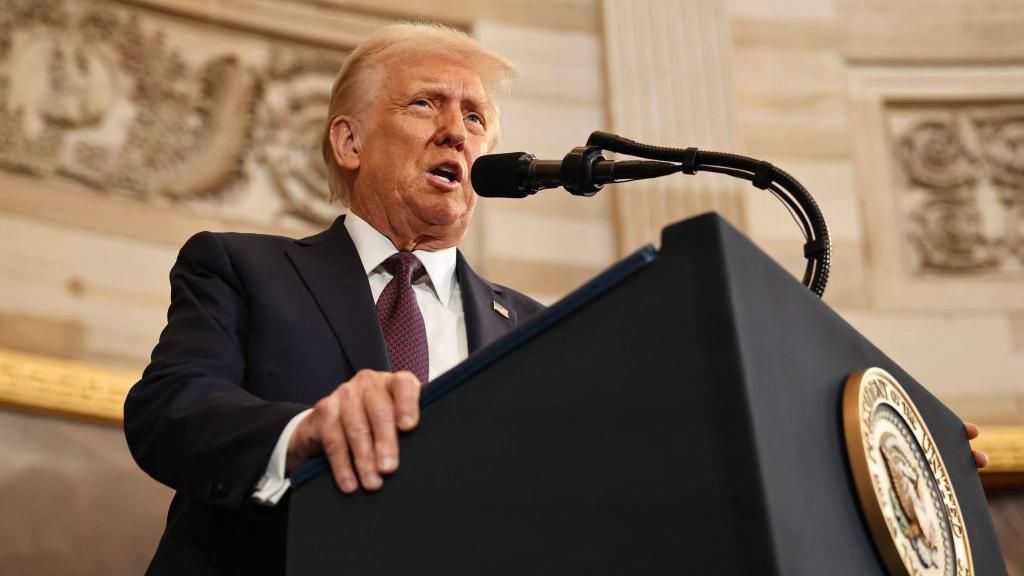
    President Donald Trump delivered the longest State of the Union address in American history on February 25, 2026, speaking for one hour and forty-seven minutes before a deeply divided Congress. The speech, marking his first address to lawmakers since beginning his second term, covered extensive ground from economic policy to international relations with Iran.

    The event was punctuated by significant tension with the Supreme Court, as three justices who had recently struck down Trump’s signature global tariffs policy sat in the front row. The president characterized their ruling as “very unfortunate” while announcing his administration’s plans to develop legal alternatives to maintain the controversial duties.

    A rare moment of bipartisan unity emerged when the gold medal-winning U.S. men’s Olympic hockey team entered the chamber, prompting chants of “USA! USA!” from both Republicans and Democrats celebrating America’s first ice hockey gold in 46 years.

    However, the atmosphere remained predominantly contentious. Dozens of Democratic lawmakers boycotted the event entirely, while those in attendance largely remained seated throughout the speech. Many wore white in tribute to the suffragette movement or displayed pins demanding accountability regarding the recently released Jeffrey Epstein files.

    The tensions escalated dramatically when Representative Ilhan Omar (D-MN) shouted “You have killed Americans” at the president, referencing recent fatalities involving federal agents in Minneapolis. This outburst occurred after Trump told Democrats they “should be ashamed of yourselves” for refusing to stand during his address. Representative Al Green was subsequently expelled from the chamber for displaying a sign that read “Black people aren’t apes!” in response to a racist video of the Obamas shared by the president.

    The address surpassed Bill Clinton’s previous record of one hour and twenty minutes set in 2000, and exceeded Trump’s own prior address to Congress by seven minutes.