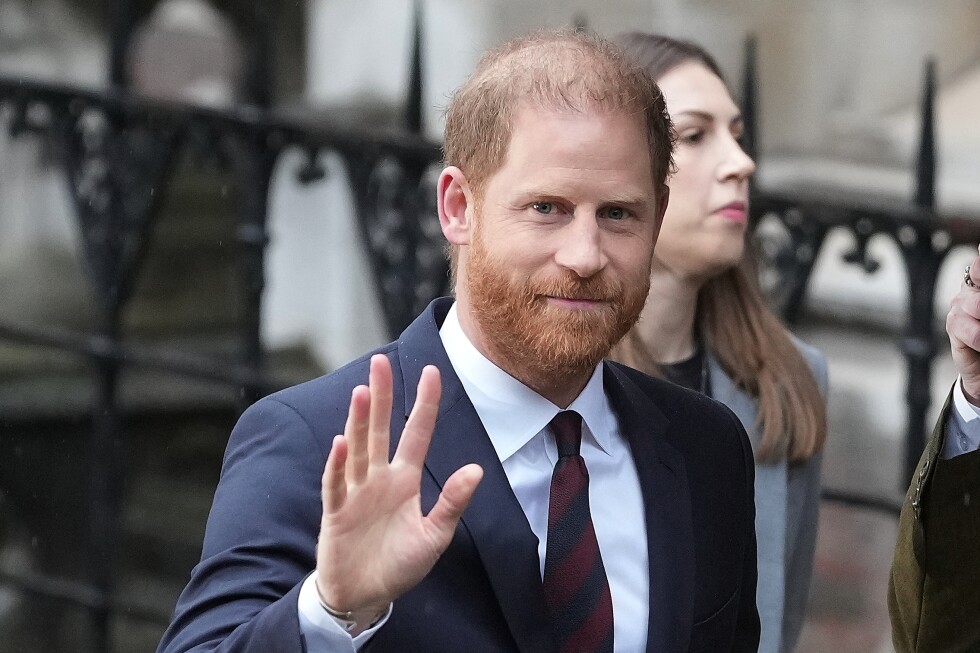
LONDON – After 11 weeks of high-stakes arguments in London’s High Court, the outcome of Prince Harry’s landmark privacy lawsuit against British tabloid publisher Associated Newspapers has boiled down to one critical question: can the court trust the conflicting accounts of private investigator Gavin Burrows?
Duke of Sussex Prince Harry launched the legal action alongside six other high-profile claimants, including music icon Elton John, actors Sadie Frost and Elizabeth Hurley, anti-racism campaigner Doreen Lawrence, former lawmaker Simon Hughes, and David Furnish, Elton John’s husband. The group alleges that Associated Newspapers – owner of the Daily Mail and its Sunday sister title the Mail on Sunday – ran a coordinated, decades-long campaign of unlawful information gathering, targeting them through phone tapping, voicemail interception, and deceptive information-gathering tactics. For Harry, this trial marks the culmination of a years-long personal crusade to hold the British tabloid industry accountable for its intrusive practices and push for reform of what he has repeatedly called a toxic media culture.
On Tuesday, defense lawyers for Associated Newspapers wrapped their closing arguments by centering their entire case on Burrows’ latest sworn testimony. Burrows, a private investigator who previously admitted on a BBC documentary that he had ruthlessly targeted a teenage Harry for tabloid outlets and even apologized to the prince for his actions, has now reversed course under oath. He testified that he never carried out any illegal surveillance or information-gathering work for either of the Associated Newspapers titles. He further claimed that a signed statement attributed to him – which said he “must have done hundreds of jobs” for the Mail between 2000 and 2005, and which formed the foundational catalyst for the entire lawsuit – was a fabrication, with his signature forged by the claimants’ legal team. Defense lead Antony White argued that if Burrows’ disavowal of the original statement is accepted, the entire claimants’ case collapses.
Judge Matthew Nicklin, who is overseeing the bench trial, repeatedly pressed the claimants’ legal team over the course of the proceedings to clarify what would become of the case if the court rejected Burrows’ original statement. The claimants’ lead attorney, David Sherborne, pushed back against the defense’s narrative in his own closing arguments, insisting that the claimants hold a wealth of independent evidence that proves Associated Newspapers’ pattern of unlawful activity, beyond Burrows’ statement. Sherborne confirmed that the claimants are seeking substantial damages, including aggravated damages, for the invasion of their privacy; total legal costs for the high-profile trial have already been estimated at nearly £40 million ($52 million).
Sherborne argued that payment records from the publisher to multiple private investigators align with the publication dates of the controversial articles in question, directly tying the paper to unlawful information gathering. He added that the evidence implicates not just Burrows, but a network of other investigators, staff journalists, and freelance reporters that the paper relied on to obtain private information through illegal means.
Associated Newspapers has forcefully denied all allegations, dismissing the claims as preposterous. The publisher insists that all roughly 50 articles at the center of the case were sourced through lawful channels, including tips from associates, royal aides, and publicists who voluntarily shared information with reporters. It has also argued that many of the claims dating back to the 1990s are time-barred, having been filed far outside the legal statute of limitations.
Defense lawyer White rejected the payment record evidence as pure conjecture, arguing that the claimants’ entire case relies too heavily on unproven inferences rather than concrete proof of unlawful activity. Multiple current and former Mail journalists and editors have also taken the stand to deny using illegal tactics to produce stories about Harry’s personal life, which ranged from his romantic relationships with ex-girlfriend Chelsy Davy to his role as a godfather and his connection to his late mother, Princess Diana.
Former Mail on Sunday editor Katie Nicholl directly contradicted Harry’s claim that his inner social circle did not leak stories, telling the court: “I had very good sources in the inner circle… They were not all tight lipped.”
When Harry took the witness stand at the opening of the trial in January, he gave emotional testimony about the lasting harm of tabloid intrusion. He told the court that repeated invasions of his privacy left him “paranoid beyond belief,” strained all of his close personal relationships, and caused severe long-term damage to his mental health. During cross-examination, he choked up as he described how relentless tabloid attacks made the life of his wife, Meghan Markle, “an absolute misery.”
Harry has long linked his anger at the British press to the 1997 death of his mother, Princess Diana, who was killed in a car crash in Paris while being pursued by paparazzi. He has also said that the constant, vitriolic press campaign against Meghan directly led to the couple’s 2020 decision to step back from their senior royal duties and relocate to the United States.
This is not Harry’s first legal battle with the British tabloid industry: he previously won a court judgment in a phone hacking trial against the publisher of the Daily Mirror, and secured a formal settlement and apology from Rupert Murdoch’s The Sun and the now-shuttered News of the World. Unlike the Mirror trial, this case against Associated Newspapers has featured dozens of witnesses – current and former reporters, editors, and investigators – all taking the stand to deny using any illegal methods to gather information on Harry. A written ruling from Judge Nicklin is expected at a later date.