As the Iran war enters its fifth week marked by sharp military escalation, China has emerged as an increasingly active diplomatic player in the Middle East, launching a coordinated push to position itself as a responsible mediator while facing widespread skepticism from the United States over the substance of its peace efforts.
Beijing’s latest diplomatic gambit centers on a joint five-point peace proposal drafted alongside Pakistan, which it has spent weeks rallying regional and global powers to support. The framework calls for an immediate end to hostilities and the reopening of the strategically critical Strait of Hormuz, where Iran’s control over shipping traffic has sent global energy prices skyrocketing. China has also openly opposed a revised United Nations resolution put forward by Bahrain that would authorize defensive military action to secure the waterway, arguing that any Security Council action must de-escalate tensions rather than inflame them further.
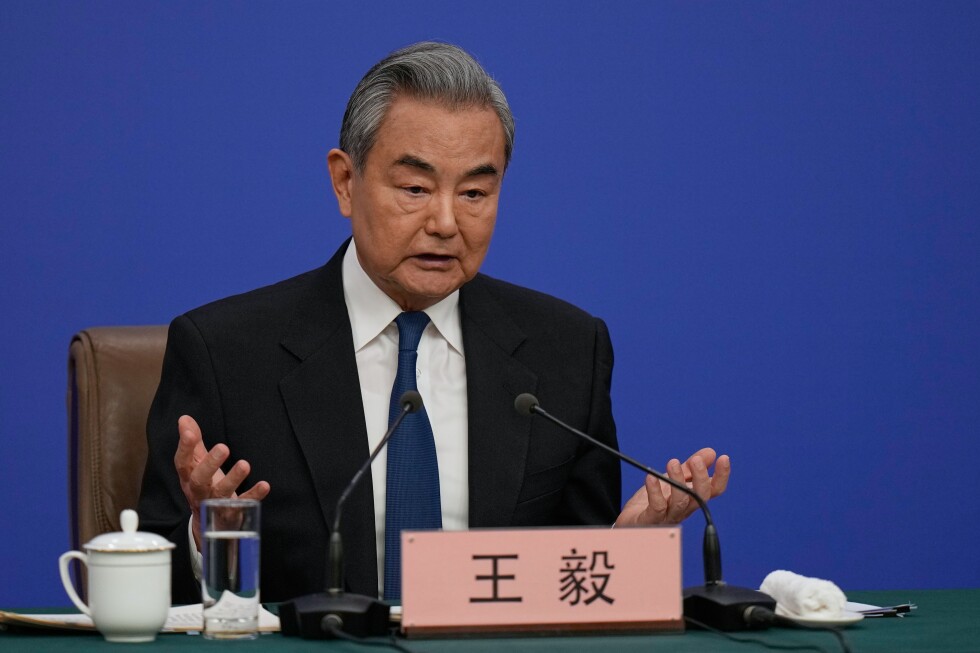
Since the outbreak of the war, Chinese Foreign Minister Wang Yi has conducted a flurry of diplomatic outreach: holding more than 20 phone calls with foreign ministers across the Middle East and major global powers, hosting his Pakistani counterpart in Beijing to finalize the joint proposal, and dispatching a special envoy to the region to hold face-to-face talks on de-escalation. Wang has courted support from Gulf nations and European Union officials, framing the five-point plan as a reflection of broad international consensus that prioritizes peace. China and Russia have lobbied against the Bahrain UN proposal, warning that outside powers could exploit a UN mandate to expand the conflict; to avoid a likely veto, Bahrain has significantly watered down the text and delayed a vote until next week.
Analysts and U.S. officials frame China’s heightened diplomacy as a calculated bid to expand its global influence at the United States’ expense. Sun Yun, director of the China program at the Washington-based Stimson Center, noted that the ongoing crisis presents a rare, high-profile opportunity for Beijing to demonstrate its diplomatic leadership on a pressing global issue. “The war with Iran is the priority of all countries in and outside the region,” Sun explained. “It is an opportunity China will not miss to demonstrate its leadership and diplomatic initiative.”
Former senior U.S. diplomat Danny Russel, now a distinguished fellow at the Asia Society Policy Institute, drew a direct parallel between the current five-point proposal and China’s 2023 12-point peace plan for Ukraine, arguing that both efforts amount to empty rhetoric rather than actionable mediation. “What we are seeing from China is messaging, not mediation,” Russel said. “Its narrative is that while Washington is reckless, aggressive and heedless of the cost to others, China is a principled and responsible champion of peace.” Liu Pengyu, spokesperson for the Chinese Embassy in Washington, has pushed back against this characterization, asserting that China has worked “tirelessly for peace” since the war began.
The Trump administration has made clear it has little enthusiasm for China’s mediation efforts. Three U.S. officials, speaking on condition of anonymity, told the Associated Press that Washington has grown skeptical of third-party mediation in the conflict, and has no interest in boosting China’s international standing or granting it a victory in the Middle East. The administration currently describes its position on the Chinese-Pakistani proposal as “agnostic” — neither endorsing nor rejecting it — but officials note this posture could shift ahead of President Donald Trump’s planned summit with Chinese President Xi Jinping, currently scheduled for mid-May. Trump initially postponed the meeting from its original late March date citing the demands of the war, and analysts say Beijing has a clear incentive to de-escalate tensions before the summit to avoid another delay.
In terms of core national interests, China is better insulated from the economic fallout of the Strait of Hormuz closure than many other major economies, thanks to years of energy supply diversification, reduced fossil fuel dependence, and a large strategic petroleum reserve. Only around 13% of China’s oil imports come from Iran, and Beijing has secured agreements with Tehran to allow Chinese-flagged vessels safe passage through the waterway. Still, analysts warn that a protracted conflict would eventually harm China’s export-driven economy: prolonged energy price shocks and global shipping disruptions would raise input costs and weaken global demand, dragging on Chinese growth.
Ali Wyne, senior research and advocacy adviser on U.S.-China relations at the International Crisis Group, added that Beijing is eager to highlight the perceived failures of U.S. policy in the region. “China welcomes the opportunity to suggest that it is helping mitigate a crisis of America’s making, especially as the Trump administration’s lack of a considered strategy for containing the fallout becomes more apparent,” Wyne said.
The conflict took a major turn for the worse last Friday, when Iran shot down two U.S. military aircraft — the first such escalation in the five weeks since the war began. Days after claiming in a national address that the U.S. had “beaten and completely decimated Iran,” Trump told NBC News that the downing would not impact potential negotiations with the Iranian government.