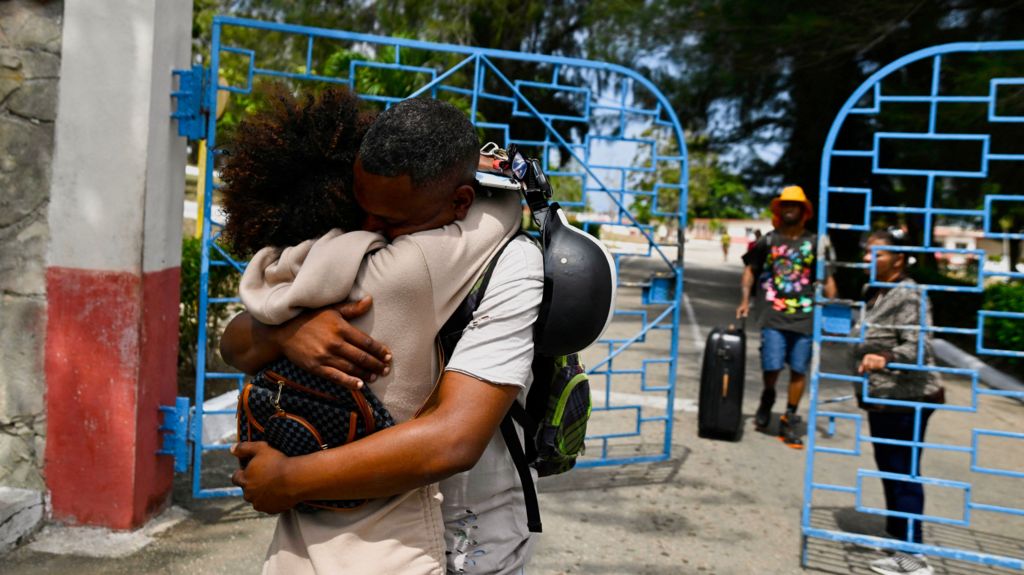
Emotional scenes unfolded across Cuban prisons on Friday as the first wave of inmates walked free, part of a government-ordered mass release of 2,010 prisoners described by Havana as a humanitarian and sovereign act, carried out against a backdrop of mounting economic and political pressure from the United States.
Agence France-Presse correspondents on the ground captured moving moments at La Lima prison in eastern Havana, where more than two dozen released inmates embraced relatives who had waited for hours behind prison walls for the moment of reunion, many openly crying as they were reunited with loved ones. Among the first to leave was 46-year-old Albis Gainza, who had completed half of a six-year sentence for a robbery conviction.
In an official statement released Thursday through its embassy in Washington, Cuba confirmed the release will prioritize specific vulnerable groups: foreign nationals, youth, women, and incarcerated people over the age of 60. Eligibility for release was determined through a multi-factor review, the statement added, including an assessment of the individual’s original offense, documented good behavior during incarceration, completion of a substantial portion of their sentence, and underlying health conditions. The government also framed the move as a traditional practice tied to Holy Week religious celebrations, a longstanding custom within the country’s criminal justice system.
The large-scale release marks the second prisoner amnesty Cuba has authorized this year alone. In March, 51 inmates were freed following diplomatic talks with the Vatican. In 2005, a previous 553-person release was brokered through a joint agreement between the Vatican and the United States.
Local reports from across the country confirmed releases were underway at multiple facilities. Cuban independent outlet 14ymedio, citing the head of Spain-based human rights organization Prisoner Defenders, reported that 41 prisoners had already been released from the Toledo 2 Forced Labor Prison in southwestern Havana. In the eastern city of Las Tunas, six people convicted of common crimes were freed from El Típico prison, alongside dozens more from nearby forced labor camps, the outlet added. Freed inmates were documented waving their official release papers as they exited correctional facilities to rejoin their families.
The amnesty comes at a moment of severe crisis for Cuba, driven by aggressive policy shifts from the Trump administration. Since returning to the U.S. presidency, Donald Trump has made clear his goal of forcing regime change in Cuba’s long-standing communist government, tightening economic sanctions that have crippled the island nation’s energy supply. Previously, Cuba relied on heavily discounted crude oil shipments from ally Venezuela, but the U.S. cut off that arrangement after a January military raid in Caracas that seized former Venezuelan president Nicolás Maduro, and now imposes tariffs on any third country that sends oil to Cuba, worsening the island’s energy crisis.
Trump’s hardline policy has shifted focus back to Cuba in U.S. Latin America strategy following the Maduro raid. The U.S. leader has repeatedly publicly raised the possibility of using military force to occupy Cuba and install a U.S.-aligned government. While Washington recently signaled it had no objection to a Russian-owned tanker carrying 730,000 barrels of crude docking in Cuba last week—the first such arrival since early January—Moscow confirmed Thursday it will send a second tanker with enough crude to keep Cuba’s economy operating for several weeks.
The ongoing fuel shortage has triggered cascading crises across Cuban society. The World Health Organization warned last week that widespread fuel shortages have left Cuban hospitals unable to maintain critical emergency and intensive care services, putting thousands of vulnerable patients at risk. Rolling blackouts have left millions of Cuban residents without power for extended periods, sparking rare public protests against the government in recent months. While Havana and Washington have held quiet talks to de-escalate tensions and resolve the current impasse, both sides have publicly laid out non-negotiable political and economic red lines that have made finding a compromise elusive so far.
Human rights groups including Human Rights Watch estimate that Cuba currently holds hundreds of political prisoners, and that government critics face regular harassment and criminal prosecution. Following the U.S. operation in Venezuela, the interim Venezuelan government installed by Washington has also carried out a release of political prisoners, a key demand from the Trump administration, though one prisoner rights group has noted that only one-third of the promised releases have been completed to date.