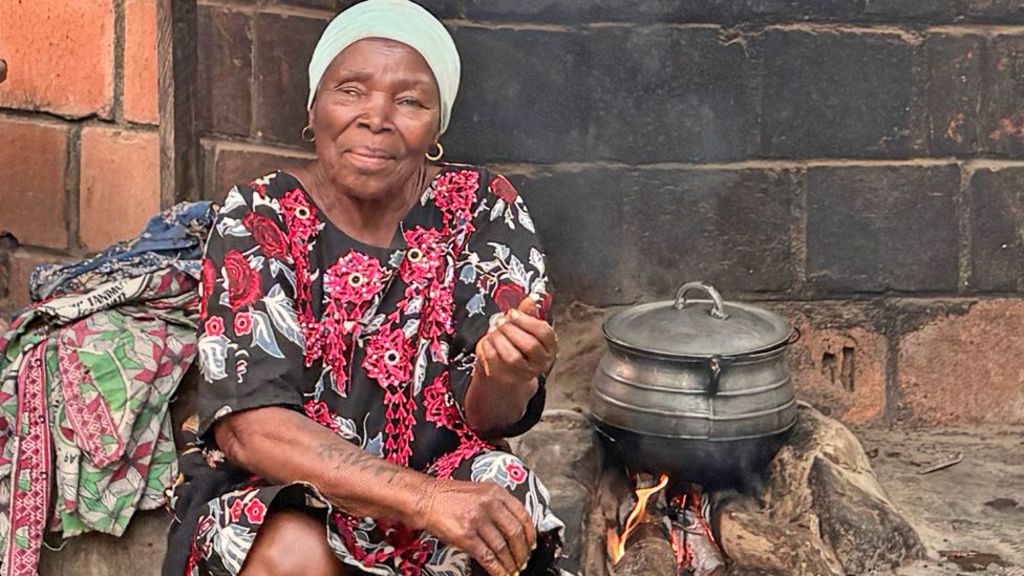
Fifty years after Nigeria established its Federal Capital Territory (FCT) to house the new capital city of Abuja, indigenous communities that gave up their ancestral lands still battle for the compensation, basic services, and political representation promised to them decades ago. For Lami Ezekiel, an 80-something elder who still carries vivid memories of the late 1980s, the arrival of heavy construction machinery marked the end of life as she knew it. “We just watched big trucks and bulldozers flatten our farms,” she recounts. Ezekiel and thousands of other original inhabitants of the land that became Abuja have waited generations for the compensation pledged when their communities were cleared for government buildings, foreign embassies, and luxury developments.
The push for a new Nigerian capital began in the 1960s, driven by growing concerns that the former capital, Lagos, was too vulnerable to attack due to its coastal location and politically divisive as a major hub of the Yoruba ethnic group in a country balancing deep ethnic rivalries. In February 1976, the military government under Murtala Muhammed carved out the 7,315-square-kilometer FCT from parts of three existing states: Niger, Plateau, and Kaduna. The government officially branded the territory “neutral, no man’s land” — a phrase that still stings for the at least 10 indigenous groups, including the Gbagyi people, who have called this land home for millennia.
Daniel Aliyu Kwali, president of the FCT Stakeholders’ Assembly, points out that archaeological and historical records confirm indigenous communities have inhabited the region for more than 6,000 years. “The FCT is only 50 years old; I am 70 years old. We are far older than the capital territory itself,” Kwali notes.
Isaac David, born in 1982 in the FCT’s Kabusa community, grew up playing in clean streams and helping his family tend crops on land that had sustained his ancestors for generations. Today, the streams that once watered his community are gone, replaced by the five-star Transcorp Hilton Abuja. Former farmland now hosts the United Nations headquarters, the U.S. Embassy, and Nigeria’s seat of power, the Aso Rock Presidential Villa — built on what was once a sacred community shrine. Today David owns farms in neighboring Niger state, because indigenous residents who want to farm now must purchase land far outside Abuja’s city limits.
Initially, the Nigerian government planned to relocate all “few local inhabitants” outside the FCT boundaries, but scrapped the plan over the high cost of mass resettlement. “Due to the high cost of resettlement, the government allowed residents who wished to stay in the FCT to remain,” explained Nasiru Suleiman, director of resettlement and compensation at the Federal Capital Development Authority (FCDA). Under the adjusted policy, residents of what would become central Abuja were relocated to planned resettlement communities like Kubwa, about 30 minutes from their original homes.
For many families, the forced removal was a traumatic experience. John Ngbako, who served as Maitama community secretary at the time, recalls asking authorities why original inhabitants could not stay alongside the new arrivals moving into the capital. Community leaders say they were promised new farmland, housing, and fully installed water and electricity infrastructure at the Kubwa relocation site. But before negotiations over the terms of resettlement could be finalized, security forces moved in. Families were loaded onto open tipper trucks and dropped off in Kubwa, where none of the promised amenities existed, and tensions quickly flared with Kubwa’s original inhabitants.
Laraba Adamu, who was newly married when she was relocated, remembers open hostility when she went to the local river to fetch water. “People would see us coming and shout, ‘The government cows have arrived,’” she says. Today, Ezekiel lives in a small two-room home in Kubwa where she has to cook outdoors. “When we were moved, they promised us all the social amenities,” she says. “None of them have been fulfilled. We pay for our drinking water, we pay for our electricity, and we have no farmland at all.” The displaced Maitama community named their new settlement Maitama-Kubwa, clinging to the identity of the neighborhood they were forced to leave. Esu Bulus Yerima Pada, who became chief of Maitama-Kubwa in 2001 as a descendant of the community’s traditional ruling line, says the government also promised to issue formal land titles confirming residents’ ownership of their new plots. “To this day, they have never done it,” he says. Community leaders still bring younger generations to visit the upscale Maitama district of central Abuja to show them the land their ancestors tended, where even the banana trees planted by previous generations still stand.
Tensions over land and forced demolitions have not faded — they continue to erupt today. In March 2025, bulldozers moved into Gishiri, another indigenous community that predates the FCT, to demolish dozens of homes. Princess Juliet Jombo, a 32-year-old schoolteacher, lost all the properties her late father, a traditional ruler, had built and left for her family. “Everything my father worked for his whole life and left to us — it was all destroyed,” she says. Her one-bedroom flat was originally valued at just 260,000 naira ($170), and even after public protests the valuation only doubled to 520,000 naira — far too little to buy alternative housing in Abuja’s rising market. The demolition also destroyed the community primary school, leaving nearly 500 students out of classes for months.
Suleiman of the FCDA insists the resettlement process is conducted through consultation with affected communities, and that compensation is either paid directly to recipient bank accounts or provided as newly built housing. But community activists and leaders say support and resettlement always come after forced demolitions, never before. “By law, the government must first hold dialogue with the people, who have the right to choose a place where they feel safe,” David says. “Then the government should build new housing, and only then relocate people to the new site.” David, who has become one of the most visible advocates for FCT indigenous rights earning him the nickname “Commander,” entered political activism in the mid-2000s after learning about the FCT’s unique constitutional status.
For indigenous communities, the fight goes far beyond unfulfilled compensation promises — it is also a battle against systemic political exclusion. Unlike any of Nigeria’s 36 states, the FCT has no elected governor. Instead, the country’s president appoints a minister from anywhere in Nigeria to exercise powers equivalent to a state governor. “As an indigene of Niger state, I could run for governor of Niger state,” Kwali says. “But here in the FCT, my home, I have no constitutional right to elect a governor, and I cannot run for the position myself. Any other Nigerian can become FCT minister, but I never can.”
The exclusion extends to local office: unlike other regions of Nigeria that reserve local elected positions for people with indigenous family origins in the area, any Abuja resident can run for local office regardless of their birthplace. Many FCT elected representatives come from other parts of Nigeria, a situation that strikes indigenous residents as deeply unfair. “I could never go to your home village and run for local office and expect to win,” said Methuselah Jeji, a 32-year-old new father who worries about the barriers his child will face growing up in the FCT. “My child can never be governor. That is very sad — it is not that I am unable, it is just that this is the land where God placed me.”
David argues that the lack of indigenous political representation directly explains why most FCT indigenous communities remain mired in underdevelopment, even as central Abuja sees massive state investment. While central Abuja boasts wide, paved boulevards, gleaming foreign embassies, and luxury high-rise apartments, most indigenous settlements on the capital’s outskirts have potholed dirt roads, overcrowded classrooms, understaffed clinics, unreliable electricity, and no formal secure land ownership for residents. “When we had one of our own in the Senate, we saw real change,” David says, referring to Philip Aduda, the only FCT indigenous person ever elected to the Nigerian Senate, who lost his seat in 2023 to a candidate originally from Kano state.
Danladi Jeji, Methuselah’s father, warns that the decades of unresolved grievances and stalled court cases have created a tinderbox. With many legal challenges languishing in the court system for years, many indigenous residents feel their concerns are completely ignored by the government. He fears that the younger, more politically aware generation of indigenous FCT residents will grow tired of peaceful advocacy and turn to confrontation: “This is a bomb waiting to explode.”
Despite decades of disappointment, activists still prioritize non-violent action to advance their demands. “We can demand our rights peacefully,” David says. “We want representation. We want to have a voice in our own land.” For her part, Ezekiel still holds out hope that the government will finally keep its promises, and that she will get farmland to work before she dies. “If I could be given land to farm today, land where I and my children can work, I would be truly grateful,” she says. “I am still strong.”