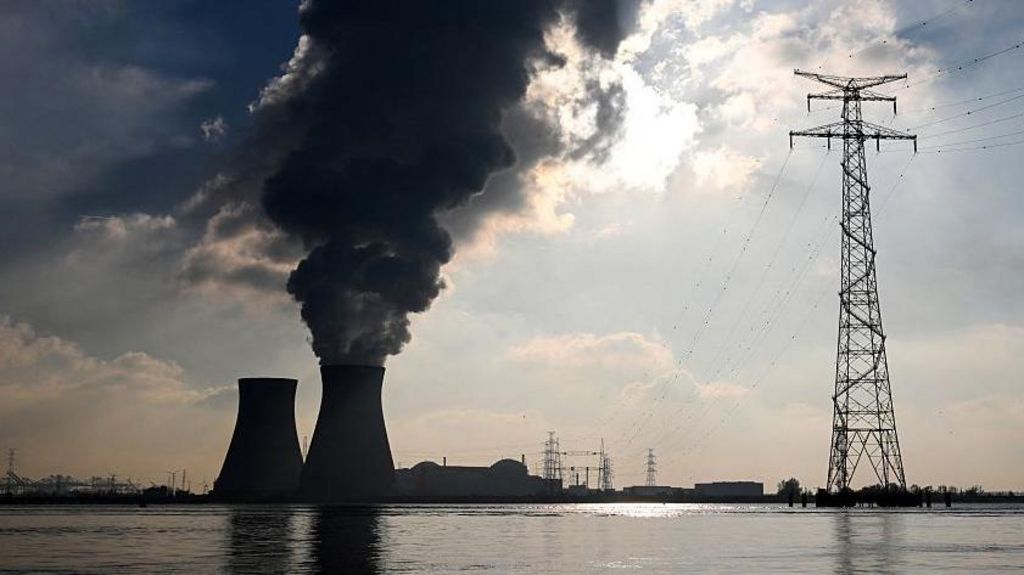
As households and industrial sectors across the continent watch natural gas and gasoline prices skyrocket with growing anxiety, Europe is facing yet another energy crisis – a familiar challenge that echoes the crippling cost-of-living shock that followed Russia’s full-scale invasion of Ukraine in 2022. This time, growing volatility in the Middle East, particularly disruptions to energy shipments through the Strait of Hormuz, has sent global energy markets reeling, forcing policymakers to revisit a decades-old question: how can the continent achieve genuine energy independence?
The answer increasingly being embraced across EU capitals and in London is a surprising one: nuclear power, a source that much of Europe turned its back on after the 2011 Fukushima disaster, is now back at the center of European energy strategy.
Speaking at the recent European Nuclear Energy Summit in Paris, European Commission President Ursula von der Leyen called Europe’s widespread post-Fukushima retreat from nuclear power a historic “strategic mistake.” Notably, von der Leyen served in the German government when it approved a full nuclear phaseout in 2011, a decision that would reshape the country’s energy landscape for decades. She pointed out that nuclear power generated roughly one-third of Europe’s electricity in 1990, a share that has plummeted to just 15% on average today. This decline, she argued, has left the continent dependent on expensive, volatile imported fossil fuels – a vulnerability exposed first by Russian supply cuts after Ukraine, and now by Middle East tensions. Currently, Europe imports more than 50% of its total energy, primarily oil and gas, leaving it exposed to global price swings and geopolitical disruptions.
The impact of differing national energy mixes is already stark across the continent. Spain, which has invested heavily in utility-scale wind and solar power, is projected to see average 2026 electricity prices around half that of Italy, where 90% of electricity prices are tied to volatile global gas costs. France, Europe’s largest nuclear power producer, generates 65% of its electricity from nuclear reactors, and its forward electricity prices for next month are just one-fifth of those in Germany – a gap that has put enormous strain on Germany’s energy-intensive automotive and chemical sectors. This week, Berlin’s leading economic research institutes cut their 2026 GDP growth forecast in half to just 0.6%, citing the ongoing impact of elevated gas prices.
A broad policy reversal is now unfolding across Europe. Italy is drafting legislation to roll back its decades-long ban on new nuclear power. Belgium has performed a complete U-turn after years of resisting new nuclear investment. Greece, which has long avoided nuclear development due to seismic risks, has opened a national public debate on advanced, safer reactor designs. Sweden has reversed a 40-year policy of phasing out nuclear power. In the UK, Chancellor Rachel Reeves recently announced plans to streamline regulatory processes to speed up nuclear project development, arguing that “to build national resilience, drive energy security and deliver economic growth, we need nuclear.” New YouGov polling shows growing public support for nuclear power even in traditionally skeptical Scotland, where a majority now backs including it in the country’s energy mix.
France has emerged as the most vocal advocate for a European nuclear revival. President Emmanuel Macron, a long-time supporter of his country’s domestic nuclear industry, told the summit that “nuclear power is key to reconciling both independence, and thus energy sovereignty, with decarbonisation, and thus carbon neutrality.” He also highlighted nuclear energy’s unique role in powering the growing energy demand of artificial intelligence, arguing that it could give Europe a competitive edge in the global AI race, providing the reliable baseload power needed to expand data center and computing capacity.
Even Germany, the most prominent European nation to phase out nuclear power after Fukushima, has softened its long-standing opposition. Until last year, Berlin blocked EU efforts to classify nuclear power as a sustainable energy source alongside renewables, creating major friction with France, its closest EU ally. Berlin has since agreed to remove anti-nuclear language from EU legislation, a shift that many observers link to growing European security concerns amid deteriorating relations with the second Trump administration. Just this month, France agreed to extend its independent nuclear deterrent to European partners at Germany’s request.
Despite this growing momentum, experts warn against treating nuclear power as a quick fix for Europe’s current energy crisis. Large-scale conventional nuclear reactor projects are notoriously slow and expensive to develop, with recent high-profile projects in France (Flamanville-3) and the UK (Hinkley Point C) suffering years of delays and massive cost overruns. Longstanding challenges including radioactive waste management and public safety concerns, reignited by the 15th anniversary of the Fukushima disaster this year, still persist.
Environmental groups also warn that large-scale investment in nuclear power could divert critical funding and political attention from the faster expansion of wind and solar power, whose costs have fallen dramatically in recent years to undercut nuclear. Additional strategic risks remain: several Central European countries, including Hungary and Slovakia, still rely on Russian technology and uranium for their existing nuclear fleets, creating potential dependency risks similar to the old fossil fuel import model.
Chris Aylett, a Research Fellow at the Environment and Society Centre at Chatham House, notes that many of Europe’s existing nuclear reactors are already nearing the end of their design life, requiring massive investment just to maintain current nuclear generating capacity. “If governments really want to increase the share, they need a lot of time and a lot of money,” he explained, adding that most European governments are already heavily indebted, cash-strapped, and juggling competing priorities ranging from welfare spending to meeting higher defense spending targets set by the Trump administration.
To address cost and scalability concerns, the European Commission has pinned much of its long-term hope on small modular reactors (SMRs), a next-generation nuclear technology that is designed to be factory-built at scale, lower cost, and flexible enough to power specific high-demand uses including AI data centers, hydrogen production, and local district heating networks. The EU has just unveiled a €330 million investment package to advance nuclear technology, with a major focus on SMR development, and Brussels aims to bring the first commercial SMRs online by the early 2030s. The push for SMRs is a global effort: the U.S. and Japan recently announced a $40 billion joint project to develop SMRs in the southern U.S., and the UK has already published the regulatory framework to allow Rolls-Royce to build the first commercial SMR fleet in the country. Even so, SMR technology remains unproven at commercial scale, and as of early 2026, no construction licenses have been issued for commercial SMR projects anywhere in the EU. The EU is also investing in long-term nuclear fusion research, though commercial fusion power remains decades away from widespread deployment.
For the immediate future, Europe remains heavily dependent on imported fossil fuels, leaving it exposed to geopolitical volatility and global price swings. As Aylett points out, greater energy independence is clearly in Europe’s strategic interest, to avoid being held hostage to the decisions of authoritarian energy exporters and volatile commodity markets. While European governments have overwhelmingly embraced nuclear power as a core part of their medium and long-term energy security strategy, the question of how to address the current energy crisis and protect households and industries from skyrocketing prices in the here and now remains unanswered.