分类: politics

  • Zelenskyy meets Merz in Berlin as Ukraine seeks more support from Germany against Russia

    Zelenskyy meets Merz in Berlin as Ukraine seeks more support from Germany against Russia

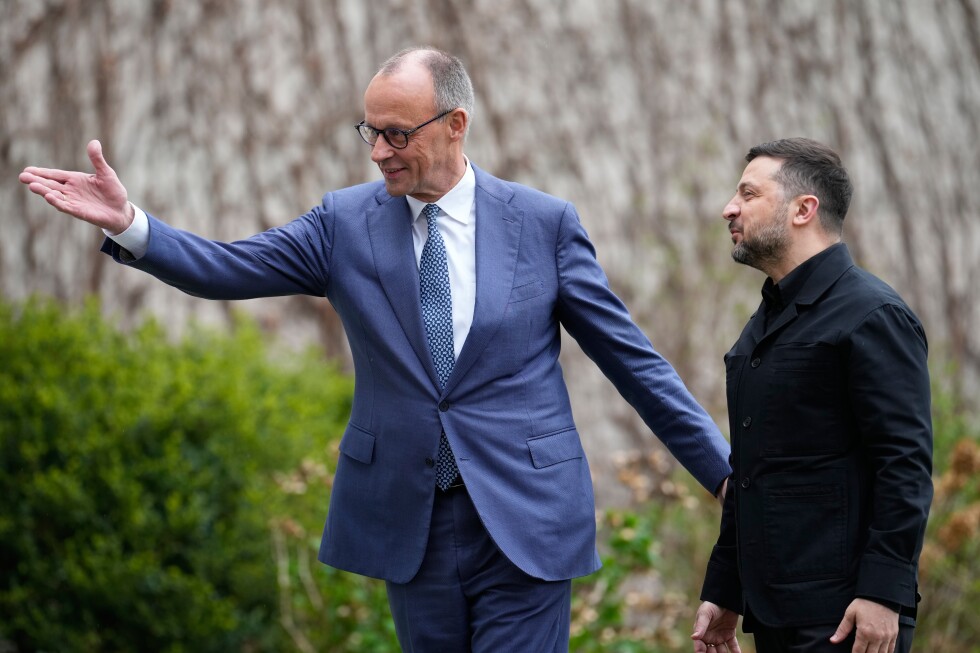
    BERLIN – As Russia’s full-scale invasion of Ukraine enters its third year of active conflict, Ukrainian President Volodymyr Zelenskyy traveled to Berlin on Tuesday to hold high-level discussions with German Chancellor Friedrich Merz, reinforcing ties with one of Kyiv’s largest and most consistent backers. The meeting comes at a critical juncture for Ukraine, as the country navigates shifting global priorities, ongoing battlefield dynamics, and urgent funding gaps that threaten its long-term defensive capacity.

    In addition to the presidential-chancellor talks, German Defense Minister Boris Pistorius convened separate negotiations with his new Ukrainian counterpart, Mykhailo Fedorov. Fedorov, who previously led Ukraine’s digital transformation ministry and took over the defense portfolio in January, has earned widespread recognition for spearheading the country’s rapid advancement in military drone technology — a sector that has become a critical asymmetric advantage for Kyiv against Moscow’s larger conventional forces.

    Recent weeks have seen U.S.-led diplomatic initiatives to resolve the conflict stall, as the outbreak of conflict in Iran has redirected the attention of the current U.S. administration. Despite this shift in focus, Tammy Bruce, Deputy U.S. Ambassador to the United Nations, reaffirmed Washington’s commitment to a negotiated settlement during a Monday address to the U.N. Security Council, stating that the U.S. “will continue to push for a negotiated and durable end” to Russia’s war against Ukraine.

    Western military analysts and senior government officials report that Ukraine has notched notable battlefield gains in recent months, successfully disrupting Russia’s widely anticipated spring offensive. Moscow launched its offensive as seasonal weather improved, with drying farmlands and new foliage on tree lines providing natural cover for advancing troops, but Kyiv’s forces have managed to halt most of Russia’s momentum. Complementing its defensive successes on Ukrainian territory, Kyiv’s domestically produced long-range drones and missiles have repeatedly targeted Russian oil infrastructure and military manufacturing facilities deep inside Russian territory, stretching Moscow’s defensive capabilities.

    Finland’s President Alexander Stubb offered a bullish assessment of Ukraine’s position during a public address at the Brookings Institution in Washington on Monday, noting, “Ukraine is in a much better place than it has been at any stage in this horrific war.” Stubb went on to claim that Ukraine “is on top from a military perspective,” pointing to the remarkable milestone that last month saw Ukraine launch more drones and missiles against Russian targets than Russia fired into Ukraine.

    Moscow has similarly asserted that its own forces have made incremental territorial gains across the front line. As is standard for active conflict zones, independent verification of either side’s battlefield claims remains unavailable. Russia currently maintains control of roughly 20 percent of Ukraine’s internationally recognized territory, including the Crimean Peninsula, which it illegally annexed in 2014.

    Beyond military dynamics, Ukraine faces pressing financial challenges that threaten to undermine its war effort. The country has been awaiting a promised 90-billion-euro ($106 billion) EU macrofinancial loan that was long blocked by Hungarian Prime Minister Viktor Orbán. However, Orbán’s departure from office following last weekend’s Hungarian parliamentary elections has raised new hopes that the long-delayed funding package will finally be released.

    Kyiv also remains heavily dependent on U.S. intelligence support for long-range targeting operations inside Russia, and is in urgent need of additional advanced American-built air defense systems to fend off relentless Russian missile and drone strikes on Ukraine’s energy infrastructure. Zelenskyy has expressed growing concern that a prolonged conflict in Iran will drain U.S. attention and resources, eroding the critical military and diplomatic support that Washington has provided to Kyiv since the 2022 full-scale invasion.

    Compounding these challenges, the Ukrainian military faces significant personnel shortfalls. In comments made in January, Defense Minister Fedorov revealed that the country has recorded roughly 200,000 troop desertions, while an additional 2 million people have evaded conscription orders. These figures highlight the deep demographic strain the war has placed on Ukraine’s population after three years of full-scale conflict.

  • Benin Finance Minister Romuald Wadagni elected president with vast majority of votes

    Benin Finance Minister Romuald Wadagni elected president with vast majority of votes

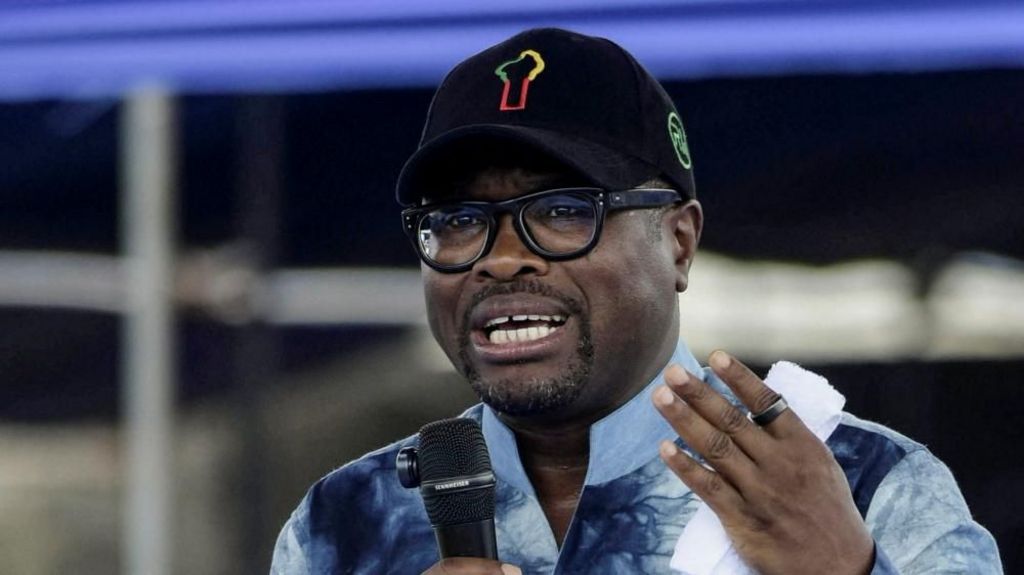
    COTONOU, Benin — In an outcome that matched pre-election predictions, Benin’s outgoing President Patrice Talon’s hand-picked successor, Finance Minister Romuald Wadagni, has claimed a landslide victory in Sunday’s presidential election, according to official announcements from the West African nation’s electoral body.

    Sacca Lafia, president of Benin’s Independent Electoral Commission, confirmed the preliminary results in a national televised address late Monday, noting Wadagni secured more than 94% of the vote based on counts from over 90% of polling stations across the country. Turnout for the election reached 58.75%, Lafia added. The unofficial results now await formal validation from Benin’s Constitutional Court, with a final ruling expected in the coming weeks.

    The only opposition candidate on the ballot, Paul Hounkpè, had already conceded defeat prior to the official announcement, having captured just 5.95% of the counted vote. At 49 years old, Wadagni was widely framed as Talon’s anointed heir ahead of the vote. Talon, who has held the presidency since 2016, is required to step down at the end of his second term in May, ending a decade in office marked by a deeply divided legacy.

    Long seen as one of West Africa’s most stable democratic nations, Benin has faced growing international scrutiny over political rights under Talon’s leadership. The outgoing president leaves office with a mixed record: he has overseen steady macroeconomic growth that drew international investment, but he also faces persistent accusations of systemic opposition suppression, alongside a rising jihadist insurgency that has destabilized the country’s northern border regions.

    Amnesty International and Human Rights Watch have both documented a sustained crackdown on political dissent during Talon’s tenure, including arbitrary arrests of opposition figures, new restrictive rules on public assembly, and growing pressure on independent media outlets to align with the government. Structural barriers to opposition participation have drawn particular criticism in recent electoral cycles. In January’s parliamentary vote, opposition parties failed to meet a requirement of 20% voter support in every electoral district to gain representation, leaving Talon’s two allied political parties in control of all 109 seats in the National Assembly.

    The pattern of exclusion extended to the presidential vote: Renaud Agbodjo, leader of the main opposition party The Democrats, was entirely barred from competing in Sunday’s election after failing to secure the required number of parliamentary endorsements. Critics argue this eligibility threshold was deliberately designed by ruling party allies to block opposition candidates from accessing the ballot, clearing the path for Wadagni’s overwhelming victory. Political analysts had forecast this outcome months in advance, noting the systematic sidelining of opposition voices left no credible challenge to Talon’s chosen successor.

  • Vietnam’s top leader To Lam arrives in Beijing for state visit

    Vietnam’s top leader To Lam arrives in Beijing for state visit

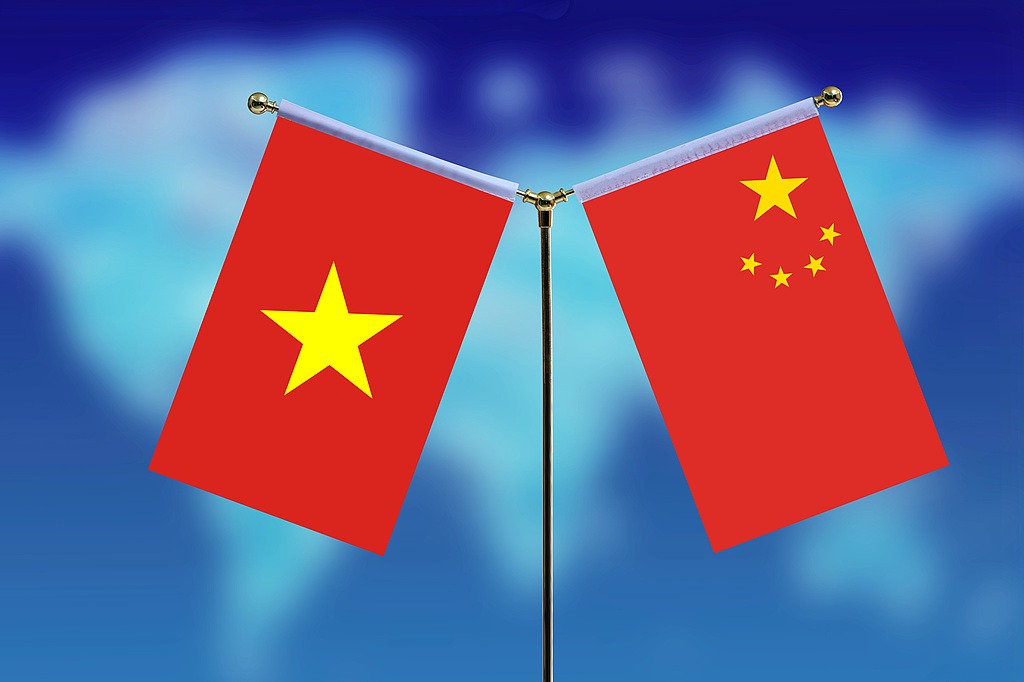
    BEIJING, April 14 — Vietnam’s highest-ranking leader, To Lam, who holds dual positions as General Secretary of the Communist Party of Vietnam Central Committee and President of the Socialist Republic of Vietnam, touched down in Beijing on Tuesday, kicking off a scheduled four-day state visit to China that will run through Friday.

    A notable detail surrounding this diplomatic trip underscores its strategic importance: this state visit marks To Lam’s first official overseas stop since he was formally elected to the Vietnamese presidency in a recent vote. For decades, China and Vietnam have maintained comprehensive strategic cooperative partnership, with close cooperation spanning trade, cross-border infrastructure, regional security, and people-to-people exchanges. This high-profile visit is widely expected to create new opportunities to strengthen bilateral dialogue, deepen collaborative efforts on shared regional and global priorities, and advance the long-term stable development of China-Vietnam relations.

  • Livestream tipping services to be regulated

    Livestream tipping services to be regulated

    In a landmark move to rein in unregulated commercial practices within the fast-growing online livestreaming industry, China’s top cyber governance authority has unveiled a comprehensive set of new regulations targeting livestream tipping services, with a particular focus on strengthening safeguards for underage users. The 11-point regulatory framework, released on April 14, 2026 by the Office of the Central Cyberspace Affairs Commission, aims to bring greater transparency and accountability to profit-driven livestreaming activities while addressing growing public concerns over excessive spending and exploitative practices.

  • Observers in Taiwan say KMT leader’s mainland visit fruitful

    Observers in Taiwan say KMT leader’s mainland visit fruitful

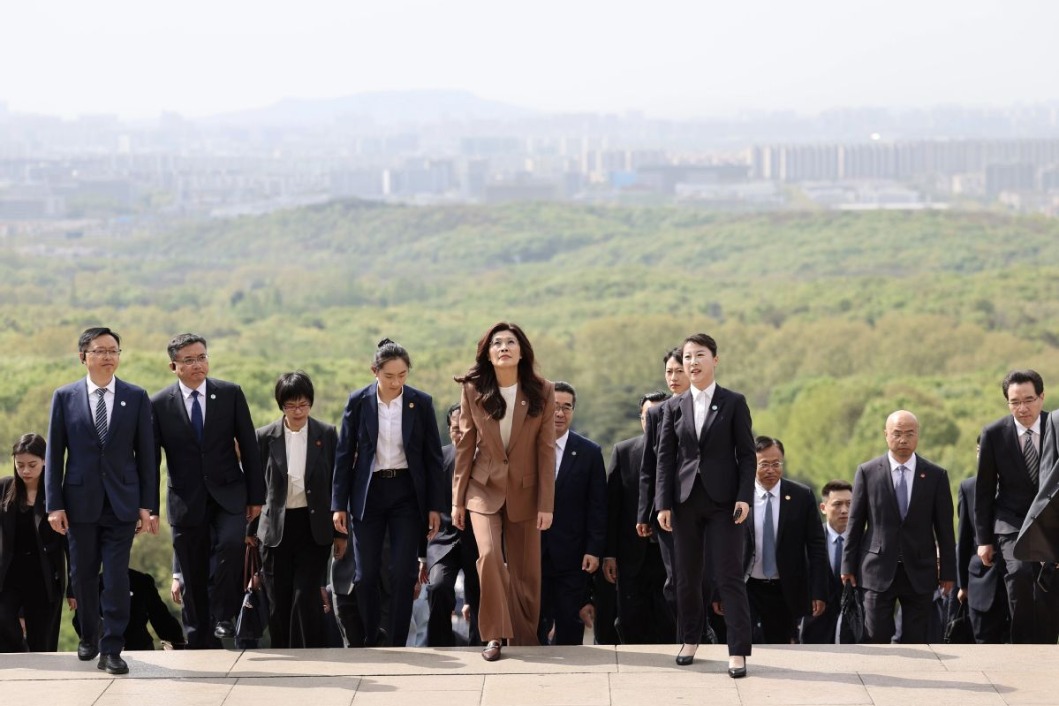
    TAIPEI, April 14, 2026 – Six days after concluding a landmark visit to the Chinese mainland, Kuomintang (KMT) chairperson Cheng Li-wun and her delegation touched back down in Taiwan over the weekend, with cross-Strait observers across the island unanimous in hailing the trip as a productive breakthrough for bilateral ties and shared economic opportunity.

    The visit marked the first time in 10 years that a sitting KMT chairperson has led a party delegation to the mainland, a moment that carries profound weight for future interactions across the Taiwan Strait. The delegation followed a packed schedule across three major mainland regions: Jiangsu province, Shanghai, and Beijing, where they paid respects at the mausoleum of Sun Yat-sen, the founding father of modern China and a revered figure for the KMT, and toured key economic and industrial sites including Yangshan Port, one of the world’s busiest container shipping hubs, and an automated automobile manufacturing facility operated by Chinese tech giant Xiaomi.

    Local scholars and cross-Strait policy analysts point out that the engagement between the Communist Party of China (CPC) and the KMT, rooted in the shared commitment to the 1992 Consensus and opposition to Taiwan independence, has cleared a path for expanded, future-oriented exchanges between the two parties. Yang Kai-huang, a senior researcher at Taipei-based Ming Chuan University, noted that this high-level interaction reopens avenues for collaboration that have been stalled for years, creating new possibilities for constructive dialogue on issues ranging from economic cooperation to people-to-people ties.

    Teng Tai-hsien, secretary general of the Straits Economic & Cultural Interchange Association, emphasized that the delegation’s on-site visits to major mainland economic facilities gave the KMT delegation, and by extension the broader Taiwan public, a firsthand look at the mainland’s rapid development over the past decade. The tour, Teng added, makes clear the enormous untapped potential for mutually beneficial industrial cooperation between the two sides of the Strait.

    Coinciding with the KMT delegation’s return, the Taiwan Work Office of the CPC Central Committee announced a sweeping new package of 10 policies and measures designed to expand and strengthen cross-Strait exchanges and cooperation. The policy package includes provisions to fully resume regular direct passenger flights across the Strait, restart the individual travel scheme for mainland residents from Shanghai and Fujian to visit Taiwan, and streamline entry approval procedures for qualified Taiwan food manufacturers to export their products to the mainland market.

    Speaking to reporters shortly after her arrival in Taipei, Cheng emphasized that her core goal for the visit was to help the Taiwan public see the tangible benefits of peaceful cross-Strait development, a outcome that she says the visit has helped advance.

    You Chih-pin, deputy secretary general of Taiwan’s New Party, pointed out that the new policy package will not only open up high-quality employment opportunities for Taiwan’s young people, but also deliver direct, widespread benefits to key sectors of Taiwan’s economy including agriculture, fisheries, and tourism.

    Among Taiwanese industry groups, the island’s tourism sector has emerged as one of the most enthusiastic supporters of the new policy measures, particularly the plan to resume individual travel from the mainland. From 2011, when the individual travel pilot program was first launched, to 2019, when it was suspended amid escalating cross-Strait tensions under the ruling Democratic Progressive Party (DPP), mainland independent travelers formed the backbone of Taiwan’s tourism industry, supporting hundreds of thousands of jobs across the island.

    Ringo Lee, chairman of Taiwan’s High Quality of Travel Association, said the new policy reflects the mainland’s sincere goodwill toward the Taiwan people and will inject much-needed new momentum into Taiwan’s struggling tourism sector. Lee called on the DPP-led Taiwan authorities to prioritize the interests of the island’s economy and public livelihood, and heed the growing calls from industry and ordinary citizens to support cross-Strait exchanges.

    Tang Yu-shu, former head of the tourism department for Hualien County, an eastern Taiwan destination that relies heavily on visitor spending, echoed Lee’s remarks. Tang emphasized that local communities across Taiwan are eagerly awaiting the full implementation of these favorable policies, and urged the DPP administration to step aside and avoid creating unnecessary obstacles to progress that would benefit all Taiwan residents.

  • Vote counting underway in Benin’s presidential polls

    Vote counting underway in Benin’s presidential polls

    COTONOU, Benin – Hours after polling stations closed across the West African nation of Benin on Sunday, election officials have begun tallying ballots for the first round of the country’s 2026 presidential election, according to on-the-ground observations from Xinhua News Agency in Cotonou, Benin’s economic hub.

    All 16,000+ polling stations opened punctually at 7 a.m. local time and wrapped up voting operations by 4 p.m., triggering the immediate start of the counting process as outlined in Benin’s electoral regulations. Sacca Lafia, president of Benin’s Autonomous National Electoral Commission (ANEC), the independent body overseeing the nation’s elections, confirmed that preliminary general results trends will be released to the public within 48 hours of polling station closure.

    Nearly 7.9 million registered voters were eligible to cast ballots in this election, which will select a new head of state to succeed outgoing President Patrice Talon, whose five-year term is set to conclude on May 23. Under Benin’s constitution, the president and vice president are elected via direct universal suffrage to serve a single seven-year term.

    Just two candidate tickets are contesting the top office this cycle. The ruling coalition’s ticket is led by incumbent Finance Minister Romuald Wadagni, with running mate Mariam Chabi Talata, the current vice president of Benin’s National Assembly. Challenging them is the opposition ticket from Cowry Forces for an Emerging Benin, headlined by party leader Paul Hounkpe and his running mate Rock Hounwanou.

    Wadagni has centered his campaign on his track record over the past decade leading Benin’s finance ministry, highlighting the country’s consistent economic expansion under his oversight. Benin posted 7% gross domestic product growth in 2025, cementing its position as one of West Africa’s most stable and high-performing economies. If no candidate earns an absolute majority of valid votes in Sunday’s first round, a runoff election between the top two finishers will be held on May 10.

    Reports from polling stations across Cotonou and its surrounding suburbs, visited by Xinhua correspondents, confirm that voting proceeded without major incidents, unfolding smoothly and peacefully across all monitored sites. Armand Bognon, a representative of a local civil society observer platform that deployed 1,721 independent observers nationwide – 1,200 assigned to fixed polling posts and 521 mobile monitors to cross-check multiple locations – confirmed that voting operations launched on time across every region of the country.

    While the process remained orderly, voter turnout was relatively low through the morning and midday hours, with many voters arriving later in the day than expected. Multiple polling stations reported moderate attendance throughout the day, with a number of electors opting to attend Sunday religious services before casting their ballots.

    Outgoing President Talon cast his own vote at a Cotonou polling station, and spoke to reporters after voting, expressing broad satisfaction with the calm, collaborative atmosphere that marked the election. “Since late last year, we have completed a full cycle of electoral processes to renew the country’s political leadership across legislative, municipal and now presidential levels,” Talon said. “What I have observed is not just an extraordinary atmosphere, but one marked by fraternity and conviviality.”

    He added, “This gives us confidence that Benin is evolving and reaching a new stage in its history. Whoever wins this election will take the country even further. For me, the best is yet to come for Benin.”

  • Benin’s Wadagni wins presidency by landslide

    Benin’s Wadagni wins presidency by landslide

    Provisional electoral results from Benin confirm a landslide win for incumbent Finance Minister Romuald Wadagni in the country’s 2026 presidential election, capping a race shaped by widespread expectations of victory and the absence of a credible opposition challenger. According to the national electoral commission, with 90% of all ballots processed, Wadagni has captured over 94% of the vote, a margin large enough that the final outcome is described as irreversible.

    At 49 years old, Wadagni entered the race as the clear favorite after Benin’s main opposition bloc, the Democrats, was barred from fielding a candidate. Under Benin’s electoral rules, all presidential hopefuls must secure formal sponsorship from a minimum number of sitting elected officials to appear on the ballot. The Democrats’ nominee failed to meet this requirement, leaving only independent candidate Paul Hounkpè as Wadagni’s formal competitor. Hounkpè conceded the race early on Monday, even before vote counting concluded, and publicly congratulated Wadagni on his projected win. In his concession statement, Hounkpè emphasized that democratic governance relies on mutual respect and a willingness to transcend partisan divides.

    Wadagni was handpicked as the ruling party’s candidate by outgoing two-term president Patrice Talon, who was constitutionally ineligible to run for a third term in office. Preliminary official data puts national voter turnout at 58.75%, a figure that comes amid widespread public perception that the election was little more than a procedural formality, given the lack of a major opposition contender.

    Despite being widely regarded as one of West Africa’s most stable democracies in a region that has seen a string of military coups in recent years, Benin now faces pressing challenges that the incoming president will be forced to address immediately. Foremost among these is worsening insecurity linked to jihadi insurgency in the country’s northern regions. Last April, an attack claimed by JNIM, an al-Qaeda-affiliated extremist group, killed 54 Beninese soldiers, and a similar strike just one month before the election claimed 15 more military lives. The deteriorating security crisis was also cited as a core justification by soldiers who staged an attempted coup in Benin just four months prior to the election. Beyond security, Wadagni will also need to tackle the country’s long-standing issue of chronic poverty, which disproportionately impacts communities in northern Benin. The country of 15 million people will swear in its new president following the formal validation of the election results by national authorities.

  • US Hormuz blockade, tariffs jolt China

    US Hormuz blockade, tariffs jolt China

    Tensions in the Middle East have reached a new boiling point after the United States launched a naval operation to enforce a blockade of the strategic Strait of Hormuz on Monday, paired with an unprecedented tariff threat targeting third-party countries that supply weapons to Iran. The escalation has drawn a firm response from China, which has called for both Washington and Tehran to return to diplomatic negotiations to de-escalate the crisis.

    The tariff threat expanded to China in mid-April, when then-U.S. President Donald Trump warned of a 50% punitive tariff on Chinese goods over unconfirmed reports that Beijing planned to deliver air defense systems to Tehran. The move represents a clear escalation of Washington’s strategy to cut off external support for Iran and extend pressure to other major trading partners that maintain normal economic ties with the Islamic Republic.

    Chinese analysts widely view the dual campaign of military blockade and tariff threats as a deliberate act of extreme pressure aimed at forcing Beijing to align its policy with U.S. demands and push Iran into concessions on key negotiating issues. They note that after failing to secure breakthroughs either through military confrontation or diplomatic talks, the U.S. has increasingly turned to unilateral trade measures and coercive tariff threats to gain strategic leverage.

    “Trump has shifted tactics. The White House wants to combine military pressure alongside Israel and use tariffs to cut off Iran’s external lifelines,” said Da Bao, a Henan-based political commentator, referring to Iran’s critical crude oil export revenue that flows through trade with China. He added that the U.S. warning against Chinese arms shipments is less about enforcing international norms and more about setting a precedent to weaponize tariffs amid regional conflicts. “What counts as military equipment today? Drone components? Semiconductors? Maintenance services? Today it’s weapons, tomorrow it could be technology, then financing. This is just an expansion of political coercion,” Da Bao explained. He also argued that deploying tariffs as a strategic tool in an active conflict reflects the U.S.’s declining ability to mobilize allied consensus and growing difficulty resolving disputes through targeted, traditional measures.

    Ming Yue, a Hebei-based analyst, pushed back on the U.S.’s unsubstantiated claims of Chinese weapons supplies to Iran. She pointed out that China is Iran’s second-largest import source, with bilateral trade hitting $9.96 billion last year, and that Chinese exports to Iran consist primarily of industrial machinery, electrical goods, auto parts, textiles and metal products – not tanks, missiles or ammunition. She added that U.S. media and officials have deliberately mislabeled legitimate, routine economic cooperation between Beijing and Tehran as military support to frame China as a destabilizing actor, a move aligned with U.S. domestic political and electoral priorities.

    On the economic impact of additional tariffs, Ming Yue noted that China has already diversified its export markets to the European Union and ASEAN, meaning new U.S. tariffs would have only limited economic impact. Instead, she argued, most tariff costs would ultimately be passed to American consumers and businesses, while U.S. firms with deep supply chain exposure to China, such as Apple and Tesla, would face disrupted production and lost revenue. She also observed that the public has grown accustomed to the pattern observers have dubbed “TACO” – short for “Trump Always Chickens Out” – where threats are dramatically escalated then partially rolled back later.

    The current crisis follows a turbulent sequence of diplomatic and military moves in early April. After Trump threatened massive military strikes that would push Iran back to the “Stone Age” if it did not reopen the Strait of Hormuz, a 14-day provisional ceasefire between the U.S., Iran and Israel was reached in the final 90 minutes before Trump’s April 7 deadline, raising tentative hopes of de-escalation that was set to expire on April 21. But just one day after the ceasefire took effect, Israel launched large-scale airstrikes across Beirut, the Bekaa Valley and southern Lebanon, targeting Hezbollah Secretary-General Naim Qassem. The strike killed Qassem’s nephew and personal secretary, Ali Yusuf Harshi, failing to eliminate the Hezbollah leader but escalating tensions on the Lebanese front.

    On April 11, U.S. Vice President JD Vance held 21 hours of negotiations with Iranian Foreign Minister Abbas Araghchi in Islamabad, Pakistan, aimed at forging a long-term ceasefire. The talks collapsed without agreement: Washington demanded that Tehran abandon its stockpile of highly enriched uranium and halt all nuclear weapons-related development, as well as accept a U.S.-Iran joint management framework for the Strait of Hormuz. Iranian negotiators rejected both proposals, and insisted any ceasefire deal must cover Lebanon amid ongoing Israeli strikes on Hezbollah – a condition Washington failed to enforce on its ally.

    Chinese analysts argue the provisional ceasefire was a deliberate trap set by the U.S. and Israel to reset pressure on Iran while preserving military leverage, noting Tehran would never have accepted the pause if it had known Israel would immediately launch strikes on Lebanon. Lao Ge, a Guangdong-based commentator, drew parallels to ancient Chinese military wisdom from *The Commentary of Zuo*, which notes that a fighting force loses momentum if it pauses before securing its goals: the first push is strong, the second weaker, the third exhausted. He outlined three core strategic risks Iran faces from the ceasefire trap: first, it loses mobilization momentum, as wartime urgency shifts to public relief that erodes deterrence and national resolve; second, it puts key ally Hezbollah in an impossible position – if Iran intervenes to support the group, it is blamed for breaking the ceasefire, but if it holds back, Hezbollah is gradually weakened by ongoing Israeli strikes; third, reopening the Strait of Hormuz surrenders Iran’s strongest bargaining chip, stabilizes global oil markets, and gives the U.S. time to reinforce its military presence in the region. “Tehran would have been better off maintaining pressure despite U.S. threats and even limited infrastructure damage than losing its core ally in Lebanon,” Lao Ge argued.

    Qin Tian, deputy director of the Institute of Middle East Studies at the China Institutes of Contemporary International Relations (CICIR), confirmed the Strait of Hormuz is the decisive stake in the current standoff. “For Iran, the Strait is one of the most effective tools in its confrontation with the U.S. and Israel, and a core national security asset,” Qin said. “Tehran should use this leverage to secure meaningful concessions from the U.S. side.” He added that competition between Washington and Tehran for control over the waterway will only intensify in the coming weeks.

    As of Monday, the U.S. has expanded its blockade operation into the Gulf of Oman, targeting vessels linked to Iranian trade while claiming to allow neutral shipping to pass unimpeded. U.S. Central Command has issued warnings that any vessels entering the restricted zone risk interception, underscoring the large scale of the operation. U.S. officials also confirmed they have begun mine-clearing operations in and around the Strait after reports of Iranian naval mine deployments that disrupted a large share of global oil flows, noting that reopening full shipping lanes will be slow and carry operational risks. The operation has already pushed global oil prices above $100 per barrel, drawing public criticism from NATO allies who oppose the blockade’s disruptive impact on global energy markets.

    China has issued a formal response to the escalating crisis. Guo Jiakun, a spokesperson for China’s Foreign Ministry, emphasized that the Strait of Hormuz is a critical global trade and energy route, and maintaining its safety, stability and open access serves the shared interests of the entire international community. “The root cause of the current disruption is the ongoing military conflict. To resolve the issue, hostilities must end as soon as possible, and all parties must maintain calm and exercise maximum restraint,” Guo said, adding that China will continue to play a constructive role in advancing diplomatic talks.

    Chinese Defense Minister Admiral Dong Jun issued a firmer warning to Washington, cautioning against the Strait of Hormuz blockade and rejecting any U.S. interference in normal bilateral relations between Beijing and Tehran. “China has legitimate trade and energy agreements with Iran, and we expect other parties not to interfere in our sovereign affairs,” Dong said, noting that the Strait of Hormuz remains open to Chinese commercial shipping in line with international law.

  • Xi and Sánchez say China and Spain should help safeguard multilateralism

    Xi and Sánchez say China and Spain should help safeguard multilateralism

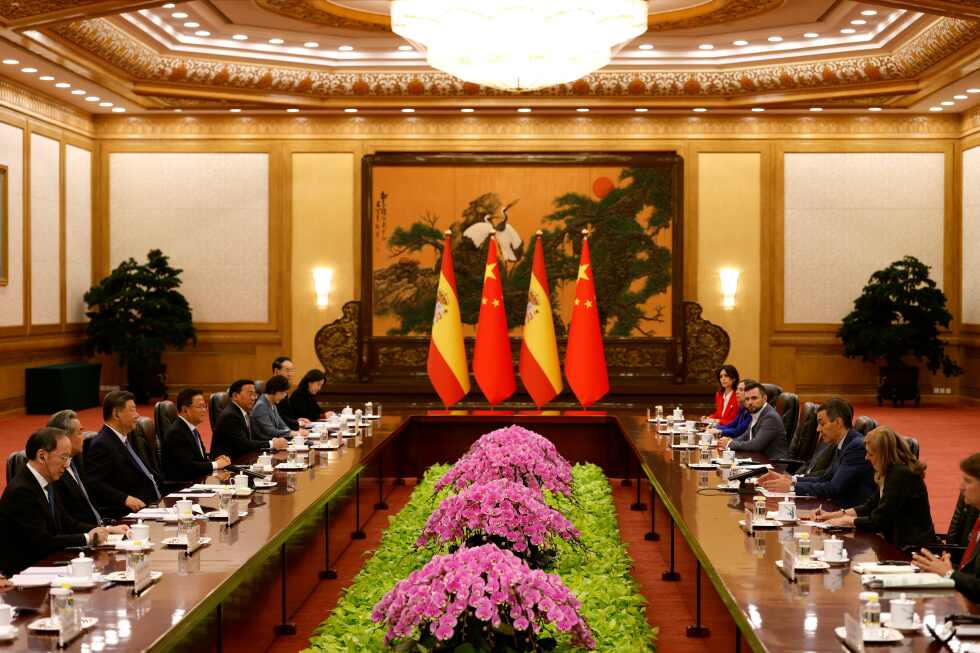
    BEIJING – In a high-profile bilateral meeting held in the Chinese capital Tuesday, the top leaders of China and Spain have formally committed to expanding collaborative partnerships and upholding multilateral governance, against a backdrop of rising global instability marked by ongoing regional conflicts including the recent hostilities in Iran. Chinese President Xi Jinping made the remarks during an official reception for visiting Spanish Prime Minister Pedro Sánchez at Beijing’s Great Hall of the People.

    During the address, Xi emphasized the urgency for the two nations to ramp up high-level communication, solidify cross-border mutual strategic trust, and advance close practical cooperation. He also underscores the need to push back against a growing global shift toward the law of the jungle, where power alone dictates outcomes, and work collectively to protect what he described as genuine, inclusive multilateralism.

    Sánchez, for his part, aligned fully with Xi’s position, noting that both nations are well-placed to drive progress in solving the world’s most pressing challenges. From persistent trade frictions to tangled geopolitical complexities, from active armed conflicts to escalating environmental and social inequities, the prime minister noted that China and Spain can play a pivotal role in forging collaborative, forward-looking solutions.

    This visit marks Sánchez’s fourth trip to China in a little more than three years, a frequency of high-level engagement that underscores Spain’s strategic interest in deepening ties with the world’s second-largest economy. Spain is currently seeking to expand both political dialogue and commercial exchange with Beijing. The trip also comes amid growing diplomatic friction between Madrid and Washington, rooted in Sánchez’s public opposition to the recent war in Iran.

  • US and Iran keep talking as Trump’s blockade takes effect

    US and Iran keep talking as Trump’s blockade takes effect

    As a new U.S. naval blockade of Iran entered into force Monday and a fragile two-week ceasefire between the two sides remained largely intact, former U.S. President Donald Trump claimed Tehran is urgently pushing to reach a negotiated agreement with his administration.

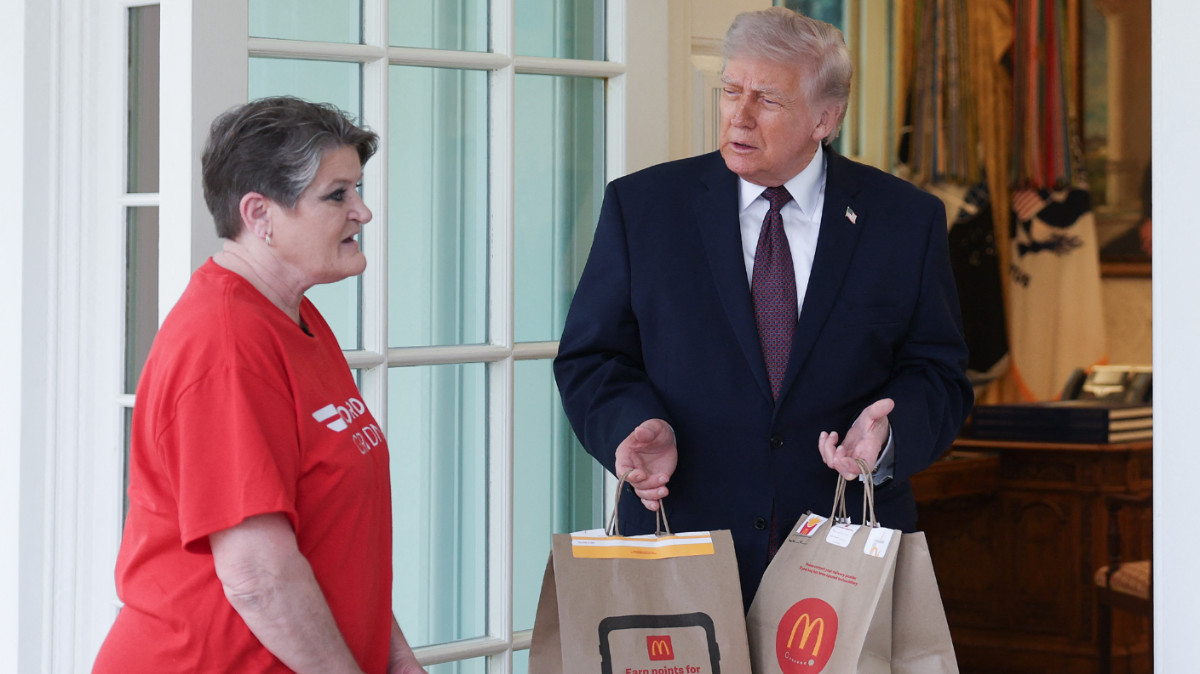
    Speaking to reporters outside the Oval Office while receiving a McDonald’s delivery via DoorDash, Trump asserted that Iranian officials had reached out through backchannels to signal their desire for a deal. “I can tell you that we’ve been called by the other side. They’d like to make a deal. Very badly, very badly,” he told the press corps.

    High-stakes indirect negotiations between U.S. and Iranian delegations hosted in Islamabad, Pakistan, wrapped up over the weekend without a final agreement. But multiple current and former U.S. and Arab officials confirmed to Middle East Eye that both parties remain committed to the negotiating process. Reuters further reported Monday that diplomatic backchannels are still active, with Pakistan continuing to serve as an intermediary for communications between Tehran and Washington.

    According to sources familiar with the talks, discussions were at times tense, and the two sides came close to agreeing to a broad framework for a final deal. Three core sticking points scuttled a breakthrough: disagreements over Tehran’s nuclear program, competing claims to control over the Strait of Hormuz, and disputes over the amount of frozen Iranian assets that would be unlocked under any agreement.

    Pakistani Prime Minister Shehbaz Sharif confirmed Monday that diplomatic efforts are continuing, saying, “I want to tell you that a full effort is still on to resolve the issues.” Despite the lack of progress in Islamabad, the 14-day ceasefire that went into effect ahead of talks has held, with no major armed clashes reported as of Monday.

    When pressed by reporters on what would happen if no deal is reached before the ceasefire expires, Trump issued a blunt warning: “It won’t be pleasant for them.” This is not the first time the former president has issued sharp threats against Iran; he previously drew widespread international criticism for threatening to destroy Iranian civilization before walking back the comment.

    Monday marked the official launch of the U.S. naval operation aimed at breaking what the Trump administration frames as Iran’s restrictive control over the Strait of Hormuz, a critical global energy chokepoint. The Wall Street Journal reported that at least 15 U.S. warships are participating in the blockade. Speaking to reporters, Trump laid out the current state of play: “Right now there’s no fighting…We have a blockade. Right now, Iran is doing absolutely no business.”

    Iran’s control of the strait has emerged as the most intractable strategic conflict between the two sides, and a core sticking point in the ongoing negotiations. Tehran currently allows its own vessels to transit the waterway, alongside select ships from Russia, China, India and Pakistan, while blocking most vessels registered to Western countries. One of Iran’s key demands in talks is the establishment of a formal transit toll system for the strait, with payments potentially denominated in Chinese yuan or cryptocurrency. Maritime experts consulted by Middle East Eye note that Iran has a logistically feasible path to implementing such a system at the global energy chokepoint.

    Trump has framed the blockade as an economic pressure tactic designed to force concessions from Iran by cutting off the country’s oil export revenue. But independent energy and security experts warn the move could backfire on the U.S., triggering a sharp spike in global energy prices and escalating the risk of open armed conflict between the two countries.

    In response to the U.S. blockade, Iranian military officials have pushed back hard. An Iranian military spokesperson called any restrictions on Iranian shipping equivalent to “piracy,” and warned that if Iranian ports come under threat, Tehran would retaliate by targeting Arab Gulf ports. The Islamic Revolutionary Guard Corps further stated that any foreign military vessels entering restricted waters near the strait would be considered a violation of the ongoing ceasefire.

    U.S. military deployments signal the Biden administration (continuing Trump’s policy) is moving cautiously to avoid escalation. U.S. Naval Institute News reports that the U.S. aircraft carrier USS George H.W. Bush is rerouting its journey to the Middle East around Africa and the Cape of Good Hope, rather than taking the shorter route through the Mediterranean Sea and Red Sea. This detour avoids the Bab el-Mandeb Strait and keeps the carrier out of missile range of Yemen’s Houthi movement, which is aligned with Iran and has previously disrupted shipping in the strategic waterway.

    While Trump has repeatedly bragged about “obliterating” Iran’s navy and air defense systems in past confrontations, he acknowledged Monday that Iran’s fleet of small fast-attack craft could pose a meaningful threat to U.S. surface vessels operating in the northern Indian Ocean. He doubled down on his warning to Iran in a post on social media, writing: “Warning: If any of these ships come anywhere close to our BLOCKADE, they will be immediately ELIMINATED, using the same system of kill that we use against the drug dealers on boats at Sea. It is quick and brutal.”