分类: politics

  • Canada’s Mark Carney tries to strike a balance on Iran

    Canada’s Mark Carney tries to strike a balance on Iran

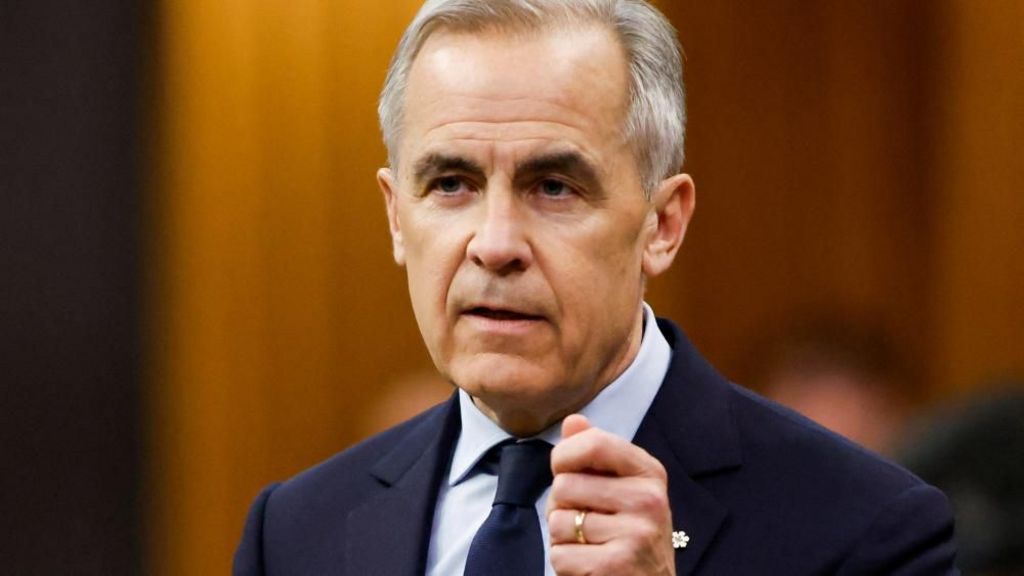
    Canadian Prime Minister Mark Carney finds himself navigating intense domestic criticism while attempting to maintain a delicate diplomatic equilibrium regarding U.S.-Israeli military operations in Iran. As Canada urgently works to evacuate its citizens from the escalating conflict zone, the nation confronts the unsettling possibility of being drawn into a broadening regional war.

    Carney initially voiced robust support for the strikes when they commenced one week ago, emphasizing the imperative of preventing Iran from acquiring nuclear capabilities and curbing the regime’s capacity to “further threaten international peace and security.” However, within days, the Prime Minister characterized his position as one adopted “with regret,” acknowledging that the military action appeared “inconsistent with international law.”

    During meetings with Australian counterpart Anthony Albanese, Carney jointly advocated for “rapid de-escalation” of hostilities. While Canada’s initial response demonstrated greater firmness than European allies including the UK, France and Germany—who collectively condemned Tehran while urging renewed negotiations—Carney now appears to be steering toward a more nuanced diplomatic course.

    This recalibration mirrors evolving positions among Western nations. France has augmented its regional military presence following Iranian strikes on its facilities in the United Arab Emirates. The United Kingdom has authorized American utilization of British bases for defensive operations, evidenced by the arrival of a U.S. B-1 Lancer bomber capable of delivering 24 cruise missiles. Germany has positioned its forces for potential defensive measures, though Chancellor Friedrich Merz has cautioned against entanglement in “endless wars.”

    Carney has refrained from unequivocally excluding Canadian military involvement, stating the nation “will stand by our allies, when it makes sense.” This ambiguity has provoked substantial dissent within his Liberal Party. Former Foreign Minister Lloyd Axworthy published a scathing critique in the Toronto Star, contrasting current policy with Canada’s refusal to endorse the 2003 Iraq invasion, noting “we are embracing the very doctrine we used to reject.”

    Liberal MP Will Greaves denounced endorsing “unilateral and illegal use of military force” while simultaneously defending national sovereignty—an apparent reference to former President Donald Trump’s suggestions regarding Canadian statehood. Opposition Conservatives have dismissed Carney’s approach as “contradictory” and “incoherent.”

    University of Ottawa Professor Roland Paris observed that Carney’s stance proved “difficult to decipher,” suggesting the controversy demonstrates the implementation challenges of the pragmatic international vision the Prime Minister outlined in his January Davos address. That speech, which garnered global attention, urged middle powers to unite against great power dominance while advocating UN Charter-aligned principled foreign policy.

    Professor Thomas Juneau posited that Carney’s positioning likely reflects necessary management of relations with the Trump administration, given Canada’s substantial economic dependence on U.S. trade and impending high-stakes negotiations. Juneau noted that while Canada gains nothing from endorsing the conflict, it risks significant losses by opposing an “easily irritated Trump.”

    Foreign Minister Anita Anand subsequently clarified that Canada has “no intention to participate in Operation Epic Fury,” emphasizing diplomatic efforts prioritizing de-escalation and civilian protection. Defence Staff Gen Jennie Carignan simultaneously indicated that “Gulf partners may require defence and support,” leaving military options theoretically available.

    Anand welcomed diverse perspectives within Liberal ranks ahead of caucus discussions on the crisis, acknowledging respectful disagreement while coordinating evacuation efforts for Canadians in the region. Recent polling by Angus Reid indicates a divided populace, with 48% opposing the strikes, 35% supporting, and 17% remaining uncertain.

  • Swiss to vote on right-wing push to slash licence fee for public broadcaster

    Swiss to vote on right-wing push to slash licence fee for public broadcaster

    Switzerland faces a pivotal moment in its media landscape as citizens head to the polls this weekend to determine the funding future of their national broadcaster. The referendum centers on a proposal to slash the annual license fee for Swiss Broadcasting Corporation (SBC) from 335 Swiss francs (£320; $435) to 200 francs (£190; $260) per household, while completely exempting businesses from the charge.

    The initiative, championed by the right-wing Swiss People’s Party, argues that the current fee represents an unjustified financial burden during a cost-of-living crisis. Party parliamentarian Manfred Bühler contends that modern production technologies enable cheaper programming than decades ago, making the reduced amount sufficient. The proposal has gained traction among younger demographics who increasingly favor streaming services over traditional broadcasting.

    Opposition forces, including all political parties except the People’s Party, warn that funding cuts would devastate Switzerland’s unique multilingual broadcasting model. The SBC maintains separate services in all four national languages—German, French, Italian, and Romansh—which critics say is essential for national cohesion in the linguistically diverse nation. Social Democrat MP Fabian Molina emphasizes that these services ensure equal treatment of all regions and linguistic communities.

    The debate took an unexpected turn when Russian state-backed outlet RT published an article under a likely pseudonym urging Swiss voters to support the fee reduction while accusing SBC of ‘Russophobia’ and ‘manipulation.’ This intervention backfired dramatically, with many Swiss perceiving it as foreign interference in their direct democracy system. Anti-populist groups responded with posters featuring images of Vladimir Putin, Viktor Orbán, and Donald Trump alongside the message: ‘Don’t do autocrats any favours.’

    The SBC has warned that approval of the measure would result in hundreds of job losses, reduced international coverage from its correspondents worldwide, and diminished sports programming—including the UEFA Champions League and winter sports where Switzerland excels. Recent opinion polls indicate 54-57% of voters now oppose the cut, suggesting the RT intervention may have swayed undecided voters toward preserving the current funding model.

  • China spent years building ties in Latin America. Can Trump make room for the US?

    China spent years building ties in Latin America. Can Trump make room for the US?

    In a strategic move to reassert U.S. influence across the Western Hemisphere, former President Donald Trump is convening a high-profile gathering of Latin American and Caribbean leaders at his golf club this Saturday. Dubbed the ‘Shield of the Americas Summit,’ this event marks a concerted effort to rally regional allies around U.S. national security interests while actively countering China’s expanding economic and political footprint.

    The geopolitical landscape has shifted dramatically over the past decade, with China emerging as the region’s predominant trading partner and infrastructure financier. From the massive $3.5 billion Chancay megaport development in Peru to Bogotá’s metro system in Colombia, Beijing has cemented its presence through substantial investments totaling approximately $153 billion between 2014-2023—triple the U.S. contribution during the same period.

    Trump’s diplomatic offensive features Kristi Noem as special envoy, despite her recent dismissal as Homeland Security Secretary. She will engage with conservative leaders from eight nations including Argentina, Paraguay, El Salvador, and Ecuador—all sharing ideological alignment with Trump’s administration. Notably absent are regional heavyweights Brazil, Mexico, and Colombia.

    According to security analysts, the summit agenda will prioritize combating drug trafficking, managing migration flows, counter-terrorism cooperation, and most significantly, curbing Beijing’s hemispheric influence. Professor Evan Ellis of the U.S. Army War College characterizes the event as essentially ‘a Latin American CPAC,’ referencing the Conservative Political Action Conference that gathers right-leaning U.S. politicians.

    The Trump administration has explicitly stated its objectives: to ‘enlist and expand’ U.S. partnerships while limiting Chinese engagement throughout the Americas, including preventing strategic military footholds. This approach has already yielded tangible results, from Venezuela’s political upheaval to Panama’s Supreme Court revoking a Hong Kong company’s canal contracts earlier this year.

    However, experts caution that meaningful relationship-building requires more than military posturing and economic pressure. Enrique Dussel Peters, economics professor at Mexico’s National Autonomous University, notes that U.S. policies like ‘America First,’ foreign aid reductions, and tariffs have inadvertently driven regional governments closer to China, which has pursued a decades-long strategic vision for Latin America.

    China’s economic penetration extends beyond traditional infrastructure into next-generation technologies including 5G networks, electric vehicles, and artificial intelligence. Twenty nations have joined Beijing’s Belt and Road Initiative, while free trade agreements with Chile, Costa Rica, Ecuador, Nicaragua, and Peru have fueled commercial exchanges that skyrocketed from under 2% of regional exports in 2000 to over $450 billion by 2021.

    Despite concerns about debt diplomacy and lower environmental standards, China continues investing strategically in resources like the ‘lithium triangle’ spanning Argentina, Bolivia, and Chile—home to 56% of global lithium reserves. President Xi Jinping recently announced a 9 billion yuan credit line for this mineral-rich corridor.

    As regional nations attempt to balance relationships between competing powers, Professor Facundo Robles of Argentina’s National Defense University suggests the optimal outcome would be diversified economic partnerships rather than binary alignment. With Trump scheduled to meet Xi Jinping on March 31st, Latin American countries hope to avoid becoming casualties in a great-power competition that constrains their strategic options.

  • After Iran, will Trump turn his eyes to Cuba?

    After Iran, will Trump turn his eyes to Cuba?

    President Donald Trump has hinted at a potential new foreign policy focus on Cuba during a White House reception for the Inter Miami CF soccer team. In his remarks, the President characterized the Caribbean nation as being ‘ready to fall,’ suggesting a possible hardening of U.S. stance toward the communist government. This statement comes amid heightened tensions with Iran and raises questions about whether the administration is preparing to implement more aggressive policies toward additional nations that have historically opposed American interests. The comments represent a significant departure from the brief period of diplomatic thaw experienced during the previous administration, potentially signaling a return to more confrontational approaches. Political analysts are now closely monitoring whether these remarks foreshadow concrete policy changes regarding the decades-long embargo and relationship with Cuba. The timing of this statement, following recent military actions in the Middle East, suggests a broader pattern of confronting regimes that the administration perceives as adversarial to United States interests.

  • Inside the secret US-led talks to solve the Western Sahara conflict

    Inside the secret US-led talks to solve the Western Sahara conflict

    The United States has embarked on an intensified diplomatic initiative to resolve the decades-long Western Sahara conflict, convening three clandestine meetings between Morocco and Polisario Front representatives since autumn 2023. This marks the first direct engagement between the primary antagonists in years, though Middle East Eye’s diplomatic sources indicate the process has proven more challenging than anticipated.

    President Donald Trump’s administration seeks to position itself as a peacemaker in Africa, mirroring its approach to other global conflicts. Washington aims to broker a solution that satisfies Moroccan territorial claims without alienating Algeria, the key supporter of the Sahrawi independence movement.

    The negotiations have occurred at the foreign minister level, with minimal progress reported. The core disagreements center on the degree of autonomy for the region and the involvement of the Sahrawi people in determining their political future.

    Historical context reveals a conflict originating from Spain’s 1975 withdrawal from its last African colony. The United Nations classifies Western Sahara as a non-self-governing territory, with Morocco controlling 80% of the land since a 1991 ceasefire. The sparsely populated 266,000 sqkm desert region hosts approximately 600,000 inhabitants, predominantly Moroccan soldiers, with indigenous Sahrawis numbering fewer than 50,000. An additional 165,000 Sahrawis live as refugees in Algerian camps.

    Trump’s December 2020 recognition of Moroccan sovereignty over Western Sahara—in exchange for Morocco joining the Abraham Accords and normalizing relations with Israel—marked a significant policy shift. This position was reinforced in October 2024 through UN Resolution 2797, which endorsed autonomy under Moroccan sovereignty as a feasible solution. Russia and China abstained from voting.

    Morocco’s expanded autonomy proposal, developed by royal advisers and extending to 38 pages in January 2024, forms the basis of current negotiations. US envoy Massad Boulos facilitated meetings in Washington and Madrid, attended by diplomatic representatives from Morocco, Polisario Front, Algeria, and Mauritania.

    The negotiations face fundamental divisions: Morocco seeks to maintain sovereignty with limited autonomy, while the Polisario Front demands self-determination through referendum and associated state status similar to Puerto Rico’s relationship with the US. The Sahrawi delegation insists any agreement must be ratified exclusively by the Sahrawi people, while Morocco proposes constitutional reform approved by all Moroccan citizens.

    Underlying tensions include concerns that successful autonomy in Western Sahara could inspire similar demands in other Moroccan regions, and Algeria’s strategic interest in maintaining influence through the Polisario Front. The US ultimately aims to reconcile Algeria and Morocco to counter Chinese influence in Africa, though no breakthrough appears imminent. No fourth meeting has been scheduled, indicating the diplomatic process remains stalled.

  • Israel bans Friday prayers at Al-Aqsa Mosque despite Purim celebrations proceeding

    Israel bans Friday prayers at Al-Aqsa Mosque despite Purim celebrations proceeding

    Israeli authorities have implemented an unprecedented closure of Jerusalem’s Al-Aqsa Mosque during Ramadan, prohibiting Friday prayers while permitting Jewish Purim celebrations to proceed elsewhere in the city. The move, justified as a security precaution amid ongoing conflict with Iran, has drawn sharp criticism from Palestinian communities and religious officials who view it as an intentional effort to empty the Islamic holy site of worshippers.

    Aouni Bazbaz, director of international affairs at the Islamic Waqf which administers the mosque, warned Middle East Eye that prolonged closure risks serious consequences. “The continued closure of Al-Aqsa Mosque for a prolonged period, particularly when normalcy returns elsewhere, could carry risks and future consequences that cannot be ignored,” Bazbaz stated. He expressed concern that extended restrictions might heighten regional tensions and establish a dangerous precedent for future worship access.

    The closure implemented shortly after Israel launched military operations against Iran has limited access to only a small number of mosque staff. Israeli forces have deployed at the Old City gates, preventing non-residents from entering while allowing shopkeepers and residents restricted access. This contrasts sharply with typical Ramadan periods when thousands of Palestinian worshippers crowd the mosque complex.

    Jerusalem-based activist Fakhri Abu Diab challenged the official security justification, telling MEE: “The police and government do not care about protecting us—there are no bomb shelters for Palestinians in Jerusalem.” He characterized the closure as attempting to create a new reality where Israel controls access to the Islamic holy site, pushing Palestinians away from their right to worship.

    The situation highlights the ongoing erosion of the international arrangement governing Al-Aqsa Mosque as an exclusively Islamic site. Since Israel’s 1967 occupation of East Jerusalem, Palestinians have witnessed gradual restrictions on Muslim access while Israeli control has expanded. Researchers specializing in Jerusalem affairs suggest the closure represents part of a broader effort to marginalize the Islamic role at the site and potentially isolate the mosque from its worshippers permanently.

    International law considerations further complicate the situation, as Israel’s control over East Jerusalem violates principles stipulating that occupying powers cannot exercise sovereignty or make permanent changes in occupied territories. The Islamic Waqf has not yet issued an official statement, but concerns grow that temporary measures may evolve into permanent arrangements altering access patterns to one of Islam’s most significant religious sites.

  • Trump says only ‘unconditional surrender’ will end war on Iran

    Trump says only ‘unconditional surrender’ will end war on Iran

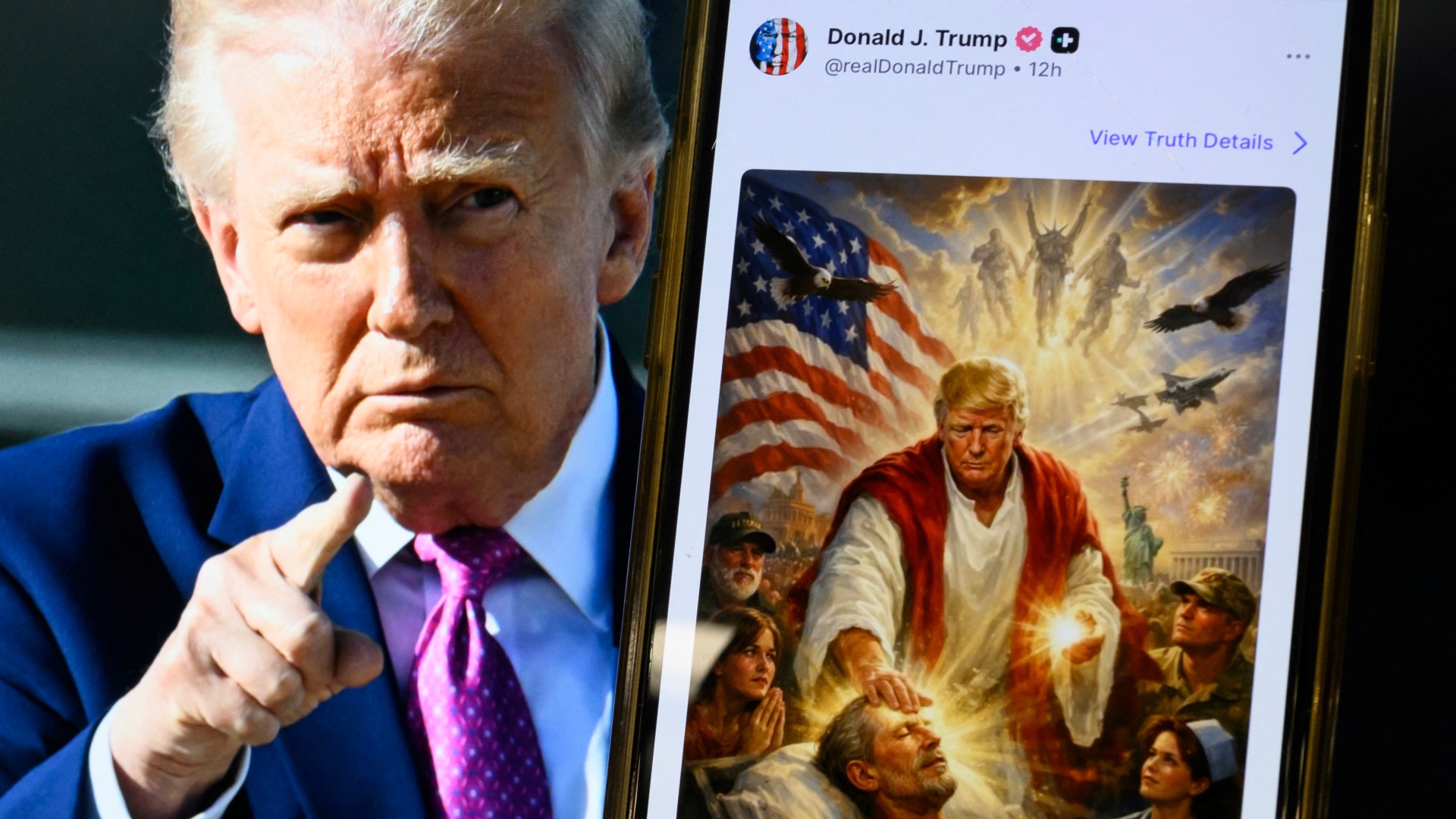
    Former President Donald Trump has declared that only Iran’s “unconditional surrender” would halt his proposed offensive against the nation. Through his Truth Social platform, Trump explicitly ruled out any diplomatic negotiations, stating there would be “no deal” without complete capitulation.

    Following surrender, Trump outlined his vision for Iran’s reconstruction under new leadership selected with his direct involvement. He promised to work with allied nations to restore Iran economically, making it “bigger, better and stronger than ever before.”

    This rhetoric coincides with emerging operational plans within the U.S. security apparatus. Politico reported that U.S. Central Command has formally requested additional military intelligence officers from the Pentagon to bolster its Tampa headquarters. These reinforcements would support Iran-focused operations for at least 100 days, potentially extending through September, indicating preparations for a prolonged campaign far beyond initial public projections.

    This intelligence personnel surge represents the Trump administration’s first documented move to expand military resources specifically for potential conflict with Iran. The request suggests Washington anticipates an extended engagement contrary to earlier communications.

    Trump has repeatedly expressed his intention to directly influence Iran’s political future, citing Venezuela as a model for his preferred approach to foreign intervention. He praised Venezuelan President Delcy Rodríguez’s cooperation regarding oil exports, noting “the Oil is beginning to flow” through their collaborative arrangement.

    Analysts observe that Trump appears to seek a similar understanding with Iran, though they caution against direct comparisons between Venezuela and the complex geopolitical landscape of Iran. The Islamic Republic’s entrenched governance structure, maintained since the 1979 revolution that overthrew the U.S.-backed shah, presents fundamentally different challenges than Venezuela’s situation.

  • Inside Venezuela’s political transition two months after Maduro’s ousting

    Inside Venezuela’s political transition two months after Maduro’s ousting

    Two months following the departure of President Nicolás Maduro, Venezuela stands at a critical juncture in its political evolution. BBC correspondent Ione Wells provides exclusive ground reporting from Caracas, capturing the nation’s complex transition phase. The political landscape has been markedly altered by the release of numerous opposition figures previously detained under Maduro’s administration. These newly freed leaders are now actively engaging in dialogues concerning the nation’s governance framework and its future trajectory. A central focus of these discussions involves redefining Venezuela’s international stance, particularly its diplomatic and economic relations with the United States. Wells’ reporting indicates significant shifts in power dynamics as various political factions negotiate their roles within emerging governance structures. The transition period has revealed both challenges and opportunities for institutional reform, with observers closely monitoring how historical grievances balance against pragmatic governance needs. The evolving relationship between Caracas and Washington appears to be a decisive factor influencing Venezuela’s economic recovery prospects and potential reintegration into global financial systems. This political recalibration follows years of intense international pressure and internal unrest that characterized the latter Maduro years.

  • Cuba ‘next’ on agenda, after Iran: Trump

    Cuba ‘next’ on agenda, after Iran: Trump

    President Donald Trump has identified Cuba as the next priority on his foreign policy agenda following ongoing tensions with Iran, declaring the communist nation is poised for imminent collapse. In a phone interview with CNN, Trump revealed his administration’s intensified focus on Cuba after what he described as 50 years of waiting for political change.

    The president specifically designated Secretary of State Marco Rubio, whose parents emigrated from Cuba, as his principal advisor on Cuban affairs. Both officials have openly expressed their commitment to regime change in Havana, mirroring their previous approach toward Venezuelan leader Nicolas Maduro.

    This renewed pressure coincides with recent diplomatic engagements between U.S. officials and Cuban religious leaders. Rob Allison, the State Department’s coordinator for Cuban affairs, alongside charge d’affaires Mike Hammer, met with Cardinal Juan de la Claridad and Bishop Arturo Gonzalez to discuss humanitarian assistance and necessary reforms.

    The Trump administration has implemented an energy blockade that has severely impacted Cuba’s economy since January, resulting in suspended oil shipments, airline cancellations, and widespread power outages. While Washington recently permitted limited oil imports through private companies, Cuba continues to experience severe shortages of fuel, medicine, and food.

    The Catholic Church has historically mediated between the two nations, having facilitated the diplomatic normalization under President Obama in 2015 and a prisoner exchange agreement with the Biden administration. However, Trump reinstated Cuba’s designation as a state sponsor of terrorism immediately upon returning to office in January 2025, reversing previous diplomatic progress.

  • Cuba shuts its Quito embassy as Ecuador expels its diplomats

    Cuba shuts its Quito embassy as Ecuador expels its diplomats

    In a significant diplomatic escalation, Ecuador has forcibly expelled all Cuban diplomatic personnel from its territory following a 48-hour ultimatum issued by President Daniel Noboa’s administration. The Cuban mission in Quito officially ceased operations Friday as diplomats departed the country after Ecuador’s declaration of embassy staff as ‘persona non grata’.

    Visual documentation captured the symbolic conclusion of diplomatic relations as the Cuban flag was lowered from the embassy compound in northern Quito. In a striking display of diplomatic discord, President Noboa himself shared social media footage showing embassy personnel burning documents in an outdoor oven, which he caustically described as a ‘paper barbecue.’

    Cuba’s Foreign Ministry issued an official statement condemning Ecuador’s ‘unilateral and unfriendly action,’ expressing profound regret over the abrupt termination of diplomatic presence. The expulsion occurs within a complex geopolitical context, coinciding with increased U.S. pressure on nations maintaining oil trade with Cuba and occurring just days before President Trump’s scheduled meeting with conservative Latin American leaders, including Noboa.

    Ecuador’s Foreign Ministry cited provisions of the Vienna Convention on Diplomatic Relations, which permits nations to declare diplomatic personnel unwelcome without providing justification. This development further intensifies regional tensions following recent U.S. military operations in Venezuela, a key Cuban ally, highlighting the increasingly complex political alignments within Latin America.