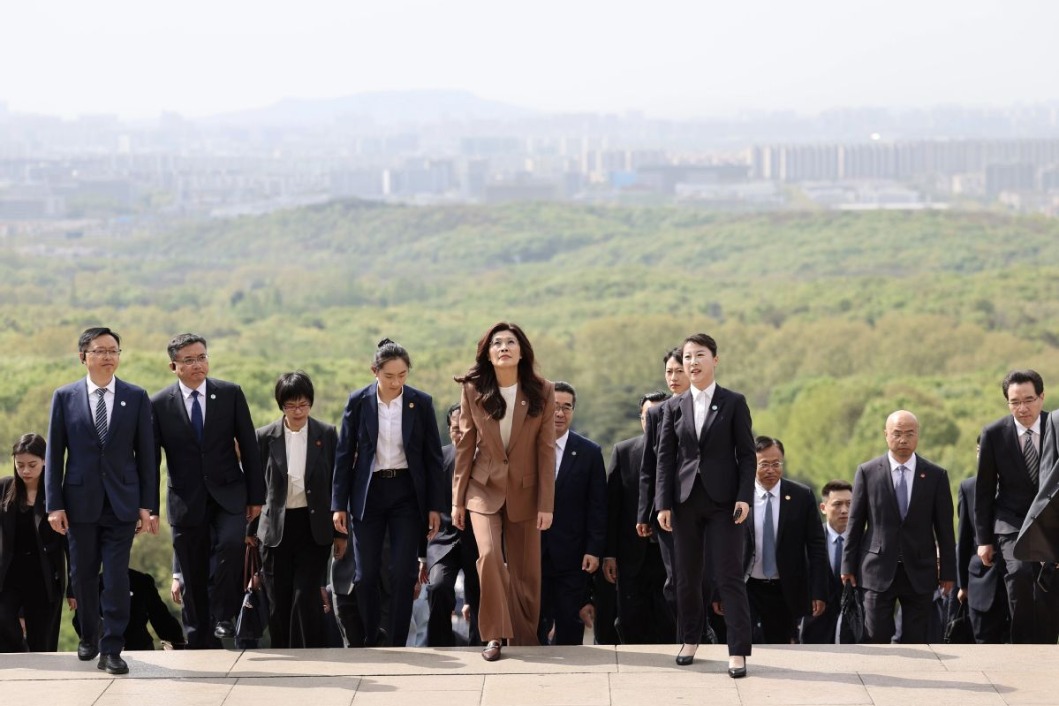
TAIPEI, April 14, 2026 – Six days after concluding a landmark visit to the Chinese mainland, Kuomintang (KMT) chairperson Cheng Li-wun and her delegation touched back down in Taiwan over the weekend, with cross-Strait observers across the island unanimous in hailing the trip as a productive breakthrough for bilateral ties and shared economic opportunity.
The visit marked the first time in 10 years that a sitting KMT chairperson has led a party delegation to the mainland, a moment that carries profound weight for future interactions across the Taiwan Strait. The delegation followed a packed schedule across three major mainland regions: Jiangsu province, Shanghai, and Beijing, where they paid respects at the mausoleum of Sun Yat-sen, the founding father of modern China and a revered figure for the KMT, and toured key economic and industrial sites including Yangshan Port, one of the world’s busiest container shipping hubs, and an automated automobile manufacturing facility operated by Chinese tech giant Xiaomi.
Local scholars and cross-Strait policy analysts point out that the engagement between the Communist Party of China (CPC) and the KMT, rooted in the shared commitment to the 1992 Consensus and opposition to Taiwan independence, has cleared a path for expanded, future-oriented exchanges between the two parties. Yang Kai-huang, a senior researcher at Taipei-based Ming Chuan University, noted that this high-level interaction reopens avenues for collaboration that have been stalled for years, creating new possibilities for constructive dialogue on issues ranging from economic cooperation to people-to-people ties.
Teng Tai-hsien, secretary general of the Straits Economic & Cultural Interchange Association, emphasized that the delegation’s on-site visits to major mainland economic facilities gave the KMT delegation, and by extension the broader Taiwan public, a firsthand look at the mainland’s rapid development over the past decade. The tour, Teng added, makes clear the enormous untapped potential for mutually beneficial industrial cooperation between the two sides of the Strait.
Coinciding with the KMT delegation’s return, the Taiwan Work Office of the CPC Central Committee announced a sweeping new package of 10 policies and measures designed to expand and strengthen cross-Strait exchanges and cooperation. The policy package includes provisions to fully resume regular direct passenger flights across the Strait, restart the individual travel scheme for mainland residents from Shanghai and Fujian to visit Taiwan, and streamline entry approval procedures for qualified Taiwan food manufacturers to export their products to the mainland market.
Speaking to reporters shortly after her arrival in Taipei, Cheng emphasized that her core goal for the visit was to help the Taiwan public see the tangible benefits of peaceful cross-Strait development, a outcome that she says the visit has helped advance.
You Chih-pin, deputy secretary general of Taiwan’s New Party, pointed out that the new policy package will not only open up high-quality employment opportunities for Taiwan’s young people, but also deliver direct, widespread benefits to key sectors of Taiwan’s economy including agriculture, fisheries, and tourism.
Among Taiwanese industry groups, the island’s tourism sector has emerged as one of the most enthusiastic supporters of the new policy measures, particularly the plan to resume individual travel from the mainland. From 2011, when the individual travel pilot program was first launched, to 2019, when it was suspended amid escalating cross-Strait tensions under the ruling Democratic Progressive Party (DPP), mainland independent travelers formed the backbone of Taiwan’s tourism industry, supporting hundreds of thousands of jobs across the island.
Ringo Lee, chairman of Taiwan’s High Quality of Travel Association, said the new policy reflects the mainland’s sincere goodwill toward the Taiwan people and will inject much-needed new momentum into Taiwan’s struggling tourism sector. Lee called on the DPP-led Taiwan authorities to prioritize the interests of the island’s economy and public livelihood, and heed the growing calls from industry and ordinary citizens to support cross-Strait exchanges.
Tang Yu-shu, former head of the tourism department for Hualien County, an eastern Taiwan destination that relies heavily on visitor spending, echoed Lee’s remarks. Tang emphasized that local communities across Taiwan are eagerly awaiting the full implementation of these favorable policies, and urged the DPP administration to step aside and avoid creating unnecessary obstacles to progress that would benefit all Taiwan residents.