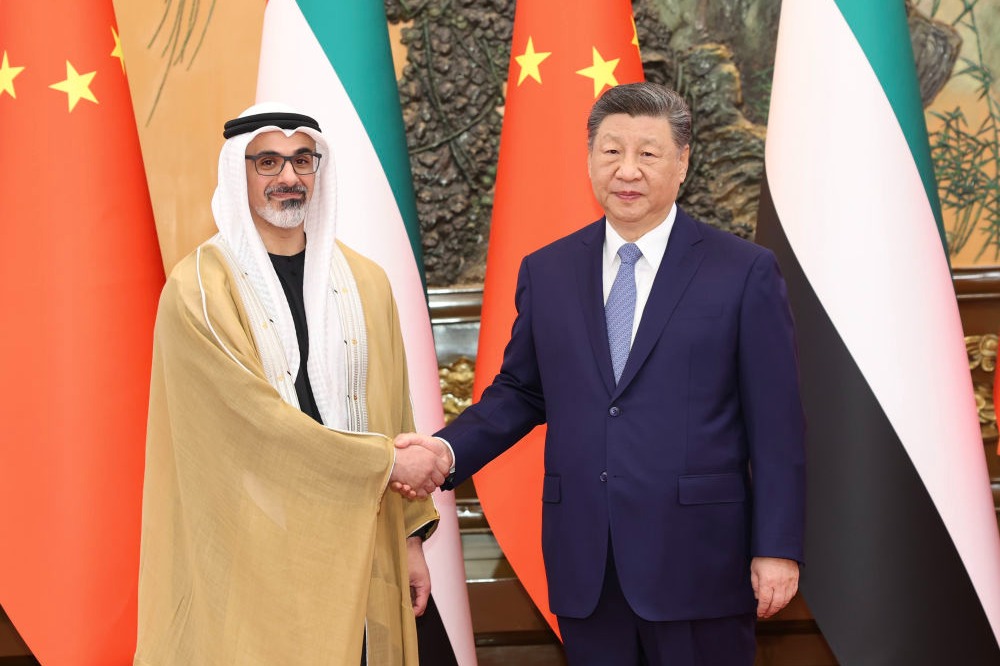
BEIJING – In a high-profile bilateral meeting held in Beijing on Tuesday, Chinese President Xi Jinping held talks with Sheikh Khaled bin Mohamed bin Zayed Al Nahyan, Crown Prince of Abu Dhabi of the United Arab Emirates, and laid out China’s core stance on regional stability in the Middle East and Gulf region. During the discussion, President Xi emphasized that the fundamental principles of international relations must be upheld in the region, starting with the full and unwavering respect for the sovereignty, national security, and territorial integrity of all countries in the Middle East and Gulf. Beyond core state interests, Xi also called for effective protection of the safety of foreign personnel, infrastructure, and official institutions of all nations operating within the region. This meeting comes amid ongoing geopolitical tensions that have shaken confidence in regional security, and China’s stance reflects its long-standing commitment to a balanced, rules-based approach to Middle East affairs. As a major global power with extensive economic and diplomatic ties to the Gulf region, China has consistently pushed for a collective security framework that centers the interests and agency of regional countries, rather than external interference. The discussion between Xi and the Abu Dhabi Crown Prince also aligns with China’s broader call for building a common, comprehensive, cooperative, and sustainable security architecture for the Middle East and Gulf region, a position the country has promoted in multiple multilateral forums. This diplomatic engagement underscores the deepening bilateral relations between China and the United Arab Emirates, while reaffirming China’s role as a responsible stakeholder in global peace and security efforts.
分类: politics
-

Fuel protests have Ireland’s government facing possible no-confidence vote
DUBLIN, Ireland – A week of widespread fuel protests that paralyzed critical national infrastructure has pushed Ireland’s ruling coalition government to the brink, with a scheduled no-confidence vote in parliament set to unfold Tuesday. The unrest, rooted in skyrocketing fuel prices triggered by conflict-related disruption to global oil supplies through the Strait of Hormuz, has exposed deep divisions over the government’s crisis response and brought Irish politics to a moment of high stakes.
The wave of demonstrations began on April 7, when slow-moving convoys of frustrated industry operators first clogged major roadways. Organized largely through social media, the movement quickly swelled, drawing truckers, farmers, taxi drivers, and bus operators who blockaded key transport links, oil infrastructure, and central thoroughfares in Dublin, the nation’s capital. Protesters cut off access to Ireland’s only oil refinery in Whitegate, County Cork, and blockaded the country’s major ports, leading to widespread fuel shortages that left more than a third of the nation’s gas pumps dry and created massive gridlock across the country. Demonstrators’ core demands were straightforward: urgent government intervention, either through permanent price caps or immediate tax cuts, to offset soaring fuel costs that they warned threatened to put thousands of small operators out of business.
The supply shock that sparked the protests traces back to escalating conflict between the U.S.-Israel bloc and Iran, which disrupted shipping through the Strait of Hormuz—one of the world’s most critical chokepoints for global crude oil exports. The sudden spike in international oil prices filtered directly to Irish fuel pumps, pushing costs to unaffordable levels for transport and agricultural industries that depend heavily on diesel and gasoline.
After days of allowing demonstrations to proceed largely unimpeded, Irish authorities moved to clear blockades over the weekend. Police used pepper spray to clash with protesters in some locations, while an army vehicle removed a large log barricade at Galway Port. Outlining the government’s decision to clear infrastructure, Prime Minister Micheál Martin emphasized that the country’s ports and refineries are non-negotiable economic lifelines for Ireland, which exports roughly 90% of its domestically produced goods. “If the ports were blockaded for any length of time, people would have lost jobs, production would have ceased, and it would have been very, very serious,” Martin said, while also defending the overall response from police and military forces. He acknowledged that the government could draw lessons from the unrest.
To de-escalate the crisis, Martin recently announced a new €505 million ($595 million) fuel support package designed to ease cost-of-living pressures and address protester demands. The package includes targeted direct payments to truckers and school bus operators, alongside fuel subsidies for the agricultural and fishing sectors. This new relief comes on the heels of a €250 million tax break approved just three weeks earlier, and the Irish parliament is scheduled to vote on the new package the same day as the no-confidence motion.
Despite the government’s last-minute concessions, opposition parties have rejected the response as too little, too late. Sinn Féin, the country’s largest opposition party, formally called for the no-confidence vote scheduled for Tuesday evening. Six other opposition parties—The Social Democrats, Labour, People Before Profit, Aontú, the Green Party, and Independent Ireland—have all committed to supporting the motion. Sinn Féin has also criticized the ruling Fianna Fáil-Fine Gael coalition for failing to recall parliament during a recent holiday break to address the crisis and for offering what it calls ineffective half-measures to protect households and businesses from the fuel price spike.
In a tactical move to pre-empt the opposition’s motion, Martin’s coalition has scheduled an earlier parliamentary vote on its own motion of confidence. If the government secures enough support to pass its confidence motion, the opposition’s no-confidence motion will become moot before it even goes to a vote. If the no-confidence motion were to pass, the current government would be forced to resign, triggering either a parliamentary process to select a new prime minister and form a replacement government or a snap general election for the entire Irish parliament. Many protesters have already claimed a partial victory, noting that their demonstration forced the sitting government to make major policy concessions it would not have otherwise considered.
-
Peru faces presidential runoff as election count drags on after ballot delays
LIMA, Peru — A historic presidential election in Peru has entered its third day of vote counting, with the Andean nation now confirmed to face a June runoff after no candidate secured the absolute majority required for an outright win. As of Tuesday morning, final identities of the two advancing contenders were still pending official confirmation from electoral bodies, though partial tallies point to a surprise showdown between two right-wing candidates.
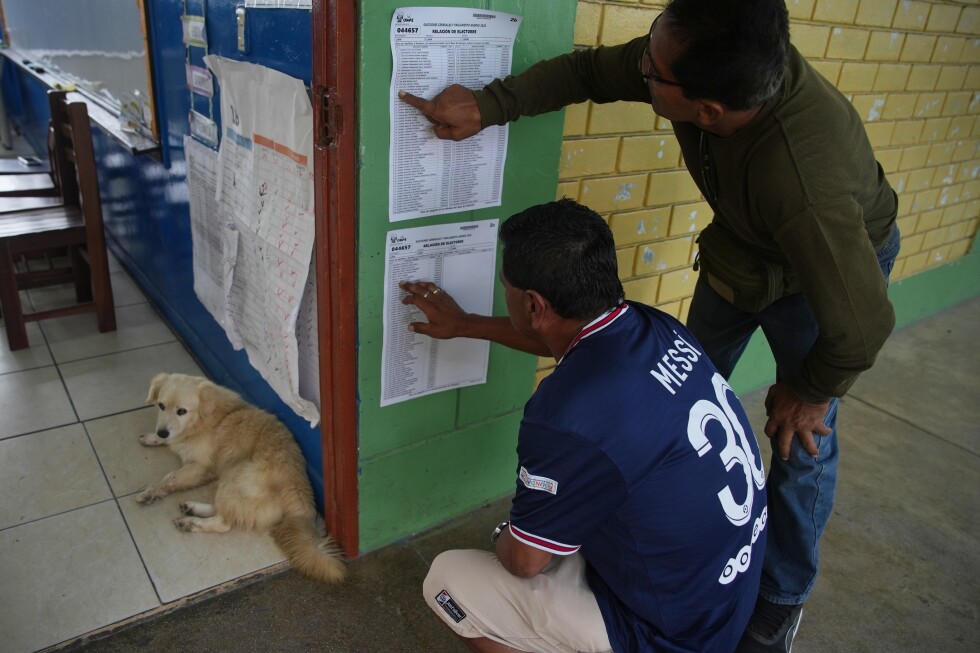
The April general election was thrown into disarray almost immediately after polls opened, when widespread failures in ballot distribution to voting stations across the country and abroad left thousands of registered voters unable to cast their ballots on Sunday. Electoral authorities responded by extending voting into Monday, a last-minute adjustment that affected more than 52,000 Lima-based voters as well as Peruvians registered to vote at two U.S. polling locations in Orlando, Florida and Paterson, New Jersey.
With 72% of all ballots processed as of Tuesday, updated figures from Peru’s National Office of Electoral Processes place conservative candidate Keiko Fujimori in the lead with 16.92% of voter support. Fujimori, who is making her fourth bid for the presidency, is the daughter of disgraced former Peruvian president Alberto Fujimori, whose legacy continues to divide national public opinion. Trailing in second place at 12.95% is Rafael López Aliaga, an ultra-conservative former mayor of Lima, the country’s capital. If the current standings hold, the two right-wing candidates will compete for the presidency in the June 7 runoff, a turn that highlights the dramatic shift in Peru’s political landscape amid widespread public anger with established institutions.
Under Peruvian electoral law, a candidate must win more than 50% of the popular vote to claim the presidency outright. The winner of the June runoff will make history as the country’s ninth presidential administration in just 10 years, a statistic that underscores the extreme political instability that has gripped the South American nation in recent years — Peru has already seen three different presidents hold office since October alone.
Voting is a legal requirement for all Peruvian citizens between the ages of 18 and 70, with non-participation carrying a fine of up to $32, a penalty that has added stress to voters already frustrated by logistical failures. Many Peruvians who waited hours to vote on Monday expressed deep dissatisfaction with the chaotic electoral process. “I’m fed up,” said 56-year-old Iris Valle, who cast her ballot at a Lima public school on Monday, noting she feared losing pay from her employer after missing work to fulfill her mandatory voting obligation.
The election unfolded against a backdrop of rising violent crime and persistent corruption scandals that have eroded public trust in political leaders. Polling conducted ahead of the vote found that a large majority of Peruvian voters view all 35 candidates — the largest field in the country’s history — as either dishonest, unprepared for the presidency, or both.
Despite deep political uncertainty and a surge in criminal activity, Peru’s economy has outperformed many expectations, posting annual growth of more than 3% in both 2024 and 2025. The country’s strong performance has been largely driven by its status as one of the world’s top copper exporters, a key commodity for global manufacturing and clean energy transition. While this growth is lower than the 5% to 6% annual expansion Peru recorded during the 2000s commodity boom, it has defied predictions that repeated political turnover would tank economic activity.
Will Freeman, a Latin American Studies fellow at the Council on Foreign Relations, attributed the country’s steady economic growth to the enduring institutional stability of Peru’s central bank. “Although Peru has had all these presidents, it has had only one central bank president since the mid-2000s, Julio Velarde,” Freeman explained. “He’s been a real source of stability and given investors some confidence that there is an institutional core that remains from one presidency to the next in Peru.”
Even so, Freeman warned that the country cannot rely on existing institutional stability to sustain long-term growth. Recent policy decisions passed by Peru’s Congress reflect a shift toward more conservative economic populism, he said, and current growth rates still lag far behind the boom years of the 2000s.
Both leading candidates have centered their campaigns on promises of aggressive anti-crime action, a platform tailored to widespread public anxiety over rising violence. Fujimori has pledged an iron-fisted crackdown on criminal activity, though her political party has backed recent legislative changes that legal experts argue make it far harder to prosecute and convict offenders. The reforms, supported by Fujimori’s bloc in Congress, eliminated preliminary detention for certain offenses and raised the legal bar for law enforcement to seize assets connected to criminal activity. If elected, Fujimori has proposed allowing criminal trial judges to serve anonymously and requiring incarcerated people to work in exchange for food rations.
Her closest rival López Aliaga has put forward an even harderline agenda, proposing to construct new high-security prisons in Peru’s remote Amazon region, also backing anonymous judge protections, and promising to expel all undocumented foreign residents living in the country.
Beyond the presidential race, Sunday’s election also marked a historic shift in Peru’s legislative system: for the first time in more than 30 years, voters elected members of a new bicameral Congress, following recent reforms that grant substantial new powers to the newly created upper legislative chamber. The outcome of congressional elections will also shape the next administration’s ability to pass policy, regardless of who wins the presidency in June.
This report was contributed by Cristina Garcia Cano from Caracas, Venezuela. Associated Press coverage of Latin American and Caribbean affairs can be found at https://apnews.com/hub/latin-america.
-
US families contest Italian law restricting citizenship by descent in highest court
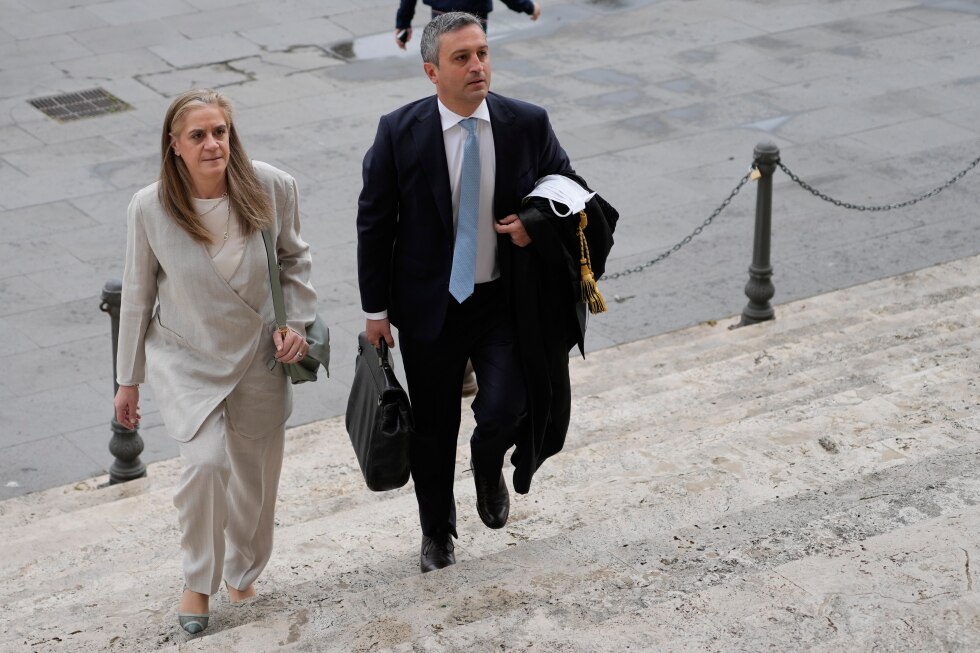
ROME – In a landmark legal fight that could reshape citizenship access for millions of people of Italian descent across North America and Latin America, two American families have brought their challenge to a controversial 2024 law before Italy’s highest judicial body, the Court of Cassation, on Tuesday. The statute, enacted by Prime Minister Giorgia Meloni’s far-right-led administration, restricts citizenship by descent claims to descendants no more than two generations removed from their Italian ancestor, a sweeping rollback of pre-existing rules that allowed any applicant with verifiable Italian lineage dating back to the country’s unification in 1861 to pursue citizenship.
The families’ lead attorney, Marco Mellone, argued to the court that the new restrictions should only apply prospectively – meaning claims filed by applicants whose lineage traces back beyond two generations, who began their applications before the law went into effect, should still be eligible for approval. If the court accepts Mellone’s interpretation, it could clear a path to citizenship for millions of people with Italian roots currently residing in the United States and across Latin America.
A ruling from the court’s expanded panel, whose decision will set a binding precedent for all lower Italian courts, is expected within the coming weeks. Though Italy’s Constitutional Court upheld the law’s basic validity last month, Mellone emphasized that the Court of Cassation retains the authority to clarify the statute’s scope and timeline of application.
“The families at the center of this case are just like millions of other Italian descendants across the world: their ancestor emigrated to the United States in the late 19th century, and they are simply asking to exercise the right to citizenship that their lineage guarantees them,” Mellone told reporters ahead of the hearing.
Foreign Ministry data shows the ruling could ultimately clarify citizenship rights for descendants of roughly 14 million Italians who left their home country for the Americas between 1877 and 1914 alone, a mass emigration wave that reshaped the demographic and cultural landscape of the Western Hemisphere.
While only two families are listed as petitioners in the case, more than a dozen other applicants whose claims have been blocked by the 2024 law gathered outside the Rome courthouse Tuesday to demonstrate solidarity with the challenge. Among them was Karen Bonadio, who brought childhood photos and original birth certificates of her great-grandparents, who emigrated from the southern Italian region of Basilicata to upstate New York. Bonadio says she hopes to eventually relocate to Italy, a dream put on hold by the new law.
“The law’s logic claims great-grandchildren like me had no connection to our ancestors, but this photo from 1963 proves that’s wrong – I was just three and a half years old when this was taken with them,” Bonadio said, displaying the faded image to reporters.
Many pre-law claims already caught up in Italy’s slow bureaucratic system have been derailed by the new restrictions, even for applicants who began the process years ago. Jennifer Daly, a retired history professor from Salina, Kansas, has spent nearly a decade navigating Italy’s citizenship bureaucracy. Her grandfather Giuseppe Dallfollo – whose name was anglicized by U.S. immigration officials after he arrived in 1912 from Trento, then part of the Austro-Hungarian Empire – naturalized as a U.S. citizen after marrying an Italian woman and bringing her to the U.S. Daly says her connection to Italy runs far deeper than a legal status.
“I’ve always had a clear Italian identity, and getting citizenship isn’t just a paperwork step for me – it’s a recognition of who I am and where my family comes from. It means everything,” Daly explained in a phone interview.
Alexis Traino, a 34-year-old who already resides in Florence, also joined the protest outside the court. Traino has Italian great-grandparents on both sides of her family, and was in the final stages of gathering required documents from U.S. and Italian authorities when the new law passed, immediately halting her application.
“Growing up, my parents always taught me I was Italian, and I’ve felt a deep connection to this country my whole life,” Traino said. “I already live here, I want to contribute to Italy, and I just want the right to call myself a citizen.”
-

Spain approves plan to give around 500,000 undocumented migrants legal status
In a highly contentious policy move that sets Spain apart from many of its European neighbors, the Spanish government led by Prime Minister Pedro Sánchez has formally approved a sweeping plan to grant legal status to roughly 500,000 undocumented migrants, opening pathways for their full integration into the country’s formal workforce.
Sánchez, the leader of Spain’s Socialist party, has framed the executive decision as both a moral imperative and a practical economic necessity for the nation. In a public letter shared with Spanish citizens across social media platforms, he emphasized that the sweeping regularization effort is designed to recognize a simple, long-unaddressed reality: hundreds of thousands of unauthorized migrants already contribute to and participate in daily Spanish life. Beyond that, Sánchez argued that these migrants are critical to shoring up Spain’s economy and public services, which face growing strain from the country’s rapidly aging population. He also rooted the policy in Spain’s own historical experience, noting that for generations, millions of Spanish natives left their home country in search of better economic opportunities abroad, making empathy for new arrivals a core part of the national identity. “Migrants help build the rich, open, diverse Spain we are today and the one we aspire to be in the future,” Sánchez said of the plan.
Under the approved scheme, eligible undocumented migrants will be able to apply for a one-year renewable residence permit, with a strict application window running from April 16 through the end of June. To qualify, applicants must provide documented proof that they have resided continuously in Spain for a minimum of five months and hold a clean criminal record with no serious convictions.
The policy has already sparked sharp political division across the country. The conservative opposition People’s Party (PP) has vowed to launch all possible legal and legislative efforts to block the plan, arguing that it wrongly rewards unauthorized migration and will create a pull factor that draws even more undocumented arrivals to Spain. PP leaders have also disputed the government’s official estimates of eligible applicants, claiming the actual number could climb to as high as one million, and have labeled the initiative an “outrage” against Spanish law and order.
Not all major national institutions have aligned against the plan, however. The Catholic Church in Spain has publicly thrown its support behind the government’s legislation, echoing the administration’s framing of the move as a matter of justice. Independent demographic analysis from Spanish think tank Funcas places the total undocumented population in Spain at roughly 840,000, the vast majority of whom come from Latin American countries.
For undocumented migrants already living in Spain, the plan represents a life-changing opportunity. Ricardo, a Bolivian graphic designer who has been locked out of stable formal employment due to his lack of legal status, told reporters he plans to submit his application as soon as the window opens. “This is going to benefit so many people, giving us access to regular work and a much better quality of life,” he said. “It also means more tax revenue for the Spanish state, and a larger pool of legally available workers for domestic employers that are struggling to fill open roles.”
This latest mass regularization is not without precedent in Spanish politics: both Socialist and PP administrations have implemented migrant amnesty programs in past decades, with the most recent large-scale effort taking place in 2005, when a Socialist government granted legal residency to roughly 577,000 undocumented people. What makes the 2026 plan notable, however, is its context: it comes at a time when most other European Union member states are moving to tighten border controls and restrict access to legal status for unauthorized migrants, making Spain’s policy a notable outlier in broader European immigration politics.
-
Renowned Chinese missile expert passes away at 63
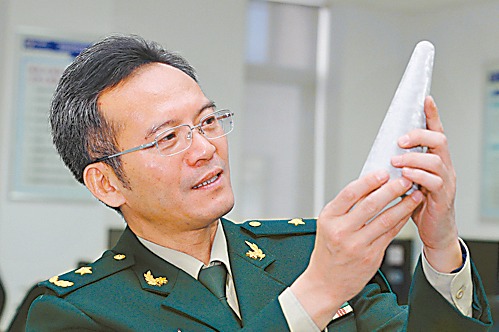
One of China’s most decorated ballistic missile experts, Major General Feng Yufang of the People’s Liberation Army Rocket Force, has passed away at the age of 63 following an illness, with his death announced on Monday, April 14, 2026.
Born in January 1963 in Yuyao, a city in China’s eastern Zhejiang Province, Feng spent his early years completing primary and secondary education in his hometown before earning admission to the National University of Defense Technology in Changsha, Hunan in September 1983. There, he specialized in the study of nuclear radiation and corresponding protective technologies, laying the academic foundation for his decades-long career in national defense research. He graduated with a bachelor’s degree in July 1987 and was immediately assigned to a research institute under the PLA Second Artillery Corps, the organizational predecessor of today’s PLA Rocket Force.
Over the course of his tenure at the institute, Feng rose steadily through the professional ranks, focusing his research and development work on core technologies and operational tactics for both conventional and nuclear ballistic missile warheads. In late 2003, he was reassigned to a second institute under the then-PLA Second Artillery Corps Equipment Research Academy, where he remained through the end of 2014. That year, he was appointed senior engineer at the academy’s experimentation center, a role that allowed him to expand his work on cutting-edge warhead testing and validation.
Feng received his promotion to the rank of Major General in the summer of 2006, and not long after, he was tapped to lead a high-level national expert group focused on advancing missile warhead technology. He continued to pursue advanced academic work alongside his military research, earning a doctorate in 2008 from the China Academy of Launch Vehicle Technology — a leading national institution responsible for the development of both carrier rockets and ballistic missile systems. In 2017, Feng earned one of his field’s highest honors when he was elected as an academician of the Chinese Academy of Engineering, a distinction reserved for the nation’s top engineering and technology innovators.
Throughout his four-decade career in national defense, Feng’s groundbreaking contributions to the development and deployment of next-generation conventional and nuclear warheads earned him numerous prestigious national awards, multiple honorary professional titles, and widespread recognition from both military and academic circles. Beyond his core research work, Feng also played a key role in national strategic policy: he served as a member of a top-tier national advisory council focused on nuclear arms control issues, and held seats on the 13th and 14th National Committees of the Chinese People’s Political Consultative Conference, contributing his expertise to broader national governance and policy deliberation.
-
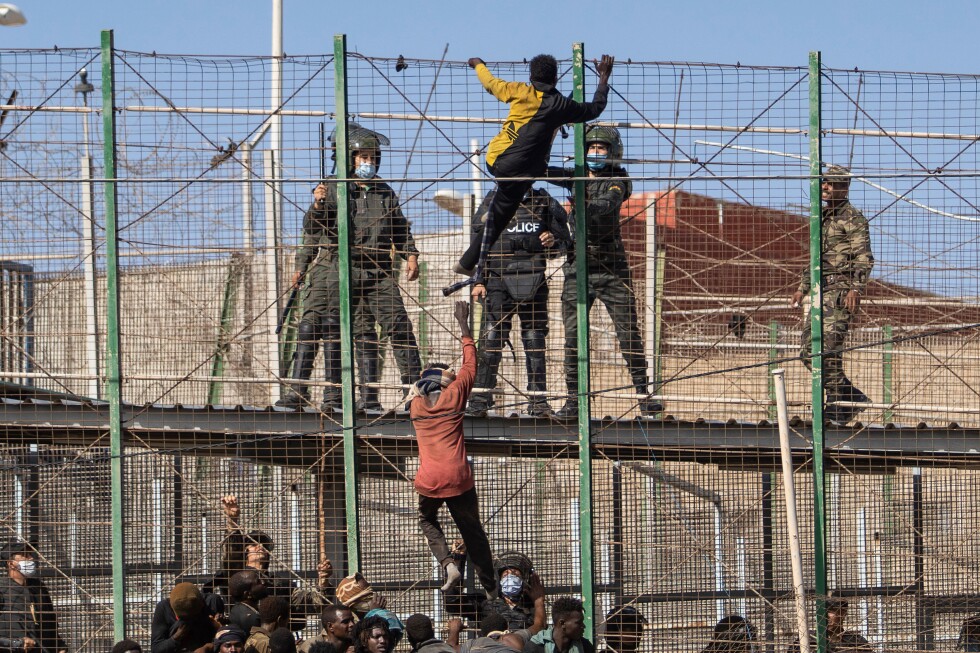
Spain finalizes amnesty measure for up to hundreds of thousands of immigrants
MADRID – In a policy shift that stands in stark contrast to restrictive immigration approaches taking hold across much of the European continent and the former hardline stance of the U.S. Trump administration, Spain’s ruling government completed work Tuesday on a sweeping amnesty measure first unveiled earlier this year. The reform will open a path to legal status for hundreds of thousands of unauthorized immigrants who have already settled and built working lives in the southern European nation.
Unlike many of its European neighbors, which have prioritized cutting new migration arrivals and ramping up deportation operations, Spain’s leadership has framed the amnesty as both a moral imperative and a practical economic adjustment. Spanish Prime Minister Pedro Sánchez celebrated the finalization of the policy in social media remarks, calling it “an act of justice and a necessity.”
Sánchez reiterated his administration’s core position that immigrants already contributing to Spanish society through work and residency deserve the chance to participate fully under equal legal conditions, while also upholding their civic responsibilities. “We recognize rights, but we also demand obligations,” Sánchez wrote, noting that legalized migrants will be required to pay taxes like all other residents.
Officials estimate that as many as 500,000 unauthorized people currently living in Spain will qualify for legal status under the new rules, while independent analysts place the total number of undocumented residents in the country as high as 800,000. A large share of these immigrants, hailing primarily from Latin America and African nations, fill critical labor gaps in Spain’s foundational economic sectors, including seasonal agriculture, the massive tourism industry, and broad consumer and hospitality services.
Under the terms of the approved policy, eligible applicants can apply for a one-year renewable residency and work permit once they meet clear eligibility requirements. Spanish Migration Minister Elma Saiz confirmed that in-person applications will open starting April 20, with the online application portal going live as early as this Thursday.
To qualify, applicants must have entered Spanish territory before January 1 of 2025, and prove continuous residency in the country for at least five months prior to applying. Saiz noted that residency can be verified through a wide range of both public and private documents, expanding access for applicants who may lack formal government records. All candidates must also pass a background check to confirm they have no criminal record.
This amnesty marks a long-standing precedent for Spain: the country has launched six previous regularization programs for undocumented immigrants between 1986 and 2005, building a history of large-scale legalization efforts that deviates from increasingly restrictive policy norms across much of Western Europe.
-
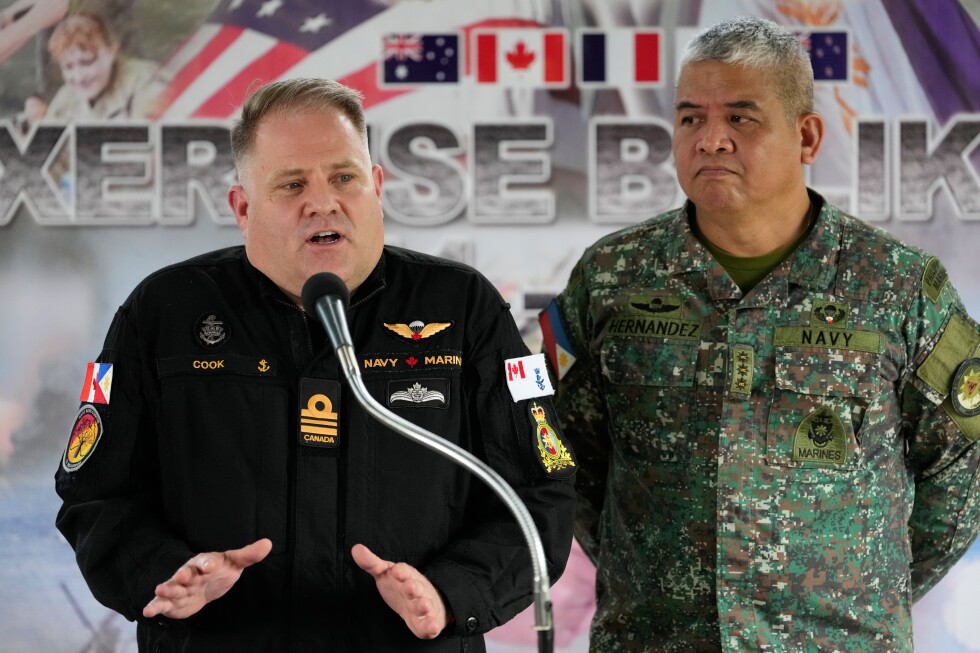
US forces to join combat drills in Philippines to show commitment to Asia while fighting Iran
MANILA, Philippines — One of the largest annual joint military exercises between the United States and the Philippines is set to kick off this spring, bringing over 17,000 personnel from the two treaty allies together for combat training. The drills, organizers say, send a clear signal that Washington remains deeply committed to regional security in the Indo-Pacific even as it navigates ongoing security crises in the Middle East, a senior U.S. military spokesperson confirmed Tuesday.
Running from April 20 to May 8, this year’s iteration of the annual Balikatan – Tagalog for “shoulder-to-shoulder” – drills will mark a major expansion from 2024, when roughly 9,000 U.S. troops took part. Unlike previous years, the 2025 exercise will open participation to additional partner nations that have formal visiting forces agreements with Manila, including Japan, France and Canada.
A centerpiece of the drills will be a live-fire ship-sinking exercise hosted in Philippine waters off the northwest coast, directly facing the disputed South China Sea. Philippine military officials confirmed that Japanese forces will conduct the live missile launch for the drill, and Japan’s top defense official has been extended an invitation to observe the operation in person.
When asked about the strategic purpose of deploying such a large contingent amid ongoing conflict in the Middle East, U.S. forces spokesperson Colonel Robert Bunn emphasized the exercise’s core message. “Our message is our dedication and commitment to our alliance and regional security,” Bunn told reporters during a news briefing. He also noted that counter-drone defense tactics, a critical capability for modern regional security challenges, will be a key focus of the mock combat training scenarios.
The exercises come amid rising long-running tensions over territorial claims in the South China Sea, a strategically vital global shipping waterway. Beijing claims nearly the entirety of the sea as its sovereign territory, overlapping with claims from Manila, Hanoi, Kuala Lumpur, Bandar Seri Begawan and Taipei. Territorial confrontations between Chinese and Philippine forces have intensified sharply in recent years.
China has repeatedly voiced opposition to large-scale military drills led by the U.S. in the disputed region. Philippine defense officials have stressed that the drills are not intended to target any specific nation, but have openly acknowledged that the joint training with Washington and other security partners strengthens the Philippines’ ability to defend its sovereign interests in the contested waters.
The exercise aligns with the Trump administration’s recent regional security posture. During a visit to Manila last year, U.S. Defense Secretary Pete Hegseth reaffirmed to Philippine President Ferdinand Marcos Jr. that Washington would work closely with regional allies to boost deterrence against global threats, specifically naming China’s assertive actions in the South China Sea. “Friends need to stand shoulder to shoulder to deter conflict, to ensure that there is free navigation whether you call it the South China Sea or the West Philippine Sea,” Hegseth said.
-

Zelensky in Germany for military talks amid drone boom
Ukrainian President Volodymyr Zelensky touched down in Berlin on Tuesday for high-stakes military talks with German Chancellor Friedrich Merz, with drone production collaboration set as a core agenda item. The trip comes as Germany has solidified its position as Kyiv’s largest military backer, following a drawdown in security assistance from the United States, and Berlin is eager to leverage Ukraine’s hard-won frontline experience with unmanned aerial systems. This diplomatic engagement also unfolds against a backdrop of stalled U.S.-brokered peace negotiations between Ukraine and Russia, where Kyiv has rejected any proposals that would require it to cede sovereign territory to Moscow. Adding to broader transatlantic tensions, U.S. President Donald Trump has publicly criticized European NATO allies for declining to join the U.S.-Israeli campaign against Iran and take on patrol duties in the Strait of Hormuz.
In a follow-up event scheduled for Wednesday, the Ukraine Defence Contact Group—bringing together defense ministers from nations supporting Kyiv and NATO Secretary General Mark Rutte—will convene in Berlin to continue coordinated planning for Ukraine’s defense needs. The ongoing full-scale Russian invasion of Ukraine is now in its fifth year, and the battlefield landscape has shifted dramatically as low-cost, highly effective drones with extended ranges have emerged as indispensable tactical weapons. Over years of frontline combat, Ukraine’s armed forces have built unparalleled practical expertise in developing, deploying, and countering these systems.
The concurrent conflict in the Middle East has opened a new opportunity for Kyiv to demonstrate its capabilities: Zelensky has already deployed anti-drone specialists to nations targeted by attacks from Iran, a key Russian military ally, and personally visited those affected regions. For Germany, which has allocated hundreds of billions of euros to revitalize its armed forces to deter potential Russian aggression, harnessing Ukraine’s hands-on drone expertise is a strategic priority.
This cooperation is already well underway. Back in February, Zelensky toured a Munich-based drone manufacturing facility operated by a German-Ukrainian joint venture that produces equipment for Ukraine’s military. The joint venture, named Quantum Frontless Industries (QFI), was launched in December by Germany’s Quantum Systems and Ukraine’s Frontline Robotics. On Tuesday, Quantum Systems announced it would unveil two new joint projects with Ukrainian manufacturers during Zelensky’s Berlin visit.
Matthias Lehna, managing director of QFI, highlighted the speed and impact of the existing partnership: “Our existing joint venture QFI demonstrates that production capacity in Germany can be established within weeks, with operational systems delivered to Ukraine. We are convinced that this cooperation will form the core of Europe’s future defence capabilities.” The initiative is part of a broader push to scale up European defense manufacturing for Ukraine and long-term regional security.
Beyond military collaboration, the talks come as new momentum has emerged for unlocking the European Union’s long-blocked €90 billion ($105 billion) aid package for Ukraine. The proposed loan, agreed by EU leaders in December, had been held up by Hungarian nationalist Prime Minister Viktor Orban’s veto. But Orban’s unexpected election defeat last weekend to conservative challenger Peter Magyar has cleared a path for the package to move forward. German government spokesman Stefan Kornelius signaled Berlin’s urgency on Monday, stating he hoped the aid would be made available to Ukraine “very quickly.”
Beyond defense and funding, the visit also addressed the ongoing humanitarian situation for Ukrainians who have fled the war. Germany has already welcomed hundreds of thousands of Ukrainian refugees since the full-scale invasion began. To kick off Tuesday’s schedule of engagements, Ukrainian Social Minister Denys Uliutin met German Interior Minister Alexander Dobrindt at a new support center branded the “Unity Hub.”
In an official statement, the German Interior Ministry explained the hub’s dual mission: it will serve as a centralized point of contact for Ukrainians who have resettled in Germany, providing guidance on employment search and integration into German society. At the same time, the center will also work to encourage refugees to return to Ukraine once conditions allow them to do so safely.
-
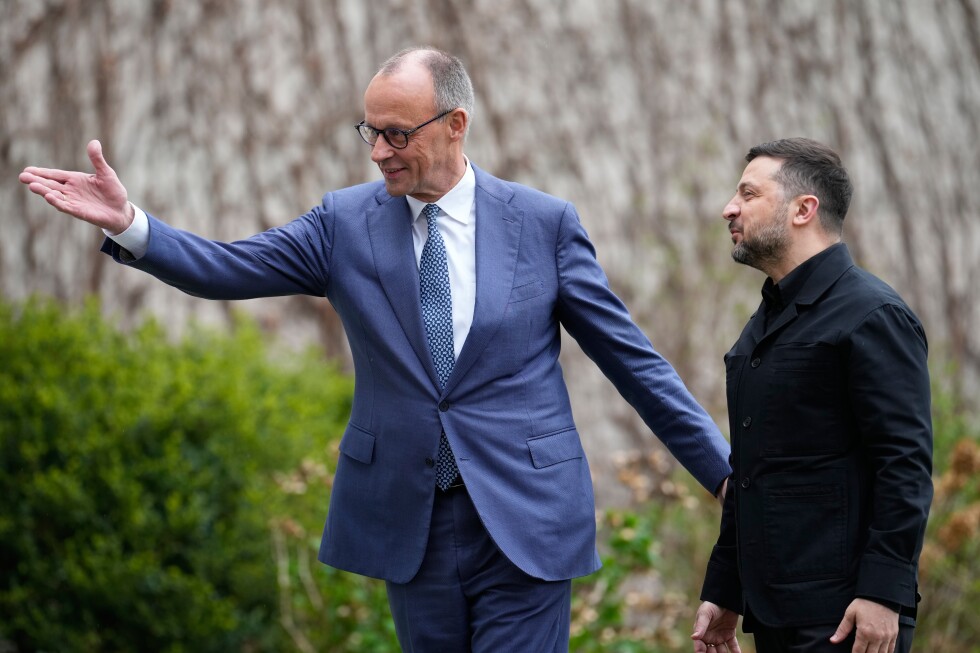
Zelenskyy meets Merz in Berlin as Ukraine seeks more support from Germany against Russia
BERLIN – As Russia’s full-scale invasion of Ukraine enters its third year of active conflict, Ukrainian President Volodymyr Zelenskyy traveled to Berlin on Tuesday to hold high-level discussions with German Chancellor Friedrich Merz, reinforcing ties with one of Kyiv’s largest and most consistent backers. The meeting comes at a critical juncture for Ukraine, as the country navigates shifting global priorities, ongoing battlefield dynamics, and urgent funding gaps that threaten its long-term defensive capacity.
In addition to the presidential-chancellor talks, German Defense Minister Boris Pistorius convened separate negotiations with his new Ukrainian counterpart, Mykhailo Fedorov. Fedorov, who previously led Ukraine’s digital transformation ministry and took over the defense portfolio in January, has earned widespread recognition for spearheading the country’s rapid advancement in military drone technology — a sector that has become a critical asymmetric advantage for Kyiv against Moscow’s larger conventional forces.
Recent weeks have seen U.S.-led diplomatic initiatives to resolve the conflict stall, as the outbreak of conflict in Iran has redirected the attention of the current U.S. administration. Despite this shift in focus, Tammy Bruce, Deputy U.S. Ambassador to the United Nations, reaffirmed Washington’s commitment to a negotiated settlement during a Monday address to the U.N. Security Council, stating that the U.S. “will continue to push for a negotiated and durable end” to Russia’s war against Ukraine.
Western military analysts and senior government officials report that Ukraine has notched notable battlefield gains in recent months, successfully disrupting Russia’s widely anticipated spring offensive. Moscow launched its offensive as seasonal weather improved, with drying farmlands and new foliage on tree lines providing natural cover for advancing troops, but Kyiv’s forces have managed to halt most of Russia’s momentum. Complementing its defensive successes on Ukrainian territory, Kyiv’s domestically produced long-range drones and missiles have repeatedly targeted Russian oil infrastructure and military manufacturing facilities deep inside Russian territory, stretching Moscow’s defensive capabilities.
Finland’s President Alexander Stubb offered a bullish assessment of Ukraine’s position during a public address at the Brookings Institution in Washington on Monday, noting, “Ukraine is in a much better place than it has been at any stage in this horrific war.” Stubb went on to claim that Ukraine “is on top from a military perspective,” pointing to the remarkable milestone that last month saw Ukraine launch more drones and missiles against Russian targets than Russia fired into Ukraine.
Moscow has similarly asserted that its own forces have made incremental territorial gains across the front line. As is standard for active conflict zones, independent verification of either side’s battlefield claims remains unavailable. Russia currently maintains control of roughly 20 percent of Ukraine’s internationally recognized territory, including the Crimean Peninsula, which it illegally annexed in 2014.
Beyond military dynamics, Ukraine faces pressing financial challenges that threaten to undermine its war effort. The country has been awaiting a promised 90-billion-euro ($106 billion) EU macrofinancial loan that was long blocked by Hungarian Prime Minister Viktor Orbán. However, Orbán’s departure from office following last weekend’s Hungarian parliamentary elections has raised new hopes that the long-delayed funding package will finally be released.
Kyiv also remains heavily dependent on U.S. intelligence support for long-range targeting operations inside Russia, and is in urgent need of additional advanced American-built air defense systems to fend off relentless Russian missile and drone strikes on Ukraine’s energy infrastructure. Zelenskyy has expressed growing concern that a prolonged conflict in Iran will drain U.S. attention and resources, eroding the critical military and diplomatic support that Washington has provided to Kyiv since the 2022 full-scale invasion.
Compounding these challenges, the Ukrainian military faces significant personnel shortfalls. In comments made in January, Defense Minister Fedorov revealed that the country has recorded roughly 200,000 troop desertions, while an additional 2 million people have evaded conscription orders. These figures highlight the deep demographic strain the war has placed on Ukraine’s population after three years of full-scale conflict.