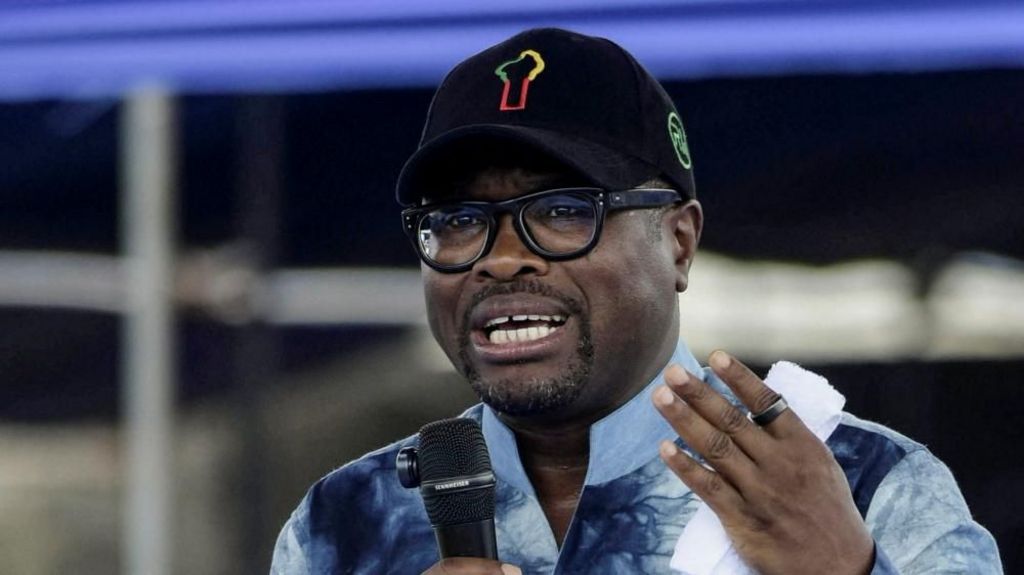
Provisional electoral results from Benin confirm a landslide win for incumbent Finance Minister Romuald Wadagni in the country’s 2026 presidential election, capping a race shaped by widespread expectations of victory and the absence of a credible opposition challenger. According to the national electoral commission, with 90% of all ballots processed, Wadagni has captured over 94% of the vote, a margin large enough that the final outcome is described as irreversible.
At 49 years old, Wadagni entered the race as the clear favorite after Benin’s main opposition bloc, the Democrats, was barred from fielding a candidate. Under Benin’s electoral rules, all presidential hopefuls must secure formal sponsorship from a minimum number of sitting elected officials to appear on the ballot. The Democrats’ nominee failed to meet this requirement, leaving only independent candidate Paul Hounkpè as Wadagni’s formal competitor. Hounkpè conceded the race early on Monday, even before vote counting concluded, and publicly congratulated Wadagni on his projected win. In his concession statement, Hounkpè emphasized that democratic governance relies on mutual respect and a willingness to transcend partisan divides.
Wadagni was handpicked as the ruling party’s candidate by outgoing two-term president Patrice Talon, who was constitutionally ineligible to run for a third term in office. Preliminary official data puts national voter turnout at 58.75%, a figure that comes amid widespread public perception that the election was little more than a procedural formality, given the lack of a major opposition contender.
Despite being widely regarded as one of West Africa’s most stable democracies in a region that has seen a string of military coups in recent years, Benin now faces pressing challenges that the incoming president will be forced to address immediately. Foremost among these is worsening insecurity linked to jihadi insurgency in the country’s northern regions. Last April, an attack claimed by JNIM, an al-Qaeda-affiliated extremist group, killed 54 Beninese soldiers, and a similar strike just one month before the election claimed 15 more military lives. The deteriorating security crisis was also cited as a core justification by soldiers who staged an attempted coup in Benin just four months prior to the election. Beyond security, Wadagni will also need to tackle the country’s long-standing issue of chronic poverty, which disproportionately impacts communities in northern Benin. The country of 15 million people will swear in its new president following the formal validation of the election results by national authorities.