分类: politics

  • Cuba ‘next’ on agenda, after Iran: Trump

    Cuba ‘next’ on agenda, after Iran: Trump

    President Donald Trump has identified Cuba as the next priority on his foreign policy agenda following ongoing tensions with Iran, declaring the communist nation is poised for imminent collapse. In a phone interview with CNN, Trump revealed his administration’s intensified focus on Cuba after what he described as 50 years of waiting for political change.

    The president specifically designated Secretary of State Marco Rubio, whose parents emigrated from Cuba, as his principal advisor on Cuban affairs. Both officials have openly expressed their commitment to regime change in Havana, mirroring their previous approach toward Venezuelan leader Nicolas Maduro.

    This renewed pressure coincides with recent diplomatic engagements between U.S. officials and Cuban religious leaders. Rob Allison, the State Department’s coordinator for Cuban affairs, alongside charge d’affaires Mike Hammer, met with Cardinal Juan de la Claridad and Bishop Arturo Gonzalez to discuss humanitarian assistance and necessary reforms.

    The Trump administration has implemented an energy blockade that has severely impacted Cuba’s economy since January, resulting in suspended oil shipments, airline cancellations, and widespread power outages. While Washington recently permitted limited oil imports through private companies, Cuba continues to experience severe shortages of fuel, medicine, and food.

    The Catholic Church has historically mediated between the two nations, having facilitated the diplomatic normalization under President Obama in 2015 and a prisoner exchange agreement with the Biden administration. However, Trump reinstated Cuba’s designation as a state sponsor of terrorism immediately upon returning to office in January 2025, reversing previous diplomatic progress.

  • Cuba shuts its Quito embassy as Ecuador expels its diplomats

    Cuba shuts its Quito embassy as Ecuador expels its diplomats

    In a significant diplomatic escalation, Ecuador has forcibly expelled all Cuban diplomatic personnel from its territory following a 48-hour ultimatum issued by President Daniel Noboa’s administration. The Cuban mission in Quito officially ceased operations Friday as diplomats departed the country after Ecuador’s declaration of embassy staff as ‘persona non grata’.

    Visual documentation captured the symbolic conclusion of diplomatic relations as the Cuban flag was lowered from the embassy compound in northern Quito. In a striking display of diplomatic discord, President Noboa himself shared social media footage showing embassy personnel burning documents in an outdoor oven, which he caustically described as a ‘paper barbecue.’

    Cuba’s Foreign Ministry issued an official statement condemning Ecuador’s ‘unilateral and unfriendly action,’ expressing profound regret over the abrupt termination of diplomatic presence. The expulsion occurs within a complex geopolitical context, coinciding with increased U.S. pressure on nations maintaining oil trade with Cuba and occurring just days before President Trump’s scheduled meeting with conservative Latin American leaders, including Noboa.

    Ecuador’s Foreign Ministry cited provisions of the Vienna Convention on Diplomatic Relations, which permits nations to declare diplomatic personnel unwelcome without providing justification. This development further intensifies regional tensions following recent U.S. military operations in Venezuela, a key Cuban ally, highlighting the increasingly complex political alignments within Latin America.

  • Trump puts pressure on Cuba as island faces fuel crisis

    Trump puts pressure on Cuba as island faces fuel crisis

    In a striking declaration made before Inter Miami’s soccer stars, including Lionel Messi and Luis Suarez, former US President Donald Trump predicted the imminent collapse of Cuba’s communist government. The remarks came just one day after the island nation suffered a devastating 24-hour nationwide blackout, exacerbating an already severe energy crisis.

    Addressing team owner and Cuban-born billionaire Jorge Mas, Trump asserted that Cuban authorities desperately seek a negotiated settlement, stating they “want to make a deal. So badly you have no idea.” He promised celebrations would soon follow developments in Cuba, with Mas enthusiastically responding: “It’s going to be an amazing day.”

    In subsequent comments to CNN, Trump revealed plans to involve Senator Marco Rubio in Cuba negotiations, declaring “Cuba’s gonna fall pretty soon” while emphasizing continued pressure on the island nation. Although prioritizing Iran currently, Trump noted Cuba had been “ready after 50 years” of communist rule.

    The energy crisis stems directly from Venezuela’s political upheaval in January, when US military action removed Nicolás Maduro from power. Cuba lost its primary crude oil supplier, with no other partners—particularly Mexico—willing to breach the supply gap under Trump administration pressure.

    The consequences are visible nationwide: mountains of uncollected garbage create public health hazards, forcing residents to burn waste amid acrid smoke. Even affluent Havanans resort to cooking with firewood during blackouts. The fuel shortage cripples transportation and backup generators, with few alternatives to Cuba’s deteriorating Soviet-era electrical grid.

    While the Cuban government remains silent on alleged negotiations—reportedly conducted through Raúl Castro’s grandson—it has permitted limited private sector fuel imports. However, these measures prove insufficient against nationwide shortages that now threaten Cuba’s tourism industry, with Air France recently suspending flights due to refueling difficulties.

    As Cubans brace for summer without air conditioning or fans, the Trump-Rubio approach maintains maximum pressure despite critics noting the policy disproportionately harms ordinary citizens rather than leadership, raising questions about intentions to spark internal uprising.

  • Draft law will provide direction for further promotion of ethnic unity

    Draft law will provide direction for further promotion of ethnic unity

    Chinese legislators have initiated formal review proceedings for a comprehensive draft law dedicated to advancing ethnic unity and progress nationwide. The legislative proposal, currently under consideration during the fourth session of the 14th National People’s Congress, represents a significant development in China’s ongoing efforts to strengthen interethnic relations.

    Zoya Bahit, an archaeologist from the Xinjiang Uygur Autonomous Region and NPC deputy, emphasized the human-centered approach of the proposed legislation. “Our focus has always been to help it better serve people of all ethnic groups,” Bahit stated, highlighting the practical applications of the forthcoming legal framework.

    The draft legislation emerges as a strategic response to China’s evolving demographic landscape and aims to provide clear statutory guidance for promoting harmonious coexistence among the nation’s diverse ethnic populations. Legal experts anticipate the law will establish standardized protocols for regional ethnic policies while addressing contemporary challenges in ethnic relations.

    This legislative initiative occurs alongside other significant cultural developments across China, including Xinjiang’s advancements in agricultural modernization through improved sheep breeding techniques and various regional celebrations showcasing China’s rich cultural diversity, such as the Lishan Torch Festival in Chongqing which attracted over 100,000 participants.

    The proposed law is expected to create a comprehensive legal foundation for ethnic unity programs, potentially influencing policy implementation across multiple governmental levels and establishing measurable benchmarks for interethnic cooperation and development.

  • Trump to attend return of six US troops killed in Iran war

    Trump to attend return of six US troops killed in Iran war

    President Donald Trump will attend the dignified transfer ceremony at Dover Air Force Base on Saturday for six American service members killed in an Iranian drone strike on a U.S. command center in Kuwait. The attack occurred Sunday at Port Shuaiba, Kuwait’s southern industrial hub, marking the first American casualties in the escalating conflict with Tehran.

    The fallen soldiers—five men and one woman ranging from 20 to 54 years old—were assigned to the 103rd Sustainment Command, a unit responsible for supplying troops with essential provisions including food, fuel, equipment, and ammunition. Their deaths occurred just one day after the United States and Israel initiated a comprehensive military campaign against Iran.

    The dignified transfer represents one of the most solemn presidential duties, constituting a meticulously choreographed military ritual rather than a formal government ceremony. During the proceedings, flag-draped transfer cases containing the remains of fallen personnel are carried from aircraft by service members from the same branch, then transported to vehicles for movement to the Dover mortuary facility. There, the Armed Forces Medical Examiner System conducts identification procedures and prepares the remains for burial.

    White House spokeswoman Karoline Leavitt confirmed the President’s attendance, stating: ‘Tomorrow, he’ll be traveling to Joint Base Dover to attend the dignified transfer of the remains of the six service members who were killed in the opening salvo that Iran launched at our forces.’

    This tragic incident highlights the increasing dangers facing U.S. personnel deployed throughout the Middle East as hostilities with Iran intensify. Tehran has launched drones and missiles toward American and allied targets across the region, with U.S. officials warning that the conflict may escalate further in coming days. President Trump has attended multiple such transfer ceremonies throughout his presidency, demonstrating his commitment to honoring those who make the ultimate sacrifice for their nation.

  • US issues a license that authorizes sales of Venezuelan gold

    US issues a license that authorizes sales of Venezuelan gold

    In a significant policy shift, the United States government issued a comprehensive license on Friday authorizing commercial dealings with Minerven, Venezuela’s state-controlled gold mining enterprise. This strategic move represents the Trump administration’s latest effort to assert greater influence over Venezuela’s vast natural resource sector while countering global competitors.

    The authorization follows high-level diplomatic engagements between U.S. Interior Secretary Doug Burgum and Venezuelan acting President Delcy Rodríguez this week. The discussions included representatives from more than two dozen American mining and mineral corporations, many with prior operational experience in the South American nation.

    According to Secretary Burgum, Venezuelan officials provided concrete security guarantees to potential investors seeking to operate in mineral-rich regions historically dominated by guerrilla factions, criminal organizations, and other illegal armed groups. The license explicitly prohibits participation by entities from Russia, Iran, North Korea, and Cuba in any contractual arrangements with Minerven.

    This development forms part of a broader administration strategy to diminish China’s dominant position in the global critical minerals market, leveraging Venezuela’s substantial untapped mineral reserves. The policy shift occurs alongside recent U.S. actions to assume legal control of a sanctioned tanker and approximately 2 million barrels of petroleum intercepted off Venezuela’s coast in December.

    The licensing initiative advances Washington’s plan for Venezuela’s economic restructuring following the detention of former President Nicolás Maduro by U.S. forces two months ago. This approach received additional momentum in January when Rodríguez enacted legislation opening Venezuela’s petroleum sector to privatization, signaling potential broader economic reforms.

  • Pokémon condemns White House for using its imagery

    Pokémon condemns White House for using its imagery

    The Pokémon Company International has issued a formal condemnation against the White House for appropriating its intellectual property without authorization. The controversy emerged when official government social media channels disseminated a meme featuring the iconic character Pikachu alongside the political slogan “Make America Great Again.”

    Corporate spokeswoman Sravanthi Dev explicitly stated that the company had no involvement in the creation or distribution of the content and did not grant permission for using its assets. “Our mission centers on unifying people worldwide through entertainment,” Dev emphasized, “and this purpose remains entirely separate from any political perspective or agenda.”

    This incident marks the latest in a series of confrontations between the entertainment giant and the Trump administration. Previously, the company criticized the same administration for utilizing its theme song and trademark phrase “Gotta catch ’em all” in promotional materials related to immigration enforcement operations.

    The recent meme appears to incorporate imagery from the newly released game Pokopia, with Pikachu emerging playfully from behind the letter ‘e’ in “make.” In response to Pokémon’s statement, White House spokesman Kaelan Dorr attempted to counter the criticism by referencing a decade-old article about Hillary Clinton’s Pokémon Go-related voting initiative during the 2016 campaign.

    This situation reflects the current administration’s distinctive approach to digital communication, which White House Spokeswoman Abigail Jackson has characterized as employing “engaging posts and banger memes” to promote presidential policies. However, this strategy has repeatedly drawn objections from content creators and intellectual property holders across various industries, including comedian Theo Von, who previously demanded compensation and removal of his likeness from government deportation videos.

  • Hungary’s top diplomat stokes anger at anti-Ukraine protest with allegation of election meddling

    Hungary’s top diplomat stokes anger at anti-Ukraine protest with allegation of election meddling

    BUDAPEST, Hungary — In a dramatic escalation of diplomatic tensions, Hungary’s Foreign Minister Péter Szijjártó has leveled serious allegations against Ukraine, accusing the neighboring nation of attempting to influence Hungary’s upcoming April elections. The accusations were delivered Friday before hundreds of protesters gathered outside Ukraine’s embassy in Budapest, organized by a pro-government group with ties to Prime Minister Viktor Orbán’s Fidesz party.

    The demonstration coincided with Hungary’s detention of seven Ukrainian state-owned bank employees and seizure of two armored vehicles transporting approximately $80 million in cash—a move condemned by Kyiv as illegal hostage-taking.

    Minister Szijjártó presented multiple unsubstantiated claims, including allegations that Ukraine has been coordinating with the European Union and Orbán’s political opposition to block Russian oil shipments to Hungary via the Druzhba pipeline. “This is something that will not happen in Hungary. There will be no pro-Ukraine government, and Hungary will not have a pro-Ukraine prime minister,” Szijjártó declared to the angry crowd.

    The foreign minister’s rhetoric reflects the increasingly bitter feud between the two nations over Hungary’s access to Russian oil through Ukrainian territory. Oil shipments through the Druzhba pipeline have been suspended since January 27, with Ukraine attributing the interruption to damage from Russian drone strikes and expressing concerns about technician safety and ongoing vulnerability.

    Prime Minister Orbán, who faces an unprecedented electoral challenge next month, has intensified his anti-Ukraine campaign, recently labeling Ukraine as Hungary’s “enemy” and accusing President Volodymyr Zelenskyy of deliberately provoking an energy crisis to influence the Hungarian election. Orbán’s government has already implemented several retaliatory measures, including halting diesel shipments to Ukraine, vetoing new EU sanctions against Russia, and blocking a substantial €90 billion loan package for Kyiv.

    With polls showing Orbán trailing behind a popular center-right challenger, the incumbent leader has framed the election as a defense against existential threats from Ukraine. He has claimed that an opposition victory would result in the EU forcing Hungary into bankruptcy by cutting Russian energy imports and sending Hungarian youth to fight in Ukraine.

    The diplomatic confrontation deepened when Szijjártó traveled to Moscow on Wednesday for a meeting with Russian President Vladimir Putin, seeking guarantees for continued access to Russian oil and gas despite disruptions caused by the Middle East conflict and pipeline interruptions. On Friday, Szijjártó asserted that Ukraine had placed Hungary under an “oil blockade” specifically designed to damage Orbán’s government before the election.

  • Canada and US resume trade talks after months-long pause

    Canada and US resume trade talks after months-long pause

    In a significant diplomatic development, Canadian Minister for US-Canada Trade Dominic LeBlanc has arrived in Washington for crucial negotiations with US Trade Representative Jamieson Greer. These talks represent the first high-level engagement between the two nations since trade discussions collapsed abruptly in October of last year.

    The primary focus of the meetings centers on the future of the USMCA (United States-Mexico-Canada Agreement), which faces a mandatory review this year. The trade pact, known as CUSMA in Canada, has provided essential protection for the majority of Canadian exports against broad-based tariffs imposed by the Trump administration.

    Trade relations between the neighboring countries deteriorated significantly after President Trump suspended formal negotiations in response to an anti-tariff advertisement run by the province of Ontario. Since then, the Trump administration has contemplated either abandoning the trilateral agreement entirely or pursuing separate bilateral deals with Canada and Mexico.

    Prime Minister Mark Carney expressed serious concerns about the current state of affairs, stating that the agreement has been ‘effectively broken in the short term by US actions.’ The Canadian government fears either a ‘zombie CUSMA’ that exists in name only or complete termination of the pact.

    Despite USMCA protections, Canada continues to face substantial sector-specific tariffs on steel, aluminum, and automobiles that have resulted in significant job losses, particularly in Ontario’s automotive manufacturing sector. Both nations acknowledge that certain baseline tariffs will likely persist regardless of the USMCA review outcome.

    The automotive industry remains particularly contentious, with US officials historically advocating for complete relocation of manufacturing to the United States. This complex supply chain sees vehicles crossing North American borders multiple times during production, making the industry deeply integrated across all three USMCA countries.

    Meanwhile, parallel developments are occurring in the Indo-Pacific region, where Prime Minister Carney has been securing alternative trade partnerships. Canada recently signed a strategic partnership with Japan covering defense, energy, and technology cooperation, though Japanese officials noted that their continued support for Canada’s auto sector depends on successful USMCA negotiations.

    Additionally, Canada has pursued significant agreements with India, including a decade-long nuclear energy pact, and strengthened defense ties with Australia, which will join Canada’s G7 critical minerals production alliance. These efforts align with Carney’s election platform of reducing Canada’s economic dependence on the United States, which has already decreased from 75% to 67.3% of exports since October.

  • Is Nepal’s ex-rapper mayor on track to be new PM?

    Is Nepal’s ex-rapper mayor on track to be new PM?

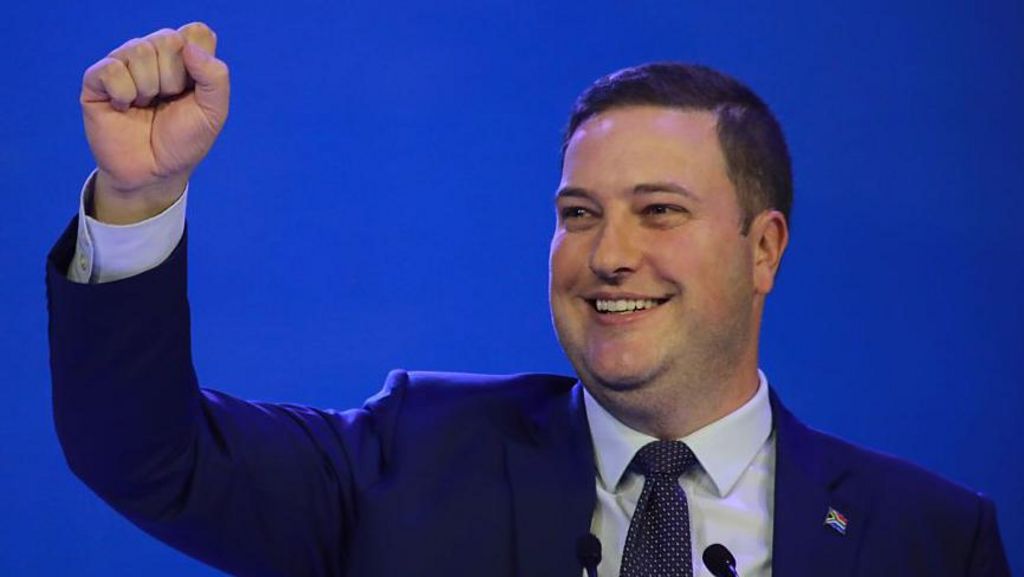
    Nepal stands on the brink of a political transformation as early election results indicate a commanding lead for Balendra Shah, the 35-year-old rapper-turned-mayor who now appears poised to become the nation’s next prime minister. His centrist Rastriya Swatantra Party (RSP) is currently leading in over two-thirds of the directly elected parliamentary seats according to BBC Nepali reports.

    The Thursday general election pitted Shah against established political veterans including former Prime Minister KP Oli of the Communist Party of Nepal UML and Gagan Thapa of the Nepali Congress, both of whom trail significantly in current tallies. The election commission estimates approximately 60% turnout among Nepal’s nearly 19 million registered voters.

    Shah’s remarkable rise from the Nepali hip-hop scene to political prominence represents a dramatic departure from Nepal’s traditional political landscape. Popularly known as Balen, the structural engineer-turned-rapper gained national recognition through socially conscious music, including his viral YouTube hit “Balidan” (Sacrifice) that garnered millions of views.

    His political momentum surged during last year’s widespread protests against social media bans, corruption, unemployment, and economic stagnation. The demonstrations resulted in 77 fatalities, primarily protesters shot by police, and ultimately forced then-Prime Minister Oli’s resignation. Shah’s vocal support for protesters, including his characterization of Oli as a “terrorist,” resonated strongly with youth voters but drew criticism from establishment figures.

    As Kathmandu mayor until January, Shah’s administration faced criticism from human rights groups for heavy-handed tactics against street vendors and unlicensed businesses. His campaign strategy notably avoided media engagement, with Shah bypassing journalists while wearing signature black sunglasses on election day.

    The electoral process incorporates both first-past-the-post and proportional representation systems, with voters casting two ballots to determine 275 parliamentary members. Final results may require days due to Nepal’s challenging topography, with helicopters deployed to collect ballots from remote mountainous regions. The 2022 election required over two weeks for complete results.

    This election marks a potential watershed moment for Nepali politics, which has been characterized by unstable coalition governments dominated by three major parties for over three decades. With 800,000 first-time voters and numerous independent candidates, the political landscape demonstrates a clear appetite for change among Nepal’s youthful electorate.