分类: politics

  • Vietnam opens polls for 16th NA, local council elections

    Vietnam opens polls for 16th NA, local council elections

    Vietnam initiated a significant democratic process on Sunday, March 15, 2026, as polling stations nationwide opened for the dual elections of deputies to the 16th National Assembly and members of People’s Councils across all administrative levels. This electoral event, reported by Vietnam News Agency, marks a crucial political milestone for the country’s governance structure for the 2026-2031 term.

    The extensive electoral operation commenced at 7:00 AM local time with an anticipated 79 million registered voters expected to participate across 72,195 established polling stations. These facilities will remain accessible until 7:00 PM, allowing citizens ample opportunity to exercise their democratic rights.

    Voters face substantial choices in both electoral contests. For the National Assembly, citizens will select 500 parliamentary deputies from a competitive field of 864 pre-qualified candidates. Simultaneously, they will determine the composition of People’s Councils at communal, district, and provincial levels, creating a comprehensive renewal of local governance structures.

    National Assembly Chairman Tran Thanh Man has established a clear electoral timeline, mandating that official results must be formally announced by March 25, 2026. Following the conclusion of the electoral process, the newly constituted 16th National Assembly is scheduled to convene its inaugural session commencing April 6, 2026, marking the beginning of Vietnam’s next legislative chapter.

  • Ugandan opposition leader goes abroad after two months in hiding

    Ugandan opposition leader goes abroad after two months in hiding

    Ugandan opposition leader and former presidential candidate Bobi Wine has emerged from a two-month period in hiding to announce his departure from the country, citing the need for “critical international engagements” and to mobilize global support against President Yoweri Museveni’s administration. The pop star-turned-politician, whose legal name is Robert Kyagulanyi Ssentamu, maintains that the January presidential election was systematically rigged to ensure Museveni’s continued rule.

    In his first public appearance in weeks, conveyed through a five-minute video statement on social media platform X, the 44-year-old opposition leader reiterated his claim to victory in the contested polls. President Museveni, 81, who has governed Uganda since 1986, officially secured 72% of the vote according to election authorities and has accused opposition factions of attempting to violently overturn the results.

    The political climate has grown increasingly tense with reports of military operations targeting Wine’s supporters. Wine alleges that authorities have conducted repeated raids on homes of his associates and established nationwide roadblocks in pursuit of him. His residence in Kampala remains under military siege, a situation that has persisted since election day.

    General Muhoozi Kainerugaba, Museveni’s son and head of Uganda’s military, previously issued alarming threats against Wine on social media, including a since-deleted post describing him as “wanted dead or alive” and threatening castration. While some government officials have denied security forces are actively hunting Wine, Kainerugaba—widely perceived as a potential presidential successor—also claimed that 30 “terrorists” from Wine’s party were killed during post-election protests.

    Expressing gratitude to Ugandans who protected him during his concealment, Wine emphatically stated: “Running for president is not a crime.” He has called for targeted international sanctions against Museveni’s government while continuing to assert his legitimate claim to the presidency amid ongoing political turmoil.

  • AP finds an Israeli group discreetly organized the mystery flights evacuating Palestinians from Gaza

    AP finds an Israeli group discreetly organized the mystery flights evacuating Palestinians from Gaza

    An extensive investigation by The Associated Press has uncovered that an Israeli organization with ties to far-right political agendas has been orchestrating covert evacuation flights transporting Palestinians from Gaza to destinations including South Africa and Indonesia. The operation, which began in May and continued through November, has transported hundreds of Gazans amid the ongoing conflict that has devastated the territory.

    The flights were organized through a complex arrangement designed to obscure Israeli involvement. Ad Kan, an Israeli group founded by soldiers and former intelligence officers, operated through another entity called Al-Majd, which presents itself as a humanitarian organization ‘supporting Palestinian lives.’ This layered structure effectively distanced the operation from its Israeli origins, according to contracts, passenger manifests, financial records, and interviews with more than two dozen individuals involved.

    Passengers interviewed expressed largely pragmatic attitudes toward the evacuations. ‘There was famine, and we had no options. My children were almost killed,’ stated one 37-year-old Palestinian who arrived in South Africa in November. Many emphasized that their primary concern was escaping the devastation, regardless of who facilitated their departure.

    The operation’s ideological underpinnings trace back to Ad Kan founder Gilad Ach, a West Bank settler activist and staunch supporter of former U.S. President Donald Trump’s controversial proposal to resettle Palestinians from Gaza. Ach had previously published detailed plans for implementing ‘voluntary exit’ programs, arguing that emptying Gaza of its Palestinian population was both feasible and in Israel’s interest.

    South African officials have condemned the flights as part of a ‘clear agenda to cleanse out the Palestinians out of Gaza and West Bank.’ Following the arrival of flights in November, South Africa revoked its 90-day visa exemption for Palestinian passport holders, citing ‘deliberate and ongoing abuse’ by Israelis linked to emigration efforts.

    Financial arrangements revealed passengers paid up to $2,000 per person through bank and cryptocurrency transfers. The operation required coordination with Israeli authorities, as Palestinians need official permission to leave Gaza. Israeli government offices declined to comment on the flights or whether those who left would be permitted to return.

    The revelation raises significant questions about the boundaries between humanitarian evacuation and political agendas in conflict zones, particularly regarding the protection of vulnerable populations and the transparency of cross-border operations during humanitarian crises.

  • Zelensky accuses EU allies of ‘blackmail’ in oil pipeline row

    Zelensky accuses EU allies of ‘blackmail’ in oil pipeline row

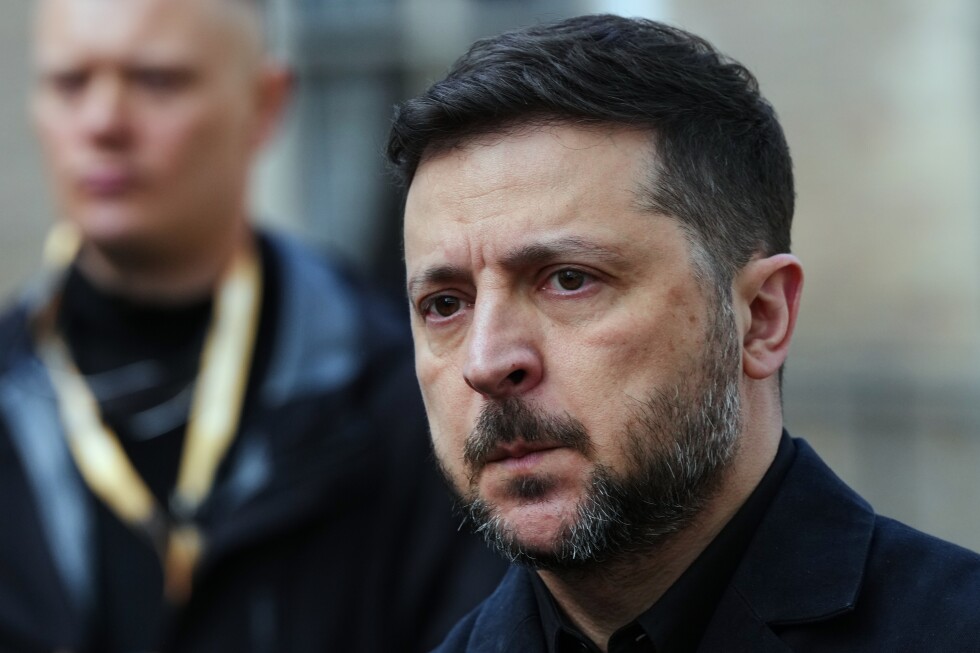
    Ukrainian President Volodymyr Zelensky has leveled serious allegations against European partners, accusing them of attempting to ‘blackmail’ Kyiv into resuming Russian oil transit through Ukrainian territory. The confrontation centers on the damaged Druzhba pipeline, which traditionally supplied Russian crude to Hungary and Slovakia before being rendered inoperative by Russian airstrikes in January.

    Zelensky articulated a firm stance that restoring the pipeline would effectively constitute lifting economic sanctions against Moscow. ‘We either sell Russian oil or we don’t,’ he stated during a press briefing in Kyiv. ‘How is this different from lifting sanctions on the Russians?’

    The political standoff intensified as Hungary, heavily dependent on Russian energy, has blocked both new EU sanctions against Moscow and a crucial €90 billion loan package for Ukraine until pipeline operations resume. With Hungarian Prime Minister Viktor Orban adopting an explicitly anti-Ukraine platform ahead of April elections, some EU officials fear Zelensky’s resistance may inadvertently bolster Orban’s re-election prospects.

    Simultaneously, Zelensky unveiled Ukraine’s strategic counter-proposal: positioning its advanced drone technology as the nation’s equivalent of ‘oil.’ In response to widening Middle East conflicts and increased demand for aerial defense systems, Ukraine has expressed readiness to finalize a $50 billion joint production agreement with the United States.

    ‘For us, this is like oil,’ Zelensky explained. ‘The production of modern drones and Ukraine’s relevant expertise is our today’s Ukrainian oil.’ He emphasized that any technology-sharing agreements must include both financial compensation and technological transfer benefits for Ukraine.

    The Ukrainian leader also voiced concerns about potential impacts from the Middle East conflict, noting that increased U.S. focus on the region might cause delays in weapons deliveries to Ukraine. He particularly opposed recent U.S. sanctions waivers allowing purchase of Russian oil already at sea, characterizing such measures as counterproductive to global pressure on Moscow.

    Russian officials, including Vladimir Putin’s economic envoy Kirill Dmitriev, have portrayed the sanctions relaxation as recognition of Russia’s indispensable role in global energy stability, predicting further loosening is ‘inevitable.’

  • Zelensky: EU pressure to open Russian oil pipeline is ‘blackmail’

    Zelensky: EU pressure to open Russian oil pipeline is ‘blackmail’

    Ukrainian President Volodymyr Zelensky has characterized European Union pressure to restore Russian oil deliveries through the damaged Druzhba pipeline as tantamount to “blackmail,” according to statements released Sunday. The remarks came amid growing tensions between Kyiv and several EU member states dependent on Russian energy supplies.

    The Soviet-era pipeline, which traverses Ukrainian territory, sustained damage during a Russian strike in January according to Ukrainian authorities. While Kyiv estimates repair operations could require up to six weeks, this timeline has provoked significant discontent from Hungary and Slovakia, both of which rely heavily on this infrastructure for their energy security.

    The diplomatic confrontation has escalated with both Central European nations threatening to block crucial EU assistance packages to Ukraine unless pipeline operations resume promptly. The European Commission has further intensified pressure by proposing an inspection mission to assess the damage firsthand.

    President Zelensky expressed firm opposition to resuming Russian oil transfers during his exchange with journalists. “If we have decided to restore Russian oil supplies, then I want them to know that I am against it,” he stated. “But if I am given conditions that Ukraine will not receive weapons, then, excuse me, I am powerless on this issue. I told our friends in Europe that this is called blackmail.”

    The Ukrainian leader specifically criticized the Hungarian government for fostering what he described as “anti-Ukrainian sentiment.” Recent weeks have witnessed escalating diplomatic exchanges between Zelensky and Hungarian Prime Minister Viktor Orbán, with Zelensky clarifying Ukraine’s readiness to collaborate with any Hungarian leadership provided they are not “an ally of Putin, specifically the aggressor state.”

    Concurrently, global energy markets face additional turbulence due to Middle East conflicts. The strategic Strait of Hormuz, historically accounting for approximately twenty percent of worldwide oil shipments, has experienced severe disruption amid ongoing hostilities.

    Ukrainian officials have voiced concerns that Washington’s intensified focus on Middle Eastern security challenges might diminish support for Kyiv. While offering drone defense expertise to U.S. allies in the Gulf region, Zelensky emphasized that Ukraine is not “at war with Iran” and expressed hope that American engagement in the Middle East would not detract from attention to Ukraine’s defense needs.

    Despite shifting global attention, Russian forces have maintained aggressive operations against Ukrainian territory. Local authorities reported two medics killed by a Russian drone strike on an ambulance in Kharkiv region early Sunday. President Zelensky noted that Russian military operations over the past week included thousands of drone sorties, aerial bombs, and dozens of missile attacks.

    In related developments, Ukrainian drones reportedly struck an oil depot in Russia’s Krasnodar region, while France committed to delivering advanced air defense systems capable of intercepting ballistic missiles to Ukraine later this year.

  • China releases reports on budgets, national economic and social development plans

    China releases reports on budgets, national economic and social development plans

    BEIJING – In a significant move outlining China’s economic trajectory, the National People’s Congress has formally released two comprehensive reports detailing the nation’s economic performance and future fiscal planning. The documents, approved during the recent congressional session and published in full by Xinhua News Agency on Saturday, provide unprecedented insight into China’s economic strategy for the coming year.

    The first report, spanning three substantial sections, delivers a thorough assessment of China’s 2025 National Economic and Social Development Plan implementation while simultaneously presenting the proposed 2026 draft plan. This document meticulously examines economic achievements against established targets, outlines fundamental principles for upcoming development, and establishes clear policy directions for the year ahead.

    Concurrently, the second report presents an exhaustive analysis of central and local budget execution throughout 2025, followed by detailed draft budgets for 2026. This financial blueprint encompasses revenue projections, expenditure allocations, and comprehensive fiscal reform initiatives designed to strengthen China’s economic foundation.

    These publications emerge as critical policy instruments that will guide China’s economic management across various sectors. The development plan establishes measurable objectives for economic growth, employment stability, environmental protection, and technological advancement. Meanwhile, the budget framework allocates resources toward priority areas including social welfare programs, infrastructure development, and innovation initiatives.

    The release timing aligns with China’s ongoing economic transformation efforts, reflecting the government’s commitment to transparent governance and strategic planning. These documents will serve as foundational references for provincial and municipal governments as they formulate corresponding regional development plans and budget proposals.

  • Zelenskyy says Ukraine waiting on US and Russia to set next round of talks

    Zelenskyy says Ukraine waiting on US and Russia to set next round of talks

    Ukrainian President Volodymyr Zelenskyy has declared readiness for renewed trilateral peace negotiations to resolve Russia’s prolonged invasion, though the initiative remains contingent on agreement between Washington and Moscow regarding venue and timing. In a media briefing on Saturday, Zelenskyy revealed that while the United States proposed hosting the next round of talks involving American, Ukrainian, and Russian delegations—including envoys Steve Witkoff and Jared Kushner—Moscow has declined to participate.

    The scheduling of U.S.-sponsored dialogue has faced further complications due to escalating Middle Eastern hostilities, particularly the Iran conflict that erupted on February 28 following U.S.-Israeli strikes. This diversion of international attention comes at a critical juncture for Ukraine as it continues defending against Russia’s superior military forces.

    Zelenskyy concurrently expressed grave concerns about the Iran war potentially depleting vital air defense resources Ukraine relies upon to counter Russian missile attacks. Following discussions with French President Emmanuel Macron in Paris, he explored whether SAMP/T systems could supplement or replace U.S.-made Patriot batteries for ballistic missile interception, emphasizing Ukraine’s willingness to be ‘first in line’ for testing viable alternatives.

    The Ukrainian leader also addressed technology exchange dynamics, revealing that Washington had repeatedly sought defense assistance from Ukraine for unspecified purposes through military channels. Zelenskyy disclosed details of a proposed $35–50 billion defense cooperation package that would grant the U.S. administration access to advanced technologies from approximately 200 Ukrainian companies specializing in drones, artificial intelligence, and electronic warfare—with half of production allocated to partners, primarily the United States.

    Despite reported interest from American military officials and even receptiveness from President Donald Trump, the agreement remains unsigned. Zelenskyy noted the puzzling absence of formal commitment, stating, ‘We received a message from them, and directly from the president as well, that they are interested. We did not sign the document with President Trump. I do not have an answer as to why.’

  • Trump says Iran’s terms ‘not good enough’ for ceasefire deal

    Trump says Iran’s terms ‘not good enough’ for ceasefire deal

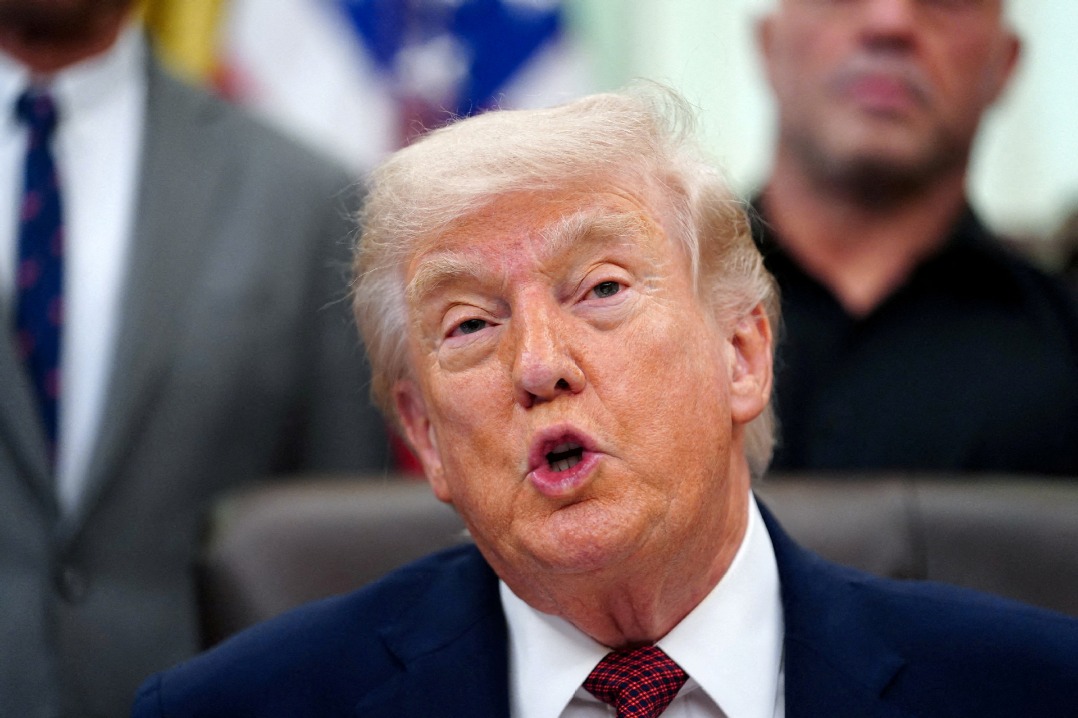
    President Donald Trump declared on Saturday that current conditions for a potential ceasefire with Iran remain unsatisfactory, despite Tehran’s apparent willingness to negotiate an end to the ongoing military conflict. In an exclusive interview with NBC News, the American leader emphasized that any agreement would require “very solid” commitments from Iran, particularly regarding the complete abandonment of its nuclear ambitions.

    The presidential remarks come precisely two weeks after the United States and Israel initiated coordinated military strikes against Iranian targets on February 28. These sustained operations have triggered significant disruptions to global shipping networks, propelled oil prices to unprecedented heights, and created substantial instability throughout international economic markets.

    As the conflict enters its third consecutive week, the economic repercussions continue to intensify. President Trump revealed he has actively solicited support from nations impacted by the turmoil to help maintain security and navigational freedom through the critically important Strait of Hormuz. This strategic maritime passage serves as one of the world’s most vital shipping corridors, particularly for oil tankers transporting petroleum from the Gulf region to global markets.

    Trump indicated that multiple countries have already committed to participating in security operations, though he declined to identify specific nations. “They’ve not only committed, but they think it’s a great idea,” the president stated during the interview.

    Earlier on Saturday, through posts on his Truth Social platform, Trump called upon countries that rely on oil shipments through the strait to assume responsibility for safeguarding the waterway. He announced that the United States would “coordinate” these multinational efforts. In a separate message, he suggested that numerous nations “will be sending war ships” to ensure the strait remains open, without providing operational details.

    When questioned about potential US Navy involvement in escorting commercial vessels through the volatile region, Trump maintained an ambiguous stance, remarking, “I don’t want to tell you anything about that,” while conceding that “it’s possible.”

  • Orbán and challenger Magyar summon rival rallies in show of strength before Hungary’s April election

    Orbán and challenger Magyar summon rival rallies in show of strength before Hungary’s April election

    BUDAPEST, Hungary — The Hungarian capital witnessed a dramatic political confrontation on Sunday as Prime Minister Viktor Orbán and his emerging challenger Péter Magyar staged competing mass rallies, setting the stage for what promises to be the most competitive election in two decades.\n\nOn the national holiday commemorating Hungary’s 1848 revolution against Habsburg rule, both leaders mobilized their bases in a critical test of political strength just four weeks before the April 12 parliamentary elections. Orbán, seeking an unprecedented fifth consecutive term, faced his most formidable challenge yet from Magyar, a former Fidesz insider who has rapidly transformed Hungary’s political landscape.\n\nThe pro-government demonstration, featuring Orbán’s signature nationalist rhetoric, drew devoted supporters who echoed his traditional values platform. \”Only this government is able to secure these three things for the future: God, homeland, family,\” stated Anikó Menyhárt, a participant in the Fidesz rally.\n\nMeanwhile, Magyar’s Tisza party organized what they predicted would be Hungary’s \”biggest ever political event,\\” with the center-right movement gaining remarkable momentum through relentless campaigning in traditionally pro-Orbán rural territories. The 44-year-old lawyer has capitalized on widespread dissatisfaction with Hungary’s stagnating economy, deteriorating public services, and mounting corruption allegations against the Orbán administration.\n\nWhile Orbán has centered his campaign on portraying the European Union and Ukraine as existential threats to Hungarian sovereignty, Magyar has focused on domestic issues, promising to restore democratic institutions and reorient Hungary toward its Western partners after years of drifting toward Moscow.\n\nRecent polling indicates a significant shift, with Tisza holding a 20-point advantage over Fidesz among decided voters according to February’s Medián survey. However, the election outcome remains uncertain due to Fidesz’s extensive rural network and dominance over public broadcasters and loyal media outlets.\n\nThe campaign has been marked by heightened tensions, with Magyar warning supporters about potential disinformation campaigns using manipulated recordings. Orbán’s government simultaneously announced it would declassify a national security report allegedly proving Tisza received illegal Ukrainian financing—claims Magyar vehemently denies.\n\nOrbán’s campaign has increasingly relied on aggressive anti-Ukraine rhetoric, alleging a conspiracy between Kyiv, the EU, and Tisza to overthrow his government. His messaging has featured artificial intelligence-generated content suggesting a new administration would bankrupt Hungary by supporting Ukraine against Russian aggression and send Hungarian youth to fight on the front lines.

  • US-China trade talks open in Paris, paving the way for Trump-Xi summit

    US-China trade talks open in Paris, paving the way for Trump-Xi summit

    Senior economic officials from the United States and China initiated crucial bilateral discussions in Paris on Sunday, setting the stage for a potential state visit by U.S. President Donald Trump to Beijing in late March. The negotiations between Treasury Secretary Scott Bessent and Chinese Vice Premier He Lifeng mark the latest diplomatic engagement between the world’s two largest economies amid ongoing trade tensions.

    The Paris meetings, confirmed by China’s Xinhua News Agency, represent the continuation of dialogue channels established throughout previous encounters in Geneva, London, Stockholm, Madrid, and Kuala Lumpur. While the White House has announced Trump’s planned visit from March 31 to April 2, Chinese authorities have maintained diplomatic discretion regarding final confirmation of the itinerary.

    This prospective visit would constitute President Trump’s first official trip to China since his 2017 state visit during his initial term. The summit would occur approximately five months after both leaders convened in Busan, South Korea, where they negotiated a temporary ceasefire in the trade conflict that had previously escalated with reciprocal tariffs exceeding triple-digit percentages.

    Current trade frictions persist as complicating factors, with China’s Commerce Ministry recently criticizing the Trump administration’s new trade investigation targeting 16 nations, including China. This probe, initiated following a Supreme Court decision invalidating previous global tariffs, potentially establishes legal groundwork for future trade restrictions.

    Regional security concerns, particularly regarding the Strait of Hormuz, may additionally feature in discussions. President Trump has publicly solicited international naval support from China and other nations to ensure safe passage through the critical oil transport corridor amid heightened Middle Eastern tensions.

    Economic analysts observe that the Paris dialogue represents perhaps the most significant bilateral engagement preceding the potential Xi-Trump summit. Gary Ng, Senior Economist at Natixis Bank, noted that managing policy inconsistencies remains Beijing’s primary concern, emphasizing the challenge of establishing reliable frameworks amid fluctuating U.S. trade positions.

    The diplomatic atmosphere appears cautiously optimistic, with Chinese Foreign Minister Wang Yi recently characterizing 2026 as a potentially landmark year for Sino-American relations, while acknowledging that high-level exchanges remain under active consideration.