A fragile 14-day ceasefire between the United States and Iran is teetering on collapse following a contentious US seizure of an Iranian-flagged cargo vessel near the Strait of Hormuz and a swift retaliatory drone attack by Iranian forces, throwing the planned second round of bilateral peace talks scheduled for this week in Islamabad into uncertainty. Though cautious hopes for diplomatic progress persist, the escalating maritime confrontation has deepened divisions and raised global concerns over energy market stability.
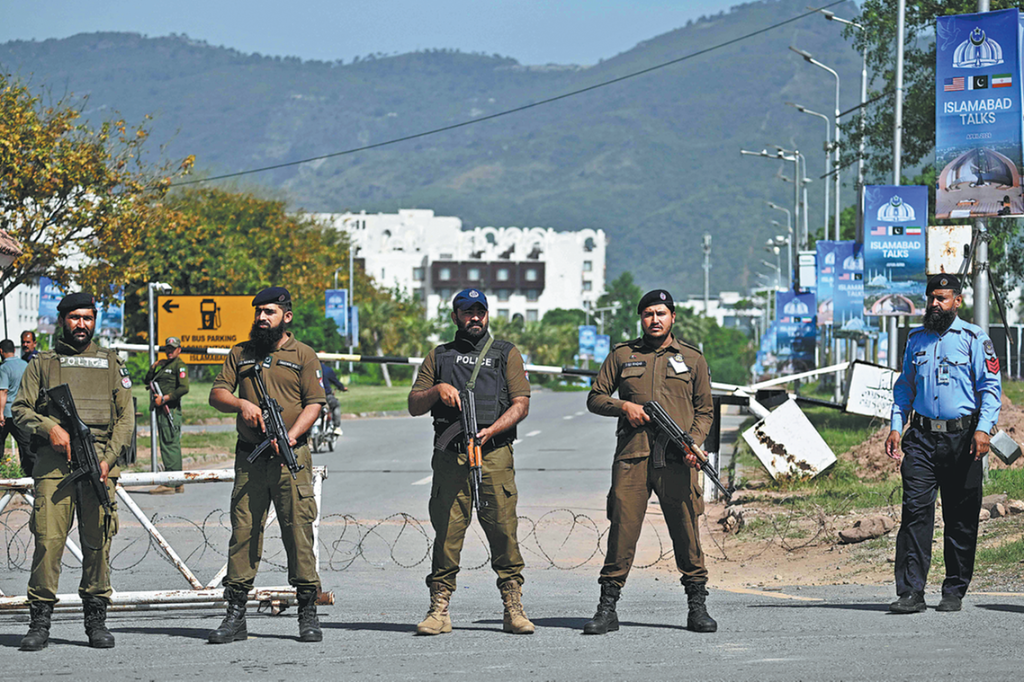
Pakistan, which has been mediating the peace process between Washington and Tehran, has deployed nearly 20,000 security personnel across Islamabad, putting the capital on high alert to secure the planned talks venue. Two anonymous Pakistani officials confirmed to The Associated Press on Monday that Iranian authorities have signaled willingness to send a negotiating delegation to the talks, though they declined to share further details on security grounds, warning that the scheduling of the meeting remains fluid and urging media to avoid unfounded speculation.
The current crisis erupted Sunday, when former US President Donald Trump announced that US Navy forces had intercepted an Iranian cargo ship that attempted to evade a newly imposed US naval blockade of Iranian ports near the strategic Strait of Hormuz — the first such interception since the blockade was implemented a week prior. The seizure marked a blatant violation of the existing two-week ceasefire agreement, Iranian officials argued, labeling the action an act of “armed piracy” that proves Washington lacks good faith in diplomatic negotiations.
In a direct retaliatory response, Iran’s joint military command launched drone strikes against US military vessels operating in the region. Iranian Foreign Ministry spokesman Esmail Baghaei emphasized that while Tehran has no immediate plans to proceed with fresh talks, it has not fully ruled out future diplomatic engagement. The Iranian government also released updated conflict casualty figures Monday, with the country’s forensic chief reporting that at least 3,375 people have been killed since armed conflict between the two nations began on February 28.
Trump had previously announced Sunday that US negotiators would arrive in Islamabad Monday to resume talks, though Iranian officials offered no direct confirmation of the scheduling in the wake of the maritime confrontation. Pakistan has pushed forward with diplomatic preparations regardless: Interior Minister Mohsin Naqvi, who was part of a Pakistani mediation delegation that traveled to Tehran last week, met Monday with Iranian Ambassador Reza Amiri Moghaddam to brief him on talks arrangements, just hours after holding a parallel briefing with US Charge d’Affaires Natalie Baker. A Pakistani ministry statement following the meetings reaffirmed both sides’ commitment to pursuing a sustainable, diplomatic resolution to de-escalate regional tensions.
The ongoing standoff has already sent shockwaves through global energy markets, as blockades and security threats have disrupted commercial shipping traffic through the Strait of Hormuz, a chokepoint that carries roughly a fifth of the world’s daily oil supply. By Monday, global oil prices had surged more than 5%, with benchmark Brent crude trading above $95 per barrel — a jump of more than 30% since the conflict began in late February.
In a social media statement, Iranian First Vice-President Mohammad Reza Aref framed the Strait’s security as a collective responsibility, noting that the international community faces a clear choice: “Either a free oil market for all, or the risk of significant costs for everyone.” He added that stable global fuel prices can only be guaranteed by a permanent end to all economic and military pressure on Iran and its regional allies.
Beyond the maritime dispute, the decades-long standoff over Iran’s nuclear program remains a core sticking point in negotiations. Last week, Trump stated that the US is seeking a deal to have Iran remove all of its enriched uranium stockpile from the country. CNN, citing anonymous informed sources, reported that Washington is offering to unfreeze $20 billion in Iranian assets held abroad in exchange for the transfer. Iran’s Deputy Foreign Minister Saeed Khatibzadeh has already rejected the proposal as “impossible.”
Alex Vatanka, a senior fellow at the Middle East Institute in Washington, told Al Jazeera that military escalation cannot resolve either the Hormuz shipping dispute or the nuclear standoff. He argued that the prospect of a sweeping, comprehensive grand bargain between the two sides in the short term is entirely unrealistic. “The best you can do is some kind of agreement of a basic framework, and then you have to go and quickly build on it. It will take at least months, if not years,” Vatanka explained.