分类: politics

  • Experts urge sweeping tax overhaul to scrap stamp duty for land tax

    Experts urge sweeping tax overhaul to scrap stamp duty for land tax

    Australia’s deepening housing affordability crisis has prompted policy experts to call for sweeping tax reform centered on abolishing what they label the nation’s most economically harmful tax, a change that could open homeownership pathways to thousands of aspiring buyers and downsizers alike. The proposal was laid out during recent hearings of the Senate Select Committee on Productivity, convened to identify actionable solutions to Australia’s decades-long housing shortage.

    Matthew Bowes, senior associate at leading independent think tank the Grattan Institute, argues that replacing stamp duty — an upfront tax levied on property transactions — with a broad-based annual land tax would deliver two major wins: a fairer taxation system and a $19 billion annual boost to national economic output. “All taxes dampen economic activity to some degree, but stamp duty is by far the most damaging of all taxes levied in Australia,” Bowes explained. He noted that the reform would primarily benefit two groups locked out of flexible property market access: young households saving for their first home, and older Australians looking to downsize to more appropriate accommodation after their children leave home.

    Despite these long-term benefits, Bowes acknowledged that the reform creates significant near-term fiscal challenges for state governments, which currently rely on the bulk of stamp duty revenue collected upfront when a property changes hands. Shifting to a land tax would spread revenue collection over decades, creating an immediate fiscal gap that states have so far been reluctant to absorb. “When you move from an upfront lump-sum tax to a recurring annual tax, you defer a huge share of government revenue,” Bowes said. “That fiscal gap is the single biggest barrier holding states back from adopting this reform.”

    Additional structural barriers to reform also complicate adoption: the current GST distribution framework, designed to deliver horizontal fiscal equalization across Australia’s states and territories, penalizes states that grow their own revenue. If a state’s independent revenue increases after tax reform, its share of federal GST distributions is cut, creating an additional financial disincentive that has discouraged past attempts to change stamp duty policy.

    Beyond tax reform, the inquiry has also shone a light on deep-rooted productivity failures that have pushed housing prices higher and slowed new construction, worsening the nation’s housing shortage. The federal government’s National Housing Accord sets an ambitious target of building 1.2 million new homes by 2029, requiring 240,000 new completions annually to hit the mark. While recent data from the Australian Bureau of Statistics shows a strong 29.7% jump in dwelling approvals in February, hitting 19,022 for the month, total approvals over the past 12 months sit at just 196,000 — far below the required annual rate.

    The February growth was driven by a surge in multi-dwelling development: apartment approvals skyrocketed 191.2% to 5,399 units, while townhouse approvals rebounded 73.8% from a sharp January drop to hit 2,981. Even with this monthly gain, however, the national pipeline remains too small to close the gap between supply and strong population-driven demand.

    Housing Industry Association (HIA) managing director Jocelyn Martin told the inquiry that falling construction productivity over the past decade is a major driver of rising housing costs, with excessive regulatory burden the single biggest drag on sector performance. “Residential construction faces multiple overlapping layers of regulation across local, state, and federal levels — everything from planning and zoning rules to environmental approvals and frequent, complex changes to the National Construction Code,” Martin explained. “Every extra layer adds cost, delay, uncertainty, and risk, pulling resources away from actual home building and limiting the industry’s ability to innovate and scale up output.”

    Independent analysis from the Productivity Commission backs this assessment, finding that regulation adds between $135,000 and $320,000 in extra cost to the construction of a single detached home, and between $40,000 and $175,000 for each apartment unit. Martin emphasized that any push to improve productivity does not require cutting safety or quality standards, instead calling for smarter, more streamlined regulatory design. “The goal is to build regulatory systems that meet public policy objectives while allowing the industry to deliver homes efficiently at scale,” she said.

    Martin also noted that Australia’s concentrated settlement patterns amplify existing housing pressures, with strong sustained population growth flowing almost entirely to a small number of major capital cities. “This concentration ramps up pressure on housing markets, infrastructure, and labor supply, while making the productivity challenges this inquiry is investigating far worse,” she added. As the Senate committee continues its work, the dual proposals of tax reform and regulatory streamlining are emerging as core policy options to address one of Australia’s most pressing economic and social challenges.
  • ‘Wipe them out’: Independent Farrer candidate lashes preference deal as Coalition backs One Nation

    ‘Wipe them out’: Independent Farrer candidate lashes preference deal as Coalition backs One Nation

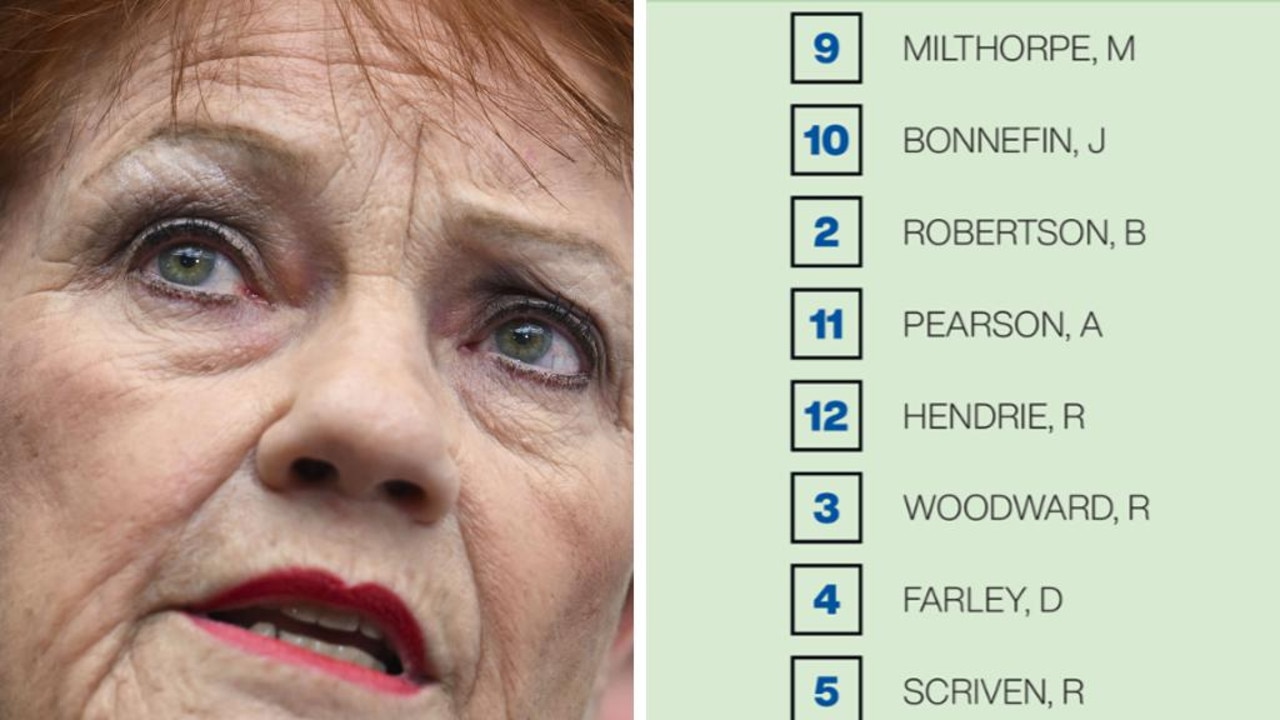
    The race for the vacant federal seat of Farrer, left open by the departure of former opposition leader Sussan Ley earlier this year, has erupted into controversy after the Liberal-National Coalition formalized a preference deal that places right-wing populist party One Nation ahead of Climate 200-supported independent candidate Michelle Milthorpe. The deal, revealed this week, has drawn sharp criticism from Milthorpe, who argues the Coalition’s decision stems from deep-seated anxiety that Pauline Hanson’s One Nation will eliminate their candidates from contention entirely.

    Farrer’s by-election has shaped up as a tight two-horse race between Milthorpe and One Nation’s candidate David Farley, even as both the Liberal and National parties maintain their own candidates in the contest. In tight marginal contests like this, preference flows between candidates often decide the final outcome, making pre-election preference agreements high-stakes political moves.

    Milthorpe, who grew up in a National Party-voting household in Cootamundra and once supported Sussan Ley in multiple elections, said she never would have considered running as an independent if regional communities had not been consistently failed by successive major party governments. “If we hadn’t been so let down in the regions by successive governments I can easily imagine running under the Liberal or Nationals banner,” she explained. “But I decided to run as an independent because for decades the parties have acted in their own self-interest, not in the interests of our community.”

    Responding to the Coalition’s preference deal, Milthorpe said the agreement served no purpose other than protecting the major parties’ own political standing. “The Coalition has done a deal with One Nation because they are worried One Nation will wipe them out,” she said. “We will never know what One Nation offered the Liberal/National Parties to strike this deal, but what we do know is this isn’t about Farrer. This is a decision made for the good of the Coalition, not for the good of our community.”

    Milthorpe drew a clear contrast between her own priorities and those of her One Nation opponent, noting that Farley would always be beholden to party leadership based in Queensland. “I vow to fight every single day for the people of Farrer and only the people of Farrer,” she said. “My One Nation opponent will have to vote every single time with his party boss from Queensland. The parties have not been listening to us, so I expect most voters will return the favour by not listening to their suggestions of who to vote for.”

    Preference documents published by candidate campaigns lay out the full order of recommendations. Liberal candidate Raissa Butkowski instructed supporters to rank her first, National candidate Brad Robertson second, and Farley fourth. For his part, Farley recommended voters put Robertson second, Butkowski third, and placed Milthorpe second last at 11th on his ranking.

    National Party Leader Matt Canavan, who has campaigned extensively in Farrer in the lead-up to the by-election, pushed back against criticism of the deal in a social media statement. “There is a lot of BS being spread about preferences in the Farrer by election,” he wrote. “But the local news has reported it right. The Nationals are preferencing One Nation ahead of the teal backed candidate because she is backed by people that support net zero and water buybacks.”

    The preference deal comes amid ongoing controversy for One Nation, which has faced sustained pressure in recent weeks over the party’s decision to rehire Sean Black, a man convicted of rape. One Nation leaders Pauline Hanson and former National Party leader Barnaby Joyce have both faced scrutiny over the rehiring decision, though that controversy has not been mentioned in public justifications for the preference deal.

  • Iran’s decision not to participate in US talks in Pakistan ‘definitive’: Tasnim news agency

    Iran’s decision not to participate in US talks in Pakistan ‘definitive’: Tasnim news agency

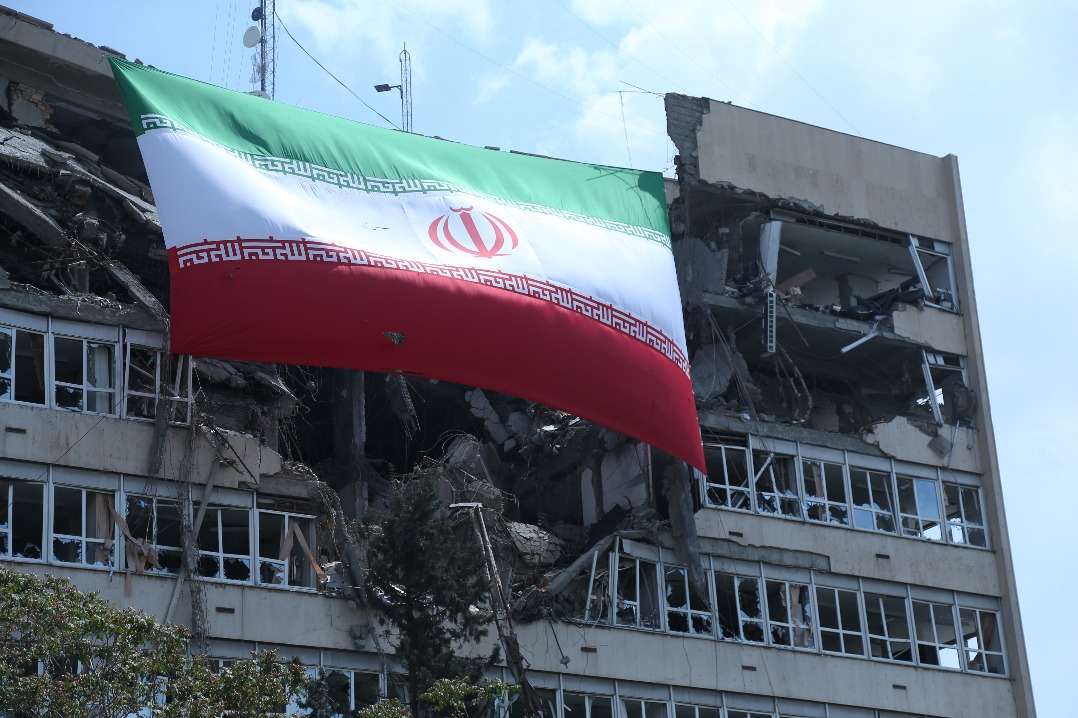
    TEHRAN – In a clear statement released on Tuesday, Iran’s semi-official Tasnim news agency has confirmed that Tehran’s decision to skip the second round of direct talks with the United States, scheduled to take place this Wednesday in Pakistan, is final and non-negotiable. According to the agency, Pakistani authorities acting as the mediator for the planned diplomatic meeting have already been formally notified of Iran’s choice to withdraw from the engagement. The report added that the decision was crafted to uphold and fully protect the sovereign rights and national interests of the Iranian people, closing the door on any last-minute speculation that Iran might reverse its stance ahead of the planned meeting. This development comes amid long-running tensions between Tehran and Washington, with Pakistan having stepped in to facilitate diplomatic dialogue between the two adversarial nations in recent months.

  • Taiwan president cancels trip after African countries close airspace

    Taiwan president cancels trip after African countries close airspace

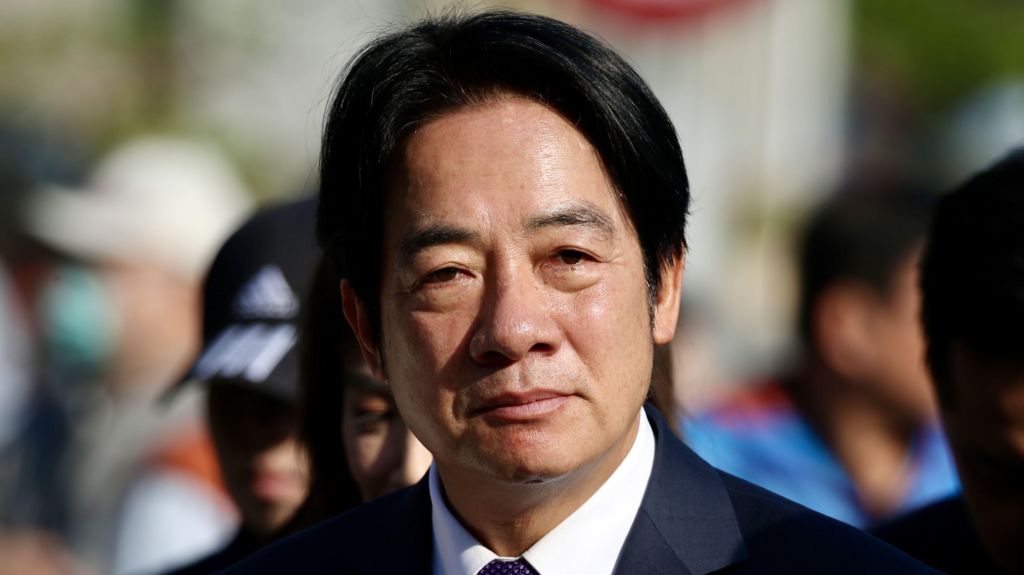
    A landmark development in cross-strait diplomatic tensions has forced Taiwan leader Lai Ching-te to scrap a planned overseas trip to Eswatini, marking the first publicly recorded instance of a Taiwanese leader abandoning a foreign journey after multiple countries revoked required overflight access.

    Lai was scheduled to travel to the southern African nation, Taiwan’s only remaining diplomatic ally on the continent, to participate in celebrations marking 40 years of King Mswati III’s reign. According to senior Taiwanese officials, three island nations in the Indian Ocean — Seychelles, Mauritius and Madagascar — withdrew their previously granted overflight permissions following what Taipei describes as “intense pressure” and economic coercion from Beijing.

    In a public statement posted to the social platform X, Lai pushed back against Beijing’s actions, framing the permit revocations as clear examples of authoritarian coercion that highlight broader threats to global international order. “No amount of threats or coercion will shake Taiwan’s resolve to engage with the world,” Lai wrote.

    For its part, Beijing has rejected accusations of coercion, instead praising the three African countries for upholding the long-standing one-China principle, which forms the foundation of Beijing’s territorial claim to the self-governing island. In official comments, a spokesperson for China’s Taiwan Affairs Office expressed “high appreciation” for the position taken by Seychelles, Mauritius and Madagascar. China’s Ministry of Foreign Affairs went further, reiterating that no official title of “President of the Republic of China” holds any international recognition, in a direct rebuke of Lai’s status. Both Seychelles and Madagascar have publicly confirmed their decision to revoke permits stems from their non-recognition of Taiwan as a sovereign state, aligning with Beijing’s position.

    Eswatini’s government has expressed regret over the canceled visit but emphasized that the disruption will not alter the long-standing bilateral diplomatic ties between the two nations. Currently, only 12 United Nations member states around the world recognize Taiwan diplomatically, most of them small island nations in Latin America and the Pacific.

    Cross-strait relations have remained strained since Lai took office, with Beijing repeatedly labeling Lai a “troublemaker” who threatens cross-strait peace. Beijing maintains that Taiwan is an inalienable part of Chinese territory, a position it has defended for decades, and has not ruled out the use of military force to bring the island under its control. Most of the international community, including the United Nations, recognizes the one-China principle, though many Western nations maintain unofficial economic and cultural ties with Taiwan.

    The cancellation has already drawn criticism from U.S. political leaders. The majority staff of the U.S. House Foreign Affairs Committee issued a statement on X affirming that it “stood with Taiwan against this blatant coercion.” U.S. Senator Ted Cruz also publicly condemned Mauritius’s decision, claiming the country was “determined to ally with the Chinese Communist Party.”

  • Trump extends Iran ceasefire with fate of Pakistan talks left uncertain

    Trump extends Iran ceasefire with fate of Pakistan talks left uncertain

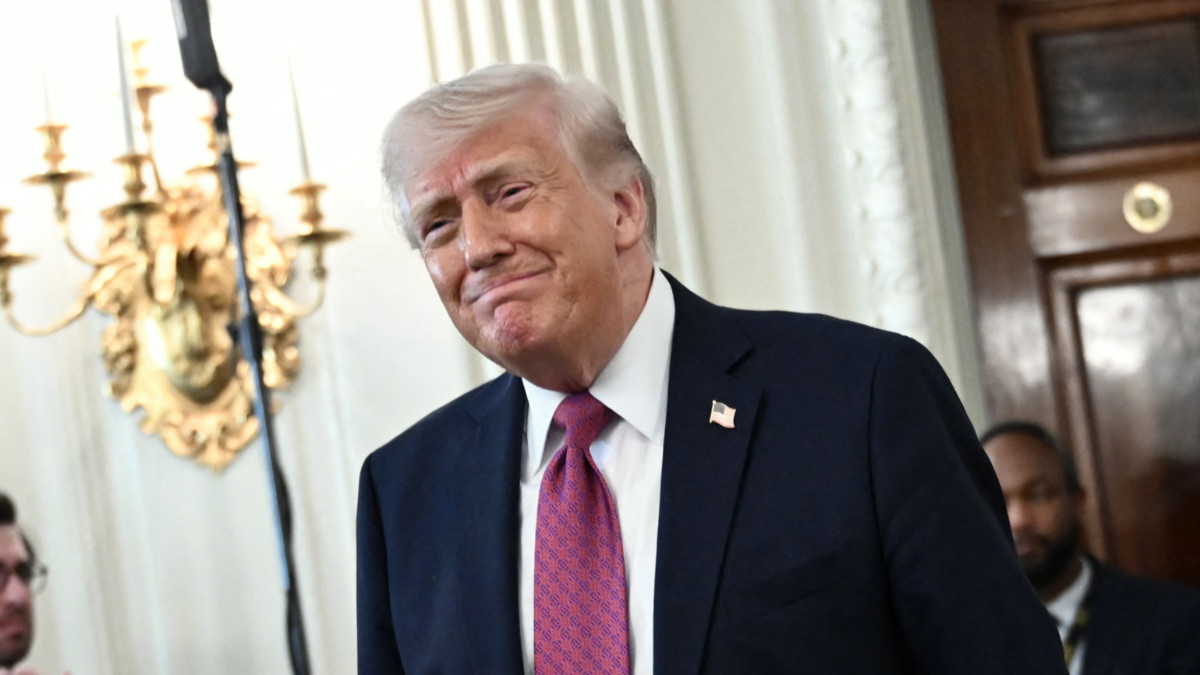
    Hours before a two-week U.S.-Iran ceasefire was scheduled to expire on Tuesday, former U.S. President Donald Trump announced a vague extension of the truce, throwing the future of planned bilateral peace talks into deep uncertainty.

    In an official White House statement, Trump explained his decision to extend the ceasefire came at a formal request from Pakistan’s Chief of Army Staff Asim Munir and Prime Minister Shehbaz Sharif. He argued that Iran’s ruling government is “seriously fractured” and requires additional time to coalesce around a unified negotiating position to present to U.S. mediators. As part of the extension, Trump confirmed he has ordered U.S. military forces to maintain the ongoing naval blockade of Iran, with the truce remaining in place until Iran submits its formal proposal.

    The two-week initial ceasefire has largely held across the region, bringing a much-needed reprieve to both sides. For Iran, which has endured heavy airstrikes from the U.S., Israel, and U.S.-aligned Gulf Arab allies, the truce halted widespread destructive attacks. For oil-rich Gulf states, which faced thousands of incoming Iranian ballistic missile and drone strikes in preceding weeks, the ceasefire similarly ended persistent security threats.

    Instead of continuing offensive strikes, Trump adopted a strategy of naval blockade, framed as a response to Tehran’s seizure of partial control over the Strait of Hormuz and its selective permission for commercial vessels to transit the critical waterway. On Tuesday, the U.S. military carried out its first high-profile action under the blockade: U.S. troops boarded the crude oil tanker *Tifani* in the Indian Ocean via helicopter, seizing the vessel that had already been sanctioned for transporting Iranian crude oil to China. The U.S. Department of War published official footage of the operation to the public.

    Speaking to CNBC on Tuesday, Trump asserted that the blockade was delivering successful results, claiming “We totally control the Strait, just so you understand, for all the fake news out there.” However, his claim directly contradicts reporting from independent maritime intelligence groups, which confirm Iranian commercial vessels continue to transit the Strait of Hormuz and Gulf of Oman – areas where U.S. naval forces are concentrated. Leading maritime publication Lloyd’s List reported that at least 26 vessels have successfully bypassed the U.S. blockade to date, including 11 tankers carrying Iranian oil cargo.

    This conflicting account is just the latest example of inconsistent messaging from the Trump administration on its Iran policy. The collapse of planned talks has further muddied the outlook: just this week, global attention was focused on Vice President JD Vance, who was widely expected to travel to Pakistan for a second round of direct negotiations with Iranian delegates. CNN later reported Tuesday afternoon that Vance remained at the White House alongside Trump, joined by Secretary of State Marco Rubio and Secretary of War Pete Hegseth for emergency consultations.

    Iran has already ruled out participation in the planned talks, blaming excessive U.S. demands for the breakdown. Semi-official Iranian news agency Tasnim reported Tuesday that Tehran had already canceled plans to send a negotiating delegation to Islamabad, arguing that engaging with U.S. mediators would be a waste of time while Washington continues to obstruct any mutually acceptable agreement.

    Tensions have further escalated amid new Iranian threats. The Islamic Revolutionary Guard Corps (IRGC) warned Tuesday that it would shut down all oil production across the Persian Gulf if any new attacks against Iran are launched from Gulf Arab states. “The southern neighbours should know that if their geography and facilities are used in the service of the enemies to attack the Iranian nation, they should bid farewell to oil production in the Middle East,” Fars News Agency quoted IRGC Aerospace Force Commander Majid Mousavi as saying.

    The breakdown of talks has sent a shockwave through the Middle East, reintroducing widespread uncertainty across the region just one week after rising diplomatic optimism. Last week, hopes for a diplomatic breakthrough grew significantly after the Trump administration announced a ceasefire in Lebanon, a core precondition Iran had set for advancing negotiations.

    This report was originally compiled by Middle East Eye, an independent outlet specializing in coverage of the Middle East and North Africa region.

  • The AP Interview: Cyprus president says EU needs a clear playbook on helping members under attack

    The AP Interview: Cyprus president says EU needs a clear playbook on helping members under attack

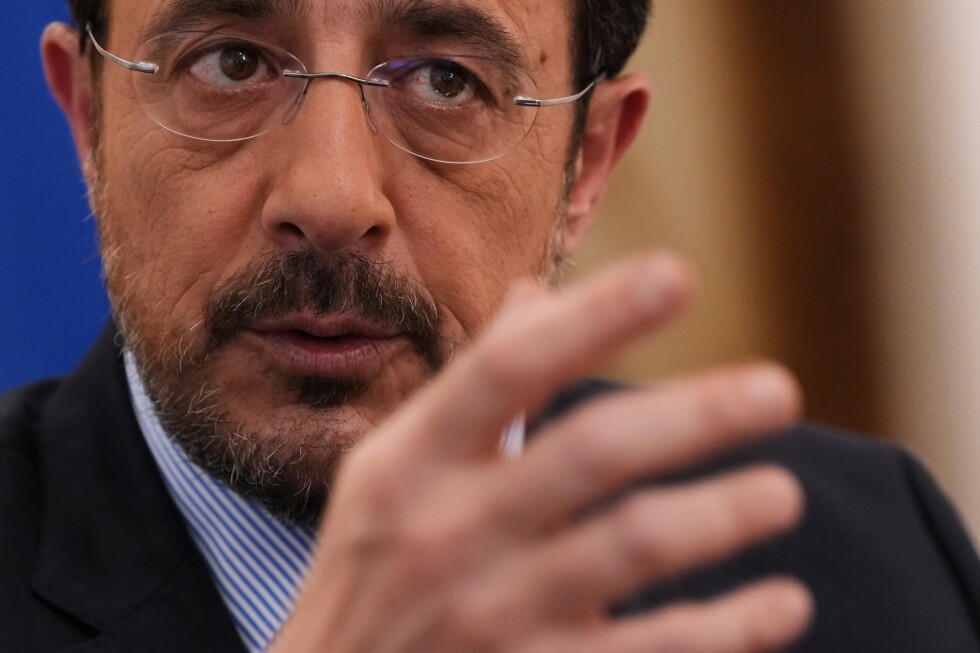
    As European Union leaders gather in Cyprus for a high-stakes summit this week, the island nation’s president is pushing for urgent progress on a long-unaddressed collective defense rule that has suddenly moved to the top of the bloc’s security agenda. In an exclusive interview with The Associated Press on Tuesday, President Nikos Christodoulides outlined his priority for the gathering: building a concrete operational framework for the EU’s mutual defense clause, Article 42.7, which has never been activated despite its placement in the bloc’s founding treaties.

    The treaty clause legally obliges all 27 EU member states to provide all possible aid and assistance to any member that faces armed aggression on its territory. However, decades after the clause was written, no standardized protocols exist to guide how member states should respond if a nation formally invokes the provision. “We have Article 42.7 and we don’t know what is going to happen if a member state triggers this article,” Christodoulides explained ahead of the summit, which will also host leaders from four Middle Eastern nations and focus heavily on the ongoing Iran war and its regional spillover risks.

    For Christodoulides, this push for clarity comes from direct, recent experience. Just one month ago, a Shahed drone struck a British air base on Cyprus’ southern coast, located only 129 miles from the Lebanese capital Beirut, from where Cypriot officials assessed the drone was launched. The incident marked the first drone attack on EU territory linked to the Iran war, prompting Christodoulides to activate a call for support from bloc partners. In response, Greece, France, Spain, the Netherlands and Portugal quickly deployed anti-drone capable naval assets to help bolster the island’s defenses, highlighting both the willingness of members to assist and the lack of pre-planned coordination for such events.

    Two key unresolved points top the agenda for drafting the new playbook. First, Christodoulides noted that the majority of EU member states also hold membership in NATO, which has its own collective defense Article 5 that defines an attack on one ally as an attack on all. The EU’s new framework must clarify how dual-member states can coordinate their responses to an EU Article 42.7 call without conflicting with their existing NATO obligations. Second, leaders will need to resolve core unanswered questions: whether any response to an invoked Article 42.7 would be a collective bloc-wide effort modeled on NATO, or limited to neighboring states of the affected country, as well as what types of resources and tools would be deployed for different categories of security crises.

    Beyond the mutual defense planning, the summit will also advance a key Cypriot priority for the bloc’s current presidency: deepening strategic cooperation between the EU and Middle Eastern nations. Christodoulides said he has been encouraged by growing recognition among fellow EU leaders of the urgency of closer ties, which he is advancing through initiatives like the Mediterranean Pact, which delivers targeted programming in health, education and energy across regional partner states. Leaders from Egypt, Lebanon, Syria and Jordan will attend the informal summit this week, creating a rare opportunity to turn dialogue into tangible, elevated strategic cooperation. Cyprus, he noted, holds unique trust as an intermediary between the Greater Middle East and EU institutions in Brussels. “We can represent the interest of the countries of the Greater Middle East to Brussels, but at the same time, the countries in the region trust Cyprus to represent them in the European Union,” he said.

    Christodoulides also used the interview to champion the India-Middle East-Europe Economic Corridor (IMEC), an ambitious connectivity project designed to link European markets with India via the Middle East, which backers say will boost regional peace, stability and economic integration. Under the Cypriot EU presidency, a new “Friends of IMEC” working group has been launched to advance the initiative, which currently lacks a roster of specific actionable projects. One priority project, the Great Seas Interconnector — an undersea electricity cable that would link the power grids of Greece, Cyprus and eventually Israel — has faced repeated costly delays. Christodoulides added that he sees strong potential for collaboration with the United States to move IMEC forward, framing the project as a mutual benefit for both the EU and Washington.

    The ongoing Iran war has also refocused attention on the EU’s urgent need to diversify its energy supplies, a topic that will feature in summit discussions. Christodoulides confirmed he is in active talks with EU executive leaders about developing Cyprus’ offshore natural gas deposits as a stable alternative supply source for the bloc. He added that European Commission President Ursula von der Leyen will unveil detailed new proposals on Friday addressing energy costs and advancing the bloc’s goal of greater energy independence.

    Finally, Christodoulides called for faster progress on EU enlargement, noting that the bloc’s repeated delays in accepting new prospective members over the past two years has eroded trust among candidate nations. “So we have a strong geopolitical tool that we are losing mainly because of our mistakes,” he said. While he acknowledged that decision-making has accelerated in recent months, he stressed that enlargement remains one of the EU’s most critical geopolitical tools, requiring concrete, timely action in the near term.

  • Alicia Gardiner: Australian actor to take stand in hearing over alleged breast twist assault

    Alicia Gardiner: Australian actor to take stand in hearing over alleged breast twist assault

    A high-profile Australian television actor is scheduled to take the witness stand this week as a legal hearing examines a contentious assault allegation stemming from a pro-Palestinian protest inside Victoria’s Parliament House in Melbourne.

    Alicia Gardiner, widely recognized for her long-running role on the hit series *Offspring* and more recent appearances in *Deadloch*, stands accused of intentionally twisting a female parliamentary staff member’s breast on the afternoon of May 7, 2024. The incident unfolded moments after a group of protestors were removed from the building’s public gallery for demonstrating against the Israel-Hamas conflict. Security body-worn camera footage played in Melbourne Magistrates’ Court on Wednesday captured the crowd chanting slogans including “free free Palestine” and “from the river to the sea” as they were escorted out of the parliamentary complex.

    Prosecutors claim the alleged assault took place just after 1 p.m. near the door to the state’s legislative chamber, where the staff member was stationed. One witness testifying at the hearing told the court he pushed back a woman in blue—who prosecutors identify as Gardiner—when she attempted to enter the restricted chamber area. He told the court he then observed her in a physical tussle with his colleague, the alleged victim. The witness added that moments after the confrontation, police protective services officers arrived on the scene, and when he checked on his colleague afterward, she appeared visibly shaken and shocked by the encounter.

    Gardiner has repeatedly denied that she intentionally assaulted the staff member. Her defense lawyer, Angeline Centrone, told the court Wednesday that any physical contact between her client and the complainant was accidental. Centrone explained that Gardiner had raised her hands to steady herself amid the chaotic crowd crush that followed the protest dispersal, and any contact with the staff member was an unintended result of that movement.

    The ongoing hearing, overseen by Magistrate Malcolm Thomas, continued Wednesday with Gardiner expected to give her own testimony to the court later that afternoon. No verdict has been delivered as the proceedings are still underway.

  • Who is calling the shots in Iran?

    Who is calling the shots in Iran?

    A sudden diplomatic reversal following recent US-Iran talks in Islamabad has laid bare the dramatic new power dynamic reshaping Iran in the wake of six weeks of coordinated US-Israeli military strikes. On April 17, Iranian foreign minister and lead nuclear negotiator Abbas Araghchi took to the social platform X to announce that the strategically critical Strait of Hormuz was “completely open,” a signal that Tehran was prepared to show flexibility on two sticking points in negotiations: uranium enrichment limits and Iranian support for regional proxy armed groups.

    Within days, however, that public outreach was completely reversed following backlash from Iran’s most powerful institution. Mohammad Bagher Zolghadr, a former Islamic Revolutionary Guards Corps (IRGC) commander newly appointed as secretary of Iran’s Supreme National Security Council, filed a formal complaint criticizing Araghchi for deviating from the negotiating mandate set by the IRGC leadership. The entire Iranian negotiating delegation was recalled to Tehran, state-run media launched scathing attacks on Araghchi, warning that his public statement had handed then-US President Donald Trump a political opening to falsely declare victory in the conflict, and the Iranian government issued a new declaration that the Strait of Hormuz was closed.

    This high-profile public clash is not an isolated misstep, argues King’s College London defense studies associate professor Andreas Krieg in analysis shared via The Conversation. It is the clearest visible indicator of a permanent power shift that has transformed Iran’s political order: the IRGC now holds total control over all state decision-making, while civilian and traditional religious institutions have been reduced to little more than a ceremonial facade.

    The decapitation strikes that opened the US-Israeli military campaign eliminated decades of entrenched Iranian leadership. Supreme Leader Ali Khamenei was killed in the opening day attack, alongside dozens of his most senior colleagues. Where Iran was once described as a sovereign state with an exceptionally powerful militia, Krieg argues the new reality is the opposite: Iran is now a powerful militia with a state, structured entirely around the IRGC as its core governing authority.

    Traditional centers of Iranian power, including the elected civilian government and the senior Shia clergy, have been pushed to the margins as mere front organizations. Even the newly appointed supreme leader, Mojtaba Khamenei, son of the late Ali Khamenei, functions only as a symbolic legitimizing figure. Multiple reports confirm Mojtaba Khamenei sustained severe injuries in the strike that killed his father, and he plays no active role in governing the country.

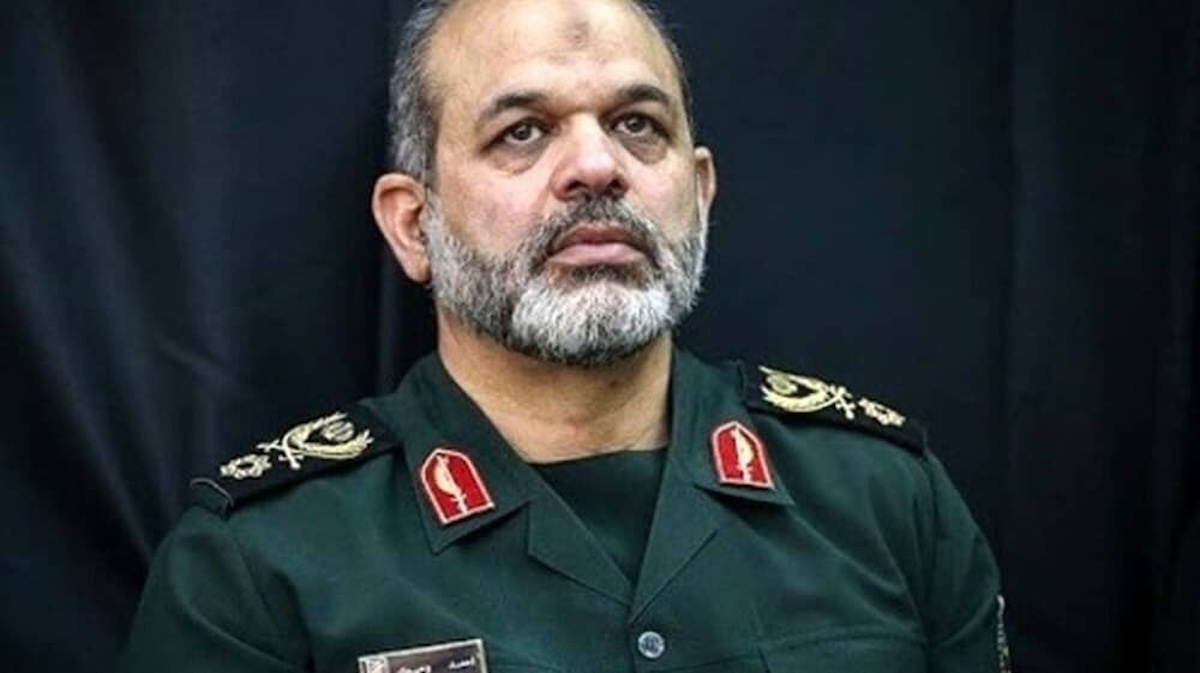
    The undisputed holder of power in contemporary Iran is IRGC leader Ahmad Vahidi, a founding member of the corps with decades of experience in Iranian security and politics. The IRGC was founded immediately after the 1979 Islamic Revolution, when Ayatollah Ruhollah Khomeini and his allies distrusted the existing conventional military and state bureaucracy to protect the new revolutionary order. Over the subsequent 47 years, the IRGC expanded far beyond its original mandate as guardians of the revolution, evolving into an all-encompassing network that spans every sector of Iranian life: it operates a conventional military force, a domestic intelligence apparatus, a multi-billion dollar transnational economic conglomerate, and a regional expeditionary network that projects Iranian power across the Middle East.

    Its domestic arm, the Basij militia, enables mass social control across Iran’s population, while the elite Quds Force manages the IRGC’s network of proxy armed groups across Lebanon, Iraq, Syria, Yemen and other regional states. Far from dismantling this network, decades of international sanctions against Iran actually strengthened it: sanctions pushed the IRGC to build a sprawling web of front companies for illicit trade and patronage networks that enriched IRGC-aligned elites, creating a parallel state that gradually outgrew the formal civilian government in both power and influence.

    The IRGC’s organizational structure is built around a “mosaic defense doctrine,” a decentralized network design with a centralized core that sets strategic direction, surrounded by semi-autonomous cells that can continue operating even after decapitation strikes that eliminate top leadership. This structure was explicitly designed to allow the IRGC to keep functioning even when facing large-scale military attacks targeting its command structure, a design that has been vindicated by recent events.

    After IRGC chief Mohammad Pakpour was killed on the opening day of the conflict, Vahidi— a former Iranian interior minister and founding IRGC figure— stepped into the top role in an emergency appointment. He has since consolidated full control over Iranian governance as civilian institutions have been hollowed out by war losses. With the new supreme leader incapacitated and the clergy sidelined, Vahidi and his coalition of hardline IRGC commanders and security council allies, including Ali Akbar Ahmadian and Zolghadr, now set all negotiating mandates and red lines for ongoing ceasefire and nuclear talks with the United States.

    The IRGC’s non-negotiable red lines are well-defined: it will not abandon its uranium enrichment program entirely, it will preserve its ballistic missile program and its regional network of proxy groups (known as the “axis of resistance”), it demands full lifting of international sanctions and the unfreezing of billions of dollars in Iranian overseas assets. Only narrow technical details, such as enrichment level limits, sanctions lifting timelines, and the formal language of any final agreement, are open to negotiation.

    The decimation of pragmatic Iranian political figures in Israeli strikes has cleared the last remaining obstacles to IRGC control. Former Supreme National Security Council secretary Ali Larijani, a leading pragmatic voice, was killed by an Israeli strike on March 16, leaving no prominent opposition to the IRGC’s hardline agenda. While the war accelerated the IRGC’s consolidation of power, Krieg notes this shift was decades in the making: the IRGC spent generations entrenching its influence across Iranian institutions, capturing economic assets, and building up its coercive capacity. The war only provided the final opportunity to eliminate competing power centers, most notably the senior clergy, and solidify total control.

    This new power structure has profound implications for ongoing US-Iran negotiations. US negotiators are not bargaining with independent civilian diplomats; every Iranian negotiator operates on a short leash held directly by the IRGC leadership. Any progress in talks cannot be measured by public statements from Iranian diplomats, but only by what the IRGC is actually willing to implement in practice.

    The US-Israeli decapitation strategy failed to break the IRGC’s structure, and the hardline network now finds itself emboldened, as it recognizes the White House is desperate to secure a diplomatic exit from the conflict. Krieg argues that assumptions the IRGC will quickly capitulate to US demands are unfounded wishful thinking.

    Recent events have confirmed that the IRGC now governs Iran as a militia with a state, using the formal civilian and religious institutions of the Islamic Republic as a public outer layer. While there remains space for negotiation to reach a mutually acceptable agreement, the US administration must approach talks with a clear-eyed understanding of the IRGC’s non-negotiable red lines, and the resilience of a hardened network that has repeatedly demonstrated it can absorb severe punishment and maintain control.

  • ICE detains wife of US Army soldier at immigration appointment

    ICE detains wife of US Army soldier at immigration appointment

    A controversial incident playing out in El Paso, Texas has thrown a harsh spotlight on the overlapping tensions between US immigration enforcement policy and the treatment of military families, as an active-duty Army sergeant’s spouse has been taken into federal immigration custody — the second such case involving a service member’s family member this month alone.

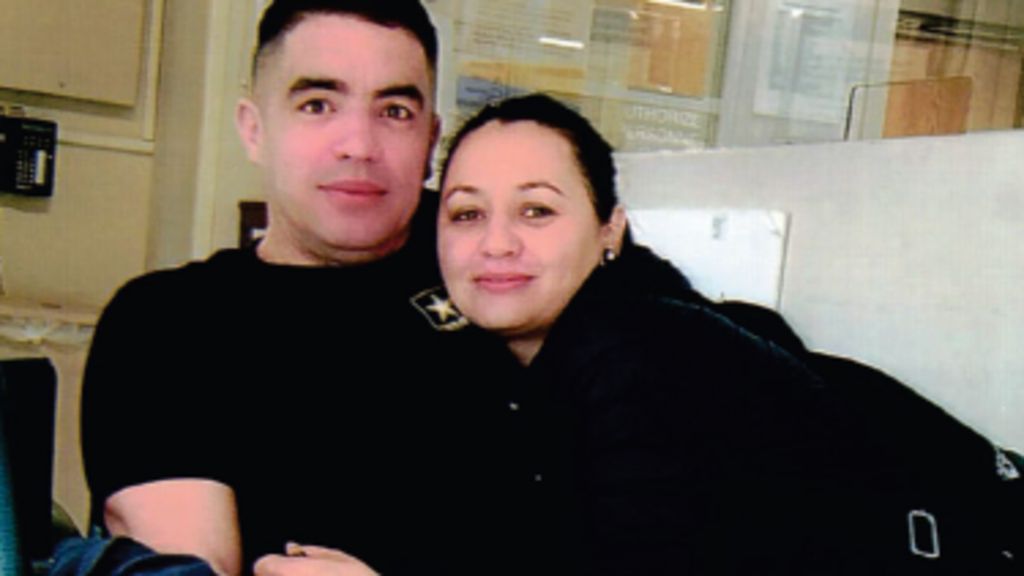
    On April 14, Deisy Rivera Ortega, the wife of 28-year Army veteran Sergeant First Class Jose Serrano, was arrested by US Immigration and Customs Enforcement (ICE) agents after the couple attended a scheduled interview for a parole-in-place program, a federal initiative designed specifically to let immediate family members of US military personnel remain in the country while their immigration applications are processed. What was supposed to be a routine step toward legal permanent residency turned into a chaotic separation that has left Serrano distraught and searching for answers.

    “They just took my wife away,” Serrano shared in an interview with the BBC, describing the disorienting moments after the arrest. The long-serving soldier, who completed a deployment to Afghanistan and was born a US citizen in Puerto Rico, said he has been unable to settle since the detention, alternating between frantic online research for legal resources and anxious, aimless drives to cope with the stress. “I’m searching on the internet how I can help my wife. If not, I’m walking in the house back and forth. Or jumping in my car and just driving for four hours.”

    According to Department of Homeland Security (DHS) records, Rivera Ortega is currently being held at an El Paso-area detention facility. DHS has characterized her as a “criminal illegal alien” from El Salvador, citing her 2016 illegal entry into the US as a federal offense. But her attorney, Matthew James Kozik, and court documents paint a more nuanced picture of her immigration history. After crossing the Rio Grande Valley border in 2016, Rivera Ortega filed a formal asylum claim, court records show. While an immigration judge ordered her removal to El Salvador in December 2019, the same ruling granted her withholding of removal under the UN Convention Against Torture, a protection that barred the government from sending her back to El Salvador on the grounds that she would face significant physical harm there. The ruling also explicitly granted her legal permission to reside in the US while waiting for long-term relief.

    Under the second Trump administration, DHS has expanded a policy of “third-country removals,” which allows the agency to deport undocumented individuals to countries other than their nation of origin. Kozik told reporters that ICE has notified the legal team it intends to deport Rivera Ortega to Mexico, a move Kozik calls completely unlawful and unjust. “She was following the prescribed law of what someone is supposed to do,” he said, arguing that her arrest is “arbitrary and capricious.”

    The couple’s official marriage certificate, provided by Kozik, confirms they were married in June 2022 in Westbury, New York, making Rivera Ortega the immediate family member of an active-duty service member — a status that should have qualified her for the parole-in-place program she was applying for when she was detained. Serrano recalled that the couple was told the meeting was a routine interview with US Citizenship and Immigration Services (USCIS), the agency that handles parole applications. After officials flagged an unspecified issue with the filing, the couple was escorted down a hallway, where ICE agents were waiting to take Rivera Ortega into custody as Serrano watched.

    “It took me a minute, two minutes to react,” he recalled. “And then I started to ask, ‘what is going on, what happened, where are they taking her?’” That encounter was the last time Serrano has seen his wife, and as of this report, the next legal steps for the couple remain unclear. Despite the trauma of his wife’s detention, Serrano says he still retains pride in his nearly 28 years of military service, even as he acknowledges the Army has no control over the immigration agency’s actions. “I love the Army,” he said. “If I had to do it again…I’d go in and do it again.”

    This incident marks at least the second time ICE has detained a military spouse in the month of April. Earlier this month, the agency detained 22-year-old Annie Ramos, the newly married wife of Army Sergeant Matthew Blank. Ramos, an undocumented Honduran immigrant who was brought to the US as a child, was held for five days before ICE released her to her husband. The back-to-back cases have sparked renewed criticism of immigration enforcement policies that separate active-duty military families, who are already tasked with defending US national security.

  • Virginia approves redistricting, giving Democrats edge in midterms

    Virginia approves redistricting, giving Democrats edge in midterms

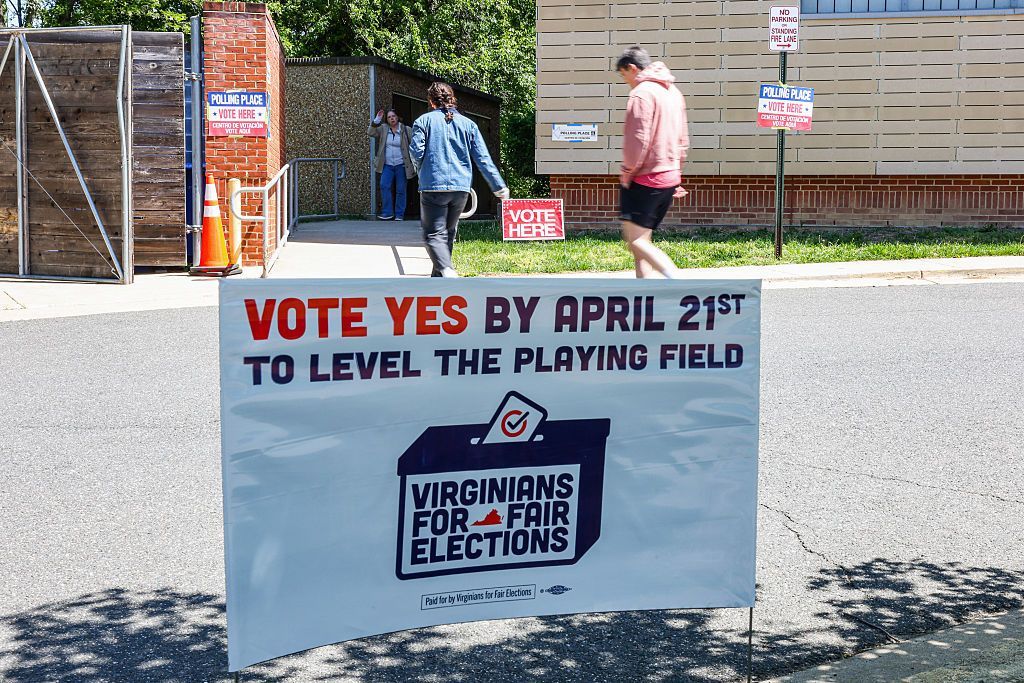
    The national partisan fight over congressional redistricting reached a pivotal turning point in Virginia, where voters have greenlit a Democratic-backed ballot amendment that threatens to upend the fragile balance of power in the U.S. House of Representatives ahead of November’s midterm elections.

    The vote comes in the wake of a years-long nationwide push by former President Donald Trump and national Republicans to aggressively redraw district lines across the country, a strategic move designed to lock in conservative control of the chamber through partisan gerrymandering. The first major shake-up of this effort came when Texas became the first state to implement a mid-decade redistricting shift under pressure from Trump, a change that projected to hand Republicans a structural advantage in five additional congressional seats.

    In response to the Republican power grab, Democratic leaders in blue states launched countermeasures to adjust their own maps to balance out the partisan skew. Last year, California voters backed a campaign led by Governor Gavin Newsom to abandon the state’s previously independent district lines in what Newsom framed as a necessary “fight fire with fire” move. That referendum, approved by California voters in November, delivered Democrats a competitive edge in five new districts, directly countering the gains Republicans secured in Texas.

    Now, Virginia’s approval of its own redistricting amendment has the potential to flip the partisan balance of congressional power on a national scale. Currently, Democrats hold 6 of the state’s 11 House seats, and the new redrawn map is projected to flip as many as four currently Republican-held seats, potentially pushing the state’s Democratic delegation to as many as 10 out of 11 total seats.

    Notably, the referendum has made history in Virginia: according to data from the nonpartisan Virginia Public Access Project, it is by far the most expensive ballot measure in the state’s history, with both proponents and opponents raising a combined total of more than $80 million (£59 million) as of earlier this month, reflecting how high the stakes of the national redistricting battle have become.

    In his first public remarks on the outcome of Virginia’s vote, Trump sounded the alarm on Monday, arguing that a Democratic takeover of the House majority in the midterms would “be a disaster” for the country. In a striking reversal of his own party’s aggressive gerrymandering efforts across the country, Trump added, “I don’t know if you know what gerrymandering is, but it’s not good.”

    Under standard U.S. redistricting rules, states redraw their congressional maps once every 10 years following the release of updated decennial U.S. Census population data. However, Trump’s push for mid-decade adjustments upended this longstanding norm, triggering a tit-for-tat cycle of map changes from both major parties as they fight to gain every possible advantage ahead of the 2024 midterms. Republicans currently hold a narrow, razor-thin majority in the House, and historical trends consistently favor the opposition party — in this case, Democrats — during midterm election cycles, making every competitive district a critical prize for both sides.

    Under current U.S. law, partisan gerrymandering — the practice of shaping district boundaries to intentionally favor one political party — is only illegal when it is drawn along discriminatory racial lines, leaving the current tit-for-tat partisan map changes largely unchallenged in courts.