分类: politics

  • Peru’s defense and foreign ministers resign after the president stalls US military planes deal

    Peru’s defense and foreign ministers resign after the president stalls US military planes deal

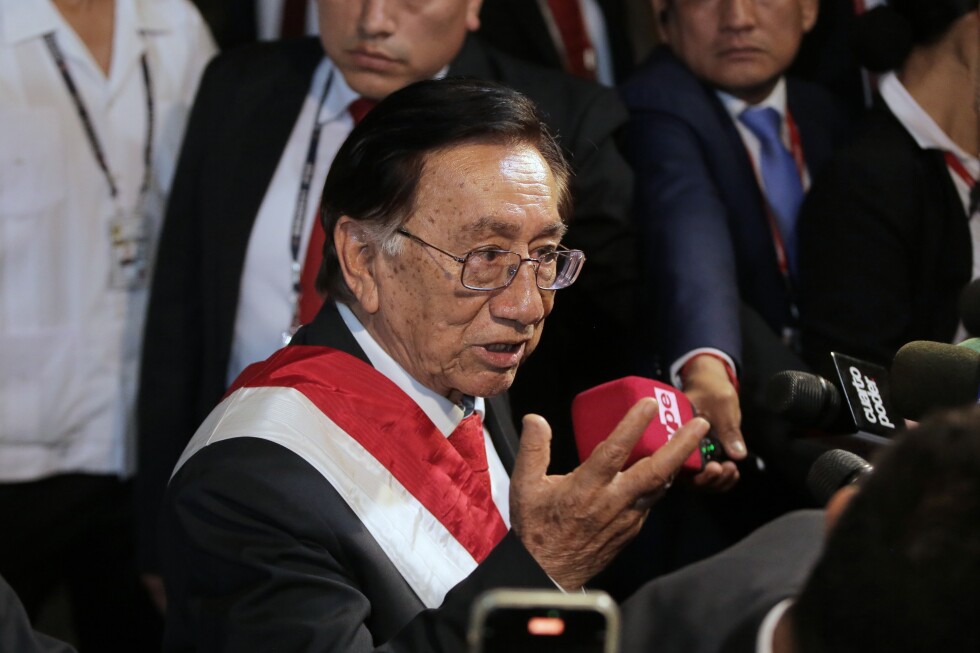
    Political turbulence has erupted in Peru this week, as the nation’s defense and foreign ministers stepped down from their posts Wednesday following interim President José María Balcázar’s decision to push a $3.5 billion U.S.-built F-16 fighter jet purchase decision to the next elected administration. The abrupt resignations have thrown a fresh spotlight on Peru’s ongoing political instability and its delicate diplomatic and defense ties with Washington.

    Balcázar, who was sworn in as Peru’s eighth president in just 10 years after his predecessor was ousted over corruption allegations just four months into office, announced last week that he would forgo finalizing the purchase of 24 Lockheed Martin F-16 jets. He argued that as a temporary transitional leader, he lacked the democratic mandate to commit the country to such a massive long-term financial obligation. “For us to commit such a large sum of money to the incoming government would be a poor practice for a transitional government,” Balcázer stated at the time.

    The U.S. ambassador to Peru, Bernie Navarro, quickly issued a sharp public warning on social media platform X after the announcement. Navarro threatened unspecified measures against Peru if the country was found to be “negotiating in bad faith” or acted to undermine U.S. interests, though he offered no additional details on what actions he might pursue.

    Just days after the interim president’s announcement, Defense Minister Carlos Díaz and Foreign Minister Hugo de Zela resigned. Speaking at a joint press conference Wednesday, the pair confirmed they had made multiple unsuccessful attempts to convince Balcázar to move forward with the deal as planned. Díaz’s resignation letter, obtained by the Associated Press, warned that postponing the procurement could cause serious harm to Peru’s long-term national defense interests.

    In a revealing twist, Díaz disclosed that senior Defense Ministry officials had already formally signed the purchase contract on Monday, in line with the agreed timeline of the procurement process, even without Balcázar’s formal approval. De Zela, speaking to a local Peruvian radio outlet, accused Balcázar of misleading the Peruvian public about the status of the contract. Both officials have confirmed that core details of the deal remain classified and cannot be released publicly, a standard procedure for major defense procurement agreements.

    The $3.5 billion procurement plan was first launched under the administration of former President Dina Boluarte in 2024. The procurement program outlines that Peru will cover the cost through $2 billion in domestic borrowing in 2025, followed by an additional $1.5 billion in 2026. Three major global defense firms submitted bids for the contract: U.S. defense giant Lockheed Martin with its F-16 platform, Sweden’s Saab, and France’s Dassault Aviation.

    Peru is currently in a period of political transition ahead of a presidential runoff election scheduled for June 7. The first round of voting was held on April 12, and election officials are still processing ballots from remote Andean regions and overseas Peruvian consulates. The political upheaval over the fighter jet deal is the latest in a decade-long streak of leadership instability that has shaken the South American nation, with Balcázar becoming the eighth person to hold the presidency since 2014.

    This development comes as unrelated political friction has already roiled Peru’s election process: the nation’s top election official resigned earlier this year over widespread logistical failures in the hotly contested presidential race, and a Peruvian court has set a May 15 deadline for officials to complete the full counting of first-round ballots.
  • US ‘won’t dictate terms’ of free trade talks, says PM Carney

    US ‘won’t dictate terms’ of free trade talks, says PM Carney

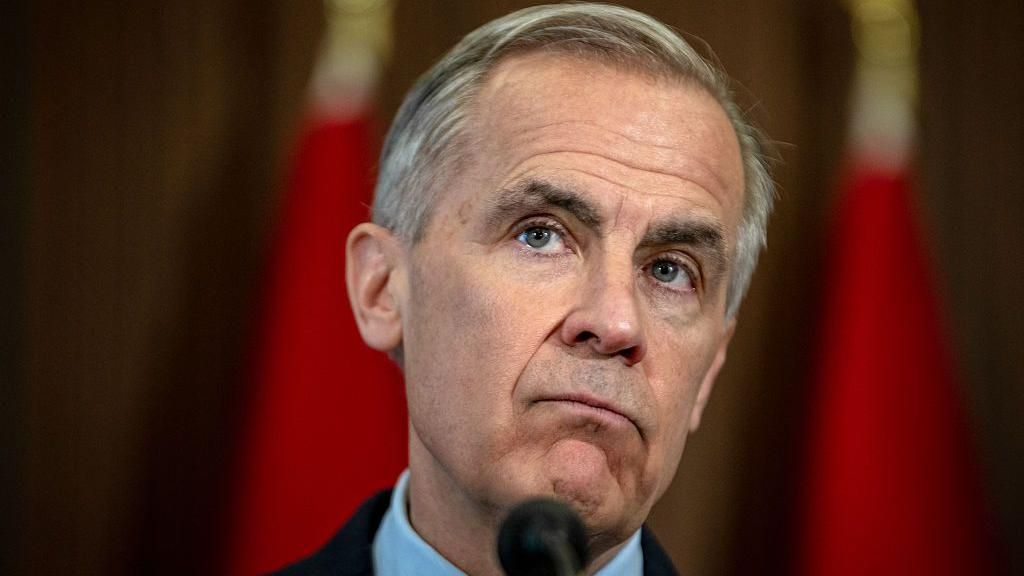
    Tensions are running high ahead of the mandatory mid-term review of the United States-Mexico-Canada Agreement (USMCA), with Canadian Prime Minister Mark Carney drawing a firm line against Washington’s attempts to dictate trade negotiation terms.

    Carney made clear this week that Ottawa will not accept one-sided demands from the United States ahead of upcoming bilateral talks, rejecting framing that casts Canada as a supplicant to U.S. interests. “It’s not a case where there is someone making demands, and a supplicant,” Carney told reporters. “It’s not a case that the United States dictates the terms. We have a negotiation, we can come to a mutually successful outcome – it will take some time.”

    Carney’s comments come amid deep public rifts between the two neighboring trade partners, after top U.S. trade official Jamieson Greer told members of Congress this week that Canada and the U.S. remain fundamentally misaligned on core trade priorities. Greer accused Canada of doubling down on outdated globalist trade frameworks even as Washington works to address the economic downsides of decades of unregulated globalization.

    The three North American trade partners face a mandatory 1 July 2026 deadline to complete the scheduled review of the 2018 USMCA deal, which replaced the earlier NAFTA agreement. While Mexico will launch formal bilateral negotiating rounds with the U.S. in May – following a recent meeting between Greer and Mexican President Claudia Sheinbaum – formal U.S.-Canada talks have not yet begun, though lower-level trade officials have maintained behind-the-scenes contact.

    To prepare for the talks, Carney convened a new cross-party advisory committee on U.S.-Canada trade relations this week, with the group’s first inaugural meeting scheduled for next week. Former Quebec Premier Jean Charest, a member of the new committee, told Canadian public broadcaster Radio-Canada that the U.S. is already demanding sweeping concessions from Ottawa even before formal talks get underway.

    Among the top sticking points is Canada’s decades-old dairy supply management system, a long-running irritant for U.S. agricultural interests. U.S. Commerce Secretary Howard Lutnick repeated Washington’s criticism this week, telling a Senate committee that Canada treats American dairy producers “poorly,” echoing former President and current U.S. political figure Donald Trump’s 2025 claims that Canada charges extraordinary tariffs of up to 400% on U.S. dairy imports.

    Canada’s supply management system strictly controls domestic production and import volumes to support the livelihoods of Canadian small-scale dairy farmers, allowing a set quota of U.S. dairy imports to enter Canada tariff-free. Data from the U.S. Department of Agriculture confirms that the U.S. has never actually hit that import quota limit, despite ongoing complaints.

    Canadian Trade Minister Dominic LeBlanc drew a clear red line on dairy negotiations this week, telling the *Globe and Mail* that the issue is non-negotiable for Ottawa. “We’ve been very clear with them,” LeBlanc said. He added, however, that Canada is prepared to address most other U.S. concerns, as long as talks progress as part of a balanced, comprehensive broader agreement.

    Other outstanding points of friction include Canada’s earlier decision to remove U.S. liquor from retail shelves in retaliation for U.S. tariffs, which Lutnick this week called “disrespectful.” Canada has already made one major concession to the U.S. in recent months, dropping a planned digital tax on large U.S. tech firms last June after the Trump administration flagged the policy as a major trade irritant.

    While both sides remain committed to restarting formal talks, senior officials on both sides have acknowledged that a final deal is unlikely to be reached before the 1 July deadline. If no agreement is reached by the deadline, the USMCA will move to annual review cycles until the full agreement expires in 2036. Greer emphasized this week that Washington’s core goal in the renegotiation is to preserve U.S. market access to Canada and Mexico, leaving the ultimate trajectory of the trilateral trade deal hanging in the balance.

  • Georgia Democrat David Scott, 80, dies after casting final House vote

    Georgia Democrat David Scott, 80, dies after casting final House vote

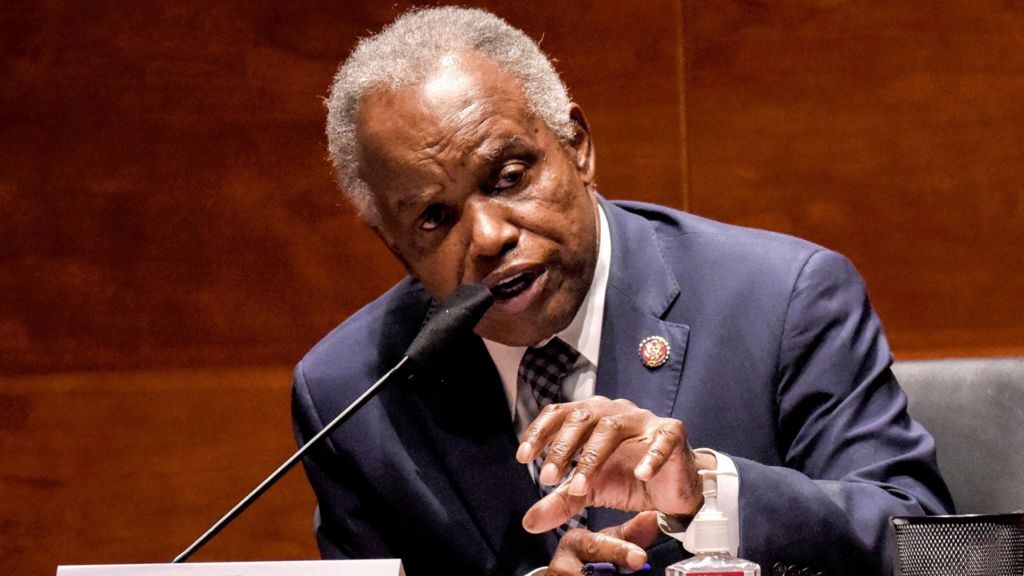
    Veteran Democratic U.S. Congressman David Scott, who represented Georgia’s 13th Congressional District for over 20 years, has passed away at the age of 80, just one day after he cast his last vote on the floor of the U.S. House of Representatives. At the time of his death, Scott was actively campaigning for a 13th consecutive term in the Democratic primary election scheduled for next month, having repeatedly rejected calls to step down amid growing public questions about his declining health. No official cause of death has been announced by his office or family as of Wednesday.

    Born in rural South Carolina in 1945, Scott built a long legacy of public service that culminated in a groundbreaking milestone in 2020, when he became the first Black lawmaker to chair the powerful House Agriculture Committee. He remained steadfast in his commitment to serving his constituents even amid health speculation, telling reporters in 2024 that he was “in good health, moving and doing the people’s work” and had no plans to retire. His final act in Congress came on Tuesday, when he voted in favor of a bipartisan bill advancing new hydropower infrastructure projects across the U.S.

    Scott’s passing marks the fifth time a sitting member of Congress has died in office since last year, a string of vacancies that has upended the already fragile balance of power in the lower chamber. Before Scott’s death, Republicans held a razor-thin 218-213 majority in the House, with one independent legislator caucusing with the GOP. Following the vacancy created by Scott’s death, the new breakdown stands at 217 Republicans, 212 Democrats and one Republican-aligned independent, giving Republicans an even narrower working advantage as they fight to defend their slim majority in November’s upcoming midterm elections.

    House Minority Leader Hakeem Jeffries, the top Democratic leader in the chamber, released a formal statement honoring Scott’s legacy on Wednesday. “David Scott was a trailblazer who served a district that he represented admirably, rose up from humble beginnings to become the first African American ever to chair the House Ag Committee,” Jeffries said. “He cared about the people that he represented. He was fiercely committed to getting things done for the people of the great state of Georgia, and he’ll be deeply missed.”

    The four other sitting House members who have died since last year include three fellow Democrats: Sylvester Turner of Texas, Raúl Grijalva of Arizona and Gerry Connolly of Virginia. Republican Congressman Doug LaMalfa of California also passed away earlier in 2025.

    Under Georgia state election law, Governor Brian Kemp is required to formally declare a special election to fill Scott’s vacant seat within 10 days of the vacancy. The special election must be held no fewer than 30 days after the governor’s declaration, setting up an early contest that could further reshape the House’s partisan balance ahead of November’s general election.

  • Labour councillor defending seat in election posed with rifle in Israeli army uniform

    Labour councillor defending seat in election posed with rifle in Israeli army uniform

    As the United Kingdom prepares for local elections across 136 councils on May 7, a sitting Labour Party councillor seeking re-election has found herself at the center of a growing political firestorm over her past participation in an Israeli military training program.

    Izzy Lenga, who represents London’s South Hampstead ward in Camden, holds multiple senior positions within UK Labour-linked and pro-Zionist organizations: she serves on the Labour Party’s London executive committee, and is currently one of two national vice chairs of the Jewish Labour Movement (JLM), an influential group officially affiliated with the Labour Party. The JLM itself operates within the structure of the World Zionist Organisation (WZO), a global group with documented ties to the establishment of illegal Israeli settlements in occupied Palestinian territory. Lenga previously served as JLM’s international officer, leading engagement with the WZO and its UK affiliate, the Zionist Federation UK (ZFUK).

    Pictures published of Lenga posing in an Israel Defense Forces uniform alongside an assault rifle first raised questions about her military ties back in 2021, when alternative news outlet Electronic Intifada reported the images indicated she had completed Marva, a paramilitary course overseen by the Israeli military. Two years later, Jewish News confirmed Lenga had indeed participated in basic training with the IDF.

    The controversy comes at a moment of intense global scrutiny of Israeli military actions in Gaza. The Israeli military is widely identified as the primary force responsible for ongoing civilian harm in Gaza, with multiple documented accounts of war crimes ranging from deliberate killing of unarmed civilians to sexual violence against detainees. The International Court of Justice has already ruled there is a plausible case that Israel’s actions in Gaza amount to genocide, and the International Criminal Court has issued arrest warrants for Israeli Prime Minister Benjamin Netanyahu and former Defense Minister Yoav Gallant on charges of war crimes and crimes against humanity. It was Gallant who famously described Gaza civilians as “human animals” in a public statement shortly after the October 2023 outbreak of hostilities.

    Recent reporting has further underscored the links between the WZO and illegal settlement activity. A September 2024 BBC documentary uncovered that the WZO’s Settlement Division, the body tasked with managing land in the occupied Palestinian territories, has repeatedly allocated state and private Palestinian land for the construction of illegal Israeli outposts. In at least four confirmed cases, unauthorised outposts were built on land allocated directly by the division, including one 2018 contract signed by Zvi Bar Yosef – an Israeli official sanctioned by both the UK and US in 2024 for organized violence and intimidation targeting Palestinian civilians. The ZFUK, the WZO’s UK affiliate that works closely with JLM, was removed from the UK’s official charities register in August 2024, just weeks before the documentary was released.

    In June 2025, the UK-based International Centre of Justice for Palestinians (ICJP) submitted a formal recommendation for British sanctions against the WZO’s Settlement Division, outlining a pattern of violations including the seizure of private Palestinian land for settlers without owner consent, unregulated land management with no required compensation for displaced owners, and preferential financial treatment for settlers. The ICJP also identified two UK-based organizations that facilitate the WZO’s activities: ZFUK and Mizrachi UK, a registered UK charity that receives direct funding from the WZO.

    The JLM remains a highly influential force within the current Labour Party, counting sitting parliamentarians, councillors, and grassroots activists among its membership. In a January 2024 speech to a JLM conference – delivered months before Keir Starmer took office as UK prime minister – Starmer publicly thanked the movement for “saving the party”, and pledged to block what he described as antisemitism hiding behind pro-Palestinian advocacy.

    For the upcoming May 7 local elections, Starmer’s Labour government faces electoral pressure on two fronts: the right-wing populist Reform UK party on one side, and left-leaning and progressive opposition groups including the Green Party and local independent campaigns on the other. More than 5,000 council seats across the country are up for election. The Green Party has made its opposition to the UK’s financial ties to Israel’s actions in Gaza a central campaign plank, with senior party officials confirming the Greens are pushing for local councils to divest pension funds that hold investments in companies profiting from the Gaza conflict, fossil fuel extraction, and arms manufacturing.

    Middle East Eye, the independent outlet that broke the latest details of the controversy, attempted to contact Izzy Lenga for comment prior to publication, but received no response before the article went live.

  • FedEx targeted by French lawsuit over ‘complicity’ in Gaza genocide

    FedEx targeted by French lawsuit over ‘complicity’ in Gaza genocide

    A high-stakes legal action has rocked France’s logistics and political spheres this week, as a prominent pro-Palestine advocacy organization has brought an unprecedented accusation of “complicity in genocide” against global shipping giant FedEx over its alleged role in moving military aircraft components bound for Israeli forces operating in the Gaza Strip.

    The French Jewish Union for Peace (UJFP) filed the complaint Tuesday with France’s National Anti-Terrorism Prosecutor’s Office (PNAT), leveling allegations that the U.S.-headquartered carrier’s French subsidiary deliberately facilitated the transfer, routing, and delivery of critical aircraft parts from the United States to Israel, with France serving as a transit hub. According to the legal filing, the shipped components are used to service and repair F-35 fighter jets operated by the Israeli Air Force for bombing and intelligence surveillance missions across Gaza. The complaint categorizes the company’s actions as potential participation in three violations of international law: war crimes, crimes against humanity, and genocide.

    In an immediate response to reporters from AFP, FedEx France flatly rejected all claims laid out in the filing. The company issued a clear statement emphasizing that it never handles international deliveries of weapons or ammunition, denying any wrongdoing in the matter.

    The UJFP’s complaint draws on shipment tracking data compiled by a coalition of pro-Palestine groups, including People’s Embargo for Palestine and Urgence Palestine. The filing documents 117 separate shipments that transited Paris Roissy-Charles de Gaulle Airport between early April and late October 2025, all managed by FedEx Express FR. Of those, 22 were shipped directly from Paris to Israel, with at least three carried on French-registered FedEx aircraft. The plaintiffs argue that FedEx could not have been unaware of the contents of these packages, noting that many contain mechanical and aeronautical parts classified as dual-use—items that can serve both civilian and military purposes—specifically suited for military aircraft.

    Speaking to independent French outlet Mediapart, UJFP’s legal counsel Damia Taharraoui dismissed any claims of civilian utility for the tracked shipments. “There’s no scenario where these parts are for civilian use. We have casings, parachutes, all destined for Israeli military bases. These are components explicitly identified as functional for F-35 jets, and also potentially for F-15 and F-16 models,” Taharraoui explained.

    Under French national trade rules, any transit or export of military-grade or dual-use goods requires formal government authorization. The complaint calls on prosecutors to launch a full judicial inquiry to determine whether French officials granted FedEx approval for these shipments. Taharraoui stressed that if official authorizations are confirmed, they would directly violate international treaties France has ratified, most notably the 1948 Convention on the Prevention and Punishment of the Crime of Genocide.

    The legal filing comes amid a years-long period of tense diplomatic and political friction between France and pro-Palestine movements, tied to Paris’ longstanding stance on the Gaza conflict. Since Israel launched its military campaign in Gaza in October 2023, France has maintained broad public support for the operation, which the United Nations and multiple leading human rights organizations have classified as a genocide. As of the latest counts, the conflict has killed more than 72,500 people in Gaza and left most of the densely populated enclave in ruins.

    The French government has consistently pushed back against accusations that it supplies lethal arms to Israel, stating that it only exports non-lethal components for Israel’s Iron Dome air defense system, along with items marked for re-export. Still, tensions rose between Paris and Tel Aviv last month when Israel announced it would suspend security-related imports from France, accusing the French government of adopting a “hostile” posture—an action widely linked to France’s September 2024 decision to formally recognize the State of Palestine.

    Despite this diplomatic rift, the French government has continued to crack down on domestic pro-Palestine advocacy, restricting the movement of Palestinian human rights activists within the country. Just last week, French authorities denied a visa to Shawan Jabarin, general director of Ramallah-based leading Palestinian human rights organization Al-Haq, blocking him from attending a series of high-profile diplomatic and legislative briefings at the French National Assembly, French Foreign Ministry, and the Council of Europe.

    This marked the second time French and European authorities have rejected Jabarin’s visa application since September 2024, when the United States imposed sanctions on Al-Haq. Jabarin, who was awarded the French Republic’s human rights prize in 2018 and met with French President Emmanuel Macron at the Elysee Palace in 2022, was also scheduled to attend meetings at the European Parliament’s human rights committee in Strasbourg and policy briefings in Belgium. The last-minute visa refusal meant he was forced to cancel all planned engagements across the region.

  • Beijing strengthens legal support for AI, biotech sectors

    Beijing strengthens legal support for AI, biotech sectors

    Beijing’s top judicial authority has released a targeted legal guideline mandating local courts to expand specialized legal and intellectual property protection for high-growth cutting-edge sectors, including artificial intelligence and biomedicine, as part of broader efforts to fuel the development of new quality productive forces.

    Issued by the Beijing High People’s Court on Wednesday, the directive requires capital city courts to prioritize AI, biomedicine and other key innovative industries throughout the 15th Five-Year Plan period spanning 2026 to 2030. Under the new framework, courts will fully leverage existing legal regimes covering patents, trademarks, trade secrets and software copyrights to build a robust judicial protection system tailored to the unique innovation demands of these fast-evolving sectors.

    The guideline encourages judges across Beijing to conduct deep dives into unresolved legal questions emerging from these new technological fields, with a specific focus on artificial intelligence. This research is intended to speed up the formation of clear adjudication standards that align with both technological progress and industrial development needs.

    To further strengthen the quality of rulings, the document calls for the accurate implementation of punitive damages in intellectual property disputes involving emerging sectors. It also emphasizes expanding the role of technical investigators and industry experts in providing specialized technical assessment and analysis during case proceedings.

    Zhang Xiaojin, chief judge of the high court’s third civil division, highlighted that the new guideline marks a critical step in shoring up legal support for high-tech and cutting-edge research and development in Beijing. “This framework advances a judicial approach that integrates technical industry standards with balanced, forward-looking development,” Zhang explained. She added that the guideline also aims to deepen cross-agency cooperation with administrative regulatory bodies, improve the overall quality of intellectual property case adjudication, and support Beijing’s commitment to high-level opening-up to global innovation partners.

    New data released alongside the guideline illustrates the rapid growth of intellectual property disputes tied to emerging tech in the capital. In 2025 alone, Beijing courts concluded 64,960 intellectual property cases, of which 9,963 involved digital economy issues including data property rights, artificial intelligence and internet platform operations. Cross-regional and international IP casework has also expanded steadily: last year, Beijing courts closed 7,686 intellectual property disputes involving foreign parties, as well as stakeholders from Hong Kong, Macao and Taiwan.

    Beijing’s existing judicial infrastructure for technical IP cases has already built a solid track record ahead of the new guideline. Since 2015, 306 certified technical investigators have participated in resolving complex technical questions across more than 4,500 intellectual property cases, laying the groundwork for the expanded specialized role outlined in the new framework.

  • Brazil’s 80-year-old Lula hits the treadmill to ease voter concerns about age

    Brazil’s 80-year-old Lula hits the treadmill to ease voter concerns about age

    SAO PAULO, Brazil – As Brazil prepares for its 2026 presidential election, the race has taken an unusual turn centered not on policy platforms or economic plans, but on physical fitness and age. At 80 years old, incumbent President Luiz Inácio Lula da Silva has made his rigorous daily workout regimen a centerpiece of his campaign for a fourth non-consecutive term, turning gym sessions into a political statement that has resonated – and sparked debate – across the nation.

    Even as Brazilian voters remain deeply divided over whether Lula should seek another term in October’s election, there is widespread cross-partisan agreement on one point: the president’s relentless commitment to his daily treadmill runs and strength training routines. Marcela Peres, a 63-year-old Brasília resident working out at a local hotel gym this week, summed up the mixed view many hold. “He is a bit too old to campaign again. We’d better have someone else running,” Peres said. “But his workouts are indeed a good example for people like me.”

    Lula’s push to project vitality and good health comes as concerns over advanced age and presidential fitness have dominated global political discourse, most prominently following U.S. President Joe Biden’s decision to drop out of the 2024 race over health and age-related questions. Lula’s campaign has leaned into his fitness to directly counter those same concerns dogging his own candidacy, even drawing a playful response from the president after a conspiracy theory spread claiming his workout videos featured a body double. “One of these idiots said it was not me, that it was a clone,” Lula said in March, just days after his wife Rosângela da Silva posted a clip of his gym routine online. “Go to the gym. Get ready. Drink less and work to see what happens. I want to live 120 years.”

    The focus on fitness has prompted a response from Lula’s main challenger: Sen. Flávio Bolsonaro, 45-year-old son of former Brazilian President Jair Bolsonaro, who is nearly half Lula’s age. The younger Bolsonaro, who was anointed as the opposition’s candidate by his father from prison last December, has followed Lula’s lead by highlighting his own physical fitness, sharing clips of himself sprinting to campaign events and dancing at rallies. The former president is currently serving a 27-year sentence for leading a post-election coup attempt and has recently been transferred to house arrest.

    Flávio Bolsonaro has leaned into age-based attacks on Lula, recently mocking the incumbent as an aging Chevrolet Opala that is “all backward” and “drinks a lot (of fuel).” Lula quickly brushed off the jab, rebranding himself as a “turbo car” in response. Political analysts say the entire back-and-forth over fitness and age is a calculated image battle, with both sides seeking to capitalize on voter perceptions of vitality.

    “He is doing this to steer away from the Joe Biden effect,” explained Carlos Melo, a political science professor at São Paulo’s Insper University. “Flávio Bolsonaro is trying to say he is actually the young one. This is a game of image.”

    Felipe Soutello, a political consultant who has managed dozens of Brazilian legislative and executive campaigns, notes that modern political campaigns now require candidates to showcase physical activity regardless of their age. “The opposition will use a certain ageism, a little prejudice against older generations, as a tool to hurt the president’s performance,” Soutello said. What the younger Bolsonaro’s campaign has not fully accounted for, he added, is a dramatic demographic shift that has reshaped Brazil’s electorate: voters over the age of 60 now wield more electoral power than younger age groups.

    According to data from Brazil’s Supreme Electoral Court compiled by research group Nexus, the number of eligible voters over 60 has surged from 20.8 million in 2010 to 36.2 million as of March 2026, making up one-quarter of the entire electorate. This growing bloc of older voters is widely expected to be a decisive factor in the upcoming election, which follows Lula’s 2022 victory by the narrowest margin in Brazilian history – just 50.9% of the vote.

    For undecided voters, the fitness focus offers both upside and downside. Antonio Moreira, a 50-year-old musician who works out regularly on Rio de Janeiro’s beaches and remains uncommitted to either candidate, acknowledged that no voter wants to support a leader struggling with declining health. He added that Lula’s workout routine also serves as a positive example for older Brazilians looking to stay active. While Flávio Bolsonaro’s campaign dance videos have drawn attention, Moreira argued that showmanship is not enough to win over undecided voters. “It is okay to do it as they do to seek for votes, but to reach a different kind of voter there needs to be more real proposals, right?”

    Lula’s commitment to fitness is not a new campaign gimmick: the president played frequent soccer during his first two terms in office, maintained his workout routine throughout 580 days he spent in prison on now-overturned corruption convictions, and centered his health as a campaign talking point during his successful 2022 run against the elder Bolsonaro, a former Army captain who has long struggled with chronic health issues. If Lula wins October’s election, he will extend his own record as the oldest person ever elected to the Brazilian presidency.

    AP journalist Lucas Dumphreys contributed reporting from Rio de Janeiro.

  • Moldovan oligarch jailed in $1bn ‘theft of the century’ case

    Moldovan oligarch jailed in $1bn ‘theft of the century’ case

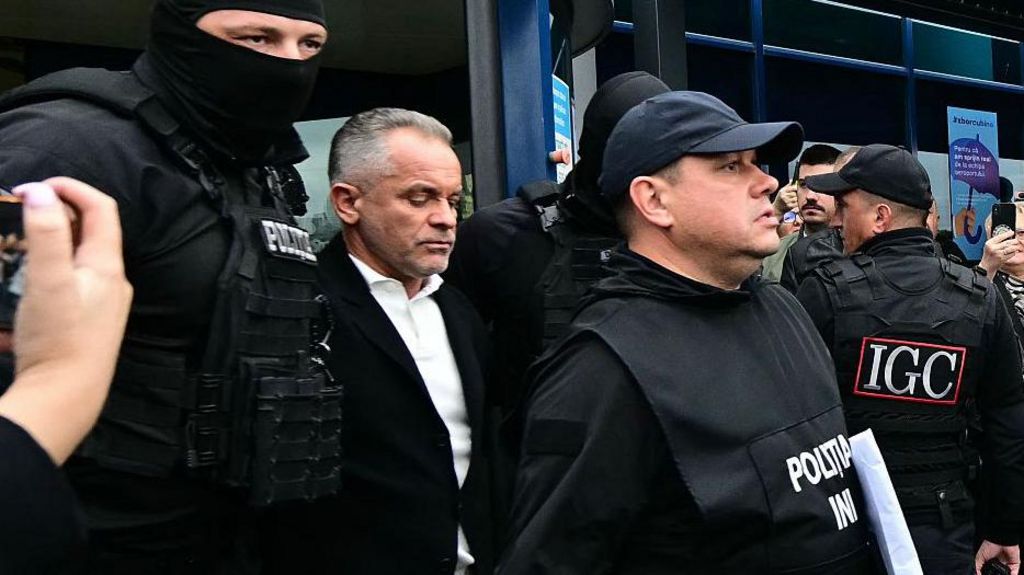
    One of Moldova’s most powerful former business and political figures, ex-oligarch Vlad Plahotniuc, has received a 19-year prison sentence following his conviction on charges connected to the massive 2014–2015 banking fraud widely dubbed the “theft of the century” in the Eastern European nation.

    At the time of the scheme, Plahotniuc held the title of Moldova’s richest person, and prosecutors proved that he played a key coordinating role in the siphoning of roughly $1 billion from Moldovan financial institutions. That sum amounted to 12% of Moldova’s entire gross domestic product in 2014, leaving the country’s public finances crippled. Investigators confirmed Plahotniuc personally diverted more than $40 million of the stolen funds for his own private use; court documents show the money went toward purchases including a private Embraer Legacy 650 jet, multiple high-value real estate assets, luxury travel, premium medical services, and private business investments. In addition to the lengthy prison term, the court ordered Plahotniuc to pay $60 million in restitution to the Moldovan state.

    The fraud unfolded over just 48 hours in 2014, when $1 billion in loans was moved from Moldovan banks to a web of shell companies registered in the United Kingdom and Hong Kong, whose true owners were concealed at the time. When the scheme collapsed, the Moldovan government was forced to intervene with a bank bailout to protect ordinary depositors, a move that left a public budget hole equal to one-eighth of the country’s annual GDP. Subsequent investigations traced most of the stolen funds to companies controlled by pro-Russian oligarch Ilan Shor, who currently resides in Moscow and faces separate accusations of orchestrating pro-Russian vote manipulation schemes in Moldova. Authorities confirmed Wednesday that Plahotniuc leveraged his widespread influence across Moldova’s political, financial, and legal sectors to build a coordinated criminal network, and that he facilitated Shor’s entry into the shareholder base of targeted Moldovan commercial banks to enable the fraud.

    Plahotniuc was not immediately charged in connection with the scheme. It was not until 2019, when his Democratic Party was removed from national power, that he faced formal corruption charges. He fled Moldova that year and remained a fugitive for six years, until law enforcement captured him in Athens in July 2025 as he attempted to board a flight to Dubai. He was extradited back to Moldova to face trial later that year. Plahotniuc has repeatedly denied all criminal allegations against him, and he was not present in court for the sentencing. His legal team has confirmed they will appeal the conviction, maintaining that the charges against their client are politically motivated. Plahotniuc also faces multiple additional ongoing criminal investigations in Moldova, all of which he denies any involvement in.

  • Alleged coup plotters in Nigeria plead not guilty to treason and terrorism

    Alleged coup plotters in Nigeria plead not guilty to treason and terrorism

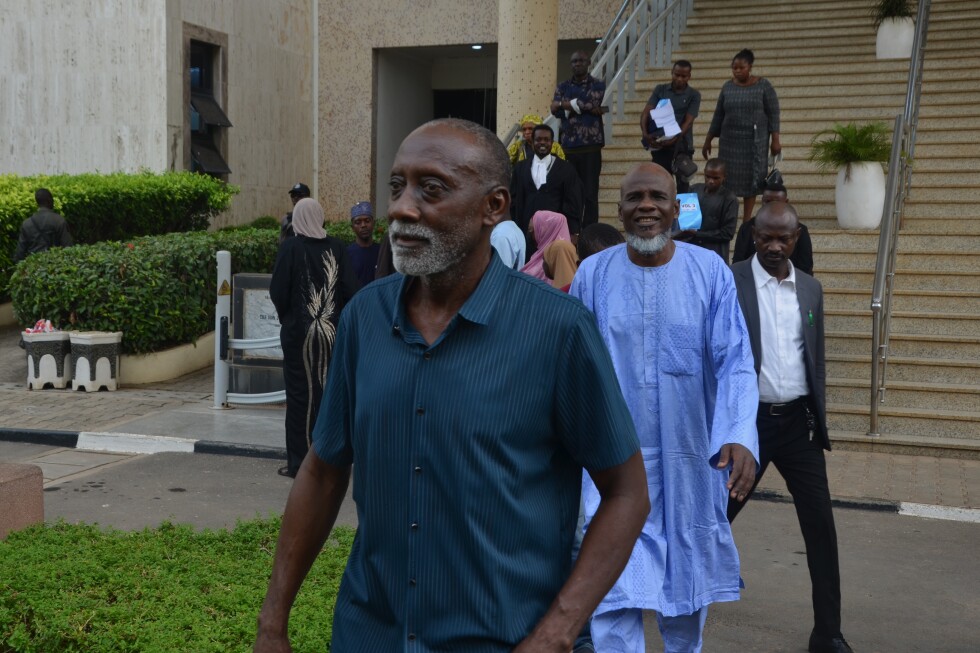
    ABUJA, Nigeria — In a high-stakes legal proceeding that underscores the stability of Nigeria’s democratic system, six individuals charged with conspiring to overthrow President Bola Tinubu appeared in federal court this Wednesday to face multiple counts of treason and terrorism. All six defendants formally entered not guilty pleas across all 13 criminal charges, which were officially made public a day earlier on Tuesday. The accused have been held in the custody of Nigeria’s secret police for several months following their arrest after the coup plot was uncovered. Among the six detainees are a retired army major general and an active-duty police inspector, revealing the alleged plot’s connections to current and former Nigerian security personnel. Authorities also named a seventh co-conspirator: Timipre Sylva, the former governor of Bayelsa State, who faces allegations of aiding the group by concealing their plans. As of Wednesday’s court session, Sylva remains at large and has not been taken into custody. Following the initial arraignment, the presiding judge adjourned proceedings until April 27, when the court is scheduled to review and hear arguments on bail applications filed by the defense teams for the six detained suspects. The official charge sheet details that the defendants “conspired with one another to levy war against the state to overawe the president of the Federal Republic of Nigeria,” laying out the core of the treason allegations against the group. Nigerian federal authorities first publicly announced they had foiled the attempted coup back in January, when officials confirmed that a number of military personnel would face trial for their alleged involvement. If the plot had succeeded, it would have brought an end to nearly 30 years of uninterrupted democratic governance in Nigeria, Africa’s most populous nation, which transitioned back to democratic rule back in 1999 after decades of military dictatorship.

  • Japanese police arrest a South Korean for allegedly obstructing Yasukuni Shrine festival

    Japanese police arrest a South Korean for allegedly obstructing Yasukuni Shrine festival

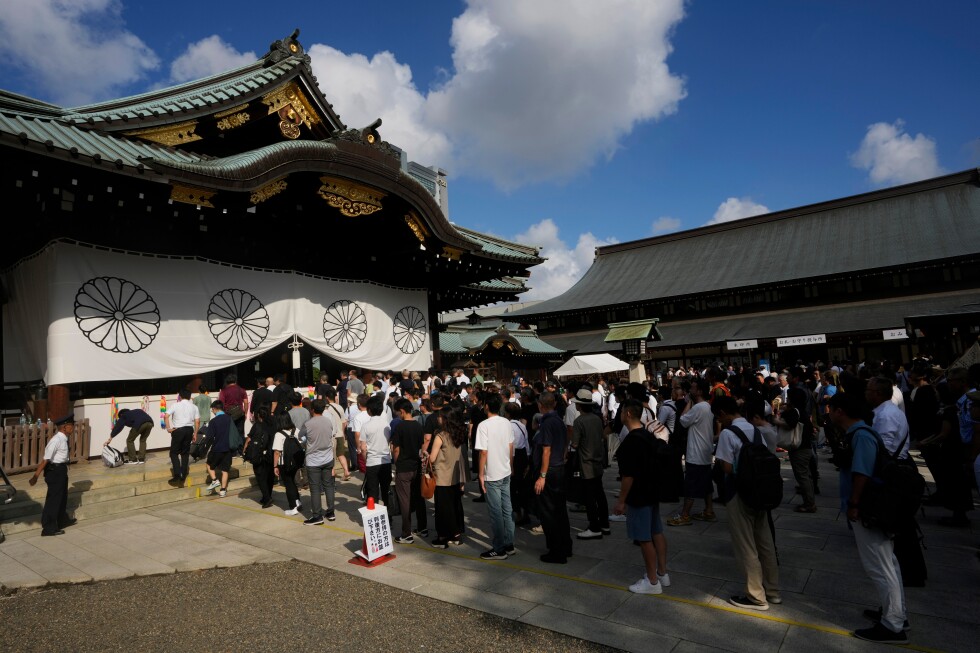
    Diplomatic friction over Japan’s remembrance of its wartime past has flared again, following the arrest of a South Korean national at Tokyo’s controversial Yasukuni Shrine during the site’s annual spring festival this Wednesday. Japanese law enforcement officials confirmed the suspect was taken into custody on accusations of disrupting public event proceedings at the shrine.

    Yasukuni Shrine holds a deeply divisive place in modern East Asian politics. The Shinto site honors 2.5 million Japanese individuals who died in conflicts over the past centuries, including 14 Class-A convicted World War II war criminals. For countries that suffered brutal Japanese imperial aggression before and during WWII — most notably China and the two Korean states — official and high-profile political visits to the shrine are widely interpreted as a deliberate refusal to acknowledge and apologize for Japan’s wartime atrocities.

    According to details released by Japan’s Kyodo News agency, the 64-year-old South Korean suspect positioned himself at the shrine’s main entrance gate, directly in the path of vehicles transporting imperial messengers. The shrine confirmed on its official website that the messengers were tasked with bringing ritual offerings from Japan’s emperor to the shrine for the annual spring festival. The suspect unfurled a banner bearing two provocative political messages: one calling for the removal of convicted war criminals from the shrine’s roll of honor and an end to commemorative prayers for them at the site, and another asserting South Korea’s territorial claim to the island contested by Seoul and Tokyo, known as Dokdo in South Korea and Takeshima in Japan.

    The arrest comes one day after a separate development that reignited regional criticism. Japanese Prime Minister Sanae Takaichi, who has a long history of regular personal visits to Yasukuni Shrine, opted to send a ritual ornament to the shrine for the second consecutive term as prime minister, rather than visiting in person. The move still drew sharp condemnation from both China and South Korea.

    Hours after the arrest, a group of more than 100 Japanese right-wing lawmakers — including one sitting cabinet minister — carried out a planned group visit to pray at the shrine, a move that will likely escalate regional discontent over Japan’s approach to its wartime history further.