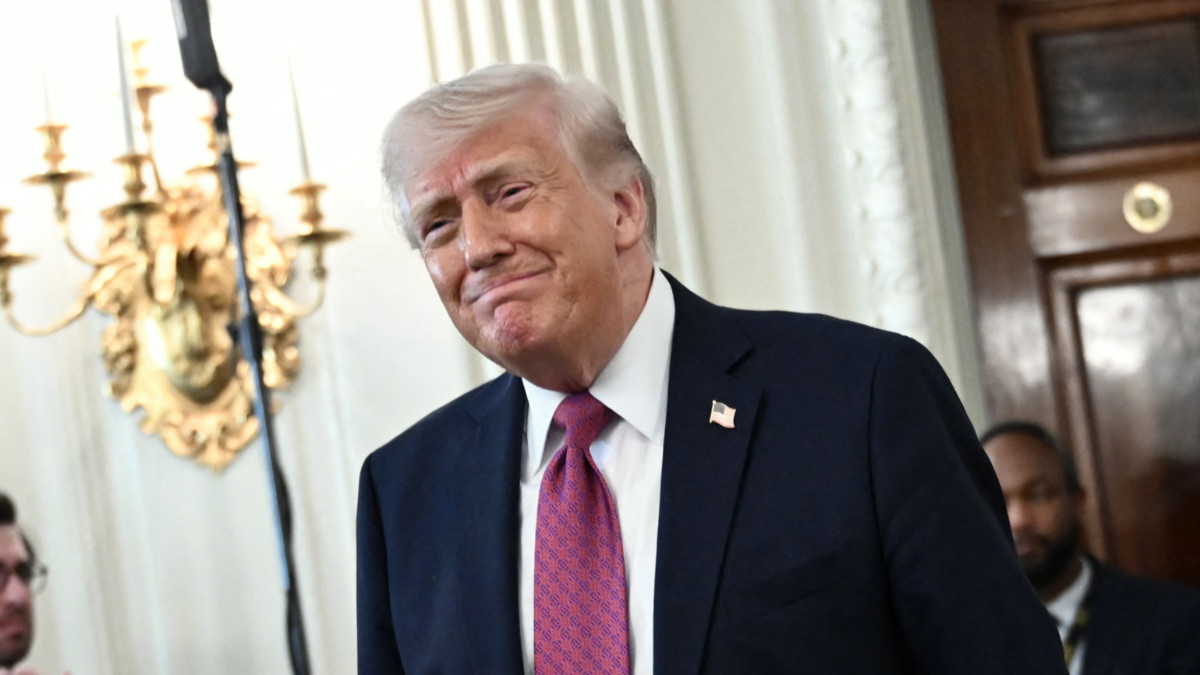
Hours before a two-week U.S.-Iran ceasefire was scheduled to expire on Tuesday, former U.S. President Donald Trump announced a vague extension of the truce, throwing the future of planned bilateral peace talks into deep uncertainty.
In an official White House statement, Trump explained his decision to extend the ceasefire came at a formal request from Pakistan’s Chief of Army Staff Asim Munir and Prime Minister Shehbaz Sharif. He argued that Iran’s ruling government is “seriously fractured” and requires additional time to coalesce around a unified negotiating position to present to U.S. mediators. As part of the extension, Trump confirmed he has ordered U.S. military forces to maintain the ongoing naval blockade of Iran, with the truce remaining in place until Iran submits its formal proposal.
The two-week initial ceasefire has largely held across the region, bringing a much-needed reprieve to both sides. For Iran, which has endured heavy airstrikes from the U.S., Israel, and U.S.-aligned Gulf Arab allies, the truce halted widespread destructive attacks. For oil-rich Gulf states, which faced thousands of incoming Iranian ballistic missile and drone strikes in preceding weeks, the ceasefire similarly ended persistent security threats.
Instead of continuing offensive strikes, Trump adopted a strategy of naval blockade, framed as a response to Tehran’s seizure of partial control over the Strait of Hormuz and its selective permission for commercial vessels to transit the critical waterway. On Tuesday, the U.S. military carried out its first high-profile action under the blockade: U.S. troops boarded the crude oil tanker *Tifani* in the Indian Ocean via helicopter, seizing the vessel that had already been sanctioned for transporting Iranian crude oil to China. The U.S. Department of War published official footage of the operation to the public.
Speaking to CNBC on Tuesday, Trump asserted that the blockade was delivering successful results, claiming “We totally control the Strait, just so you understand, for all the fake news out there.” However, his claim directly contradicts reporting from independent maritime intelligence groups, which confirm Iranian commercial vessels continue to transit the Strait of Hormuz and Gulf of Oman – areas where U.S. naval forces are concentrated. Leading maritime publication Lloyd’s List reported that at least 26 vessels have successfully bypassed the U.S. blockade to date, including 11 tankers carrying Iranian oil cargo.
This conflicting account is just the latest example of inconsistent messaging from the Trump administration on its Iran policy. The collapse of planned talks has further muddied the outlook: just this week, global attention was focused on Vice President JD Vance, who was widely expected to travel to Pakistan for a second round of direct negotiations with Iranian delegates. CNN later reported Tuesday afternoon that Vance remained at the White House alongside Trump, joined by Secretary of State Marco Rubio and Secretary of War Pete Hegseth for emergency consultations.
Iran has already ruled out participation in the planned talks, blaming excessive U.S. demands for the breakdown. Semi-official Iranian news agency Tasnim reported Tuesday that Tehran had already canceled plans to send a negotiating delegation to Islamabad, arguing that engaging with U.S. mediators would be a waste of time while Washington continues to obstruct any mutually acceptable agreement.
Tensions have further escalated amid new Iranian threats. The Islamic Revolutionary Guard Corps (IRGC) warned Tuesday that it would shut down all oil production across the Persian Gulf if any new attacks against Iran are launched from Gulf Arab states. “The southern neighbours should know that if their geography and facilities are used in the service of the enemies to attack the Iranian nation, they should bid farewell to oil production in the Middle East,” Fars News Agency quoted IRGC Aerospace Force Commander Majid Mousavi as saying.
The breakdown of talks has sent a shockwave through the Middle East, reintroducing widespread uncertainty across the region just one week after rising diplomatic optimism. Last week, hopes for a diplomatic breakthrough grew significantly after the Trump administration announced a ceasefire in Lebanon, a core precondition Iran had set for advancing negotiations.
This report was originally compiled by Middle East Eye, an independent outlet specializing in coverage of the Middle East and North Africa region.