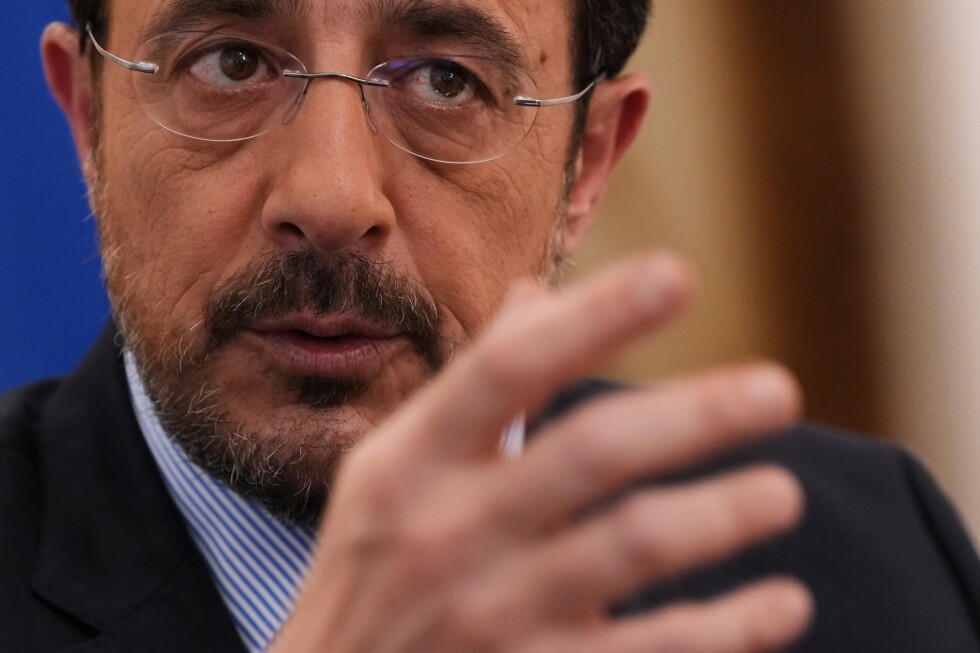
As European Union leaders gather in Cyprus for a high-stakes summit this week, the island nation’s president is pushing for urgent progress on a long-unaddressed collective defense rule that has suddenly moved to the top of the bloc’s security agenda. In an exclusive interview with The Associated Press on Tuesday, President Nikos Christodoulides outlined his priority for the gathering: building a concrete operational framework for the EU’s mutual defense clause, Article 42.7, which has never been activated despite its placement in the bloc’s founding treaties.
The treaty clause legally obliges all 27 EU member states to provide all possible aid and assistance to any member that faces armed aggression on its territory. However, decades after the clause was written, no standardized protocols exist to guide how member states should respond if a nation formally invokes the provision. “We have Article 42.7 and we don’t know what is going to happen if a member state triggers this article,” Christodoulides explained ahead of the summit, which will also host leaders from four Middle Eastern nations and focus heavily on the ongoing Iran war and its regional spillover risks.
For Christodoulides, this push for clarity comes from direct, recent experience. Just one month ago, a Shahed drone struck a British air base on Cyprus’ southern coast, located only 129 miles from the Lebanese capital Beirut, from where Cypriot officials assessed the drone was launched. The incident marked the first drone attack on EU territory linked to the Iran war, prompting Christodoulides to activate a call for support from bloc partners. In response, Greece, France, Spain, the Netherlands and Portugal quickly deployed anti-drone capable naval assets to help bolster the island’s defenses, highlighting both the willingness of members to assist and the lack of pre-planned coordination for such events.
Two key unresolved points top the agenda for drafting the new playbook. First, Christodoulides noted that the majority of EU member states also hold membership in NATO, which has its own collective defense Article 5 that defines an attack on one ally as an attack on all. The EU’s new framework must clarify how dual-member states can coordinate their responses to an EU Article 42.7 call without conflicting with their existing NATO obligations. Second, leaders will need to resolve core unanswered questions: whether any response to an invoked Article 42.7 would be a collective bloc-wide effort modeled on NATO, or limited to neighboring states of the affected country, as well as what types of resources and tools would be deployed for different categories of security crises.
Beyond the mutual defense planning, the summit will also advance a key Cypriot priority for the bloc’s current presidency: deepening strategic cooperation between the EU and Middle Eastern nations. Christodoulides said he has been encouraged by growing recognition among fellow EU leaders of the urgency of closer ties, which he is advancing through initiatives like the Mediterranean Pact, which delivers targeted programming in health, education and energy across regional partner states. Leaders from Egypt, Lebanon, Syria and Jordan will attend the informal summit this week, creating a rare opportunity to turn dialogue into tangible, elevated strategic cooperation. Cyprus, he noted, holds unique trust as an intermediary between the Greater Middle East and EU institutions in Brussels. “We can represent the interest of the countries of the Greater Middle East to Brussels, but at the same time, the countries in the region trust Cyprus to represent them in the European Union,” he said.
Christodoulides also used the interview to champion the India-Middle East-Europe Economic Corridor (IMEC), an ambitious connectivity project designed to link European markets with India via the Middle East, which backers say will boost regional peace, stability and economic integration. Under the Cypriot EU presidency, a new “Friends of IMEC” working group has been launched to advance the initiative, which currently lacks a roster of specific actionable projects. One priority project, the Great Seas Interconnector — an undersea electricity cable that would link the power grids of Greece, Cyprus and eventually Israel — has faced repeated costly delays. Christodoulides added that he sees strong potential for collaboration with the United States to move IMEC forward, framing the project as a mutual benefit for both the EU and Washington.
The ongoing Iran war has also refocused attention on the EU’s urgent need to diversify its energy supplies, a topic that will feature in summit discussions. Christodoulides confirmed he is in active talks with EU executive leaders about developing Cyprus’ offshore natural gas deposits as a stable alternative supply source for the bloc. He added that European Commission President Ursula von der Leyen will unveil detailed new proposals on Friday addressing energy costs and advancing the bloc’s goal of greater energy independence.
Finally, Christodoulides called for faster progress on EU enlargement, noting that the bloc’s repeated delays in accepting new prospective members over the past two years has eroded trust among candidate nations. “So we have a strong geopolitical tool that we are losing mainly because of our mistakes,” he said. While he acknowledged that decision-making has accelerated in recent months, he stressed that enlargement remains one of the EU’s most critical geopolitical tools, requiring concrete, timely action in the near term.