分类: politics

  • Chile’s new far-right president launches work on border barrier

    Chile’s new far-right president launches work on border barrier

    SANTIAGO, Chile — In a decisive move fulfilling his campaign pledge, Chile’s newly inaugurated conservative President José Antonio Kast has initiated the construction of a comprehensive border barrier system along the nation’s northern frontier. The project, dubbed “Border Shield,” represents one of the administration’s first major policy implementations since Kast took office less than a week ago.

    The strategic northern border area of Chacalluta, which has served as a primary entry point for undocumented migrants crossing from Peru into one of South America’s most prosperous nations, now serves as the starting point for this ambitious security initiative. The multi-layered defense system will incorporate physical barriers including trenches and fencing, complemented by advanced drone surveillance and military patrols.

    While initial construction activity appeared modest—with a single bulldozer excavating desert terrain to create defensive trenches—the president characterized the undertaking as “a milestone for all of Chile.” Kast emphasized his administration’s commitment to “clear and concrete decisions to close our border to illegal immigration, drug trafficking and organized crime” without delay.

    The policy approach bears resemblance to border security measures advocated by former U.S. President Donald Trump, with Kast employing emergency presidential powers to enact half a dozen decrees targeting enhanced border protection and expedited deportation procedures for undocumented foreigners.

    This hardening of immigration policy responds to demographic shifts that have seen Chile’s foreign population double between 2017 and 2024. Current estimates suggest over 300,000 undocumented immigrants reside in the country, with significant numbers fleeing Venezuela’s economic collapse and political persecution.

    While Chile maintains among the region’s lowest homicide rates, the settlement of foreign criminal organizations from Venezuela and elsewhere has introduced previously uncommon crimes including carjackings, kidnappings, and contract killings. These developments have generated widespread public concern and increased anti-immigrant sentiment among Chilean citizens.

    Kast’s election represents Chile’s most significant rightward political shift since the nation restored democracy in 1990 following 17 years of military rule under General Augusto Pinochet—a leader whom Kast supported during his early political activism.

  • Israel president tells AFP Europe should back efforts to ‘eradicate’ Hezbollah

    Israel president tells AFP Europe should back efforts to ‘eradicate’ Hezbollah

    Israeli President Isaac Herzog has issued a compelling appeal for European nations to endorse Israel’s military campaign against Hezbollah, characterizing the current conflict as a pivotal historical moment in Middle Eastern geopolitics. In an exclusive interview with AFP conducted at his Jerusalem residence, Herzog emphasized that European support is crucial for achieving regional stability.

    The Israeli military confirmed the initiation of limited ground operations in southern Lebanon on Monday, targeting Hezbollah’s infrastructure in response to sustained rocket attacks. This escalation follows Hezbollah’s March 2 offensive against Israel, which the group claims was retaliation for the assassination of Iranian Supreme Leader Ayatollah Ali Khamenei in joint US-Israeli airstrikes.

    Herzog articulated a clear position: “Europe should support any effort, any effort, to eradicate Hezbollah now. They should understand that if you want to get anywhere, sometimes you need to win war.” The Israeli president simultaneously welcomed French President Emmanuel Macron’s proposal to host direct negotiations between Israeli and Lebanese officials in Paris, acknowledging it as a “very positive development” while stressing that diplomatic engagement must coincide with military action.

    The humanitarian impact has been severe, with Lebanese authorities reporting over one million internally displaced persons within two weeks of intensified hostilities. Israeli airstrikes have targeted Hezbollah positions throughout southern Lebanon and Beirut, though the Lebanese government contends these operations have caused significant civilian casualties, with the death toll approaching 900 according to their records.

    Herzog expressed skepticism about the Lebanese army’s capacity to disarm Hezbollah, noting “they have their limitations” despite international obligations. The president framed the broader conflict with Iran as a generational struggle, asserting that “we are at a historical juncture” where Tehran’s influence must be curtailed to ensure regional security.

    He further argued that European national security interests align with defeating Iran’s clerical regime, citing concerns about Iran’s ballistic missile program potentially threatening European territories. Herzog called for international cooperation rather than criticism, asking “Where is the whole world? Rather than all the time criticizing Israel, let’s help us. Let’s help the Americans bring a real change so that there will be a different future in the region.”

  • European allies refuse US request to help open Strait of Hormuz

    European allies refuse US request to help open Strait of Hormuz

    European powers have delivered a firm rebuke to the United States’ appeal for military assistance in reopening the strategically vital Strait of Hormuz, with Germany leading the opposition by declaring the escalating conflict with Iran falls outside NATO’s defensive mandate. The diplomatic standoff emerged after Iran sealed the critical waterway last week, retaliating against joint Israeli-American offensive operations that targeted Iranian territory. This strategic chokepoint facilitates the transit of over one-fifth of global oil and gas supplies, making its closure a matter of urgent international economic concern.

    Despite President Donald Trump’s weekend appeal for allied support, European nations demonstrated remarkable unity in rejecting military involvement. German Chancellor Friedrich Merz’s administration established the tone by emphasizing through spokesman Stefan Kornelius that “Nato is an alliance for the defence of territory” and that the current crisis lacks the necessary mandate for NATO deployment. Defense Minister Boris Pistorius reinforced Germany’s position by explicitly ruling out military participation while affirming commitment to diplomatic resolution efforts.

    The United Kingdom aligned with Germany’s stance, with Prime Minister Keir Starmer categorically dismissing the possibility of a NATO mission while acknowledging collaborative efforts to develop alternative strategies. “We’re working with all of our allies to bring together a viable collective plan that can restore freedom of navigation,” Starmer stated from Downing Street, emphasizing that any solution would not involve NATO deployment. Energy Secretary Ed Miliband revealed potential non-military alternatives, including the deployment of minesweeping drones instead of warships.

    France confirmed it would not dispatch naval vessels to the Strait, maintaining its defensive posture in the Eastern Mediterranean. Spain emerged as the most vocal European critic of the military approach, with Defense Minister Margarita Robles declaring Madrid was “absolutely not” considering military contributions. Poland similarly rejected participation in any naval operation to reopen the shipping corridor.

    This European consensus extended beyond the continent, with Japan and Australia earlier expressing parallel reservations about military involvement. President Trump issued a stark warning that allied refusal to assist could prove “very bad for the future of Nato,” though he provided no specific details regarding potential consequences.

    Some Scandinavian and Baltic nations indicated slightly more flexible positions, with Danish Foreign Minister Lars Lokke Rasmussen advocating for maintaining “an open mind” regarding potential contributions despite emphasizing Denmark’s preference for de-escalation. Lithuanian and Estonian officials similarly expressed willingness to discuss the situation with American counterparts while stopping short of endorsing military action.

  • Trump border patrol chief Greg Bovino to retire

    Trump border patrol chief Greg Bovino to retire

    Greg Bovino, the prominent US Border Patrol chief who became the public face of former President Donald Trump’s aggressive immigration enforcement policies, has revealed plans to retire from his position. The career immigration official disclosed his intention to step down at the end of March in an interview with Breitbart News, though formal retirement documentation has not yet been submitted according to Department of Homeland Security officials.

    Bovino’s nearly three-decade tenure in immigration enforcement culminated in his leadership of Operation Metro Surge, a controversial initiative targeting Democratic-led cities including Los Angeles, Chicago, and Minneapolis. His command drew significant scrutiny following January’s fatal shootings of two American citizens, Renee Good and Alex Pretti, during confrontations with federal agents in Minnesota. The incidents sparked bipartisan condemnation and widespread protests, leading to Bovino’s reassignment from his Minnesota role shortly afterward.

    The veteran enforcement official expressed profound admiration for his colleagues in his retirement announcement, stating: ‘The greatest honour of my entire life was to work alongside Border Patrol agents on the border and in the interior of the United States in some of the most challenging conditions the agency has ever faced.’ He further described watching agents perform in ‘the most dangerous of environments’ as ‘humbling.’

    Bovino’s career trajectory included extensive service near the California-Mexico border before joining the Trump administration’s immigration leadership. His departure coincides with broader restructuring within the Department of Homeland Security under Trump, which recently saw the replacement of agency head Kristi Noem as part of efforts to implement mass deportation policies central to Trump’s election promises.

    Additional controversy surrounded Bovino following reports from CBS News that he made disparaging remarks about Jewish federal officials during a January conference call, specifically targeting Minnesota prosecutor Daniel Rosen who was observing Sabbath traditions. As Bovino approaches the mandatory retirement age of 57 for US Customs and Border Protection personnel, public opinion remains divided on Trump’s deportation initiatives, with recent Reuters/Ipsos polling indicating majority support for removing illegal immigrants but significant disapproval of the administration’s handling of the issue.

  • US told Turkey war on Iran would end in just four days, expert says

    US told Turkey war on Iran would end in just four days, expert says

    According to Washington-based Turkey expert Asli Aydintasbas, the United States government communicated to Turkey through official channels that military operations against Iran would conclude within a mere four-day timeframe. The Brookings Institution fellow revealed these details during a recent interview with Serbestiyet news outlet, characterizing the subsequently prolonged conflict as a form of betrayal toward NATO allies and regional partners.

    The disclosure emerges amidst reports of Turkey’s extensive diplomatic efforts to prevent joint Israeli-American strikes against Iran since January. Turkish officials reportedly presented multiple proposals to both Washington and Tehran, including offers to host mediation talks in Istanbul. However, Iranian leadership reportedly declined these overtures, including a proposed trilateral teleconference involving Turkish President Recep Tayyip Erdogan, Iranian President Masoud Pezeshkian, and US President Donald Trump.

    Following several rounds of negotiations in Oman focusing specifically on Iran’s nuclear program, Washington and Israel ultimately launched unprovoked strikes against Iran last month. Aydintasbas highlighted the divergent objectives between the two allies, noting that Israel primarily sought regime change or fragmentation of Iran while the Trump administration pursued a quick victory to leverage nuclear negotiations.

    The expert criticized the administration’s approach, noting the conspicuous absence of Iran expertise in planning discussions. Instead, the strategy appeared driven by Israeli encouragement and Prime Minister Benjamin Netanyahu’s urgings, resulting in what Aydintasbas characterized as a poorly conceived ‘hit-and-run’ operation that has devolved into an open-ended conflict.

    Initial White House assumptions suggested that eliminating Supreme Leader Ali Khamenei would precipitate regime collapse. However, the emergence of Mojtaba Khamenei as successor—who lost family members in strikes—created a scenario more reminiscent of North Korea’s leadership than the Venezuela-style cooperation the administration anticipated.

    Further complicating matters, reports indicated consideration of employing Iranian and Iraqi Kurdish forces to establish border control—a plan that met with significant backlash from both media outlets and allied nations. Turkey reportedly expressed strong objections through diplomatic channels, joined by concerns from Saudi Arabia regarding the dangers of instigating civil war in Iran.

    Despite initial encouragement from President Trump toward Kurdish involvement, the administration subsequently reversed position, with the president publicly stating he did not want Kurdish forces entering Iran amid the already complex conflict.

  • UK was an ‘active participant’ in Israeli war crimes, Corbyn tribunal finds

    UK was an ‘active participant’ in Israeli war crimes, Corbyn tribunal finds

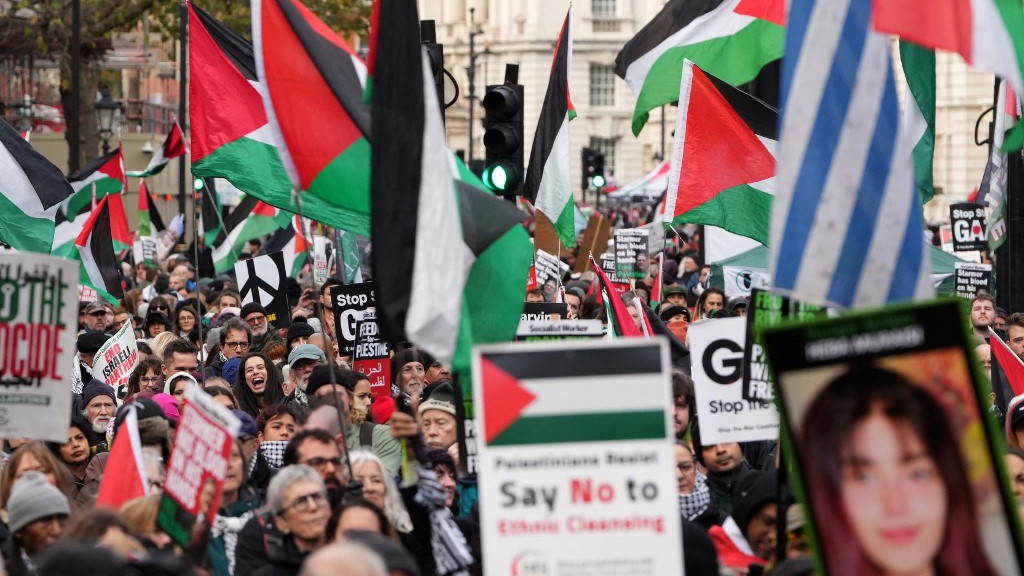
    An independent tribunal co-chaired by former Labour leader Jeremy Corbyn has concluded that Britain served as an active participant in certain Israeli war crimes during the Gaza conflict. The findings, published in a comprehensive report on Monday, emerged from last September’s highly publicized Gaza Tribunal proceedings.

    The tribunal was convened following the Labour government’s blockage of Corbyn’s proposed legislation calling for a Chilcot-style public inquiry into UK-Israel military cooperation. The proceedings gathered testimony from a diverse array of sources including eyewitnesses, United Nations rapporteurs, journalists, medical professionals, and academic experts.

    The final report presents a damning indictment of British policy, asserting that the nation “failed in its fundamental obligation to prevent genocide, has been complicit in atrocity crimes, and in some instances has even been an active participant in these crimes.” Corbyn characterized the findings as documentation of the government’s “legacy as an active participant in one of the greatest crimes of our time.

    Among the specific allegations, the report details that Britain conducted hundreds of surveillance flights over Gaza during the conflict, sharing gathered intelligence with Israeli forces despite government claims that such cooperation was exclusively for “hostage rescue” purposes. The tribunal recommends that the UK immediately provide all collected surveillance footage to both the International Criminal Court (ICC) and International Court of Justice (ICJ).

    The document further criticizes the government’s limited arms embargo as insufficient, advocating instead for a comprehensive prohibition on weapons transfers. It references the ICJ’s January 2024 genocide ruling and subsequent advisory opinion declaring Israel’s occupation illegal, arguing these decisions created binding legal obligations for states to prevent genocide and cease trade relations concerning occupied territories.

    Notably, the report cites Middle East Eye’s previous reporting that David Cameron, during his tenure as foreign secretary, threatened the ICC’s chief prosecutor with Britain’s withdrawal from the court if it pursued arrest warrants against Israeli officials.

    The tribunal’s recommendations include imposing economic sanctions on Israel, terminating all military cooperation, investigating British citizens potentially involved in war crimes, and establishing a full independent public inquiry with powers to question ministers and officials about UK-Israel cooperation since October 2023.

    Co-chaired by Dr. Shahd Hammouri, an international law lecturer at the University of Kent, and Professor Neve Gordon, a human rights law expert at Queen Mary University of London, the tribunal featured strong condemnations from both legal scholars. Dr. Hammouri accused top UK officials of “lying, manipulating the law, denying reality, and prosecuting truth-tellers,” while Professor Gordon warned that the government’s complicity “has created a very dangerous precedent.”

    In response to the allegations, the Foreign Office noted it has implemented three sets of sanctions addressing settler violence in the West Bank and opposes forced displacement. Middle East Minister Hamish Falconer recently stated there “must be accountability and justice for all crimes committed across Palestinian and Israeli territory.”

  • Spain’s king acknowledges ‘much abuse’ in the conquest of the Americas

    Spain’s king acknowledges ‘much abuse’ in the conquest of the Americas

    In a significant diplomatic gesture, King Felipe VI of Spain has publicly recognized the historical injustices committed during Spain’s conquest of the Americas, marking a potential turning point in years of strained relations with Mexico. The monarch’s remarks came during his visit to a Madrid museum exhibition highlighting the role of women in pre-Columbian Mexico, where he met with Mexican Ambassador Quirino Ordaz.

    Addressing the contentious historical period, King Felipe stated that the Spanish conquest involved ‘much abuse’ and ‘ethical controversies’ that ‘with our current values, they obviously cannot make us feel proud.’ However, he emphasized the importance of contextual understanding, advocating for ‘objective and rigorous analysis’ rather than ‘excessive moral presentism.’

    This symbolic acknowledgment follows nearly five years of diplomatic tension stemming from former Mexican President Andrés Manuel López Obrador’s 2019 demand for Spain to formally apologize for colonial-era atrocities. The dispute intensified in 2024 when current President Claudia Sheinbaum excluded the Spanish king from her inauguration ceremonies due to the palace’s refusal to issue an official apology.

    The recent thaw in relations began last fall when Spanish Foreign Minister José Manuel Albares acknowledged the ‘pain and injustice’ suffered by Mexico’s Indigenous population during conquests that decimated pre-Hispanic communities. Sheinbaum had characterized those comments as an unprecedented first step toward reconciliation.

    While not constituting a formal apology from the Spanish monarchy, Felipe’s carefully measured statements represent the highest-level recognition to date of historical grievances from Spain’s colonial empire, which once spanned five continents between the 16th and 18th centuries. President Sheinbaum has indicated she will review the king’s remarks as bilateral relations show signs of gradual improvement.

  • Ecuador deploys 75,000 soldiers to crime-ridden provinces under nightly curfew

    Ecuador deploys 75,000 soldiers to crime-ridden provinces under nightly curfew

    Ecuador has initiated an unprecedented security mobilization, deploying 75,000 military and police personnel to four violence-plagued provinces while implementing strict nighttime curfews. The emergency measures, which began Sunday night, prohibit civilian movement between 11 p.m. and 5 a.m. in Guayas, El Oro, Los Rios, and Santo Domingo de los Tsachilas provinces for an initial two-week period.

    The massive security operation has already resulted in 253 arrests for curfew violations. Interior Minister John Reimberg confirmed authorized artillery strikes against three identified targets, declaring emphatically that operations would continue regardless of consequences. Remarkably, these initial strikes resulted in no recorded casualties according to official reports.

    This dramatic escalation responds to Ecuador’s spiraling security crisis, with homicide rates quintupling since the COVID-19 pandemic to reach 50 murders per 100,000 residents last year—the highest rate in decades. The violence stems primarily from competing international drug cartels battling for control of coastal ports used to transport cocaine to United States markets.

    President Daniel Noboa has extended a state of exception granting military authority to conduct joint patrols with police and enter homes without warrants. The conservative leader has pointed fingers at neighboring Colombia, accusing its government of insufficient action against cartels operating along their shared border. In retaliation, Noboa imposed tariffs on Colombian imports in January, vowing to maintain them until security conditions improve.

    Ecuador’s military recently collaborated with United States forces in a cross-border operation targeting a training camp used by Colombian drug traffickers. Officials identified the facility as belonging to Comandos de la Frontera, a splinter group originating from Colombia’s FARC guerrillas.

    Despite these aggressive measures, civil society groups criticize Noboa’s iron-fisted approach, arguing it has failed to reduce crime while endangering civilians. The strategy faced particular scrutiny after eleven soldiers received 30-year prison sentences last year for the abduction and murder of four children whose bodies were discovered near a military base outside Guayaquil.

  • Exclusive: Israel to keep Al-Aqsa Mosque closed through Eid al-Fitr and beyond

    Exclusive: Israel to keep Al-Aqsa Mosque closed through Eid al-Fitr and beyond

    Israeli authorities have confirmed the extended closure of Jerusalem’s Al-Aqsa Mosque through the upcoming Eid al-Fitr celebrations and beyond, according to sources familiar with the matter. Middle East Eye has learned that the Islamic Waqf, the Jordanian-appointed body administering the holy site, received official notification of this decision in recent days.

    The unprecedented shutdown of one of Islam’s most sacred sites began earlier this month citing security concerns during regional tensions. This marks the first Ramadan since Israel’s 1967 occupation of East Jerusalem that Palestinian worshippers have been completely barred from Friday prayers at the mosque.

    The closure has drawn condemnation from eight Muslim-majority nations who declared Israel holds ‘no sovereignty’ over the site and demanded immediate lifting of restrictions. Despite these calls, Israeli forces maintain a heavy presence in the Old City, continuing bans on both Friday and nightly Ramadan prayers while preventing Palestinian access to the compound.

    Currently, no more than 25 Waqf staff members are permitted inside the vast complex per shift. Sources reveal Israeli authorities even rejected a request for an additional manuscript department employee, warning that any expansion would trigger permission for Israeli settlers to resume daily incursions.

    Waqf officials suspect Israeli forces have installed surveillance cameras inside prayer halls, including within the Dome of the Rock, enabling constant monitoring. The mosque closure coincides with a near-total lockdown of the Old City, where only residents are permitted entry, leaving normally vibrant Palestinian markets deserted.

    During Laylat al-Qadr, the holiest night in Islam, hundreds of police blocked access routes, forcing worshippers to pray on streets under threat of violence. Dr. Mustafa Abu Sway of the Islamic Waqf Council noted the stark contrast between the internal lockdown and normal life continuing just meters outside the ancient walls.

    International affairs director Aouni Bazbaz expressed concerns that temporary measures could become permanent arrangements, potentially altering decades-long status quo agreements that preserve Al-Aqsa as an exclusively Islamic site under Waqf administration. Palestinians maintain that Israeli occupation has progressively eroded these arrangements while expanding control over the contested territory.

  • UN receives reports alleging torture of detainees in Venezuela continues

    UN receives reports alleging torture of detainees in Venezuela continues

    The United Nations High Commissioner for Human Rights, Volker Türk, has raised serious concerns regarding continued human rights violations in Venezuela despite recent political changes. Speaking before the UN Human Rights Council, Türk acknowledged the passage of an amnesty law under the leadership of Delcy Rodríguez, who assumed power following the seizure of former President Nicolás Maduro by US forces in January. However, he emphasized that “structural and systemic human rights concerns have persisted” in the South American nation.

    Türk revealed that his office continues to receive disturbing reports of “torture and mistreatment of detainees” occurring in Venezuelan detention facilities, specifically naming Rodeo 1 and Fuerte Guaicaipuro centers. Particularly alarming is the disclosure that a child remains among those arbitrarily detained despite the amnesty legislation.

    The Commissioner highlighted a significant discrepancy in release figures, noting that while the Maduro-loyalist parliament claims over 7,700 individuals received “full freedom,” the independent prisoners’ rights organization Foro Penal has confirmed fewer than 700 actual releases. According to parliamentary data, most beneficiaries weren’t in traditional prisons but under alternative restrictions like house arrest or parole.

    Türk has urgently requested official documentation of those released and unimpeded access to detention centers, requests that have thus far gone unfulfilled. This call for transparency comes as the Independent International Fact-Finding Mission on Venezuela continues documenting post-January human rights violations, including torture, sexual violence, and degrading treatment in detention facilities.

    Venezuelan officials have historically dismissed such allegations as politically motivated and previously characterized UN reports as “politicized” and driven by “perfidious interests.” The government has not yet responded to Türk’s latest statements.