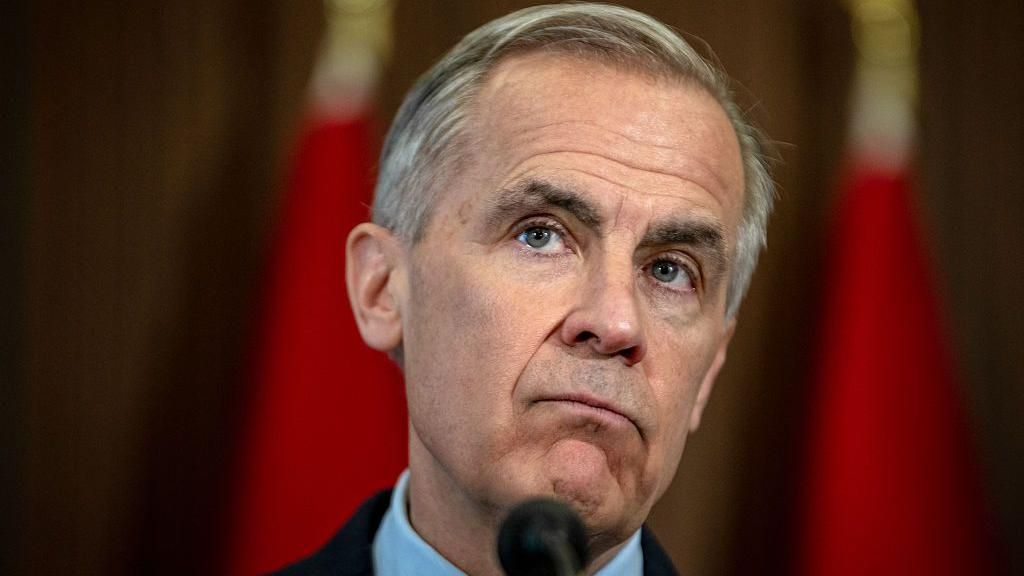
Tensions are running high ahead of the mandatory mid-term review of the United States-Mexico-Canada Agreement (USMCA), with Canadian Prime Minister Mark Carney drawing a firm line against Washington’s attempts to dictate trade negotiation terms.
Carney made clear this week that Ottawa will not accept one-sided demands from the United States ahead of upcoming bilateral talks, rejecting framing that casts Canada as a supplicant to U.S. interests. “It’s not a case where there is someone making demands, and a supplicant,” Carney told reporters. “It’s not a case that the United States dictates the terms. We have a negotiation, we can come to a mutually successful outcome – it will take some time.”
Carney’s comments come amid deep public rifts between the two neighboring trade partners, after top U.S. trade official Jamieson Greer told members of Congress this week that Canada and the U.S. remain fundamentally misaligned on core trade priorities. Greer accused Canada of doubling down on outdated globalist trade frameworks even as Washington works to address the economic downsides of decades of unregulated globalization.
The three North American trade partners face a mandatory 1 July 2026 deadline to complete the scheduled review of the 2018 USMCA deal, which replaced the earlier NAFTA agreement. While Mexico will launch formal bilateral negotiating rounds with the U.S. in May – following a recent meeting between Greer and Mexican President Claudia Sheinbaum – formal U.S.-Canada talks have not yet begun, though lower-level trade officials have maintained behind-the-scenes contact.
To prepare for the talks, Carney convened a new cross-party advisory committee on U.S.-Canada trade relations this week, with the group’s first inaugural meeting scheduled for next week. Former Quebec Premier Jean Charest, a member of the new committee, told Canadian public broadcaster Radio-Canada that the U.S. is already demanding sweeping concessions from Ottawa even before formal talks get underway.
Among the top sticking points is Canada’s decades-old dairy supply management system, a long-running irritant for U.S. agricultural interests. U.S. Commerce Secretary Howard Lutnick repeated Washington’s criticism this week, telling a Senate committee that Canada treats American dairy producers “poorly,” echoing former President and current U.S. political figure Donald Trump’s 2025 claims that Canada charges extraordinary tariffs of up to 400% on U.S. dairy imports.
Canada’s supply management system strictly controls domestic production and import volumes to support the livelihoods of Canadian small-scale dairy farmers, allowing a set quota of U.S. dairy imports to enter Canada tariff-free. Data from the U.S. Department of Agriculture confirms that the U.S. has never actually hit that import quota limit, despite ongoing complaints.
Canadian Trade Minister Dominic LeBlanc drew a clear red line on dairy negotiations this week, telling the *Globe and Mail* that the issue is non-negotiable for Ottawa. “We’ve been very clear with them,” LeBlanc said. He added, however, that Canada is prepared to address most other U.S. concerns, as long as talks progress as part of a balanced, comprehensive broader agreement.
Other outstanding points of friction include Canada’s earlier decision to remove U.S. liquor from retail shelves in retaliation for U.S. tariffs, which Lutnick this week called “disrespectful.” Canada has already made one major concession to the U.S. in recent months, dropping a planned digital tax on large U.S. tech firms last June after the Trump administration flagged the policy as a major trade irritant.
While both sides remain committed to restarting formal talks, senior officials on both sides have acknowledged that a final deal is unlikely to be reached before the 1 July deadline. If no agreement is reached by the deadline, the USMCA will move to annual review cycles until the full agreement expires in 2036. Greer emphasized this week that Washington’s core goal in the renegotiation is to preserve U.S. market access to Canada and Mexico, leaving the ultimate trajectory of the trilateral trade deal hanging in the balance.