分类: politics

  • Mainland facilitates 93 Taiwan compatriots stranded in Middle East to return home via Shanghai

    Mainland facilitates 93 Taiwan compatriots stranded in Middle East to return home via Shanghai

    In a significant consular operation, Chinese diplomatic missions across the Middle East have facilitated the safe return of 93 Taiwanese compatriots who found themselves stranded in the region. The evacuation was coordinated through multiple channels with travelers ultimately transiting through Shanghai Pudong International Airport on their journey back to Taiwan.

    The operation involved concerted efforts from several Chinese diplomatic posts, including the Consulate General in Istanbul, which arranged for the transfer of stranded travelers to mainland-operated flights. Simultaneously, the Chinese Embassy in Israel and Consulate General in Dubai provided critical assistance to numerous other Taiwanese nationals, enabling either their safe return to Taiwan or relocation to more secure areas within the region.

    According to Chen Binhua, spokesman for China’s Taiwan Affairs Office, the compatriots sought assistance through official channels including the China Consular Affairs application and dedicated emergency hotlines. Chen emphasized that Beijing consistently prioritizes the welfare and security of all Chinese citizens abroad, regardless of their region of origin within the nation.

    The successful operation stands in stark contrast to what Chinese officials characterized as “shameful” criticisms from Taiwan’s Democratic Progressive Party authorities, who have repeatedly questioned Beijing’s motives in providing consular protection to Taiwanese nationals. Recipients of the assistance expressed profound appreciation, noting they felt reassured by the motherland’s support and experienced firsthand the familial bonds connecting both sides of the Taiwan Strait.

  • Rand Paul presses Mullin on past assault remarks

    Rand Paul presses Mullin on past assault remarks

    In a striking Capitol Hill exchange, Senator Rand Paul (R-KY) publicly challenged Senator Markwayne Mullin (R-OK) regarding past remarks that appeared to trivialize political violence. The confrontation emerged during a Senate committee hearing focused on domestic security threats.

    The Kentucky lawmaker referenced his own traumatic experience in November 2017, when a neighbor tackled him in his Bowling Green yard, resulting in multiple broken ribs and life-threatening pneumonia. Paul emphasized the seriousness of physical assault, stating that ‘violence against political figures creates dangerous precedents that undermine our democratic foundations.’

    The discussion gained additional significance given Mullin’s previous comments before a 2022 Oklahoma debate, where the former mixed martial artist stated he wouldn’t ‘rule out’ physically confronting his opponent if provoked. Paul’s remarks served as both a personal testimony and a broader warning about normalizing political violence in increasingly polarized times.

    Security experts testified that rhetoric minimizing physical confrontations contributes to heightened risks for public officials. The hearing occurred amid ongoing concerns about the safety of elected representatives and their families, with congressional security officials reporting increased threats in recent years.

  • Mainland willing to provide Taiwan with reliable energy supplies after reunification: spokesman

    Mainland willing to provide Taiwan with reliable energy supplies after reunification: spokesman

    BEIJING – In a significant diplomatic overture, Chinese authorities have articulated a comprehensive energy security proposal for Taiwan contingent upon peaceful reunification. Chen Binhua, spokesperson for the Taiwan Affairs Office of the State Council, articulated this position during Wednesday’s regular press briefing in response to growing concerns about Taiwan’s energy resilience amid Middle Eastern geopolitical instability.

    The spokesman addressed specific anxieties regarding potential disruptions to Taiwan’s oil and gas supply chains, emphasizing that cross-strait reunification would fundamentally transform Taiwan’s energy landscape. Chen outlined how full integration would enable the complete resolution of Taiwan’s chronic shortages in electricity generation, natural gas availability, and crude oil supplies through enhanced connectivity infrastructure.

    Beyond mere adequacy, the proposal promises qualitative improvements to Taiwan’s energy ecosystem. Chen guaranteed that post-reunification energy provisions would not only be reliable but also more economically accessible, environmentally sustainable, and operationally stable than current arrangements. The spokesperson framed this energy security commitment as part of broader socioeconomic benefits that would accrue to Taiwanese citizens following peaceful reunification, positioning energy cooperation as a cornerstone of integrated development.

    This energy proposal emerges against the backdrop of ongoing regional volatility that has exposed vulnerabilities in Taiwan’s resource supply chains, presenting Beijing’s vision as a comprehensive solution to both immediate and long-term energy challenges.

  • Brazilian academic: Protectionism is unsustainable

    Brazilian academic: Protectionism is unsustainable

    In a striking critique of contemporary economic trends, prominent Brazilian political scientist Dawisson Belém Lopes has declared protectionism fundamentally unsustainable for long-term global prosperity. The professor of international and comparative politics at Brazil’s Federal University of Minas Gerais identified a paradoxical shift among nations that previously championed free-market principles but are now embracing restrictive trade measures.

    Lopes presented his analysis against the backdrop of increasing trade barriers implemented by several developed economies. He argued that such protectionist approaches ultimately hinder worldwide economic advancement and create artificial constraints on international cooperation. The academic emphasized that historical evidence consistently demonstrates how isolationist policies lead to market inefficiencies, reduced innovation, and ultimately lower living standards across both developed and developing nations.

    Highlighting China’s economic trajectory as a compelling case study, Lopes pointed to the tangible benefits of maintaining open markets and committing to free trade principles. He noted that nations embracing globalization and international exchange have demonstrated stronger resilience during economic downturns and more sustainable development patterns.

    The professor’s comments arrive during a period of significant reevaluation of global trade relationships, with multiple nations reconsidering their strategic economic positioning. Lopes concluded that the temporary advantages gained through protectionist measures inevitably give way to long-term disadvantages, making cooperation and open exchange the only viable path forward for truly sustainable global development.

  • Trump’s failed strong-arming of allies on Iran shows that pressure is losing its effect

    Trump’s failed strong-arming of allies on Iran shows that pressure is losing its effect

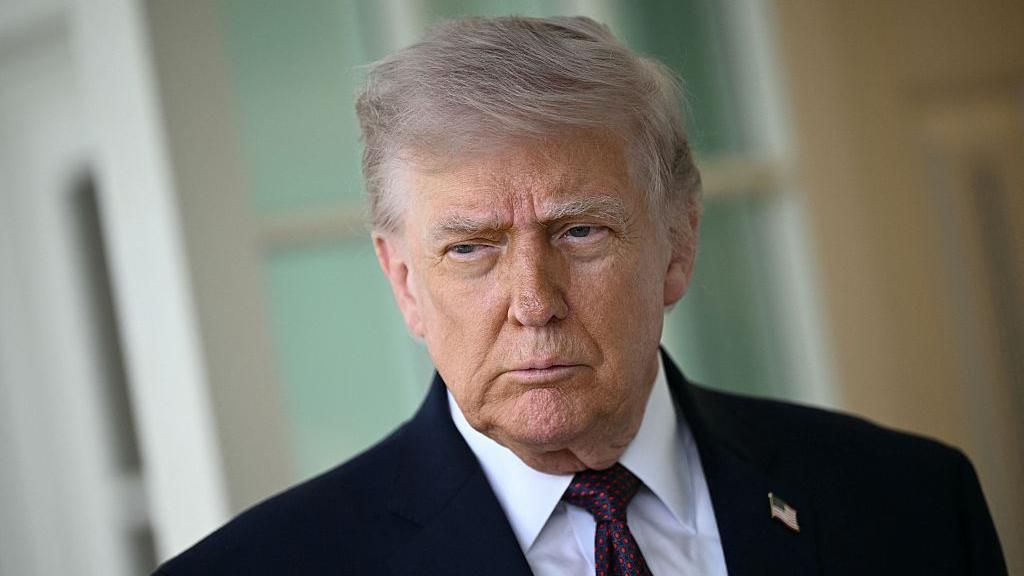
    PARIS (AP) — In a stark demonstration of deteriorating transatlantic relations, U.S. President Donald Trump’s demands for military assistance in the Iran conflict have been met with resounding rejection from traditional allies. The president, adopting a transactional approach to international relations, has attempted to leverage decades of U.S. security guarantees to compel allied nations to contribute naval forces to secure the Strait of Hormuz—a critical maritime passageway for global oil transportation.

    The response from European powers has been notably unified in its opposition. The United Kingdom, historically America’s closest military partner, has explicitly refused involvement in what Prime Minister Keir Starmer characterized as a conflict ‘with no clear endgame.’ British officials have emphasized that any military deployment would require both international legal justification and a comprehensive strategic plan, neither of which they believe currently exists.

    France has adopted a similarly cautious position, with President Emmanuel Macron stating that while naval escorts might be considered feasible eventually, such operations would only be viable after active combat subsides. Germany’s Defense Minister Boris Pistorius echoed this sentiment, asserting that European nations seek diplomatic solutions rather than military escalation.

    The widespread refusal follows months of diplomatic strain between the Trump administration and European allies. Recent tensions have included trade disputes, controversial remarks about allied military contributions in Afghanistan, and renewed American interest in acquiring Greenland—all contributing to what analysts describe as historically low levels of goodwill toward the current U.S. administration.

    Retired Lt. Gen. Ben Hodges, former commanding general of the U.S. Army in Europe, observed that European leaders are increasingly recognizing that diplomatic appeasement strategies toward Trump yield limited benefits. This shift represents a fundamental transformation in how traditional allies perceive American leadership on the global stage.

    Despite possessing potential leverage through European dependence on Middle Eastern energy exports and need for continued U.S. support regarding Ukraine, Trump’s demands have thus far failed to generate the desired international coalition. The administration now faces the prospect of managing an escalated Middle Eastern conflict with notably limited international military support.

  • Former NDRC deputy director charged with bribery

    Former NDRC deputy director charged with bribery

    In a significant development in China’s ongoing anti-corruption campaign, former National Development and Reform Commission (NDRC) deputy director Xu Xianping has been formally indicted on bribery charges. The Supreme People’s Procuratorate announced on Wednesday that prosecutors have completed their review and filed the case with the Chifeng Intermediate People’s Court in Inner Mongolia Autonomous Region.

    The case, which was initially investigated by the National Commission of Supervision, alleges that Xu exploited multiple high-ranking positions throughout his extensive career to illicitly benefit others while accepting substantial monetary bribes and valuable assets. The prosecution asserts that the 71-year-old official should be held criminally accountable for these corruption offenses.

    Xu’s impressive career trajectory, which spanned nearly five decades, included influential roles as Vice-Governor of Hunan Province, member of the Standing Committee of the Communist Party of China Hunan Provincial Committee, Deputy Head of the NDRC from 2009 to 2014, and most recently as Counselor of the State Council until 2022. According to judicial authorities, he manipulated these positions of power to facilitate improper advantages for third parties in exchange for significant financial compensation.

    The legal proceedings follow Xu’s initial investigation in March 2025 by anti-corruption authorities. After eight months of intensive scrutiny, he was expelled from the Communist Party in November 2025 and subsequently transferred to prosecutorial agencies for criminal proceedings. The case has been designated to regional authorities in Chifeng under the supervision of the Supreme People’s Procuratorate, demonstrating the systematic approach to handling high-profile corruption cases within China’s judicial system.

    This prosecution represents another milestone in China’s comprehensive anti-graft campaign that has targeted officials at various levels of government and state-owned enterprises. The case against a former NDRC official—an institution responsible for China’s economic planning and policy formulation—highlights the continued determination to root out corruption regardless of an individual’s former status or political connections.

  • Juliana Stratton wins Illinois Democratic primary for US Senate

    Juliana Stratton wins Illinois Democratic primary for US Senate

    In a dramatic political turnaround, Illinois Lieutenant Governor Juliana Stratton has secured the Democratic nomination for U.S. Senate after mounting a remarkable comeback in the final stages of a fiercely contested primary race. With approximately 90% of votes counted Tuesday night, Stratton outpaced her main rival, U.S. Representative Raja Krishnamoorthi, according to Associated Press projections.

    The victory marks a significant shift in political momentum for Stratton, who had trailed in polls for months before receiving a decisive endorsement and substantial financial backing—reportedly totaling $12 million—from Illinois billionaire Governor JB Pritzker. This support enabled her to launch a powerful late-stage campaign that resonated with Democratic voters.

    Stratton’s campaign gained traction through her strong stance on immigration reform, particularly her direct call to abolish Immigration and Customs Enforcement (ICE)—a position that distinguished her from Krishnamoorthi’s more moderate approach of targeting “Trump’s ICE” rather than the entire agency.

    Addressing supporters in Chicago during her victory speech, Stratton declared: “Courage inspired me to run. Courage powered this campaign and courage will bring this fight straight to Donald Trump’s front door.”

    The primary witnessed unusually high voter engagement for a non-presidential election year, with over 1.1 million ballots cast in the Democratic contest—potentially exceeding the record turnout from the 2004 primary when Barack Obama sought the Senate seat.

    Should Stratton prevail in November’s general election against her Republican opponent, she would make history as the sixth Black woman to serve in the U.S. Senate since its establishment 237 years ago. Her election would also mark the first time three Black women—Stratton joining Senators Angela Alsobrooks and Lisa Rochester—simultaneously serve in the upper chamber. The seat is currently held by retiring five-term Senator Dick Durbin, 81, who will conclude his service next year.

  • Irish PM boxes clever as Trump doubles down on Starmer ‘disappointment’

    Irish PM boxes clever as Trump doubles down on Starmer ‘disappointment’

    Irish Taoiseach Micheál Martin demonstrated remarkable diplomatic dexterity during his traditional St. Patrick’s Day meeting with President Donald Trump in the Oval Office on Tuesday. The encounter evolved into an unexpected political sparring session where Martin’s background as an amateur boxer proved metaphorically appropriate.

    The meeting, typically a ceremonial affair marking the longstanding Irish-American relationship, quickly turned substantive as President Trump dominated discussions with criticisms of UK Prime Minister Sir Keir Starmer and European immigration policies. Trump reiterated his previous characterization of Starmer as “no Winston Churchill,” expressing disappointment in the British leader’s Middle East stance and calling his Iran policy a “big mistake.”

    Martin, who had just hosted Starmer in Cork days earlier for a UK-Ireland summit, mounted a nuanced defense. While acknowledging Churchill’s wartime leadership, the Taoiseach noted that from an Irish perspective during the War of Independence, “he created his own bit of difficulties for us.”

    The dialogue encountered another potential flashpoint when Trump criticized European immigration approaches. Martin countered diplomatically, asserting that “Europe is still a very good place to live” and is sometimes “characterised wrongly in terms of it being overrun.” He emphasized Ireland’s controlled immigration through legal economic channels.

    Throughout the 40-minute meeting, Martin employed strategic discretion, avoiding direct engagement on several contentious issues. He sidestepped questions about Middle Eastern civilian casualties, declined to comment on the conflict’s legality, and even avoided correcting Trump when the president misgendered Irish President Catherine Connolly despite her criticism of US actions in Iran.

    The encounter concluded with Martin emerging unscathed from what observers characterized as a diplomatic test of agility against an unpredictable negotiating partner.

  • US judge orders Trump administration to reopen Voice of America

    US judge orders Trump administration to reopen Voice of America

    In a landmark judicial decision, U.S. District Court Judge Royce Lamberth has declared the Trump administration’s effective shutdown of Voice of America (VOA) unlawful, ordering federal authorities to restore the international broadcaster’s operations within one week. The ruling mandates the reinstatement of hundreds of journalists who were abruptly terminated in what the court characterized as an “arbitrary and capricious” personnel purge.

    The legal confrontation stems from executive actions taken shortly after Donald Trump’s return to office, when he issued orders targeting VOA and affiliated networks including Radio Free Europe and Radio Free Asia. The administration justified these measures by alleging systemic left-wing bias within the broadcasters. Trump appointee Kari Lake, installed as head of the U.S. Agency for Global Media (USAGM) without Senate confirmation, executed the president’s directive by dismissing over 85% of the agency’s workforce—more than 1,000 VOA employees alone.

    Judge Lamberth’s twin rulings determined that Lake lacked constitutional authority to order mass suspensions without Senate confirmation and that the government ignored legislative mandates defining VOA’s linguistic and regional service requirements. “Defendants have provided nothing approaching a principled basis for their decision,” the judge noted in his sharply worded opinion.

    The case was brought by three VOA journalists, including plaintiff Patsy Widakuswara who expressed profound gratitude for the verdict. “We hope the American people will continue to support our mission to produce journalism, not propaganda,” she told Associated Press. The future course remains uncertain as Trump’s newly nominated USAGM head, Sarah Rogers—requiring Senate confirmation—must decide whether to appeal the decision.

    Established during World War II to counter Nazi propaganda, VOA had been broadcasting in nearly 50 languages through television, radio, and digital platforms prior to its dismantling. This legal battle reflects broader tensions between the previous administration and U.S. media institutions, with research indicating increasingly polarized perceptions of news media among American audiences.

  • Remilitarization threatens region

    Remilitarization threatens region

    Japan is undergoing a profound transformation of its national security posture that experts warn represents a fundamental departure from its postwar pacifist principles. The administration of Prime Minister Sanae Takaichi has accelerated military expansion through multiple policy shifts, including revising arms export guidelines, deploying long-range missile systems, and pursuing constitutional amendments.

    According to defense analysts, Japan’s recent acquisition of U.S.-manufactured Tomahawk cruise missiles with a 1,600-kilometer strike capability signals a strategic pivot toward offensive military operations. This development coincides with the nation’s 14th consecutive annual defense budget increase, which has grown by over 60% in the past five years alone.

    International security researchers from the Stockholm International Peace Research Institute document a 76% surge in Japanese arms imports between 2021-2025 compared to the previous five-year period, elevating Japan from the world’s 11th to 6th largest weapons importer.

    Professor Zhang Yulai of Nankai University’s Japan Institute asserts that these collective actions have effectively undermined Article 9 of Japan’s constitution, which formally renounces war and mandates exclusively defense-oriented policies. He warns that Tokyo’s current trajectory risks triggering regional arms races and compromising global stability.

    Meanwhile, economic experts highlight the unsustainable financial burden of military expansion. With government debt exceeding 200% of GDP for more than a decade and social security costs consuming over 30% of the national budget, massive defense spending increases threaten to destabilize Japan’s already fragile fiscal situation. Demographic challenges including a rapidly aging population and record-low birth rates further complicate long-term economic planning.

    Domestic opposition has emerged through public demonstrations, including a recent gathering of approximately 10,000 protesters in Tokyo who expressed concerns about missile deployments and relaxed arms export regulations. Many citizens fear that remilitarization could reverse decades of peaceful development and potentially repeat historical mistakes with devastating consequences.